Morning Briefing - 14th September 2018
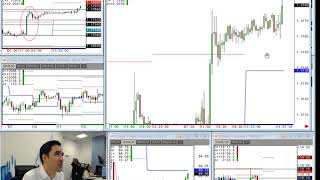
Anthony Cheung breaks down Friday's market setup: US inflation came in lower than expected (core 2.2% vs 2.4% forecast), supporting equities despite the Fed's September rate hike still coming. He unpacks the US-China trade war's ongoing volatility, explains why Mark Carney's 35% house-price warning was a worst-case stress test not a forecast, and notes China's investment growth hit a record low.
Chapters
Okay, very good morning. It is Friday the 14th of September. I hope everyone is well. Briefing today, you're going to cover a few things. There was a little bit of outperformance in the, the NASDAQ, so we'll look at a breakdown on that, and some surprising news on the inflation front which has certainly changed, I think, people's perception about the future rate trajectory for the Fed. So we'll talk a little bit about that. We're also going to talk about Brexit a as well and what it means going forward. There's definitely some, some major press headlines about a potential house price crash and so on. So we'll try and make sense of that and whether or not it is important. First things first, though, looking at the general setup and sentiment this morning, we've got a bit of a, a bit of a risk-on feel. Certainly equity markets finishing on the front foot yesterday in the US and index futures are higher this morning. European index futures following suit. So, well, one thing to be aware of first and foremost is we've had some contract rolls, certainly in the, the FX futures. You'll notice we're trading now DEC futures in euro and the pound. But just looking at the DAX here, coming up into close proximity to what was yesterday's midday high, so worth keeping an eye on. And obviously just looking at the S&P here, what was kind of the US session peak of price activity, the top end of that range you can see here on the center-right chart. That's contained so far some of the price action during the Asia-Pacific session. We've broken above that, and here we are just moving up to the, to the R1. Similarly, the NASDAQ and the, the Dow Future have followed suit. So firmer equities, and if anything not having too much of a, a downward force on T-notes. But the inverse relationship is playing out to some respect. The US 10-year is down about 4 ticks, the Bund also consequently down about 7. Elsewhere, we've got minor weakness in the dollar. We're down about 0.1%. The percentage change is fairly minimal. I think what is more interesting, if you look at the dollar index after the Dixie plummeted following the surprise weakness in US inflation data. We are testing the lower bound of what was the dollar index's low yesterday. So I think just looking at the major pairs being somewhat assisted by that weakness in the greenback. So EURUSD here at highs. And now if you look at the EURUSD chart here, and that was the, the spike high post the US CPI report. We'll get into some of the reasonings here because, you know, of course yesterday was a big day for the central banks, that being the Bank of England, ECB, but ultimately as we were expecting, a bit of a non-event in the sense that status quo for now. We're not expecting really meaningful changes, certainly not for the Bank of England until we get more clarity on Brexit, and then for the ECB until we get more details about what's going to happen with the, the reinvestment of the principles of their QE and bond buying program, which is due to finish end of the year. The biggest story here was the US CPI report because the biggest move definitely came on the back of that. And let's just have a quick recap of what those numbers look like. So this is the, the year-on-year US CPI reading, and we came in at 2.7%. Probably the one though that's more eye-catching, the one that the market will look at more closely is this one here. This is the US core inflation rate, and it dropped to 2.2%. What was interesting here was we were expecting 2.4%. The lower bound— the most pessimistic analyst on Wall Street was looking at 2.3%. So we breached the lower bound. This was how surprisingly weak, uh, this CPI data was, and it came in at 2.2%. Now, 2.2% then isn't spectacularly low. But obviously the Fed are in a tightening cycle and we're expecting an interest rate hike in September. Let's be quite clear here, this weakness in inflation is not going to stop them hiking rates. It's pretty much a dead cert that's going to happen. The market's still pricing in, in the mid-90%, the probability that in a few weeks' time the Fed will hike at the end of September. They're likely as well to hike in December. The question mark here is then, is this weakness in inflation, in addition to things like trade wars, um, which could escalate— we've got the midterms, how is Capitol Hill going to be, what's the shape and composition of the chambers of Congress, and so on. And so the question mark here is, well, how many rate hikes if any at all, can the Fed do in 2019? Now, the market was expecting at least 1 or 2. Question mark now is, you know, is it going to be 2, September and December 2018, 2 and done? Not very often I come into the office and the head of trading, Piers Curran, wanders over to my desk, says nothing, just shows me the inflation chart and raises his eyebrows and rolls his eyes and goes— which I know quite clearly is a hint— he thinks 2 more and done, that's it. Now what does that mean for financial markets? Well, 2 more and done is very interesting because what that means is we go back into what could ultimately be this Goldilocks scenario. This being we've got a US economy which is you know, heating up. We've got economic growth, GDP of in excess of 4%. We've got sentiment, forward-looking, uh, indicators like manufacturing PMI tracking at the highest in 14 years, corporate consumer confidence still at elevated levels. And you've got an incredibly slow, if anything, then gradual rate hike which is going to peak at a level lower than what we were being spooked by in February, which caused the equity market to collapse. So what I'm saying here is that you've got a low interest rate and accommodative interest rate environment that, with the economy picking up, could then spell a continuation of this ongoing bull market, which obviously a lot of people are questioning the longevity of this in the medium to long term. Ray Dalio, obviously very famous chap, biggest hedge fund in the world. I think they manage $160 billion, something like that. And he's been on Bloomberg this week kind of talking up the indicators are flashing towards the potential next collapse in the market, somewhat similar to the financial collapse or even worse. But if the Fed do hold off and the markets have to re- customize themselves to this, I see no reason why we're not going to go to all-time highs again in this US equity market. The fact that the S&P is pretty much there at the moment, you know, I think it could do it today, never mind, um, in the future. And so definitely I think all-time high is on the cards. I think this CPI reading is a real surprise, and ultimately this changes at least market short-term perception on one of the biggest underlying factors of market direction, which is monetary policy. So I'm looking here for more dollar weakness and equity appreciation. Um, the Dow is at around an interesting technical point. Obviously, if I just look back to some of the price activities from late August, I think now we open up a bit of free air, if you like. Technically, the Dow still got a little bit of distance to go, but let's just have a look. What's the percentage increment we need to go? Is about 1.9, so let's just call it 2%. Oh, for sure, the, the Dow can, can have 2% change. I think that's, that's well in capability of this market. Not today, but certainly in the coming weeks, I think, for sure. The NASDAQ I'm looking at that on a daily continuation, uh, the, the percentage change probably even smaller. And it was the NASDAQ which actually outperformed yesterday. So let's just have a look at that firstly. And this is the heat map of the S&P 500. There's one notable large green block on this screen, as you can see, and that's Apple. And so obviously Apple shares dipped after market on Wednesday night after they unveiled their latest kind of suite of products, but their shares came surging back yesterday. And when the world's largest company and heavyweight in these US indices moves by an increment change of 2.5%, well then that cultivates then a kind of a read across for the overall index. And the Nasdaq did outperform. I think the close in the cash was about 0.9% higher. So equities remaining quite buoyant at the moment. You know, we've had a good corporate earnings season on balance. Apple shares, these big tech giants, which obviously the FANGs are the first to feel the pressure of growing uncertainty, and a good barometer, I think, of market risk appetite. And they're moving higher with the economic setup, as mentioned, with the US economy. And then now this probably renewed thinking about Fed speed of tightening, I think we've got a bit of a game changer here. And I think certainly today I'd be biased on the, on the long positioning, but also going forward. The other thing, of course, which was quite key from— well, this is just a quick look at the dollar and the collapse of the dollar on the CPI reading. The other thing, though, which is the bigger macro topic here, away from what we've spoken about, is the relationship between the US and China. And yesterday morning in the briefing, we were talking about the positive development because there had been some rumors circulating about, from the Wall Street Journal, that US administration were wanting to bring China back to the table for more trade talks. This had been after a bit of a stalemate. However, Trump doing what Trump does, this was what he tweeted yesterday. So let me just read it out. He said, the Wall Street Journal has it wrong. We are under no pressure to make a deal with China. They are under pressure to make a deal with us. Our markets are surging, theirs are collapsing. We will soon be taking billions in tariffs and making products at home. If we meet, we meet? So if you're not used to this type of behavior, an approach from Trump. You're going to have to get used to it because it's kind of give with one hand, take with another. This is that what I was referring to yesterday, the management of the situation. But again, point being is the threat, looming threat then of the trade war now with low inflationary environment. You know, we have to see whether this is sustainable, of course, on the latter. But if it equates to a prolonged accommodative environment. This has proven to be equity-friendly dollar weakness, and so something to keep in mind. On the back of that, this morning, going back to the charts, gold is rising and the major pairs are being supported. So again, this is all feed-through from the dollar. What was quite clear yesterday was that although we were listening to Draghi in the regular press conference, it was really a side point it was the, the dollar information that was driving financial markets and I think still driving the major pairs here. If you look at the pound this morning, let's just talk a little Brexit, and we've managed to get our heads above what was again the appreciation of, of the pound predominantly. Yes, technically it's broken some of the upside range of recent weeks, but also the dollar weakness, and we've just broken above that yesterday afternoon high. So moving slowly higher in tandem with a move towards R1 here in the top left in EURUSD. This is the headline that a lot of the press are running this morning. So Mark Carney warns no-deal Brexit would mean rate hikes and a 35% house price fall. Now you can only imagine the type of reaction that this is having on social media. The Brexiteers are out in force. The Tory Eurosceptic MPs are ridiculing the governor's warnings, arguing that both the Bank of England and the Treasury have miscalculated the economic consequences of Brexit because they've done so in the past. If you remember, one of the biggest almost mistakes of George Osborne, who was obviously the Chancellor under David Cameron, who initiated this whole referendum in 2016, was this project fear about the economic consequence of what's going to happen if we vote to leave. And their scenarios never played out to as pessimistic as they were suggesting. And so Mark Carney's being kind of lynched this morning for going down a similar route. And this comes after Theresa May held a 3-hour meeting with various different officials to try and ascertain what the potential fallout could be. Couple things though I want to say on this, and a few points I want to clarify. So this is Carney's warning of economic chaos in a no-deal Brexit. However, as much as he talked about a 35% collapse in house prices, I think personally what's happened here is this is media sensationalism at at its finest, because if you actually start reading what actually happened here, this is a total misinterpretation of what the governor has said. What the governor has said here, and I've, you know, I've done my due diligence here, I'm not just saying my opinion, um, this is the key elements of the 2018 stress tests as conducted by the Bank of England in March of 2018. Now what happens here, there's something called the Bank of England AS or ACS, which is the Annual Cyclical Scenarios, as per then, the adverse economic conditions that they run the UK economy through in order to see how it performs under a stressed scenario. Now, this is the most stressed scenario. Important here, this is not the baseline outcome that they see. Very important. What Mark Carney was saying yesterday is this is the worst-case scenario if a no deal. He's not saying this is what he expects to happen if we vote for a no. For— well, remember, a no deal is not what's the most likely outcome at this point. The most likely outcome is a muddled-through type of Brexit, whether hard or soft. But obviously the papers are going to latch on to what if we get a no deal. The whole point here is the pound's been rallying this week because of conciliatory tone coming out of Europe and about the positive kind of tones between Theresa May's government and that of Michel Barnier on behalf of the European Union. And so this is a little bit making a mountain out of a molehill, in my opinion, because when you look at a stress test at its most severe, we're talking about a global GDP fall of 2.4%. We're talking about UK GDP falls nearly 5%. We're talking about unemployment nearly hitting 10% and the Bank of England interest rate hitting 4%. These are quite spectacular models to run the economy through. So when he says it could fall 35%, you know, this is of course economic, you know, due diligence, planning for the worst-case scenario, but it's the lowest probability. And so, you know, I think this then will make a bit of sense why the pound traders who know everything that I've just spoken about, they know that this, this is just nonsense what the papers are talking about. And so yes, what I'm saying has absolutely no reflection though on on the political sentiment, which of course, this is a really powerful headline and will probably turn people's heads and make people feel quite emotive on the subject of Brexit. But from a financial market point of view, which is my job, this is really a non-point for economics. But as we know, if it can tilt or change the favorability for how Theresa May or the ERG could handle Brexit, then the domino effect is this then can start to affect the economics if we have a change of leadership. So there's kind of a near-term non-reaction, I would say, but a long-term potential if it can sway public opinion and then make change on the, the leadership of the government as it exists at this point, or cause complication at least to the, the Cheka's plan, then that's a different ball game. So just a couple of thoughts there I thought I would share because, you know, it is quite frustrating when you see these types of things, I think, miscommunicated to the public in that sense. Because, you know, definitely not, I think, you need to start, you know, filling up your larder with food and the end of the world is coming because that's not the case at this point. All right. Other data points just to round off the news that has happened. China fixed asset investment growth slows to a record low. Emerging markets have not gone away. Um, we saw some very short-term reprieve yesterday for the EMs, and you can see how negative global asset and global participant, um, sentiment is to the emerging markets because yesterday Even European equities saw a very brief rally after the Turkish central bank kind of brought out the, the kind of bazooka to some extent and almost doubled up on what the consensus was for the size of the interest rate hike. This obviously goes against the wishes of Erdoğan and the government, and they really, you know, try to— they're trying to quell this, this inflation spike, and so they went for a for a big interest rate rise accompanied with a threat of their continued policy tightening stance. And that came as some short relief about their— they're really serious about tackling the issue, but that was it. That was all. And don't get me wrong, that one action I don't think is going to be enough to save Turkey at this point. There's going to have to be much more continuity to maintaining that type of policy stance. But The point here is that China is still suffering, and this emerging market situation, although attention has been turned at the moment by the more positive outcomes about the CPI and what that might mean for monetary policy from the world's biggest central bank, the Fed, China is still struggling and these trade wars are still going on. And so they do still need to be monitored. So overnight, retail sales steadied out in China. Industrial value is pretty much constant, but fixed asset investment was quite interesting. That was the one that actually fell. It grew still, but it was declining at a rate— I think slowest in a couple of months was the basic statistics that came along with that. Okay, calendar for today, and before I talk economic data The one thing I think you need to be aware of, just given all of the, the subject matter just discussed with Mark Carney and Brexit— Mark Carney is speaking today in Dublin, and he's going to be on the wires in about 2 hours' time, speaking from 11 AM. I think it would be highly prudent to be monitoring that if you're trading the FX markets. I think his commentary is going to be quite key. Sticking with the speakers, a couple of ECB ones. This is kind of classic central banking strategy. They already have scheduled, always ahead of an interest rate decision, whether it's an important one or not, speakers just in case of a misinterpretation by the market for them to then manage and realign expectations. So I wouldn't expect anything from these guys, Smets and Lewontny, today. Because there's no real need for them. I think the ECB were quite clear with their current stance yesterday. From an economic data point of view, this morning relatively quiet. If you are looking at emerging markets, you do have a Russian interest rate decision. So any guys in the FX looking at the ruble. But then into the afternoon, interestingly, you get another key piece of economic data from the States, this time in the form of retail sales. You've also got industrial production, cap utilization, Um, you've got University of Michigan. Interestingly, this is the more important of the two readings because it's the prelim for September. So quite a few things to get your teeth into this afternoon. And I would say, just given the context of the way that the markets are moving, which is predominantly based and underlined on a macro perspective by this, this shock weak inflation print and its knock-on effects of what that might mean for policy, then I would say you could be better served maybe just unless something quite clearly, uh, materializes an opportunity. I think the bulk of the price action is going to occur into, into the US session, so I'd be looking to, to kind of plan the strategies accordingly around those hours, uh, for the most defined movements potentially. All right, going to leave it at that, let you guys get on. Uh, I'll be in the chat room throughout the day Any questions, just let me know. Otherwise, have a good day and have a fantastic weekend. Thank you very much.
More from Anthony


Inside the Biggest Banking Stories You Need to Know This Week (Anthropic, Diageo, Private Credit)


Inside the Biggest M&A Deals You Need to Know This Week (UniCredit, GameStop, eBay, Eli Lilly)







AI Breakthrough or Hype? Anthropic’s Claude Mythos, Tim Cook Steps Down & LIV Golf Collapse