Morning Briefing - 16th July 2018
China's growth hit its weakest pace since 2016 amid trade tensions, while US earnings beat expectations across 89% of S&P 500 firms. Trump meets Putin this week, Brexit negotiations intensify with a Commons vote on the Customs Bill, and Jerome Powell testifies to Congress on the Fed's rate outlook.
Chapters
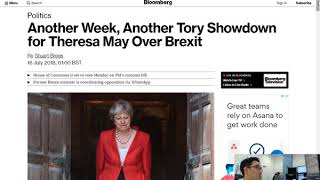
Okay, very good morning, Monday 16th of July. I hope everyone had a good weekend, enjoyed the various sporting events that are going on. But straight into it, let's have a look and review of— well, really this briefing is more about not just today, but a look ahead for just preparation for the, the trading week and what's to come, because there definitely is a fairly busy calendar and a few things to be aware of. So we'll look at that first, and we'll try to tie in then some of the, the overnight news as well, and then the charts and how we're sitting at the moment. So first things first, let's look at the weekly highlights for the 16th to 20th of July. And a couple things here just to draw your attention to, uh, first of which, first line of Monday, you've got the Chinese GDP, IP, fixed asset investment, retail sales. So this is kind of your main bulk of Chinese economic data points. Now, if you're looking at the charts this morning, there hasn't really been a massive read across into impacting of market sentiment for this European Open. But just quickly, this is what the headlines in reference to that data suggest. Chinese GDP slips in the second quarter, but as far as I understand, it was basically in line, but does mark the slowest rate of growth since 2016. You'll remember this is that kind of period that we had a few years ago when people were questioning the bottom of where this GDP slowdown in China would end, i.e., fears of a hard landing. So we're getting down to these— the midpoint of the 6% region does start to raise a few eyebrows, and obviously it comes in the context of aggressive deleveraging campaign curtailed investments in infrastructure in China. So one of the main things here for the slowdown in China that we've been seeing is the infrastructure investment has begun to slow down in the first quarter as the government's been trying to control local government debt. And as such, then you've seen a little bit of this brief rebound that we'd seen a couple of quarters ago, quarters ago in China, just dissipating a fraction. And the economic data, if you look at it on those three measures of which we— which came out overnight, you can see have just been gradually moving lower, particularly that idea of the fixed asset investment. The darkest blue line here has been under— has been consistently moving lower over a consecutive period of a few years now. This, of course, comes in the, the backdrop, if you like, of the ongoing US-China trade conflict. And although, as you can see here, spokesperson for the National Bureau of Statistics has said in China that the impact on the Chinese economy be relatively limited, that's fine, but it's definitely a big tail risk for the prospects for economic growth in China. This does come as well from a meeting point of view. There's a top-level summit happening today between the European Union where they will be meeting with President Xi Jinping, and it's expected to try to project a united front against the US-led trade protectionism. Because remember, this is that idea that, you know, it's kind of in the interest, if you like, if the US are being the aggressor, that other big trade hubs like the single market in Europe and China, if they were to team together, then you would think at the table negotiation they'll be a little bit better armed. So Yeah, a bit of focus on China overnight. Nothing, as I said, that's really spooked the markets to that respect, but something I guess in the longer term to keep an eye on if these trends do materialize and obviously if the, the trade situation was to escalate. Going back here then, other things for today's session: US retail sales is kind of the main figure for this afternoon, Empire Manufacturing as well, and then following on for some of the initial bank earnings reports that we had at the end of last week. You've got Bank of America today, uh, on an earnings perspective. Just quickly, I've only put here on this list just a couple of the key ones. You've got Bank of America on Monday, Tuesday Goldman Sachs, J&J, UnitedHealth. Wednesday you get the likes of Amex, eBay, and then Thursday you've got one of the biggest firms, Microsoft, reporting, a big German firm SAP. At the moment, in terms of US earnings season, it's kind of gone the way that most were expecting. And by that I mean that the earnings growth rate for the S&P 500 thus far has been 19.9%, so just pretty much to the T on that 20% outlook that we are looking at ahead of earnings season. So far only 5% of companies in the S&P 500 have reported, so we're right at the beginning though of the season. Interestingly, as a statistic according to FactSet 89% of the S&P 500 companies have reported a positive EPS surprise. 85% have reported a positive sales surprise. You know, so we're talking about nearly every single company that's come out has exceeded expectations on both those two metrics, and this underlying then what has always been anticipated to be a fairly strong earnings quarter. So that's the earnings for the, for the week, things to keep an eye on. And certainly the— it does pick up a little bit of pace this week. Going further forward though, for other events, you've got US President Trump is meeting Vladimir Putin. And so that's something, I guess, to just keep an eye on what is going to come of that from a market reaction point of view. I don't think there's going to be too much but certainly just like to just keep on your radar as we go through the session. That's happening in Finland actually. So whilst Trump is still operating close to our own time zone, I think you've just got to recalibrate a little bit your awareness for when he potentially could tweet on those regular issues about NATO and the military spend, about the trades with the UK and Europe and so on. And his ideas on Brexit, given some of the commentary. Well, and you probably saw the advice he gave to Theresa May, according to the PM, to sue Europe over Brexit rather than negotiate. So just be mindful that Trump could be tweeting a little bit earlier than probably would typically be normally the case. With that in mind then, that brings us to the UK part of the news, where UK and EU negotiations on Brexit continue in Brussels. But you've got the UK House of Commons debate on the customs bill. Now let's just have a quick look at that while we're on this subject, because this is the type of titles that you're seeing on Bloomberg this morning. And another week, another Tory showdown for Theresa May over Brexit. And what this is talking about is it's the first opportunity where potentially there could be any disruption here to the House of Commons, who's set to vote today on the PM's customs bill. This is the one that's caused so much friction on that white paper from the Chequers, where we saw, of course, the resignation of David Davis and Boris Johnson. So this is the first opportunity, is the Taxation Cross-Border Trade Bill, which returns to the House of Commons today. And this is one where leading pro-Brexit Tory member Rees Mogg, chairman of the European Research Group, has offered amendments to the legislation which are believed to have little chance of passing but are intended to show the Eurosceptics group's strength. Now, just tying together a couple of the articles from the weekend, The Telegraph reported this weekend that there's more than 100 lawmakers in a WhatsApp group, which if true obviously amounts to a real credible threat to Theresa May's leadership. Now, May's most immediate threat is then whether or not she gets forced into a vote of no confidence. This would be to the number of 48 Conservative members would need to basically pen a letter to trigger a leadership challenge. So rather than defeat on the trade bill itself, basically what we're looking at here is Rees-Mogg said that both taxation bill and trade bill due to be voted on are sensible overall and that he doesn't expect the votes to go against the government. So this is a little bit more, I think, Riesmog positioning himself to show the strength that he does have. He doesn't think actually that the government's going to get voted down, but it's this kind of, this warning sign that there's enough there should she so push things in the wrong direction too far or too quickly, that a vote of no confidence could be the result of that. He warned that in the longer term, parliamentary arithmetic would force May to either change her Brexit policy— so this is why he's on that kind of wait-and-see mode— or rely on the opposition Labour Party votes, a strategy that he warned would then split the Conservative Party. Over the weekend though, as far as Theresa May is concerned, you might have seen her— I think she was on Andrew Marr— talking about little signs that she was preparing to cave into these demands. Another side piece of news that we've had, before we get into some tweets that have just come out this morning, is that it's not only about the Brexiteers, there's also the, the kind of very much pro-Remain people. So Justine Greening, who resigned from the government in January, called for a second referendum to break the impasse. This is the first senior Tory member to have done so in the Sunday Times. Actually, that was reported this morning. Do I think that there's a second referendum likely to happen? I think at this point, no. But it's just interesting to see that you're getting this real division being ever more evident amongst the very diverse views within the Conservative Party. Adding to this then, and this whole kind of process that we've had of how the white paper is being received, and this kind of move towards apparent softer Brexit, This has had a ramification for the opinion polls for Theresa May. Labour have opened up a lead over the Conservatives according to a few polls that have come out in recent week. A Delta poll survey for The Sun on Sunday placed Labour at 42%, 5 points ahead of the Tories. According to an opinion for The Observer, support for the Tories has dropped by 6 percentage points since the beginning of June to 36% from Labour at 40%. So this kind of dissatisfaction of the PM to execute the will of the people has been playing out, and it's more not the fact that people want to vote for Labour, it's more about being fed up with the way of which Brexit's being handled by Theresa May is what's being reflected in some of those, those polls at the moment. Now, just moving to the here and now, we've just had this come out. Now, I've just said here that Jacob Rees-Mogg He himself has said over the weekend that he doesn't expect the government to be voted down on this cross-border trade bill being heard in Parliament today. However, we've just had a tweet here from the BBC assistant political editor who has said that he's hearing the government has accepted all the Brexiteer ERG amendments to the customs bill. This would be the reverse then of what the PM's stance has been at the weekend and what Jacob Rees-Mogg has said. This would be more akin to then taking this soft Brexit white paper into something a little bit more harder. That would be technically then pound negative. Now, there hasn't been a real big reaction here in the pound. You can see cable has been drifting off its initial highs this morning, seen first thing. But the point being that it was already moving lower before some of these tweets started to circulate. Now, just to give you some added color here on this subject, this has come out of the analyst team at Lloyd's this morning. If I just read it through, it'll put you in a good position to just understand what exactly is being voted and discussed in Parliament. So, following the, the Brexit white paper, the Taxation Cross-Border Trade Bill makes its way back to the Commons today, commonly known as the Customs Bill. It is intended to put into place the customs policy contained within the white paper Several amendments to the bill have been tabled, including 4 by hard Brexiteer Jacob Rees-Mogg. Meanwhile, more pro-EU MPs have tabled an amendment aimed at keeping the EU— or keeping the UK in the customs union within the EU. So this then leads to, well, what time is all of this happening if you're potentially thinking about strategies for the pound? And so this is the parliamentary website, and you can see here in the main chamber of the House of Commons This is the, the kind of order of play. 2:30 PM, you get oral questions, the Home Office. But then it's after that when we have the legislation on taxation, which is this cross-border trade bill. And so really, you're looking from after 2:30, given there's oral questions here, it might not be till 3:30, 4 o'clock until you start getting some of these comments and debate underway, which could then be impactful for the pound. I've just also seen one last tweet just come out, so let me just refresh this, see if we can capture that as well. I think it's about Brexit. So Kevin Schofield, so ex-Herald, Scotsman, Daily Record, and Sun editor of Politics Ohm. So someone kind of in touch with the, the various comments and rumors going around. Says here Tory Brexiteer MP says they're not sure they can get the 48 letters to force a vote of no confidence in Theresa May, and even if they did, chances are she would win and be untouchable for at least a year. So it's deadlock. Now this is something which Piers and I were discussing last week, and we're both of the same view, and I think that this is a view shared by the market and a reason why I think that— and I could be wrong, of course— that I don't think that there's going to be a vote of no confidence on Theresa May for this exact reason that's being pointed out here. Because even if there was, the chances are she would win. And then if you've done that, you've almost strengthened her hand to then be— to govern under these circumstances. So I think Jacob Rees-Mogg here is making noises in order to just build support for somewhere down the line. Not yet. Time is not right, and politics is all about timing. And if anything, if he pulls the trigger now, I think it would backfire and go against him and only strengthen May's hand. Because although we've discussed who could be potential replacements as a Tory leader, I think ultimately it would come down to just her winning out once again. Giving how divided that both sides are, I think you're more likely to go with, with May to continue as the way we are, muddling through. All right, enough of the pound then for the time being. That's kind of— hopefully we're up to speed of where we are with that. So later on this afternoon, you're gonna have to look out for a couple of things. But sticking with the UK but away from politics, this week is a big week for economic data. Tuesday, you've got the UK claimant count and average earnings numbers. You've got Mark Carney speaking on Tuesday. Wednesday you get the UK CPI data, and then Thursday you get the UK retail sales. So this is kind of my favorite week, if you like, for UK economic data because we get the wage numbers, which are obviously quite key given this move back into real wage growth, having spent much of 2017 seeing a divergence between stagnant wages and higher inflation. So it's quite key to see, is that continuing to move higher on wage growth in order to ease some of the pressure on the, the kind of, uh, the less confident UK consumer at the moment? Then you're going to see that play out in terms of the actual inflation metric via CPI, which is going to come on Wednesday. And then you've got UK retail sales, which is going to come on Thursday. However, I would say that, you know, just given how phenomenal the weather's been in the UK, the back of things like the World Cup and these other sporting events that have been happening. I'd say retail sales, yeah, you couldn't really read too much into it last time because the May reading was, was supported by not just exceptionally hot weather, record May actually in terms of history, but he also had that royal wedding as well to support things. The ultimate thing here though is that we kind of have a pretty good feel for where Brexit negotiation is at this point. Obviously things need to be monitored today, but then with this, armed with this economic data, by the time we get to the end of the week, we should be in a much better position to understand will they or won't they hike interest rates. This is the Bank of England come August. I think the pricing in at the moment is kind of in the high 60% for an August interest rate hike. So depending on the, the kind of composition of these numbers and how they're performing, in addition to the outcome of today's Commons debate on the Customs Bill, could be quite influential then for then the broader movement for the pound over the course of the next week or two. And so if you're thinking about sterling strategies for today, given the risk and timing of the Commons vote being later today, and given this key economic data it might be that the more prudent thing is to tackle cable a little bit more conservatively the earlier part of the week. And as we go through the week with— armed with the economic data, we should have a little bit more clarity then about not just the political situation but the economic situation, and by default then the intentions by the Bank of England. So you might get a little bit better directional kind of movement for the pound. Going back then to the calendar, other things to be aware of. As a side note, you've got the EU Foreign Affairs Council discussing your Iran nuclear deal as well today. Moving on to Tuesday, this is one of the other things I just briefly wanted to cover for any of the newer traders who aren't familiar with these events, because this week on Tuesday, you can see here the Fed Chair Jerome Powell delivers his semi-annual testimony to the Senate. He then also appears in front of the House Financial Services Committee on the Wednesday. Now, this is one of— actually, in terms of history, one of the major platforms outside of the regular monetary policy meetings that the Fed chair has an opportunity to communicate about latest assessment on the economic environment and subsequently monetary policy. So So these speeches have been, in terms of Janet Yellen, Benjamin Bernanke, very important for markets to get that most up-to-date insight as to the Federal Reserve's thinking. However, I would say that given the context of where we are at the moment with Fed policy and the outlook for it, i.e., two more interest rate hikes pretty much bedded in for the rest of this year. I would expect Powell to remain pretty consistent in being optimistic about the economic outlook with this obviously lingering tail effect of downside risks if the trade war situation was to escalate. So overall, on the balance, I'd expect him to sound relatively upbeat in reflection then of some of the minutes and things that we've seen more recently. So this definitely, uh, can be market moving. Has been historically. But I think putting it in this context just described, I'm not sure it's going to be that much of a key event, but certainly one you're going to have to tune into. From a practical point of view, as you can see here, there's obviously two chambers of Congress. So Powell basically delivers this semiannual testimony to the Senate first and then the House second. Now, it's always the Senate, the first hearing, that's the most important. Because he basically then just reiterates the same view and statement to the House the day after. And so as a consequence, the second reading is usually non-market moving. The Q&A session that goes on pretty much for the whole day for Jerome Powell on both the Senate and the House, while the politicians ask him questions, very rarely is that market moving. It's really only the statement part which can be, because the questions that they ask are very politically driven, don't really have much of a consequence for what markets will, will think about future policy direction. So that's quite a big thing for this week. So you've got earnings that we've discussed, you've got this Brexit House of Commons EU situation with Brexit, you've got the Fed Chair testimony. So a couple of things certainly on the docket here. Going further into the week, let's kind of get towards rounding things up then. We've got Friday, last day of the week, um, for anyone monitoring crude oil prices, you've actually got the OPEC Joint Ministerial Monitoring Committee meeting. Bit of a mouthful. This is otherwise known as the JMMC. This is when, given the meeting that they had in Vienna a few weeks ago where they agreed to increase output, this is about the monitoring committee who should go in and check compliance levels. So it could be something to just look out for on Friday. On that note, talking of energy information, you might have caught this at the weekend. Uh, Libya's biggest oil field is set to cut output. So this is talking about the loss to the Sharara field output, seen at 160,000 barrels a day. So set to drop by half after authorities evacuated staff and shut wells for safety following the armed abduction of several workers at the Shawara deposit, according to the State National Oil Corp. That production in the field in western Libya will fall about 160,000 barrels a day as a result of these precautionary steps. So Libya still seeing some impacts on their supply at the moment due to these, these reasons. Oil this morning, not too much movement. We're a slight negative down about 50 cents. So just pulling back from some of the elevated moves that we saw just to finish off the session really last week. I guess in a broader picture, if you look at oil on a slightly longer timeframe, you know, we still are holding on to pretty impressive gains that have been seen over the first half of this year. So although we've pulled back quite steeply from the $75 handle, this does come amid then the implementation of that latest ruling from OPEC about the supply increase. So, uh, we're going to send out the weekly strategy when we'll look at all of these charts more technically. So I'll have that out to you in a few hours' time. So that's Libya. And then finally, you've got the G20 meeting of finance and central bank deputies happens on Friday. That carries on with the finance ministers and central bank governors, and that will run through into, into Saturday. So That's your kind of main events for the week, and definitely what I'd be doing is kind of having a good idea of then, given these events, understanding the kind of the calendar from a, from a broader macro point of view, and also for economic data, and then to try and understand where possibly could be the best trading opportunities to come. Um, Sam's gonna mark up some charts as well and pop them in the chat room. But obviously anything from a more technical perspective you want to ask Sam, and he's going to be available in the chat throughout the day, so please feel free to do so. Inga is also here on hand as well to help, and she'll be monitoring the chat room as well. All right, I'm going to leave it at that, let you guys get on with things coming up to 9 o'clock. So I will wish you a good session ahead and a good week as well. Thank you very much.
More from Anthony


Inside the Biggest Banking Stories You Need to Know This Week (Anthropic, Diageo, Private Credit)


Inside the Biggest M&A Deals You Need to Know This Week (UniCredit, GameStop, eBay, Eli Lilly)







AI Breakthrough or Hype? Anthropic’s Claude Mythos, Tim Cook Steps Down & LIV Golf Collapse