Morning Briefing - 1st August 2018
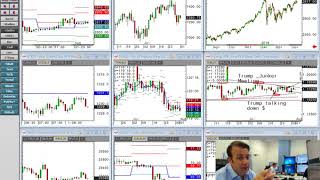
Apple beat expectations with 20% revenue growth from iPhone X price premiums, while Brexit fears could push 75,000 financial jobs out of London under a hard exit. The Bank of England is expected to raise rates from 0.5% to 0.75% tomorrow, and the US just announced 25% tariffs on another $200 billion of Chinese goods.
Chapters
Okay, good morning everybody. Welcome to the month of August. It feels like we've already had British summertime, uh, to be honest. Been absolutely spoiled. I can't believe August is, is just beginning, but it's, um, it's been a good summer. So here we are. I hope you've stayed cool, and the markets are just about to heat up as from today we have all of the, the data and the main central bank events that we've been waiting for. I'll cover those shortly, but I'm sure overnight most of you guys have seen the news about Apple and their phenomenal increase in revenue from the iPhone X. Really, that stock price is well on its way now to hitting the, the $20 handle. iPhone X results smashing forecasts after what has been a bit of a topsy-turvy few days for the FANGs and for the technology sector out of the US as a whole. You had Facebook disappoint only very slightly, normally on its data, but disappoint in terms of its forecast. You then had Amazon do incredibly well. And then here we've got the next big, big heavyweight with Apple. And actually, when you look in the results a bit more, more closely with Apple, they sold just 1% more phones than they did in the comparable. But the issue is, or the benefit is, is that the iPhone X is so much more, much more expensive that that increased revenues by 20%. And like me, you might be guilty of having one. So I've got my iPhone X even when I still had the other iPhone, just because it is, it is a phenomenal piece of kit. It is incredibly fast, the camera quality is incredibly good. So much deserved. And just to think about these sort of valuations when you look at the NASDAQ, because as you As you know, for some time I've been worried about the type of valuations we've been seeing in the NASDAQ. If I bring up the, the NASDAQ chart here, if we go to a weekly chart, you can see the trend that we've had just over the last couple of years. If I go to monthly charts, you know, this is nothing short of phenomenal in terms of a decade trend in the NASDAQ. But considering the size of Apple, just imagine the size of this company, it's now had 4 quarters in a row of double-digit revenue growth. Double-digit revenue growth every quarter for the last quarter for one of the world's largest companies is absolutely phenomenal. And, you know, as long as these heavyweights still do keep on making money, then this can expect to continue. So one second, let me just, uh, confirm you can see my charts, can't you guys? Testing, testing. That's what I'm seeing. Screens. Okay. Thank you. So here. So thank you. This is the Nasdaq share price here. Well, also the Nasdaq index price going from 2009 all the way to, to now. Many of you guys won't remember even markets when we're going back to 2009, but the Nasdaq all the way down to 1000, really. When I squeeze this a bit, closer. Can anyone see the greatest recession here for generations? You know, it looks almost like an insignificant blip, to be honest, doesn't it? There it is, 2007-2008. Now obviously these are technology stocks, but even when you now bring in the dot-com crisis of early 2000, that rally that we saw there up to around the 5,000 handle, which I remember very, very well, far being surpassed now as we crack on to really try and reach 8,000 in the NASDAQ. So phenomenal scenes in the technology sector, and these kind of results with Apple, you know, double-digit growth quarter on quarter for 4 quarters are phenomenal. Yeah, the other thing about their results was it wasn't just about what they have achieved, it was about the fact that actually inventories of the iPhone X are incredibly low, which also points to further future growth. Very different to Facebook, whereas although Facebook only very slightly missed current expectations, it was their forecast that hurt their share price. Whereas with Apple, they're actually forecasting greater revenue in the future as well, looking at inventory levels. So interesting scenes from the NASDAQ, and you've got to be careful for any bears out there who are predicting that these equities to be overvalued just yet. They there's, there's enough momentum behind them, um, it seems for now. In the UK, a bit closer to home with earnings, we've just had Lloyds results, um, pre-tax profit over 23% increase on the comparable. So really, uh, nice results from Lloyds as expected, but their share price is up a couple of percent as well on that. And we've got Barclays out tomorrow. Um, politics now. So we've covered some, some interesting company news, now on to politics. Um, More Brexit news as always. A new report this morning out of the impacts of jobs that a hard Brexit could have. It's looking at about 75,000 financial jobs could move from London if there's a no deal. If there is a fudge, which the FT is predicting this morning, it's going to be more like 5,000 jobs. You might have seen in the news yesterday and the day before Deutsche Bank are moving its clearing process from London to Frankfurt, but interestingly they're not moving any people. They're just moving the function of clearing rather than the staff that process the clearing. And this is interesting because I was with Deutsche Bank for the last 2 weeks. They were using our technology for to make their new traders' desk ready, and I was talking to them about Frankfurt versus London, and for many of the German traders actually this was the first time they had been in London, and they were saying, look, they The issue is, the reason why Deutsche Bank can't move people is that when you look at Frankfurt, you've got 250,000 to 300,000 people maximum. You know, you can walk across the city in a very short space of time. Those families, you know, the directors, the heads of trading desks, the operations staff, who have all set up in London and they have families in London, it's actually, it's actually very hard to move people. And this is something that's in London's benefit. I mean, it might just mean that the whole process takes a lot longer should there be a hard Brexit. But from the staff at Deutsche Bank that I was speaking to, their point of view was their people who work in London don't want to leave London. They're settled in London. Their kids are at school in London. So they would find a way to make it work, at least in the short term. It's very unrealistic to say to thousands of people that might have young families, "Right, that's it, we're moving in 2 months' time." You might lose a lot of key staff members who have now settled. So just interesting. Also in politics then, from the UK and the Brexit point of view, as you've probably seen, many of the UK MPs are in France today, including Jeremy Hunt, to try and warn them against a no deal by accident. Looking ever more likely that you might get either a no deal by accident or potentially a vote on the deal that does get agreed on. So still a lot of uncertainty there with Brexit, but really when you come to the pound, actually all eyes on the pound will be on what's going to happen tomorrow on cable. I'll talk about that shortly. Finally, on politics, we've got the US-China trade war. The latest on that was that talks were just about to begin to try and calm fears. So just hours after news that Mnuchin and Li were trying to appease the US and restart trade talks, Trump has just announced he's to propose 25% tariffs on another $200 billion worth of of Chinese goods. So that's going to be 25% instead of the planned 10%. Okay, so that's only just been announced right as, uh, trade talks are about to resume. So there's still a lot of mileage in the trade negotiation and discussion, which, you know, over time, the more this develops, is likely to weigh on stock. It is hard to— if you're, if you're going to be investing in US stocks, or especially Chinese stocks, but if you're going to be investing in US stocks over the medium term, these type of trade talks and trade negotiations are going to just perhaps make you think twice whilst we're at these all-time record valuations. What concerned me about US equity prices was when Donald Trump said, well, to be honest, if you look at the phenomenal rally that we've had in equities over the last 12 months, it's okay for us to have these trade talks because, to be honest, We're playing with the bank's money. And what he meant was that, you know, he's made his voters enough money over the last 12 months on their investments that even if these trade talks now do depreciate stock prices by 10%, 20%, then they've still had an excellent year and they should still vote for Trump because they get to have made money on their equity positions and make America great again all at once. Just finally on politics, talking about the UK. It's such a mess in the UK really, and it's unbelievable to me that Labour haven't been able to take advantage of the shambles that's going on within, or has gone on within, the Conservative Party. Just this morning Corbyn has had to apologise because of a report. I mean, it's almost unbelievable that on Holocaust Memorial Day he chaired and held a talk called Auschwitz to Gaza. Um, I mean, it's, it's, it's phenomenal. Uh, it's— I don't know, I don't know how to explain it. And I think even the Labour MPs are now finding it hard to explain it. I mean, it was interesting in the news, they were talking about today, you know, does this, uh, only seem to come out of the woodwork as a ploy to try and damage Labour popularity or Labour votes. Maybe. I think there's something in that, but I think perhaps Corbyn could absolutely do quite a lot more just to close this case and move on and get on with challenging the government in seat. Okay, moving on to central banks. Obviously, you've had the Bank of Japan so far, and their yields are back on the ascendancy over, well, what was the biggest one-day drop in nearly 2 years. We've got the Fed tonight, as you probably know, and they're expected to keep rates on hold. Um, quite a nice, uh, review here is on investing.com looking at the likelihood of where interest rates will be. So, you know, at 1.75 to 2, they're likely to remain the same for now, although we are likely to see, you know, positive talk about the US economy. We're likely to see positive talk about the low rate of unemployment Um, but we don't expect rates to move this evening. It's really going to be a bit of a non-event. In September, again, rates remaining— uh, sorry, in September, however, we do expect that another quarter point hike. So in September, 90% expected to inch rates in the US higher again. Nothing in November, but then the final one in December. So to be honest, in terms of credibility at the moment, in terms of what's being priced in, the Fed absolutely sticking to their guns And, you know, this is, this is what happens. This is why the yield curve is flattening, and this is why therefore there are talks about is this potentially a sign of another recession coming on the wires. Just to, just to explain to anyone here, uh, who's perhaps new to trading, um, what it means by the yield curve flattening. Well, it means that the shorter end of interest rates, if you like, so 1 year, 2 years, or below those, the prices of those bonds moving lower because of expectations of higher interest rates. So a normal yield curve which slopes upwards, it's just raising the short end. And also, if you're not really expecting any inflation on the, on the long end, if you think there could be a recession, then actually holding long-term bonds is more favorable. So, so that curve starts to flatten, which signifies low inflation and high interest rates in the near term, which for every recession for the last 100 years, a flat yield curve has been able to predict that recession. Every time I've seen a flat yield curve before, there's always been the mantra or the excuse that this time it's different. This time it's different because of the myriad of reasons that the journalists will give. But it never has been different. Now, the difficulty is, is of course, you know, we are— economic markets do go in cycles, economic systems do work in cycles. A flattening yield curve tells you that there could be a likelihood of a recession, but it doesn't tell you when that's going to be. So just before you get too excited, there's no timing on that front. But monitoring the yield curve, definitely important. And looking at that Fed forecast, you can see why the short end is moving higher and therefore why that curve is flattening. Okay, so that's tonight from the Fed, likely to be relatively, uh, non-event, muted market activity. What will be of much more importance and much more volatility tomorrow will be the Bank of England. And let's just have a quick look at the pound here if I bring this up. Cable coming under continued pressure really since the April highs when we're around the 144 handle, just hovering above the 130 handle still. We're in a, we're in a range, but you can see this is, this is definitely a downward trend that you can pick up from May going all the way back down to August. Yes, on part because of the tightening that we're seeing in the US and the likelihood that they'll keep to that that, uh, but also because of the quite poor UK data we've had periodically throughout this period. Um, however, having said that, you know, Mark Carney has communicated clearly that the Bank of England are likely to raise rates tomorrow, up from 0.5 to 0.75. I think, I think his credibility is at stake here. He's already been called the unreliable boyfriend, uh, a number of times based on promising the market one thing and then actually delivering something completely different. I think if he does the same again, um, his credibility is going to take a hit because the data, in my opinion, hasn't been bad enough to, to warrant that. Of course, there's continued uncertainty over Brexit. However, you could argue perhaps that the fact that all of the MPs are in France at the moment trying to win over the, the Chequers deal— you are getting some noises from key EU members that actually the Chequers deal is at least a good starting point. I don't know, I'd like your opinion on this, but I think it's going to be a rise in interest rates. I don't think there's going to be too much hawkish commentary. You can look at how they're going to justify it. You know, we've had modest economic growth, to be honest. But one of the big changes will be on the voting. Is it going to be a unanimous vote? And it's probably up in the air enough for it not to be unanimous. So look for the voter split, of course. And most importantly, look for the outlook for the economy going forward. So there might be mention about the trade war, about Brexit, obviously. But it'll be interesting to see about the future path of rates. If they get— give any hint on the future path of rates, I think that will have a big, bigger impact on the pound. Be careful trading this event tomorrow. The cable can be notoriously volatile before an event like this. You should certainly have your, your pivot points on for the pre-event volatility. The perfect way to trade Bank of England, like any type of central bank announcement like this, those to wait for the market to hear what has been said and look for a classic opportunity using technical analysis to join that fundamental move higher. So Bank of England tomorrow, we've got the Fed tonight, but also out today, actually this afternoon, we've got a plethora of data to keep you glued to your seats. Well, and this morning, obviously, uh, just in a few minutes' time, we've got actually the EU manufacturing PMI. So I'll try and wrap up within the next 1 minute. At 9:30, we've got UK PMI, so keep a lookout 9 o'clock, 9:30 for the European manufacturing data expected. You then have a break until 1:15 when we have ADP employment, that's expected at 185. Of course, that's important. We've got non-farm payrolls on Friday, construction spending coming out of the US at 3 o'clock, and then the ISM manufacturing data at 3 o'clock. So if you're going to take a break from your screens today, make sure it's between 9:30 and 1 PM. Um, we got the oil data then at 3:30, so full-on afternoon for you guys to really get your teeth stuck into some macroeconomic data. We've got 1 minute until the EU data, so I'm going to close this session now. Good luck today. I look forward to speaking with you in the room, and, uh, good luck on your trading. Thank you.
More from Anthony


Inside the Biggest Banking Stories You Need to Know This Week (Anthropic, Diageo, Private Credit)


Inside the Biggest M&A Deals You Need to Know This Week (UniCredit, GameStop, eBay, Eli Lilly)







AI Breakthrough or Hype? Anthropic’s Claude Mythos, Tim Cook Steps Down & LIV Golf Collapse