Morning Briefing - 30th August 2018
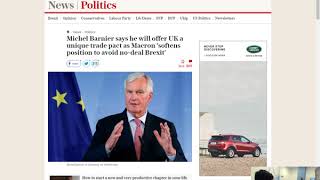
Sterling rallied sharply on a short squeeze while the presenter was away, with GBP/USD testing resistance at 1.3050-1.3057. Brexit talks between Dominic Raab and Michel Barnier offered mixed signals on a deal, though core issues like the Irish border remain unresolved. ING's scenario matrix prices sterling from 1.23 in a no-deal to 1.38-1.45 if a deal passes.
Chapters
OK, very good morning. It is Thursday the 30th of August, so I hope everyone is well. I must admit I'm a little upset this morning because out of all the days after day and weeks after weeks that I sit on a desk, I have one day away from the desk and lo and behold you have this ginormous rally in the pound, completely unexpected, which is obviously quite annoying for someone like me whose job it is to to kind of monitor these events. So if there's any type of correlation between my time on a desk and the frequency of this type of news unexpected coming out, then maybe for the sake of you guys creating opportunity, I should spend more time off the desk. But yeah, yesterday obviously big move in the pound, and you know, as I was kind of recapping things last night to kind of see and catch up with what was going on having been away. You know, obviously the big chart that stood out was cable and this really powerful move that we're seeing yesterday afternoon where kind of cable exploded to the upside. And, and we've managed to hold on to a bulk of that rally, which is obviously quite telling, uh, from a technical point of view. Um, quite interesting to see then how the market has responded. And for any of those newer traders, this is quite usual, I would say, in terms of when you get these quite extreme flashes of market volatility and momentum. Typically, anyone trading these short-term kind of fast money moves, they look for the first possible exit to maximize that kind of speculative trade if they were getting in and out of the news. And so as we've hit this top here, you can see that this is quite a defined area. And if you were in that long at the time, and obviously eyeing up at what point do you think that the market is going to reach its kind of near-term peak, at least for the moment, in response initially to that knee-jerk reaction. Well, that line there kind of matches up really nice to the points of support that we're seeing through the best part of Q4 of 2017. There's also that period of resistance that was also seen in the month of May of 2017, again in June the kind of anniversary, if you like, of the referendum vote last year, and then we eventually broke it. So, you know, you can see how when the market does respond like that, looking back here for this— I mean, this chart we're looking at here is a daily continuation, but we're encapsulating here the entire referendum kind of framework of price activity to work with, which is quite key. So getting above here, we've hit resistance there. That's going to be a line to watch going forward, whether or not we can remain bullish here to continue to push on the upside. So far, price has been contained overnight in the Asia-Pac session. That range kind of holding at those levels around the 130.50 mark, that for sure is going to be the kind of near-term daily range to have a look at, and kind of that 130.21 to 50 on the upside. We're gonna have a look then what exactly happened and how did it happen. Well, this was the kind of comment. I'm sure you're more than familiar with this chap now, Monsieur Barnier, and he came out yesterday speaking to— well, first of all, there was two separate events that just so happened to be happening at the same time yesterday and just so happened to be the two kind of most influential people in regard to this ongoing negotiation on the shape of Brexit. That, of course, being the Brexit Minister Dominic Raab and Mr. Barnier. Now, speaking to a committee of lawmakers in Parliament, the Brexit Minister confirmed the timetable for getting a deal was slipping beyond the target date of the EU leaders' summit starting October 18th. We've already known this. It's kind of been suggested before. And this was that Bloomberg headline we were looking at yesterday. He went on to insist that an agreement, though, is within sight, but did acknowledge that there might need to be leeway in the October deadline. Now, Barnier was speaking in Berlin, and after meeting the German foreign minister, he said— and this was the kind of key catalyst, if you like— He said he'd be ready to propose an unprecedented new partnership with the UK. So this kind of unique offering, if you like, of potentially giving the UK a type of deal that's never been seen before, the market kind of responding to that. You know, I've tried to kind of read what's happened here in a bit more detail, and it's hard to really see Um, for me, without putting too much obviously political bias, personal confirmation of my own beliefs, but I can't help but feel a lot of this is a little bit of a short squeeze with the overwhelming short positioning of the market. And obviously this headline catapulting the price higher and people getting squeezed out of those positions which kind of exacerbated the move, I think, yesterday. Because when you start reading through some of the comments here, although undoubtedly that sounds quite positive on the, on the surface, you scratch a little deeper and the EU's offer is still conditional on the UK accepting the bloc's fundamental red lines, in particular on the customs union, which we know is critical to the success or not of the deal. He still— Barnier holds that Britain cannot choose the parts of the EU's single market it likes while discarding other elements, such as the free movement of people. Barnier also underlined maintaining an invisible Irish border remains the most difficult area of negotiation. Separately, the Brexit minister of Britain said the most stubborn obstacle in progressing talks is how to avoid a hard border with the UK and Ireland after the divorce. So that still really is the highly contentious issue which is holding up and could well be the deal breaker on, you know, how this is dealt with and how close we can get to striking a deal. One thing that we've had this morning, and this is kind of a little bit of a taking a page out of the central banking textbook, is you've had a little bit of political verbal management, I would call it. And what I mean by this is the market's obviously responded in the way it has, and you could read this as being then, you know, the kind of prospects of a no deal have been slightly reversed, and this is quite a positive sign in progression. So what happens? Well, they try to realign people's expectation. So this morning You've had EU's chief negotiator Barnier has already come out and said at 6:20 AM this morning that he cannot speak about the success regarding Brexit, adding a no-deal Brexit is part of the EU's planning. Separately, the German government said last night, issuing a statement on Twitter, that its first priority was to protect the integrity of the EU rather than offer concessions to Britain. So not a done deal is the— is the— what I'm saying here. And I don't know, again, without being too biased here, my interpretation is, well, why wouldn't Europe give Britain a unique deal? Britain and its contribution in various different forms to that of the success of Europe is so important given the the kind of size and the kind of the precedent, certainly from a financial services point of view, that Britain has as its kind of gateway traditionally into mainland Europe, that of course they're going to give us a unique deal. I don't think that's ever been questioned. So another thing to have a look at though, let's look a little bit more factual. And this is one thing that I've seen the chaps at ING, the been looking at this morning, and this is looking at leveraged funds that are short sterling. And one of their FX strategists was talking about the fact that they could bail on more positive Brexit headlines. So what you can see here are asset managers and institutional investors have been— I mean, this is a chart here. The zero horizontal line in the center is the net long cable positioning, the percentage of open interest. And you can see here really post the referendum, although it had briefly a little pickup a few months ago. Net-net, then, this CFTC data of market positioning in the futures market has remained negative, i.e., short. The one thing that has changed is through the best part second half of 2017 and the beginning of the year, leveraged funds were actually in long positions in in terms of open interest. However, that has materially changed since the prospect of a no deal has picked up. That means then that the market is overtly short, short sterling. And so you get a positive headline which is against the bulk of the market's positioning, and obviously a lot of people feel the pain very quickly. And this is when you get that squeeze on those positions and you ultimately get quite an aggressive move to the upside. So I don't know, to be monitored, of course, political developments. To give you an idea, I believe that negotiations are recommencing between the two Brexit negotiators, Barnier and his UK counterpart, on Friday. And so we've definitely, you know, headlines sensitivity of pound sensitivity to headline news is obviously very high. But I think a lot of what happened yesterday could be more of a function for how the underlying mechanics of how the market is positioned, not just it being a big game changer in the Brexit side of things. Just my interpretation of what I'm seeing. Let's just have a quick look though at the pound on the charts. Um, obviously that 1.3050, 1.3057 on the daily continuation is a really key level here for those reasons. I mentioned before. Any break above there, obviously technically, uh, kind of, I guess you're going to be scaling up to the, the previous— I mean, let's have a look. We had that trend kind of materializing over the last couple of months before the Trade Secretary made that 60/40 comment. So really the point I'm looking at is kind of this area here, this kind of channel, if you like. So I'd be watching this, and any breach on the upside, then looking at the various highs that we've had as we reverse any of that. This being obviously under positive developments. On the negative, then you've already got these predefined areas to keep an eye on, um, that being the, the previous point of resistance that we had just around a week ago or so. So if we did get a pullback to this point, could act as some decent near-term support for the moment. A breach of that you'd then be eyeing up the pullback down to these previous points where we were trading only a few weeks ago. One thing then that ING have mentioned, and you know, they always put together these particularly useful infographics. I have spoken to the chap that published this because I did have a question for him about why does it have August on here. So basically this is dated, but he said that the numbers are still relevant in his opinion. And what's quite neat about this type of matrix is you can look at the basically different scenarios on the status of Brexit withdrawal deal being a deal done in principle all the way down to no deal, and consequently then the kind of response that you're likely to see from the central bank being the Bank of England i.e., a no deal would ultimately, you would think, lead to a progressively more dovish Bank of England as they look to support the economy through what would be economically the most destabilizing. And so then the most severe call being down at 1.23, the most positive, a deal being done in principle. And if you then start seeing, um, the political, let's say, uncertainties alleviate and then the economy starts to regain some momentum and confidence, then obviously the market will immediately start repricing this back in. Then you can start looking up at this higher bound of the 134s up to the 138s. Um, if— oh, let's just have a look at cable. Where would that put us? This is obviously looking at cable on a much bigger time frame, on much bigger kind of question marks on the overall outcome of Brexit. So 123, what would that look like? Well, let's just have a quick look. 123 is going to take us all the way back down to these levels, kind of down to where we were. We just, we just remove some of these lines to make it a bit more clearer. So 123 is going to put us back down to the kind of 2017, beginning of the second half of 2016 levels. That would be kind of the no deal, the big level. Obviously the 120 on the downside, which is that double bottom. in the aftermath of the referendum vote. On the upside, 138, well then we'll see kind of key level here. You'd have that 137 to surmount first. Uh, that's obviously the, uh, this area here. I'll just remove some of these, and this area here would be key. And then 138 being their call would push us right back up to that kind of area of the highest price activity that we had at right at the beginning of the year, uh, when we hit around that double top that was, uh, towards 145. I'll share that in the chat though if you want to have a look. I did send out their full research report on this note. It's definitely worth a read, particularly, uh, on the point of this kind of market positioning of the pound. I've seen the FT looking at this as well. I'd just be interested to see, you know, other people's interpretation of the moves from yesterday. Okay, a few other things to have a look at. Um, we at the beginning of the week, the bank holiday in the UK, we were discussing this new US-Mexican trade deal and how the market was responding positively. Then the equity market in the US hitting new all-time highs in the case of the S&P and so on and so forth. So now the question marks remain on Canada. What's going to be the case here? Well, uh, just Justin Trudeau, the Canadian PM, and Donald Trump, US President, said a deal on revamping NAFTA by Friday was within reach as talks intensifies in Washington to salvage this ongoing deal. Um, the Canadian PM cited differences though over trade in dairy products, but said an agreement could still be struck by the end of the week. So if you are looking in the FX markets at the, the loonie, the Canadian currency, I for sure would be just keeping an ear out on the mic for developments on this as we get into the last kind of two sessions now to see out the week. Um, reading the comments from the Canadian PM yesterday, uh, he said no NAFTA deal is better than a bad NAFTA deal. It's like, oh my god, where, you know, what's happening in this world where they're just re— kind of taking the language from Prime Minister Theresa May and just coining it for their own phrases. So a lack of creativity there on behalf of the Canadian PM, but the point remains the same. He's been pretty resolute that they're not going to just sign up to any old deal. It needs to be one in the best interests of of Canada. On that note, and because I do get quite commonly questions from a lot of the interns, I just wanted to quickly have a look at a few graphics. So again, for the experienced guys, I apologize for going over this, I'll try and keep it brief, but to explain a few things, you know, why is it that the American economy is seen as such a strong economy? Well, okay, granted it is the largest, but what makes it— what makes America great is the fact that it has fairly diverse kind of exports in that sense. So it's not one-dimensional is what I mean. Here you can see there is quite a large tilt towards machines and transportation, but fairly sizable areas as well related to commodities and so on and so forth. So this is America, which is in fact the second largest exporting nation in the world. Of course, the biggest one is this— China. China by the numbers, to give you an idea, in 2016 exported $2.27 trillion. And look at the composition between the US by structural breakdown of its kind of categorization of export comparative to China. You can see here China is 48% geared towards that of machines manufacturing and exportation. And so this is, you know, makes sense then of why China and the kind of the push towards more internal consumption to rebalance then a lesser dependence on this to regain a little bit more control, or at least taking it out of the hands then of the importer. And so you're kind of de-risking in a sense in the long term. Now, one, I guess I've got a country here which you'll recognize. What country do you think this is? So 70% of their exports is based in mineral products. And if I was to drill this down to a secondary level of that mineral products, 59% of their exports here is dependent from crude petroleum. This, of course, as you can see on the left-hand side, is Saudi Arabia. So, you know, we have conversations about why is there now a necessity for such drastic economic and social change. Underpinning this kind of Vision 2030. Well, you know, this is a country where it's highly leveraged and one-dimensional in its exports. When comparison, again, remember, this is what the US looked like— much more healthy composition in that regard. The other two, then, looking back to NAFTA where this conversation began, is— well, let's have a look. This is Mexico. So with Mexico, obviously, cheap labor, so the manufacturing of a number of goods is the kind of advantageous effect of what the US have had. So cars, particularly important. The biggest exports of Mexico are cars, vehicle parts, and delivery trucks. So you can see here, basically, 1, 2, 3. Hence the reason why tariffs on these particular measures are so potent when the US are threatening these trade wars. For Canada, this is what the Canadian export mix looks like. Again, a little bit more diverse, which obviously means they can be a little bit more— they don't hold such ransom as, say, Mexico is to specific one tariffs because it's a little bit more spread. But again, you can see if you break this down, cars is particularly influential. We know obviously crude petroleum makes up a large part as well. These tight correlations that we see typically with the Canadian currency to explain that as well from a correlation effect. So yeah, a couple of, couple of charts there. This website is particularly useful. So for any, for anyone doing that kind of economic macro research If I go back to the home page, this is what it's called, the Observatory of Economic Complexity. It has some quite nice visualizations to see lots of different things. Well, here you go. What does Bulgaria export? Not sure the last time I would have needed to have looked at that for the assets we're trading, but you get the point. All right, other news out there, a little bit of weakness in the Aussie overnight, but quite frankly, I think that this is short-lived and I don't think I fundamentally would take this into account for reshaping the day going forward as to your outlook for the currency pair. But Australia's currency basically fell. This is the beginning of the overnight Asia-Pac session after capital expenditure and building approvals missed expectations. New Zealand dollar took a knock on business sentiment as well. So the Antipodean currencies saw a little bit of weakness in the overnight session, but it hasn't really been sustained. Otherwise, elsewhere, um, had a little bit of a sell-off in the DAX this morning. You've had the German state CPIs coming out, uh, and actually, as a matter of fact, they've been slightly on the weaker side. So some of the first ones, we just had Brandenburg come out, um, it was -0.1% on the month, a month previous 0.4%, year on year 2%, previous 2.2%. Saxony all pretty similar. So on a month-to-month basis, uh, pretty flat comparative to higher inflation readings that were previously seen. You just had some German data as well, the unemployment change in rate, but it looks all in line. So the move came earlier. Why, why did the DAX drop? I would say this is more a technical breach. If you actually look at the, the type of price pattern development over a 1-minute profile, then you can see that when we broke really around that 12,500 level, it really kind of snapped lower. And then once again, these kind of fast money spec traders just looking to get out at the first opportunity, and obviously the, the pivot levels and the S2 providing a prudent point of exit to maximize that trade. So yeah, a little bit of weakness in the DAX, but it's nothing really new fundamentally, I'd say. Um, and just looking at the euro, not really too much definitive direction on the back of these, these CPI comments. A quick look at the, the S&P though, uh, once again we kind of continue this ever higher march to record territory. I mean, looking at the daily, here we are, uh, and obviously as we were saying at the beginning of week, I really don't see any reason why not to get to 3,000 in the coming weeks. Obviously, the barriers or the risks to that call are going to be things like negative developments on things like the trade war situation ultimately between the US and China, which is very pivotal. But it doesn't look like too much is going to be happening there, and the markets seem relatively comfortable with the current status of that, that conversation. And so there's nothing really too much to disrupt it, and I it wouldn't be surprising to see us just grind up higher now. Um, the other US indices obviously to watch if that's going to materialize and become true. On a short time frame, this is just looking at the S&P over the course of the last kind of 2 days or so. Uh, we sit around the pivot level at the moment. I guess from a near-term perspective, I think getting long around here is a little bit punchy. Probably I'd prefer for the market come down a little lower, maybe just playing some of the top end of the range that was seen over the first part of the week, Monday, Tuesday, and Wednesday session. So maybe looking at the 0.05 as an entry, using the S1 level as a bit of support down there to play the move back up to the pivot and then the all-time high. Uh, that could be one way of looking at it, or being a little bit more conservative, maybe just moving the entire trade a little lower having then the, the low print from yesterday afternoon just before the US Open, and then using the lower bound of the range for a push back up then to the top of that range, and then ultimately maybe pivot, and if a third target, the all-time high. But you're looking at quite large price movement there. It would be, I would say, surprising to see that type of movement. So even if you were playing, uh, the more kind of conservative angle it might be that you never get the fill. So depending on your risk appetite of how you'd want to approach that, but I'd still feel the bias is for the long at the moment in the US equity market. Just a matter of picking a spot where to get the right entry point to manage the, the associated risk with it. Okay, quick look at the calendar for today. It is a little bit more busy. We've got the various CPIs coming out, so still to come, some more coming out. Of the German state CPIs, and then that will culminate in the, the actual pan-German national CPI print later at 1 o'clock. But as you know, then we already kind of know the composition of its parts, so never really market moving. UK mortgage approvals, mortgage lending to be monitored. I wouldn't really say this is going to shake up the pound too much. It never really does. I'd classify this more as lower-tiered ranking data from a market-moving potential. Same case here for the European data. So just for the clarity of any interns, this sounds interesting when you start seeing a whole batch of numbers at 10 o'clock pertaining to business climate, economic sentiment, industrial services sentiment. You know, on, on the surface you would think, well, that sounds important, but historically very seldom also does that move the market. Into the afternoon, obviously you've got the PCE numbers from the US, and this could be something of some interest. Whenever there's any kind of inflation-linked data, it always is something to monitor as a key component for Federal Reserve thinking on their policy side, and obviously comes on the coattails of a, of a positive GDP revision yesterday. And in Canada, not only to look out for any political NAFTA-type headlines that I would imagine the loonie would remain particularly sensitive to. You've also got Canadian GDP this afternoon. ECB's Weidmann, obviously the, the more leaning hawk of the ECB council, is going to be speaking as well, but that'll be much later on into the evening. So overall, I would say data-wise, it's busy. There's nothing here that's going to be monumental though, and obviously things to just definitely keep an eye out for are any new comments on the Brexit side. I would say what's happened is the pound's moved higher, positive commentary and noises made yesterday, particularly from Barnier, but he's already been out downplaying that again this morning. So, you know, what's the next twist? Well, the next kind of scheduled formal meetings between the two key people is not going to happen until tomorrow. So again, any tweets, press leaks, things, just be wary of that. Otherwise, any updates on the NAFTA situation pertaining to Canada, and obviously anything on the, the relations between the US and China, kind of still your pressing macro kind of risks to the day's market sentiment, which at the moment, although equities are slightly off this morning I don't know, I'd still be looking for maybe lower bound levels, but still that the market's gonna hold up, albeit maybe just a partial bit of profit taking on the record run that we've had in some of the US indices. All right, I'm gonna leave it at that, let you guys crack on. Have a good day, I'll see you in the chat room. Thank you very much.
More from Anthony


Inside the Biggest Banking Stories You Need to Know This Week (Anthropic, Diageo, Private Credit)


Inside the Biggest M&A Deals You Need to Know This Week (UniCredit, GameStop, eBay, Eli Lilly)







AI Breakthrough or Hype? Anthropic’s Claude Mythos, Tim Cook Steps Down & LIV Golf Collapse