Morning Briefing - 3rd July 2018
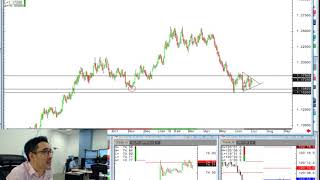
In this morning briefing, the presenter delivers a comprehensive market snapshot for 3 July 2018, highlighting modest dollar weakness that lifts major currency pairs (EUR/USD, GBP/USD) while treasuries and equities remain flat. He explains the impact of the early US market close ahead of the Fourth of July holiday on trading volumes, noting a 20 % dip in Monday equity turnover and anticipating further thinness on Wednesday. The briefing then shifts to geopolitical drivers: Trump’s “America First” stance, recent actions against China Mobile, and the looming $34 bn tariff on Chinese imports; a deep dive into the euro’s rally following the resolution of the Merkel‑Seehofer migration dispute and its political implications for Germany and the AfD; and a detailed analysis of the Chinese yuan’s sharp intraday fall past the 6.7 CNY/USD level, suspected PBOC intervention, and the concurrent slide in the Shanghai Composite toward 2016 lows. Additional coverage includes a brief on the yen’s double‑top test and the BOJ’s likely inflation‑forecast cut, the Australian dollar’s resilience despite China‑linked risks and the RBA’s steady‑rate decision, and a stark look at soybean futures hitting nine‑year lows amid China’s retaliatory trade measures. The presenter wraps up with a preview of the day’s economic calendar—UK construction PMI, US factory orders, ECB and BoE speeches—and offers practical trading‑hour advice around holiday‑driven volume patterns. Throughout, he maintains an analytical yet conversational tone, flagging potential risk‑off triggers while acknowledging the limited immediate market reaction.
Chapters
Okay, so very good morning, Tuesday the 3rd of July. Hope everyone is well. Looking at the, the charts this morning, a little bit of a mixed picture in regards to a definitive read on, on risk sentiment. Treasuries are basically flat, gold minor bid tone coming up to pivot, so up and around its higher levels that we've seen since the Asian session. Touch of dollar weakness, albeit moderate, about 0.1%. As a consequence, both major pairs up on the front foot, up about 35 pips or so each. Equity markets pretty flat. If anything, US— European futures on a front foot. This is irrespective of what we're going to look at, which is continuation of pressure in the Chinese markets overnight. And what has led to suspected intervention on behalf of the, the central bank to intervene on the weakness of their currency, which we're going to have a look at. But first things first, do be aware that there's an early close in the US today that comes ahead of the full closure of markets on Wednesday for the Fourth of July Independence Day. It does mean that actually for American equity markets yesterday, volumes were about 20% lower than they normally would be on a Monday. So as we were kind of talking about the briefing yesterday, what quite often happens is that North American traders really take off an extended weekend all the way running through to coming not back into the office until Thursday, which you know on the calendar is when things really start to, to pick up pace. And obviously you've got that big trade story on Friday with the US imports on that $34 billion of Chinese goods comes into effect. So I would be expecting that volume kind of profile, if you like, to continue in that fashion. It'll probably drop off even more so potentially today. Before then, Wednesday will typically be quite quiet. As per our political kind of stance, Trump not letting up either, which I think I did discuss this in a strategy. I think this is going to be his kind of tact going into the, uh, the Fourth of July period where it's kind of a celebration of independence. What better time to toe the kind of line of America First policy? And overnight, Trump reportedly has moved against China Mobile due to, again, security concerns, which has been the main kind of legislative spin that he's put on for a lot of these, um, various rules that he's imparted on for Chinese firms and investments on of Chinese firms into North American firms. But overall, first things first, let's just have a look at the, the euro currency because there was a bit of a pop higher, uh, yesterday evening. It came shortly after half past 8 PM. Not sure if you would have caught the news or not, but this is euro-dollar on a 30-minute candlestick, and we did spike higher. And this came after some commentary regarding Angela Merkel, which we've talked about at length yesterday, about the risks to potential German government breakup, which would be of a great concern given the, the kind of economic importance of Germany, the, the kind of the position of Merkel as kind of a senior figure within Europe as well. But what's happened overnight is that Merkel and Horst Seehofer, the German interior minister, have reached an agreement to resolve their bitter row over the migration policy. This then meaning that Seehofer, who on Sunday night offered to resign as CSU leader and interior minister, that's kind of now, as a short-term risk at least, being put to bed. and so we had some euro appreciation. The agreement calls for the creation of a transit centre on the German-Austrian border for asylum seekers who have already been registered in other EU countries. They could then be sent directly from there to their countries who are responsible for them. So this represents a slight compromise. Mr. Seehofer had previously insisted that such refugees should immediately be turned away from the German border. something which initially got rejected by Merkel and saw this whole issue flare up. But now the compromise has been made, as I think, for me, as largely to be expected. There's just too much at risk for Merkel to see a collapse of her coalition with the CSU. And I guess, if anything, there's a relief rally of sorts on the back of that. Is that lifting the euro this morning? Well, it's probably helping, but don't forget the dollar in itself is seeing a touch of weakness. Both EURUSD and cable are rising at the moment, but it certainly helps that upside kind of movement from a fundamental perspective. One thing though, the issue of asylum has taken on renewed urgency, and this comes in the run-up to the elections in Bavaria in October. In which the AfD could deny the CSU its absolute majority. So this issue that seemingly has been resolved, at least in the short term, is likely to return in a few months' time, given Bavaria, specifically the stronghold of the CSU. Polls suggest that the spat with the sister party has hurt the CSU more than the CDU, so Merkel's party. Polling group Forsa released a survey yesterday that found the CSU winning just 34% of the vote in its home state, which is actually down 5 points from last year's general election result and 14 points from the latest regional ballot. So it certainly has had some implications on their, their support, which in a broader context only plays into the hands of the more right-leaning AfD. And so plenty more political headache to come. I'm sure, for Merkel, um, later in a few months' time. But for the moment, the market's just taking heed from the, the kind of relief that it hasn't worsened in the here and now. Looking at the euro on a slightly longer time frame, this is 60-minute candlestick. So just looking at that trend line from the highs from the 26th of June and in the 29th of June, so latter part of that month and then where we're coming up to that previous point of resistance from the— on that same day on the 29th. So not too far from there, about 10 pip range. Then that trend line just above could be quite an interesting zone of potential resistance down the upside for the pair. I was also kind of looking on a longer time frame, on a daily, where we've had this consolidation here more recently over the course of really the last 2 months. We're coming up to the upper bound of some of that price action at the moment. Uh, so you're on the front foot, uh, and probably rightly so, just given some of the news that's occurred. Uh, cable though, as I said, a bit of dollar weakness and cable just rising up. Probably the next area of potential resistance just coming up to around this area of 2629 in the futures. You've also got those previous highs there that were seen on the morning of the 2nd, so yesterday morning. Up at 3219. We do have some UK economic data coming up, construction PMI, to be aware of. So it's only about less than an hour's time now. Um, quickly then, one thing that definitely is simmering in the background but hasn't fed through to influence, I'd say, overall market psyche, but I would put a word of warning that it's getting very close to that point where I think markets could quickly start to, to panic, and that is the performance of the, the Chinese markets. So China's, uh, renminbi suffered one of its worst intraday falls on record in early trade overnight before the central bank appeared to intervene to stabilize the market. Well, equities have also been losing ground. So this is a graphic of a particular key area, 6.7. that's the yuan per the dollar of what we're looking at here. So both the onshore and offshore yuan spot have gone above that level. Why is this happening? Well, market participants said expectations of falling trade surplus helping to drive the, the currency lower. And analysts, of course, have been looking about the potential risk that the impacts of a trade war adding downward pressure from a slowing domestic economy would have on China itself. Now, that's 6.7. To put that in a bit of perspective, this is a slightly longer time frame because this is when we've had suspected intervention on behalf of the Chinese authorities before. And this has come at this specific level which we've traded at. And the reports from what you've probably read from this morning's press is that those who are monitoring the kind of trade flows in the currency have said that Chinese banks were seen selling dollars after the yuan weakened past that key level, stoking thoughts that the, the central bank had been intervening in that respect. Now looking at this chart, this is even more longer time frame. The purple line is looking at the Shanghai Composite, which we've looked at before. So you can see on the, the left axis is the value of the composite index point value, then you've got the, the Chinese yuan on the side, so it going lower reflecting then the weaker currency. And you can see the dramatic fall that we've had as these trade wars have really started to become a distinct reality, because as we just said, it does come in the backdrop of a slumming domestic economy, and we've got this definitive deadline of the US actions coming into force on Friday. And so at the moment, the Shanghai comp is coming down to the lower bound of where we were in Q1 of 2016. So it is worth noting that we've probably got a little bit further to run before we start really testing some key levels to the downside. The yuan for sure has been weaker. You can see that from where we were back at the end of 2016, beginning of 2017. But it's been the pace of the fall which has been the most eye-opening. If you actually look at that yuan performance over recent weeks comparative to what we've seen over recent years, it's certainly much more violent in the pace in which it's been weakening. So although this hasn't had a broader implication on the market as a kind of a risk-off play as yet, I think if this starts to kind of capitulate and get worse and the whole market, the decides to play into this, this China weakness story, then certainly it could open up a whole new realm of negativity. But as we've discussed on Monday, I think if there's a risk of that, I would expect that to materialize, if it does, at the end of the week. That's when this trade war rhetoric is going to hit real kind of an absolute point of confrontation, I would imagine. Some other things to be aware of from a news perspective. You've had a little bit of movement in the Japanese yen overnight. It's kind of tested a double top in the Asia PAC session, which is around its respective R1 in dollar-yen futures. This was the, the kind of comments from overnight. So you have had a Reuters source report which has basically said that the BOJ likely to cut its inflation forecast for the current and next fiscal years. So comes also amid some of the movements from, from overnight, but generally speaking, something to just be aware of from a broader context. So Bank of Japan likely to cut its inflation forecast for the fiscal year in the year of March 2020 at a meeting due later this month. Price pressures, as we know, in Japan have remained stubbornly low for a particularly long period of time. The other thing we had overnight, just so you're aware, for Aussie movement, a little bit of Aussie strength actually seen overnight. This come irrespective of maybe some feed-through concerns that may emanate from the slowdown materializing in China. If the Chinese situation does materially worsen in the next coming days, you'll probably see that play out in the Aussie assets, particularly their currency as a proxy. Given the importance of that trade relationship. But for the moment, overnight you had the RBA, central bank in Australia, they held interest rates unchanged. That was as expected, uh, actually, but something to just be aware of going forward. This relationship with China is particularly key for them, of course. One other chart actually I just wanted to show you, and this is just on the back, on the coattails of the, the US rhetoric on China. And this is soybeans. Now, these obviously were in focus only a few months ago when China kind of retaliated with a surgical move to specifically pinpoint soybeans, which is one of the main soft agricultural goods exported out of the US, and the bigger buyer in town being China. So who better to hit than the real heart of the voting electorate that support the Trump administration. And so Trump does have a little bit of management, I'd say, on these particular issues, because not only could China leverage this on the demand side, but the problem you are having with soybean futures is they've just tumbled to their lowest price in 9 years yesterday. So this obviously not a good situation for those agricultural producers in the Mid-America. Now this does come— obviously you've got the, the retaliation effects potentially from China on purchasing. The world's largest of this particular product, consuming nearly a third of the entire US production of supply. But what's happened is that it just so happens soybean plantations have been in excellent shape and farmers looking potentially to have a record harvest. So you've got supply coming onto market amid your biggest buyer in town also holding back on purchasing. So it's kind of a dual effect. And soybean prices are at 9-year lows. So just interested to see how, how Donald manages this, whether he takes his foot off the gas a little bit. I am expecting um, from this week, from a news perspective, that Trump is going to ratchet up the commentary over the Fourth of July, and then you'll see him compromise towards the end of the week. So between now and then, things could materially get worse considerably on the trade side, which obviously could play out negatively. So That's kind of the main, the main headlines for this morning. So again, from a major charting point of view, equities are pretty quiet overall. Likewise in Treasury markets. Remember, volumes are dissipating as we get the run into the US holiday tomorrow on Wednesday. Volumes were already down yesterday, you know, further layer in the World Cup as we get into the knockout stages, which does also have a bit of a feed-through effect, obviously depending on who's playing, of course, as well on trading volumes. But euro on the front foot, decent 50-pip move on the upside. Cables followed suit with some of the dollar weakness, but the euro has the added benefit of a short-term relief on the German political situation. Calendar-wise, a few things to look out for coming up then was that construction PMI comes on the coattails of the manufacturing number from yesterday. From a construction PMI perspective, we are looking for a number relatively consistent from what we've seen from the previous two prints here. But looking at the range, we've got a range of 51.7 to 53. 51.7 would be kind of at this rate back to a February level. 53 would put us back up towards a level of the end of 2017, neither of which— either side of that, I would say, would have too much of a of an outright move or influence on the price of the pound. Yeah, I mean, if you're looking on a 5-year, you've really got to be punching up to levels to the 55 mark or sub what would be down here, well below 50. Uh, I think unlikely to see that type of huge miss on the upper and lower bound of expectations. So I think it just needs to be a little bit controlled with how you're approaching that piece of economic data. Unless it's very surprising, I don't think it's going to act as much of a catalyst. The service number will be more interesting tomorrow, particularly if overall trading volumes are quite light, then it might exacerbate some of the reaction to the service PMI. Otherwise, going into the US afternoon, you've got factory orders, uh, it's the kind of main highlight. There's no major 1:30s coming out of the States. And just remember, often what happens here, those North American traders who are in the market today, given the fact that they'll want to get away early to get in their cars and drive to see their families for Fourth of July, uh, or the opposite, go and hit Vegas for a couple of days, then they're going to look to get out the office as early as possible. So what often happens, you get a bit of a front-loaded session from a movement and volume perspective. So just keep an eye around that kind of 11:30, 12 phase as we go into the crossover. But then as we get into the latter part of European trading hours, things could start to dry up pretty quickly. So just think of that as well when you're, you're making up your strategies for the day ahead. API crude oil inventories, they still have it here for release tonight. If that is the case, be aware though, the DOE aren't due till Thursday, owing to that holiday. Speakers-wise, ECB's Prayat speaking at 5 PM. I've had a look at the Bank of England's website. I can't actually see a schedule for Saunders today, but obviously just keep an ear out. You can expect though Saunders to be sounding hawkish as per his usual stance. Market closures are here, they're on your calendar, it's just so you are aware. So for the NYSE today, London time, so So for US cash equity markets, there's an early close that's going to be at 6 PM. So as I said, things could start to, to die down as we get into kind of post-3 PM after the factory orders is probably passed, certainly after European cash close. All right, I'll leave it at that, let you guys get on with things. I'll be in the chat room throughout the day, so any questions, feel free to fire them my way. But have a good one and good luck, England.
More from Anthony


Inside the Biggest Banking Stories You Need to Know This Week (Anthropic, Diageo, Private Credit)


Inside the Biggest M&A Deals You Need to Know This Week (UniCredit, GameStop, eBay, Eli Lilly)







AI Breakthrough or Hype? Anthropic’s Claude Mythos, Tim Cook Steps Down & LIV Golf Collapse