Morning Briefing - 3rd September 2018
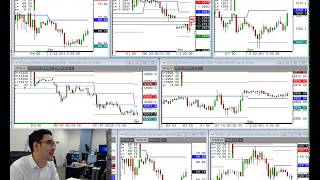
Markets face a slow Monday with US and Canadian Labor Day holidays. Turkey's 18% inflation and currency crisis, Argentina's IMF talks, and Brazil's election uncertainty are emerging-market risks to watch. Sterling slides as Boris Johnson attacks Theresa May ahead of the Tory conference, while the week brings RBA and Bank of Canada rate decisions, UK services PMI, and Friday's US jobs report.
Chapters
Okay, very good morning, Monday 3rd of September. So I hope everyone had a great weekend and, uh, going straight into what is quite a lot of news flow. And also, uh, barring today, obviously the Americans and Canadians out of the market respectively for Labor Day. So albeit that will probably have a feed-through effect in terms of the volumes for this afternoon, but overall for this week from a scheduled calendar perspective. Certainly there's quite a few things to be, to be aware of and tracking. So having a look at the markets this morning, a little bit reflective of that, um, obviously lack of participation, it does often translate into a fairly benign and calm UK and European session. And ultimately Mondays tend to be that way unless there's been some breaking news. There has been in the case of the pound, and we're going to have a look at that in a second because as you'll notice here in the center top chart there's been a gap lower here in sterling futures, the reopening of trade, and we remain around sub that S1 at the moment. So we've clawed back some of the losses but still down about 40 pips on the, on the session. So underperformance for the pound to get things going, but wanted to kick things off by just looking at the emerging markets because I feel this could be something that might well move to the back of the— or move back up the kind of priorities for the market from trying to ascertain at least short-term market sentiment. And there's a couple of things that are coming out which kind of support that potential view. Now, first off, Turkey set the tone again for the emerging markets this week. We were looking out for some inflation data to to come out of Turkey that has already come out. So let's just have a look. It came in just shy of 18%. So Turkish CPI, and obviously this has been something we've been watching quite closely over the course of the last few weeks given the dramatic fall in their currency and its consequent effect then on inflationary conditions. And so as you can see here, we've had a huge ramp up of inflation from what had been a kind of a steady, if you like, first, well, 2017 of around, let's say, 11% on average. And here we are up at 18%. Now, to put things in a little bit of context though, I guess for any of the, the interns in particular, is 18%, uh, CPI in Turkey high? Well, if you stick this chart on a max, you'll see that inflation's been a hell of a lot higher in Turkey over the decades You can see here we were up, we got up to just shy of 140% inflation. This is going back to the, the 1980s, and then we had a repeat kind of flash crisis that occurred during the early to mid-'90s. And so it had been relatively controlled, really, ever through the last several years. Only now though, we've kind of breached the upper bound of that that kind of inflation rate. So some worrying signs certainly for Turkey, and obviously lots of other political things to be aware of, particularly between the US and obviously this issue with the pasta and the subsequent actions being taken on trade tariffs. But it's not just about Turkey. There are a few other things, as you can see here. Turkey, Brazil, Philippines are all due to report inflation data. Investors concerned about potential emerging market outflows. It's obviously according to Fidelity, so one of the bigger names in the business. And there's a few countries then that we can just quickly— I can give you a summary. Firstly, for Turkey, obviously we finished the month of August now, so to make you aware, the lira suffered its biggest drop in August just for that one month since February of 2001. So you've got to go back, you know, roughly 17 years to last time the Turkish lira saw such a negative 1-month performance. Outside of that though, obviously Argentina is another big EM in focus and it's going to remain so this week. A couple things to be aware of: the Treasury Minister is due to unveil a new fiscal plan today and then travel to Washington to meet with the IMF to talk about potential credit lines and a cash injection of up to $50 billion. A kind of short-term gap to bail out the economy. Uh, Argentina's credit rating is also under threat by Standard Poor's, the biggest of the rating agencies, just given the, the plunge that's been seen in their currency and the bailout from the IMF. So potential credit rating at S&P could be cut to junk. Uh, so that's also, uh, another risk. Outside of Argentina though, there's a few other countries Brazil is one. Now, Brazil has an outsized fiscal deficit, has failed to deliver reform agendas, and is facing elections, which there's been some heightened uncertainty. Those elections are taking place next month. Now, what's happened recently, or over the weekend, is that the country's top electoral court has banned Imprisoned da Silva, who was leading in the polls, from running in October's presidential elections. So if you just imagine, you know, kind of market sensitivity to these things anyway, your leading candidate in the polls is now not being able to run. So obviously going to cause some further uncertainty. And then of course there's South Africa. With South Africa, Tuesday is quite an important day. Could be another flashpoint for the EMs because we're going to get GDP figures from South Africa and and we're going to find out whether or not the country has moved into a technical recession, because last time their economy shrank 2.2% quarter on quarter in the first 3 months of the year. To put things into, again, some perspective, obviously the Argentine peso, the Turkish lira have kind of caught most of the headlines, but the South African rand is the worst performing emerging market currency after the lira and the Argentine currency. Through the month of August. So lots of EM headlines this morning, a lot of people looking at this because of the calendar. There's a few key things on both growth and inflation, which is underlying metrics, uh, which people are looking at in order to ascertain how serious and how negative is the situation in these countries, which I think just could be something not right now to trade, but certainly as we go through the week, you're going to have to be aware of any developments in that nature. Obviously, this is in addition to any conversations that emerge, further developments between Trump. You remember, we kind of finished off last week and he's ramped up the rhetoric on both China and Canada, so those two issues still looming large, but we could see just see the EM situation rise back up the agenda as well. So some definite risks to this week, uh, on a macro perspective. Jumping straight to the pound though, because the pound's been the kind of more noticeable mover from this morning. If we just make this cable chart a little bigger, you can see here the futures market just gapping down at the reopening of trade last night. We kind of went fairly steady after that during the Asia-Pacific session And this is often what you see actually, um, again for any of the newer traders, it's not really until UK and Europe start to step into the market come 6:00, 6:30 AM that you start to see what can be a secondary phase to the move. So here the initial reopening of electronic trade and then the push lower. We have had a bit of a recovery, but certainly any recovery here we'd be looking at I mean, it's been a bit chopped up, that S1, but I guess if we start to get to the upper bound of what was then the high we printed just about 2 hours ago, could be quite interesting to see whether we get a move back to that initial low that we've seen late towards the end of trade on Friday and then the kind of gap fill to where we closed on that session, which is also a relevant level of support turn resistance now should we get back up to 129.65. 82. So cable's seeing a little bit of upside here, so I'll be looking at those, uh, kind of subsequent levels here for potential points of resistance on any type of recovery going higher. Well, it's quite interesting looking on the daily chart. You can see here it is also a fairly significant point where we're at. You can see on that initial dip and break that we had the the recovery that was seen and then to where we are at the moment. So quite an interesting test up around these levels as a line of resistance at around what is, I guess, matches up with the, the overnight session high during the late Asia session to have a look at. So why the weakness in the pound? Well, if you'll remember, well, if I just jump back on actually on the cable chart before we look at the latest Barnier comment, this was last week. So what we're looking at here is a bit of a retracement on what was an explosive move seen midweek last week following some positive noises coming out of Michel Barnier about giving the UK quite a unique deal that would be special for them, which makes sense from a European side because ultimately they would want a tight relationship with the UK. This isn't all about the UK kind of making concessions. There's also— Europe has a lot to lose as well from such a significant partner on the trade side. And so that caused a really aggressive rally. Now, where we are at the moment is we can see we've already pulled back. I mean, the low point seen very early this morning, we've retraced pretty much 80, 90% of that rally. Now, the comment here which has caused this latest pullback is because at the weekend in The Guardian it was reported that Barnier here, he strongly opposes May's Brexit trade proposals. This is to do with the Chequers proposals, of course, as he advised European car manufacturers they'll have to use fewer British-made parts after Brexit. So quite a change of tone here after what I think is a little bit of kind of massaging or realigning of expectations, because I don't think even Barnier quite realized the type of impact that his comments last week were going to have in a positive sense on the pound. And so I think he's trying to just reclaim some of the control of the negotiation stance by just evening it out and talking the other side of the book again. So As I think to be expected, still a long way off. Of course, the Irish border is still the contentious issue to watch here, and we need to monitor this situation quite closely. The other thing though that this is leading to, and the other discussion point of course for Brexit, is you've had Boris Johnson back on the scene. Now, Boris Johnson used his first newspaper column of the new parliamentary term And what did he do? First thing, of course, he attacked Theresa May's Chequers plan, saying it means UK enters Brexit negotiations with the white flag fluttering. So he's immediately on the offensive, talking down the Prime Minister. He, of course, as to many people's view, has been lining this up since he stepped aside from his former former senior cabinet position. And let me remind you of a few things. Is, well, one, Parliament in the UK returns from its summer recess. So actually, you can expect in a sense that actually Brexit political commentary is going to start intensifying because essentially they have their August summer break. But as of tomorrow it's all back to business, hence the letter from Boris Johnson and the timing. But I think the timing is quite key because, as you'll remember, you've got September 30th to October 3rd is the Tory Party conference. So in my mind, what BoJo has done at the weekend is the first of what I think will be many tactical jibes at the Prime Minister in order to weaken her stance within the political party ahead of the Tory Party conference in order then to strengthen his position and having a more hard Brexit line. And whether or not that will trigger a potential then run on the leadership, I'm not sure. I think once we get through that November deadline, seeing whether or not the government can commit to that framework agreement will be quite key. If that struggles, which I think is a distinct possibility, well then the inability to execute any progress on Brexit, if he can continue to cause further division within the party, if you start to layer in then a potential leadership challenge, further political kind of domestic uncertainty which detracts from the point of dealing with the Brexit negotiation, Well, then you've got to welcome back further downside potential for the pound. You know, talking at lower bound of 127 could well be back on the cards under that type of scenario. So plenty to come. Not mentioning as well the fact that you've got— remember that risk radar— you've also got the Labour Party conference, which always front runs the Tories. So that's happening at the end of this month, 23rd to the 26th. And obviously, Jeremy Corbyn is having his own particular leadership issues as well. Now, just quickly then, that's that EU summit which was the initial deadline to outline the deal of a future relationship. That's already been kind of postponed and pushed back to this November period. So, you know, time is ticking. And I think a lot of key things to look out for here, and that kind of relief rally that we had on some positive tones from the European side from last week has been quickly taken back over the weekend. So we're kind of back to a neutral negotiation point in that respect. Okay, so I mean, that's pretty much the news from this morning. It is kind of more broader reaching other than Brexit, that update, which is quite specific news. Otherwise, it's more kind of ongoing trade talks, the ongoing EM potential flare-up that could come from those reasons we've just discussed. So just, just have a look at some charts. Let's have a look at the US equity market. I guess we'll put it on a longer time frame. You can see that really we've, after breaking that previous all-time high, we've kind of consolidated, if you like, around this top. So I guess going forward for the week I've got to be looking at Friday's low seen at 91, uh, as a kind of a decent line of support. And then scaling that down, probably the more interesting level becomes then what would have been that previous high that was seen back at the beginning of the year. And then the test and eventual breach there, that's a— that's going to be a really strong support point, uh, again, of which I think that you know, some profit taking, as we saw— I think this is back on Thursday— warranted. I do think that there's some more room to the upside, if anything. So initially for the week, I guess we got to look at this area on that range of the, the higher and upper bound, so 17.5 to 91.75. And as we're going to discuss on the calendar, there's certainly a few things to be aware of that could shake things up. So on that note, Today might not be that day. As mentioned, you can see on the top line you've got the US and Canadian bank holiday. But as we go to Tuesday, for any currency traders overnight, if you're interested, you've got the RBA rate decision. You've also got TSC here. TSC stands for the Treasury Select Committee. So this is when the members of that committee linked to Parliament or the Treasury start to question the quarterly inflation report that was last released by the Bank of England. Now, this isn't normally market moving. However, it does warrant at least listening to, just in case, in the off chance something is said. It does include Mark Carney and some of the other senior deputies, as well as chief economist Andy Haldane. So that's tomorrow. You've also got then some other manufacturing data, really is kind of the, the recurring theme. So it's the global manufacturing PMIs you get, so starting off with Europe, scaling through US and UK. You also then get on Wednesday what's going to be obviously quite key for the UK is the service PMI reading, and you've also got the Bank of Canada rate decision which is always quite a volatile affair for the— again, singularly for the currency. Thursday got some bond auctions out of Spain and France. Can't envisage them having too much of an issue at this point. If it was Italy, maybe more so, would be more of interest. But nonetheless, that is happening for any Bund traders to be aware of. You've then got the build-up for the non-farm payroll release on Friday. So you'll note here, US ADP employment change, the kind of precursor, if you like, to payrolls, are often seen that way. That's on Thursday, not Wednesday, owing to the fact that you've got the US bank holiday today. That does also mean that the oil inventory data is bumped back one day from normal. So we'll get the APIs on Wednesday evening, the DOE's on Thursday afternoon at a slightly later at 4 PM. And then Friday, of course, is Non-Farm Payrolls, so typically quite quiet in the morning of that event. Non-farms, I've not read too much research into it as yet, but again, it's the wage component which ultimately is the key rather than the headline changing on farms in itself. How much of that is going to influence Fed thinking? I think markets are still very much prepared for the September hike coming up. I think it would take something quite monumental to detract the Fed from executing on their plan at this point for those two rate hikes. Any talk about potential movement, i.e., whether external headwinds coming from emerging market issues or Trump trade war issues This is only going to alter, I think, 2019's trajectory rather than the two bedded in for, for 2018. Then just as a footnote, you'll see here I've also included Saturday and Sunday. Now I've included— well, really Friday, Saturday, and Sunday have some quite interesting geopolitical events. On Friday you've got the Turkish Prime Minister, or Turkish President, excuse me, Erdoğan is meeting Russia's Putin, and they're meeting in Iran the Iranian President Rouhani. So this is probably something Trump will not want to be seeing. You've got Putin sitting at a table with Erdogan and Rouhani in Iran. This is kind of— if you were looking for anything to stoke the US president into action on his Twitter account, I think there you have it. And I'm sure he's going to be vocal at the end of the week criticizing a lot of those discussions that will be going on. So that could add add an interesting element to the end of the session on Friday from a risk perspective going into the weekend. Then on Saturday, informal meeting of EU economic and financial affairs ministers. So anything, of course, on the Brexit side could be quite interesting. And then you've got the Chinese president, Xi Jinping, visits North Korea, as well as then, as a footnote, Russian regional elections all happening on Sunday. So quite a busy calendar, actually. Which is good. Should give you plenty of, uh, potential ammunition to get this market back into gear once the US return from Labor Day. What normally happens is, you know, now we're in September, the August typical kind of volume lull that can be quite common, things quickly get back on track as soon as September rolls around. So as of tomorrow Today might be a little bit slower, particularly in the afternoon, but then come tomorrow I'd be expecting things to pick up a pace. That does mean though, if you're trading US indices into the afternoon session, I think you've just got to be a little bit realistic with your ambition on profit targets. So maybe, you know, looking for relevant range plays could be the more astute play. Looking at the actual calendar 4 today. Let's just have a quick review of that. So as you can see, there's, there's nothing coming out of the US at all, um, through the morning. You've had it already, a couple of the manufacturing PMIs from Europe. The Italian one a little bit weak, the French one manufacturing broadly in line. So as you can see, hasn't really moved the market too much. Finally, just a quick word on gold. Just edging up, coming up to a test on pivot here. So up and around that also high that we saw kind of late UK evening on Friday. So be interested to see how it responds here. Gold, if anything, as a pattern throughout the week, not so much of a risk barometer, more so gold being quite sensitive in recent weeks to performance of the US dollar. And so that's the way I'd probably continue to interpret any potential price moves in the asset for the moment at least. All right, gonna leave it at that, let you guys get on with things. Hopefully I'll get the regular weekly strategy report out to you in the next couple of hours, but I'll be in the chat room throughout. And then Sam, Charlie will be back in the afternoon to manage the chat as well. So have a good day, thanks very much.
More from Anthony


Inside the Biggest Banking Stories You Need to Know This Week (Anthropic, Diageo, Private Credit)


Inside the Biggest M&A Deals You Need to Know This Week (UniCredit, GameStop, eBay, Eli Lilly)







AI Breakthrough or Hype? Anthropic’s Claude Mythos, Tim Cook Steps Down & LIV Golf Collapse