Musk vs Altman: The Battle for AI Supremacy
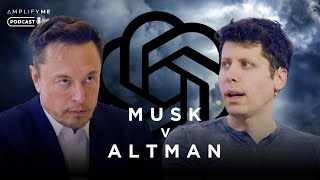
Elon Musk and Sam Altman are locked in a battle over OpenAI's future. Musk filed a lawsuit over the nonprofit's fiduciary duty and reportedly bid $97.4 billion to block its conversion to a public-benefit corporation, while Altman pursues a $500 billion Stargate partnership and other AI infrastructure plays.
Chapters
Hello and welcome back to Deal Room. A fresh week ahead and it's the big one, it's Musk versus Altman. So we're going to break this down, Stephen on the call as ever, and there's so many different pieces to this puzzle. But what we're going to do is aim to talk about not only what is the current state of play— you might have seen a really great FT headline last week, conflict secured, which is obviously a play on the Twitter funding secured that we had what, a year or so ago. But really it's about why are they fighting and what are their agendas and how is OpenAI structured. This is where the corporate finance angle really comes into play. And if we can understand that, I think you'll, you'll have a probably a different perspective on what's happening at the moment in the daily news flow in the AI space. And I want everyone on this call at the end to submit a comment on who they're backing, Musk or Altman. Now I'm going to put a poll. If you're on Spotify, you have to take part. Other than that, we're also going to then talk about private equity in the era of Trump. How's it looking? Is it looking good or bad? There has been a slight change. Obviously, there's been a lot of new things that Trump has been bringing in through policy. Would one of those potentially impact PE? We're going to find out because Stephen's going to share his latest thoughts. So Steven, Musk, Altman, hit me.
Wow, what a topic. This is one of my favorite topics because it involves everything that we might say is interesting and exciting about finance and other people might say is crude and egomaniacal and power hungry and money hungry about finance. So let's take it for what it is. And I was just thinking, I was trying to step back and think about this great rivalry between two billionaires that are trying to set the course of history through a breakthrough technology. If you go back through history, what other major feuds have there been? And maybe what can we learn from those feuds? I'm not going to spend a lot of time on Thomas Edison versus Nikola Tesla back in the day. Huge feud relating to a very fundamental technology, as we're talking about today. What about Steve Jobs versus Bill Gates? That was a pretty massive feud back in the day, the fight between Microsoft and Apple. But this one promises to be even more impactful for the way that we do our everyday lives. And before I start, and I'm going to give the history of OpenAI and maybe the history of OpenAI in the context of Elon Musk before we get into what's going on today. Before I start, I would give a shout out to our researcher Aaron for compiling this. But I have to say, for, uh, for, you know, for a little bit of balance, uh, I've also consulted my good friend ChatGPT, and I have also consulted my good friend Grok. So making sure and asking the same questions to ChatGPT about OpenAI and Grok on X. So see what happens.
That's so interesting actually, because I've actually only this week not having spoken to you, been using Groq, and I've been using it to produce images. And the images of prompts that, that you get out of X are incredible compared to OpenAI. So much better.
It's really interesting. And again, you know, this technology, A, is moving really fast, but it's becoming distributed across lots of different, very, very high-quality platforms to the extent that it might well become like a transistor or like the web. It might well just become commoditized, but at the moment it is extremely valuable, and obviously there's billions of dollars in this story. So let's get into it. Um, thank you ChatGPT, our researcher Aaron, and Grok, uh, for help putting together this. Um, so let's rewind to 2015. This was the birth of OpenAI. OpenAI was founded as many of you will know, by both Sam Altman and Elon Musk. And the goal was to advance artificial general intelligence for the benefit of humanity, right? Nonprofit. Musk initially pledged a billion dollars in funding, although as we now know, reports suggest he only contributed a fraction of that amount. And even though there was this $1 billion commitment, which is what Sam Altman thought would be the, you know, a good chunk of money to get the first phase of, you know, AGI research off the ground, only $130 million were actually committed to the not-for-profit. This is a really important number in the context of understanding how much it has cost to get to the stage that we're at today. So not-for-profit, back in— actually, fast forward to 2018, OpenAI was struggling financially, and this kind of bromance, I don't know what it is, it's kind of frenemies, uh, Musk and, Musk and Altman. Musk tries to take over OpenAI and incorporate it into Tesla. Musk goes, look, you guys are running it like amateurs. I don't back you. OpenAI, OpenAI has a 0% chance of success. That's what he said before he walked out, right? This is something that's fueled Sam Altman's drive to make this thing successful. I was listening to an interview just a couple of months ago with, with Sam Altman, and he references this 0% as his drive. So Musk leaves 2018, disillusioned with the vision, tries to buy the, buy the not-for-profit, fails, leaves. Now in 2019, and this is where the story really gets interesting and a little bit confusing, this is a not-for-profit company that in 2019 launched as a subsidiary underneath what we call the top co, the not-for-profit top co, launched this capped profit model, which means that as of 2019, OpenAI can start raising normal investments from investors that have a returns objective. Now, the important word here is the capped. So we discussed this probably 18 months ago on the podcast, a long time ago now, but this capped model means that if I invest $10 million in OpenAI, the most I can ever receive is 100 times that $10 million. Not bad. 100x return is the cap of my return on my investment, which encourages 99.9% of the investment community to get excited because a 100xer, 100 bagger, is pretty good. Anything above 100, 100x, X goes back into quote unquote the philanthropic mission, mission of OpenAI. So it's a bit of a fudge. But before I pause for a second, this is super important for any person trying to understand corporate structure and trying to get their heads around, you know, why we've moved from this not-for-profit structure to a cap profit structure. The dollars floating around charity, you know, charitable giving, fractions, you know, 0.0000001% of the dollars floating around for-profit investments. So as Sam Altman realized that to fully, fully realize the ambition that we're now seeing in, you know, ChatGPT-4 and things like that, it's going to take not a billion dollars but $50 billion, maybe even $100 billion to get to that level that fulfills OpenAI's mission, it has to go to the, to the private markets, to the likes of Microsoft, to the likes of venture capital investors to get that money to advance the mission of the company. The not-for-profit has not gone away, but this capped profit model sits underneath. That's 2019.
I was just trying to remember then. Okay, we've probably got some years to build up into it, but the whole saga, I'm sure you'll explain about when Altman got ousted. And then got— came back in again. I'm sure that fits into this.
Yeah, that was, that was a weird one, and we definitely covered it when it was happening. So this was in 2023, under the $10 billion investment from Microsoft. There was an ousting of Sam Altman with the intention of bringing OpenAI further into the Microsoft ecosystem, but it failed. A, because it was really— because, uh, staff rebelled and the board rejected the ousting. So Altman got reinstated and changed the board. So the board are now all pro-Altman. And when I talk about the board, this gets a little bit confusing. When I talk about the board, this is the board of the not-for-profit, the likes of Lawrence Summers and, and a lot of other bigwigs. So let's fast forward beyond that and Musk starting to use his favorite mouthpiece, X, AKA Twitter, to start really throwing some pretty big rocks at, uh, at Sam Altman in particular, and also OpenAI. So in 2023 to 2024, this war of words grows. Musk becomes increasingly vocal about OpenAI's direction, claiming it's now controlled effectively by Microsoft rather than serving humanity. This is a fundamental technology that Musk theoretically— we'll talk about this in a second— does not want to be in the hands of a large corporate. You know, I scoff quietly about any of Musk's intentions to create something for the benefit of humanity. Um, he criticized OpenAI's lack of transparency, and then Altman responds dismissively, making sarcastic remarks about his prior involvement. Early 2024, Musk sues OpenAI. If you remember, this was a story about 8 or 9 months ago where Musk basically said, look, you're a not-for-profit and you are making shedloads of money and you are in bed with Microsoft. You know, in what way is your main subsidiary contributing to the objectives of the not-for-profit, which is AI in the advancement of humanity? This looks more like AI to the benefit of Microsoft and a few very, very wealthy investors. So I'm going to sue you because what you, you know, the not-for-profit that I originally donated up, you know, $30, $40 million to, you know, you're not carrying out that fiduciary duty, that not-for-profit charitable duty, and you're taking your eye off the ball, and I want my $40 million back, right? I want that money back because you're not doing what you said you're going to do. Really interesting. Lawsuit gets thrown out, and then we fast forward to this week. What happened this weekend?
Well, this, this is it. Like, I, on, even on LinkedIn now, you tend to see like breaking news and people posting stuff, um, other than like championing new job roles and things like that. And, uh, yeah, I did see lots of back and forth where it was I can't remember what the tweet specifically was that really initiated it. It was, right, I'm going to buy your company for this amount of money. And then he replies going, how about you, you basically move the decimal on that number and then you can have it. And then there's a few more ding-dongs or, but yeah, this all happening on X, on Twitter. It reminds me a little bit of. When there was supposed to be a cage match between Zuckerberg and Musk. And now Musk— now Zuckerberg is completely in bed with Musk and the Trump administration. And 12 months ago they were throwing, you know, barbs on social media and now they're like best buds. So, yeah.
Well, look, we all know that Zuckerberg just follows the kind of the lead bully in the pack, right? You know, it's so clear that you can see that, okay, Trump's, uh, you know, Trump's cool. I'm gonna follow him. Oh, you know, Musk has now got power. I'm gonna follow him. But yeah, you're absolutely right. Uh, Musk loves picking fights, right? That's, that's his kind of modus operandi. And he does it, I think, just because he's bored, right? And because he just wants to have some, have some action. So the fact that he is, his latest feud in the public domain is very much with Sam Altman. It's just the latest in a long line of feuds that he's had with, you know, everyone from Zuckerberg to Bezos. You know, it— this is, this is common for Elon Musk.
Can I, you know, you being a strategist, can I ask you, um, what would your advice be if you were a senior company figure and you were being attacked by Musk specifically as an individual in your company? What would your advice be? Do you engage or do you just completely not engage?
I would totally, totally ignore it. There is, there is nothing, very, very little to be gained by, you know, trying to punch across to someone that's just running their mouth, you know, even if they're saying some pretty scandalous things, you know, I will, I will not dignify that response with an answer.
So you've answered my question here. Altman's in bed with Musk. Absolutely. Like, why, why bother?
He shouldn't, he shouldn't have re— he shouldn't have kind of responded to the fact that he took the bait. And look, you know, look, if someone's calling me a swindler, which is what Musk is calling me, if someone's saying that I fundamentally do not trust, trust Sam Altman, you know, there's a lot of, there's a lot of insecurity amongst these tech bros, right? And their phone is— they've probably got 3 or 4 phones that are constantly in front of them. Their kind of desire to respond and, you know, air their public grief, their grievances in public, is probably just too strong for them to resist. And it all looks like billionaire bros being billionaire bros, right? You know, I'm gonna buy your company for $97.4 billion. Well, I'm gonna buy Twitter for $9.74 billion. This is so lame. It's not funny. And I wonder whether they're actually, maybe they just hang out privately together and they're like, "We're going to do this thing because it will cause people like us to talk about it for half an hour on a podcast." Not sure. No public sightings of them cracking a beer together have been seen recently.
Can I just ask, because I know superficially people look at Altman and go, "He's a bit of a of an odd chap. But then you look at Musk and it's pretty clear what type of person he is because he doesn't shy away from his personality or what he's trying to convey himself as. But can you just touch on perhaps Altman's tentacles and what he has his, his fingers involved in? Um, because, you know, you talk about nonprofit and doing AI for the benefit of humanity, and that's my mission, But what— tell me a little bit more about Sam. I'm desperate to know more about Sam. I feel like I know a lot about Elon. I don't really know a lot about Sam.
Yeah, I think, I think there's something about Musk that because he puts it all out there, he's obviously not— and this is what Altman said— it's obviously not a hugely kind of contented, happy bloke. Um, and, you know, does he have a lot of friends? Does he have that great support network? Probably not. You know, it drives him to do the things that he does very positively as well as negatively. But Sam Altman is this very, very strange character. And I understand why people have a kind of aching mistrust of this very softly spoken bloke who's trying to own the future of humanity and change it and improve it and talking up a really good game, how this thing should be part of the public domain. Et cetera. However, we all know that he's a billionaire, right? So he was one of the founding partners of Y Combinator, invested in a whole host of unicorn companies. And he's also, and it's definitely worth taking a look into this, he's also really very, very heavily invested in all of the infrastructure that is lying around the AI revolution. So yes, this OpenAI thing is a not-for-profit, and even if it is spun out into a for-profit, which we'll discuss in a minute, he might not get a particularly large slice of the pie. But, you know, recently over the last 10 days, they've announced a $500 billion funding of Stargate in collaboration with the likes of SoftBank, where he is going to take an economic interest. And you raised a really interesting company, which many of you wouldn't have heard of, called Oklo, earlier on today. Tell me what's— which is a special purpose acquisition company founded by Sam Altman. What does Occlot do? And remind me.
Yeah, so I heard this in conversation and it was because, yeah, anytime someone tells you a stock has gone up 140% in the last 3 weeks, you're like, okay, excuse me, what was that? What was that company's name? And so Occlot was the one being discussed and basically it's It's nuclear energy powering specifically AI-driven infrastructure. Uh, and of course your man Sam serves as the company's chairman. And that company, I know we were just looking at it before we began recording this on a, on a chart, but yeah, maybe you could give me a description of the shape of that chart of Oklo.
Yeah, this is remarkable. So because it's a special purpose acquisition company, that was launched by Sam Altman in 2021. The nature of a special purpose acquisition company is that IPOs at $10 and that no one trades it until something happens. So $10, $10 for a couple of years, totally flat on the share price graph. And then Sam Altman, this SPAC buys Oklo, incorporates it, does that SPAC IPO through the back door. Share price drops or hovers $10, $9, $8 down to $5. $5, and then since the announcement of Stargate, it has absolutely popped. So it's gone from $5 to $55 a share in the matter of, well, about 20 days. Uh, and obviously, who is the main beneficiary of this? Sam Altman. So yes, he's trying to change humanity for the better, and yeah, money's not everything to him, and you know, this is really, you know, it's really good that he's started this, you know, not-for-profit and this is fantastic. And Musk is the one that's the, you know, the multi-billionaire. But let's just think about these other interests, including this nuclear energy provider, uh, Oklo.
Yeah, it's kind of like the greater of two evils. Do you want someone to be explicit in what they're doing, even if you don't agree with it and you're not particularly happy with how they do it? Or do you prefer someone who's discreet and hides it and tries to present a different type of, uh, optics?
Yeah. And this is it. And the way that, the way that Altman talks about OpenAI is he talks about AI as a kind of Manhattan Project or a moon landing project. These are big government-run, historically successful government-led initiatives in the US in the 1950s and 1960s. You know, a rare example of the government and private, uh, companies working together for the betterment of a particular goal. Yet, What we've seen with regards to AI is it's almost entirely corporatized. It's almost entirely privatized. You know, the, the government doesn't own a slice of OpenAI. The government doesn't own a slice of Anthropic. This is not a— he can call it a Manhattan Project to the day he dies, but this is private VC-backed companies getting extraordinary valuations through a innovation that they own the intellectual property for.
All right, well, let's, let's go into some of the, the nuts and bolts then. When you're talking about Altman trying to spin the non-for-profit arm of OpenAI into a normal company. So yeah, what, what's this part?
This is really confusing. So as of today, the, uh, OpenAI is a not-for-profit top co not-for-profit company with a subsidiary that is that capped profit model. Now, what Altman and the OpenAI team wants to do is it wants to get rid of its not-for-profit arm and become what's called a public benefit corporation, which is basically a normal company that says in its founding charter that it's going to do some good for humanity. Super, super soft, not very enforceable by law. So you go all the way from this is a not-for-profit to this is a not-for-profit, but it's got a cap profit vehicle underneath to let's scrap the not-for-profit and just be a public benefit corporation. And a public benefit corporation owned by the shareholders, profit motive, fiduciary duty to create profit for, you know, create returns for shareholders. Altman will get very, very rich out of this vehicle. All well and good, but in order for this to go through, the not-for-profit OpenAI needs to agree that this is the roll-up, the structure that the not-for-profit and the for-profit is going to be rolled into, because the not-for-profit owns the for-profit entity. And this is where Elon Musk comes in. So Elon Musk goes, all right, this top co— this not-for-profit has got effectively a veto right over the rolling up of OpenAI into a pure for-profit company. So I'm gonna, you know, I'm gonna put in a blocking move by trying to buy the top co, the not-for-profit company, in order to stop this thing getting rolled up into a, into a pure for-profit vehicle. Because if I own the not-for-profit, I own the ability to make these kinds of corporate decisions. Now, There's a lot of different kind of theories as to why Musk has done this. Firstly, it could just be this blocking move. I don't, you know, Musk wants to own the not-for-profit so that it never becomes a for-profit. Maybe. Secondly, you might, you know, that $97.4 billion, that really does put a significant value on effectively buying out the donors of this not-for-profit. Will Sam Altman and his cabal have to trump, have to beat that $97.4 billion to effectively buy the not-for-profit in order to spin it into a for-profit? So is he just kind of egging up, kind of ginning up the share price? And, and when I say share price, I'm being a little bit misleading. This is not, this is a not-for-profit. It doesn't have shares. So if you take a further step back and put corporate finance hats on, How the hell do you value a not-for-profit? It doesn't distribute returns to shareholders. So the, the value of the not-for-profit, no donor in a not-for-profit is going to receive the returns from the for-profit entity, right? That at the moment. So how do you value the not-for-profit at $97.4 billion? Is it the intellectual property that's held within the not-for-profit entity? Where does the intellectual property within OpenAI sit? Very hard to find this out online, by the way. Lots of people are suggesting that it's been transferring quite nicely the patents and the intellectual property down from the not-for-profit into the cat profit vehicle. So how do you value this thing? It's absolutely bizarre. Usually I can get my DCF out and I can start figuring, is $97.4 billion an appropriate amount to pay for this corporate entity? But it's just not like that.
So how would, um, an advisor take on a situation like this? So presumably Musk is seeking legal, financial help in order to make these strategic decisions, whatever of the 1, 2, 3 options that he's going down. So in this case, would you— like, how do you— you don't have a team, I'm assuming, that would deal with this because it's not a recurring piece of business. So how do you facilitate that if Musk calls you up, right? I work at X Bank and he goes, right, I want to do this, put Stephen on the phone. Like, how do you do that in terms of a service provider?
It's so interesting. And quite frankly, I don't know if there are advisors yet on this deal. If you listen to the Altman camp, they haven't even been approached. You know, this is just smoke and mirrors. A publicity stunt. But then if you talk to one person involved in Musk's bid, he says, if OpenAI says it's a publicity stunt, we say call our bluff. Um, because Musk's bid theoretically is backed by Valor, Baron, um, VY Capital, 8VC, Endeavor Chief Executive Ari Emanuel. So there's some big hitters that are backing this. Do they have advisors? Probably. Are these advisors going to be talking more about the kind of, A, art of negotiation, which Elon Musk is pretty good at, but also B, the construction of buying a not-for-profit, which is very, very different from buying a for-profit? There will be an expert somewhere in the world that is very, very good at this kind of stuff, but it's not going to be your jobbing banker at Morgan Stanley or JP Morgan, I wouldn't have thought.
Okay, so I'm assuming there are some legal structural kind of roadblocks potentially that could step in the way here. What would some of that be, and where do you actually see this heading over the next course of the next coming weeks?
Well, it's really interesting because, so Sam Altman controls the board of the not-for-profit, right? You know, and he can just on Twitter, on X, say no, '90s, you know, we're not going to take that, but we are going to buy Twitter for $9.7 billion,' or whatever throwaway comments. So he can just unanimously say, 'Look, this is spurious. We don't want to accept this bid.' And what's so interesting about trying to buy a charity, effectively, quote unquote, buy a charity— it's a really, really strange thing just to think, just to conceptualize— is the governors of charities do not have a fiduciary duty to accept the best quote-unquote bid. They have a governance duty to do the thing that is most aligned with the charitable mission of that not-for-profit. So they can easily go, hey Elon, this $97.4 billion, it's not going to further the aims of the charitable status in which we were incorporated, so we can just reject you outright. So my expectation is that this will maybe rumble on in the Twittersphere, but I don't think that we're gonna see any advance in terms of OpenAI, the top co, the not-for-profit changing control or anything like that.
How, how do you square the circle where Musk is currently co-president of the United States with Trump, and then Trump's cutting the Stargate initiative with Altman.
This is such a, this is such a kleptocracy, right? And this is really, if we take a bit of a step back, this is extraordinarily concerning from a, from a future of US democracy perspective. Because one of the main goals that Musk and Trump has is to expand the executive office, which is effectively expanding the unilateral rights of Trump and his associates, his appointees, to do what they want without legislative approval. Like, that's one of their missions. And that is an authoritarian kind of— that's an authoritarian mission. And then when you bring in the world's richest man, who's obviously conflicted in so many different ways, There's an argument to say, by the way, going into UK politics, often people say you should pay politicians a lot more because then they wouldn't have outside interests that might present a conflict of interest. Obviously, this is totally wiped out the water with someone who's worth $400 billion standing next to the president with his son, uh, chatting about getting rid of USAID. You know, this is— it's quite remarkable. And I'm hoping, this is my hope, that this is a kind of a flare, you know, a flare on the edge of the sun, right? This, this happens over 3 or 4 months. It's, it's very overwhelming and disruptive. And then Musk falls out with Trump or vice versa, and things start to regain some feeling of due democratic process. At the moment, things are going the other way. The flare is getting bigger, things are accelerating, and it's a time to be worried.
All right. Well, talking of Trump and talking about Trump trying to force an agenda, what's the situation with that and the potential consequence on the private equity industry?
Yeah, we'll cover this one very quickly. We spent a lot of time on, on, on the, on the meat of, of today's story. But the second headline that I very quickly wanted to cover because it's really important in the context of people going into interviews and trying to understand the question that might be asked, what is the impact on M&A and on private equity of Trump's second term? It's a really, really valid question to be asked. We all thought, I think if we wind back the clock to our podcast a couple of months ago, we all thought that Trump would be good for M&A. We all thought that Trump would be good for private equity, lower regulation, drill baby drill, tax breaks. This is a kind of The next golden age, right? But what's actually happened, the beginning of this year has been an absolute shocker for both M&A in general, but also more specifically for private equity deals because, and this is so important when it comes to thinking about the landscape of private equity and M&A, investors, acquirers, they just hate volatility. I heard a wonderful quote the other day, which was something like, markets can only crash down. Volatility is usually to the downside. From an economy perspective, we love it when an economy is growing at 2.5% every year, inflation's at 2%, and there are no nasties. That is perfect. We don't want any flares to the upside or the downside. But at the moment, every news article that's coming out about tariffs— tariffs are obviously very inflationary. Inflation means that interest rates are going to be held at a relatively high level as they are coming down in the UK. So there's a bit of divergence there, and this is a horrible, horrible environment for private equity firms to make deals. And I'm just going to present this kind of if I was a private equity partner, GP, general partner, sitting in, sitting in their office thinking about the headwinds and the tailwinds. On the left-hand side of my brain, I've got, all right, I've got to sell some of these companies that I've got in my portfolio. They've been hanging around for 3 or 4 years. And by the way, I've just launched a new fund because there's still money sloshing around wanting to go into private, private equity. So I've got to spend this money and I've got to sell these companies. On the other side, cost of capital is still really high and valuations are still really high. So how do I square that circle? Buy companies at the right price with low-cost debt to take advantage of the money that's coming in, but also sell companies that is going to receive the appropriate money-on-money returns from that particular investment. So there's so much going on here. And so many conflicting forces and volatility. And what Trump's doing is making the landscape ever more difficult to navigate. And as soon as a landscape is difficult to navigate, we step back and go, I'm just going to wait and see, give it another 6 months, see what Trump's up to next. Yeah.
And even from an economics perspective, last week obviously we had the US CPI report and it's not looking favorable in terms of the consequence of interest rate expectations. I mean, we were part of the thesis, I guess, of the bounce back in deal activity of 2025 was that interest rates should be decreasing. And inevitably the market now is priced for just one cut this year, which is quite an incredible shift in just a few months.
That is remarkable. And again, if you look at the, if you look at the UK, and I know that we're not on the Market Maker podcast now, so I'm out of my depth, but if you look at the UK cutting interest rates, were there two, two people on the MPCC that wanted a 50-bip cut? Yeah, that's right. That suggests that the UK might end up, and the Eurozone in general might end up in a structurally different position, place to the US because of this tariff move and the fact that the US is at full employment. Therefore, does private equity, much like we spoke about last week with Japan, does private equity start going, hey, the UK and Europe's actually a better place to do business, and starts getting a little bit more interested back in everywhere that is not the US. We shall see.
All right, we'll wrap it up there. As I said at the top of the show, there is a poll if you're listening to this on Spotify, and it's got just two options: Musk or Altman. So let us know, and we will report back, Stephen, this time next week on who people are backing.
Okay, I'll cast my vote.
All right, take care, have a good week ahead.
Thanks, Ant.
More from Anthony


Inside the Biggest Banking Stories You Need to Know This Week (Anthropic, Diageo, Private Credit)


Inside the Biggest M&A Deals You Need to Know This Week (UniCredit, GameStop, eBay, Eli Lilly)







AI Breakthrough or Hype? Anthropic’s Claude Mythos, Tim Cook Steps Down & LIV Golf Collapse