Nasdaq Posts Worst Day Since 2022 As Trump Rattles Markets
Nasdaq fell nearly 2% as Trump's Taiwan defense comments and Biden's China export controls spooked semiconductor stocks like ASML and Nvidia. The Fed may cut rates before inflation hits 2%, while Trump backs keeping Powell through 2026. The pound rallied past 1.30 USD/GBP, helped by sticky UK services inflation tied partly to Taylor Swift's tour.
Chapters
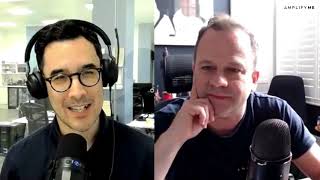
Welcome back to the Trading Floor, where I'm joined by co-founder Piers Curran to talk over some of the major news in markets so far this week. And we're going to focus on a few things. First, midweek, the NASDAQ slumped nearly 2% to a 2-week low. Chip stocks in particular have got hit quite hard, all the way from in Europe ASML to Nvidia in America and TSMC in the Far East. So we'll talk a little bit about then why that's happened. There's the rotation trade. If you missed the previous episode, that's still ongoing, it would appear at this point in time, but more so in this episode, we're going to talk a little bit about geopolitics, in particular, some commentary from both the president, Joe Biden, and also the former president, or soon to be in some people's eyes, Donald Trump. Both of them have made comments that impacted the technology stocks midweek, and we'll look to explain why. And there's also Trump gave a Businessweek interview to Bloomberg, and he showed his hand a little bit on his future nominations for Things like what he thinks with the Fed and interest rates and Jerome Powell's future. And so we can talk a little bit about that and also how markets are priced. We've had some interesting US data, US retail sales, um, but also comments out of Powell himself and also the head of the New York Fed, John Williams, who obviously gives us a little bit of forward guidance on potentially what to expect with the idea of rate cuts. And then finally, we're going to talk a little bit closer to home for us in the UK. We've had UK today— we're recording this on Wednesday— and it showed particularly sticky service inflation and has actually caused quite an aggressive rally in the sterling currency, at least in the intraday move. So let's start at the top, Piers, and let's talk a little bit about global chip stocks.
Yeah, well, I mean, you mentioned the NASDAQ, um, which, yeah, is not having a very good time of it. I mean, which is obviously a complete flip reversal for like most of the year where things like the NASDAQ were motoring higher. But yeah, the last week it's been pretty bad actually. In fact, the NASDAQ's off, you know, well over 600 points, you know, down 3-4% from the all-time high that it set back on the 10th of July. Um, and yeah, we talked about the rotation last week. It's been added to this week. That's on the downside, an ongoing— we'll talk about perhaps, um, interest rate cut expectations in a minute because there's been more news flow on that. But there's something else that's been added here, and it's all wrapped up in this US election shenanigans, let's call it, and both Trump and Biden making comments that have had a pretty meaningful impact on the semiconductor sector. And we'll get on to a company called ASML, which I reckon it's one of those companies that people might have heard of, or they think, hang on, is that Arm or is that Arm Holding? What is that? What? But it's actually the 20th biggest company on the planet. I guess it's a bit like Nvidia 3, 4 years ago, where unless you were a gamer, let's be honest, you probably didn't, you might have heard of it, but you probably didn't really know what it did. Obviously these days now everyone knows, but ASML's gone under the radar. So that's down 10% today, and that's kind of front and center of the reaction to this double whammy, I'd say. So firstly, a left hook from Trump. So he made some comments in the Business Week earlier, I think this was yesterday, and he was basically— it's the same old rhetoric really from his first presidency, but he's basically saying that foreign countries need to pay more to have the US defending them and US defenses. And he particularly picked at Taiwan and saying that ultimately the US does a hell of a lot for Taiwan with regards to their defenses against China. And look, they should be paying more for this. And all that does is ratchet up the fear that relations between the two countries might ultimately deteriorate as a result. And why does that matter? Well, it matters because of a company called TSMC, which is the biggest semiconductor producer on the planet and supplies semiconductors for the world's electronics. Okay. And so why is that important then? Well, okay, if you now say, well, who does, who supplies TSMC? Because TSMC make these semiconductors, which are hugely complex, you know, electronic products that need very advanced, you know, high-tech manufacturing equipment. So who provides, who's the supplier for TSMC? Well, it's ASML. This is a Dutch-based company, actually. Market cap, $433 billion. That's in dollars. Based out of the Netherlands, 41,000 employees, 20 most, 20 biggest, 20th biggest company on the planet. But look, they produce technology that enables TSMC to do this advanced manufacturing process. So when Trump rocks the boat here, because then the right hook came from Biden, and look, Biden's obviously been floundering in this campaign spectacularly and needs to come back fighting, right? Kind of metaphorically and actually literally to show that he's not like on his deathbed. But he's said that he's looking at further restrictions on semiconductor equipment sales to China. This includes importantly, non-US-made tools. So basically, ASML, they're a European company providing equipment to China and indeed, obviously, to Taiwan. But for ASML, 49% of their revenue is from China. So if Biden's going, hang on, we're going to put restrictions on equipment sales to China, Biden wants to kind of put the brakes on China's whole advancement in the semiconductor manufacturing space. All right. And so this is a political scenario that has led to a big increase and really threatens ASML's revenue flows. So they're off 10% today as a result. Now, there is an opposite argument because, all right, well, if the Taiwanese, if TSMC can't provide semiconductors to US companies. Where are US companies going to get their chips from? Well, Intel. So actually Intel here today, they're up 7% as a result of this. So it's pretty interesting volatility going on in the semiconductor space.
Two things then to ask you on the back of that. The first one, isn't these moves a bit overdone given the, as you said right at the beginning, This is like almost the political posturing to make the loudest possible noises. I mean, I certainly don't want to call Trump's bluff because he has gone ahead and done these things in the past, but like say the Biden element.
Yeah, I, I guess, well, the simple answer is yes, this is a short-term fast money reaction. Don't forget that ASML shares broke €1,000 for the first time in their entire history just last month and are up through the roof. You know, they have doubled in the last sort of 12 months, right? The share price. So they have gone through the roof as like the Nvidias of this world has. Point being, people are sat on big profits here. Any sniff of danger and that triggers a bit of profit taking. And that's basically what's driving this 10% sell-off today. Is it a surprise what Trump said? Absolutely not. He said that for the entire 4 years of his last presidency. Is it a surprise what Biden said? I mean, yeah, probably people weren't expecting necessarily him to be that aggressive. But the point there, if you're an investor, doesn't matter what Biden says or thinks because he won't be in office in 6 months' time, right? So if you're willing to take that bet, on who's going to win the US election and based on the polling and the idea Biden's not going to win, then okay, you know, you can kind of discount a little bit what's coming out of the White House at the moment.
So short term then, Trump going, reverting back to his normal, like you said, Intel, because he's kind of anti-China and EU in many ways.
Yeah.
But long term, does this not play into China's hands in terms of One China policy and Taiwan's stance and its relationship between it wanting to be independent and the US is an incredible important ally within that relationship. But if you cut off its main economic artery, then surely this plays into China's hands.
I mean, yes. I mean, this is it, right? This is the, the chessboard of global politics where, If Trump wants to address a specific issue that he feels is not fair to the US electorate, as in, "We're paying too much for Taiwan to be defended," and if he addresses that issue, there's then intended, unintended consequences that come from that. And so, yeah, sure, that puts Taiwan at a weaker position in that standoff with China.
Equally so though, I mean, thinking about the Art of the Deal, Trump style, right? Perhaps this in a way is posturing for himself to engineer a, a better deal in terms of the relationship with Taiwan, given Taiwan's reluctancy as a country to be consumed by China.
Absolutely. So, I mean, you can think back to NATO in his first presidency where he basically said, look, this is ridiculous. The US is spending huge amounts on their armed forces each year in terms of percentage of GDP, and the Europeans are basically spending nothing. We're out. Unless Europe, you start spending some money, we're out. We're fed up of funding global security. And it works, right? Europe stepped up and they're spending more money. Okay, there's a war on the doorstep that incentivizes that, but it's the same principle. So you are right, Taiwan will end up paying more because they're dependent on US and their security that they provide. So yeah, it's the, it's the classic, it's classic Trump.
Okay. Well, let's move on from that. And a segue would be then what does Trump think about US interest rates? I know that he, in that same interview you mentioned in Businessweek, he did talk about the Fed Chair Jerome Powell and what he would like to happen with interest rates. So what was Trump saying there? And then what is the current state of play with US rate expectations?
Well, it's quite interesting that Powell on Monday, and then there was comments from one of his colleagues, John Williams, earlier on today. But Powell, hang on, I want to quote this. I've got the quote somewhere. He was basically saying, Actually, I don't have a direct quote. What he was saying—
I can fill in the blanks. I've got a snippet here of what he said on Monday. He said the central bank was gaining greater confidence that inflation was easing back to the Fed's target. And essentially, in combination with some other factors ongoing, it's leaning towards then.
But what I was interested in was basically he said, and this isn't a quote, but he was basically saying the Fed wouldn't wait for inflation to get all the way back to 2%.
Yeah.
And, and we'll talk about the UK in a minute because the UK obviously seeing a different picture here, but the Fed are saying we don't need to get back to 2, we can start cutting before inflation gets back to 2 because of the lag effects of tightening. So this is just that point about you change interest rates, the central bank changes rates, and then it doesn't have an immediate impact on the economy. It takes time to feed through. There's these things called the transition mechanism and so on. So it can take months, right? It can take 6 months. Some people think longer, like 9 months before a rate, a change in interest rates fully feeds through to the economy. Okay. So Powell's saying we need to start cutting before we get to 2 because The rates being so high for this long, even if we start cutting now, are still going to have a lagged tightening impact, which should continue to drive inflation lower. The last thing in the world they want is to undershoot and inflation doesn't only go to 2, it then goes to 1, it then goes to 0, and then you are flipped and oh my God, we've got a deflation risk.
And to make sense of that, from why political commentary is different from market, central bank commentary. So Trump was saying he doesn't want Powell to cut. What you are saying is, well, it doesn't really matter because of the lagged effect, but for Trump it's because of the political optics that Biden is doing something that's beneficial for the consumer. Would that be right?
Yeah, of course. Yes is the answer to that.
Yeah, so, so, um, he did say then that he wanted to keep Powell for a full term. Now that term ends in 2026, so it's for— it's not for a while yet.
Yeah.
Is that because he already sees the cuts coming and so therefore—
I don't know, I'm— I basically, I'm surprised. I guess I'm surprised about this given how the Trump-Powell relationship was. In first time round, and Trump was highly critical of Powell and the Fed because they were hiking. I think it's just a function— Trump's opinion is purely a function of where we are in the rate cycle. So whilst in his first term rates were going up and he was trying to deflect the blame of people's mortgage costs getting more expensive, blaming the Fed, look, it's not us, the politicians, it's the central bank, blame them. Now, of course, we're going to begin a rate-cutting cycle. I assume that means Trump, therefore, it wasn't specifically critical of Powell. It was more of where he was and where his presidency landed in terms of the interest rate cycle. I think it's probably that, but yeah, he seems to have flip-flopped on his opinion there.
Which means that he will, could probably continue to flip-flop depending on economic conditions and what the Fed think is the best policy going forward. So one of the other instrumental roles within the US system for the financial industry is the Treasury Secretary.
Hmm.
And on this front, he kind of threw out, feels like a slightly random name, but it's certainly one of which I imagine I can think of a few points of why he would pick him. But what did you think of that? Jamie Morgan, CEO, he said he would nominate or at least be shortlisted for the role.
I don't think it's random. You know, I think that people have been talking in those terms about Jamie Dimon for quite a while. Don't forget, he's been top of JPMorgan He's made it the biggest bank on the planet, and he's been their CEO for over a decade. And it's like, well, look, that job doesn't normally last that long, right? And so it's probably time. He's getting on a little bit in terms of age. And so maybe stepping back from that, what must be a phenomenally big, stressful job, stepping back from that would make sense. So they've been thinking, what's he going to do? And look, he's already started his succession plan. You know, over the next couple of years, what's he going to do next? And it was like public office and, you know, is he going to serve? And right, what role would he do then? And some were talking about him being maybe a presidential candidate, maybe, right? So I don't think it's a surprise that his name's been thrown in the hat here. I think it would make a lot of sense. I think that would land well with the electorate.
Yeah, there's obvious ones like the, you mentioned the financial expertise, the experience, track record leadership. I thought one that's probably particularly telling is Dimon's fairly vocal character and his being from the commercial world. It's always been to promote economic growth, deregulation, business-friendly environment. It's like music to Trump's ears.
Absolutely.
So there's a good alignment. Cuts, because that's another thing Trump mentioned, he wants 15%, uh, which obviously was the what ignited the stock market on the first presidential run at the time, as well as deregulation and all the subsequent policies to boost growth. So yeah, makes sense.
Yeah. This cut, I mean, this corporate tax cut. Yeah, that's kind of, again, a soundbite from last time around when he was president, but I just don't see how they can cut tax rates, to be honest. They've got such a worrying worryingly large deficit that actually that is the emergency. And so whilst sounds good and good soundbites to get votes, when it comes to him being sat in the seat, I just doubt he's going to be able to do any of that kind of stuff, at least not in the early part of his term.
Yeah. Well, before we move on, just a final nugget of information about why Jamie Dimon might be somewhat incentivized to take the job of the Treasury Secretary at the call of Trump. And what I was reading was really quite interesting because it starts to go into the technicalities of what happens. So as most people will know that if you're a major chief executive or a senior person within a big business, you get paid in multiple different ways. And this is where it gets particularly interesting and using the precedence, if you don't remember, but Trump selected the former Goldman Sachs, Gary Cohn, He was the director of his National Economic, uh, which is essentially assistant for economic policy in the US. And so when someone leaves banking to serve in a senior role in the federal government, they have to sell all of their stock in order to avoid any conflict of interest. Normal vesting schedules then don't apply. and the stock would have to be vested in the future, is suddenly all up for grabs. Can take it now off the table. Um, even better, there's this thing called a divestiture rule, which basically is a technicality meaning that stock sold by an executive joining the federal government specifically subject to capital gains tax.
Oh yeah.
If it's reinvested into treasuries or diversified funds, right?
Oh, oh, I— okay, so they has to be immediately reinvested into treasuries or diversified funds.
The latter, I think, is the get-out-of-jail-free card, um, of doing it. And so basically what I read was someone's run the numbers, uh, and using, uh, Gary Cohn as the example, basically the payday for Jamie Dimon would be I think somewhere in the region of 5 to 6 times larger. And so Diamond holds circa 7.7 million shares in JP, and that would be currently worth roughly about 1 point— Okay, so you get the call, you take the legacy, you get the next level up, and you get nearly 2 billion in the back pocket.
So he's an absolute shoe-in. Well, go back to that point about, so you have to invest it in treasuries or whatever you said.
Undescribed diversified funds.
Ignore that second part. If you've got to invest it in treasuries, that is, that there's a whole load of wrong about that. You're basically saying that if you get hired to be the Treasury Secretary, You'll get a load of tax breaks, but you have to lend that money back to the government. That's basically what that means. There's a whole load of conflict of interests wrapped up into that. That's interesting.
Maybe you can have a chat with Jamie over a pint next time you, uh, you meet up. Uh, okay. Anything else on the Trump, uh, side of things or Biden, or should we move on to the UK?
Let's move on. Everyone's bored of Trump in the press given what's happened with his near-death experience. Let's not talk about that.
Okay, so let's move on to the UK then, and specifically because on Wednesday of this week, the pound did jump quite a bit. And on a superficial level, you might go, well, inflation's at target. What's the problem here? So what is the problem here?
Yeah, well, services. Versus goods. So remember, inflation is the prices of everything in the system that we as consumers spend money on. So, and generally we kind of split it into services and goods, goods being like physical products. And what the problem is, the prices of goods, well, they're actually doing what we had hoped and they're actually going down. In fact, if you're looking at an annualized basis, that, that's in deflation. The goods side of the inflation basket is like down at minus— I think it's minus 1% ish. Um, but the problem is that the services side is still stuck, um, and it's stuck at 5.7%. Um, and it was unchanged on the month before. So June 2024, services inflation 5.7%, same as May. Analysts were hoping it was going to drop to 5.6, but it hasn't. And so this services side of the economy, and we're talking things like restaurants, hotels, you know, prices in particular, those two were the most responsible for, you know, leading to this services side remaining stubbornly too high. And so overall what this has meant, you got the goods going down, you got services staying flat, and overall that meant that the basket in its entirety stayed at 2%.
I, I thought people knew that services was going to be up this month because of the Swiftonomics effect of her whirlwind tour. Analysts I remember were talking about this already, that there would be a temporary— the likelihood is we'd revert back to trend and the Bank of England would see through that, which is why I'm struggling to reconcile why the pound is reacted so shocked this morning when you just specifically said hotels and restaurants, and they make a lot of sense because when that, all that detail was coming out about the average UK consumer spend on it from the Swifties.
So I mean, you're right. I would say that, A, right, the pound's reaction, okay, um, the pound has been trending higher against the dollar for 2 solid weeks, and the trend is just continuing. So all of this information, whilst on its own, I don't think you can say, for the reasons you've given, you can't say that this has begun a new uptrend of strength for the pound. That's not really the case. It's already uptrending, and that's generally because of our interest rate differential, our expectations of when the Fed will cut versus when the Bank of England will cut. That's probably just diverged. And the potential chance of a cut by the Fed in September is now 100%. Right? The Bank of England, not so. It's not 100% yet. So we're thinking the Bank of England are going to be last because don't forget the ECB have already started cutting. We think the Fed will go in September. We think the Bank of England won't go in September. It'll be a bit later. So as a result of that, that's driving this trend over many weeks. This short-term money move off this data in the, in the UK inflation data is really just— it's technical as well because it triggered a move above 130, so 1.30, which is a key psychological technical level. So this inflation data kicked it up through there. Now when you get above key technical levels like that, it's just confirmation that the trend is strong and ongoing. Which supports more buying and expectations the trend will continue in the days and weeks to come. I think I mentioned last week there is a key level, uh, 1.31, um, for cable, sterling versus the pound. That was the summer of 2023 high. So I think we're on the way to 1.31. This data is just, it's more of the same and it's just helped it along on the path it was already on.
And this comes just after the GDP data that we had just a few days ago, which recorded a 0.4%, which was double the anticipated pace.
That's right. But Swiftonomics. So, and actually she'll, she'll be back in August. There's more dates at Wembley in August, as you know, I think, I think you're going, aren't you?
Front row seats, of course.
So, yeah, the UK's having a good summer with the football, as we were saying last week.
Yeah.
Pubs are packed, you know, this is, this will move the needle and you're already seeing that in the GDP data, as you've said. So just delays probably the ability for the Bank of England to cut rates because this, it's the services side that's benefiting from this SWIFTonomics and this football, pubs and restaurants. Pubs are basically restaurants, right? This is a service. And so strong demand keeps inflation stubbornly high.
Well, you know, God forbid that the sun comes out for the first time in the UK summer.
Yeah. Well, what happens if we smash it in the Olympics? I mean, this is— we're going to have to hike rates if we're not careful.
All right. Look, we'll wrap it up there. Thanks very much as ever. For sharing your thoughts, Piers. If you're not already subscribed to the show, please do click the follow and the bell icon to be notified when new episodes come out. Again, just a reminder, we have a corporate thing of every week and a global markets at the end. And hopefully, whether you are a student looking to apply to careers in finance, whether you're a business owner, entrepreneur, hopefully us talking shop about all things happening in the global economy helps. So yeah, thanks, Piers, and thanks everyone for listening. See you next week.
Cheers, Ant. See ya.
More from Anthony


Inside the Biggest Banking Stories You Need to Know This Week (Anthropic, Diageo, Private Credit)


Inside the Biggest M&A Deals You Need to Know This Week (UniCredit, GameStop, eBay, Eli Lilly)







AI Breakthrough or Hype? Anthropic’s Claude Mythos, Tim Cook Steps Down & LIV Golf Collapse