Navigating Social Mobility in Finance (Chloe Shepherd - VP Credit Repo Trader at Citi)
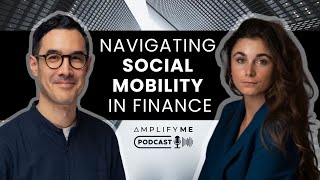
In this hour‑long interview, host Anthony Cheung talks with Chloe Shepherd, a VP Credit Repo Trader at Citi and board member of the social‑mobility charity UpReach. Chloe recounts her working‑class upbringing in the seaside town of Morecambe, the influence of her parents—especially her mother’s ambition for her to attend a grammar school and later university—and her transition from a Scottish four‑year Master’s programme in mathematics to a history degree after discovering that the university style of maths did not suit her. She describes how, during her final years, she became aware of finance careers, missed the traditional spring‑week route, and leveraged UpReach’s mentorship to secure a sales‑and‑trading internship, later converting it into a graduate role at Citi. Throughout, she highlights the transferable skills she gained from years of wait‑staff work, the importance of framing those experiences for recruiters, and the role of mentorship and networking. Chloe reflects on the current state of social‑mobility initiatives in the City—partnerships with the Sutton Trust, calls for FCA‑mandated socioeconomic data reporting, and the growth of charities like UpReach—while noting that progress remains uneven, especially for regional and gender representation. She discusses code‑switching and the subtle pressure to neutralise her northern accent, the challenges of being a woman on a traditionally loud trading floor, and how senior male and female mentors helped her build confidence. Resilience, authenticity, and the ability to adapt are identified as core traits that have underpinned her success. Finally, she offers concrete advice to aspiring candidates: embrace one’s whole story, network purposefully, treat internships as learning opportunities, and confront imposter syndrome by applying, seeking feedback, and presenting an authentic narrative.
Chapters
Okay, welcome to the show and welcome to a very special conversation which I've been working to make happen for quite a long time, so I'm super hyped about this. Uh, no pressure, Chloe, by the way. But, um, just to give a bit of an introduction, I have with me Chloe Shepherd, who's a VP Credit Repo Trader at Citi. But much more than that, she's a dedicated board member of UpReach, which is a charity that helps undergraduates from less Advantage Backgrounds Secure Top Jobs. She's a champion of women's empowerment in the workplace. And in this conversation, I think, Chloe, you're going to have so much to offer because we're going to take you back to your early life, your education, uh, being a working-class young person growing up in the North, uh, your kind of family situation, how you got interested in finance. We're going to talk about, uh, reflections on having worked now for several years, what you think has helped, what hasn't, and then talk about how you handle challenges like imposter syndrome, for example. So yeah, really fantastic to have you with us and thank you for giving up some time as well for the community.
Thanks for having me, Anthony. I'm surprised that this is the first time I've been asked to natter on a podcast, to be honest, because normally you can't shut me up.
So we'll see.
Well, let's see how far we get along.
Well, absolutely. You know, take your time and go as far as you need to go with explaining things. But we normally start with guests. With going back to understand them a little bit more in their journey as to their childhood and thinking about school and your upbringing leading into your university. So what was that like for you in this kind of school days?
Yeah, so I am from a small town up north, seaside town called Morecambe, which people probably know the same hometown as Tyson Fury. Or Eric Morecambe if you're a little bit older. Um, and so I'm obviously— you described me before as working class, and that is very much how I identify myself, and I still do now despite now living in London and working in finance. Um, so when I was growing up, I was very aware, um, how hard my parents worked and how much they sacrificed for myself and my sister. Um, and the kind of jobs that I grew up around from my parents and from friends' parents and my wider extended family were very much jobs such as like trade jobs. So when I was at primary school and a few— my first few years of high school, um, my mum was a butcher and my dad fitted double-glazed windows. So those are the kind of exposure to adult jobs that I had when I was growing up. And then when I went to high school— and also the people that I was around at primary school were similar class, and so I kind of grew up on a level playing field with all them. And that kind of changed when I went to high school, so I actually went— I was lucky enough that there was a really good local state grammar school close to where I grew up, and my mum from a very early age instilled in me that I would be going to the school where the clever girls go. And she said if I didn't get into that school, that she'd homeschool me. So that kind of drive and ambition came very early from my mum. And I luckily got a place in my local grammar school, and that's kind of the first instance where I realized that we probably weren't that well off compared to other people, um, that I would be socializing with there. Now, I, like, I'm not playing the whole, like, woe is me card. Like, I did not like have it that bad. There are definitely people who had a lot worse, and I'm very fortunate I grew up in a very loving home with two parents who did work as hard as they did to supply me with the best opportunity that they could and instill that drive in me. So I am fortunate that I was able to go to this grammar school and have that opportunity to be to have a little bit more exposure and kind of fire put under me to excel. And the school was really good, but like I said, this was kind of the first experience where I realized, oh, there's people out there who have a lot more than me. And I think that kind of signaled in when first, even when we were buying my school uniform, which was super expensive My mum had to buy me a uniform that was gonna last me for 3 years until the uniform changed when we got into like Year 10. So the jumper that she bought me was humongous and it absolutely swamped me. And when I was younger, I was tiny anyway, so it just looked ridiculous. But because it was so expensive it had to last me, so that meant that we had to buy a bigger one. So I looked a little bit out of place from that. And then when I started going to school, my parents were struggling a little bit at this time for money. And one of my memories would be like in the morning, my mum trying to find enough change so that I could get the train to go to school. Now at the time, the train was like £1.90. For a return. Now it's probably more like £5 for the same trip, but that's inflation for you, um, and cost of living. Um, so I was aware that they were struggling and that I was kind of maybe a little bit of a disadvantage, and this kind of played out a little through school as well. Where there were school trips that were quite expensive and maybe Mum and Dad couldn't afford for me to go on them, so I wasn't able to maybe— and they tried really hard to make sure that I did do that where they could, um, but like things like the ski trip at school, um, which— and that sounds ridiculous, like, oh, you didn't get to go on a ski trip, but I think that it was that first time in that environment that I realized that there was kind of a disconnect between social standing, um, there. So yeah, yeah.
Can I just ask that in that situation then, given your, your— as a young person, generally your kind of emotions are a bit up and down, um, does that make— did that make you feel angry or did that make you feel motivated?
Um, probably a little bit of No, I think probably a bit of both. So motivated because one of the things that my mum was very good at telling me, like saying I need to go to that school, was that she, she wanted me to go to that school because she wanted me to have the best opportunity to go on to get a good job where I'd earn lots of money so then I wouldn't struggle like they did. And that is what she said to me, that she didn't want me to have to worry about money as much as her and my dad have to worry about money. So I think seeing that made me want to do well so that I could put myself in a financially secure position in the future. But it also made me angry because it was— it felt unfair. And that kind of exemplified through— and it was an all-girls school I went to. Now, all-girls schools are notoriously maybe a little bit bitchy, supposedly. So it's— and at that age when you're a teenager, the pressures that are put on you to look a certain way, to have certain clothes or have a certain bag. I remember a school bag being such a big, big thing, right? You needed to have the it bag. And it was hard because we'd be going like shopping for a bag for school and Mum could only afford a certain one. But everyone had these cool designer bags like Jane Norman. Which were cool at the time, but like, there was no way that my mum would be spending money on that because she needed money for the bills and the debt and the mortgage and the food that she's paid for me and my sister. So it's, yeah, it's, it's, and I think probably that as a teenager you misplace that anger, right? So you get angry at your parents because you're like, well, why can't I have this bag, and you don't. And at that age, you're kind of coming to realization and maybe have a little bit of empathy and understanding, but you're going through such a big period of change as well that you kind of push that anger onto them. Which now, obviously, when I'm older and reflective looking back, like, I'm so appreciative of all that my parents did for me and, and all that they sacrificed to enable me to have the opportunities they did, and they sacrificed a lot to make sure that every year me and my sister got to go on holiday, like we got to go on holiday with them. And as I said before, like, in the grand scheme of things, I didn't have it as bad as other people, but it's, it's all relative to your own situation, right?
And then what— so sounds like your mum was quite a big influence because you mentioned her a lot. So what was the dynamic? Very much mum-driven? And what was dad's role within this mix?
Yeah, well, so my mum is a very, very strong character, and my dad, God bless him, is a man of few words, but he's supportive all the same. Anthony very much agrees, and he's so proud of me now of what I've achieved as well. But Mum's really the, the talker in the situation and the big guns, and will come in and say, like, no, you need to, like, get, get your head down, and if you want more than what we've got here, then you need to work for it and you need to put that effort in. And that was very much all the way through, like, GCSEs and A-levels, because I really, I Well, I didn't tank my AS levels, but I didn't do as well as I could have done. And she very much whipped me into shape for my A-levels to make sure that I got the grades I needed to to get to a good university.
And then university was always the plan in her eyes, was it?
Oh yeah.
But was it a plan in your eyes though?
Not a question. So neither of my parents went to university, and I didn't really have anything to compare it— like, compare their experience to. So that was all very new for me, but also my parents when we were applying for university. But yeah, it was— there was no doubt that I wasn't going to university in my parents' eyes. That was the end of it. There was, there was a period of time when, just before I was about to go, my mum afterwards said to me, she was like, we were really scared that the day before we were going to take you up there that you would just turn around and go, no, I'm not going. Because it's where I'm from, like, quite a lot of people just stay in the area and don't leave. So I think she was, she was worried that I would chicken out of leaving just at the very, very point. But, um, it was hard though because they, they didn't go, so they didn't have any way to prepare me or to, like, explain how university life would be. And this is, like, my first time living away from home and having to like fend for myself and budgeting as well. So it was, yeah, it was interesting. But yeah, there was no doubt in any of our minds that university wasn't the answer, but that was just for my situation. Now of course there's lots of different ways in which you can get into jobs like mine, which don't include university, which I'm sure we'll talk about more later, but that's just a side note.
So at that point then, when, like you said, so your mum kind of lets out that we were quite nervous that you'd just pull out. So, you know, I only know Chloe of the last 2 years. I don't know you when you were that age. So, you know, you have this confidence now and you can speak openly and freely, but at that point, Were you the same kind of underlying character then, or were you kind of a bit unsure yourself at that point?
I was so unsure, but I think most people at that age are. I think especially when you've stayed in the same place for your whole, like, childhood life, and this is your first experience where you're going out into the world and you're moving to a place quite far away. So I went to university in Glasgow, which is basically the other end of the country, um, to where I was. It's in Scotland, obviously, so it was like a 3-hour drive. And I think not having that security that there was someone near if you needed it, it's, it's quite daunting. And, and at school I definitely was a lot shyer than I was— I am now. I definitely grew a lot in confidence, especially at university, because you're exposed to new people and you're able to kind of figure out for the first time who you are and who you want to be, away from any kind of experiences, dramas, or things that could potentially tie you down to a place. And I think university was where I really, really came into myself and got a lot of confidence about who I was and what direction I wanted to go in. And I think that, um, it was probably exemplified through the fact where I actually went to university to do a master's degree and ended up coming out with a degree in history.
So, yeah, hold on, hold on. You can't drop that bomb and then not explain yourself. So walk me through that.
Yeah. So in Scotland, the way that it works is it's kind of a bit more like the American style. So At Scottish uni, you do 4 years instead of 3, and you come out with a Scottish Master's at the end of it, which is slightly different to the— what happens in England. So you go in for your first 2 years, and obviously I applied to do a degree, a Master of Science in mathematics, straight mathematics, but in your first 2 years you actually can do up to 3 subjects. So the first year I did maths, history, and archaeology, which is a bit different. And then on my second year I did maths, history, and then I took a random, like, physics cosmology course that looked at the planets and stuff, just because I thought it was interesting. So, um, it's— and then after that second year, that's where you kind of decide what you want to then carry on doing. And if I'm being totally honest, so I went and studied maths because that's what my mum thought would stand me in good stead for getting a job, like a secure STEM degree would get me a good job, and that's why I did it. And I did love maths and I was good at it, um, but maths at university is very different from maths at school. Now, I think the reason that I liked maths at school was because I liked getting the answer right, whereas— and I like getting to the right answer really quickly. And I remember a lot of my maths teachers were like, Chloe never writes any of her working out, and she just wants to do everything so quick and get to the answer, and then that's good, move on to the next thing. And when I was at university, it's not about that. It's about writing down every single step to explain a proof of why, like, what is the root of -1 and explain that. And that drawn-out process and having to explain everything, I just— it just didn't, didn't sit with me. So when I was at uni, in the first 2 years, I had the best time. I was out all the time. I made some such amazing friends and we're still friends today, which is like 10 years later. There's a massive group of us, it's really nice, and I had such a good time and I kind of let the ball slip a little bit and I wasn't doing great in my maths come end of Year 2. So I was like, you know what, if I do 2 more years of this, I'm going to be absolutely miserable. I don't enjoy it. And so then I was like, right, I'll just do straight history. And I enjoy history so much. I enjoyed being able to do so much research into a subject and form an argument and present that. And yeah, I— and because I enjoyed it, I did well, um, and ended up coming out with a very nice 2:1.
So question then, when you were doing this journey through the the exploration of subjects. Were you thinking at all about work at this point and what, what work you could be doing post-university, or was that not even an idea at that point?
So I was, and it was kind of in end of my second year, start of my third year that I started thinking about it. And that's only because of people in my maths class were like quite focused on finance, as you would be, because it's quite a natural progression. And I started hearing things about these things called Spring Weeks. Now, I completely missed these Spring Weeks, like applications, um, I had no idea what they were. So then I was thinking, right, what do I want to do? And at the baseline I kept going back to that thing my mum said, is that she, she didn't want me to be able to, like, be worrying about money, and she wanted me to be secure. And I was like, right, how do I earn loads of money? Banking, right? So I was like, okay, so banking, like, what, what even kind of jobs can you do? Like, I had no idea. So I started doing, like, a little bit of research, Googling. And came across— let's talk about sales and trading internships. And I was like, oh, sales. So I've worked as a waitress since I was like 14 years old. So when I was at home, I worked as a waitress in, um, my local golf club. And then when I was at uni as well, I was also waitressing then because I needed some more money, um, to help me live because student finance doesn't really stretch that far, unfortunately. And also I was going to be saddled with a load of debt from 4 years of uni. So I thought, right, because unfortunately when I first started university, the government scrapped the maintenance grant. I don't know if you know what that is. Yeah. So everything switched over to a loan, which meant that I was— and because of what my parents were earning, I was on the maximum amount of loan that you can get from the government at that time for support. So it was kind of, I had that help, but I just, if I wanted to go out and enjoy social activities and be able to buy nice clothes because I have a little bit of a bad shopping habit, then I needed to be able to support that myself. And so I was getting, I worked at a steak restaurant when I was at uni in Glasgow on the side. I also, yeah, And then I had a little help, had a scholarship as well when I was at university. So they reduced my university fees each year as they basically look at your student finance and it was for talented students who suffered financial hardship, they said. Yeah.
I don't want to kind of jump the gun, but with all those other jobs that you've just mentioned, so predominantly dealing with people, service industry. Oh yeah, what skills do you think you got out of that that actually, you know, that apply to your working career today? Because I think some people, sometimes people think you need to study finance, you need to have finance work experience to get a job in finance. But what's your perspective on that?
No, I think it's all about transferable skills. And this is what I thought first when I was like, oh, sales, because I was like, oh well, I deal with people when I'm waitressing. Like, that's what I'm doing is sales, right? I've got good interaction skills, I know how to talk to people, I know how to sell a product, so naturally that would be a good fit. And I think that's a very important, like, still in my life and something that I try and explain to students who I speak to today about how important transferable skills are, but more importantly, how can you you frame your experiences to show whoever you're interviewing with or talking to that you are a good fit for the role. And that's really important as well. So, like I said, I did waitressing and I did a history degree. Like, you wouldn't really equate that to then going in to be a trader at a bank, right? So, I think it's really important learning how to communicate your skills in a way that fits the job that you're applying for, um, and convincing who you're speaking to that, that you are a good fit.
So did you manage to actually get a finance internship then while studying, or did you just go in at the grad level then?
I did. So that— so I missed the spring week. So like I said, I did found sales and trading. I was like, okay, so internships are going to be next year in third year, in between that summer between third and fourth year. So then I was like, right, I have no idea what I'm doing here. Like, I have no idea about the interview process, I have no idea about what's going to be expected of me. And so I started Googling for help for kind of people from like a low economic background because I thought, well, maybe there's some kind of charity or some kind of company that helps people like this. And then that's when I first came across UpReach. and they— I had to apply to be an associate, and, um, I got accepted. And I was one of their— they were very London-centric at the time, and I was one of their first associates that was kind of outside that realm up in Glasgow, and one of the first associates where they started doing, um, Zoom kind of workshops and, and help with. So they provided me with a lot of one-on-one support in helping me get my internship, and I think I owe a lot to them. And the CEO at the time, John Craven, he used to work in a bank before he moved to be the CEO of UpReach, and he really took me under his wing and gave me advice on what to expect in the interviews for these internships because he'd been very much part of that in his old job. And he explained that there was going to be testing, so mathematical tests but also situational judgment tests, a telephone interview first, then maybe another telephone interview, and then the dreaded assessment centre where you'd go in with a pre-prepared maybe presentation that you'd have to do, but you'd also have 2 more in-person interviews, and then you'd also be assessing a group project with loads of other people there looking for the same role that you want to get. So he and, and Uppreach, my programme coordinator there, really helped me through that process and helped me realize kind of the potential I had and help polish that a little bit, because at the time that's what banks are looking for. They're looking— and it's something that comes up that we should be looking at potential over polish. Um, but yeah, I owe a lot to UpReach, and that's why I am now helping as an alumni and sit on their development board and try and help connect them with people within the finance industry and with their programs. And it's just still working fantastically through those today.
So in that 10 years or so, like, how much has it changed then? Now do you think there is much more accessibility for lower socioeconomic people? To foster that mobility a bit better? Has it moved on a great deal or not, in you, in, from your perspective?
I'm gonna be very careful in the way that phrase is. I think there's a lot more focus on it. I think there's been slight improvement, but I think we've still got a long way to go. And there's lots of examples of, um, in finance especially of social mobility being targeted as a group, sorry, low socioeconomic background and that being targeted as a group for D&I initiatives. So, Citi, for example, have one in partnership with the Sutton Trust and CareerReady where they do like an insight programme and allow students from low economic backgrounds into the bank and give them exposure to lots of different areas in the bank and careers that they maybe could go into. And I know quite a lot of other banks have similar things, but unfortunately it's not— employers don't have to— well, you yourself don't have to disclose to your employer your socioeconomic background. It's not one of the protected characteristics. So, there's no way really for banks or other companies to track that or track that progress. So, there is a drive at the moment. So, UpReach and a few other social mobility charities, so Progress Together and the 90% Club and some other charities have actually got together and signed and written a letter that's been published in the Financial Times, and that's appealing to the FCA to make it obligatory for financial firms to collect and report on socio-economic data of their employees, which I would urge anyone to take a look at if they're interested. It should be still on the FT's website. So there's no real way to track the progress there. Now, like I said, there's a lot more focus and you've probably seen a lot more noise about social mobility over the, over the past year, definitely. Because I remember when I first started out, there was not the— well, what was that, like 7 years ago? Wasn't really anything. Uproach was still quite a small charity when they were helping me, and now they've grown exponentially in the past 5 years. It's amazing how much progress they've made. And how many students that they're helping now. Um, but yeah, there's definitely still more to do. So I think one thing— oh, yes, no, go on.
Yeah, I was gonna, I was gonna ask, so is there, um, there's two other kind of parts that I'd be quite interested as well to get your perspective because you represent them as being yourself, which is regional biases So, so, because I mean, I'm, I'm always, you know, amazed, like you go around the city or Canary Wharf, you never hear a Scottish accent, a regional accent, a Brummie accent, whatever it might be, a Yorkshire accent, very, very rare. And then the other thing, the gender, being, being a woman. So I just wondered, so other than let's say class, but then the other elements of that, so perhaps the region one.
This is one of my favourite things to talk about. But, um, so obviously I am from the north and I'm a very proud northerner. My accent's actually dulled down quite a lot from even when I went to university and then moved down to London. It's definitely mellowed.
I bet that goes down well back home.
Oh, so yeah, I get called posh now. My granddad was like, you sound posh. 'What's happened to you?' But then when I go home, I pick it up again, which is nice. And then come back to London, everyone's like, 'Oh my gosh, you've gone so much northern.' And then when I'm drunk, it comes out even more as well. But no, it's— yeah, it's— this is a big thing, right? Because there is— we can talk about class. And we talk about improving social mobility, but I feel like in terms of financial centre, especially London, that focus is very London-centric, and there's a lot of work being done for, like, London schools in, in low socioeconomic areas and targeting of London universities, but there's not really any outreach to other regions from from what I've been exposed to anyway. And like you say, you don't really hear that many accents, and it's quite nice because, um, there's a young man who just started at Citi, and I met him on his internship last year, and he's now just started as a grad. And I got talking to him at an event, and because he came over because he heard my accent, and it turns out that he's from a town very close to mine called Kendal, that's very close to Morecambe. And so we've now kept up and met up when he's just started as a grad, and he said that it was so nice to be able to speak to someone who understands and comes from the same place as him and be able to share their experience because It does feel like you're coming down to the big city and you're like this fish out of water and it's a whole new experience. And it's— there is like few— like there's not that many of us in the environment. So when you do hear a regional accent, I get really excited because, oh my gosh, another northerner.
So do you feel like— I mean, certainly probably when you are less sure of yourself, So earlier in your career, was there ever a thought of, I need to conform and I do actually need to actively tone my accent down? Or were you just like, I'm just going to do it because, and they're going to have to suck it up and I'm going to let my performance prove it? Or was it, how does it actually work? You know, I mean, I've learned how to, like you say, polish my accent a little bit, but I'm from the South Coast, so It's not a million miles away from the London accent.
So I think I more do it subconsciously than consciously because I think it depends on who I'm speaking to as well. It definitely does. I think when I'm at work, I have my phone voice, which is very neutered down, but I very much tried to play on my accent as well at points to make me stand out, number one, because a trading floor is a very loud place and it's a very tough environment, and so having a way to stand out is important. So I think at points I probably drummed it up and played on it more and leaned in to that side, whereas other times, maybe when I'm on phone to clients and new people that I've, I've not met before, then I probably filter it back and speak more properly, as people would say. Um, but I think I do that unconsciously and I don't realize that I'm doing it. And then afterwards I'm like, why am I speaking like that? That's not how I speak. But it is tough, it is. And because you're exposed to people who don't sound like you all day, I'm very much someone who kind of just, I would like tend towards how they speak because that's what you're exposed to for quite a lot of the time. But yeah, it does sadden me that my accent has dampened if I'm being completely honest. And it saddened me that I subconsciously felt like I had to kind of dull my, like, my whole self down to make me more platable— placable? See, I can't even—
palatable.
Palace Book, that's it. This is the thing, I can't even say words properly because it's things like that, like the vocabulary as well. Like if I've not heard it out loud before, because who the hell uses that in their everyday language, then I don't know how to say it. Yeah.
Oh, I get that. I get that all the time. And I just feel like I even get it when I read the FT. Oh yeah. Like embarrassingly, my job, I've been working around markets for nearly 20 years. And there will be a way that the FT will phrase something, and I'll be like, what is that? I was like, why can't they just write in normal English? Why do they have to put up this like wall to try and make it inaccessible by using words? I used to have ChatGPT now to tell me what it is.
I know, it's, it's really— and because I read a lot as well, and like, I'm not— because I've not heard it, it's just like, oh, ridiculous. But I've just remembered what the The phrase is for you're changing your accent and the way you speak. It's called code switching. I don't know if you've heard of that before. No. So it's like when you're changing the way that you speak or conforming to how you think you should behave with certain people.
Your advice then to a Yorkshire lad coming down has got his opportunity, let's say, in a, in a bank, in a trading seat, what would you encourage them to be like then from that regional aspect, having had your own journey but knowing what it's like now? Like, can they just be themselves? Like, is that— what's the best advice you would offer someone in that situation?
Best advice is, yeah, be yourself. Like, you And it's the way you phrase it though, is like, can you be yourself? Well, you shouldn't really, in respect to your accent or the way that you— you shouldn't care what people think. And I know that's really hard, and once you're put into a situation like this, it is like— it's easy for me to say 7 years nearly down the line where I'm quite established in my role and I feel more comfortable being myself and bringing that, that self to work and bringing my whole self to work and being and talking how I do. But yeah, I think otherwise if you don't, you end up deeply unhappy with yourself. That's a little bit dramatic, maybe that's a bit dramatic. I am quite dramatic sometimes. But I think it causes a lot of internal identity crisis because you're not being authentic to yourself. I think that's— it's something that's quite hard, I think, for like people like me that maybe like first generation coming into this environment from knowing something different, knowing where your identity lies, because you're kind of in this like in-between bit, right? And when you're at home, you don't really maybe feel like you fit in there because you live in London and you do this job and earn like a lot of— a few times more than both your parents put together have ever in their lives. And you're kind of exposed to different people and different ways of life. And then you also feel a little bit lost when you're here because you have this whole other side to you and this place that you've come from where people really do struggle to just even live and exist. And it's— I find it hard, and I know other people that are in similar situations to me do as well. And it's hard to know where you fit in and hard to kind of glue those two identities together in you because it's kind of conflicting. Well, it's not kind of conflicting, it is completely conflicting.
And is that something you feel like you have yet to kind of reconcile, or you feel like it's just you've met, you've met now, you've kind of got like a peer group within London that you're friends with outside of work, and like, it feels— do they ever mix?
Oh yeah, no, I mix everyone. Um, and I don't, I don't think that I will ever be like personally reconciled with it because I think it is something that is still going to affect a lot of my life. And I have friends from work, I have friends from university that have moved down to London, and I also have friends from other walks of life, and then I still have friends at home as well, and I have friends from home that are in other parts of the country as well, and I have friends from home in London. So it's like I have all these different worlds, and I— you— when I, when I was first starting out and I don't— if I'm being honest, I was quite nervous to mix them both because I didn't know what preconceived notions each side would have them, or how, how that would play out. And all my friends are lovely people. I won't be friends with them if they weren't. But I think you always have that fear that, are these two worlds gonna mix, and is it gonna be Okay, okay.
There was one thing you said not long ago about on the trading floor, and sometimes you'd lean into it to be, I guess, a bit more assertive, bit more heard. Being a woman in that environment, because I mean, there are some physical differences, right, in physical presence, physicality, probably acoustically a man can shout a lot of the time louder. So how— what was that like? Because you, um, you know, you've been doing this, as you said, for several years. Has the trading floor— because I know there's probably some preconceived ideas of what stop a lot of young super talented women with super high potential are just put off because I guess they see The Wolf of Wall Street or they see these kind of Hollywood movies and go, that's definitely not for me.
And it isn't— it is intimidating walking onto a trading floor for the first time, like, because it is kind of like that. Um, it is still quite loud. It has changed a lot, and obviously Wolf of Wall Street is fiction. Um, so it's, it's changed a lot. It's not as loud as it used to be, and everything now because of technology is kind of done electronically. But like you say, there's some big characters and big voices on the trading floor. And to be a trader, you need, you need to have that confidence to back yourself and back your opinions, um, in order to kind of— how do I word this? You need to be able to stand your ground to show that you deserve to be there. And I don't know if it's something that I necessarily agree with, that you need to be a certain way to be a good trader, because I know lots of traders who are very different from that preconceived kind of like big, loud, like bulgy character that you would probably associate with the trader. Um, I know traders are a lot more like detail-focused and, and very much keep their heads down and do the work and just trade that way. But when I first started out there were hardly any women traders on the whole trading floor. In the team that I joined, there was 2 out of probably 15, 20, just in that team. So yeah, it can be— yeah, it was intimidating. But like I said, I tried to lean into it because it's probably more of a, like, front that I was putting on to show that I was confident. But yeah, the reality check at first was, was a lot. But then after a year and a half, moved into a team where I was the only female trader. And it was a bit of a smaller team, and these were all kind of quite senior men. They'd all been in the market a long time, and they really, really took me under, under their wing and helped me build my confidence. And, and to be— so that front wasn't really a front anymore. And I think when you're— well, when you're trading, you're dealing with lots of different personalities. You're dealing with clients, you're dealing with salespeople, you're dealing with office people and you're dealing with brokers, right? And brokers, kind of stereotype there is that they like to go out and have fun and have a drink. And I think my time at Glasgow University really stood me in good stead and was able to impress them with my loud Northern straightness and being able to down a pint.
So, knew those skills would come in handy one day.
Yeah, exactly.
So was there a— you mentioned there the kind of impact or importance that having some senior mentorship from those, those more seasoned people. Were they all men? Was there any women present, senior role models for you?
There was, and I had a really good mentor when I was at my old place, and she really was a really big advocate with me. And then when I had issues, she very much, like, very much went and stated my case and really had my back, which was really, really amazing to witness because I think it's hard to get people that will fight for you and have your corner. That much. And so there definitely were, but I think it's good to have a balance, right? And I think if we just— I think having all female mentors, even though it's good, I think you're kind of limiting your experience, right? Because they probably had a similar experience to what you've had, where I think it's good to get outside perspectives as well. And, um, yeah, like I said, the team, they were amazing, and I was with them for 5, just over 5 years, and, and I learned so much from them and owe a lot to their guidance and the exposure that they gave me, um, and the way they allowed, they allowed me to grow within the bank and within my role as well. Um, yeah.
Okay. So I was just having a quick look at some of the other questions I had for you. And actually some of those are probably really good ones for people to hear because they're probably quite practical in terms of their application, I would say. So one was, we've kind of touched a little bit on imposter syndrome, but a lot of people listening to this are probably right in the middle of application season.
Yeah.
And it might be like the, I don't know if I'm good enough. Like we had an Amplify big event with over 100 students and I was talking to them. I was like, how's application season going? And they were like, oh, you know, I'm still, still looking to refine that CV, still working on my, like my interview game. And I was like, so have you applied yet? Because, you know, the common belief for a lot of these roles is you've got to be in there in the first 1 to 3 days to have a chance. And they were all kind of like, you could tell they were kind of scared to apply because they felt the fear of failure. So you've been through that, having done an internship, got a grad role. Even today, I'm sure in your current role, you still feel it to a certain degree. So what practical tips do you have for getting someone to take that first step? And have that confidence to kind of take a bit of, of a risk on themselves?
So first off, I would say is that everyone faces rejection. When I was applying for internships, I got rejected, um, and I feel lucky that I did manage to get one despite not having the kind of prerequisite experience with the Spring Week or something. Similar. Um, so I think it's important to get out your head, and you don't know what's going to happen until you at least try. And I think there's this real— there's a lot of pressure, um, nowadays it seems, to have lots of internships and lots of internship offers, and my advice would be you only need one to make it count. So I think kind of stepping back and trying to take the pressure off, because an internship as well isn't, isn't a guaranteed job offer. And also you might get onto the internship and realize that you actually hate the job, because that's what internships are for. And I think that's kind of gets lost a little bit nowadays because both internships and rotational, like, graduate programs are there for you to try out different jobs and try out different areas to see if you're a good fit and good at the role from the bank's perspective, but also from your perspective, it's to try out and see if that's something that you want to do every day for 10 hours a day for a long period of your life. So I think go into it not as looking at almost like it's a be-all and end-all, and see, okay, well, this is a chance for me to experience and to figure out if this is something what I want to do, and look at it as a learning opportunity and an exposure opportunity rather than, uh, oh my God, this means I'm not going to get a job, or that I'm set for life now. And I think talking to people who have gone through it, so reaching out to them maybe on LinkedIn, people that you know from your university or to the banks that you're applying to, I think reaching out to them, talking to them before can kind of put you at ease a little bit. And I know a lot of people do that, but I think you just need to apply and ask for feedback if you do get rejected at maybe that interview stage as well, so that you can improve for the next one.
Okay, cool. All right, well, there's two more before we wrap. So one was, uh, I'm going to change up the question a little bit. So if you were to kind of distill down your key one or two traits or skills that you have that you think have contributed to the success that you've had so far? Is that possible? Are there key things that you think, yeah, that's, that's probably helped me out a lot, that people that might resonate with other people?
So number one I'm going to say is resilience. I think that that comes from maybe not— maybe experiencing that in my younger life and witnessing, um, that not everybody has it so easy. I think that resilience has stood me in good stead in the environment that I'm working on a trading floor and in finance, which can be quite cutthroat, right? You see in the news like people get fired and there's job cuts and If you're a trader and you lose loads of money, like, it's not— it's not all— like, it's a hard job. It's not all sunshine and rainbows at the end of the day. Like, it's a risky, high-pressure, tiring job. And I think that resilience has really stood me in good grounding for coming into this environment and also dealing with people who are hungry and competitive and are probably more upfront and aggressive than you would get in other workplaces. And I think that resilience also comes through the fact that a lot of change goes on in our industry as well. And like I mentioned before, like, I changed roles when I first started out my career, so after about a year and a bit. And at the time, I honestly thought it was the end of the world that I wasn't going to be doing the role that I started doing as a graduate for the rest of my life. And it was like, I was traumatized that I was getting placed into and moved into another role. So I think that resilience helped me process change a lot better now as I've come up through the years as well and, and realize that change can be a good thing. And I think that, like I said, I think that resilience from coming from a place where I've seen that it's not easy also keeps me quite grounded in what I do. Today, and I realize that I am in a very privileged position now, um, doing the job that I'm doing and, and being able to live in London and live in a nice flat and go on nice holidays. And, and because I'm working to earn enough money to do that, and it's not that I'm working harder, like, I wouldn't say that I'm working harder than my parents did or that any of my friends at home that are working and have a different job that's maybe a trades job, I'm not working any harder than them. Like, I saw how exhausted my parents were. Like, at one point my mum was working 3 jobs, and I saw that, how that toll that, that took on her and the pressure they put on them. So I don't— I think that that has made me strong in myself, but that resilience and groundedness has really helped me put things into perspective and appreciate what I'm doing and appreciate that I can now give time back to help other people like me and to also funnel my energies in into that as well. That kind of slightly went off on a bit of a tangent. I was getting a bit emotional. Sorry.
No, no, look, I don't— I super appreciate your, your honesty. And look, I wouldn't be doing my job as a host if I didn't ask some fairly probing questions. So, um, look, the last question And then I promise I will wrap. So, um, what I'll kind of ask this of all guests that we have that come in to speak to me, so if you were going to pass on just a line or two of advice to any young person, um, you know, definitely one of the things I think I see having not a too dissimilar journey to kind of yourself in my own background is that is kind of the lack of confidence. I always remember in the schooling I had, you'd kind of suffer in silence. So when I was at university, I'll just suffer in silence because all the other people would be super confident and they would just ask and you kind of— but so I think it's really amazing to hear your story, to share it, and to let some of those people that would have been like me to hear, hear what you've gone through and, and how you feel now, and, and to see you giving it back. But if you were going to close and give them some advice to those young people, maybe the younger you back then, having not known or lived what you have done now in the last several, what would you say to them?
I think, first of all, stand your ground. Um, use your experience and draw on your life for what we said before, like transferable skills. I think it's so important to use all of your life experiences, like no matter the relevance, in, in helping shape in what direction you want to go. And especially because, like you said, like a lot of listeners are going to be in the application thing now. Like, I think it's super important to draw on that and make— turn your story and your narrative into a positive and something that should be celebrated and seen as an addition to your skills as well. Probably didn't word that very well, but basically be unapologetically yourself and bring that whole self and use it in order to present an authentic person when you're applying for these roles. So I think honesty and authenticity goes a long way, especially in a role like mine, which is in sales and trading. I think it really stands you in good stead to, to be that kind of character. Another thing would be network. Shoot your shot, definitely, but do it in a targeted and tactical way. Don't just, don't just spam people on LinkedIn. I think it's really important to find a like personal or tangible connection to someone or something relatable that you can talk to them about. And I think it's important to just put yourself out there and really focus and pay attention to who you're reaching out to and what you want to get from that conversation, because I get so many messages in my LinkedIn inbox from students just blanket asking for advice, and if you're not telling me who you are, what's your story, and why I should help you— because I get a lot, a lot of messages, and I would try to get back to everyone, but I can't physically get back to everyone because I just don't have the time or the capacity. So I think being able to highlight yourself as, as someone and kind of relate to the person that, that you're asking to is super important as well.
I'm going to give them a tip. I'm going to say, you're, you're, you're, you're— add a note when you connect with Chloe and say, I listen to your conversation on the podcast, and then you're in.
Yeah, yeah, that's it. There you go. He's like, oh, 'When you said this on Anthony's podcast.' Yeah, that will definitely get me to reply. I'll try.
All right, well, look, we'll wrap it up there. Chloe, that was amazing, and thank you for being, like, as I said, super open and honest and sharing that journey. You know, I'm sure it kind of opens up a bit of self-reflection and things like that for yourself as well. So I do appreciate, um, you sharing your story, and, and yeah, thanks everyone, and see you next time.
More from Anthony


Inside the Biggest Banking Stories You Need to Know This Week (Anthropic, Diageo, Private Credit)


Inside the Biggest M&A Deals You Need to Know This Week (UniCredit, GameStop, eBay, Eli Lilly)







AI Breakthrough or Hype? Anthropic’s Claude Mythos, Tim Cook Steps Down & LIV Golf Collapse