Need to know guide for today's ECB meeting
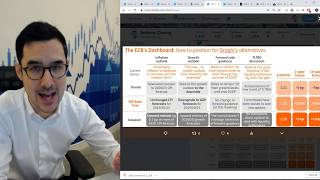
Anthony Cheung and Sam break down the ECB's March 7 policy announcement, focusing on three key signals: staff growth and inflation forecasts, TLTRO details, and forward guidance timing. The ECB will likely cut growth projections but hold rates steady, while the TLTRO decision becomes the main dovish or hawkish tell.
Chapters
All right, very good morning, Thursday, 7th of March. Welcome to ECB day. That's going to dominate the kind of focus for the briefing from my side, at least from a fundamental perspective. I'll leave Sam to look at some of the setups in Euro, DAX, Bund, European kind of assets, both if we were to get a hawkish or a dovish outcome, and we'll discuss of what shape or form that could take in order to reach those two ends of the spectrum. Shortly. The other thing of course is Brexit. Not that the pound's seeing a considerable amount of movement, but there's quite a lot of news, and I think it'd be appropriate to just kind of summarize the current state of play so if we do get any headlines come out, rumors, tweets, you're able to react accordingly. Otherwise, just looking across the charts here, things are— it's pretty neutral at the moment. Uh, not that surprising. Obviously you've got the ECB coming up, and so big event tends to kind of saturate the market focus until that begins, which of course will be a bit later on. And then you've got things like non-farm payrolls, of course, coming out on Friday and so on. Um, a little bit of a blip of flurry of action to the downside in gold, but pretty much immediately reversed. Again, nothing fundamental behind that dip, just kind of lower volumes, a bit of a break of a technical level, blip, and recovered. I think more than that, I would say. Otherwise Stock index futures marginally lower, a little bit of the kind of fatigue, if you like, in the Asia-Pacific session overnight. Asian equities just generally drifting south. One thing I have just seen, actually a bit of breaking news just came out, not that this will have an immediate reaction effect on the major assets that we look at, but there's been 18 people just been injured last few minutes by a grenade blast at a bus station in Indian-controlled Kashmir. So certainly the escalation of this is continuing. And of course, this was a big focal point for markets last week. You'll have to excuse the background noise. That's Charlie. I don't know what he's doing. He's just trying to put me off. He's gonna have to do better than that. Um, yeah, so the— yeah, India, Pakistan, that wasn't so much of a market mover for the broader market. Certainly if it escalated substantially and it started to draw in some of the other kind of allied nations, predominantly then Western-based America, and then quite interestingly you had China overnight that was applauding Pakistan for its very calmed, measured response, if you like, to the situation. But obviously this has just happened now, so be interested to see if there's any comments that come out. Otherwise as well, if you're a homeowner and you recently purchased a home, Halifax house prices just came in at 5.9%. So they've gone up 5.9% month on month in February. Expectations, of course, are flat. So, you know, house price growth is certainly not expected to be that significant. I'm sure there's some reasoning behind, maybe a technicality of why it's just jumped, but obviously no reaction in the pound. It's a lower-tiered piece of information, but I thought I'd just point that out. So rather than talk about any other news, I'm going to jump straight in, talk Brexit and then ECB, and then I'll hand you over to Sam. So what is the current status? Well, this is where we're at. Right now, um, Theresa May. And the Prime Minister and the government outlined steps to develop technology to keep the Irish border open. So this is about the, uh, the PM engaging with proposals for a technical border solution. The plan then would not strip the Irish backstop out of the withdrawal agreement. So this comes after obviously breakdown in talks that happened. We were discussing that this time yesterday, where Geoffrey Cox, the Attorney General, who's kind of the main person in charge of the legal process from our side to negotiate with Barnier, failed miserably. And apparently it was the worst kind of abrupt end to that meeting that we've seen for many weeks. Now though, the government is in kind of a real pressure point to try and get May's deal over the line, of course, before May 12th to have a parliamentary vote on whether or not her deal is going to be accepted. Otherwise, we start moving into other alternatives, which we'll discuss shortly. So a little bit more about what May's pushing right now. The government will set up apparently 3 advisory groups to help develop arrangements that could be used from the beginning of 2021, looking to kind of, uh, put aside £20 million to testing potential technologies. The measures aimed at pacifying pro-Brexit members of the Conservative Party who want the Premier to broker an alternative to the so-called Irish backstop. So if you remember, this is that idea of using a technical kind of video camera, if you like, technology in order to keep the border open to satisfy then both North and South, the Republic of Ireland. That there would be no growing friction there and no barrier to transportation and movement between the two borders. However, I mean, this is very similar to, if you remember, the, the Malthouse Compromise that was being talked about before. This is where May is trying to go in order to get, again, those Brexiteer-minded kind of ERG members on board. In addition to the threat then of, you don't vote for me, you get no Brexit at all, So, you know, trying to cajole the support internally, but the problem is here is that Europe are just remaining firm, that that's not going to wash. So on that point, uh, there was rumors in The Telegraph this morning, uh, that Brexit deal, May's deal that she's going to bring, is going to be defeated by 100 votes. So obviously it's got a little closer. She may have got some on board but nowhere near enough to get the deal through. What this means then is if that collapses, her deal is defeated heavily in Parliament again, Downing Street apparently, according to The Telegraph, is already making plans for a third meaningful vote on the deal. The assumption that Tuesday vote is lost, and Mrs. May is considering making a major speech on Friday to plead for support from MPs to have just one more go, third time lucky. The problem that that would create though is that you would likely then get a whole, you know, the people were pressuring her, even senior cabinet members within the Tory party, that they would resign at this point. If it goes to round 3, that's probably going to trigger that, hence the reason why a third vote is probably highly unlikely. On that point, this is of course the BBC political correspondent Laura Kuenssberg this morning. And someone was talking about this earlier, Christopher Hope, who's the chief political correspondent of The Telegraph. And this is what he was talking about, allowing a third meaningful vote just days before the Brexit day itself, following then swift succession votes by no-deal extension votes. Laura Koonsberg saying she heard that yesterday, denied strongly by Number 10, and fair to say that Remain Minister front kind of bench ministers would go absolutely ballistic and probably with immediate resignations. But of course, we know what the political scene is like. It can be surprising and volatile. Stranger things have happened. But I'd say that this probably is a lower likelihood at this point. On that point, what is Europe saying? Well, obviously the the sticking point here remains Northern Ireland. And this was a quote from the Irish Prime Minister, and he said, quote, the position as of today is if we have no text or draft text to consider to get legal advice on. I'm not entirely sure what MPs are looking at in London. We have no legal texts or draft legal text to consider, propose amendments to, or seek legal advice on. So basically, and, and the point being, that first article I showed you on Bloomberg, this technological solution that doesn't exist at this point, it's a hypothetical that's based on a Norway-type kind of model used for the border crossing kind of procedure, if you like. There's no— the technology in itself, as far as I understand as well, hasn't even been created at this point, i.e., the actual definitive solution to cover the size of the border. So again, we remain as— kind of firmly is my belief that the possibility of May getting her deal done, I think, is very low. On that point then, following this conversation through, if we start on the left-hand side of this tree This is the meaningful vote coming up on the 12th. What is the probability here? This is Nordia Bank, which have assigned percentages. I think it's always quite nice when a bank, you know, puts its neck on the line and assigns some probabilities to these outcomes. And I would kind of agree. I would say that her vote going through, it is a possibility, but I would say it is the lowercase one. I'd say the base case is that, uh, she doesn't have something to bring, or indeed it fails, as the Telegraph was suggesting, by 100 votes. Let's remove then the vote passing. Well, actually, just quickly to finish that off, the vote passes, May gets her deal through with backing. This still requires actually a technical extension, probably of a couple of weeks to 2 months, in order for the ratification process to happen in Parliament. So even that does need some degree of an extension, hence the reason why as well the fact that you have a vote pass, we go through into an orderly Brexit, that in itself would be mildly positive for the pound because then we move into transition and so on. Let's follow the other way because that's more likely. Let's go up into the, the kind of red zone. If you remember, if she fails that vote, she has already committed, as she tabled 2 weeks ago, that she will hold 2 votes in a sequence of a vote on no deal, i.e., do you want to keep that as an option on the table? Now, nearly everyone from the cross-party commentary that we've had— obviously there are some outlying Brexiteers— The overwhelming majority and belief in markets is that if that gets brought up, then there's a 95% probability Nordia are giving that that is just removed. So do you want to vote on a no deal? Uh, nay, move on. We then have to start talking about an extension. Vote on extension deadline. Yes, that will probably go on. The extension beyond then, the deadline opens up then the next area here which is do we go back to no deal at that point? But that largely would have been removed at this case. Extension of summer deadline because we've got the, the MEP situation coming up for Europe. Do we have the Malthouse compromise? General election, second referendum, seek EU concessions, second vote passes, then kind of an amendment deal, and so on and so forth. So hopefully this makes makes it a little bit more clear of what's going to happen. Certainly next week, this part, the, the left side of this chart, will be completed one way or another. All right, moving on. That's Brexit updates to get you up to speed. So let's talk about the main event for today, which is the ECB. I'm gonna start, I guess, from the bottom up. Just to make sure everyone, even the new traders, are up to speed of exactly what's going to happen today. And that is the ECB is a two-part event. So 12:45, we get the initial announcement on interest rates, of which no one is expecting an interest rate change right now. And I'll discuss what it is that we are looking for. But they also release a statement at 12:45, and there is something of particular interest that the market is going to be looking at at that point of the release, and that is something called targeted long-term refinancing operations. In other words, loans issued by the central bank, ECB, to the banking system in order to add liquidity as a form of then lowering lending rates through interbank lending, essentially. Now, that is going to come at 12:45. We'll get into the, uh, the detail of that in a second. 1:30 then you get the press conference with Mario Draghi. Typically that tends to be, uh, in terms of a release and therefore market reaction function, 12:45 is bang, it comes out the headlines and the market goes into immediate volatility as Bloomberg kind of drop all the headlines in an immediate fashion, including of which will be that Teltrow comment. Now, 1:30, it's a bit different. He gives an opening kind of statement, but then we go into a prolonged Q&A session with the press in attendance, which can last anything from about 45 minutes to, to 1 hour. Now, there definitely is a hierarchy to the questioning format. First questions are typically the most influential and have the ability to move markets the most, and then we go down the kind of hierarchy of the press and the questions get less pressing and by default less market moving. So that's the structure. The second half part is much more— you have to work with the ebb and flow of the commentary. So being able to get the comments quickly, whether via Twitter or Squawk, is absolutely critical if you're going to attempt to trade that type of event. Okay, first things first then, as we, we break this down as a bit of a preview, is monetary policy is quite a complicated issue. Um, you know, I was speaking to this to some of the guys before. It's going to take you as a new trader many, many months to get your head around basically learning a brand new language, the code words of a central bank as it's often referred to, because singular words added, removed, subtle structural sentences changed can have very radical implications for what markets think that the forward guidance is then for that central bank going forward. But what we can do, and this is even the case for experienced traders, is this event goes on for quite a long period of time. If you were to actually, you know, take verbal commentary from Draghi into word count, you're talking about 15,000-20,000 words probably. What's key is what specifically— how can I break this complex event into very simple binary parts? Like point 1, the staff projections which are coming out today. Point 2, the detail or not and timing around the Teltros, the long-term refinancing operations. And in 3, in Q&A, What's the general overall perception about the downside risks going forward? For example, the forward guidance on interest rates, could that change from through summer to something more delayed? So what you do by doing this process, being much more fixed on singular elements of a bigger, more noisy event, is you can basically be a lot more effective of where is it the market will take its cue for its corresponding move, rather than trying to just, you know, make your way through the stormy weather of a release when markets are jumping all over the place. That bigger, more definitive, clean move will come probably from one of those three points I just discussed. On that regard then, this is an excellent crib sheet that gets put together by the chaps at ING. If anyone would like this, more than happy to print it out for everyone to have on their desk, no problem at all. Now the reason I like this is the infographic consolidates very clearly what specifically to look out for. So you've got the inflation outlook, you've got the growth outlook, forward rate guidance, and the Teltrow discussion. Now what's good about this is the top line, the orange part, is the current exact words and phrases used by the ECB to describe each one of those sections. And what's interesting about this graphic is it gives their base case, which I absolutely agree actually on all three or all four of what they're suggesting, but it then gives you, well, what needs to happen or what needs to be said in order for the markets to interpret this as dovish, i.e., the euro weakens, the DAX rallies, bunds move up, so on and so forth, or the opposite and it's hawkish. And you can almost use it as a checkbox as they're speaking to make a little bit more sense before you get to the point where you can just interpret these on the move a little bit quicker when you get more experienced. So I'll share that with you guys shortly. So the base case here that they're looking at is that— and let me read you through a few things first, because yesterday you'll remember we had ECB source comments. Now again, for any new traders, let me just do one thing first. What is a source? A source is not 'My mate Dave the greengrocer tells me the ECB are going to do details on the Teltros.' I wish Dave at the greengrocer's did know that. He'd be a very useful person to know. What a source is, is an actual person at the ECB who has a relationship with a person and a financial newswire, i.e., Bloomberg. And the ECB actively use this as a backdoor communication strategy to drip-feed ideas into the market, or as what we did yesterday, to almost prepare the market to mitigate ensuing volatility on the day. So it's a very much a frequently used avenue that the central bank uses or deploys, because a source by default means then, even though we all know it's them saying this, they can say, well, it's not the official line, we haven't said that. So it gives them a lot of flexibility in that sense. Second point on sources is use your kind of logic. When do you think a source is going to be most relevant? Now, if I was to go back and show you an Excel spreadsheet of every single ECB source comment in the last 4 or 5 years, 95% of those come the day before an event because often when there is some complexities around the situation, like this time round with these new loans that they might issue and forward guidance and so on, they don't want to dump that all in the market at once. So they drop in little pieces of information to desensitize us, almost to control and have more of an orderly release in markets as they, as they deliver it. And so The, the second part of that is you can often see sources come out. So the most prone time is right before the event, either in the 24 hours or 12 hours in the run-up, or in the 24 hours after. This is when often the markets might move radically on the back of something the ECB says. So by default then, what happens is a source comes out to clarify and re-guide markets back to their original intention. So that's, you know, you can almost anticipate when sources are more likely to happen, so you're just a little bit more aware of it. And obviously, if you were contemplating any type of euro-denominated asset to trade, potentially there's an increased risk to volatility, and so execution of your strategy under those types of conditions. Just something to be aware of. Now, yesterday, the sources, they forecast downgrades are set to justify— that's downgrades to things like growth in these forecasts, for example— to justify a new round of funding for banks, according to people familiar with the matter. The sources, staff have been working on the design of loans, and the question is whether the Governing Council will unveil all details on Thursday, or wait until April. That decision and the text will come at 12:45. This is what I'm looking at. This is the last ECB press statement that you see at 12:45. So if we do get any clarity on this, there should be an additional sentence or two added to this statement, and then that will give us the details of what exactly has been said. Um, the main thing, the reason why people are so fixated on this Teltro idea, um, well, let me get to cover a few points first on the, on the, on the growth forecasts, and then we'll get to the Teltros because that's a little bit more complicated part. Now, every alternate meeting, the ECB will release either Eurosystem or staff projections. Today we're looking out for the latest ECB staff projections. Now, this is a useful table by Danske Bank, and the arrows are indicative of what they think will be the outcome, the brackets being the existing forecasts from the ECB staff, the numbers then being their projected ones. So as you can see, we're expecting downgrades to GDP and HICP inflation. That's harmonized, basically, inflation across the eurozone. So markets already factoring this in. Don't forget, economic conditions have been particularly weak in Europe. Uh, Italy, the third last largest economy in the eurozone, is in a technical recession. Manufacturing data has been weakening almost most clear and worrying in the case of Germany. You've got export-heavy economies are suffering under this ongoing trade war. Factories in the eurozone saw export orders drop the most in 6 months in February. There's a risk of a disorderly Brexit. There's political situations going on in Italy and France. There's a lot going on at the moment, which means the world has moved on in created a more pessimistic environment. So inflation, demand, and growth do need to come down. I mean, that's— I think that's expected. Question mark then for these numbers is, well, how much are they cut? And that's going to be key for that part. The next part then is about these, these TLTROs, these long-term refinancing operations. Now, the reason why this is such a talking point right now is that over the course of the next 12 months, so from today till March going out— well, this, this is going out to June 2020. In fact, I'm just trying to check, actually. I'm not sure if Bloomberg have made a typo here, whether that's '19 it should be instead of '20, and that should be '20, not '21. The point being though remains the same. There's essentially, in summary, €700 billion worth of these loans that have been issued from the Central Bank that have been gobbled up by all these European banks. Now, from a geographic breakdown, roughly half of that €700 billion has been taken by banks in Italy and in Spain, the two countries which you would imagine have had the most kind of economic strife and therefore required more assistance by taking liquidity from the central bank. So by default, if the ECB start going down the route of another round of these loans, they're going to be the biggest benefactors of that. Now the reason why this has come around now is that that €700 billion scaling in starts to mature, because these are loans. They're only fixed a 4-year term. So a lot are coming up for expiration, and some of those in June. And so by default then, the ECB needs to start making some intentions towards what are they going to do going forward. Because remember, the economy is moving weaker, QE has stopped, and they're communicating they're going to hike rates through the end of summer. So at this point, you've got a fairly tightening monetary policy in an economic deterioration. So these loans would be a nice fix to address that. Now, there are lots of different possible changes though, and things we could look out today. One of the key things is Mario Draghi— does he just flag the fact that technical teams are now addressing this and looking into the what is exactly needed, i.e., it's going to happen 'But we're investigating, more details to come at further meetings, say April.' Or does he go line by line, detail, 'This is exactly what we're doing, the due diligence is done.' The latter point is way more dovish, and so therefore you'd be looking for the corresponding reaction in, in markets. Interestingly, the other side of what they could do, if we go back to that original chart here is Teltros, uh, sorry, forward guidance. At the moment, they've said that rates to remain at their present levels at least through the summer of 2019, right? So think about it, markets are priced for an ECB rate hike not until well into 2020. So this is way out of kilter with what markets are expecting. Could they push this back Now, a very interesting comment that came out recently was from Jens Weidmann, who's the head of the German Bundesbank, so by definition tends to be one of the most, if not the most hawkish members of the ECB. And he's one of the contenders, of course, although not the favorite, to replace Mario Draghi when Draghi's term finishes towards the end of the year. Now, what he said Jens Weidmann, was that does not expect a rate increase this year and said that investors' expectations for a liftoff in 2020 are plausible. So hang about, you've got the most hawkish member of the ECB saying something that's way off track of what their official communication line is. And if he's saying that, well, wow, what are the doves thinking then? Because they're gonna be even more even further down the timeline. So at some point, this language needs to change. If that language changes today and they outline lots of detail on the TLTROs specifically, that's going to be the most possible dovish reaction you could see. That with substantial downgrades on growth and inflation, that's the uber-dove release. Me personally, I think that it would be a mistake from the ECB to go that far. Remember what central banks are like. They like to keep as many options available as possible. If you have a gun with 6 or 7 bullets of monetary policy ammunition, why are you gonna fire all 4 or all 6 of your bullets at once? You wouldn't do that. What you would do is do one. Then wait, see if the market responds, try to use verbal intervention, and then if necessary do 2, then do 3. Hopefully then this starts to bed in and markets start to stabilize and recover, and so therefore you've always got options available at your disposal. So with this, it's either got to be one or the other here. I think the downgrades are coming. The question is, how radical are they? Forward guidance, I don't think that needs to change yet. Remember, they said through summer, indicative of Q3 or Q4. It's only March. So even though we know this is going to change, I think they'll hold off for that, and I think that's sensible. The telltale, though, is going to be where the detail comes. On that front, final piece, uh, I won't go into this in detail because this is when this starts to get a little bit more complicated, but it might help for those in the, in the live room. This is looking at the Teltro announcement specifically. So now what you're looking at is there's 3 objectives the ECB could deploy these new loans. Either trying to prevent liquidity problems arising, especially in the case of weaker banks, which is the first column. Two, trying to prevent a relatively rapid fall in excess liquidity, or 3, trying to provide additional easing. Now, the difference here with these 3 different top-level objectives is, 1, this is only liquidity, this needs a tweak to forward guidance, this needs a more radical change. This would be more of a bridging situation to just make sure banks are okay. This would be kind of really beefing up liquidity in the area. Maturities are quite key. And actually, the maturity date could be quite a big signal as to then how hawkish or dovish this is. Easiest way I can put it: the shorter the time frame of the loan, the more hawkish it is. The longer it is— 4 is the current— anything above that would be dovish, i.e., they're gonna have it in the system for longer, more assistance. And then it's about the type of interest rate that it operates around— the main refi rate with a spread, or the complete opposite, as low as the deposit rate and fixed rate, which if you remember, the deposit rate, the ECB is currently at a negative rate. So I'm going to leave it at that, not going to go into it anymore because hopefully that just gets you up to speed with a lot of the kind of top-level stuff that we're looking at. I'll let Sam jump on. Obviously, for the new guys, what I really want you to focus on is, you know, if you need to rewatch this video again just to go over things or ask me any questions, please do. But these events, as you can see, can be quite complicated. But if you actually can break it down to some very distinct parts, that's how it can be a manageable situation despite ensuing volatility that will likely occur upon release. All right, hope that was useful. I'll hand you over to Sam. I'll let him look at some of the charts, and good luck for this afternoon.
Thanks, Ant. Yeah, with euro, obviously the focus coming quarter to 1 UK time, probably best to sort of leave that. And then we'll come on closer to the time and have a look at the chart where we're trading closer to the event and where it could be worth potentially getting in and out depending on, on each scenario. Uh, but just, uh, having a look elsewhere, another few of the dollar pairs. It might be interesting here to keep an eye on, on the pound. We obviously had a bit of a recovery from this this bull run, if you like, where we come to one of the highs since September. But now potentially looking like we've broken out this trend channel to the downside. Pivot holding well, but I'll be interested to see what happens should we get a retest of this, uh, well, downward trend around sort of 130, 150 by the looks of it. If it was to come in there, the only reason I wouldn't fancy it too much, or maybe I'd look to go long, as if the trend line from the, the low of, of the month and yesterday's lows, if that was to break quite strongly. But for a couple of these markets, as we'll go through, these, these sort of trend channels seem to have presented, or seem to present, a possible change in direction and an opportunity in this case to, to look for a long. Um, just one to, one to, to keep an eye on. With the Canadian dollar yesterday, um, obviously we had the, the rate decision out in an area that I like the look of to sort of continue this, uh, downward trend, which we haven't just been on from yesterday. But if we have a look over the last sort of couple of weeks or so, we're, uh, we're quite high down from, from, uh, well, what's what we've got here, the, the 25th of Feb. But, uh, yeah, looking on a shorter time frame, just having a look at the, the trend that we, we, we broke out. Let me just get this roughly on. You can see see here matching up quite nicely with where the pivot would be. This, the, uh, the slow trend in the build-up to the rate decision over the last, uh, sort of 2 and a half days before that decision at 3 o'clock yesterday might well be that, uh, should we get a bit of a grind higher, which the Canadian dollar will do following a sort of data release anyway, much similar to sometimes the euro offer an ECB release where you get the initial reaction in the coming days, the market sort of just recovers back to where it was. But anyway, here looking at the pivot, also got in the mix, uh, one of the previous highs, uh, from the sort of brief recovery yesterday into the back end of the session. So that'd be an area of interest that I'd be certainly looking at continuation if we weren't to get up there. Now you can see a trend already forming quite nicely here from that low yesterday to the this morning's lows as well. So, uh, with the dollar just weakening a touch, it wouldn't be too surprising to see a couple of these pairs just push a touch higher to get in the mix around there. Aussie dollar, um, talked yesterday about the potential— and if he's put this on a 60-minute chart— to, to get in a short should we get a retest of, of what was such a good level of support back in February, and then Uh, obviously the, the 5th of March as well. And if this weaker dollar was to continue this morning, we could get a test of that around sort of 70.60 in the Aussie. And I think that's not a bad place to potentially look to, to get the short. You can see just those levels of support hopefully acting as a resistance point for, for now. See, the, the pivot has already had a couple of tests, so I'd just be a bit wary about the short should we get back to that point. Um, obviously the high of the day, previous low from, uh, the 6th as well, uh, on yesterday morning to, to have on the chart. The yen, so just having a look at the yen against the dollar rather than dollar-yen, you've got quite key resistance, haven't you, around the R1, which has been tested on multiple days. So I'll be keeping an eye on this. The, uh, market over the last, well, couple of trading sessions, weren't about 5, 5 trading sessions has has been quite range-bound. We've already had a test of that R1 today, which was yesterday's high. Another one of that, you might start to see a bit of a change in fortune here, and the yen could look to appreciate. Not really buying into the fact that equities have had a couple of sort of bad sessions and not really catching a bid. S&P on quite a key area this morning. The S1 was also, uh, the previous sort of lows and highs from the 14th. You can see they're quite a key technical level of support. If that was to go and give way, uh, well, I think you could see a bit of a sharper move over the coming days, news dependent of course, down to the low that we had on the 15th. So equities, you know, ranging last couple of weeks, albeit the, the big move that we saw on the, on the afternoon of the 4th, but quite a key support important level to, to have on your charts. Having a look over at gold, we had a bit of a tech break lower, and the way gold can sometimes convince you it's going to only snap back— we've already had that, and we're again back into a bit of a range similar to the yen over the last few trading days where it's all lacking direction a bit. So looking to potentially play that range, you've got the R1, yesterday's high, looks quite key. Um, obviously to get through that, we'd have to go through quite a strong level of resistance around 1289, where you've got the highest from 1 o'clock yesterday and then early this morning in the Asian trade. So having a quick look at the overview, the DAX worth keeping an eye on how we, we trade around here. Uh, probably worth getting a bit of a trend on from those highs, and if that was to go, you might get a bit, a bit of a relief rally elsewhere. But of course, with the ECB, probably best to wait until that before getting stuck in. But maybe use the DAX as the, the key for maybe the NASDAQ, for example, or the S&P. That if the DAX was to break that trend, it could be that the US equities follow suit. You can see they're sort of testing those levels now, uh, which, uh, well, we've— last sort of couple of days in the morning, US equities have done okay before for drifting lower post-US cash open. Oil, we had the build yesterday, and on its own, if that was the only thing that mattered, we of course would have pushed lower. But because it wasn't necessarily as, uh, as big as the API amongst other things, we have pushed higher from that, uh, that low. And similar to another few markets ranging over the last few days, so potential here for a break either way once this happens. Retest of the trend line there that we broke overnight yesterday would look to sort of come in, uh, at quite a key level of resistance from the, the fifth as well. So if you're keeping an eye on any sort of retest around there, 56.77, uh, as well. Uh, EURGBP testing, uh, actually the liquidity on the future is not amazing, so let me just put this on a longer chart and you can see Let's just get this trend line on. Coming up to the pivot looks quite key, doesn't it, as an area, uh, short term. But of course ECB later, so for the euro-related markets, probably best to wait and see for opportunity-wise. The DAX, you can see now, just respecting that trend line. So using that as a gauge for the US might be not the worst thing in the world. Pound just coming under a bit of pressure here. I'm not sure if there's anything behind it, but, uh, worth keeping an eye on that pivot and that retest of the trend line, which would be a bit lower down as well. Any questions, please do let me know. Of course, we'll be on the mic throughout the morning ahead of the ECB as well, and, and I'll take a better look at the markets just a few minutes before that. Hope you have a great trading day, uh, and if anyone is looking for a stock to buy just quickly, it might be worth having a look at the Manchester United share price. An unbelievable win, first time in history that a team that has lost by 2 goals at home has turned it around in the away leg. Their share price probably selling yesterday because of the fact that they were expected to drop out of Europe, already up a tiny bit in pre-market. Might be worth having a look at that recovery back to those highs, 7% off the, the high that we saw at the back end of February. What a result for, for them as well. But yeah, any questions, please do let me know, and I'll catch you throughout the day.
More from Anthony


Inside the Biggest Banking Stories You Need to Know This Week (Anthropic, Diageo, Private Credit)


Inside the Biggest M&A Deals You Need to Know This Week (UniCredit, GameStop, eBay, Eli Lilly)







AI Breakthrough or Hype? Anthropic’s Claude Mythos, Tim Cook Steps Down & LIV Golf Collapse