Non-Farm Payrolls LIVE - 4th Oct 2019
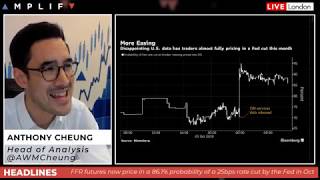
Anthony Cheung and Sam break down the non-farm payrolls release live, analyzing weak economic data that's pushed markets to price an 88% chance of a Fed rate cut in October. They map trade setups across stocks, currencies, and gold, and warn new traders to avoid impulsive entries during the volatile data release.
Chapters
Okay, so just testing the mic. Testing, 1, 2. Understand. Can you hear me okay? All right. So just, just cracking on then with the session. There's a few things now to go through because we've got nonfarm payrolls coming up in about half an hour's time and it's a little bit of an impromptu session by me and Sam. We weren't planning on doing this live. However, we've been inundated with a lot of questions, both people internally and externally. Asking us about our view about how things are going to react, because obviously it's been quite an interesting week where we had a lot of weak economic data that did then have the response in markets where equities were selling off for the predominant part of the week. And then we rallied back quite aggressively yesterday, even though we had further weak data. So it does mean then that I think markets are very sensitive at the moment to US economic updates. In the form of data. And as I'm going to show you shortly, there's a lot of Fed speakers as well on the docket for later on to also get through. So usual routine for those who don't subscribe to the channel, just quickly, my specialism is kind of in short-term intraday markets from a global macro fundamental point of view. My colleague Sam is one of our more senior traders and he trades definitely much more from a technical perspective. So I guess we both complement each other, and hopefully we can cover all bases in this, this short build-up to payrolls. Um, quick look at the charts this morning to see how things have been playing out thus far. And, and obviously it's been relatively quiet. This is always the case ahead of non-farm payrolls, even if we're in a a period where the data isn't important, it does carry that kind of symbolic historical significance that it really cuts to the, the lifeblood of the US economy. And the US economy, of course, being the world's largest in the economy, means that job situation is ultimately very key to interpret then the strength of the economy and what a central bank is going to do then in reaction to that about their future policy. And it's that, that alteration in fluctuation of future expectations that, that really does move the value of the assets day to day that we look at. So let's have a look then. Things have been pretty quiet. The FX market, the dollar index, is basically flat. It's been that way really ever since the session in UK and Europe begun. A little bit of volatility in the pound. If you did catch my briefing this morning, I was talking about what's next for Brexit, and really the next 2 weeks are very key because failure to get a secure deal from Boris Johnson's latest plan in the next 2 weeks means that technically speaking, given that Ben Bill that passed in UK Parliament a few weeks ago, he would then need to submit a letter to Brussels to request an extension. And the question mark was whether Boris would do that or not, but he has come out earlier, about half an hour ago, and said, committed to sending the Article 50 extension letter, according to the lawyer. So I actually think that's to be expected. I do think that plays into Boris's hands, because if a deal doesn't get done by then and he does need to request an extension, he can then wash his hands clean of having to do this do-or-die-and-resign situation, because he can say it was Parliament that blocked me, I wanted to get the deal done. And I think that will resonate strongly with his electorate, and his ambition is still for that general election to get a big majority. But gonna park Brexit for the moment and just focus on non-farm payrolls. So equity index futures pretty steady, oil, T-notes all the same. So What are we looking at here for this non-farm? This is the reaction of probability of— well, this is the implied probability of a 25 basis point rate cut from the Fed at the end of the month. 30th of October is their next decision. As you can see, here is an explosion at what would have been 3 PM London time yesterday, the release of the ISM non-manufacturing, the services data that we had. Of which came in reflecting that the US service sector is in fact growing at its slowest pace in 3 years during September. And this then did see at the high, uh, the expectation altering from around 75 or 70% to 95% assured as far as market pricing that the Fed are going to cut and deliver that in the October meeting. Um, we know the Fed have been cutting, they've cut twice of course since their 9 rate hikes in that sequence we saw commenced from 2015. The idea though, what we're trying to figure out at the moment going forward in the medium term, is, is this simply just a mid-cycle adjustment, is what they've been trying to have us believe, or as the data has been severely weakening at the moment, is this going to be something more sustainable than just a short little blip in interest rates when we look back at this in future? So What does October look like? As of right now, federal funds rate futures are currently priced in at 88.2% by the end of the year because there's only 2 more Fed meetings left. There is no meeting in November, so there's one at the end of October and there's one in mid-December, December 11th. And actually now market pricing is that rates will be cut twice by the end of the year. This is quite a radical shift from where we were just 5 days ago at the beginning of the week. The probability of us being at the same level as what we are today is only 5% as far as markets are concerned. Now, the reason for this, of course, it was the really the big one that really shifted the balance was ISM Manufacturing. Now, we know that if we go back and look at this on a, on a candlestick or the bar chart to have a look at how that's been performing over the last 12 readings, ISM Manufacturing PMI dropped to 47.8 on Tuesday. That in fact was the steepest contraction in manufacturing sector in the US since June of 2009. Obviously these ongoing tensions, accumulation of it, that it's having on activity United States ongoing with China, is having its knock-on implications for that sector. And so much weaker than expected. We then had ADP and it was only a slight miss of 5,000, but down revision to the previous. And certainly though, does show quite a distinct lower average in the past 5 readings than certainly what we had had in the prior 5 to that, um, from the end of '18 to the beginning of 2019. So quite a split between Q1 and Q2 situation. And then yesterday's reading, the ISM Non-Manufacturing slumped to 52.6, That was way below expectations of 55, lowest reading since August 2016. And then, then we have the overall setup of the other figures. Challenger job cuts, maybe a slight sweet spot, but I guess in terms of how the market's perception and the weighting it tends to give to these numbers, Challenger layoffs is really much lower hanging fruit in that respect. Similar sort of case for the initial and continuing jobless claims. That's not really a great factor in this. I'd say the employment constituents of the ISM both reports are much more significant alongside the ADP, and importantly, all three of those have been weak. Other figures, the JOLTS job openings fell below expectations. The Consumer Board Conference— Consumer Confidence Index saw a decrease as well from recent months' peaks. but Michigan was slightly higher, bouncing back to above 90. So overall, when we look at this, and this is the usual routine of the employment indicators that are the prelude to the BLS's official report for the nation, have been on the negative side. Hence the reason why a lot of people are looking for a downside number. Now Bloomberg were putting around the talk at the moment of the whisper number is something more akin to 125,000. What is the expectation? Well, the expectation today for the headline reading is around 145,000. So as you can see on my calendar here, that's the headline reading. We are low on the street of 85. Not sure what bank that is. I do know that Deutsche Bank are going for 100. Deutsche Bank's Supporting evidence for that lower-than-consensus expectation is that employment indices in the PMIs and the ISM reports do not look encouraging. They say that a weak report will likely add fuel to the repricing of the Fed seen this week, which we've already seen, as we said, up to 88%, and now pricing in just on the balance a secondary cut to happen at the end of the year. The upside— there is one bank looking for 216, so so completely on the flip side. So let's just have a quick look back at payrolls. 85 and 216, where would that put us? So let's just get non-farm payrolls up and have a quick look here on the, the previous data sets. The, the last reading was 130, and this has definitely— the employment situation become a kind of increasing importance for the markets given the way of which this data really has been weakening. I mean, the last 3 months have seen persistent decrease. We had that, that lowball number at 62 back in May, then it rebounded back to 178, but then it's kind of dripped lower, 159, 130, and then again the whisper today is for 125. The lower bound at 80, that's not shocking in regard to really the last several prints. We have had numbers lower. If we get a bounce back up to 200 plus, we but that put us back at the April reading. One important thing though, and I'm sure Sam will, um, will ratify this kind of point when he talks over the charts and the setups and the execution from a trade point of view— Nonfarm payrolls is way more than just a singular headline number. It's definitely not as binary an event as that, as you guys will all know. The ones that are most important, secondary to the headline figure, is you've got average hourly earnings. Now they're expected see a minor decrease on the month-to-month to 0.3%, remain steady year-on-year at 3.2%. You're then looking out for any revision to the previous, which was 130, then the 2-month net revision, and then also the unemployment rate. Now, I would certainly discount the Canadian trade balance numbers and things like that, not unless you're trading the loonie, but I think you have got to literally be a bit of a loonie to trade the loonie. Because it's so volatile, particularly trading massive dynamic for the dollar fluctuation that's about to happen, in addition to the CAD also seeing severe movement. Just be very careful if you are looking at that. Definitely would not get involved in trying to hit market aggressively. Would be looking for strategic entry points thereafter in the second, third phases of the move. Um, so yeah, As for the new guys, if you are new to watching non-farm payrolls, before I hand you over to Sam, all I would say is that as tempting as it can be knowing that there's almost guaranteed volatility on the back of releases like this, that by no way means that it's easy money to take out of the market. Quite indeed the opposite. I would always suggest for new people to, to really stay out of this type of thing. Watch it multiple times, review it, study it, then sim trade it before then you take it on with some smaller size before you ever really start trading these more news-driven high volatility events which typically do put stress on your psychology, your risk managing of the trade, your, your precision of execution, and all these other factors that make a successful trade. Um, the other final point is don't be duped as well by the initial knee-jerk spike. Remember, the algos are programmed on a first-in, first-out response, so they often do react violently to the first headline reading. But nearly always what we see is, given the, the various multiple data points we need to look at in an entire report with payrolls, you can often see a spike and then quite an aggressive fall back, which can be quite dangerous if you're hitting market aggressively. So all in all, I'd say yes, if it's a real standout one-dimensional numbers and you get all numbers pointing in the same direction, sure, you can look to get a little bit more aggressive. Otherwise, uh, usually the more prudent approach is to digest, see how— what overall— how the market reacts. As Sam will discuss, picking out technical levels on both sides of the coin, not looking to go in with a preconceived idea of how you think this is going to play out. Go with what you see and execute accordingly. So that's it from me. I'll hand you over to Sam. I'm sure he's got a good 10 minutes or so of stuff he wants to go over. So good luck. And I will be here live and I'll cover the whole thing as it comes out.
Yeah. Hi, guys. Hope we're We're all doing well, looking forward to, uh, the release. And I'm just wondering, it'd be interesting to see actually what you guys think if you just put it, uh, in the chat, whether you reckon there would be a bigger reaction for a better number or worse number. Because of course, as Anthony has mentioned, we've had some bad numbers recently. And, uh, I just wonder what would be, what would be actually medium term better for the S&P. Is it going to be a a really bad number and then suddenly, you know, the rate hikes are getting massively priced in and stocks actually go down the route of bad news is good news and we push higher? Or is it going to be again the case of the initial reaction we saw where the bad news is bad news and we come back lower? But from this week, end of the week, it's going to be important for the S&P, I think, where we finish. And these are levels that we went through in the briefing. You can see we— this is the futures chart here, uh, and just looking at the, uh, the zone really between 2926 and 46, if we can get back in, in towards that area, which of course 20 points to the upside of following non-farm payrolls isn't out of the question at all, then I'd be more happy to, to be bullish this market. And that's quite a key zone. The trend line that we, uh, we broke through initially yesterday, uh, is key as well. If we close the week below there, then you could well get a further push down and 2850 comes in. So where we close the week is key. And of course, that initial volatility after the release doesn't guarantee that it's going to continue in that direction, especially for, for equities here. So Chris reckoner, I think, big bigger reaction for a worse number, and I think that's right. I think the worst number here, we could see a decent move in all markets and a knee-jerk reaction lower. I do think still it's a case of bad news is going to be good news overall. And, you know, I think— I don't think we can necessarily close the week below 2850. I think we get either way some good buying pressure into the back end of the week. I've seen some comments in the chat talking about, you know, obviously the, the China talks, uh, next week as well, which, you know, at the moment seems more positive perhaps. Uh, but certainly those are the levels I'll be looking at. 2926 to, to the upside, a key level from 3rd of September that we had broken through. 46 above that if we were to get there, uh, and the trend line below. Looking intraday, uh, a bit closer, what was yesterday morning's high is, is a level I'm really keeping a close watch on. More of a, a line in the sand. If we break below there, then I think, you know, we'll struggle to really get back above there. So quite a key resistance point. The high of the day, you can see the importance of that as well, was the, the low that we had from Wednesday morning. So that coming in at 2916. So some really important levels there, to, to be honest, that I would just be keeping an eye on. We are just getting squeezed from both directions, just before we go into, uh, the release. You can see this trend from the upside and the downside, but of course on the announcement, that algo spike is going to take us out of that, that little pattern. Currency-wise, I always favor for, for non-farm pairs or US data releases in general to, to focus on the euro, um, of the, the dollar pairs. And you can see, much like with the pound, we actually pushed yesterday up to some previous levels of, um, well, what were supports and now resistance. We couldn't quite get back above there, uh, today. You got the R1, you got yesterday's high, or in the mix around that, that point around 1.1050. So that's quite a key, key area to, to keep an eye on. And, and also just having a look at the last few days, and, uh, I would like for opportunity-wise anyway to see a good number here, just because the last 1, 2, 3, and at the moment 4 days, the euro has just been pushing on and finishing higher each day. That we are starting to develop it. It's not the best trend in the world, it has to be said, but a trend higher and a break of that, break of the low, and I think we can get a decent push lower. And just the way the euro has moved this whole year, you get these gradual grinds higher and then it snaps back down. So For the euro, I'd like to see a good, good number, better than expected, better wage growth, wage numbers. And for the short going into the end of the week, that area I've highlighted to the upside, the rectangle, is, is important as well. Close above there and we could really get a decent push on and get to 1.1090 and 11 relatively quickly. This trend from the bottom side, close below there and what is the current low of the day highs from the 27th and the 2nd as well. A break of that I think is, is a good opportunity. Having a look at bonds, T-notes and gold, we'll cover in a moment. You can see opposite of what stocks have been doing, we have been pushing higher. However, we are just drifting down a touch now. So some key points of, of interest I would have on here, and you can see yesterday, you know, while the move wasn't really because of a technical reaction. We also could well come into to retest some of these trend lines also on the lows of the day. So if, if it was relatively in line, not much, uh, of in the way of a reaction, I'll be keeping an eye on the pivot low of the day. This trend line is a strong area of support. If we were to break through, and of course the strong number is going to do that, just keep an eye on these previous highs from the all the, all the other days that we have broken through. And similar again, just looking at different trend lines, you can see the high from the first became the low on the second, and then overnight on the second, then the third as well, also on S1. So some really actual key technical levels of support that have been reacting very well, uh, just to be aware of for, for bonds. A push higher and then suddenly we're, we're, you know, you know, in, in uncharted territory, not seen for for quite some, some time back into the beginning of that— what, middle of the summer, I would say. Um, as well, have a quick, quick look over at gold as well. Um, beginning of the week, we of course broke through the all-important— on the futures anyway— $1,492. I mean, you can just see how, how important this whole area was. And, uh, you know, you had a lot of people talking about the, the head and shoulders on this market. We broke through, came back, retest. Great opportunity technically to, to get short both on the day and the next day. But of course, that bad, bad figure from the ISM and, uh, manufacturing numbers have seen us push higher. And stocks coming under pressure, money going back into safe havens has seen us now get back above that level. A really strong number here and back below $1,492, ultra bearish, I believe, for gold if that was to happen. However, not looking too likely, uh, from where we are trading. The spike we got, uh, yesterday to the upside, obviously a point to, to, to consider. But as we just drop it down more intraday, again, just looking at really almost just below the, the low of the day, we've got a key technical level from many, uh, days as well. So you can see from late last evening, 1510, well respected. Yesterday morning and the night before that, very well respected. And back on the the 27th, 25th, and 26th. 1510, really key line in the sand. Also, if we have a trend line drawn from yesterday's lows, where's that going to mark up? You guessed it, right on 1510. So very important level there for gold. To the upside, the highs of the day, we just can't get through at the moment around 1516. So that's, uh, almost a breakthrough that can turn to support, uh, leading to the opportunity perhaps then to get long if we were to have a, you know, all in all worse, uh, worse release. But trendline important, be looking for a good number to see us break below there. S1, previous highs, again like with T-notes, just looking at those highs as areas of support, uh, as well. Got about 8 minutes, or 7 minutes now, uh, until that release. Uh, in terms of other possible reactions in the market, obviously you've got got the pound because of the, the dollar is always a focus. But with Brexit, you know, are we gonna see a really decent reaction in this market? I would say no. Certainly if we go back to the last livestream we did on the 18th of September with the Fed, euro moved a lot, gold moved a fair bit as well. The pound finished exactly where it was and hardly spiked either direction. So that would be the same thing I'd be looking for here. Not really worth the attention of getting too involved, uh, in this market. Of course, we've got, you know, big— bigger things to come, uh, for sure. But, you know, maybe later on it's worth having a look at those highs. We're getting squeezed in, and also those lows, uh, as well. You can see we've respected quite nicely this trend, starting from the 2nd to the 3rd to the 4th today with the 3 touches. So going into the close of the week could be quite important, uh, as well. And then a break below there or above there could lead to a significant move as well. Obviously, this is the time where people are going to start unwinding positions. The liquidity is going to start to thin out. So if you have any dollar-related positions, now is obviously the time to start doing that as well. Neil, you just asked a question: does Amplify do an online trading course or only in-house? Well, actually, you're living in Asia, Anthony Cheung, well, thank you for joining us. If you literally, underneath this video, there's a subscribe to Amplify link. You click on that, and where we got this online course coming very shortly, and we'll email all the information out regarding that. You also receive the weekly strategy report that we do on a Monday as well, Neil. So please, you know, do sign, or click the link and sign up to that. Be coming shortly, and we are looking to do as many of these live streams as possible. Of course, with some big events coming up at the end of October, you can expect a few to come there. But as I was saying, yeah, obviously people are going to start unwinding positions now, so I wouldn't be looking to get into any new trades. And as, and as Anthony said, it does not mean at all, uh, that you have to trade this. Um, we'll obviously run through as it comes, hoping for a decent reaction. I think for the The best possible reaction we need to see, you know, really wild, um, you know, uh, figures— what I'd say, 60,000, 70,000, uh, out of line— and then the wage numbers to be in correlation with that. I want to see, for best possible reaction, really, really bad number, uh, and get that. Yeah, well, yes, Anthony's just sort of saying, you know, you see all sort of questions in the chat about which, uh, which assets the best of trades. So the ones I went through there, the ones I'd focus on— gold, T-notes, and euro-dollar would be the ones to focus on. Because of course on the chart as well, they're all going to move that same direction. Uh, Will DeLucy, who you've seen in the chat, is, uh, is a firm believer, and I completely, you know, second it, that gold can sometimes give that wink that the move is going to continue. So if we are to see a bad number, the markets go higher, keep an eye on gold. The 5-minute closes are always worth keeping a close watch on as well. If we can 5-minute close above a resistance or 5-minute close below a support, just gives that extra idea that the market is going to continue that direction. So currency-wise, I'd focus on euro or the yen against the dollar, leaving pound alone because of Brexit. Gold and T-notes for the dollar reaction as well. The tricky one, and we were talking with this with the trainees yesterday, is equities. Is bad news bad news and stocks come down, or is bad news actually good news and we go back higher? Or the flip side, if we get a good number, is it all now good and the global slowdown fears subsided and we push higher? Or if it's really good, well, hang on now, the rate cut is, uh, not as likely and stocks have come lower. So that confusion there is almost better to stay away from stocks, certainly on the initial reaction, uh, anyway. I I would say, uh, the dollar itself at the moment pretty much bang on flat, only down 0.02%. Of course, that's, you know, likely to change as we come through. So the initial spike you get on the, the reaction, there's no need, I would say, to definitely feel like you've got to jump in there. There's still opportunity to come that can obviously happen with these breaks, these technical levels. As well, uh, to keep an eye on. But any, uh, any other questions, obviously please, uh, do get them in the chat. We've got that 2 and a half minutes, and we'll obviously be on throughout the, uh, the release as well. No worries, Bill, it's always good to, to see you in the chat. I hope you're, you're doing well. So Chris here, yeah, about the Dow Jones, a no-go. Similar for the S&P, and just the confusion that could come from the, uh, the number, Chris. So I'd almost— I'd be looking basically— what I would like to see for equities is a really bad number, knee-jerk reaction to the downside, and then, then we sort of price in more rate cuts. Trump comes out, criticizes the Fed, and then you look for that reversal. That's what I would like to see. And but that's, you know, 30, 60 minutes after the initial release. So in the first few minutes for me, stocks, I'm not too interested unless we were to have a really bad number. Then I'd think short is the right direction. But just because you've got the idea of rate cuts and all of this needing to be priced in off a good or bad number, I'd almost just stay away from that. Uh, lower number bullish or bearish? So a higher number, high, uh, across the board obviously except unemployment rate, bullish for the US uh, dollar. So euro-dollar lower, gold lower, T-notes lower. Where if it's a worse number, lower jobs created, lower average earnings, then we're going to see money come out the dollar, euro go higher against it, gold go higher, T-notes go higher. The only one that's a bit tricky is perhaps the S&P. Got 1 minute now, so I'm just gonna leave the mic on. Hope you're all good, ready to go.
Month-on-month forecast at 0.3, year-on-year 3.2, average hourly—
the week work—
week work hours rather, 34.4. Then move on to the unemployment rate, any revisions to headline, private manufacturing, government labor force participation. I can cover the US trade, Canadian trade, 2-month net birth death adjustments, and any potential comments from Fed's Rosengren. 30 seconds.
Yeah, so 30 seconds, guys. Do Do note though that as we are streaming live, there is about a 7-second buffer, so not a lot I can do, I'm afraid. But as I said, we'll analyze this as it comes out. I'll keep the squawk on. Got about 10 seconds.
10 seconds. 1.36, that's 1.36 below the expected of 1.45. For earnings, month-on-month flat at 0, below forecast 0.3%. The year-on-year 2.9 below forecast 3.2%. Workweek hours 34.4, that's in line. The unemployment rate, that's 3.5% below expected 3.7%. The headline, that's revised higher to 1.68. So it's a breakdown: private 114, manufacturing -2, government 22, participation rate 63.2%, US trade a deficit of 54.9. Still looking out for the breakdown, but for Canada, that's a deficit of 0.96 billion against expected deficit of 1 billion. In terms of the team of net revision, that's a plus of 45,000 with the birth-death ratio minus $71,000. No initial comments seen from Fed's Rosengren. In terms of the breakdown of the trade balance, the US-China August trade deficit, that was $31.76 billion against the prior deficit of $32.78 billion. So this is a bit of a summary of that data then. So the headline was softer, albeit slightly softer, although those earnings components, they were pretty soft. For the month-to-month, flat at zero. Year-on-year also relatively flat. In terms of the initial reaction Seen a bit of volatility in Treasury markets, uh, now ultimately lower than pre-announced levels. E-mini, that's seen upside and have also seen some volatility in the dollar.
Yeah, initial, initial first glances here. Obviously the market's still, still digesting other revisions.
Modest revision for the manufacturing payrolls, that's been revised lower to 2 from 3. Of course, it's in relation to the Canadian trade balance.
Just going with Canadian numbers. So I was just going to say that the headline, although it's weaker than consensus, obviously the whisper number doing the rounds this morning was around 1.25 and it's come out at 1.36. So a little bit firmer. The unemployment rate as well has dropped. I'll get some more details behind that to 3.5%. The expectations were for 3 to maintain that 3.7%. The one thing is the average earnings month to month was flat. Expectations was for 0.3 and the previous was 0.4. So that's a substantial decrease there. So just trying to think here, you've got dropping unemployment, but people not getting paid more with a fairly okay level of jobs being created. Uh, the unemployment rate, just having a look, a few people tweeting, it's the lowest level since 1969, but no wage growth. On the back of that. But just going through with the way the market's reacting at the moment, I guess it's taking it as a, as more of a net positive. Certainly that top line headline figure, a lot of people would have been looking for downside surprises given the nature of the numbers this week. Hasn't occurred. So yields have had a bit of a spike higher, and therefore consequently T-notes, bottom right, just retesting down at the lows here, uh, on the— and the pivot level. Equities, a little bit of a boost. So a bit more of that kind of traditional movement in that sense. Uh, gold hasn't really been able to make its mind up as yet, and I would still say this isn't completely as crystal clear as perhaps it could be because that wage component is particularly weak, which obviously isn't a good sign if the consumer is not going to have the ability to better have that disposable income to be able to spend. Therefore, demand side inflationary conditions are probably going to remain tepid. You would say then that would force the Fed to have to continue to cut. So I guess in that sense, that makes a bit of sense for the, for the equity move, but doesn't for the yield move. In that respect, that seems to be just reacting more to the fact that the headline has not come in as maybe some of the market was positioned more bearishly for it. Gold now, a bit of a break lower in gold, uh, decent pop given that was the, the break of the Asia-Pacific fairly quiet session that we had. It's a little run down there now.
Yep, sorry, didn't have the, uh, the sound on there. So I was just talking about euro, uh, I'm just saying now we've got that close below these lows here, that important level at 1.1070, 1.1017, important. Also got gold now confirming a break below that 15.10 level that we talked about with those circles. So looking here now at, uh, this is a resistance point for potential move lower. Stocks are loving it as well, but this is an important area here. Higher the day, the low from, uh, Wednesday morning. And if we can get through here, I think 26 can come quite quickly, or 27 if you like, around the, the high of the afternoon of the second bit of the breakdown as well. Around that point. So looking for some closes above these, these levels. And of course, for euro and the pound— uh, euro and, and gold— just as long as we can confirm breaks below this area, the dollar could strengthen. That trend line on the pound, we are below there now as well. So if we can confirm this break, looking at this trend line to act as a bit of resistance point as the dollar just you know, strengthening a touch on there on this at the moment. So stocks are liking it but hitting resistance at the moment. So I've got a question: will gold go below 1,500? Um, I'd be surprised if it confirmed a break below there, but, uh, for it to, to get to that point. Really key level, higher the 30th low of yesterday and the S1 as well. So I, I'd be, I'd be surprised. I don't think we, we've got that in. Why is the low of the day in gold there? Well, you can see, look here, look at this trend line from the first. You've got 2 touches there, and we talked about this in the briefing in almost trying to predict where that third test can be. And look at that, so you would have had orders waiting there. There's also the low from Yesterday afternoon, really key level, 15.03, 15.10 to the upside. There's your, your no man's land is where we're trading now. The bears will be looking to protect 15.10, the trendline. The bulls break either way and you can see our reversal continuation as well.
Okay, hi guys, just jumping back on just while I was off and Sam was covering that. I've had a chance to have a quick read-through of the actual BLS report. Again, if you ever did want to do that from a fact-finding point of view, if you go on to the Bureau of Labor Statistics website, they always have it on their homepage immediately upon its release. You just click on that, you can see the entirety of the report. And a couple things here that, that have stuck out. Remember before last month they were talking about the hiring related to the 2020 census? Well, that was negligible it was literally just 1,000 jobs. So again, you would look at that then as a more truer sense of a stronger employment figure, that it doesn't have these kind of one-off anomalies helping support the overall number. Also, employment in other major industries including mining, construction, manufacturing, wholesale trade, information, financial activities, leisure, and hospitality— so importantly, mining, construction, manufacturing— showed little change over the month. I think a lot of the reaction effect here initially, I think, was built on the fact that everyone seemed to have got so spooked by this almost apparent acceleration of an economic downturn happening in America, given the weakness of the ISM reports that we had, that this is just a little bit of relief almost. I don't think it really ultimately changes what the Fed are going to do, and I think that explains a little bit why gold the dollar and the yield have been a little bit reticent to really push on with this move just yet. But I think really what it's suggesting is, I think it's a bit more of a function, this reaction of the market was so downbeat, if you like, of what had happened. And actually saying that, let's just get this S&P on a longer time frame. Where are we for the actual week? I mean, don't forget where we were on Tuesday. At the beginning of the week, we were trading up at the 3,000 handle pretty much in the S&P. So I think the market is just a bit depressed. This number, just going through the actual BLS report, as I just said there, and I'll share it with you at the link if you want to have a look yourselves. I mean, it's fairly— it's okay. There's no real, um, there's no real evident weakness in the employment situation in variety of different sectors that really spells like there's a looming disaster or companies are putting off their hiring processes or anything like that. And so yeah, a little bit of upside just coming through. Obviously the S&P's failing yet to breach the early European opening test that we had as well, which was the, the second support on October, the second support that we had before the eventual break came, uh, following some of that US data. Okay, if anyone has any questions though, feel free to put them in the chat room. Absolutely happy to address them, whether— if I can help Sam, and just go for it. Okay, one, one thing to be aware of that I didn't mention earlier that you should be aware of is that if you were looking for a little bit of clarity, you know, does this really make any difference at all for what the Fed have been communicating and what they're thinking? Don't forget you do have a whole batch of Fed speakers for the rest of today. Rosengren, Bostic, Kashkari, and then Jerome Powell is even speaking as well at a Fed Listens event that's happening at 7 PM London time. So yeah, there's a couple of things here to be aware of where we might get a bit of a flavor for another, or more confirmation at least, by the end of the North American session of where exactly is the Fed's head at and is the market or has the market been right to reprice this October cut so aggressively like it has done? Obviously, that has altered probably a touch, but not a great deal. So federal funds rate futures are still pricing in that cut, just not to the degree of which we got to the high on the initial ISM shock that we had yesterday. So you might get some more clarity. These guys and girls in regards to BrainArt are going to be speaking later. So don't forget to note that down or factor that in if you are sticking around for later on this evening. Yeah, Tim, I hear what you're saying. I guess with, you know, negative yields, obviously for an investor. I mean, you're talking about people buying negative yielding bonds, which technically means that if you were to buy or if you were to hold a bond until its redemption, then you're actually going to have less money than when you first bought it. So instead of actually getting the coupons and then redeeming it at the end, getting your money back, it's kind of counterintuitive to then to why would you even want to purchase that debt. But again, there's lots of nuances to this, as you will know So just explaining for everyone else who perhaps doesn't, the, the, what is very important is the quality of the holdings that lots of big fund managers, an example, hold. And obviously, and when you're putting up collateral as well in regards to in exchange for liquidity from the central bank and so on, it needs to be of a certain status. And so a lot of the time it's not even optional, you know, certain strategies require holdings of a certain amount. It's just about then, you know, picking the one that you're not going to get hurt the most in. But you're right in regards to perhaps then equities benefits in that situation. But the only problem is, is that we're at an interesting juncture where, you know, are we overbought and overextended in the equity space having traded up? We're still relatively near record high levels. We've also, you know, we've seen that in the speculative futures positions we get in the weekly updates, the kind of exhaustion of long positions, and the move higher is getting kind of more shallow to all-time highs because the fact is, is it's the shorts getting squeezed rather than people taking renewed long positions. But, you know, if you've been following our briefing since the beginning of the, the week, I don't think necessarily What's happening at the moment still doesn't detract from my belief in the medium term that there is still a notion of buying sell-offs. I think we were talking about this on, on Monday and Tuesday's briefing when the S&P, you know, we had those first back-to-back sell-off days in excesses of 1%. So this is really Tuesday, Wednesday. And we were kind of targeting lower down areas of where we felt like the market might find some, some support. And I think that does remain the case for the moment.
Just talking the jobs report over here, he seems to latch on to the jobless rate. Notes at 3.5% has fallen to a 50-year low.
Yeah, so Trump, Trump tweeting, obviously talking his book. He's saying, wow, America, the Let's impeach your president even though he did nothing wrong. Unemployment's at a 50-year low. So you wouldn't expect anything else. And then, you know, this is, this is quite key actually. Well, I was talking to a couple of MSC and MBA students yesterday about the outcome of the trade war, and although for intraday traders it's all about navigating next week's meeting and the source comment here and volatility there. In the endgame, you've got to think about the political timelines and milestones that need to be met. And if Trump is to secure a second term by weaponizing things like the stock market value as validation of his administration's policies, and also that of having low unemployment rate, anything that detracts from that point— so a severe recession that led to mass job layoffs or equity prices collapsing is not what Donald Trump wants. So he has to strike this fine balance between appeasing his base and talking harsh to promote making America great with his protectionist policy. However, cannot push the envelope too far in risk that the fallout then jeopardizes the simplicity of message that he's used by using the stock market as the unemployment rate as the ultimate messaging for getting people to vote for him. So yeah, the endgame being then is the conclusion— although we've got a real interesting period of volatility to come, in the end you've got to think that the deal is going to get done. Now, what does that deal comprise of? Who knows at this point, but you would think it's in Trump's interest to get something over the line in that respect. Yeah, just looking at a few comments. I do think it is a pretty— at the moment at least— a relatively calm response to that event. As I said, I think it's more— I mean, that the data there hasn't been of complete shock in respect to the headline figure, at least. I'm gonna have a little look around, actually. I'll see if Sam wants to jump back on. I could see if I get any more information behind specifically the weakness in the wage component. I'd be quite interested to see if there's any analysis I can get a hold of, and I'll keep you updated in the next few minutes.
Yeah, actually quite an interesting time to look at, at the charts. And gold here, you can see just coming back to retest that 1510. And we'll just go over again the importance of this level. You can just see how many times we just fail to either break one way or the other, and, and that confirmation of a move below or above leads to a continuation. So at the moment you can see the first retest of that. Well, I'll zoom in because you might not be able to, but you can see it's come back and found resistance there, as you would expect in the first retest of it. And it's already had a decent enough move lower, so keep an eye on that for, for gold. 9 minutes until the close of the hour as well. Um, the target, if you are short, you've got to have the— I guess there's the trend line below, which is looking Looking good at the moment. Um, having a look at that euro right on that low as well, so just retesting some of those lows. And if gold is pushing lower, then euro you'd imagine would follow suit on that. And the pound still nicely below the, uh, the trend, and it's actually just gone to test down some of, uh, yesterday morning's support. Around 1.2322. I think a close below here for the week as well, uh, could be relatively significant. However, if we look at the bigger picture for the pound and draw a line on that low, it's right in the middle, isn't it, of all of that, that range as well. But certainly keep an eye here on gold. You can see 1510 just showing how important it is already, uh, 30 ticks lower just after hitting that, that level. So if you got in on that short, good trade as well. Worth keeping an eye on oil actually, you know, just coming up to— if I draw that high, you've got the R1, you've got the $53 handle, you've got yesterday's highs, morning high, you've got the low as well of the, uh, the first of the month. And we're just trying now to get a break above there, um, as well. So this is a really key zone just being tested. You've got resistance from today, from yesterday, the dollar handle, the R1, the low, uh, of the first as well, and also really the second before we broke lower as well. So for any oil traders, certainly an area that I would, uh, would keep an eye on as well. Stocks still elevated, and obviously if gold does come lower, they're going to push higher, uh, as well. And that 2917, important 4 and 29, 27, 26. And the S&P, uh, the next area above at the moment, just staying, staying up. So gold here, you can see, I mean, where they— I mean, that was just a lovely reaction, wasn't it? Almost 50 ticks from, uh, from there. Did anyone get in on gold?
Let me know.
Let me know. T-notes, I mean, it had the spike both directions, similar to euro really, isn't it, in that failed to break higher, came back lower, found some support on the previously important area. And it's just, you know, coming back to what was the previous low of the day. And I think gold will really dictate what these, these markets dollar-related are gonna, gonna do now as well. Those speakers obviously worth keeping an eye on later on. Powell, 7 o'clock UK time, just before the, uh, the end of the week, which will be, which will be interesting. And as usual, one to, to keep an eye on, um, as well. So, so gold on the, the low post that 1510. This is where I would be keeping my attention So there, here is where you would be looking to take profit, just before that trend line. We've had the one test which made it the trend line just earlier, got those 3 tests already. Um, so yeah, I think you probably have a little bounce, and then if we can get the other side and, and close below, that would be pretty key. Yeah, Michael C out at 15:05. Lovely, great trade, isn't it? Oh, you went long for from the— on 1500 on spot. Okay, yeah, yeah, definitely on the, on the flip side before getting back up to certainly 1510. You chickened out. I stress too, Kate. Yeah, I mean, it was moving quick, but you can see this, you know, purely here, this is just, you know, such an important psychological level from so many previous days, and it pretty much came back exactly to, to the tick. And there you go, look at that reaction on the that trend line here. This is, is good to see. We know the market is looking at this trend line, uh, getting that confirmation on the fourth test here. I wouldn't be too, uh, comfortable in thinking it's gonna hold, um, but worth keeping a watch on, on here. And it's just coming down now to test that low from yesterday afternoon, 4:20. We've got 5 minutes to the close of the hour. I would just be looking to see where this closes right on that circle now, testing. S&P back up towards those, those highs, 2917, that key level we talked about as well. Gold really testing that, that, uh, that level now. Okay, so we're just now breaking that trend. Let's see if we can get a confirmation of that break below. This is pretty key now. It took 50% mark. Lovely, great, great trade on that. You can see just the importance of what's going on now. I think, uh, you're definitely the right thing, trendline to de-risk. If we can get a 5-minute close below this trend, I think you can get a bit more. And then obviously we're looking here at futures, but just the importance of, uh, here as a psychological handle around the S1, you've got 1500, you've got the low from yesterday and also the high back on the 30th. So that would be the next area that I'd be, uh, be looking at. A few minutes to go to the close of the hour. Can we get that close below? And that's when I'd be looking for a further leg down. And also got stocks here just making another run for it. So if you are long equities, I'd say, you know, the 2926 on the futures is is an area to consider. I always don't mind— well, I like, especially when X is pushed, just getting these trend lines on here. You can see from yesterday's highs to this morning's highs, the third one would be coming in anytime really now, 2923. And I just not— wouldn't necessarily have a target here, but I'd just be looking to see how we react. And if you are long and we obviously find resistance there, just one to keep an eye on. So stocks liking it as gold comes under pressure. 3 minutes to close the hour will tell us a bit more about where this market could go. Yeah, thank you for tuning in. Um, you said you found the videos a couple months ago. Um, and yeah, any questions, as I'm sure, and you know, I said, and we say each day, any, any questions even just on the morning briefings, you know, put them in the chat and we, we can get, uh, those answered throughout the day, uh, as well. So, uh, even later on, obviously on this video, feel free to put it in the chat. But yeah, any questions on any video, please do let us know. Just keeping an eye, of course, here, stocks on that trend line uh, as well. 30 seconds to that hour close. Gold as well, we're looking like we're going to close below that trend, and therefore you've got to imagine S1, the low from yesterday, is going to come. Or they go spike down and it gets it there. So, uh, who was it that was still had a bit short? Mark, I think. Yeah, it's not a— Mark, you've taken a bit more around here, let me know. There you go, coming down to test 1500 here. Go, you've got that close now below on the hour, so that trend line now can act as resistance on the way up. But of course, that S1 and, and this level is key. It is key. Let's have a look at S&P now. You can see just— I didn't quite make it to that trend line on the hour. But it's above 2917, which is also important. So that level will act as a bit of support, you'd imagine. Obviously got cash open in, in 30 minutes. We've already seen Trump has tweeted. Got Powell later. Should be a good— actually, uh, pretty good end to the week, I'd say.
Okay, so Just, just quickly before we wrap things up, special guest appearance. He only ever comes on for the Hollywood situations, but hopefully he— so just a little bit of an introduction. So Piers, our head of trading, who's going to come on now, used to be— well, started his career trading fixed income futures. I was just having a conversation with him just to kind of set the scene. About the way the Treasury market has reacted this week. I mean, I'm just looking here, let's just make the chart a bit bigger. I mean, we've gone, you know, we've seen a sizable move over a fairly short period of time, and obviously there's a lot of focus as well there's been on the yields and repricing of the Fed cut for October and for a subsequent cut perhaps later this year. But just interesting to talk beyond just the initial knee-jerk reaction here, but what where we go in the future. So with that, I'll hand you over to him and let's hear some of his thoughts.
Hi guys, thanks, thanks, Ant. So it's definitely, I mean, yeah, let's, I'm gonna, Ant's got this 60-minute T-notes chart and, you know, what we saw yesterday was a nice punch to the upside for T-notes off the back of the, you know, worse, much worse than expected ISM non-manufacturing data. But if you look at long term, the importance of that move yesterday was we moved up through the high— what was the high? Well, yeah, the September high. We broke the September high, but this, this puts T-notes back at levels we haven't seen for 2 years. So Sorry, 3 years. So T-notes yesterday, price terms, made a new 3-year high. So if you now look at what's happened today, go back to that 1-hour chart, obviously T-notes have sold off, which on the face of it you could say is confusing because, you know, in the end, I mean, forget about the payrolls number, that's not particularly relevant, I don't think, in this part of the cycle. That wage growth data was, was the standout figure. All right, with the pretty big surprise that you've got a 3.5% unemployment rate. But I think what's happening is that businesses are, you know, in a bit of limbo here because they're worried that we've peaked, you know, the economic cycle's peaked. They're worried that a recession might be coming. And therefore they're not really passing on any kind of profitability to their staff. So they're not increasing staff wages, but they're not yet panicked enough about the future recession to stop hiring. They're not yet panicked enough to go further and actually start laying people off. So you get this weird situation where the unemployment rate's phenomenally low, record lows, but wages aren't going up. Now, if you think about the Fed, because what's happened in the last week or so, as Ant just mentioned, rate cut expectations have ramped higher. We're now nailed on for an October cut, then another one in December. And normally you think, well, all right, if the Fed are cutting rates, well, yields should drop, prices of bonds should go up. And that's what you've seen this week, except T-notes have just gone down. Now there's one further element to think about when you're considering T-notes here, which is a 10-year government bond. When you go further out on that sort of duration curve, if you're looking at the yield curve, one thing that the longer end are sensitive to is inflation and the inflationary outlook. Now when you look at the jobs report first Friday of each month, there's one element of it that's particularly inflationary, and that's the wage growth figures. Now, inflation, don't forget, that's the rate at which prices of goods are rising over time. And the biggest influencing factor on that is consumption and consumption growth. And how do, how do people in the system spend more money and consume more? Well, they need more income. But if wages are flat then that's, that's actually deflationary. So I think what's going on here in the very short term for T-notes, two things. Why have T-notes dropped? I think number one, it's perhaps some long-term profit taking because we've just broken to make a new 3-year high. But I think probably more importantly, you've got lowball, you've got almost like a deflationary element to this payrolls report, and that might be just causing concern. But I think it's profit-taking because we've had a phenomenal week. I would say this pullback here is not the end of the upward trend that we've seen this week, the upward trend that we've seen in the last— well, the whole year. If I go to the daily chart, we've been ramping higher all year. I think that this is a short-term flip lower. I think T-notes are probably going to continue their upward trend in Q4 if all of these factors continue to play out, which is, you know, we've had a really bad week for US data. And so that just cements this idea that the cycle's peaked. Fed are gonna have to begin a cutting cycle. It's not a midterm adjustment as Powell tried to describe it earlier in the year. This is the start of a cutting cycle, and we've got an economy that's losing momentum. And when you've got a trade war that is still very much unresolved, then, you know, this is playing into an increased risk of a recession. The You add in the fact we've got an election in the US next year, then Trump's not going to be happy with this direction of travel for the economy. And he's been— continued to be very aggressive with his criticism towards Powell. But to be honest, I don't know what the— I mean, if Trump was in charge of the Fed, rates would be at zero already and he'd probably have started his QE program. But whilst we're going to hear from Powell this afternoon, whilst yes, they might cut rates in October, they might do it again in December, you know, in the end they've only got 2% of interest rate cutting ammunition. And I'm not sure that's particularly— I know, I don't think it's enough. I don't think it's powerful enough to kind of reverse the trajectory of an economy heading towards a recession. So what I'm interested in is in Q4, if this data continues to deteriorate, do markets start getting even more dovish and pricing and demanding not only rate cuts, but, um, do they start looking and talking about QE restarting in the US like it has done in Europe? So that'll be what I'd be looking out for. All of these factors should be positive for T-notes, and so we should expect, even though a little bit of short, probably profit-taking here today, I'd expect T-notes to trend higher in quarter 4.
Okay, so we're going to wrap things up for this live session. As I said at the very beginning, it was a bit impromptu, we just had a lot of questions and we thought, well, instead of just replying to everyone individually, we would just put it out there live. So I hope you found it of value. Everyone you've heard from today, so myself, Sam, and Piers, are all on Twitter if there's anything you want to ask us further. Obviously the guys in-house— well, Sam's heading back now to have a bit of a debrief of what's just happened and he'll talk through that in more detail. What I mean by that is we have currently a group of people going through our trader training program, which is a 9-week program here in London, but we do have an intensive 1-week course in trading financial markets where we go through the key kind of competencies of trading. Obviously, that's just the starting blocks of anyone looking to get into this professionally, but But anyone interested in that, check out our website. Then of course, anyone who's not subscribed, we'd really appreciate it because I do know that I think it's almost half of our viewers aren't actually subscribed to the channel. So do remember to click the subscribe button on the YouTube channel, uh, click the bell notification or icon to get notifications every time we publish something live. And we're going to be covering the Fed live on the 30th of October. And obviously that's a big kind of few dates in the calendar, of course, because at the moment we've got Brexit still seemingly due to end, at least for the moment, on the 31st of October. We've got Mario Draghi, last day of work on the 31st of October, at least at the ECB, that is. So a lot of things are going to be happening, and it's going to be quite a good live event. And then every morning, I know some of you're already aware of this, but we post a morning briefing, which is our kind of overnight assessment of what the close on Wall Street was, what's happened overnight in Asia, and then also what our expectations are fundamentally from the news and macro themes that are in play at that point in time. And also technically from Sam, how he's looking at then playing out that fundamental view on markets from a trade setup point of view. So the morning briefings go up there every morning about 9 PM— or 9 AM, excuse me, London time. And then what we try to encourage people to do is, if I just click on yesterday's video here, is absolutely feel free to leave questions. Both Sam and I will get back to every single question that we receive, so absolutely happy to do so. Same case with this this live video, anything else that we can do, we're always here to help. Finally, as you'll see with any of the videos that we post, there is a subscribe to Amplify link here as the first part of the video descriptions. That is a link for if you have interest in being notified about our upcoming online trading program. It's been in development for a couple of months. We're super excited about it because it's the first time that we can really open up a lot of the things we do here internally based in the City of London to everyone else globally. And so if you are interested in that, then feel free to just hit that link and then put in your details and we will keep you informed and up to speed as soon as that becomes available, anticipated to launch at the end of the month. All right, that's it, folks. So thanks very much for joining us. Good luck for the rest of the session. Have a great weekend, and hopefully I'll see you all for the next live session at the end of the month. Take care.
More from Anthony


Inside the Biggest Banking Stories You Need to Know This Week (Anthropic, Diageo, Private Credit)


Inside the Biggest M&A Deals You Need to Know This Week (UniCredit, GameStop, eBay, Eli Lilly)







AI Breakthrough or Hype? Anthropic’s Claude Mythos, Tim Cook Steps Down & LIV Golf Collapse