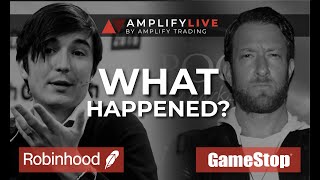
Robinhood blocked retail investors from buying GameStop, AMC, and other volatile stocks after a clearing house demanded $5 billion in additional capital. Hedge funds could still trade while retail investors faced 40-60% price drops, sparking outrage from politicians and traders over unequal market access.
Chapters
Okay, welcome back. It's Friday, 29th of January. We've had tons of questions on various different social channels for what exactly is going on, what is this situation with Robinhood and all the brokers, and what's going on with GameStop and WallStreetBets. So got the main man back again, Eddie Dommez. Eddie, how's it going?
Hey, um, what a week.
Yeah, I mean, incredible. But look, I mean, this is definitely much more up, up your street than mine. So I thought rather than me try to explain this, you're going to do a far better job than I can. So get us up to speed. What exactly has been happening in terms of what happened last night with the brokers?
Yeah, so it's been an incredible week, uh, and actually Robinhood have taken, taken a spectacular step in actually banning the trading of these retail favorites like AMC, like GameStop. Because of the volatility. So really incredible steps that they've taken. And this is— and they've actually been having to draw on credit lines and things like this from the major Wall Street banks amid this volatility. So in terms of who's allowed to trade and things like that, the funds and hedge funds are still allowed to trade the stock, and they are most likely making a killing now. The shares were down so much up to 50-60% in some of the names. So AMC was down 53% on this announcement, KOS was down 43%. So these average people, the retail traders that were making a lot of money, are now potentially losing a lot of money. So the funds are not locked out, but the retail people are.
So, so in kind of basic terms then, what, what triggered this action? Why did they have to do what they did, say Robinhood for example?
Yeah, so essentially, um, the brokers were facing higher costs, um, if the clearing houses, their kind of counterparties, raised their margin requirements to protect their members from, from the increased volatility. So the broker Robinhood, they don't have enough capital in terms of liquidity overnight, and this was basically $5 billion in increased capital that they needed. Um, and this just got too much for them, basically. Uh, they tried to grow too quickly, uh, as we've seen with a lot of growthy tech names, and deal with the consequences later. They usually have to put up 1 to 2% of that trade, but because of this volatility, they were having to put up 5 to 10% of each trade with the clearing houses.
Yeah, one of the things I saw actually late last night GME surged 60% late hours. And I just saw, I think they're German listed, they're up nearly 90% now. So they've gone down 44%, now they're up 70%, 80% again today. Robinhood did say last night in a statement they would allow limited buys of these securities, continue to monitor the situation. But presumably then more volatility is coming because this is the kind of tap is going to come on and off so to speak. Is that the way you see it?
Yeah, I think, look, the retail favorites have identified these targets, and they're not, you know, particular targets. They can be anything. And like you've seen with Elon Musk and people tweeting about Bitcoin and Dogecoin, it's up 800%. So these were just some of the names for random reasons, you know. So we mentioned some fundamental catalysts, but this volatility could flow into any, you know, pockets of the market. Mainly cryptocurrency, if you think about the decentralized nature of this kind of debate. Um, so more volatility, uh, is definitely, uh, to come. And I think this is the key point, is there's got to be a consistent rule for people. You can't just say, you know, hedge funds, you are allowed to trade, retail, you're not allowed to trade. Um, that's not how it should work. There should be a kind of democratic approach to trading, right? It's a free market. And, you know, some people may argue, is it a free market? You know, when we had, for example, in March, the Fed stepping in and buying, backstopping the credit markets, backstopping seemingly the, the equity markets, this is further fueling this kind of, uh, you know, the suits, uh, versus, you know, the average day, average, average people. Uh, house prices are all-time highs. So the free market is really taking or the idea of a free market mechanism is really taking a bit of a punch. And let's just remember Robinhood's slogan, democratizing finance for all, which is seeming pretty ironic right now.
Well, you said it. But so what big players are against this move by Robinhood?
Yeah, so it's drawn even members like AOC, said she would support examining a stock trading app, Robinhood, their hearing against them. It's taken, obviously, Ted Cruz, also a Republican, which has led to this kind of weird bipartisan agreement that this, this shouldn't happen. And obviously the names like David Portnoy has obviously felt extremely strongly about this, as you can imagine. Shamath, a very famous—
I saw them in a Twitter spat with, uh, was it the Point72 guy? Is it Cohen?
Yeah, Cohen. Yeah, I mean, yeah, well, this is— this embodies the David versus Goliath story. Um, and Shamath tweeted, uh, very famous VC: in moments of uncertainty, when courage and strength are required, you find out who the true corporatist scumbags are, which is a pretty, pretty good gauge of, uh, the retail sentiment at this time.
So one of the things here is that prior to this episode, Robinhood was a phenomenal success by many means. It's the lower barrier to entry, fulfilling their company core slogan, I guess. But what we've seen, as you've said as well, is that this typically then they want to capitalize on that and they IPO, for example. Surely this is a significant bump to that ambition.
Yeah, well, definitely. So, um, the IPO should have happened, uh, a few months ago before this, before they kind of got caught, if you, if you want to call it that. Um, but this is definitely going to lead to a flux of people flooding out of this app, um, because it's really a far-reaching issue. And you've seen, you know, lots of movement from WallStreetBets, from Reddit, saying, look, let's, you know, let's leave Robinhood.
They become the target themselves.
Yeah, exactly. So it's been a really terrible week for Robinhood, the early investors, for example, because they were all for Democrats basically leveling the playing field for finance and financial trading, and they've taken the complete opposite by suppressing people. So this is going to put a major spanner in the works for a potential IPO for for sure.
Okay, so, so I guess the biggest question now is what next? Is there something specific?
Yeah, so I think we need to definitely, um, watch this situation as it evolves, and let's take a look at where this kind of volatility, where this speculation next kind of rears its head. I think it's going to end up in the kind of cryptocurrency markets and decentralized finance space, which some people may not be too familiar with. But this is a function of so many kind of social issues, so much social unrest like we've seen over the last few years, and then the kind of the action from the central banks and the governments basically just flooding the system with liquidity. And this speculation and this flood of liquidity is going somewhere, and it's kind of fueled by this coronavirus, of course, and the lockdowns and these frustrations from young people. Particularly about, you know, baby boomers participating in equity market rallies, house price rallies, general asset price inflation. And, you know, they want to get a piece of it. So I would see that, you know, the cryptocurrencies that represent decentralized finance, basically where all this volume is going to go. Okay, cool.
Well, look, we'll wrap it there. But as we did before, if If there's any questions at all for Eddie, just drop a comment on this video. Look, we're here to help more than anything. I think what this episode definitely has shown, because there was a few private group WhatsApp messages we were shown yesterday from different circles of generally young individuals new to markets, and some of the stuff we were reading was quite frightening. So we do feel a bit of a responsibility to try and act as a, as a sounding board to just get more informed about this type of stuff. And so absolutely ask any questions, uh, we're both happy to help. But cool, thank you very much, Eddie.