Positive news on China lifts global sentiment
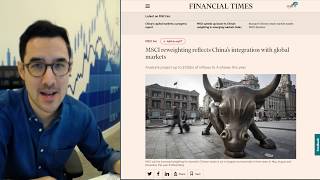
In this March 1 market briefing Anthony Cheung and Sam deliver a risk‑on outlook driven by a bounce in Chinese economic data and a major MSCI index weight increase, which together lift global equity sentiment. They note that the Caixin manufacturing PMI, while still below 50, showed a sharp rebound, and MSCI announced a quadrupling of China’s weight in its Emerging Markets index, potentially channeling $125 billion of fund inflows into on‑shore Chinese stocks. The hosts also touch on geopolitical easing after North Korea’s positive remarks toward the United States, Fed Chair Powell’s dovish comments on productivity and wages suggesting a pause in rate hikes, and the upcoming ECB policy decision with its own set of risks (Euro‑area slowdown, Brexit, trade tensions). Technical market analysis follows: equity index futures are testing resistance levels, gold’s long‑term trend line has broken with support near $1,300, oil is targeting $58, and currencies (AUD, NZD, EUR/GBP) show key trend‑line breaks. A calendar of imminent data releases – European, UK, and US PMI figures, ISM Manufacturing, and other macro indicators – is provided, with commentary on how these could influence short‑term moves. The overall tone is cautiously optimistic, emphasizing opportunities for short positions in over‑bought markets while warning of lingering risks.
Chapters
Very good morning, 1st of March. Happy St. David's Day to all of our Welsh followers. Um, looking at markets this morning then, getting straight into what is a relative risk-on open to proceedings for UK and Europe so far following their positive performance overnight in the Asia-Pacific session. So we've got higher index futures, the DAX already up fairly significantly testing its R2. You can see here in the center left at the moment, US index futures drifting up, sitting just above their R1 across the major 3 bourses there. T-notes then under a bit of pressure, US 10-year down 4 ticks, gold on the back foot down 7. And I was just having a look at gold on a slightly longer time frame. This is kind of the month of February, obviously brings in some quite interesting near-term points of support down at 1307. And of course comes in the broader context of that strong trend line that had been in play that we'd been watching really for the last couple of months, uh, has now been broken and hence just adding to some of the weight on the downside move. So kind of the asset class mix all reflective of general risk appetite, at least in the short term. So let's discuss why that is happening. First off, having a look at the the kind of scoreboard, if you like. This is how things reside overnight in terms of the Asia-Pacific session. And as you can see, this kind of encapsulates global indices. And top of the pile is the Shanghai Composite, gains just shy of 2%. You've got the Nikkei, the Hang Seng's up there, DAX obviously up positive this morning as well. So China is a positive story. So I guess the first point is, well, why is that happening? Well, really two things that need to discuss. First of all, we've got Chinese manufacturing data that came out overnight. Remember, we had the, the kind of main government reading, uh, the day prior. This is the Caixin reading where manufacturers suffered a third month of contraction. So we're still sub-50. However, as you can see, we've had in the, let's say, the pink line, quite an aggressive bounce off the number that was heading towards 48. So if anything, it's kind of mild relief that things haven't continued to plummet. I mean, if you look at the last couple of readings we've had when we broke 50, it's gone from basically a 50 test back up just above, and then it broke, and two readings really dropped sharply. So this comes as, again, as I said, a little bit of a relief for markets here. Secondly though, and arguably I guess can be more positive, and this is very specific for China, is the world's leading equity index provider. This is a company called the MSCI. Now this is very important for, say, portfolio managers, for instance, who are benchmarking against various different indices in regards to emerging markets. Now the reason for that is because the MSCI have announced it's going to quadruple China's weighting in its flagship emerging markets index, something of which analysts have said overnight could lead to an estimated $125 billion flowing into Chinese equities this year. Now just to give you a bit of background as to why this is significant to The funds that benchmark their performance against the index then are obliged to buy the underlying stocks, which is what triggers this potential large inflow into China. Now, Chinese stocks listed offshore— so this is important between on and offshore— so offshore in Hong Kong and in the US, for example, because obviously as people like Alibaba is listed in the US, already feature broadly in the MSCI Emerging Market Index. The offshore stuff accounts for about 31 or so percent, but if you throw in this now additional amount, then it totals up, you know, you're looking at a pretty decent amount of just over 34%. So the point being is this is part of that broader push that the Chinese government has been having to try to open up their economy to foreign investment. They've been pushing these kind of index trackers for quite a long time. To be more incorporate of the domestic, not just the offshore related companies. But this is despite all the negatives that they've been suffering over the kind of uncertainty and cloud of trade war, which has had an impact on their economy. This is a net positive because by default then, people will need to, these fund managers will need to buy into these domestic-based onshore Chinese companies. which is a positive to counteract that economic downturn they're experiencing. So that, with a little bit of a, I guess, light reprieve from what has been such a dire state in the manufacturing sector, has helped cultivate a decent bounce in risk sentiment. And consequently, hence you're seeing the moves that you have given the sharp rise in Chinese equities overnight. In addition to that, uh, not that it was particularly market-moving yesterday, You had that kind of abrupt end to talks in Vietnam between Donald Trump and Kim Jong-un. Well, Kim Jong-un has come out in the state media overnight. He's basically said he's actually very positive about the developments with Trump. He's very happy about how proactive Trump is being to try and find a solution to this, in a very conciliatory tone coming from the North Korean leader. Not really too much response from Trump at this point, but certainly the olive branch coming out the side of North Korea to definitely progress, and the intention to hold another meeting in going forward, which again kind of removes any tail risk that this kind of situation was going to break down. And then you've got some comments. Fed's Powell was speaking again, um, overnight. So this obviously follows his testimony that he gave Uh, not a great deal of market movement on the back of that. Typically, historically, it is a big deal, but obviously we know the current status of really Fed communication. Uh, but he did speak overnight and said that a rise in productivity last year gives more room for wages to grow without the risk of higher inflation. So that in itself, obviously in fitting with the dovish rhetoric of late, he's saying that yes, we've got still very low unemployment and as a consequence wages will rise, but actually there's enough room here where it's not going to impact the inflation conditions. And so by default, most likely course of action then is a pause in interest rates, as they've been hinting towards. So if you think about it, you've got a fairly dovish Fed, you've got a, a kind of an agreement, if you like, to keep talking with North Korea, albeit I think that's way lower down the, the list of risk events. And then you've got actually this kind of short-term, at least, recovery in sentiment over the Chinese kind of situation. So hence you get a bit of a knee-jerk reaction this morning, and things are looking positive for now at least. Gold, I'll let Sam go over that more technically. I think that could be very interesting because you remember what gold was like a few months ago when it really starts to break key levels, and we do get a bit of a switch in sentiment with that long-term trend line breaking. Moves can quickly occur to a large magnitude in that specific metal. And obviously we're trading just $9 above $1,300 in the futures, which, which could be quite interesting to watch. Otherwise, other things to be aware of— I mean, this is a bit more from a broader macro perspective, given the fact that we've got, I believe it is, the ECB interest rate decision coming up next week, next Thursday. There was a Bloomberg poll released overnight. A couple of interesting graphics, uh, I'll share the link in the chat room, but basically this is the ECB timeline as Wall Street economists foresee it. And so the big talking point at the moment is about are they going to do any more of these long-term refinancing operations in order to kind of facilitate this idea of we've ended QE but we still need to give a degree of accommodation to the banking system. Through extra liquidity or not. So that's kind of the near-term policy actions we could see. If you remember though, the, the current communication from the ECB is an interest rate hike through the summer, basically through the end of summer, hinting towards September, October. But we know that that's probably unlikely to happen, and most economists anticipating the first deposit rate increase here. We've got to go really into not just the end but the beginning of 2020. So still some way off, and obviously we need to accommodate in the interim period the transition of a new ECB president, which is going to happen in October, of course. So quite an interesting timeline, again worth reading just to say you're completely up to speed. This is something— I guess the reason why they've, they've asked economists about this is because next week must be one of the rotations where we get the updated ECB staff projections. And so economists see the ECB lowering projections for 2019 and 2020. So I don't think really that's too much of a surprise. And then in terms of what do— or what are the biggest risks to the euro area economy, the euro area slowdown is by far the largest. And you can see here the black kind of bars on this chart signify the highest risk. So it's quite, quite interesting. If you remember only about, what, 6, 8 months ago, emerging markets was really such a massive pivotal theme in, uh, that was driving intraday sentiment because of what was happening in Turkey, South Africa, Brazil, China. That has, even though China still remains somewhat on watch I think the fact that, as we discussed many times, the intervention from the government and the central bank now with some of the things we've just discussed from what's happened overnight, emerging markets definitely has become a risk, but a lower one. As you can see, the lowest of, of risks according to the poll. The biggest then, euro area slowdown, a disorderly Brexit, and something which I think maybe is a little bit underplayed by markets, but this is the global trade tensions, because Europe is definitely part of that equation that Donald Trump will be targeting for sure. It's just that he's so kind of caught up in the China focus right now. All right, quick look at the calendar because I want to hand you over to Sam. There's a couple of data points coming out. There is manufacturing PMIs coming out from Europe as we speak. On that point, we've just had the Spanish manufacturing PMI about half an hour ago. Came in at 49.9, so a contraction. Expectations were for 51.7, so that was weaker than expected. The Swiss one's just come out, kind of lesser interest for us. We're not really looking too much at the Swiss, but that was actually stronger than expected. And we're going to get out momentarily the French numbers, so I'll keep you informed. The German one to follow, of course. Then at 9:30 you get the UK manufacturing PMI, and this is what I'm looking at here. So how much is this going to move markets? I would say probably to a lesser extent. Just generally speaking, it acts— can act as a little bit further fuel to the fire if directionally it's very bad. And obviously there's kind of maybe some Brexit-related headlines that push it in that direction. I think on the Brexit front, as has been typically the case every time there's kind of this milestone parliamentary gathering about an amendment vote, soon it kind of peaks in intensity and sensitivity for the pound. Once we know now that the new deadline is March 12th, well then everything kind of goes very quiet in the immediate aftermath, and then we can expect that intensity to build back up and with the volatility to follow in step. So kind of in a bit of a Brexit gray period at the moment, not a great deal I'd expect to be going on either in the weekend's press Probably the most interesting thing I read this morning in the FT was about Vince Cable, leader of the Liberal Democrats, talking about potentially this kind of idea of teaming up with the new independent group, which is now being front-run by— the spokesman has been chosen, who is Chuka Umunna, as you would expect. So yeah, Brexit's pretty quiet. The UK economic data, I don't think it's going to be a massive deal, but I guess would be interesting if we start to breach the lower bound. I would say anything with UK economic data from a near-term fast money move, I'd say probably reaction is probably more sharp to upside surprises because everyone's so pessimistic about UK economic conditions at the moment. To give you an idea, the range for the UK numbers is, uh, UK manufacturing is expected at 52 Got a range of 51 to a high 53.4, so nothing really too groundbreaking. Uh, the other thing we're looking out for, we get the respective reading of ISM Manufacturing in the US. Probably this will be a little bit more interesting just given the state of recent economic data in the States. And the last ISM Manufacturing PMI did jump after a very depressed reading that we printed right at the end of 2018. Fastest increases were seen in new orders, production, and inventories. Employment slowed. Exports continue to expand but at a slowest, um, or the lowest level since the fourth quarter of 2016. So I'm quite interested to see how that plays out. And remember, even though it's the 1st of March, there is no non-farm payrolls today. We already know that. The BLS already pointed that out over a month ago. Reasons for this It can often happen, particularly when there was what, the Presidential Day holiday, which was a bank holiday 2 weeks ago, can mean that given that in combination with the government shutdown more recently, backlog of information, and so they just roll it over to the next week. Simple as that. So I wouldn't really read too much into it. It's quite a normal thing. Happens probably once or twice a year. And otherwise on the calendar, let me just bring it over. And then I'll hand you over to Sam. You have the Italian manufacturing PMIs just come out and actually in line, touch higher than expected, 47.7 against expected 47.2. It's funny how we're actually talking about these data points being a little bit better than expected and we're still in contraction. Don't forget, but DAX still feeling pretty bullish and we're just having a bit of push on R2 at the moment. So equity index futures still remaining buoyant. So I would keep an eye on gold just while Sam comes on because we're pretty close to those technical points of support as well. Other than that and the UK number at 9:30, we do have some German unemployment rate and change coming up as well momentarily. Otherwise, in US afternoon, this is a mistake on the calendar. I have called them up to tell them to correct that, so So do scrub that off your calendar. There is no retail sales, of course. That was just a short while ago we had that number. Core PCE then this afternoon, Canadian GDP, ISM Manufacturing, and Michigan. Michigan, those the final readings are unlikely to be particularly interesting. And that is it really from me. So let me hand you over to Sam. I'm going to wish you all a very good weekend. I will type into the chat room while Safe is going over the charts of what the data is as and when it comes out shortly. All right, take care guys.
Hi guys, happy Friday. Uh, well, this is coming to the desk. You can see, uh, equities just pushing higher. The DAX through the R2, NASDAQ higher the day, and S&P higher the day. Um, Yeah, as, as I was saying, uh, with the first sort of line, and very much a risk-on atmosphere, uh, across markets at the moment. And I was just looking before I came, came over at the S&P on a daily chart— well, actually, no, it's a weekly, um, because obviously we haven't had too many red weeks, and we're, we're pretty much sitting where we open the week. So it'd be quite key to see where we finish this day. 2815 is obviously massive. The, the high that we had back on, uh, the third of the— or the week of the 3rd of December. So that Monday where we gapped higher, price came back lower, that trend line. And obviously from then on, um, you had, uh, you know, a big push lower. Where we close is important. Can we get back above 2815? I think, you know, if you're— while the bears aren't really in control of this market at the moment, uh, I think you would need to get I mean, below 2763, I think would be, you know, exciting for the bears for once to sort of get in this market. But look, if we get above 2815, you know, there's a bit of resistance on the 17th of October higher. But the only way I think, uh, is, is up should we close above that. And then you're looking at, uh, 2866. And you know who's going to be tweeting at that time, uh, with gold. As Ant mentioned, it is pushing lower. This morning and just having a look actually on the daily chart, and I posted it in the, the chat room as well. Just that trend line has gone, it's broken last night, just confirming that, that break below the trend. And yeah, $1,300 I think is the next sort of key area to look at. It's not a million miles away, and the way gold moves, you know, could do that. And you know, it wouldn't surprise me uh, you know, too much to, to see that, to be honest. And if we have a look at some of the recent Fridays, the 25th of Jan, albeit to the upside, was quite a significant move that we saw there as well. And just to, you know, talk about gold, how that can move when a trend line breaks. Look at last summer, if I just get the correct trend line on Here, there you go. Price comes up 1, 2, 3, break of that and a whole new trend. So could be quite key, and it's not the only market that's breaking the trend line or, uh, giving that a go at doing it. If we have a look at Aussie dollar, yesterday I tweeted about this and, you know, quite a few people I think were interested in, in that. Now we've closed below, I think, the low of, um, sort of the 11th of Feb isn't too far away. And when with these, these trendline breaks, not to say you can't look for it to go long, uh, you know, bad US data, good Aussie data, good positive trade talks are reasons why we could go higher. But with these trendline breaks, from a personal point of view, I'd only really be looking to, to go short on, on this pair. Where's the best place that I can get into to go with the momentum? What is the majority of the market thinking with that trendline break, which has been significant. Could be that we now start to continue to push lower. New Zealand dollar, I know not many people maybe trade this intraday, but from a sort of medium-term perspective, if Aussie keeps going, I think the New Zealand dollar will follow. And, and in turn, that could, uh, be a good opportunity on the break of that back down to sort of the 22nd of Jan levels. Euro pound again will be important where we close the week. We had that that break for the first time in a couple of, couple of years. That's still an opportunity, I believe, to get short should we come back to test that. Obviously the weekly closes will be important across the board. And gold, as Ant mentioned, the sort of key levels from the back at the beginning of Feb, we're not too far away from that coming into, into fruition now. But yeah, the DAX pushing, S&P and NASDAQ um, on their highs, you've got to imagine the Dow Jones is doing so as well, and it is. Just having a look at that, we are coming into a bit of resistance, however, on a couple of those equity markets. So maybe, um, you know, holding off to sort of join the party with a little bit of a pullback is not bad. Oil broke higher into the back end of the session, has continued this morning. Target-wise, obviously, other than the, you know, the high of the day. We also tested the, the 22nd of Jan. And with the oil market, obviously, you know, could argue if you didn't have the numbers, it's the, the S&P as well since, uh, Boxing Day. But the key, key level, can we get there today? $58, the, the high that we had back on the futures 16th November, but it also was tested back in the 9th Feb I think you've got a fib around there as well if you're, you're that way inclined. And the $58 handle, we're not far from, from trading there at the moment, 20 or so, uh, ticks. That's definitely one to keep an eye on this morning. But yeah, as I mentioned, you've got data coming out, uh, and with the US numbers as well, but into the back end of the session. It's not to say that the only direction for these pairs is, is to the downside, you know, if we do have weak numbers at the US, you could be looking for those longs. But just while we're below those trend lines in gold and Aussie, I do prefer those markets really only to be looking to go short. Euro, which has been choppy, hasn't it? It's not— let's not lie, it went higher, lower, and, and chops around really from midday onwards. And looking at this more intraday, I mean, we're sort of stuck in that range. I'm not sure if I'm a massive fan of trade in the euro right now. I mean, that classic off the, the low of yesterday wasn't a bad little trade, but, um, yeah, obviously with the numbers coming out, might be better just to sit on the fence for now. And same with the pound. While we hit that multi-month high, and then we, we sort of mentioned— and mentioned as well, and the headlines were talking about it with prediction of where the pound could go— they were sort of saying, you know, this is now priced in, wouldn't be a bad time to take a bit of profit. Perhaps on a more intraday, uh, so, well, not, uh, sort of on a more weekly close basis. If we get back below the, the, uh, 25th of Jan high and close below that, 32.50 could be quite key, um, for sort of shorter-term sentiment. Um, but yeah, not surprising to see a bit of a pullback here, uh, really. Those PMI numbers Germany coming out in line. So disappointing off a reaction point of view, but in line, those numbers coming there, and euro not really moving too much off that. But yeah, hope you all have a great trading day ahead of you. With X3 pushing and gold going low, there could be a couple of opportunities to continue this trend. Where we close the week is obviously key. For quite a few of these markets, notably Euro/Pound, S&P around that 2815, oil $58, and Aussie and Kiwi I'll be keeping a close eye on as well. But if I don't speak to you throughout the day, hope you all have a great weekend. It's, it's an important one tomorrow for, for North London, so hopefully it remains red.
More from Anthony


Inside the Biggest Banking Stories You Need to Know This Week (Anthropic, Diageo, Private Credit)


Inside the Biggest M&A Deals You Need to Know This Week (UniCredit, GameStop, eBay, Eli Lilly)







AI Breakthrough or Hype? Anthropic’s Claude Mythos, Tim Cook Steps Down & LIV Golf Collapse