Professional football to Prime Broker
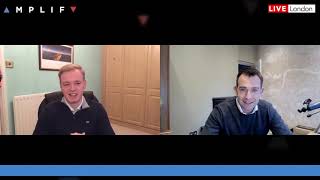
In this interview, James, a former professional footballer, recounts his unconventional path from the football pitch to a prime brokerage role at Morgan Stanley. He explains how he balanced football with academics from age 16, completing A‑levels, playing in the Irish Premier League while studying at Loughborough University, and earning a degree in business economics and finance. A family background in finance sparked early interest, but the decisive moment came when he joined the Amplify summer internship, which provided a sales‑and‑trading simulation, mentorship, and exposure to industry professionals. Through Amplify, James connected with Morgan Stanley leaders—including co‑head of EMEA Prime Brokerage Will Smith, asset‑backed securities analyst Joseph Jackson, and Prime Brokerage colleague Charlie Ainsbury—building a network that supported his application. He describes the remote assessment centre, case‑study presentation, and interviews, noting that despite initial concerns about virtual interaction, he succeeded and received positive feedback. James highlights the role of the Professional Footballers Association (PFA) in funding his participation and his plans to help future athletes transition to finance, advocating for more educational opportunities for players. Throughout, he emphasizes transferable skills from sport—resilience, discipline, teamwork—and the importance of proactive networking (e.g., LinkedIn) for non‑traditional candidates. The interview concludes with reflections on the impact of his success story on the Amplify program and encouragement for other students.
Chapters
Well, I wanted to, uh, sort of just, just grab you for a couple of minutes, James, just to talk about, um, your experience, because I think it's quite, it's quite unique. Um, and, you know, we've been, uh, working with students for over a decade now, helping them secure their, their career in finance. Um, now there has been one other, so you're the only second, uh, ex-professional footballer to move into finance, and that's, um, well, quite a unique journey. So talk to me a bit about it. Um, can you give me a bit of background about, um, your footballing career and then why and how you wanted to move in finance?
Yeah, so, um, I mean, I've balanced football and academia sort of throughout my career in both, um, and really in terms of finance, when I took economics for A-level during college, sort of my first feelings towards the markets and that kind of stuff. I think having the background with my dad having sort of worked in finance as well, he's had roles within the market, so he had a kind of better understanding of it, and I suppose was able to guide me once I said that this is something I'd like to balance alongside football. So I mean, in terms of going back to the start, really, it was, you know, I had that face that kind of decision that a lot of young pros have to make at 16 in terms of do you sort of leave school and go full-time with football or do you continue your education. There wasn't really an opportunity it seems to do both, yet I spoke to, you know, my parents were really helpful with the whole idea and helped me approach the football club and the college in order to kind of recognize that both parties could benefit from someone who was able to balance both. And, you know, the club thankfully allowed me to take some time away to go to college to do the exams, to meet my tutors and stuff like that. And likewise, the college allowed me to sit my exams almost as a sort of external student, but come back to the college to take my exams there. And then kind of worked, worked through both. And then having achieved A-levels, I went and played football then for the next 4 or 5 years before returning to university and joined Loughborough University and took a business economics and finance degree and continued to do the same really. I was still— I went over to the Premier League in Ireland and was playing over there whilst at Loughborough University, so similar to my A-levels really. I was used to spending a lot of time on my own studying after training each day and kind of completing both, and then graduated this summer and obviously enrolled on the Amplify training.
What a story, fantastic story. I'm definitely one of sort of juggling and multitasking, but I think it's what I like about your story, it's a bit of realism as well. During the program, you said to me, you know, the thing about professional football is, you know, it really is just a very, very top echelon that make it a full-time career that people read about. And actually then for still super talented players, it's just a sensible thing to have other options. And you were always interested in finance as well.
So yeah, I mean, as I sort of briefly touched on, I think that probably comes from my background from my dad. He was involved in finance, and so I suppose when I thought, started thinking about careers to balance alongside football and, you know, where my academics could take me, you know, he was helpful pointing me towards, you know, you might like this. And then really the catalyst for me was the Amplify summer internship. I mean, the I took part in a sales and trading sort of simulation insight day at Loughborough University, and I met Eddie there and he talked about the sort of the summer internship. And I looked into it and thought, well, you know, this would be a fantastic investment for my future in terms of, if nothing else, just figuring out, you know, what I liked, what I didn't like, and kind of give me an idea. And actually, it almost sounds silly, but I think one of the best things about it is I learned things that I didn't know I needed to learn. And, you know, I would have had no idea what, you know, exactly makes someone, you know, successful starting off applying for jobs and looking for a role in finance had I not enrolled on that internship. And I think that definitely the catalyst for understanding exactly, you know, where I wanted to go.
Well, so you didn't know what you didn't need to know, was the—
Exactly, that was probably the biggest takeaway from the internship and I think it's sort of— I know when we've spoken you said one of the things that you notice is sort of people leaving the Amplify course are better positioned than other candidates going into interviews and those processes and it's one thing kind of hearing it from the Amplify team and thinking, right, you know, I am, I am learning bits here. But then when you do start the process, I did feel like actually I was more comfortable approaching questions. I was able to actually understand things I was reading easier and follow the markets easier because I had that sort of experience and was taught the things that I needed to know.
So now it's one of those things that actually a lot of students don't know is about the role that you've gone on to secure, which is super I'm really, really happy for you, by the way. So obviously we've got connections there with Morgan Stanley and specifically, you know, the co-head of the whole prime brokerage division for EMEA, who actually now, that was Will Smith. Did he speak? Were you in the program that he spoke at? Were you in that intake where he?
Yes, I was. Yeah. Yes, that was definitely, you know, I traced back the kind of, the sort of affiliation I've built up with Morgan Stanley through this process. From that moment really. And actually, following that, you know, as I did my application for Prime Brokerage, I connected with him on LinkedIn and kind of gave him a few updates on my application and, you know, he wished me the best and then congratulated me once I secured the role. So it's fantastic. But I think that, you know, initial webinar, very, very fortunate to speak to him and he was able to provide that kind of gave an overview of the whole Prime Brokerage division and explained how central it was to Morgan Stanley and how they kind of— the way he described it was pulling together all the different aspects of the firm to meet the client's needs. And I think that was the first time I really considered the role, liked the idea, liked what he had to say, and particularly started me on the path of building this affiliation with Morgan Stanley. And I think what's interesting to touch on is he spoke a lot about the culture and the environment. And I know that when you're doing interviews and when you're speaking to people with firms, it can seem a bit cliché to ask those questions and hear their feedback. But what was interesting is someone else on the course asked him the question about why he'd spent so long at Morgan Stanley, and he mentioned that. And then the experience that I've had with everyone that I've spoken to through the process. So, you know, initially you put me in touch with Joseph Jackson, another guy who was on Amplify, now on the Asset Backs the securities desk at Morgan Stanley. He was so accommodating and really, really helpful in terms of guiding me towards, you know, my application. And then, you know, from there I was quite proactive in terms of speaking with other people. So, um, you know, Charlie Ainsbury in particular is in Prime Brokerage, and he's an ex-professional rugby player. And, you know, again, I had a conversation with him. So that kind of relationship that I've built with other people, you know, I'm not going to sit here name-dropping everyone that I've spoken to, but the point is that that initial statement that Will Smith made about why he stayed at the firm for so long actually has really started to resonate with me as I've gone through the application process and everybody I've spoken to, whether it's people I've reached out to to help me or whether it's people that have interviewed me, I've got that feeling from all of them and it just means that I'm excited to get into the building to meet these people face to face.
Oh, it's fantastic to hear and, you know, and I think also part of of that with bringing in the co-head of Prime Brokerage into the summer program, you can actually deeply get to find out what is Prime Brokerage all about. How, as you described it, bringing in the different parts of the firm in order, right at the peak, I think one of the things he was saying is, serving the client, no matter what, that's it, that's the priority, delivering that ultra, if you like, unique and tailored fit product. I think for that to run through, I think lots of students out there don't really understand prime brokerage and the difference between that and trading or market making or sales trading or broking. And so I think, you know, you definitely had an advantage having that insight, and I'm over the moon that you were able to convert on that advantage.
Yeah, I mean, obviously I'm delighted, really, really excited.
But oh God, here's another one. Hold on, I'm going into you. Can you go and close the door? I'll be one minute, okay?
This is the perils of working from home. No, no, no, let's go.
It is one of the penalties of working from home, and 2020 is definitely a strange year for that. And actually, on that point then, how did you find it? Because obviously, you know, how did you find the remote aspect of it? How did you find it being, you know, connected but not physically there?
Yeah, well, you know, it's interesting actually. Particularly the final stage of the Morgan Stanley application process is the assessment centre, and, you know, I was given a case study and had to present and then had 3 interviews throughout the day. And initially I was thinking it's a real shame that I'm not getting to go into the office and meet people face to face, and, you know, having heard sort of Joseph's experience going into the assessment centre and actually kind of building a rapport with people. I thought, 'Ah, that's a shame, I'm an outgoing person, I like meeting people, like talking with people,' and I thought it would be a disadvantage being remote. But actually, when I was then asked to give feedback at the end of the assessment centre, the feedback I gave was really, really positive. I think that even though it is remote, this kind of face-to-face interaction actually meant that I did feel I was still able to kind of build that rapport and understand how the interviewer was feeling and sort of portray myself in the way that I wanted to be portrayed. So it was— I thought it was going to be a disadvantage, but actually, you know, it was fine. Although, you know, if you said to me, right, when I start the role next year, I'm going to have to do it from home, then I'd be definitely disappointed about that.
And I think for next year with the summer programme and going forward, so you'll have to come in as well, we're going to be having periodic, like, day meetups, and I'd love you to come along to the next one in 2021, where all the candidates on the current Summer Analyst Program will be invited to come to London for the day, come into the office, connect with each other, connect with people like you. It'd be great if you could share some of your advice with them as well, and then continue on the, on the program online. I think there's a good hybrid to be had there for those that can come to London. Fantastic. But then it doesn't disadvantage those who coming to London for all of that time would be super expensive.
Yeah, well, in terms of the Amplify course over the summer, it worked very smoothly considering it was all virtual, and I think that my cohort was the first course of the summer, I think?
You were the first one, yeah.
So there wasn't really many teething problems as such.
There was, you just couldn't see them, we were like ducks.
Panic in the background. So each morning before the morning reports, it was just mayhem. Yeah, but, uh, no, I mean, from my point of view, it seemed to run very smoothly. Um, and I think the, the biggest thing for me now, having kind of secured the role, and I'm so excited to start— I mean, you know, I was half tempted to just go up to London and look at the offices for where I'm going to be. And I mean, it might be a bit sad just standing outside, but just, you know, But, I mean, particularly with my background, you know, slightly more unique, I feel very passionate about giving other people those opportunities. And, you know, I kind of briefly put you in touch with Jordan Unsworth at the PFA, and the— so the PFA, the Professional Footballers Association, the union, are really, really helpful. I mean, the support that they've given me and I know other people through a transition from full-time professional football into, you know, another career, for me being finance, and both, you know, the support in terms of contact with them and financial support in order to give me the opportunity to enrol on the Amplify course. I feel extremely grateful for that, but also now that I have the chance to kind of look back and reflect on my journey I think that it was more difficult than it should have been and there weren't the opportunities there for, you know, young players to balance both education and football. And so, you know, I've actually been speaking with the PFA and into 2021, you know, volunteered sort of my services to help them and come up with some ideas in how to sort of approach this. And Jordan's been great, so we've been speaking and we're gonna, you know, hopefully host some webinars and stuff like that next year and I would like to kind of pass on that information to young boys, young players, boys and girls in my position, and almost tell them, you know, what they don't know.
What I was saying, you learn absolutely anything.
And I mean, you know, so for example, with Morgan Stanley in particular, I know that the other co-head of European Prime Brokerage with Will Smith is ex-military, and so he has that strong belief in terms of transferable skills from military personnel and sports personnel, and then, and you see with Charlie Ainsbury and Joe Jackson gone on to be successful within the firm, that there are these skills. And although people had said to me, 'Oh, there is lots of transferable skills,' it's only once you start going through the application process you realize actually, you know, having been in these environments and maybe difficult situations, that I was more prepared. And so I'd love to go back and tell, you know, other young players, actually, you probably have no idea, but, you know, here's opportunities where people actively seek, you know, those with a unique background or professional background. And, you know, here's my route, here's my route through the Amplify summer internship, and that's how I learned and stuff like that. And I would love to—
We would be super happy, obviously, to continue to help. And I did say Strodden would be back in touch because we definitely want to sponsor some events, Finance Accelerator events.
He said the same to me on the phone last week.
I think you're right, what you said there is it was harder than it should have been and it's not just you coming from a professional sport background that, you know, finds that timing difficult. We actually have a lot of students join us who are in their second year, who are in their third year and they've missed out on the timing of Spring Week then, you know, they haven't been able to secure that first internship and then they feel like they're out the loop a bit because there's such a narrow window. And some of our best success stories, which we'll be sharing, are those students who are in their second year, third year, or postgrads who we've been able to connect with, with roles such as yourself.
Yeah, it's interesting having kind of, you know, one of the things that I've taken on board, particularly again from Amplify is to engage more with LinkedIn and network and stuff like that, and it's interesting to see different people's opinions. I've read some people saying, oh, why are students so obsessed with spring weeks and internships and that kind of stuff? And actually, having now gone through the process, I think that's, you know, a terrible thing to say because actually, you know, having graduated this summer, I found that I wasn't eligible for a lot of roles if I had wanted to apply for them because I hadn't done their internship program or their spring week program. You know, fortunately, you know, I had my sights set on Morgan Stanley and was focusing on that application process. But, um, you know, I did look at other areas. I wasn't naive in terms of, you know, solely all my eggs in one basket, but the What I did realize is that, you know, the majority of firms kind of recruit graduates directly from their internships, and if you aren't on an internship, you're massively disadvantaged. They might not even consider your graduate application because they're just going to hire from their internship. So yeah, as you said, you know, people that have gone on through Amplify in their second and third years to then secure roles is actually, you know, something they deserve a bit more credit for because it really is, from my understanding, following that traditional route of spring week, maybe they're less important, but even so spring weeks, then the internship and the graduate scheme. And to be quite frank, I'd never even heard of a spring week until I joined the Amplify course, because I was solely just balancing football and education. I just wanted to thrive and get my degree as good as it can possibly be, play football at the highest level I can and continue to play well. And the outcome will take care of itself. But actually, it would have been nice along the way to go, I need to know a little bit more about this, and maybe a spring week or an internship would have helped my cause. But, you know, all's well that ends well.
Yeah, absolutely. I mean, look, you made it work in the end, and I think, you know, it was definitely such a pleasure having you on the Amplify programme. And right from the start, when I knew you came from a professional sport background, I was obviously very interested in the psychology in terms of the resilience, in terms of the focus and the discipline. And it's those types of transferable attributes that the financial industry do desire, but it doesn't just happen. You know, you've got to make it happen yourself. So all of those applications that you sent out, interview practice questions, you know, I could see your work rate was through the roof trying to make sure you secure that role. So huge kudos to you. And just fully deserved. So, so we're, we're over the moon.
Oh no, well, you know, I really appreciate it. And it's nice because, um, you know, other people that were on the course, like Renata, who's sort of helping Amplify a bit— it was amazing, after I spoke to you, she then reached out to congratulate me. And so it did feel that, yeah, the Amplify team were very pleased and proud. And, and it's great because, you know, I'm delighted to be able to say you know, I'm a sort of Amplify graduate who's gone on and secured a role because initially when looking at the idea of joining the summer internship, I read some of the stories of people that have gone on to secure roles and so I feel very proud of the fact that I can join that list and I think that the thought that yourself and Anthony Cheung and Eddie and Piers and everyone who was so helpful through the internship can kind of feel proud of the fact that here's another one that we've secured a role for. Makes me feel good inside as well. It's nice to—
yeah, it makes our day. As soon as I got your WhatsApp, photos sent to everybody, shared to everybody, and then a big email as well. And actually, that's, you know, I'd say once a week I'm doing that with a great new success story. And it's such a fantastic thing for us to remind the whole team, this is why we do it. Um, yeah, it feels good.
You know, that, that's good. If it's Feel good all round then.
Feels good. Exactly.
I mean, the main thing you have to hope now is that we don't actually go out into the industry and mess it all up for everyone.
Exactly. So yeah, don't do that. Don't do that, please. But listen, thank you so much for joining this chat and giving the feedback. Hugely, hugely useful.
Delighted to. As I said, you know, if I can help out in any other way going forward, please let me know. I'd be delighted to.
More from Anthony


Inside the Biggest Banking Stories You Need to Know This Week (Anthropic, Diageo, Private Credit)


Inside the Biggest M&A Deals You Need to Know This Week (UniCredit, GameStop, eBay, Eli Lilly)







AI Breakthrough or Hype? Anthropic’s Claude Mythos, Tim Cook Steps Down & LIV Golf Collapse