In this August 13, 2021 market briefing, the host (Speaker A) opens by promoting his Market Watch podcast featuring Piers Curran. He then outlines the prevailing market conditions: trading volumes and volatility have been unusually low throughout August despite ongoing Fed rhetoric, jobs data, and inflation figures. The S&P 500 has been hovering near its recent highs, with a narrow near‑term price channel and the VIX down to 15.5, well below its long‑run average. The host attributes the quietness to seasonal summer volume drops, the winding down of the Q2 earnings season, and market participants waiting for the Jackson Hole symposium and potential Fed taper signals. He provides a quick global snapshot: Asian equities were flat to slightly negative, with concerns over COVID‑19 restrictions, lower vaccination rates, and China’s tighter regulatory stance on real‑estate and a partial port shutdown. WTI crude slipped modestly, reflecting no major fundamentals. A Reuters poll suggests most economists expect the Fed to announce a taper plan in September, with actual asset‑purchase reductions likely in Q1 2022. The host also mentions a Goldman Sachs view that the White House’s push on OPEC+ is unlikely to materialise, and that OPEC+ may raise quotas, keeping crude prices near $80/barrel. Corporate earnings highlights include Disney, whose shares jumped ~6% after beating EPS and revenue expectations and adding 12 million Disney+ subscribers (116 million total), and Airbnb, whose shares fell ~4.5% after forecasting bookings below pre‑pandemic levels due to the Delta variant. He reminds listeners of his social handle @AmplifyMe for real‑time market stories, and notes upcoming data releases: U.S. import‑export prices and the University of Michigan consumer sentiment preliminary August figure, with attention on 1‑year and 5‑year inflation expectations. The briefing ends with a weekend well‑wish and a reminder to check the podcast.
Chapters
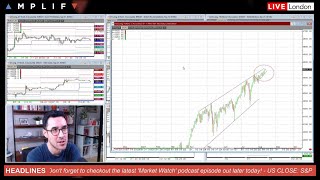
Okay, very good morning folks. It is Friday 13th of August. Hope you're doing well. And before I begin with the regular briefing, don't forget to check out the Market Watch podcast. I will be talking to the head of trading, Piers Curran, a bit later on this morning, and that latest episode will be going out today. So we generally discuss the major things that have happened this week and have a bit of an informal chinwag about what we feel about that particular news stories and how it might impact the market going forward. So do check it out, um, it's available on Apple as you can see here, Spotify, Google Podcasts, all the other major platforms. Otherwise, look, let's have a look and what are we expecting for the day ahead. And things are pretty quiet, and that really has been the case through August so far. So despite things like a lot of Fed rhetoric, jobs data, inflation figures, Generally speaking, market volume and volatility has been quite low. Um, yesterday healthcare technology shares pushed the S&P to a closing high for a third straight session and for the 47th time this year. And so here's just a quick look at the S&P 500 and how it's performed through the week, and you can see we're pretty much at the upper extremity of that move. And of course, these on the higher time frame, going back to, you know, just looking at the price action really, which we've had since that initial dip that we saw, going all the way back to a couple of periods here through the beginning of the year. But, you know, in context from the, the low that we had at the pandemic, I mean, it's quite phenomenal how far we've come. But, you know, just clearing out some of these lines for a moment, one of the more interesting things here is that if you actually look at the shape of the volatility on these candles on a daily continuation, if we start then to draw in and zoom into where we're at at the moment, you can see then that the more near-term range over the last couple of months has been defined by this kind of trend channel here. But just check out how small the current range is that we've been trading, as you can see here. And this really is the August price activity, is what you can see here. And it's not that unusual, you know, we go into the summer, typically trading volumes seasonally do start to drop off a little bit. And we've had a really solid second quarter earnings season start to kind of wind down now, so that's out of the way. And we're now awaiting essentially the Jackson Hole Symposium, which is going to happen at the end of the month, of course, and all eyes will be on Jerome Powell. So yeah, there's a lot of people just wait and see for the moment, and thus resulting in lower volumes. And generally lower volatility as well. So the VIX fell more than 3 points yesterday. We're now down to 15.5, significantly below its running— its long-running average of 20, and well below the 80-plus peak that we hit at the, um, the height of the COVID-19 crisis going back to March of 2020. So as you can see here, the VIX has been lower towards the back end of June, but we're pretty much at the lowest it has been since the pandemic, essentially. One thing to quickly check out here, if you've not already done so, is this handle. I am now using this handle, so if you just search for Amplify Me, the handle is @AmplifyMe. If you follow that one, I'm basically sharing stories throughout the day, so I probably tweet from here maybe I'd say anything from 8 to 10 times a day. So if you want the latest kind of key stories in focus, um, do check that out and follow that handle going forward if that's going to be helpful. Otherwise, a quick look ahead and some other things that are going on. For one, a quick talk about Asia. Asian equities generally were flat, just maybe slightly negative, so didn't quite carry on the positive baton from Wall Street where The S&P obviously finished up 0.3%, the NASDAQ 0.4%, the Dow was pretty flat overall. So technology last night in the States did play a bit of catch-up, having generally underperformed throughout the week. Um, WTI crude though, you can see here, is a touch negative this morning, um, just fading from some of that price recovery that we had midweek. Um, so we're down about $0.64 for the time being, but nothing really too fundamental there to be aware of. That's, that's dramatic. But generally speaking, the overall kind of slightly sour note in Asian trade overnight is on the persistency of just generally the COVID situation. Um, still a lot of restrictions in place, still trying to tackle rising cases generally in the region, given the, the fact that vaccination rates are quite a bit lower in some spots than what we have here in the UK or in the US and so on. The focus in China obviously remains on Beijing's push to exert more control over a range of different industries. Overnight in focus was real estate. The nation suspending private equity funds from raising money to invest in residential property development. And also separately, a partial shutdown of a major Chinese port due to virus outbreaks has stoked some concerns about a repeat of last week's— or last year's, excuse me— pandemic shipping situation. So it's something to just keep in mind. But, you know, my coverage of the news this morning generally is going to be quite brief. There really is not too much going on, and so just getting up to speed on what there is to be aware of. There was a Reuters poll that came out overnight, and obviously it's good to get a kind of sense check of, of where the general lie of the lay of the land in regard to the timing around tapering, given that that's the really next significant piece of information which we're awaiting in a few weeks' time. And according to Reuters, the Fed will announce a plan to taper its asset purchases in September, according to a solid majority of economists polled by Reuters, who said the US jobless rate will remain above its pre-pandemic level for at least a year. So the economists looking for the SEP plan on tapering is 28 out of 43 are looking for that outcome, so the majority. And Nearly 60% of respondents, 26 of 43, said they expected the Fed then to start the actual reductions of its asset purchases in the first quarter of next year. Nearly all of the rest said it would happen in the fourth quarter of 2021. So the general consensus here still is, as it generally has been despite then a lot of these hawkish comments, that Jackson Hole will get a few more details end of the month, gets formalized in September, they start in Q1. And then the— an outside chance they start a little bit earlier towards the end of the year in December. One other thing I did read, just to cover off from yesterday, I was talking about Biden's kind of push, a bit of pressure on OPEC to, to increase supply. US bank Goldman Sachs have come out and they said they believe the White House call for OPEC+ to boost output is unlikely to materialize given the Delta variant threat. Adding that an additional hike in OPEC+ quotas appears increasingly likely given the recent global supply disappointment. GS maintaining their $80 a barrel year-end target for crude oil. A quick look at some corporate earnings, um, and just because pretty recognizable names and sizable movement that was seen after market last night. This is Disney. As you can see, their shares skyrocketing after market, up around 6%. Their EPS came in at $0.80 above the expected $0.55. Revenues beat expectations. Disney+ subscribers exceeded expectations. They actually had 116 million for the quarter. And parks, experiences, products revenues also beat expectations, obviously, as they start to see some restrictions lifted and people can get back to theme parks and so on. They signed up about 12 million subscribers to their flagship streaming service in the most recent quarter, and doubling its customer base from a year ago and outpacing obviously some of its main rivals, in particular that of Netflix. The other one was Airbnb, which obviously highly sensitive to restrictions over the COVID period, and their shares you can see initially blipped up but then down, finishing in aftermarket trade about 4.5%. They forecasted a decline in quarterly bookings compared with pre-pandemic levels, citing the spread of the Delta variant of COVID-19. So continuing to struggle in the current context of, of that situation globally. As far as Canada is concerned, for today it's pretty quiet. Nothing really major coming out in the morning. In the afternoon, we get US import-export prices and University of Michigan sentiment preliminary figure for August coming in at 3 o'clock this afternoon. The headline expected unchanged. Few people though will be keeping an eye on the likes of the 1-year inflation, 5-year inflation expectations, just given the emphasis on that area at the moment, and to see how inflationary pressures are affecting or impacting consumer psyche at this present point in time. But look, I'm gonna leave it there really. There's nothing much more else for me to say other than I wish you a fantastic weekend. Stay safe and don't forget to check out the podcast. The latest episode will be out later today. Alright guys, take care.