Stocks bounce into Thanks Giving
Markets bounced modestly as the US and China face a trade war: $200 billion in Chinese imports hit with 10% tariffs, rising to 25% if no deal by year-end. Oil fell into a head-and-shoulders pattern toward $52.80, while US housing cooled sharply with mortgage rates near 5.2% and applications dropping.
Chapters
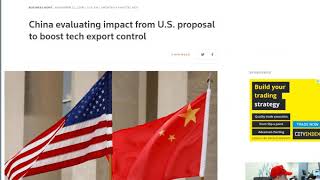
Okay, good morning guys. It just so happens to be the 4th Thursday in November, so anybody of an American persuasion, Happy Thanksgiving. I thought I'd honor that with my Make America Great Again Donald Trump hat. And for those of you who have any interest, this dates back— Thanksgiving dates back to 1621. Did you know that? Commemorates a harvest festival celebrated by the Pilgrim Fathers. Also, I didn't realize it's also a Canadian thing as well, but that's usually on the second Monday in October. So there you go, there's my Thanksgiving fact that most of you didn't know. Canada celebrate— apart from you Canadians, obviously— Canada celebrate their Thanksgiving second Monday in October. Uh, but anyway, we have more things to be interested in than Thanksgiving if we're living over here in Europe, and that is this ongoing, um, quite phenomenal week that we've been seeing in markets. And actually, I'm showing you the NASDAQ here, which kind of kicked things off. Remember, if we just go back to that Monday session that really properly got the ball rolling with some steep, steep, steep declines. And, um, yesterday— just draw the box around yesterday's session here— um, the NASDAQ actually had a pretty solid, um, bounce. Um, not a big bounce, but a solid one. Then it was fairly sustained. We had a few wobbles, um, certainly around the US cash open. For example, if I go to a 15-minute chart, then we had some volatility in around that open period. But, but even on this chart, it doesn't seem too much. So a nice kind of respite from the savage downside we've seen to get the week started. We did have a dip into the close last night where we're trading right now today. If I zoom this on a little bit, we're sideways to lower. And as I speak, we're just setting new lows for the session, actually, for the Nasdaq. And this is you can just move it back, comparing it to yesterday's kind of levels, then we had some support around here, um, in the Asian session yesterday. But yesterday's low, and indeed the low of the week, of course, are much, much more important levels. Um, so let me just draw those two up. These are the kind of two levels of note. That's the low, um, back on Tuesday afternoon. We had the low here on Tuesday afternoon. So Tuesday's low are the kind of two price points below where we're trading now that are potential targets. You've got 6500 as well. You've got the pivot levels. But I'd say certainly, obviously, the low of the week is key. And just as a reminder, as if you, as if you need it, that low of the week has taken us back to levels we haven't seen since April. And the kind of big levels below there are the two bottoms. If I just mark these up, the April low 6,300, and then the current low of the year, 5th of— or the week beginning the 5th of Feb, down at 6,165. So a bit of respite yesterday, but things slightly drifting slowly south as I speak. So let's, let's review what's going on. Yesterday I kind of focused a bit on, on the Italy situation. Today I'm going to focus a bit more on the China-US trade war. I would say you could strongly argue that this right now is probably the number one factor influencing global markets, I would say. And we're worried, you know, what got the ball rolling with the sell-off on Monday, you would say, was that APEC summit that went really badly, where Vice President Pence had a bit of a standoff with Xi Jinping, indicating that The position of the two world's biggest economies around trade are still nowhere near each other. And so that kind of led to the probabilities of any kind of progress at the G20 summit next week. The probabilities of progress dropped. So what I wanted to do was just take a quick look and a reminder, if you like, as to the current state of play with the tariff situation. So let me show you a screenshot here. So this is what the current state of play is. At the top, what tariffs have been added to Chinese goods coming into America. And what we've seen is that we've seen some tariffs added earlier in the year, but the big set of tariffs were added 24th of September to a further $200 billion. So look, you've got $253 billion worth of goods That's Chinese goods coming into America that have now had tariffs added. Now, the one kind of slight silver lining to this $200 billion, um, tariff was that in the end, the tariff that was added was right at the low end of the range, and it's 10%. Okay, so 10% tariff added to the $200 billion worth of goods. However, In a rare show of concession from Trump, he did then say, but that's fine, I'm only gonna put 10% tariffs on. However, if we don't make progress on some kind of trade agreement by the end of the year, these tariffs rise to 25%. And so that's the current threat that's on the table, okay? As we go into this G20 summit next week, you know, time is running out. The end of the year is pretty much in sight, and unless they make any progress, then we're gonna find that the tariffs jump to 25%. And one of the other big kind of underlying concerns about 2018, of course, has been— let me just find my— one second— has been Chinese growth slowing. I'm just gonna find— just give me one second here. There we go, that's the page I want. I'm just going to bring up a chart of that Chinese GDP decline that we've been seeing. So if you have a look at this, and so some analysts— well, pretty much all, not some, all analysts are expecting that GDP growth rates in China will continue to slow in 2019. The big uncertainty is how fast does that deceleration happen. And if we get to the G20 summit next week and if no deal— no, well, not— that's very unlikely to be a deal. But if there's no progress, if they come out of that summit still arguing and focusing on the negatives, then we're going to see this China deceleration risk ramp higher as tariffs take a further negative chunk out of their growth potential. So Trump does have $267 billion worth of goods that do not have tariffs added. And Trump, worst-case scenario here, is that the tariffs on the $200 billion get lifted to 25%, and then he adds tariffs to all the rest as well. So he's— Trump's got plenty of ammunition still here in his pocket on the tariff side if he wants. There was an article on this in, in Reuters this morning, just talking about how the US government proposed stepping up scrutiny over technology exports, um, in 14 key high-tech areas including artificial intelligence, microprocessor technology, and so on. Um, and so this is like directly targeting China. This is that whole fear that Trump has around China stealing US intellectual property in these kind of key areas like artificial intelligence. So you've got Pence arguing with Xi Jinping at the APEC summit. You've got Trump looking to investigate, you know, just exactly what are we sending over to China, and are we part of the problem here, and do we need to control what goes into China in terms of trying to protect our IP? And you've got still the tariff standoff with regards to China. They've got $50 billion. They've added tariffs to $50 billion worth of goods going into the US— sorry, going into China from the US. And they're proposing tariffs on the rest as well. So, but they've kind of run out of ammunition on the tariff side, you would say. So I do think— I mentioned something yesterday. We were talking about markets and how markets can sometimes force the hand of politicians. And it's quite interesting, maybe, that the timing of this summit— if I go to now a weekly chart, I go to it now, go to a daily chart on the Nasdaq. Now that we've had the big move, and maybe it gets bigger to the downside, but now that we've had some major pain for investors, of which Trump is one— he is an investor, of course— very wealthy man and certainly exposed to this downside like all other investors. And now that we've had this, does this force the hand of Trump? You know, it's all very well and good when stocks are at all-time highs for Trump to be aggressive on China and, you know, great, that will win me votes and all the rest of it. But number one, the midterm elections are done. We ain't— you know, Trump's not up for election for 2 years now. So That kind of immediate political pressure to win votes has kind of gone. The stock market's been absolutely hammered. One of the reasons is this growing trade tension. And so I'm wondering whether Trump is, is the type of person that will now react to this stock market downside. And perhaps this might persuade him to be a little bit less aggressive. And maybe this does open the door for some form of progress. I saw that Navarro is kind of one of his China hawks in his team, is no longer going to the G20 summit, which is quite an interesting development that maybe indicates there is room for some progress. So we'll see. But this isn't till next week, of course. And really, when I say progress, you know, all we want to see, at the very least, we want to see Trump and Xi Jinping agree to pause on the tariff and the retaliation and retaliation and retaliation and arguing. Just put a pause on that and let's get back to the negotiation table. If that happens, then that would be market positive now that we've seen this huge sell-off. Um, of course they could go even further than that. It's unlikely, but you know, they could even make progress towards some form of deal. And if that happened, then you get a major boost, um, in stocks. So we'll see. But there is always that possibility that these negotiations end like all of the rest of them have, and that is that both sides come out blaming and arguing and threatening. And if that happens, then there's definitely more downside to come for the equity space. So let's look at— let's change tack. Let's talk about oil. Here's a chart, 30-minute chart, looking over the last couple of sessions. And yesterday we had a nice bounce, like equities, certainly high correlation at the moment between what's going on in the crude oil market with what's going on in the stock market. So nice solid rebound. We got a kind of major boost having had a bit of a decline. The oil inventory data from the US did show, did show a further build in stockpiles, 4.85 million. But we had a drawdown in Cushing, for example. US crude production did not increase. And so in the end, we got a boost and a nice technical break and a, and a quite powerful move back above $55 that got us up to— almost got us up to $56, but not quite. But you can see by the time we hit the end of the session, we, we dropped right back into the earlier day's range. And what's going on this morning is we've just taken out that low point, that post-oil inventory data low from yesterday at $54 has been broken this morning. And so again, it's looking quite negative. As Charlie was pointing out, a bit of a head and shoulders pattern here with the head being that top from yesterday's session. Couple of nice shoulders left and right here from last night and overnight and early morning. And the neckline here has now been broken. So quite a nice pattern being completed. And of course, Technically, the target is now the low of the week, which is right the way down at $52.76. So technically, if we go to a daily chart, this is again looking a little bit nerve-wracking for your oil bulls. And let's switch and have a look at the dollar because we had some moves on the dollar yesterday. If I go to a 60-minute chart, certainly we had a period of dollar— I'm going to go to 15-minute chart. We had a period of dollar weakness. Which didn't kind of follow through to anything major. But this period where the dollar weakened and this was a move on all FX pairs and this was off the news flow that potentially this was a report from MNI, a kind of financial news service in the US, and they were speculating or they were stating that they had heard from senior Fed officials that the Fed are looking to pause their rate hiking cycle in the spring of next year. So we're expecting a rate hike in December, but the big question is, are they going to hike in March 2019? How many hikes in 2019? And rumor is, as the stock markets drop and as concerns around growth increase, the rumors are, of course, that the Fed may well have to take a pause as we hit 2019. And I think, again, going back to that G20 summit, not wanting to bang on about it overly, but you could argue that Fed policy hinges on what happens at that summit, because if progress is made and if it's positive steps towards some kind of future deal, then that can certainly help with economic sentiment. It can help with, therefore, economic growth. And if the US can just push into 2019 with growth rates remaining resilient, well, then the Fed can carry on hiking. But if there's no deal and there's arguments and threats, then I think the stock markets carry on moving lower. I think economic sentiment carries on dropping sharply. And one thing that's been fueling that, and I mentioned it earlier in the week, and I'm going to show you further evidence of it now. If I can get my— got a couple of charts for you, a couple of exhibits. Because I mentioned the housing market in the US, and we haven't been interested in US housing data for years, years and years and years. US housing data, not relevant. It was back in the crisis, to go back to 2007 and 2008, and sure, that was kind of data point number one, tier one stuff, but not, not for the last few years. But I think this housing market data took a turn for the worse this week, and I think that might be another indicator that we're 'In for a Week 2019.' Check out the left-hand chart here because obviously rates have been rising. And so you've got two things on this left-hand chart. Number one, the orange line is the mortgage rate, 30-year fixed mortgage rate. So how much you got to pay, what's your interest costs to borrow money to buy a house? And we're right up around just shy of 5.2% now. Um, now long term, okay, 5.2% It's not expensive, it's not cheap either, but I'm just comparing it to like Europe, for example, where obviously rates are still at zero and locked in on zero, and mortgage rates in Europe are more like 2 to 3%, not 5 plus. So look at the steepness that these rates have climbed over the last 6 months, and this is, this is having a notable effect, I think. You know, mortgage rates have gone from 4.8% to 5.2%, sharpish, and that's a concern. And that's made the housing market more expensive from a financing point of view, which is starting to hit demand. So check out the gray line, MBA mortgage applications for house purchases. Obviously you've got an inverse correlation here, which completely makes sense, and this has nosedived. So this is an indication the housing market is really slowing We've had pending home sales data, existing home sales data this week. We had the NAHB House Market Index survey all coming in really bad. Look at the declines here on the right-hand side chart. So certainly you've got further evidence coming out of the housing market now to support the idea that 2019 might be a different story when it comes to US growth and this, this binge tax cut that has spiked US growth rates higher in 2017 and '18. Perhaps, perhaps the best of it is now behind us. Let's have a, let's have a Brexit update, and let me show you the story. Theresa May had a good, good day. Good day in Brussels. And, um, she's— I'm just looking at cable. Let me bring up cable whilst I'm talking about this. Cable's been quite flat though, so no response, I wouldn't say. But yesterday, good day in Brussels, a couple of hours meeting with Juncker, and both came out with very positive comments saying good solid progress has been made, the negotiators now have sufficient direction to go ahead and complete the final part of the, um, agreement. Of course, we've got the withdrawal treaty done, and now it's just about that non-legally binding commitment to a future economic agreement. And apparently sufficient progress was made yesterday that negotiators can now go ahead and complete that section of the document. And the idea now is that Theresa May will go over to Brussels on Saturday for a final meeting with Juncker before Sunday this stuff gets signed off. A full EU leaders meeting. And they're not going to mess around. The timetable is 9:30 AM. EU leaders, the EU27— so that's the EU leaders minus Theresa May— meet at 9:30 AM on Sunday. They talk for 1.5 hours. Then Theresa May joins at 11 AM for less than an hour's worth of talks because they've got the signing and the concluding statement and press conference scheduled for 12, midday. No food has been ordered for lunch, so they— this is obviously a very positive sign that we're pretty much there in respect of the EU leaders making an agreement. Obviously, that's the first step. Then everyone's got to go back to their own countries and get this stuff ratified and voted through their respective parliaments. And obviously, for Theresa May, that's a big hurdle. She's apparently lined up an economic assessment, a prediction on what the kind of 3 outcomes— what kind of damage would a no Brexit have on the UK economy. That's no Brexit, we stay in, by the way. What kind of damage does a Her Deal have on the short- and long-term economic prospects for the UK economy? And what kind of damage does a no deal have? And apparently she's going to release this next week, and that's going to form the basis of her attempt to persuade Parliament that this is the deal to go for. And the economic assessment will show that No Brexit at all would be the most favorable economically. Her deal, though, would be way better than a no deal. And that's why we should go ahead, and that's why Parliament should sign this off, and we move forwards, and we withdraw from the EU in March, and we start negotiating the trade agreement as the transition period starts. So a good day for Theresa May. You got a bit of exhaustion, I would say, though, here in cable. If we have a quick look on the daily chart, we're hanging around down the lows that we had back end of October. We didn't quite make it to that low from, from August. So we're kind of down around the low point of the range, but still some room to move lower if we do get any negative developments. And I think, to be honest, now markets are pretty much priced in the idea this deal is getting signed off on Sunday. And really, we're not really looking at that now. That's not the focal point for investors. The focal point for investors is the, the date which hasn't been set yet in Parliament in the UK at the start of December where this deal gets voted on. That's the big one, and that's what investors are looking at now. And the fact that Theresa May had a good day yesterday and the deal looks like it's going to get signed off on Sunday, it's kind of now— we've priced that in. So it's more now about the UK voting this through in Parliament. It's more about Spain being happy, um, with regards to Gibraltar-related stuff. And it's more about France being happy with, um, the fishing situation. Um, are French fishers going to be able to continue to fish in British waters? So these are the kind of three things I would say. Um, right, let's have a look at the day ahead from a data point of view, because obviously it's Thanksgiving, so forget about US Things today, in this afternoon, data— sorry, there is no data, as you can see by the calendar. But also there'll be no trading. I mean, volume this afternoon will literally collapse. And I'm going to perhaps give you an example of what I mean, if I can. I'm going to bring up on my S&P daily chart, I'm going to bring up a volume analysis. I'm going to go back to last year. So look, volume on this sell-off— let me just get rid— I'm just going to tidy this, tidy this chart up. Let's just get rid of everything and I'll put volume back on. Um, where's my volume? So volume in the sell-off we've had has massively stepped up. So that's one thing to note, um, as the collapse has happened, obviously volume has stepped higher. Look, the biggest volume day of all, we almost clocked in at 4 million e-mini S&P 500 futures contracts traded in one day. But if you go back to— I'm going to zoom back to last year, so, and find Thanksgiving. So here was Thanksgiving. If I try and draw up, you can see the tiny little box here. So on Thanksgiving last year, volume was 500,000, and as you can see It was the lowest volume day other than the 26th of December. It was the lowest volume day pretty much of the whole year. The 4th of July also, but no, it was even lower than that. So yeah, Thanksgiving last year was the second lowest volume day of the year. Only the 26th of December saw a lower volume. Okay, it's going to be the same this year. Volumes are going to collapse. You know, yesterday the S&P traded 1.5 million contracts. It's going to be probably one-third of that today. Okay, so this is a European session and it's a European morning session, um, so this is where we're going to get volume. We do have— well, no, we don't have any data out of Europe either, unfortunately. We've got some speakers this afternoon— Bank of Canada, Bank of England, ECB. Um, we've got some bond auctions, but, but really from a scheduled news flow point of view, there's nothing. Um, so you definitely got to have— you got to put that into your mindset for how you go about this session. Movement this afternoon is going to be non-existent, probably. Obviously, unless we get that unusual surprise event, maybe there are developments on, I don't know, Well, I was going to say from Trump, but he's going to be, he's going to be tucking into his turkey. But you never know, after he's had a few glasses of red wine and the tweet, the, the tweets start flowing, I guess you never know. But most likely the session is going to be very slow, so you've got to factor that impatience is key for this afternoon. Okay, I'm going to leave it at that. Remember, oil looking a little bit vulnerable. Again, now that we've broken below the low point that we had from yesterday afternoon, and you're going to find a high correlation between oil and stocks, and the NASDAQ was just under a little bit of pressure. So that's how I'll leave things and let you get on. So happy Thanksgiving, enjoy the session. Thank you.
More from Anthony


Inside the Biggest Banking Stories You Need to Know This Week (Anthropic, Diageo, Private Credit)


Inside the Biggest M&A Deals You Need to Know This Week (UniCredit, GameStop, eBay, Eli Lilly)







AI Breakthrough or Hype? Anthropic’s Claude Mythos, Tim Cook Steps Down & LIV Golf Collapse