Stocks rally after US mid-terms
Markets surged after the midterms, with the S&P 500, Dow and Nasdaq posting their strongest three-day rally since 2002. The rally reflects relief that fiscal stimulus won't be as aggressive, a weaker dollar, and lower yields, while the Senate staying Republican and House flipping Democratic keeps risk appetite intact. Oil hit a double-bottom near $61 as U.S. crude production grew 3.5% week-over-week.
Chapters
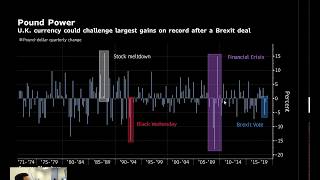
Hello, good morning, Thursday the 8th of November. Hope everyone is well. Just going to have a recap then of a couple of main events for this week. We've got the, what's remaining, that is, the FOMC this evening. But prior to that, we've got to have a look at this rally we've had on Wall Street last night in the wake of the US midterms. And of course, got to talk and update ourselves on the situation with Brexit and what we could expect for the pound going forward. First off then, looking at the S&P 500 chart, and I can see then a decent continuation of the rally after we departed at the European close last night. Looks like we just continue to push higher all the way up into the close in Wall Street, finding a little bit of a hiatus in price action around the previous high that was seen kind of mid-October. So, you know, looking at this from a percentage point of view— well, let me just switch over to show you a graphic. And this is the S&P 500 index, one-day price change, Dow and NASDAQ. So very much reflective of a move, uh, underpinned by the macro development of the midterms rather than anything from an isolated micro-level story. Certainly earnings season is still ongoing, but you can see when we get broad-based, equal-size type movement across the major three indices, this is when there's something meaningful that's happened with the bigger picture. As you can see here on the far right of all of these bars, that's the NASDAQ, and you can see here how influential and sensitive the, the technology sector tends to be to the risk-on, risk-off environment. Because you can see here the NASDAQ outperformed, it tends to underperform, the swings are much more exaggerated for those types of growth stocks which are typically, typically outperform the market so substantially. Point being though, that all three major indices managed to get their heads above the 2% mark Uh, that's not really happening since about the 16th, 15th of October. More importantly though, looking from a historical context, if you were to take the 3-day performance of the S&P 500, i.e., the day before, the day of the midterms, and the day after the midterms, the 3-day percentage return here, um, is actually the second best, um, around the midterms of the past half century. So the benchmark rallied for 3 consecutive sessions, the first midterm hat-trick since 2002. If we then flip over and we look at this stat, Wall Street's performance the day after 2018 midterms is among its best in the past 40 years. So plenty of reason then for Mr. Trump to come out yesterday, and not sure if you are monitoring his Twitter feed, but you know, this is just priceless, so I've got to cover it. Basically, there was a journalist which commented on his performance, and he then took the quote from the article, of which let me just read out to you just the first half of it. It says, "There's only been 5 times in the last 105 years that the incumbent president has won seats in the Senate in the off-year election. Mr. Trump has magic about him. The guy has magic coming out of his ears." He's the astonishing vote-getter and campaigner. And then the second tweet was saying Trump is the magic man. And, you know, it is quite incredible, but yep, this is actually reality. This isn't fake news. This is the actual authenticated account of Donald Trump. But, you know, this— statistics are obviously can be spun in whichever purpose that you want to to serve, and technically he's not incorrect. But if you think about the times when, you know, historically what tends to happen is the president does lose support in the first midterms during their presidency. That's quite typical. And so what happened yesterday with the House changing isn't unusual, but he gained some seats in the Senate, which actually is quite influential, certainly if he wants to run again in 2020. But some of the other times when this has happened, typically I think the one that comes to mind was Bush in 9/11, where because of the terror attack, obviously he was, you know, he grew substantially in popularity because of his definitive action on Iraq. So to coin Trump in the same kind of situation is kind of pushing the stats a little bit in your favor. I guess we come to expect nothing less. The other thing that's come is, if you remember from the midterm results, basically the House changed into the hands of the Democrats, uh, the Senate remains Republican. This is all in line with the baseline market expectation. There was of course an outside possibility that you could have had a, uh, what the press were referring to as a blue tsunami, which which would have been a Democratic sweep and surprise. That didn't materialize, and that was a tail risk for markets, because that would have been absolute political gridlock to the nth degree that would have seen a big unwinding in the market of this kind of built-in stimulus impact, if you like, because Trump wouldn't have been able to do anything. There would have been political uncertainty through the roof. That didn't materialize. Happened was the base case scenario. And so we saw yesterday the CBOE's volatility, the VIX index, the measurement of implied volatility in the S&P 500, in the options market, basically dramatically dropped as people, you know, just playing to the fact that, well, the worst case didn't happen. And the fact that it has changed and there is now termed political gridlock actually is in fitting with our expectations. So why did the market rally? Just to clarify, Again, this is because the threat of further fiscal stimulus is now diminished, and it's the fiscal stimulus and the continued firing up of the US economy which ultimately would increase demand and therefore net result would have meant higher interest rate rises. That's been now slightly removed. So instead of Powell in the last few weeks talking up a game of optimism and also potentially even more to come if Trump was going to remain in control and impart further policy changes. That's now been slightly removed, and so the Fed remain on track without the threat then of a more steeper rate trajectory, which was spooking markets in February of this year and was a key component of the sell-off in October. And so equity markets catching a bit of a relief rally, if anything, on the back of it. The dollar weakened, uh, and subsequently yields also dropped. So when equity prices as an index and bond prices, so the US 10-year, rise together, this is typically a monetary policy play because theoretically they should move inverse depending on the risk environment. So this is a recalibration of markets' expectations that actually this fear of policy sped-up tightening has been put on the back burner, at least for the moment, because of— now he's probably going to be unlikely to forcefully implement such grand, uh, kind of tax proposals, large-scale fiscal stimulus spending, and so on and so forth. All right, so that kind of hopefully explains a little bit what was happening yesterday. I guess the bigger question is now is where do we go from here from an equity price point of view. And I was just looking at the Dow— excuse me, the S&P— on a daily continuation. And, you know, my, what a turnaround we've had since that kind of breach of the 200 DMA that we had when, you know, the persistency of the October sell-off was really taking hold. A couple of disappointing earnings, Trump upping the ante on the trade war side. If you remember though, although Trump's been somewhat sidelined by the political campaigning for the midterms, it's been pretty quiet actually on the Chinese front. And if anything, the last comments that we really heard were the fact that they were looking to come together and have some discussions after a 6-month kind of hiatus in talks. So that, with, you know, this kind of technical bounce off the failed real break of that trend line from the year-to-date low, has seen a really sharp spike, and we're back above, you know, fairly interesting point, which is really— if I just remove this here— this kind of 2800 handle, uh, in the S&P has been kind of fairly influential. You can see here, if I just mark it up from the kind of March highs, previous points of support, pretty close to that trend line and high that we printed in June. And so we now got our heads above there. Um, upside target from where we are at the moment you'd be looking here at that early or mid-October high. So if we were to come here, I'd be looking at probably that trade band through the rest of the session, uh, as kind of the, the most near-term price ranges to be aware of for the time being. But looking quite bullish for the moment in the equity market and mimicked across the other 3 major indices. Um, other things then to have a look at is of course the British pound. You can see here, we feels like we've kind of priced in now the kind of latest status quo with— it appears that 95% of the job is done in terms of the terms to be agreed to finalize the divorce, um, kind of legal points, apart from the fact that the 5% remaining of course remains the biggest issue of which the whole thing has always resided on, and that is of course the Northern Irish border issue. So that's still not a done deal, and it feels like just given the, the strength of the rally that we've had, and it's about a 5-point or 4-point move that we've had, I think this is, you know, fair movement for what's happened because there does seem quite a lot of political will. And, you know, apparently the discussions that are happening behind closed doors are pretty intense to the point of which they know that they've got to get it done sooner rather than later, i.e., in the next week or so, if it is going to be put forward, uh, for discussions at the end of this month, an emergency meeting, and more importantly, for the December summit in December. So they need to get it done now in order that there's time to then put together all the fine print so it can be discussed, uh, and then agreed on a European side in December, so then it could come back for the parliamentary vote, uh, in the UK. So things that are happening at the moment is yesterday the current status is that Prime Minister Theresa May has begun briefing her cabinet on the text of the almost complete Brexit deal. So if I just bring this into shot, these are the kind of latest headlines that we're seeing this morning. Senior ministers have been invited into a private reading room apparently joining May's offices to examine 95% of the withdrawal package that's been agreed so far, according to people familiar with the matter. What's missing? Of course, this contentious part of the deal, the guarantee to keep goods trade flowing freely across the Irish border. Options are now being negotiated in detail by British and European officials in Brussels, according to sources. Quite interestingly, May will still need to get the get the deal, including the so-called Irish border backstop plan, approved by her cabinet and later by Parliament, which, if you remember in the briefing yesterday I was discussing, could come with its own issues when she brings it back to the lower house. But two people familiar with the matter suggested she would not need to wait for cabinet approval before signing up in principle to the terms negotiated in Brussels. You can imagine though the risk that she runs then of going against her own cabinet. I think it was Michael Gove who two days ago kind of demanded that he sees the— I think it's Geoffrey Cox who looks at the legal side of the deal, and that he unveiled then these details to the cabinet so they can make a more informed decision. And this is what's kind of holding things up at the moment. So there's still a lot, a long way to go here before we get complete done deal. So I think the market now is happy here in the intraday environment to kind of sit where it is. And just, it's a waiting game now. Do we get the headline conclusion that the cabinet are happy and then she can present this kind of deal to Europe? For me, this is when, you know, looking on a— well, let's look on a much broader chart. It becomes a little bit more difficult now. I think the move has kind of happened with the pound to some extent with the news that's out at the moment. What you're really waiting for now is, do you get a headline that drops where it says all cabinet members are happy and EU's Tusk is said to believe to be happy with the, with the plan? And it's only really, I think, now if you get that type of headline that you could aggressively get long the pound and you could look for a meaningful further extension. And what already has been a pretty large rally. So if that— unless that materializes, I don't think there's really much more here until we start getting more concrete deal-done type headline, of which we're— it feels like is pending at the moment. So just having a look here, you've got a multi-month trend line from the highs going back from September and the October highs So we're getting fairly close to that there. I'd be keeping an eye on, and then likewise, the kind of upper bound of that September mark at 3350, quite a nice level from previous historical prices as well as the September high. So that's kind of an area of resistance that I'd be looking at for the moment, not unless we get that positive confirmation about a deal being struck and an accord specifically on a Northern Irish agreement. Now, one thing I did read this morning, and just to bring it to your attention because I definitely want to talk a fair argument when we talk about potential opinions about the pound. If you remember yesterday, there was quite a few money managers, fund managers, I think it was BlueBay, one of the bigger ones that's been quite negative and, and has a big short position on the pound. Well, how about the flip side? Read this morning that Aberdeen Standard Investments are betting that sterling will climb to 150 in cable, a level not seen since the 2016 vote, within 3 months of the divorce agreement. That would mark a gain of 15% from the current level. And this chart here on Bloomberg is kind of looking at the last time the market in the pound has managed to rally to that kind of size. Well, you'd need to go back to the midst of the financial crisis where you can see extreme volatility in currencies or the stock market meltdown of the '80s. So, you know, they're particularly bullish. And, you know, it's not just a research note. Their money managers added to their long position versus the dollar, saying it has the potential, if a deal can get done that they're discussing now, to trigger the sharpest appreciation that we've seen in the best part of a decade. Not only that as well, in the short term, obviously we've had a bit of a boost with the dollar weakness from yesterday on the back of the midterm result and the unwinding of the kind of the stimulus beliefs, uh, that we discussed earlier. So what does that look like on the chart? Well, a 150— where does 150 put us? Well, you remember what happened when we were at 150? That was right after the polling booths closed on the night of the EU referendum itself. So I mean, that is a ginormous move. Um, could it materialize? Well, sure. The mechanics of this would need to be that, um, basically, you know, political posturing takes place, but ultimately a deal gets done because it has to. We then go into the transition period and we just basically execute Brexit. But the reality is this goes over a long period of time, but Brexit happens at such a slow pace that it has a, a pretty muted effect on the actual economic situation. And once confidence returns, the underlying mechanics of the UK economy, X-ing out that of the Brexit conditions in itself, would suggest that things are actually relatively positive. And so there's plenty to believe then if we could remove this idea of a kind of cliff-edge no-deal prospect. And that's important. If we can get rid of no deal being completely off the table, get this agreed, get it signed off in the lower house, go into the transitional period, I think there's plenty to say that the pound could definitely rally to the upside. I guess the point being is, can we get to that? And this is where the market is quite divided, as I said, because if we didn't and we did have the worst-case no-deal scenario, well then forget 1.50, we're going to breach the year-to-date lows and we're going to be pushing down to the lower bound of the 1.25 and south of 1.20 then, to what was the referendum low. So you can see it's a critical juncture politically where we were at, and one would imagine then that really volatility is to pick up over the coming months in towards year-end, which means Christmas, which is typically quite a quiet time of year, could be quite interesting actually for pound traders going forward. Because I'd say the period between now and really January is absolutely pivotal for the future of Brexit. Okay, final point with the Brexit side, of course, is You do need to be aware that, obviously, this is a fluid situation. Tweets are coming out all the time from the major political correspondents via Twitter, which ultimately is way quicker than the traditional newswires. So just keep yourselves alert, and as I said, really, I think we're at the point now where you either need a kind of "Talks aren't progressing, prospects of a no deal have ratcheted up" type headline to to move the pound sharply negative to reverse some of the sharp appreciation we've had over the recent sessions. Or the opposite, Northern Ireland situation resolved, job done, Europe agree, and the pound rockets to the upside. I think otherwise there's a bit of a risk just getting caught up in some of the headlines now because I think the market's kind of repriced itself for the current state of play. Other chart I wanted to look at was oil. And, you know, we're getting to some quite interesting levels where technically if we, if we breach— had a bit of a double bottom now of a test of what was looking at Tuesday's low and yesterday's low. Because if we breach 61.31, 61, then really there's not a lot technically if we were to stretch this chart out until we get down to the $60 handle psychologically. So quite a pivotal level here. And certainly within range of near-term prices for the rest of this week. Um, actually, as price rises here now, worth just keeping an eye on the trend line for November. You can see here, been tested multiple times and held thus far, and we're just coming up in close proximity to that at the moment. Uh, that also quite a nice setup, just with the— as a point of resistance with the lows that are in play, uh, at the end of last week and Monday of this week. So kind of this area here could be quite pivotal for this current move higher. But what was interesting was yesterday the oil inventory data, because actually we had slightly bullish data on the crude and Cushing numbers, but this came out, and I, in my near 13 years of looking at this data, I've never seen seen, uh, these numbers before because this is a record number that the US is now producing. And in fact, the US now is quite clearly the largest producer of crude on the planet by a fairly clear distance now, way bigger than that of Russia and Saudi Arabia, which are in the tens still. What was quite phenomenal was the fact that the actual increase here was 3.57% in one week is crazy increases. To give you some context, I'd say the average increase over 2017, or fluctuation, was probably anything around, I'd say, 0.5% if I was to look at it in percentage terms. So to see an increase in one week to another of 3.5% 5, 7%. That's, that's big. Um, and what's really interesting here is that obviously the market is becoming somewhat oversupplied. And if we look at the longer-term performance of oil, so if I stretch this chart out, this is why the market has moved essentially into bear market territory. Because if we start marking this up, obviously from the peak that we had north of 76 to the low, this is over a 20% move in WTI. And as I was mentioning yesterday, I was doing some kind of, uh, number crunching, and I was looking at the numbers, and Saudi's basically at renewed highs, US is at record highs, Russia's near record highs, the UAE is at record highs, Libya is now pumping back at multi-year highs, back above a million. The Iran sanctions obviously are not as impactful as we thought because of the waivers, so their supply cut is not as powerful as we thought. So the market's oversupplied, and of course this comes in the backdrop of a lot of people questioning the kind of global economic outlook going forward under the guise and cloud of uncertainty emanating from trade war. So interesting though for the US production side is You know, I think Trump is playing this quite well, obviously short-term, that is, because why not pump? You know, the US being an incredibly diversified economy is its strength, and why not then force countries like Saudi Arabia, who don't forget need to have a fiscal break-even price of oil trading at $85, in order to implement their Vision 2030 diversification, you know, they're feeling it at the moment. And, you know, when Saudi feels it, that's a problem because they have the power to potentially intervene to change the situation, and the US know that. So while the US pump, and now obviously the Saudi themselves are near record levels, is Saudi have got to start changing things up. And the other people who obviously feel the pain, who also have a high reliance on the selling of crude, is Russia. And so yesterday, lo and behold, and I think quite to be expected, you had Russia and Saudi starting to talk up the prospects of a production cut. Now, to give you the background here, basically there's a meeting of OPEC and non-OPEC members this weekend in Abu Dhabi, which there's not expected to be any definitive outcome of their discussions because the OPEC official meeting is happening in December. I think it's the 3rd of December. So this is kind of their pre-meet and gathering ahead of the official meeting in December. But likely to come out of this meeting will be a lot of noise from the big players about cutting production. Because you remember they only increased it a few months ago. And so when needs must, necessity takes hold, and you get this verbal intervention. So if we were to get down to towards $60 and we break the lower bound of the recent range I was just mentioning, I would be expecting the frequency of comments out of the likes of Russia and Saudi to, to intensify and for them to start talking up a potential supply cut is coming, because they're going to look to intervene in what has been a very, very persistent move lower in the price of oil. So again, thinking ahead of time, just trying to better prepare yourselves then for the potential headline volatility that might come the way of oil should we break this current lower bound just above the 61 handle. Because if we break there and we run towards 60, you know, those kind of players, those bigger oil-producing nations barring the US, are going to start coming in trying to lift the price and verbally intervene. So do be aware of that. Okay, quick look then at a final thing, uh, and I did want to quickly mention this was because overnight we did have Jeff Sessions has now been pushed aside. So Donald Trump has forced out his Attorney General just a day after the midterms. Jeff Sessions submitted his resignation last night. The departure, long, long expected, not particularly unexpected either, has come after months of public criticism from Mr. Trump towards his former Attorney General. This is all kind of tied into Trump's involvement with the Russian investigation prior to the election. Mr. Trump dismissed questions about whether he would try to shut down now the Russian probe and warned Democrats that if they mounted investigations of their own into his affairs and the administration, he would respond in kind. The person who, lo and behold, is going to take over is a chap called Matthew Whitaker, who actually is quite favorable of being on the side of Trump. And just to give you a bit of flavour of the US political scene, this is Matt Whitaker's Twitter account. It's just unbelievable, isn't it? He's just pumping weights in the gym. But this now is your new Attorney General of the US. The point being is I think that any threat, irrespective of the House going the way of the Democrats, to Trump being impeached I think is a bit much of a non-event. I think the probability of it occurring, the probability of Trump being, um, you know, pressed on this affairs with Russia— if it was going to happen, it would have happened already. I just think it's a non-event to really talk about, so I'll leave it at that. A few other things for this morning though that I did want to cover off. One is you've had a couple of corporate earnings this morning, not nothing really too outstanding. I mean, Siemens shares, when I last checked, weren't particularly higher or lower. They weren't in the top gainers or losers within the DAX index, despite the fact that their profits sunk on charges related to their embattled power unit. I would suggest then that some of the restructuring was probably priced into market expectations. There's been a few other European corporate earnings. Some of the early movers: AstraZeneca up about 1.5%, SocGen in France in the bank sector up about 2% of some of the more kind of familiar names. And finally, later on today we do have the— if I flip over to the calendar, today's pretty quiet overall, but we do of course have the FOMC rate decision this evening. Now for me, the FOMC decision is going to be a fairly tame event, I would say, is kind of my, my baseline expectation here. Expectations are very much from a market pricing point of view in federal funds rate futures that the Fed will indeed hike interest rates in December, which has been telegraphed for some time. And given the economic performance of the US, is a warranted move by the numbers. It's a compelling case to suggest the labor market has continued to strengthen, economic activity Activity has continued at a strong rate. Unemployment rate is still particularly low. Household spending, business fixed investment has grown strongly. All of these reasons are why the Fed are indeed going to hike in December at this point, all things remaining equal. The risk, of course, is about trade wars, but at the moment I'd say that's pretty much factored in as to what what the Fed are expecting, at least at this point. And so it's really December when we're looking out for those latest dot plots to see whether there's any meaningful change to the composition of the rate hikes for 2019. The concern, of course, trade war issues, which were actually noted in the last Beige Book prepared for this meeting. For those not familiar, the Beige Book is that document prepared by the reserve districts that comprise of the American areas that formulate the FOMC. Other things particularly of interest, if you are going to be sticking around to trade the initial statement or anything pertaining to, I guess, discussions, but likelihood will need to wait for minutes. This is about this recent kind of commentary we've heard from Powell about the neutral interest rate. That is something which has spooked the markets of late, but the fact now that potentially some of the fiscal stimulus measures from Trump might dissipate. That's probably less a concern. And also be interested to see if the Fed officials reference the midterm election itself and its potential policy gridlock and the impact that that could have subsequently on the US economy. But I think that there's no real need for central bankers to comment on these political situations, and certainly everything's gone as expected. So really, I'm expecting a fairly tame reaction language to be very much a kind of holding pattern, because really it's December which will be more interesting, and that's when we're anticipating a rate hike from the Fed. All right, I'm gonna leave it at that, uh, let you guys get on with things. So have a good day, catch us in the chat if you have any questions. Sam will be here as well, so any technical questions that you have as well, feel free to just drop them in the chat room. Okay guys, have a good day.
More from Anthony


Inside the Biggest Banking Stories You Need to Know This Week (Anthropic, Diageo, Private Credit)


Inside the Biggest M&A Deals You Need to Know This Week (UniCredit, GameStop, eBay, Eli Lilly)







AI Breakthrough or Hype? Anthropic’s Claude Mythos, Tim Cook Steps Down & LIV Golf Collapse