Stocks rise on Trump trade comments
In this live market‑news broadcast, host SPEAKER A opens with a quick overview of the day’s agenda—global headlines, a brief chart review, and a hand‑off to technical analyst Sam North for deeper market analysis. The main catalyst discussed is President Donald Trump’s request that U.S. cabinet officials draft a potential trade deal with China ahead of the G20 summit, which has helped reverse a bleak October market sentiment and lift U.S. equities, the S&P 500, and Asian indices. The host details China’s coordinated stimulus package (tax cuts, infrastructure spending, central‑bank policy tweaks, broker‑regulator support, and stock buybacks) and the resulting bullish start for the CSI 300 and a rebound in the Hong Kong Hang Seng index. The broadcast then shifts to Europe, highlighting a sudden pound rally driven by a leaked FT story on a UK‑EU compromise over the Irish back‑stop, which produced a rapid 50‑pip move after Bloomberg reported the news. The host critiques the market’s delayed reaction and notes the limited coverage of Brexit in U.S. trading circles. Apple’s earnings are examined: the company will stop reporting iPhone unit sales, a move seen as a strategic shift to focus investor attention on services and higher‑margin products. Despite a short‑term share dip, Apple’s year‑to‑date performance remains strong, and the host argues the broader tech sector (FANG+) has weathered the trade‑war storm better than most. Oil is discussed in the context of waning demand expectations, recent Iranian sanctions, and OPEC’s record‑high output, all contributing to the biggest weekly loss since February. The segment concludes with a preview of the U.S. non‑farm payrolls report, outlining expected headline numbers, wage growth, and the potential impact on the dollar, equities, and Fed policy expectations. Sam North then provides a technical walkthrough, covering the weaker dollar, key support/resistance levels for the pound, euro, Australian and New Zealand dollars, and major equity indices (S&P 500, Nasdaq, Dow). He cautions against aggressive positioning before the payrolls release, highlights trend‑line breaks, and points out trade‑setup opportunities in currencies and oil, while also wishing a happy birthday to a colleague.
Chapters
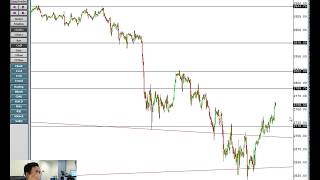
Very good morning, Friday 2nd of November. Hope everyone is well. What we're going to do today is I'm going to go over the news, very brief look at the charts, and then Sam North, chap over there, is going to come on and he's going to look at the market a bit more technically and give his views on a couple of trade setups for the day ahead. Kicking things off then, because a few things to get through, including the preview of course for upcoming non-farm payrolls, and that is the equity market rallying. And, you know, we were talking about this right from the beginning of the week, uh, the kind of terrible October, or Red October as it's been termed, and then this really strong bounce that we've been seeing from the various different catalysts we've been discussing. But another catalyst overnight to help just lift general global sentiments, specifically on the equity side is this. Donald Trump at it again, and I hate to say it, quite masterfully done in a sense that, you know, it was his ability to kind of massage the communication with China in order to reignite some positivity to the market after such a depressing October's performance. And this obviously, timing-wise, you know, this is when you've just got to read between the lines a little bit. Trump saying that he's asking a cabinet now to draft a possible trade deal with China coming 4 days before the US midterms, cultivating about another full turnaround then of— well, not full, but another further turnaround of the US equity market. After, you know, it was being questioned about was this the beginning of a correction. So he's kind of managed to get away with it again in some extent, and obviously there's still a little bit way to go for a full reversal. But let me just read to you what exactly the status is, because if you look at the US equity market— I'll go back to the chart for a second. Now this was the, the move we were looking at, that trend line from the previous kind of January high, which was the previous all-time high. Scaling down the various points. That's played out quite well, and we broke above there 2 days ago, and we've kind of remained bid ever since. But looking at a slightly shorter time profile, you can see this is the S&P on a bit more of a zoomed in, so we can see that the pop that came, I think it was around 4 AM last night, uh, or 4:30. This is when Bloomberg dropped the article. So President Donald Trump wants to reach an agreement on trade with President Xi at the group of G20 in Argentina later this month. He asked key U.S. officials to begin drafting potential terms. Again, this of course not above board, this is people familiar with the matter, but that's all the market needs, you know. And remember, we're kind of— the market had to be in one of the most kind of negative mindsets in quite some time, only really a week ago. And so this all the more potent, the positive news when it does come out. Now, Trump has asked key cabinet secretaries to have their staff draw up a potential deal to signal a ceasefire in an escalating trade conflict, according to people who said that multiple agencies are now involved in drafting a potential deal. Now, what this has meant is one of the big, obviously, question marks has been the fragility of the Chinese economy, particularly when their assets are trading at very psychologically important levels. And that 7 of the yuan, the offshore yuan spot rate, was so crucial. And we've— you can see we've just got within a whisker of it. And then a combination really of a few different things, because if you remember, from China's point of view, you've had full coordinated commitment, which rarely happens, I'd say, in China. By this, there's kind of 3 parties. There's the government, there's the central bank, and there's the regulators. And all in combination coming forward and looking at various means in order to stimulate the economy in various different ways. That has meant that the CSI 300 index— so obviously you're probably more familiar with things like the Shanghai Comp, for example, but the CSI 300 is the top 300 stocks in Shanghai and Shenzhen— and they're kicking off November with the most bullish start to a calendar month since January of this year. The yuan obviously moving quite sharply away from the critical level of 7 So this persistent throughout the week, this goes all the way back to really Monday, the kind of verbal commitment, because don't forget that these stimulative measures from China have really not come into effect as yet. But the commitment from them, in addition now to a bit of a Trump softening of the tone and looking like then a de-escalation and some positivity potentially ahead of the G20 at the end of the month. Has seen this quite severe about-turn in financial markets. So what are the things that China could do? Well, further tax cuts have been mooted, increasing infrastructure spending, major tweaks to central bank policy, regulators for brokerages supporting the private sector, increasing stock buybacks for listed companies. They are really throwing a bit of the kitchen sink at this point to try and get things to turn around. And, you know, Trump timing this almost to perfection because the telephone conversation that he said he had at length yesterday was the first publicly disclosed call in 6 months. And as I say, for Trump, what better time than to kind of drop it right before the midterms commence? So other things here that I was looking at this morning, well, you know, this is the renminbi move we just looked at. In terms of Hong Kong, this isn't just a Chinese situation. Obviously, China is so critical to that geographic region, but also the general market sentiment, given how important it is. And Hong Kong stocks are also on track for the best week since April of 2015. So the Hang Seng Index has gained 6.5% this week. So Asia-Pac bouncing back, and that's also helping some of the sentiment. Other things to, to look at from a, from a news perspective is there's a story here that came out last night. Now what I wanted to do is just have a quick look back at the chart, the pound. I'll let Sam really go over this in more detail, but 3 kind of different time frames. One, first chart here is a 60-minute, and just looking at the, the size of the rally yesterday is impressive. No, 127.83 up to 1— I think we got above north of 130. I think that clocks in at the 5th biggest gain for cable ever in, in an upside move. So, you know, putting in a bit of perspective, there was a really powerful move, combination of positivity from Dominic Raab. Are we getting closer to a deal? Question marks though about how old that piece was because it was a letter to Parliament in late October. But nonetheless, potential deal coming in time for then an emergency meeting with EU members at the end of the month, with also the G20 coming. Then you had this, the Times article talking about a deal in principle or an agreement for the financial services area, which is obviously very important for the UK economy. So second positive factor. Then you had the Bank of England, really nothing overtly dovish in that sense. And we moved higher again post the press conference. And then this was the article which came out last night. Now I put it on a minute profile here just so you could see it, because I know some of you might have joined me last night, but I did like a live session on YouTube yesterday evening, and as I was just talking, I clocked in the corner of my eye a tweet from the FT talking about basically an EU compromise on the Irish backstop. I think I saw it a couple of minutes just before this spike happened, and the point being here, this is a real point of when you can get such a clear opportunity Americans— I'm totally not saying anything about Americans' trading performance. What I am saying is that Americans do not have their finger on the pulse of monitoring Brexit news like we would during our UK session, for instance. That's not what they're looking at. They're getting g'd up for Apple and non-farms and Trump and data and so on. Not so interested at this point unless Brexit was to spill into a no-deal scenario. So what happened here was I saw this tweet, I jumped on the FT, this was the article that I saw. And to give you a bit of a summary of what we're looking at here: the EU Brexit negotiators are exploring a compromise on a plan for Northern Ireland that would give the UK stronger guarantees that a custom border would not be needed along the Irish Sea. This is a concession on the EU side to London the EU would lay out the full terms of a bare-bones all-UK customs union in Britain's exit agreement, avoiding the need to negotiate a second customs treaty after Brexit, according to several diplomats familiar with the plan. So again, sources in that sense. But I mean, you had a lifetime to get to catch that move, because even by the time that I, you know, having been speaking to 100 people in this chat, seeing that tweet, going on the FT, checking the FT, seeing the comments seeing that it's bullish. I mean, the article had already been out for 8 minutes. It's only that, you know, unfortunately on a Thursday night, certainly in the UK, if you are a veteran of the city, at 6:30 you're probably about 4 or 5 pints in at the local boozer rather than sitting here trying to find the latest Brexit comment, is the reality. Not a lot of people in the market leads to two things. One, there's a delayed impact in the market. The market only spiked here when Bloomberg ran the FT headline, but Bloomberg aren't always amazing, you know, because most of their key senior level and core staff, quite frankly— that, and I know this because I know people who work there— they've gone home. And so at 6:30, they're sloppy. and that means that, you know, that's when you can get a bit of advantage if you're switched on and you're looking out for these things, because you had an 8-minute edge. Bloomberg ran it and then bang, it just exploded about 50 pips on the upside. So yeah, just from a news function point of view, it was just quite interesting there. Other things, as I said, I'll let Sam go into the, into the real detail of what to look out for technically and where we go from here for the pound. Other things was Apple. Um, press quite downbeat on Apple this morning. Uh, Apple are going to stop reporting their iPhone unit sales. I find that incredible. Got a company that derives 60% of its revenue from one product, and you know, we're talking— we're not just talking about any company, we're talking about one of the biggest on the planet, and they're going to stop reporting their main product, the that comprises of multi-billion dollars of revenue seems absolutely ridiculous. But how better to manage a situation where you know markets are quite sensitive to these types of information? Well, you know what, let's just stop reporting our unit sales, then no one's going to know. So, you know, part of this I think is a long-term execution of a strategy of Apple trying to move investor focus off the iPhone and onto things like applications, their other product streams, and so on. The important part here though was always not so much the numbers as they came out, but was more about the— not the XR, the selling prices, but the forward guidance for the holiday season. And that actually did disappoint. They underwhelmed on their forecast for basically the Christmas period weak and expected demand for their new, uh, pricier iPhones. In addition to what I said before about stopping reporting unit sales, their shares actually did fall last night. But typical Tim Cook timing, he then gets the positive Trump response and how equity market lifts, and that obviously helps mitigate some of the downside. One thing always that's relevant when it comes to statistics You should never believe one number in isolation, so the logic would say, because saying that Apple down 3%, you know, this— let me show you. I've been seeing all kinds of graphics this morning. I think I saw one earlier and it was looking at Apple share price and how it plummeted overnight. Sure, it went down, but Apple are up even with last night's drop. 31% for the year. So, you know, everything's got to be taken in context. Yes, it was negative. Yes, they fell. It was an absolute drop in the ocean comparative to the phenomenal moves that they've seen throughout the year. And if you actually look at, you know, this table I'm showing you here, the FANG+, this is actually a, a NYSE index that you can trade, basically encapsulates some of the other kind of growth names like Twitter and Tesla, but also Chinese social media names. So it gives you a nice kind of global cross-section of that particular sector. And you can see Apple quite clearly has navigated the trade storm the best. This is not forgetting, of course, that Apple have struck a deal with Trump and that China would not include them, and the US would not include them in any types of tariffs. Obviously Apple highly important to both sides, both countries in that respect, on an employment basis and then just kind of the general revenue generation in that respect. So yeah, Apple I think is not something that I think is going to be super important at the moment. I do think that's been superseded now by the fact that you've had these Trump comments. Other thing, um, and Sam will look at this from the support points that were taken out, which certainly helped some of the drop in oil yesterday, but oil set for the biggest weekly loss since February on a supply concern. Um, oil, I guess fundamentally the Chinese news that's come out from Trump should technically be a positive on the demand equation and hopefully can turn around some of this buildup of negative sentiment about the prospects for global economic kind of demand for oil and commodities in general, because some of those related metals obviously feeling the bite of the potential downturn in China. But if China flips, then, then that obviously will go in hand with it. One thing that people generally are focusing on, we saw this yesterday, is that we've got the impending US sanctions on Iran, but the expectations are now that it won't cut the producers' exports to zero. So, you know, a lot of the selling pressure that we've seen, yes, it's kind of Saudis are pumping, there's been some technical breaches, there's been some dollar strength, X-ing out yesterday what we saw the day before on Wednesday, which has all kind of helped the downside pressure in oil. But The fact that Iran, which let's not forget is the third largest producing member within OPEC, is not— the sanctions going to have quite the same impact as we thought. That's also obviously weighed on prices. And at the moment, OPEC boosting its output in October to the highest level since 2016 has also not helped the case for oil. So that's something to just be aware of. OK, looking at the calendar for today. I'll hand you over to Sam. Um, of course, as you're aware, it's US non-farm payrolls with the clock change. Again, North American clocks change at the weekend, and so we've got 12:30, not 1:30, for payrolls. So do remember that. Just before we get to payrolls though, for this morning we have had the various PMI numbers. You've got the construction PMI of the UK at 9:30. I've just seen the Italian one come out as I've been speaking. Uh, 49.2, no real concern there. It's a little bit weaker than expected, but nothing, nothing catastrophic in that sense. Non-farm payrolls then, what are we looking for? Headline reading, 190,000. That would be a distinct improvement from the prior 134. We do have a range though of 134 to 270. I mean, that's It's pretty punchy in terms of a range on the most pessimistic, optimistic analysts on the street. The unemployment rate, you know, and Trump's going to be obviously using this to his advantage in the coming days, and I'm sure over the weekend once this data is out, because unemployment is expected to still remain down at its lowest level since, what, the mid-1960s. And if he can cultivate further turnarounds in the stock market, then, you know, all the more it fits for his political agenda. The wage component though will be ultimately very important. Average wages year-on-year expected at 3.1%. That is a move higher from 2.8%. And if you think about it, the employment cost index that came out on Wednesday alongside the ADP was also up, testing I think a high it printed earlier this year and 2017. but to a level of which we haven't seen other than those two prints for the last 10 years pre-financial crisis. So some of the indicators coming up for the jobs report, you'll remember ADP was particularly strong, came out at 227 against expectations of 189, the previous only seeing a marginal downward revision. So overall headline job creation figures being pretty solid, and the, some of the employment more compensation metrics have also been on the upside. So odds are that we get a kind of potentially a more dollar-positive outcome here. How would equities react? I think it's quite interesting because we were in a period— if we just go back to the S&P— where if wages was picking up, people were panicking about Fed tightening and this higher neutral rate, and that is partly what caused the sell-off. Through the best part of October. But I actually think that as long as it's not a massive spike in wages, which brings about that same argument, I think actually, you know, just a decent jobs number overall might just help further continue this upward trend in the jobs market because it just kind of steadies the ship in what's been quite a negative week or two in financial markets just globally. All right, I'm going to hand you back to Sam. Obviously, I will be here to give you the full kind of non-farm preview closest to the time of release, but let me hand you to Sam and he can talk through his views for the day as well. All right, have a good one.
Yeah, hi guys, good morning. I hope everyone's Friday is going well and obviously obviously stay tuned for the, uh, Amplifier non-farm payroll average guess, which is obviously the most important thing ahead of that 1:30 announcement. Let's have a quick look over some of the charts. So again, we're seeing the weaker dollar this morning, now below that 96 on the way back to— well, still a bit to go to 95, which seems to be such a magnet over the summer. A couple of key breaks over the last couple of days. Obviously, we'll start with the pound. As you can see, really did push on. And really key level of yesterday's high, uh, just been touched again this morning. So worth keeping an eye on that. And above that, then you're looking on the futures anyway, up at the 23rd of October as a high, uh, just put in this longer term. And now of course, you know, if you were to have a very, very strong, uh, payrolls today, yeah, you can get a bit of a reversal, whether it's to still has that importance or not, I think remains to be seen. Having a look here, you can see that breakthrough that we had of that trend line. Uh, well, when was that? It was the 22nd, which I think was— was that last Monday? Um, 22nd? No, last Thursday. Uh, so possibly a retest of that and the 131 later on would be quite interesting to see what happens there on a longer term perspective. And the euro as well, which is having a bit of a recovery, and similar sort of pattern in, uh, in that, uh, we had that breakthrough similar sort of time, and we've, we've come back now to retest that, almost getting the low of the year, uh, a couple of days ago, and reversal seen now. So if we drop it lower time frame and look more into a day, whether you want to get involved too much ahead of the payrolls is, is up for debate. I think usually best to sort of wait and see, or at least keep it, uh, sort of minimum in terms of the risks or taken. We've had that push through of the, the highs that we had of the, of the week and yesterday, so that was a key support level to be aware of. Should we get down to towards the pivot area in Euro as well, quite a lot of, uh, decent price action around that point where, uh, if it was to come back down, all things considered, you'd expect a decent level of support. Where does this up move perhaps start to drift back down? You know, when could you start to see a bit of dollar strength? Probably worth getting a bit of a trend line on that. And from all the dollar pairs really, which of course have had a bit of a recovery— we're coming to Aussie dollar, which, you know, was, uh, active in the chat yesterday in terms of that trend line people were talking about. So for these dollar pairs, worth probably having a bit of a trend line on to see what we hang on, hang on, when is the, uh, when is this dollar strength going to come back in, if it's going to come back in? Let's just go over to the Aussie dollar and put that trend line on from the, the high of the year, January, end of January, coming through there, really strong breakthrough. And also we had the high of, uh, the month as as well that broke, uh, as well at the same sort of time. Really strong push. I mean, technically, whether we can get to the highs that we had back in September or not remains to, to be seen, but technically very, very strong break there in Aussie dollar. New Zealand dollar as well pushing to the upside on this sort of weaker dollar, probably led by, um, you know, the, the Chinese currency rejecting 6.9 and the 7 handle very strongly. But, uh, yeah, lower the time frame down. So we talked about the euro and pound perhaps where they could reverse from. Aussie dollar, obviously we've got the R1, but I think unless we were to really close below the, the sort of the high of the day sentiment, you've got a favor to the upside. Of course, 1:30— well, actually it'd be 12:30 today, um, It could be the, the key sort of moment to wait out for, um, as well, rather than looking to get too involved this morning. Equities had that push early this morning, um, I think sentiment, you've got a, got to favor the upside for now, uh, unless really if you just try drop this down to 5 minutes, getting a bit noisy up here to be honest. I think the, the long above those, those highs would be half interesting. It's sort of stuck within this range between the previous high of the day and the high of the day. Now probably just best to leave that alone really, wait for a clear direction, uh, to come. We've already pushed very high this morning above the, the R2, and you've got a bit of noise above there as well. Even if we were to push here in the S&P, um, I think a long from lower down would be, would be quite interesting. And I've just seen Anthony has put in the chat the uh, the S&P on that longer-term chart. You've got the, the 200 daily moving average pretty much trading on the top of these candles now. Um, where we close the week will be important. Can we close above that? Well, I think that will be quite bullish, uh, for sure. If we have a quick look over at the NASDAQ, and we'll come on to the Dow and gold as well, similar sort of scenario. Maybe the Dow a bit closer to that yesterday high, which looks like a decent level to get in, but I wouldn't be too aggressive this morning in, in terms of wanting to get, you know, too involved before non-farm payrolls comes out. Is always a bit of a higher risk sort of trade anyway. And the Dow, you can see, really pushing on, much more correlated with the S&P today. Of course, Apple's probably holding the NASDAQ back there. Gold choppy, choppy, choppy this morning. You know, whether to move off, uh, the sort of the weaker dollar, which really helped push it yesterday to the upside, or, you know, equities pushing and sort of coming down. Choppy price action. When I see it like that, I usually just, you know, draw up the lows, uh, and the highs and, and really wait for a clear sort of push from that. And this is a 15-minute chart. Is there anything that interesting? Okay, maybe if we can get get a break below that, that trend, I'd be, be half interested to see. But, you know, remains to be seen on a few of these dollar pairs where, uh, we end the day. And the non-farm payrolls will be obviously the key part of that. But again, here for the pound, similar to euro, just trying to see, can we get any sort of, uh, you know, trend lines or resistance turn to support up just for that opportunity for the reversal? Because obviously we had some strong moves yesterday. Whether that can continue today, I think there'll be a couple of factors in the mix. To finish up, let's have a quick look over at oil, which really had that strong push to the downside, breaking the low on, well, 1, 2, 3, 4, 5, 6, 7, on the 8th time of asking. So it was a tricky, tricky trade opportunity unless you had the patience to wait for the low of the 30th and that sort of retest yesterday for that strong push down. Same with the sort of the currencies in terms of whether you're looking to get in on the continuation of those lows or for the reversal back. I think, uh, is, is, is going to be the, uh, the main thing to consider. I wouldn't be too aggressive at the moment, but we've had that low of the day already touched a couple of times, so maybe that breakthrough, uh, quick sort of target down to the low of yesterday today could be the opportunity, or keeping an eye on the pivot, uh, as well. Worth— let me just put this on a 15-minute chart. Not really a trend appearing as of yet, but maybe for the opportunity to go long if we were to break really to the upside later. You know, there's a couple of trade opportunities. I think I'd be waiting for a break of this or a break of those lows. as well to come into play. Um, also big shout out to Don Pears. Pears' current birthday today, uh, as well. I'm sure everyone will join me in saying happy birthday. We'll be on the, on the mic later on, uh, to sort of run through the payrolls. I'll post some charts we'll see in the chat, uh, closer to the time. And of course, just to reiterate, going over the Amplify prediction non-farm payrolls, which we all need to know, of course. But if I don't chat to you personally, hope you all have a great weekend, and I'll be on the mic later on. Thank you.
More from Anthony


Inside the Biggest Banking Stories You Need to Know This Week (Anthropic, Diageo, Private Credit)


Inside the Biggest M&A Deals You Need to Know This Week (UniCredit, GameStop, eBay, Eli Lilly)







AI Breakthrough or Hype? Anthropic’s Claude Mythos, Tim Cook Steps Down & LIV Golf Collapse