'Succession' Explained - How Similar Is The TV Show To Reality?!
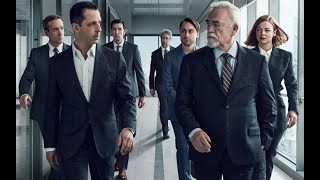
Anthony Cheung breaks down Succession's fictional Waystar Royco using real M&A concepts: the $65-100 billion media company, the failed GoJo deal, and how founder Logan Roy's death tanks the stock. He compares it to AOL-Time Warner, Elon Musk's influence on Tesla, and why succession planning fails at Disney and GE.
Chapters
Hello and welcome to The Deal Room. And for anyone watching the YouTube channel, it's just me. Piers is off in Miami. I think he's— he says he's doing work. I'm not totally sure. He might be getting a tan. And Ant has refused to do an episode on Succession because he hasn't finished the final series yet. Frankly, that's his fault and he's really landed me in it. But anyway, kind of on this point, this episode of the pod does contain some spoilers for both Series 3 and Series 4 of Succession. So make sure that you go back and finish at least till the end of Series 3 before listening to this. I don't want to spoil the drama. It's a brilliant end. Okay, so what we are trying to do in this episode is to better understand the world of corporate finance and deal-making through the lens of Succession. Now, Succession is dramatized and not wholly consistent, but does provide a reasonable reflection on a real-life company dealing with acquisitions, takeovers, and succession planning. As Anne has refused to join me today, I decided to ask the team, who are all big fans of the show, to submit some questions around the corporate finance and deal-making elements of Succession. So let's get into it. So question 1, give me a little bit of background on Succession, the company, and how it's structured. So the main character in Succession is an aging media conglomerate called Waystar Royco, modeled Maybe a little bit on Rupert Murdoch's News Corp, maybe a little bit on Disney, maybe a little bit on Time Warner. This company owned by Logan Roy, ostensibly owned by Logan Roy, who is the patriarch of the Roy family and the founder of this empire. Again, a little bit like Rupert Murdoch. It's this juggernaut, this big lumbering company. That owns theme parks, it owns cruises, it owns TV, uh, movie studios, and finally it owns ATN, which is the jewel in the crown. It is the Fox News of the Waystar Empire, and it's the part of the business that Logan, the father, the aging father, probably likes the most. It can decide presidential elections, it can test the mood and change the mood of an entire country. Question 2, how is it valued? Again, a very good question. This isn't always consistent throughout the 4 series. Again, this is drama, not reality. But we worked out that from a low point to a high point, the valuation range from a market capitalization perspective is between about $65 billion and $100 billion. Market capitalization is number of shares outstanding multiplied by price per share. And it was about $65 billion when, again, this is a big spoiler, when Logan Roy dies. And it went up to about $100 billion when Madsen of GoJo offered to acquire the company in Series 4, Episode 5. This next question's a tough one, and it's actually very realistic in some ways. Who owns the company? And are there any links to real life? This required a decent amount of digging. So, the company, as it stands at the end of Series 4, you know, there's lots of variations throughout the 3 series, but then by the end of Series 4, the company's 36% owned by Royco Holdings. Now, Royco Holdings is the family holding company, and the kids each own about 2.5%, we reckon, of the whole company. That equates to about 2.3 billion each. Well, it certainly did at the beginning of Series 4 when they were thinking about selling to Gojo. It seems like the holding company has a special class of voting shares which carry a lot of weight, almost transformational weight. Now, this isn't, this isn't unusual at all. You know, especially in the US, you get a lot of dual-class, uh, shares with one class of shares often owned by the founders and the senior leadership that confer a lot more voting power than the ordinary shares. This is a very standard thing. You see it in almost every US tech company, Facebook being a great example. Now, in this instance, it seems like the holding company— seems like Logan has We think 3 special voting shares. We think that the kids have also got 3 special voting shares between them. And in between, the kind of pivot point, are the kids' mum, Logan's ex-wife, who agrees at the end of Series 3, if you remember, who agrees to give up her special voting share to Logan in exchange for a flat in Belgravia. This turns the tide of the deal and makes it much more likely that Waystar is gonna get sold to GoJo, much to the umbrage of the three kids who slightly make a fool of themselves at the end of Series 3. Again, Tom Wambsgans playing the dealmaker behind closed doors. The rest of the company not owned by the family, it's public float. They're listed on the stock exchange, the New York Stock Exchange. And then there are a bunch of private activist investors. Including Sandy and Stewie and their activist voting bloc. We reckon they own about 20 to 25% of the business. There are a few other individual large investors that also own 5 to 10%. And now the board, which is different, you know, the board construction is very different and is not necessarily representative of ownership construction. The board by the end of Series 4 consisted of 13 members, 3 kids, 4 board seats for the activist investors, and then 6 others, uh, including Frank and Logan's brother. This is incredibly important when it comes to the finale of Series 4, when the decision to sell to GoJo hung on the 7th member. It was 6-all, and I'm not gonna give away the very final ending, although I'm sure you all know. Alright, let's get onto a bit of deal rationale. Why in Series 3, it's a really good question, why in Series 3 did Logan want to sell? And to whom? What was the structure of the deal? It's a really good question. So remember, this company is an aging media conglomerate. Its market capitalization is, let's say, $60 to $70 billion on a steady state. And it's probably valued by the markets as a kind of boring, slow growth, possibly declining, uh, company that's not going to achieve a very high price-to-earnings multiple, price per share over earnings per share, or EV over EBITDA multiple. So what Logan Roy does, because he can smell the winds of change, he thinks that a transformational acquisition of a tech company like Gojo, which is a multi-platform tech business run by a maverick Swedish CEO. It includes streaming, gambling, social media, and news. Logan Roy kind of thought, all right, my company is embroiled in scandal, it's not growing very quickly, I need something that's going to bump the share price and turn us from a kind of boring declining cash cow into an exciting growth stock, and that will bring the multiple with it. However, this was a really nice theme during Series 3, and the GoJo acquisition looked like it was on, then it looked like it was off. But during the course of Series 3, what happened was that GoJo's share price ticked up and its market capitalization ticked up, and Waystar dropped out due to scandal, due to Logan's ill health, et cetera, et cetera. And it got to the point that by the end of Series 3, Madsen, the CEO of GoJo, didn't want to get sold. In fact, he either wanted to merge, partnership of equals with Waystar, or he actually wanted to buy Waystar. This was a big about-turn, and it, it humiliated the kids. They didn't want to see this happen. But actually, Logan was still bullish on the deal as long as ATN, which was his baby, was carved out. You know, this happens— spin-outs, carve-outs within an M&A transaction. Although I don't think I've ever heard of a business who was going to acquire another business actually getting acquired. Anyone that does have an example of that, please drop it on our LinkedIn site or in the Spotify. The Street seemed pretty favorable on the deal. Most people wanted it done. You know, it seemed like a good exit. Of this aging media conglomerate. Next question. Yeah, what was the deal rationale? Is there any precedent to real life? I think this is a really good one and it ties us back into reality. Remember, we are talking here about a drama, even though it's a very good drama. Is there any precedent to real life? I'm going to talk about Warner Brothers and Time Warner. So this is a really good example of basically deals between two very different companies going quite badly wrong. So in 2000, AOL, the kind of the big beast of the tech boom, it was the Facebook or the Google or the Apple of its, of its day, flushed with a very, very high market capitalization. It went out looking for assets, looking for things to buy, and ended up buying Time Warner for $183 billion. An outrageous sum of money, and it was a complete disaster of a transaction. The two cultures clashed. The synergies weren't ever expected. They were actually doubling and tripling work. And what actually ended up happening was in 2002, the, the joint company declared $98.7 billion of losses, posted a $98.7 billion loss. In 2002. Goes to show how badly wrong an ill-conceived transaction can go. And then Time Warner was in the news again when AT&T, the American telecoms company, purchased it for $85 billion in 2017, 2018. It was an absolute disaster again. $40 billion write-off within 2 years. Major issues around culture, major issues around synergies and whether they can actually be achieved effectively. It was hugely value destructive. So if there was to be a Series 5 of Succession, we really hope there is, but I don't think there will be. And we saw how this, this acquisition went through between GoJo and Waystar. The likelihood is that it would be a total disaster. We saw in Norway in Series 4 the very, very different culture of corporate America versus scrappy startup in Europe. This was going to be value destructive, EPS dilutive and not accretive, and it was going to be a disaster. Quite frankly, I would have taken the money if I was one of the kids. I would have, I would have taken the money and I would have run. Okay. Getting— coming kind of in towards the end of the episode. So spoiler alert, Logan dies and the stock plummets. So one of the questions that I had from the team was, how do you value inspirational founders and what happens when they leave? So there's a few data points here from Succession, and then there's probably more data points from real life. So in Series 3, when Logan suffered another one of his health problems, the share price went down from $160 per share to $138 on news of his ill health. That's how powerful he was perceived to be by the Street. And then on news of his death, the share price of Waystar dropped almost 20%. I don't know if you remember, But the kids were crowding around an iPad on the, on the airport track looking at the Bloomberg screen. And one of the kids said, look, that's dad's legacy. 20%, $20 billion. That's what dad is worth to the business and worth to the investors in the business. Quite a kind of poignant moment. But let's bring this back into real life. Usually it's not as clean and simple as this is how much an individual's worth. And often the problem is, is that the individual's so tied up with the genius of the company. So for example, I could say that I could value Elon Musk based on the premium of Tesla's share price, price earnings relative to its competitors. So Tesla's price earnings multiple is 64 times, very aggressively valued, very highly valued, whereas VW's price earnings multiple is only 5 times. Now, that's not just because Elon Musk is the CEO of Tesla. It's due to a number of factors, but a number of those factors were enabled and contributed to by the genius of Elon Musk. We could say the same about Nvidia price earnings 204 times at the moment. Uh, the price earnings of TSMC, the Taiwanese semiconductor company? 16 times. Is that because Jensen Huang is a genius? Well, maybe, but it's not all about the individual. In fact, in 2021, when Jeff Bezos stepped down as CEO of Amazon, the stock climbed to an all-time high, went up 3.3% on the announcement. And this, you know, we can see, we can see this happening all over the place. and there's a piece of analysis that was done that mentioned that stock prices rise nearly half the time when a CEO dies unexpectedly, according to a study of 240 US public companies from 1950 to 2009. So this goes to show that the company is almost always bigger than the individual, and there can be short-term rumbles within the stock price, but it's hard to price in you know, in dollar terms, how much value a particular founder or a particular CEO adds to a business. Final question, and maybe linked to this point, the wider and final question is about succession planning. When has it worked well and when has it failed? Now, it's fair to say that in recent years, the Best example of it succeeding was with Apple. So in 2011, Tim Cook took over at Apple. He was seen as a continuity choice, maybe a little bit boring. Share price dropped by about 5% on the news of, uh, of Steve Jobs, the inspirational founder's death. But what has happened since is that Tim Cook as head of the company has has driven Apple to being the biggest company in the world. The share price has grown by more than 1,000%. Some of the new products that it's introduced over the last 10 years have really been transformational, and the Street absolutely love Tim Cook. So succession done well in that instance. But there's many more examples of it failing, and sometimes the truth is stranger than fiction. So I'm gonna give you 3 examples here, and I love all 3. The first one, Bob Iger, the legendary CEO of Disney, who was at the helm for almost 20 years and did a number of quite transformational things for the group. He spent quite a long time appointing his successor towards the end of 2020— the end of 2020, 2019. He eventually landed upon Bob Chapek, who actually was a bit of a disaster. Only lasted 2 years and was unceremoniously ousted, only to be replaced by Iger himself in December 2022. Think about that. So there's this big beast, this corporate legend within the company. Even though they left, they're probably still walking around the corridors of power within Disney. They still know all the shareholders and all the management team, and Quite frankly, Čapek probably didn't even stand a chance, didn't get given long enough. Uh, the sword was wielded pretty quickly, and it goes to show just how difficult it is to step into shoes that have been made that big within a particular company. Similar story with General Electric. Now, Jack Welch is well known in management circles as being a legendary CEO that turned the company from a $10 billion market cap company to a $410 billion market cap company. And over a 6-year period, as he was winding down, wanting to hand over, he, in a kind of Hunger Games style, he narrowed down his potential successors to 3 handpicked finalists. Unfortunately, the Street concludes that he picked the wrong one. So Imelt, Jeff Imelt, was picked, and he was assumed to be the weakest of the three. Uh, stock price went down 50%, disastrous share buyback program, failed acquisitions, and let GE Capital become the dominant element within the firm. A total disaster, and basically destroyed, uh, Jack Welch's legacy. And then finally, bringing this in to land, there is Sumner Redstone. Some of you might have heard of this guy. So he's the media baron that many people say was the real inspiration for Logan Roy alongside Rupert Murdoch. When asked about his succession plans, you know, as he was getting into his 90s, Redstone joked that he did not plan on dying. Dying was not an option on the table for him. Maybe it was okay for other people, but he didn't want to die. He wasn't planning on dying. And this is quite a significant thing because he controlled, at the height of his power, He controlled a vast media empire— Viacom, Paramount Pictures, CBS, MTV, Comedy Central, Nickelodeon, uh, and the publisher Simon Schuster. But he's not gonna die. Obviously, everyone dies. And the battle for succession raged between, uh, a number of hangers-on, a number of corporate, uh, uh, members of the team, but mainly his daughter, Shari. Now, his daughter, Shari, much like maybe Shiv in Succession, she was constantly courting the favor of Redstone, but then being pushed back, wanting the job, but then not wanting the job. And it all transpires that after Redstone passed, she ended up taking over the company, rebranding it as Paramount, and the share price, somewhat expectedly, is off 75% until, uh, since 2015, where the reins was slightly released by Redstone. So the conclusion is succession is incredibly difficult regardless of how good you are as CEO. Maybe the advice to companies is do not create this cult of leadership. Do not create this cult of personality. Make sure that even if you do, à la Steve Jobs, make sure that you have a plan in place and that the company ends up being bigger than the individual. This is something that all major companies with inspirational founders should be listening to and planning for many years in advance. So that's it. That is our wrap-up, our Q&A on Succession. If you haven't watched it and you don't know what I'm talking about, Please go out and watch it. I think I might watch it all over again. It really is a fantastic 4 series. If you've got any questions, please do leave them on our LinkedIn page or on our Spotify account. We'd be really, really delighted to answer any of your questions. Ant will be back. He promises to be back on Friday having binged the last series of Succession. So we all look forward to seeing you then. Thank you very much.
More from Anthony


Inside the Biggest Banking Stories You Need to Know This Week (Anthropic, Diageo, Private Credit)


Inside the Biggest M&A Deals You Need to Know This Week (UniCredit, GameStop, eBay, Eli Lilly)







AI Breakthrough or Hype? Anthropic’s Claude Mythos, Tim Cook Steps Down & LIV Golf Collapse