Sunday LIVE Session - 3rd March 2019
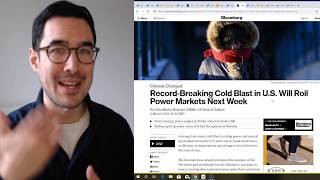
Anthony Cheung covers the week ahead: RBA, Bank of Canada, and ECB rate decisions; US payrolls data unlikely to shift Fed policy; technical levels for S&P 500, crude, and gold; Brexit scenarios and pound projections.
Chapters
Testing. Hello. Just getting the feed up and running. Thought I'd try and do a live session a bit earlier than normal. Just given some of the, um, the issues encountered last weekend with the internet connection. So just seeing if anyone comes online. We'll give it a minute or so. So I hope you're having a good weekend. A couple of charts I've got marked up. My intention is I'm going to go over all of these. I've kind of annotated some of the charts with some key levels. Couple of ideas I'm looking at for the week ahead, and then we can discuss the column— the calendar as well, of all the different types of risk events from a fundamental perspective. So, hi Rob, nice to have you with us. Let me know whether you can hear me okay, Rob, whether the feed's coming through smooth, both the video and the audio. Okay, anyone else? I can see there's a couple of other people there. Happy Sunday. Hope you're having a good weekend so far. Just let me know whether or not you can hear me. The other guys, I can see someone, Miss Actor. Hello. We'll just give it another minute or so, let people log in, and then we'll get cracking and have a— my intention is a half an hour session. We're gonna have a look at the week ahead. All right, well, let's, let's get going, and if other people come in, uh, we can catch up afterwards. Uh, thank you, AB and Arif, nice to have you with us. Uh, Drew B Designs, hello. Um, one thing I'd say is what I'm going to do is I'm pretty much going to just give you a bit of a market insight for what I'm looking at, having just gone through the news, prepared for the week ahead, a few ideas I've got. I'll also look at some charts to match up with that So my intention is I'll probably talk for about 20, 30 minutes, and then if you have any questions, just pop the questions in there and then I'll review them at the end and we can do a bit of a Q&A. Probably work the most smooth. So Liam, hope you're well, Liam. All right, well, let me switch over. So hello again, welcome. Thanks for joining us on a Sunday. This is going to get recorded, so don't worry if you're not watching this live. This is the week ahead, so Monday through to— actually, I've got through to Saturday because there's some Chinese inflation data coming out on the Saturday. Now, what I normally do here is run through some of the key events. If you wanted to access this particular calendar in its entirety, all you need to do is go on to my Twitter account, so just @awmcheung, or just search Anthony Cheung, you'll find it. So let's just have a run through then. What have we got here for the risk events for this week? So Monday, pretty quiet, as is kind of standard actually on a Monday from a calendar perspective. But one thing I wanted to share with you was this. Don't know whether you've caught this or not. I know obviously we're in, we're in Britain, so we're not exactly tracking US weather conditions that closely. But one of the things I wanted to point out to you guys was that there's a record-breaking cold blast in the US, and the— what Bloomberg are looking at here is the impact this could have on power markets, because essentially things, uh, power demand spikes up in what typically otherwise is a, is a time of year when demand starts to taper off because temperatures start to rise. So one of the things here is that power and gas prices surged on Friday ahead of this new unexpected winter chill. I mean, this was power, uh, spike. Pacific Northwest suppliers constrained by costly gas. I mean, this was the pop that we had right at the end of the session in the US. Now basically, there's lots of different measurements that you can have for different specific isolated power grid prices, but one of the points here is twofold that I wanted to point out to you guys was that This is the, the weather pattern that we have. Uh, this is Sunday going through Monday. So if you do have any friends over in the Northeast, obviously they've experienced snow this weekend in likes of New York and Boston. But if you actually look, we're anticipating anything— you can see in the right-hand corner there about 6 to 12 inches of snow going through Sunday to Monday morning. Now, not only might this have a bit of a read across for any further pricing in on those power prices, specifically for those contracts. But also as well, don't forget that North American traders need to get to work, and particularly in the New York City area. So it might have a little bit of an impact, just like to be aware of that. Obviously is in combination with the fact that on the calendar is pretty quiet actually on Monday. Tuesday, moving on, you've got the RBA interest rate decision. Um, with that, I was just looking back at some previous charts that I'd had This, I believe, was from about 2 weeks ago, but just goes to show how sensitive the Aussie dollar has been to corresponding events, whether economic data, speakers, or central bank actions. And this was just one, one 12-hour period that saw some real extreme kind of fundamental catalyst to spike price action. And it kind of cements 3 things here that we, we really need to monitor if you're looking fundamentally at the Aussie. One is the economic conditions. So here you can see the jobs data, which was actually surprisingly strong, caused the, the currency to appreciate. So when we have the RBA decision going over Monday into Tuesday morning, then what is their belief about the strength of the Australian economy? The other ones then are things about trade wars. The trade tie with China is obviously so pivotal And the last few weeks we've had quite a lot of news. You can see on these bottom parts here on the chart about the Chinese delay of coal imports from Australia. This would have massive consequence in the short-term economic kind of performance of Australia if they were to politically fall out with China. Uh, so any positive progression, um, that China might have with the US, does that give then China more license to be more, uh, firm and strict with Australia, which would obviously be negative for their economy. In Australia. And another thing, RBA watchers— anyone who's new to markets, what a watcher is, is we have this for pretty much every central bank. So you— there's usually one specific economist, or can be a journalist at a major national newspaper, or a bank economist, and their job exclusively is to follow the central bank. And it's kind of a mutually beneficial relationship. That journalist has a very close relationship with the central bank who feeds them the information so they can leak it into the market. So there's another form of kind of backdoor communication in order to just communicate their intentions in a calm way in order to mitigate market volatility. So yeah, looking out for anything further in that regard. The Aussie rate decision, obviously we're not at a point of changing rates, but the accompanying wording that comes along with anything is going to be key. On that point, Wednesday note as well, you also get the Bank of Canada interest rate decision. Always the loonie very sensitive to those developments. Tuesday though is probably interesting from an economic data point of view, and what I'm going to do is summarize really the two key economic data releases of this week come from the US and come on Tuesday and Friday. So Tuesday you can see there you've got the various service PMIs coming out of Europe and the UK. The UK obviously will be quite an important one, at least to ascertain how much is this Brexit uncertainty still weighing on the UK economic performance. But it's the ISM non-manufacturing PMI which will be very interesting. If you remember, retail sales, the last report in the US was an absolute disaster in that respect. So interested to see, does it hold up? Then on Friday, if we just skip down to the bottom, of course we get the delayed US non-farm payroll release. Now remember, non-farm normally comes out the first Friday of the month. However, just given a couple of different factors— adverse weather conditions, the President's Day holiday, the government shutdown— meaning that actually this got bumped and it's going to be on the, on the 8th. Non-farm payrolls, as ever, the average hourly earnings, the unemployment rate, everything needs to be taken in, in overall context rather than just the overall jobs headline itself. Personally, I think other than just the release and ensuing volatility I still stand pretty firm in the belief that nonfarm payrolls, from a job creation point of view at least, is really a non-event. Whether it swings down to low 100s or plus 200,000, it really is of no consequence to Fed action, I feel. And then the unemployment rate expected to remain suppressed down at 3.9%, which is again down around these record levels. And then the wage number, again, we're not looking for anything that surprising. So So yeah, non-farm payrolls on Friday, uh, it's important, but I don't think it's really game changer or a particularly big deal in, in that respect. Um, the other big thing then that we've got coming out is the ECB interest rate decision. Now let me run through a couple of stories then, and I'll bring in some charts, uh, and then we'll go from there. So let's have a look. First things first, well, let's go back to here on the calendar. You can see from Tuesday— or let me have a look where I've got the Chinese here— Annual People's Political Consultative Conference, and then this is followed up with the National People's Congress. So some of you might not be familiar with how the, the Chinese political system works, but In the Western world, you have quite a clear differentiation between the independence of a central bank and the government, and the two should work in isolation of each other, although the central bank typically reports in to the Treasury function if it was the UK. But the central bank makes its own decisions. It should not have a political agenda. Their job is to manage the economy with the evidence at hand. Now, in China, things are quite different. The state control, the government onus, if you like, and its control over the economy and subsequently the People's Bank of China is quite intertwined. So actually this week is quite interesting because, um, I did tweet this from the Amplify Twitter account last week. Not sure if you guys had a chance to read it, but this is a what Reuters call a fact box, which is basically gives you a summary of all the major points of different events that are happening. Now, what this essentially is in China is an annual meeting of parliament, but their parliament literally is everything— top-level agenda. They'll discuss things like new foreign policy, investment law, new economic actions that might be warranted, everything and anything. But these are the people who really rubber stamp anything that goes through into official policy. So actually, it's quite an interesting event. I'm not looking for one isolated big thing, but given the emphasis there is at the moment on the Chinese economy, any further signs that China is looking to do one, which is take more forceful action to support their economy, which they have been doing since the turnaround in markets since the beginning of the year. And then secondly, any idea about the foreign policy side, the dealings with the US, this kind of more liberal view for globalization, if you like, to be a world trading partner and so on, could act as a bit of a, a kind of risk-positive situation. If that were to be the case, the opposite would be they become a little bit more protectionist, they're a little bit at loggerheads with the US. This could reignite a little bit of the trade friction, if you like, between the US and China. Now this goes through all week, so there's no one day but multiple days to be looking out for that. With China, this is one thing that I thought was quite interesting. And if you can see this chart clearly, let me see if I can just make it a little bit bigger. There you go. So what I'm looking at here is that— and I know this is a very crude way of looking at analysis, but this is journalists are now writing basically only about circa 25 stories per day on the worries about Chinese growth. If you remember, when we had that massive sell-off in US equity markets in October, November, December at the end of 2018, core to that story was the kind of pessimism over global growth, predominantly led by the emerging markets and China and the weight of the trade war and this policy tightening idea. Now, what's quite interesting is that although people are still very much monitoring the economic situation in China, the PMI data are still in contractionary territory. The, uh, frequency, if you like, or how regular these stories are being pumped, has dropped quite considerably. And actually, it's only about 25 stories now. It was 60+ only about 6-7 weeks ago. So what, um, Nordia, which is a bank, their research desk was suggesting with this graph is, you know, have we reached peak China? Now, an amazing thing here is the, you know, behavioral finance us as market participants, if the media really force and force and force the story onto us, we inherently start to focus on it and start to price it in, start to become growing kind of negative. You know, it's kind of that echo chamber, if you like, of information. The point being is, is has the market now moved on to some degree? And, you know, things have definitely stabilized in China, but I just thought it was a really interesting, uh, graphic. And I mean, look where we were in the middle of 2015 when we had that kind of Black Monday, when the US equities sold off over 10% in one day, and everyone was really scared about a hard landing in China. I mean, to where we are today, yeah, it's a radical difference at this point. Okay, with that, let's just bring in a couple of charts because For one, this is the S&P 500, and as you guys would have seen this chart many times that I had shared with you, um, this really is unaltered. So here you've got the picture from 2018 on the left, and this goes all the way up to the, the current day, or where the market closed on Friday, which was here. So it's a really key area. This week again remains very similar to last time. That was that triple top that test. We actually got through, broke it. We actually did close above there, uh, on one occasion. I think it was last week. But then the other 3 days, we've basically just been hitting that level. And then Friday, we busted through it. And on the upside now, we're kind of bringing into play that high from what would have been, what, the beginning of last week, up at 2813.5. That's in the S&P futures. And that kind of tallies up then with that that last peak on that retest on the trend line we had on the 3rd. So definitely watching this with a lot of focus this week. Any breach above here, then I do think that there's a, uh, a distinct possibility that we could within the week push up to the upper bound. And this is this kind of area here between 49.5 and 65, I think will be quite key. So yeah, as I've written here, next target on a break of this would be into this area which brings in some of the consolidation from the kind of summer period of 2018, and of course the previous all-time high that we had early part of Feb of 2018. So things that you'd need to play out to get this, like I said, I think non-farm payrolls is a bit of a mute point. I don't really think it's that compelling. I think as long as it fits pretty much within the consensus estimates, I think that this trend of recovery in equity markets can continue. I think the technical levels are probably particularly important. If China says anything at this National Congress meeting, uh, and if we get some more kind of positive, friendly type rhetoric on the US-China trade war, that would certainly help. Uh, and I'm going to show you, Trump already has been again laying into Jerome Powell saying, um, you know, he wants a weaker dollar, he wants a more expansive monetary policy because Trump knows that politically, a firmer stock market is definitely favorable for his political agenda, of course, uh, on that side. Talking of like growth and, and I guess, um, China and data coming out and so on, this was WTI crude oil. And again, this is kind of a repetition of charts that we've shared with you before when we've done some of our weekend talks. And quite interesting, we've had a rejection around the $58 handle, which of course actually is quite a quite a distinct level. You can see here, this is— we've had the same markups for the last 2 weeks. And you can see here, going all the way back to, uh, what, late 2017, the dip and support that we had in Feb '18, and then again a rejection on a move back on the early part of November, and then what we had on the 22nd of Feb. So markets have now started to consolidate within this range. And you can see here is quite key as well, you've got the 38.2% fib on that multi-year high to the Christmas low, and that also comes in at around that trendline. So at the moment, OPEC-wise, things are relatively quiet despite Trump tweeting last week about how he wants OPEC to take action because oil's become too high again. I think this is just kind of the usual shot over the bows from Trump. OPEC though, last week according to Saudi, remain pretty committed to continuing with their OPEC cuts, which of course includes Russia. Uh, the other side of this of course is US oil production hit a record of 12.1 million, but I think a lot of that has been priced into some respects. So maybe don't have too much of a bias here. If anything, maybe it's a bit of a consolidation between this 55 to 58 handle, uh, might remain, uh, in play for the moment. I guess the trendline break could be interesting if that was to materialize. And from that point of view, that's exactly what we saw with gold this week. So here's gold, and this was that really firm trendline that we've been watching multiple tests going through Q4 of 2018. And we broke that last week, and you can see just how powerful the move was. And I mean, gold is one of those assets, if you are new to trading, where, you know, when we break key levels, when there is a fundamental kind of catalyst in step with that, the market can really move very quickly. Um, so the break of that saw, you know, drop— I mean, that's a 1-day change, don't forget, here that we had at the end of last week. And we were trading around a 1320 handle the day before that, and then we just busted through 1300. Obviously, uh, it adds probably to the momentum of the trade when we break around figure, and 1300 definitely has played psychologically a level of importance over time. As you can see, even in, uh, even the beginning of the year on both resistance and support. And so we snap back down and we're kind of consolidating now just below, uh, the figure. So downside targets, if we did remain heavy, and let's say equities still kind of push higher, and if the Fed, you know, maintain— although they're dovish but don't become any more dovish, let's say, let's say the non-farm payrolls data is pretty in line, ISM non-manufacturing is basically in line and not, um, spectacularly weak, because if it was weak and the dollar gets knocked back down, well, that could help support gold back up higher again, uh, in that respect. So yeah, interesting, uh, moves that have been occurring in, in gold lately. Okay, a few other stories, uh, obviously Brexit can't go weekend update for you guys without talking about everyone's favorite, or not favorite, most tiresome topic, which of course is Brexit. So here it is. This is the latest coming out the Sunday Times. So remember, if you are tracking Brexit news and you're going to, you know, look to potentially, if there is any opportunity to trade the pound, we, when we reopen on Sunday night, it's the Sunday National Press that normally has the best rumors, the latest updates, and and so on, in addition to Twitter. Now, the Sunday Times has reported that pro-Brexit hardliners among PM May's Conservatives have outlined conditions for supporting her plan for leaving the EU, the clearest sign yet that they're prepared to fall in line. Now, this isn't really new. This is very similar to what we had in the middle of last week when Jacob Rees-Mogg, obviously the main spearhead force behind the European Research Group, has said— he's basically softened his stance. Interestingly, now that it seems ever likely that Article 50 might get delayed, and the parliamentary vote now is a strong possibility of no deals being removed, these hardline Brexiteers are basically being forced into either you accept my deal, Theresa May's deal, as it is with some very minor tweaks on the legally binding part on the backstop, or you run the risk of not having any Brexit, i.e., no Brexit. We go down that route where no deal is removed, and then we get maybe a second referendum, a new general election. And if you're a Brexiteer, I'd rather take something than nothing. And so maybe this was the strategy all along from Theresa May to try and, you know, force this upon them. But it's looking likely now that the Brexiteers might fall in line. If that is the case, then we start to fit into this orderly Brexit type situation, which although isn't as bullish as it could be if there was a no Brexit at all, let's not forget no Brexit at all, although an increasing probability, is still credibly low. An orderly Brexit is still a positive in that sense. So yeah, couple of things to look out for. This is, um, basically Rory Stewart, who's a junior minister, and he said UK is likely to be forced into Brexit delay if PM May's deal is rejected. So on that note, I thought I'd just recap this kind of flow diagram to you because this is what we've got coming up. So actually, given this week is the 4th to the 8th of March, in terms of Brexit commentary that could potentially move the pound and UK assets I would be anticipating that that's going to pick up in intensity towards the end of the week. Just, you know, just remember how any political negotiation tends to unfold. No one does an early deal. That's just not how you leverage your bargaining power. What you do is you push it all the way up to the end, and then at the end you start getting some concessions off your, your counterpart, and you cut a deal if there is a deal to be done. So actually, I think this time next weekend when we're just 1 or 2 days ahead of that March 12th vote, that's when the news will really be much more important than it's going to be at the beginning of the week coming. But following this down, obviously, this— if the Brexiteers do fall in line, and, you know, other Labour politicians maybe who are very unhappy— reportedly there was a large number of them, it's been reported in the press this weekend, that are really not happy about Jeremy Corbyn now backing a second referendum. So could Theresa's deal be accepted. If she gets Geoffrey Cox, the Attorney General, gets the relevant legal conditions changed on the backstop, then we go into orderly exit. This then gets final sign-off following the chain down on the right-hand side, and then that's ready for signing off by European and British politicians for March 21st, 22nd. Might well require a short trend or a short extension of Article 50 for the legislation to go through and be approved, and then we move into transition. So that would be your orderly Brexit situation. The opposite side is we go back to what we've had on the two prior occasions. May doesn't get what she needs, the deal gets rejected, not enough people back her, and then we go to this already approved amendment from Yvette Cooper where the vote on a no deal Now, vote on no deal gets no deal rejected. We then go to the vote on the extension. The extension gets accepted, and then we go for delay sign-off in that summit, and Article 50 is extended. Now, on that point, something which I did cover briefly with some of you last week, but I thought I'd recap for any of those who hadn't or didn't join us for a previous session. This is something which I got from Dutch bank ING. They have some really good analysis And one point that I wanted to stress was the impact on the pound under two different scenarios. I know this is a bit small, so let me talk you through it. Essentially, if we're talking about an extension of Article 50, the timeframe has been either 2 months or 2 years, both radically different impacts that that can have on the pound, but both actually positive, at least in the initial reaction. Now, a short delay, ING is suggesting, to Article 50 could see a temporary 1 to 2% rally in the pound. So let's, let's get the cable chart up and let's have a look what we're looking at if we talk about that type of move. So let me get my currency tool. A 2% move higher would be— what are we looking at? Well, let me go on to a daily continuation and then that'll make a bit more sense. We can look at the longer time frames. But a 2% appreciation from where we are, that's going to take us up to, let's say, 135 handle. Now, if it was a long delay, let's say 12 months plus, this could trigger, they reckon, a 4 to 5% rally. Now, that would take us up to— we're looking at nearly the 139 handle. So if you're looking at two different scenarios, um, this would be the short extension here coming up to levels not seen going back to what, the April-May part of, uh, 2018. Anything above that, 138, and you can see really this is quite a key level. So if I bring into shot that, that would be an area of definitely significance. That encapsulates then the 2017 high where we bounced off and found support in this kind of zone, if you like. So, and push above there and the 137 handle no doubt would see another kind of launch higher. And so, yeah, really strong, powerful moves. The interesting thing here is, is that yes, if you have access to, uh, information quickly, if you're an experienced trader, when you can think on your feet, you can scenario build but execute under kind of tight time frames and manage your trades and risks accordingly, then you can take advantage of a lot of this intraday volatility. However, this being said, there's a big fundamental change happening with Brexit that's coming up, and actually this pound is going to respond in kind. Because what about if we have a no deal? Everyone keeps taking that off the table, but if we did have a no deal, don't forget the, um, the pound now has rallied from its lows at the beginning of the year, 6.5%. This is pricing out the probability of a no deal. If we had a no deal, well, you know, we're gonna go crashing right back down to that late 2018 low, and then we're gonna push even further below there. I mean, if we're— I mean, a lot of big banks have been talking about a 10% depreciation, and 10% from the current day price takes out, of course, our post-EU referendum low, that kind of double bottom that was seen here in 2016, early 2017. This obviously here being the referendum in itself. So yeah, if you're looking, I guess, medium term, there definitely, you know, some just say that you could, um, just stay out of the market and wait for the bigger move because ultimately it is coming. Now, from an intraday or weekly perspective. What I've done here is this is now zoomed in, and all I'm looking at here is basically the chart is late Jan on the left and February on the right. Now you've got this trend line that's been forming since, uh, February 15th. We've got a retest on the 22nd, and we had a retest at the end of last week. So that's quite a key level I'd say I'm watching, uh, of price action as we get the week underway. On the upside, obviously we bring into play, uh, the previous highs that were seen towards the back end of January. So if we did get up to that, at around that point of the trend line and the previous level, you can see it's quite a significant mark, 132.50. Interesting to see how the price reaction plays out here. Any breach of that trend line and a pullback, much like in the way, uh, the gold moved, be looking back down again, scaling to here and then to here, which brings in some of these other areas of interest as well. Now what I've tried to do is put down the bottom here a couple of key things that I feel will be drivers for the currency pair in cable this week. So you've got no real major UK data. You've got the UK service PMI, and that's probably the main one if I was going to update that text. Brexit watch, again, latter part of the week I feel is going to be more important. End of the week, likely more rumors. And then really, for me, the cable trade is going to be a lot of it deriving from the dollar, particularly with ISM non-manufacturing on the Tuesday and US non-farm. Any short-term movement which might correlate with the timing to break some of these technical levels on that trend line, for instance, could well be just that catalyst to see some ensuing price volatility. Okay, a few other things. Just to quickly run you through, and then I'll take some questions if you have any. This is the ECB. I tweeted this just a short while ago. So on Thursday we have the ECB interest rate decision. Currently, as you know, we're not expecting any change in rates completely. It's not about interest rates, it's about the press conference with Mario Draghi. And particularly important this time around is the ECB give their latest macroeconomic projections. What this is, in short, is they give you projections for what they see about growth, what they see about inflation, and from that we can start to derive what we think the corresponding monetary policy will be over that time horizon. Now, the current communication— because remember, there's only these updates and the forecasts only come every, every quarter, uh, of 4 of the 8 meetings— and They said they're going to pledge to keep interest rates on hold at least through the summer and as long as needed. So they're— what they've suggested before in a few months ago at the end of last year was that they're going to keep basically interest rates as they are and then look to hike them having ended QE much later in the year, more circa September, October after summer. Now everyone is aware that's probably very unlikely to be the case. Markets are not pricing an interest rate hike in Europe 'til well into 2020. So actually, correspondingly, we're looking for a downgrade to the outlook for growth and probably inflation. Now, the last time we had these projections was in December, so this is the purple bar. This was what they saw for Q1 of this year, Q2, Q3, Q4. Now, the Bloomberg Economics— so this is their own one, and this is the Economist Consensus. So Bloomberg basically calling up all the major economists at the top banks. What do you think now, mapping it against what you thought in December? And, you know, look how the deterioration in growth expectations has dropped and will continue to do so as we go out through this year. So a lot of this, I think, has been priced in. But if there was one word of advice I'd give you for trading the ECB decision this week Obviously there's going to be questions about in the Q&A, what does Draghi think about the slowdown in the economy? What's the impact of the trade war? And so on. But it's the projections. We're expecting them to be downgraded. The question mark now is, well, how significantly, how large is that downgrade, or how not large it is? And actually, could it be a hawkish surprise? And yes, they've become more pessimistic, but maybe the market's got a little bit carried away about the doom and gloom. So that's going to be the key decisive factor, I think, if you're trading the euro, those types of assets. A few other things just to round off. I just thought I'd mention this. I thought, you know, it's— I don't know why I'm surprised by this type of headline, but Donald Trump said yesterday he renewed his criticism for Federal Reserve head Jerome Powell. He said the central bank's tight monetary policy was contributing to a strong dollar and and hurting the United States' competitiveness. So this, of course, comes after Trump was accusing China again of being a currency manipulator last week. Yeah, hard to see how this isn't currency manipulation. Um, but he's heaping the pressure back onto Jerome Powell. Of course, um, Powell obviously did change tact in January, but let's not forget that did come amid an absolute stock market rout. Where he probably felt, um, he had to respond with a communication change to become dovish. Trump saying this, I don't think it's going to really make too much of a big deal, but it's just interesting. Trump, if you remember, he's been tweeting now against Powell and about the dollar, and last week he was tweeting about the price of oil. So regular course of business, I guess, if you're US President Donald Trump. Okay, so that is it for my kind of market wrap, if you like. So that's the week as a whole. As I said, jump on my Twitter account if you want to see that in whole. Let me just show you. This is my Twitter account, so any of those who don't already follow me or the Amplify account, this is the handle, just @awmchung. I generally tweet not a huge amount, maybe 3 or 4 times a day. The Amplify Twitter account is called @askamplify. Amplify, definitely recommend that for the morning. So every morning at roughly about, I guess, 6:45 in the morning, I'll start tweeting some of the key stories that have come out. So, uh, the MSCI reweighting of the Chinese edition of domestic stocks on Friday, what Vince Cable is saying about potentially teaming up with the independent party newly formed in the UK, Jerome Powell, so on and so forth. Quick few things then before I push on, and then I'll take some questions from you guys. This is the Amplify website. So when you come to the Amplify website, you'll be presented with some different options depending on what your, what your needs are. So we basically— Amplify, we, we teach individuals how to trade. Now these can be from people who are complete novices all the way up to people already working at the bank in potentially back or mid-office who want to be looked at for a potential front office role, and so they need some proprietary trading experience, for example. So we have a trader section, we have a student section, which we have for an internship program we run over the summer for 4 weeks where we do a lot of the bank simulations that would be done at Deutsche Bank, at Morgan Stanley, Citi, HSBC, and so on. We're involved in their training. And so we do that as a course as well, specifically for students. And then there's an institutional one for, so for any corporate clients. But for you guys, probably traders is the most relevant. So if you are looking at this for the first time, if you go on to the trader tab, this will be the trader page. If you scroll down, you can actually type in your, your address here. So say me, a Cheung at hotmail.com, or amplifiedtrading.com, should— my work email. If you sign for that, basically every Monday, myself and my colleague Sam North, who's our kind of main technical analyst and he's one of our senior traders, we'll put together a strategy report Monday morning. We send that out on a free distribution list. So if you would like that, just pop your email on here. I'll put this link into the chat room now, and then you can get this weekly strategy report. So if I click on that see if it opens— how quickly it opens up. And then you can see what we wrote last week to give you a bit of an idea. So here we are. So yeah, weekly calendar recap, uh, you get a macro overview. So normally it would be me, uh, writing just generally my fundamental thoughts for the week ahead, and then Sam gives his technical view where he'll look at all the different charts. So here's the S&P key levels he's looking at and key cable, in gold, in WTI crude. And then actually we get trade ideas from each member of our team. So Saif Ali, who's one of our senior members of the team, what he's looking at— Charlie, Tommaso, and Sam himself. You can see here his kind of recommendations for potential trade ideas. Uh, so yeah, you can sign up for that. That's free if you want the strategy report. Otherwise, um, if there is anyone who's in close proximity to, to London we have free kind of workshops that we run every 2 weeks in or on our trading floor in the City of London. So if you just jump on to there, if you ever wanted to come in, if you wanted to meet me in person or meet Piers, the head of trading, or Will, the co-founders, our next one is happening on the 27th of March. You can just click on register now and you can reserve your ticket because there is limited space. For those events happen in the evenings. Hopefully, if you're— yeah, if you can get into the city, you can come join us. We talk generally about some macro issues like I've done, but also a little bit more about what Amplify does and our training and so on. And then if you are interested at all in our courses, you can see here there's the registration for the, for the introduction kind of seminar, which is free. Or otherwise, we have two different things I can quickly show you. We have a one-week training program That is essentially, you come to London, you go in our training facilities for one week, and essentially we give you an intensive, all-encompassing kind of the competencies of trading, from macroeconomic fundamental analysis to technical analysis to trading psychology, behavioral finance, risk management. We do that all within the week, including practical kind of training as well on the systems. We then do a 9-week program, and this is kind of our flagship program. So we have got a couple of different intakes for this. If you ever were interested, you can just go on the website and click on Learn More to have a look. So this is April 1st, the 29th, there's one actually happening on Monday, so hopefully I'll see some of you guys on Monday tomorrow. And then the last one's in May, before then basically we then go into full student internship mode over the summer. So yeah, check out the website if you're interested. Just go on to any of these dates, click "More," you can read more about the course, download a brochure, and so on in your own time. Okay, does anyone have any questions? If you do, pop them in the chat now and I'll be happy to answer them. So any questions at all? I'll give it 2 minutes. Otherwise, I'll wrap things up. I'll let you guys get on with your Sunday. I know it's not particularly nice outside, but it's not raining, so I'm sure you'll be meeting up with friends and family and so on. But yeah, any questions at all? Someone said, "Would you have taken no deal off the table?" Yeah, Brexit is a really quite a tricky— so for me, my role is I'm head of analysis at Amplify. So I do a lot of talks with people about explaining Brexit from a trading perspective, but obviously when I encounter a lot of people with issues that can be quite emotive like Brexit, which has obviously divided a nation essentially in half, what I think doesn't really matter. I mean, I definitely do have a view I will share. My friends and family close to me will know quite firmly what my view is, um, but very important when you're performing fundamental analysis, particularly when the financial markets in this current world are predominantly driven by politics as much as economics, you have to be objective. And it's just about then looking at all the different arguments and assigning a hierarchy of probabilities and you just playing off of that and that only. The moment you start letting your kind of views come in, it certainly warps and puts a big bias on the way that you technically look at charts but also fundamentally analyze the situation. So yeah, a bit difficult to answer that, to be honest. All right, well, it doesn't look like there's any questions, so I'm going to leave it at that. Let you guys enjoy your Sunday. Thank you very much for joining us. Hopefully the feed was better this time. That's why I've done it earlier today, because I wanted to make sure that I don't hit that peak internet kind of time in the evening. So hopefully it worked fine, and I'll see you guys again next week. Thanks very much, guys. All right, take care.
More from Anthony


Inside the Biggest Banking Stories You Need to Know This Week (Anthropic, Diageo, Private Credit)


Inside the Biggest M&A Deals You Need to Know This Week (UniCredit, GameStop, eBay, Eli Lilly)







AI Breakthrough or Hype? Anthropic’s Claude Mythos, Tim Cook Steps Down & LIV Golf Collapse