Survive and Thrive on Wall Street: Career Advice from a 37-Year Veteran
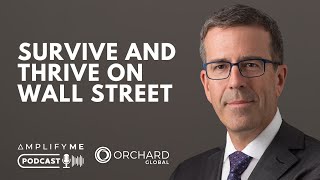
Marc Bergeron, a 37-year finance veteran who started as an accidental bond trader in 1988 and co-founded Orchard in 2001, shares what actually matters for a Wall Street career: resilience, learning to depersonalize performance, and finding managers who let you fail safely. He warns against banks that promote on P&L alone and recommends reading Marcus Aurelius' Meditations alongside Buffett and Dalio.
Chapters
Hello and welcome back to the Market Maker podcast. And today I'm joined by Marc Bergeron, a founding member of Orchard Global's predecessor company, which is now a leading alternative investment manager with over $9 billion in assets under management. With nearly 40 years in finance, Marc has worn many hats from trader to entrepreneur to president and global head of sustainability. And as he begins his transition toward retirement, Marc is leading the development of a new internal program at Orchard focused on talent development and mentorship, an area he is deeply passionate about. So in this conversation, we're going to dive into his journey, the soft skills that matter the most, and the lessons he wants the next generation of finance professionals to carry forward. So Marc, how are you?
Good, good yourself. Thank you, Anthony, for having me. It's great.
Yeah, it's a pleasure to have you. How does it sound when I say 40 years in finance? How does that feel?
37. I'm turning a big number this year. I've told everybody, don't call me, please. Next year we can celebrate.
No, it's amazing. And I'm sure there's going to be so many great insights to come here. So perhaps then you could tell us a little bit about that background. So going all the way back to a large proportion of our audience are in their early careers or possibly even a student thinking about their career in finance. So what did it look like back then for you going from study and those first steps into finance?
Well, I'll take even one step further back than this. Full disclosure is I was a failed electrical engineer. When I say fail, I didn't mean failing the classes 'cause I was passing, but I just hated it with a passion. And the goal has always been to get my engineering degree, work 2 years, then go to an MBA and doing finance. So being math-oriented, basically I just made the— when I realized how much I hated engineering, I just made the leap straight into finance. That's where I feel, at the time anyway, I was feeling really good, you know, with regards to numbers and everything. But the interesting thing is I started my career in '88, and those might remember that in '87 we had a little bit of a hiccup in the market. I had thought that I Wanted to go into investment banking and our teachers in school in '87 says, kids, think of something else. Literally for the next few years, I saw an ad for somebody to work in fixed income trading, bond trading. And to be honest, back then, university did not prepare us very well for the bond market. I knew that yield and price were inversely related and that was about it. Like literally. And in my first interview, I guess they, who became my the person who hired me looked at me and says, well, I guess you don't know much about the bond market, do you? He says that it's, you know, X times, I don't know if it was 10 times back then, the 10 or 20 times bigger than the equity market. 'Cause all you heard back then was the equity market. You know, you turn on CNBC, equity, equity, equity, and then, you know, there's a big world out there on the bond market. So basically I became an accidental bond trader and it suited me, loved it. You quickly learned that, you know, to be into trading itself, Oh, all those economics course you took, you know, they have great value and everything, but that's not how the market work on a short-term basis. And as somebody used to love to remind that the market can remain at a crazy level longer than you can remain solvent in your trading book. So I learned pretty quickly to, you know, let go a little bit on of, of all those theories and just, you know, just, just follow the market, which I guess in the long run is not something I really wanted to do. There's a fair amount of, I'm not gonna lie to people, think about that. There's a fair amount of stress into that business. And it's unlike investment banking or even portfolio, it's not like short-term stress. And then, you know, I mean, there are times where the market's not moving much, but there are times that it doesn't leave you like you're not a day trader as a bond trader. Usually you go to bed with positions on your book. Something can happen in the overseas market overnight and you wake up, you come in the next morning, or you, or worse, you've had a lot of phone calls middle of the night and, you know, try to, back then there was no phone with, even the BlackBerry was so basic. There was no, you know, we couldn't, even if we turn on our computer, we couldn't get access to Bloomberg or anything like this. You had to ask her what is US Treasury doing and everything. So it was a little being in the dark, but it was, you know, baptism by fire. You learned a lot on the job and That's, you know, that's how you, that's how you survive basically. There was, uh, finance was known back then and maybe still a little bit nowadays, but, you know, trading desks were a brutal place to, uh, uh, uh, to, to grow up as I call it. Probably there was zero training on HR, on how to deal with people. It was, uh, you know, stapler across the head and, you know, go get me a bagel and, you know, lots of insult and Lots of putting down and lots of swearing, but you had to, you know, you had to learn not to get that bother you too much. Those who learned to do this did well. Those who didn't had to find jobs somewhere else in a hurry. But the way I look at it, you know, since then I look at it as it was great formation for me. 'Cause if you can survive this, you know, I remember the gentleman I was asked to, that was, I was hired to replace a gentleman, a British guy in Montreal that was retiring. So at some point, 2 months into the work, I was just out of my wits, stressed out. And you know, I remember that he took me out for lunch and I told him, Mr. Kerr, I said, I don't know how you, how you, and he was a calm, very calm person. I don't know how you can deal with that. And it was well known that Mr. Kerr had been in the British regiment. And he told me very calmly, son, when you have bullets flying left, right, and center of you, it's not a little bond market action that's going to— and I looked at him and said, I'm sorry, sir, but I've not had bullets flying next to me, so I'm learning. And he goes, just don't take it personally. Your personal self-worth is not tied to your P&L of that day. So, you know, those are two different things. In the long run, well, if you don't have good P&Ls, you have to find another job or you're being asked to find another job. But it's not, you know, it's not You try not to have that take a value of who you are as a person, basically.
So how long did that particular part of the career last for then in the end?
Oh, oh God. '88 to '96, '96, '97. I thought that I was getting so good at it that, you know, why would I trade another firm's capital and I'll trade my own firm and my own capital. And I did bonds and FX, which was, I understood. And then I made the fatal mistake of thinking that all of those way I can trade, why not look at commodities? You know, they move a lot. So, you know, and you've learned very quickly during the, I think '97 was the Russian crisis and soybean crash. And you learned that a market is limit down. And what that means is like the market opens, hits the limit, nobody can trade. See you tomorrow. Opens, limit down again. And so the concept of, oh, I had my stops here and there and, you know, doesn't happen. I mean, commodities are not as liquid as the S&P 500 or as bonds, and even those markets can have gaps someday, but you have severe gaps in commodities. So that was the end of that. And then I thought that I could use all the skills I had in fixed income and cash market and parlayed that into a bit of derivative. I looked at, and so I started working at Bankers Trust, which was, you know, a derivative shop mostly, where you learn it was, you know, an extremely interesting place to work because you could be creative. That was past Bankers Trust had hiccups themselves, but after that, you know, you could do equity derivative, fixed income derivative, Uh, you name it. And, uh, you know, it was really client problem solving. You spoke to a corporate client or you spoke to pension fund and they say, well, you know, I'd like to do this or that. And then you say, okay, let's try to create an instrument that can help you achieve your goal given your market view. So that was super interesting. Uh, so I did that, then we got bought by, uh, Deutsche Bank and I did that till 2001. And that's when I left that, co-founded New Shore, which became Orchard, which is where I am retiring from today.
Love that. That end part is actually like a huge company and many several years. So yeah, it was, let's unpack some of that in particular because, you know, one of the things that I think is really interesting is that you start in these places where, you know, you, a big company, you've got access to intelligence and people and network and clients. And things like that. So as you progress and get more senior, obviously they do, I think those big companies quite a good job at trying to make you that this is the place to be and this is the seat to have. So taking that leap then to go and start your own firm, I just would be interested to unpack of what motivated you. Is it just that, is that process you just explained being able to really work on cool problems with good clients?
If I was dishonest, I could tell you that it's after reflecting and seeing a total business opportunity and everything, blah, blah, that, but that's not really what happened. Uh, reality was that the element of office politics came in massively, which is something I was not used to, which something I hated because probably because I was really poor at it, or I'm poor at it because I hated it. I don't know. But started to really, really dislike what I was doing. So we saw an opportunity, we went, we talked to the rating agency, and then we had to do the leap. And the leap was we had everything lined up, but we could not have the proof of concept yet, but everything was lined up. But despite having the rating agencies just saying, yes, go ahead, if you bring this, that's gonna work, then having commercial paper dealer saying, yeah, if you create this, this, uh, uh, this trust or this vehicle, we'd like to issue your paper despite you have all of this. And somebody go like, wow, I'm starting with nothing. But at some point we just, yeah, it's almost like, I don't know, taking a deep breath and jumping into the, in the lake or, or the pool and hoping you can swim. But literally, uh, when we first started, we rented off a space of a friend of mine who tried to get a hedge fund going, did not work. We were hoping that that wasn't a curse, but, uh, so we rented something and we paid him off over time of all the furniture. And it was just two of us. And then we hired a young lady who was receptionist, secretary, accountant, IT person, you name it. So, uh, it, it, you know, it, it was very different, but I, I can't really recall having difficulty adapting. When I was at Bankers Trust, I was told that— I found out later on because I used to make, you know, they told me, okay, we have to go pitch to such a corporate or pension fund. I'd make my own presentation. So just the way I was used to working, I did not find it to be a big challenge. But I do remember fondly colleague friends of us who came and joined us and, you know, there was 3 of us then. And then my new colleague asked me who was our courier company. And I said, well, what do you mean? He says, well, You know, if we need to send a letter or package, I said, where does it have to go? And it was literally 2 blocks away. And I said, okay, why don't you walk there? 'Cause you know, Deutsche Bank, you give it to your PA and the PA gives it to the company's dedicated, you know, you don't have this as a small company. But that was not a, that was not a, that was not hard for me to, 'cause I don't know, that felt more natural for me than a big company. And I guess, And you know, there are different personalities that are suitable for each one of them. And that's something that, you know, I'm being asked a lot about that from young people in university. You know, should I go to Goldman Sachs or should I go to— and you know, there's no right or wrong answer, but there's definitely the wrong personality for the wrong side of that equation.
Looking back in retrospect then, that entrepreneurialism, so seeing the uncertainty almost as opportunity, rather than the safety of the clarity that a big firm gives you. Can you connect the dots to anything within your life experience when you were younger that would've given you that appetite on that risk perspective, do you think?
Again, full disclosure here. When my colleague and I started our— we had put up the threshold was fairly low. We were so fed up We said, look, if we can replace our base salary and earn enough money to pay ourselves a little bonus, we're good. That was literally the goal for the first year or two is like replace what you had. And then very quickly learn, okay, well that's kind of silly to have taken all that risk to only— and then you can see all the, you know, you're free to see different opportunity and to grow the business. But in terms of what, I mean, My dad worked, my dad was an accountant. He had his own firm. His office was in our house basement and has separate entry and everything back in Montreal. And I guess I saw him as, I never thought of my dad as an entrepreneur. I just thought that he worked for himself, but I guess that must have run something in the back of my head that, you know, if you don't want to deal with all the office politics and everything, then, you know, I mean, you exchange a set of problems for another, but still, you don't, you know, that's something you don't have to deal with. In the end, you know, what, you know, what makes you happy in life and what makes you happy at work. And as easy to say, the old thing about if, you know, if you really love what you do, it doesn't feel like work. It truly doesn't. And if what you like is a big firm, that's great. And you'll, you know, you won't mind putting in the big hours 'cause it won't feel that bad. Same thing, all the issues with being a smaller company, you won't they won't bother you too much because you like what you're doing. And if you can even love it, that's even better.
Cool. Well, let's move forward to talk about, you know, when we met up, you were very passionate about this new kind of role you're taking on as a consultant with Orchard, which is about talent development and mentorship. And so a couple of questions here about soft skills in particular and advice just generally for young people. So my first one here is about You spoke to me about the importance of adaptability and resilience. So what do those skills look like when someone's starting out and in practice for you?
Okay, let's start with resilience first, and that's maybe a bit more touchy. I think it's something that young people need to develop, and it's probably something that the younger generation, to be honest, doesn't have as much as us. But in fairness, our parents probably thought that we didn't have the same resilience that they did, and their parents thought that, you know. So when you put it together, we went from, in some instances, from having a generation that had to grow their own food and dispatch their own food to the social media generation in 3, 3 or 4. I mean, really, really short time. So, so things are, are very different. But resilience is being told on the entrepreneur side is to being told no, you know, you got this great idea, it's not working, or, or, you know, even though you You, bottom of your heart, you think that this would be the greatest thing for this client to do, but they just don't see it the same way as you do. So you have a no. Resilience is having your superior tell you that either diplomatically or not diplomatically that your work is not good and has to be redone. Resilience is trying to convey a message and you are having a lot of trouble, you know, exactly putting either in writing or, or in a presentation what, what, what, you know, and you, you have to keep at it. You have to keep at it. You go and you present that to one group and you see their eyes roll and nobody understand what you're trying to say. Then you gotta go back and go, okay, don't take it personally. You gotta redo it. So resilience is, is, is moving forward despite being said no, despite being saying it's not good enough, despite somebody maybe tell you, yeah, we don't really care about doing it that way. It's, you know, develop a slightly thicker skin a little bit in that you have to depersonalize that. You know, a lot of people see 100% of their work as equate that to 100% of their own personal value. I mean, there's a huge overlap. I'm not a psychologist and I know it's huge, but it's not 100%. It's not because you did do something, you know, wrong or wasn't great that you can't do it better. But the thing is, if If you let that get to you, it's gonna take you a while to, you know, give your head a shake and go, all right, let's redo it. How do I do it better? How, who can help me do it better? So resilience is to move forward. You know, I have to move forward and not sit there and, you know, lick your wounds for too long. Adaptability is once you need to get out of a bad situation or You know, you can be as resilient as you want, but at some point, you know, you can't do the same thing and expect different return, uh, uh, result, right? So adaptability might be, uh, uh, the market moved. You know, you can have the best ideas if you're a trader or if you're a structure or if you're, you know, or you want to create a new fund. Uh, if you take too long, maybe that was a brilliant idea 6 months ago. It's not. The market is moving. The economy is moving, especially now with AI. I don't even want to think how quickly things are moving right now. If you can't adapt, you know, you're, you're dead in the water. Adaptability could be also in your own career, evolve, change, or even move up promotion or lateral or change position or change a company you work for. And our new, new superior is wildly different than the previous one and you can't interact the same way. And if you try to, to keep just doing the same thing, you find out that maybe they don't appreciate the way you work. you need to adapt to different people. And sometimes it could be, uh, you work for two departments, uh, you know, you, you, you, you need to do, do, and, and they're wildly different. So you, you, you know, uh, adaptability clients, you go and you, you pitch a certain way to certain people if you're into the marketing side, but you gotta understand that different clients react different way. But even sometimes you, you might be brought on as the analyst in a meeting with, you know, 10 people from a big bank or something and then to, to help present and you need to read the room, you have to be quick and, okay, what, you know, the way in your head you had rehearsed something and then all of a sudden you might realize this is gonna fall flat if I deliver my message the same way. So pivot, change, change something quickly. So basically adaptability has to be big because, you know, I think the days of you did something one way and 5 years later, you're still doing it the same way. I really can't see that happening. And it's not something just for young people. Like I recently, I signed up and I did a 6-week course on AI because for people a bit older, we had a joke about the VHS flashing 12, which was what your parents had a VHS and couldn't program it today. And it kept flashing 12 o'clock, which meant it wasn't programmed and they couldn't do, you know, it was kind of a running joke of people my generation. Laughing at our parents saying, oh, well, their VHS still flashed. Well, I'm with AI, I felt like I had become my parent. You know, I'd heard about it. I was like, what do you do with that? I know what ChatGPT is, but what do you really do with that? And basically I was like, well, you know, I know I am going to retirement, but you know, it sounds like I'm gonna stop working tomorrow morning and adaptability. All right, sign up and then, you know, understand that better. Because otherwise the world is going to pass you by. I was really scared of not understanding, and the market and work and the way we work, the way we interact with one another, being influenced by using AI, moving in a way that I wouldn't understand what was going on. So, you know, you have to adapt. And those are, you're right, those are soft skills. You can be the best, if you're a credit analyst, say you can do the best reports and find numbers nobody can and dig information nobody can, but you have to deliver the information and you have to deal with people around you and you need help. And the soft skills come in when you need, when you're asking for help in your company. You know, every company has people that have a way of asking that everybody else will bend over backward to help them. And there's other people that they're, let's say, less willing to do so. You want to be the one that people bend over backward to help. So, you know, those are, you know, Those are the soft skills that are really important. And I mean, we can call them life skill, I guess. It's not necessarily being taught in university or anywhere for that matter, unless you kind of decide to develop or you have a mentor, which I, looking back, I did have a bit of a mentor, but it was more, this is the market you should be going. This is like, it was kind of more guiding my career, but in terms of how to interact with You know, never did that. And then a few years ago, I worked with an executive coach and, you know, again, you're never too old to learn. And it's, you know, you have to adapt, you have to learn, you have to develop soft skills. Sometimes you might think you have the soft skills and then somebody else that is in the business of coaching goes like, starts laughing, go, you think so?
Really?
Right? So maybe you might consider doing this this way or that way. So I mean, I think these are very, very, very important and people out of university are really focused on the technical aspect of what they do, which, which obviously they, they need to and they should, but they should do, it doesn't take a lot of time to pause and wonder if they're asking for assistance, if they're not receiving it, you know, what are they doing right? Or if, I don't know, their colleagues not treating them well, what are they doing right or wrong? Or, you know, same thing. So I think those are very, very important. It's not being taught much. And I think that's why the program we're developing, the mentoring aspect of it, I'm looking forward to that because the way I'm thinking about it, I go, I wish I had somebody telling me this, you know, when I was younger. And I was like, well, you know, why don't I be the person now telling them or suggesting or guiding them? Or, I mean, obviously don't want to give too many answers right away. You want them to find the answers themselves. But guiding them a little bit, I think would be great because I think we got onto this, Anthony Cheung, when we had a coffee, was my view, and I might get a lot of flak for that, but my view that trading desk, trading firms, investment bank fund managers, generally speaking, I'll tone it down, but I'll say are not necessarily good managers of talent because mostly people get promoted based on P&L, how much money they brought in. If you're into marketing, how much money, how many clients you sign up, or however your firm works. If you're a trader, how much money have you made? It's all driven by P&L usually. And people who are good at generating P&L can be good managers of people, but not necessarily. And I think what happened a lot of times is you'll find that personalities that get somebody to be a bit more mercurial, to be more warrior-like and take no prisoners at all. All that, you know, attitude that some people have, they're great to get. They don't play well in the sandbox with others necessarily, results in great P&L. But you put somebody with that mindset in charge of a group of individuals and it's chaos. And I've seen it at firms I work, I've seen it at friends' firm. I still see it, you know, grabbing a coffee or lunch with somebody is a 9, you know, they're downloading how mad they are at their work and what's happening there. And you see that, you know, all over. So, you know, we're not a, we don't tend to be a business where, and I don't mean just fund managers, I mean literally banks, investment banks and that, like we don't tend to develop people until they're very, very high level. So when people are approaching C-suite or directorship or something very senior, then the company starts to think, oh, well, maybe executive coach them and all this. But otherwise, whereas other— for my wife used to work in a pharma industry and they spend weeks at seminars where they're trying to coach people on management skills basically, or people management skill and like in terms of in marketing or sales, they won't necessarily put— maybe the sales— the best salesperson needs to be left as a salesperson and putting them in charge of other people is gonna get the revenue down because— and they may not be able— they may not be good enough in management of people to bring everybody else up as much of what they're down because they're not selling 24/7. So, you know, maybe you put somebody who's not the best salesperson but is more organized, a better communicator. And you know, who cares that that person is not the most profitable salesperson? The firm is gonna profit probably more by putting somebody like this, putting really the best person who is the manager of people and not necessarily the, you know, the best marketer is not necessarily the best mark, the best heads of marketing. So I think that that's something I'm really excited is to, you know, For a number of funds, I sat back and been unhappy about the way things are, things were. Now I can influence it and try to, you know, I'd like to think with all our recruits that I will be an unbiased person for them. I've done all, I've done a lot of the, as you mentioned, I've done a lot of the work at Orchard. I've worked in pretty much every department except investment and credit analysis, but I've done pretty much everything else. I understand how the departments work. You know, I don't have preference into any department. And I think for, you know, somebody to be able to ask, you know, say, you know, I'm having a little bit of trouble knowing that it's not gonna go to their superior and, you know, bite them back. I think it's useful. And I think, you know, that I will have, I have that trust with people I've worked for a long time. I'm gonna, need to try to get it very quickly with those young people. And I think just sitting down and listening, I already, I've done that twice this summer with our summer interns. Sit down, just grab them for lunch. Hey, let's go and have lunch. How's it going? And you know, not with the head of their desk. And I think they, you know, they hopefully they, they thought that they knew that I was not there just to spy back to, but try to really see how they were doing and give them advice and everything. And You know, it's fun. I mean, it's empowering. It's great to be able to, because young people are not necessarily jaded after 20 years of, you get some time to be a little sarcastic, a little jaded about, you know, finance and the world and to have people who are wide open eyes and happy and just, you know, looking forward to develop themselves. It's great. You know, you don't have to shape them into saying, there's not too many bad habits. You have to, you know, I mean, we all pick bad habits in life and in uni, but I mean, you don't have a lot of work bad habits to, to fight against. So you can help them find their own way. And I think that, really looking forward to that, I think that'd be really interesting.
Yeah, no, I think that sounds awesome because actually when people talk about resilience, they automatically tend to focus on the individual and individual's mindset. But actually, I think to build a a resilient workforce, you need to give them space to be able to fail, to ask questions, to voice opinion. And given, giving people of a lower down, let's say, ranking within the company's structure or hierarchy, I think that's such a healthy thing because in a controlled way, of course, but to be able so that they can feel heard and free to voice things and not just harness it and let these seeds of doubt or anxiousness grow.
But the caveat there is you also need to coach the people they will be reporting to a little bit because, you know, some of us don't take, don't necessarily, you know, there are people who go through the thing. Well, my boss told me I, you know, I couldn't say anything. Therefore, I'm, you know, kind of like it's been done to you. You're gonna do it to the next person and you, we're gonna break that cycle. And it's like for us to say, look, you, you gotta let them fail. You gotta let them say something stupid in the meeting. Hopefully it won't be in front of clients, but you know, you gotta let them do it. And yeah, maybe the first time it's better to take them aside after the meeting. You know, I always, one thing that I'm very, very strong on is public praising but private chastising. You know, the old style of, you know, I'm gonna give somebody a dressing in front of everybody else. It does nothing. I mean, it's so counterproductive, it's not even funny. But you know, again, because it's been done to people, they're like, oh, now I'm the one that can do it. You know, so trying to break that cycle, I think that's, you know, you gotta let them fail. You gotta let them find their own direction. You gotta let them, you gotta let them waste a normal amount of, or let's say you gotta let them waste a reasonable amount sometimes of time to, for them to find the solution or find out it works. Because if you're trying to speed up everything and every time you spoon-feed them, they're never gonna learn anything. So yeah, let them struggle a little bit and then it's, you know, that's how they learn.
Yeah, it almost actually, you talked about AI earlier, that element of building the muscle of critical thinking and not leaning too hard on AI tools, for example, it's almost like a similar type of mind framework to use in that way. But I was going to kind of ask then in kind of reflection almost of the last 37 years, there's kind of two parts of this. One is, you know, looking back at all the different hats that you have worn, you've talked about several. What are some of the biggest lessons you've learned along the way? Number one. And then what's one thing, because I know when I did meet you for a coffee, you're just super honest about everything. So I'm just curious, what's one thing that you think you could have done better? Because I think if people hear that, they might go, ah, actually, yeah, that's advice that I could act on and maybe I could save myself time.
Uh, could have done better is not having an open mind to office politics, but being more realistic that it is present in a large company. And instead of blindly fight it and, you know, be 100% proud of, of, of maybe I'm not suggesting to do it, I'm just saying there might be a way to handle it better. I could have handled different situation better as opposed to being, being told that I'm as subtle as a brick on the side of the head. I could have learned to deliver a different message and, and I could have understood what made— once you understand what makes somebody tick a little bit or click or what floats their boat, once you understand that a little better, it's easier to adapt your answers to them or how you work with them as opposed to assuming that there's one way to do something and it's your way or the highway. I think being more attuned at— well, that's bring back to what we said earlier, being attuned to the soft skills earlier in my career. Sadly, when you're, you know, when you, there's a bit of a cycle when you're out of university, you don't have a big ego because you know, like you're at the bottom, you're at the bottom of the totem and you need to, you know, you're still learning. So fine. But once you start to do really well and get promoted and then get promoted, you reach a point where I think It's, I'm sure that, that spot is wildly different among people, but, uh, you reach a point where you're not mature and old enough to understand that there are things that maybe you should be more attuned to. Uh, and, uh, you know, you're still young enough to think that you know everything. So, At some point with maturity, and maturity is not an age thing, but it's, it's a, it's an old joke. It's not the mileage. It's not the age that kills you, it's the mileage. And mileage in, in, in, in company would be like, how many situations have you had? How many, how it's not just the amount of hours or the amount of years you've been in the business, but what, uh, what problem have you dealt with? What failures have you had? And the more you have of these, the, the better it is, hopefully more success than failures. But, uh, it, it, it really shapes you know, how you are. And at some point to be a little bit more attuned, saying, hmm, you know, could have done things differently. That's why I'm so big on trying to tell, you know, younger people to, you know, be attuned to the soft skills. It's funny, I did take Psychology 101, but I think I, in university, but I think I should have taken either Psychology 201 or 202, whatever it is, the one after that. But, uh, really try to understand people is crucial. And whether it's clients, uh, it's crucial, especially crucial in a marketing role. But marketing is not necessarily just going and talking to your clients. Marketing can be internal. You have a new way, you have an idea you want to push, you know, you want an idea, you want a new fund, like an ARCA. Somebody has an idea for a fund. Well, they have to sell it internally for us to, you know, the powers to be to go, hey, that's a great idea. Let's do it. You have to be able to convince people. So, you know, the skills required to do this. Are crucial and should always try to, you know, I told pre-university students here that were, that we were hosting, I said, that's before like that one advice. I said, okay, well read more. But I do tell them, I said, if you are going to read one book, it's one book only, which you shouldn't do, but let's say you do. Only one book, Meditation by Marcus Aurelius. If you, if, if that's the only book you read, you'll get, I, I'd like to think you'll get a lot out of it. And a lot of it is gonna be into self-improvements, soft skills. You know, you talk about, it's, it's, it's all in there. And it's, it blew my mind when I read that, that, that book was written 2,000 years ago. I, I'm certain that if I had the time to go change in that book, to go change the, what gives away the, the fact it was in the Roman era and it was 2,000 years ago. If I could change all of these things, you know, take out the word emperor and things like this and pretend that it was a mo— people would read it and go, oh yeah, of course. It's, it's totally applicable to this crazy media and 24/7 news cycle that we have. They would think it's completely applicable. All the advice are good and it was written 2,000 years ago or so. So, you know, I would say develop the other technical skills, the soft skill, the people skill, the right writing skills. I'm a numbers person. I'm not the best writer and it's, I'm, some colleagues who might listen to this will start to laugh and say that I should be worse than saying I'm not really good. I'm actually pretty horrible. That's a skill I should have learned, you know, like basically, you know, because again, it comes down to if you need to convince something, somebody by writing a memo, you know, I had the old engineering or, you know, math thing. No, I gotta, you know, gotta just gotta make the points. I gotta show the numbers, you know, and then, you know, the rest, ah, that's fluff, you know. You know, at some point I realized that, well, maybe it wasn't fluff. Maybe I should have spent a bit more you know, time educating myself on, on, you know, better writings and better people skills earlier on, basically.
So, well, I was gonna ask you actually if there was one piece of advice to give, but is this, is that, so we've just heard it, right? You've just given the spoiler away. It's the meditation.
Yeah, it's, yeah, no, honestly, I mean, I'm trying to, you know, we all, A lot of people tend to have a short attention span now with YouTube and everything. So I'm not going to say go read War and Peace or anything like this, but if you want one book, better than that, keep reading a lot. You look at Warren Buffett spends, I don't know what percentage, I've read somewhere he spends an inordinate amount of his daytime reading and it's tough. He doesn't read only annual report and 10-Ks. I mean, Read a lot. Bill Gates reads an awful lot. Ray Dalio, like, reads a lot. Like, you, all the best investors and readers, I mean, to be a good investor, you gotta understand what, where the world is going. To understand that, you have to read a lot. So I would say, you know, don't read, read a lot would be a better thing. But if you have to, you know, if you hate it and you gotta read one book, read that one book, I would say, 'cause it's really life lessons. Applicable to your personal life, your family life, and your professional life. So I wish, again, wish I'd done things differently. I wish somebody would've told me when I was younger. I might have said at that time, ooh, philosophy, you know, but I wish somebody could have convinced me to read that way younger than I did.
Okay, cool. Well, look, we'll wrap it up there and just a quick shout out, 'cause I know that there's a huge 2 huge societies on the Warwick University campus in both finance and economics, but there's many more that are all going to come together because Mark and I are going to be on campus. We'll be together with a couple of members of both the AmplifyMe and The Orchard team, and we'll be running an exclusive simulation related to the company. So one that we've never done before on campus, and there's going to be an opportunity to speak to Mark and a number of his colleagues, and I'll be hosting a panel as well. So look out for the registration link. And in fact, I'll add it to the show notes on this episode. So if you're Warwick University, please do. I'd love to meet you and for you to get involved, but hopefully everyone found that conversation enjoyable. And Marc, thank you so much for sharing your 37 years with me.
Well, there you go. Thank you, Anthony. Thank you for reminding me it's 37. I'm really looking forward, you know what, I am really, really looking forward to that evening. 'Cause again, we didn't have that. Back then. It was, uh, it was, uh, Salomon Brothers came to McGill University where I was studying and they had a little room and if you were lucky enough to be elected to go and talk to them, that was it. And they, and it, they weren't pitching anything. It was like you had to pitch yourself to them. So I'm really looking forward to how we're going to do this. This looks really fantastic. So thank you for organizing that.
That's great. I actually remember I was at the Lehman Brothers chat. In 2005 at my university. So, uh, yeah, life could have taken a different path, but, uh, all right, well, all the best. Thank you very much.
Thank you.
More from Anthony


Inside the Biggest Banking Stories You Need to Know This Week (Anthropic, Diageo, Private Credit)


Inside the Biggest M&A Deals You Need to Know This Week (UniCredit, GameStop, eBay, Eli Lilly)







AI Breakthrough or Hype? Anthropic’s Claude Mythos, Tim Cook Steps Down & LIV Golf Collapse