Switching From Tech to Finance: Career Paths Explained
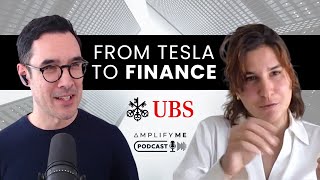
Sarah moved from engineering at Microsoft and Tesla to sustainable investing at UBS by asking yes to opportunities and reflecting on what stuck. She advises STEM students to learn the financial ecosystem top-down, start with bonds and asset classes, then go deep in one sector. A tech background gives you an edge: logical thinking, comfort with numbers, and sector knowledge.
Chapters
Hello, Sarah. Real pleasure finally to have this conversation. How are you?
Very good, thanks. And well, the pleasure is mine. Thanks for having me here.
Yeah. And the reason why I'm so excited about this is that we are roughly about halfway through this series we've been doing with a variety of women across the industry. And you are someone that really stuck out to me for a number of reasons, but mainly because of your background. Which I know we're going to dive into because I think a lot of students or young professionals who are thinking about career decisions, you know, you've worked and interned at Tesla, Microsoft, McKinsey, you're now at UBS. I think this will be super interesting, particularly for people as well from a non-finance background, especially those from the STEM subject matter as well. And also location-wise, you know, you've been to Italy, Germany, Japan, Switzerland. So, so much there. So perhaps we could start from the top, like we do with all of our guests, and take me back to, you know, when you were a student, your childhood, what were you thinking career-wise? And then we could build up to the present day and what you're doing. That'd be great.
Sure, sure. Thanks for that. Of course. So I'm originally from Milan. I've been growing up there in the outskirts of Milan for, I would say, 19, 20 years of my life before I started moving around like a spinning top. Um, and as I was growing up, I grew up as the first of 4 siblings, which I always like to mention because I think it really shaped me as a person going on, also career-wise. And I think if there are any listeners in the crowd, uh, that can relate, as first kid, you, you know, you're the first one. You really need to stop on top of, um, stay on top of parents' expectations and you need to go out. Discovery, understand yourself, and you really don't have anyone in front of you showing you the path. So I think that really, um, I brought that with me along my journey. And well, there in Milan, I had the, you know, the basic, um, education for myself. So I started very far away from where I am today, both figuratively and, and, and physically, geographically speaking. Um, because I started out in classical studies during high school, so I was studying like Greek, Latin, ancient languages, dead languages as they call them. But also that I think shaped me very much as a person, as a person in my way of thinking and critical thinking especially. And you know, when you spend your days on great thinkers of the past, you really learn to question everything. And I just brought that along with me across my journey. And when the first pivotal moment came, um, you know, choosing what to do during uni, I think it was the first time I applied, um, a way of decision-making and thinking that, that I brought along with me, which was, I've always tried to go beyond what I already knew and what I already experienced. I would say that's a bit of my red thread throughout my life. And in that case, you know, I did a lot of, you know, literature, Italian, and not, not a lot of math. And I really just liked that, and I felt I was missing that piece. So I said, why are you not moving completely to the other side of things? And, and that's how I pivoted to engineering, basically. It's not a common move to do for people from classical study to engineering, but I just felt it was right and it could complement myself as a person and as an academic student at the time. I joined specifically, uh, industrial engineering, uh, which I, I find is a really good path because you can really blend, you know, the engineering side of it, physics, chemistry, all of that with more managerial skills and understanding and, you know, a company. And at the time I was kind of sick, honestly, of not understanding like titles of newspapers, what the economy is. And I think that really could give me an edge. It did. So it was a great choice in terms of content, but specifically really helped me to live kind of experiences that I would have not lived otherwise. So university really gave me the chance to travel around, basically. I started with my first experience in Hamburg, uh, in Germany. And again, there was a pivotal moment for my life. I just understood that that's what I wanted. I wanted to go abroad, live different experiences, know different people. It just enriched me so much that I knew I needed to do it more than once. So when I came back, I already knew I wanted to go abroad again. Um, COVID hit, as for many people, it kind of changed my life. So I stayed in Milan for the time being. I kept on my master's studies with, I kept on basically management engineering. So it's the same as industrial engineering, but you take a little bit of more managerial path, let's say. And as I was there, I managed to enter a double degree program, which is called QTAM, which stands for Quantitative Techniques for Economics and Management, because I realized I really wanted to stay on the quant side. So yes, managerial side, but I really wanted to master quanty stuff, let's say. And also because that allowed me to do two additional exchanges. The first one I did in Munich and the second one in Tokyo. So, all of these academic experiences, you know, enriched me so much, both academically, professionally, and I'll get there in a second, but especially as a person. And I brought that with me until today. I felt like uni was not enough, so I needed to do some professional experience and as I'm, you know, COVID hit, as I was at home, it just happened that I could get an internship at Microsoft and I was working on IoT and cloud applied to different industries. One of them was energy and sustainability. So I loved my time at Microsoft. I really liked it, but I just understood that tech was not for me. Uh, what was for me was the industry I was applying tech to. So, you know, energy and sustainability. And that's how then it was much easier the second time when I needed to choose an internship. So it didn't just happen. I needed to, you know, select a company. I knew I wanted it to be in the energy space, energy transition space specifically. And that's how I ended up in Tesla, basically. And I don't know if many people know, but Tesla don't only have the vehicle business, they also have an energy storage business. So that's what I was working on. Again, I loved it. Um, but I was there, I realized I didn't quite like staying on one product, one company. I really like to see more of that. So more companies, more projects, just have more of a systemic view. And I felt like the financial industry could give me that. And also another thing I realized was I, I always was driven by this idea of having an impact and I'd realized, you know, you really can do that faster when you can direct money. That's how I think our world works. And that's basically how I switched side of the table. So from the investee, from the company to the investor side of things, and I ended up in UBS where I'm today in their, you know, sustainable investments area within private markets where also infrastructure sits and where I undertook a credit program, which I just finished like a month ago actually. And yeah, where I'm working also today in the infrastructure equity business, basically.
Oh, thank you so much. That was such a great explanation of your background. And actually, you answered what was probably going to be one of the things I was going to ask about why the pivots through these industries, but what you said made a lot of sense. But perhaps I could reshape that question a little bit and ask, perhaps I think a lot of people find a lack of confidence to be able to try to have the self-awareness or assess their present situation. And whether they're satisfied, and then making that leap to then move. You've done that, it seems like, quite a few times, from what you were studying originally at school, to then going engineering, to then going into these companies and going, you know, it sounds very definitive, your process, and it all makes logical sense. But so many people, I think, would struggle to take that leap of faith and back themselves to make a transition like that. Is there any like process that you apply to like self-review your situation and your progression?
Yes. Yes. 100%. Look, the first thing is you need to realize it's a process, right? So it's a journey. So I would've never guessed even just 2, 3 years ago, I would've been here today. So every step of the way kind of led me to the next one. And that was only possible because of two things. I think the first one is I was always genuinely curious, so I, you know, pushed for to learn more, to, to know more. And I said yes to everything because of, not to everything, sorry. I said yes to a lot of things, but I said yes to opportunities when they arise. Like it happened with Microsoft. I'll, I'll make a couple of examples now, but I said yes to opportunities and I seek for more when I felt like I didn't have the kind of opportunity I wanted. And the second bit is I could, as I said, it was not really a random choice, but it was a strategic choice. And that's just because of the self-awareness I developed through time. And I think we are not taught this enough in university. You really need to spend time to think about yourself, who you are, what you like, what you don't like. And it's okay not to have it all, you know, figure it out day one, but I'm quite sure your gut feeling already tells you. You know, at least the direction. That's how I felt. I had the direction, but I was not quite sure. And I feel like I kind of adjusted with time, um, better and better. And to make you, you know, um, real examples of that. So the experience in Microsoft was, was, you know, it just happened to me. I was doing one of those, uh, business challenge in university as, as the ones you probably propose as Amplify Me to students, right? So companies came to to Polytechnic of Milan, where I studied, and Microsoft was one of them. It was like a 10-day challenge, and then they were interviewing people they liked, and that's how I got my internship. And, uh, you know, I said yes. It was not obvious because I never thought about tech, to be totally honest. And, uh, also, this is very Italian specific, but it's not common to work as you study. You normally finish your studies and then you go on working, even though I don't agree with that, but it was At the moment, I felt insecure, like, shall I, you know, be behind with my studies, be behind with my exams? At the end, I just said yes. So that's, that's the first point. Yes to the opportunity. And as I was in it, I kind of explored different things. And, you know, as I said, I was working with IoT, which by the way is Internet of Things, um, applied to different verticals. And one of them was energy. My gut feeling told me, you know, go there. And I started, I said, I like this. I told this to my manager. I was very vocal about it, and I started, you know, just get more projects in it and get involved and work more on that, even though it was my, you know, my prior responsibility, primary responsibility, sorry. And that's how I developed at least a bit of an understanding. And by the end of it, it was 6 months. I was given an offer, but I said, look, you know, I realized tech is, you know, not my thing. I literally sit down and made a list of things. What did I like? What I didn't like? Or what I would do differently, at least. What I liked was to have an impact. You know, Microsoft is huge and they do a lot in terms of impact, and I knew I just wanted to keep on with that. And second, I really liked that, you know, energy sustainability piece. So I knew I wanted to stay within that. What I didn't like was that it was very qualitative as a job, which, you know, might fit some people, didn't fit me. I needed more numbers. So I just kept this within my head for the next step. And when the next step came, eventually I was in Munich and I needed to find an internship. And at the same time I was developing those interests. So in general, I really encourage people to study and work, not at the same time, but in the same period of time, because I could study energy markets in Munich, uh, because I knew I liked it and, you know, I was still in university, so I could do that. So I really encourage people to to double down on what they feel they like. And it was much easier for me to, to choose Tesla because I knew that was a sector. So when I entered Tesla, the kind of same thing happened. So I started, um, in an operational logistics role, which I really liked, but not like love. Um, just to give some context, Tesla produces these big batteries. They're called, uh, megapacks. So it's like big fields of battery storage. utility scale basically. And I was working to bring basically logistic-wise, uh, those megapacks from America to the EU. Uh, and then an opportunity came, basically one of the team members left, very senior actually, and she was working more on the energy trading side. So these batteries trade energy with the grid when they are operating. And, you know, there was no one available. I was an intern at the time. I said, I can take some of that over, of course, with some support, but that's, that was my first interaction with energy markets and energy trading and finance somehow. And I just found I loved that completely. And I just stayed there. So when the internship finished, um, again, I did the same thing. I said, what are the things I liked? What are the things I didn't like? And I started for the first time having a list of what are the things I don't want to compromise on. You know, so there are things you can give and leave, but there are things you really don't want to compromise on. And for me, that was first, I wanna have an impact. Again, I'm not gonna work in a sector where I don't feel like I'm having an impact, which means both in my case was also like sustainability-wise, but it can really just mean also work on projects that, you know, I can see live and, and, uh, make difference in, in general in our society. It doesn't have to be sustainability related. For me, it was. So I wanna have impact. I wanna work in the energy sector, energy transition sector. I wanna have, and that was the third point, a really quant job. Again, what I was doing was more quant than the first time, but not enough. I want more numbers. I want to think through things. And, um, the last one, which is what I mentioned maybe before, is in Tesla, it was a great company, but it was one product, you know, only Megapacks for Tesla. And I felt like I wanted to see more, more projects, more product, more companies. And through a little bit of research and speaking to people, and probably we'll get there through the conversation, I realized finance can, could, could give me that, um, that edge basically, that, that what I was looking for was there. And so that's basically how I, I made the switch. And when I entered UBS in the sustainable investing practice, in private markets, in infrastructure, I kept on that thinking and still I do today. So. As I took every rotation, I'll just make you a very practical example. Infrastructure equity, I loved it, uh, but I felt like I missed the debt part of it. Uh, I didn't know how debt worked, and that's why, uh, my third rotation was in leveraged finance and structured finance, which basically lend to this project. So it's not equity, but it's the debt side of it. And now I feel more complete. So in general, it was a combination of really trying to complete myself, uh, and really stay, uh, authentic and true on the things I didn't want to compromise on. And, you know, to the students listening to this, I'm not saying it's not scary. It is super scary as you're there, especially if you're the first one, especially if you don't have anyone in front of you saying this is gonna work, but this is going to work. Like, I know when you're there, you think, I was thinking, and you can ask my friends, like, what if I'm not good at this? What if finance is not for me? Um, or, you know, as an industrial engineer student, you really feel like you only have one option after your master's studies, which is consulting. Like everyone just goes in consulting and I know it's scary to take another road, but it's going to pay off, I assure you. And not only in the long term, I think really also in the short term, because you're just going to get where you want much faster. And I think a lot of people spend time. Working through their CVs to get there, but they don't know what there is. They don't know what they want. So really spending that time thinking what you want, and then you can think how you get there, really pays off. And it's going to build that confidence that you're speaking about, like the confidence I have now, it's not the confidence I had 2, 3 years ago, because every step you take, you're like, well, it worked out. I actually loved it. And you also enjoy the journey, by the way, in between, because every step you take, you take it very consciously and because you want it, not because someone told you to do so. And, um, really builds that confidence and it helps you build your story, which I think is a super underrated and underestimated skill that you need to have. But really build, building your story, which is an authentic one, is not built up. It's really like your own, really gives you an edge. Also in interviews, like very practically, I was told this when I got into UBS, like you just had a good story, right? It's, it's not made up. It's authentic. And, and that's going to really give you an edge. And the story you build is a combination of your journey, but also coming up with that list of things you don't want to compromise on, which makes your red thread through your journey.
Yeah, such great advice. And actually what really resonated there was when you, you know, you're talking about you need almost experience to figure things out and figure yourself out. And yeah, a lot of, so many students I interact with just have this preconceived idea and they are always quite almost restricted in the narrowness of their view thinking, right, I've got to make the right decision from the beginning and that's going to define me for the rest of my career. But you're absolutely right. How do you even know, really, until you've had these genuine experiences? Well, look, we covered quite a lot there. So, I'm quite keen to move on to some of the things that would be more specific for particularly STEM students, because we encounter and work with a lot of them. And there is this increasing interest of financial institutions for people of that discipline. I guess for those students like yourself, they're not always thinking finance first. And so I guess a question to start with, that having spoken to you before, you were in good parts self-taught somewhat when it came to finance, and you mentioned listening to podcasts and kind of taking it upon yourself to be proactive with your own learning. I just wondered the biggest knowledge gaps that you had to bridge then when you came into finance, because I guess it can be quite intimidating for someone who's not an econ student, and then kind of practical advice that people could take when entering a completely new industry as well.
Yeah, yeah, yeah, of course. So yes, also to give some reassurance to the people listening to this, like when I started thinking about finance, I couldn't distinguish a UBS from a BlackRock. I didn't know the difference between public markets and private markets. So you really can get there. So this is for the people listening. In my case, I think the biggest knowledge gap at the beginning, for the way I think, so I really like to have a big, the big picture first. I really like to understand how, you know, the system works. And that was just really blurry to me. It was from, from someone that doesn't study finance or it's not really interested into it since the beginning. I think it, it can get very abstract, very very easily. So you really don't know who the players are, what's exactly going on with, you know, the money in the system. And that took me probably the biggest part of my time. But when I had that figured out, everything was much easier. Again, probably that's my way of reasoning and thinking through things, but getting first the big picture and then moving on to basic financial concepts, that's a gap I had. So from, you know, time value of money, of course I've seen a bit of accounting and, and all of that as I was going through my management engineering university path, but, but it was not the same thing. So you really need to, it's not only you understand it, it's you, you master it, you own it. So that took me quite a while. And all those concepts, like also on other asset classes like bonds and why the price of bonds move with interest rate, all of that. All of that was actually during my Tokyo exchange. And as you mentioned, I just was very curious in it. I just was again, kind of sick, kind of sick of not understanding how the whole system worked. And I started listening to podcasts and reading journals and you need to be very selective with it. So there is so much information out there. So I spent some time selecting what I thought was the podcast I just liked, not even they were good. I liked them. I liked listening to them, spending my nights, you know, with my bike and just listening to that. You need to enjoy the process of learning. And by the way, that's a very, very good way to understand if you like finance or not. If you spend, you know, entire days and hours informing yourself and you like the process, that's an easy choice. If you just cannot listen to that stuff, that's probably not your journey. It's okay, right? In my case, it was something I really liked. I was lucky enough to be able to choose some uni courses there in Tokyo. um, that helped me a little bit. Um, so that was a bit my process before the interviews. And then of course, when you, you need to be strategic with your preparation of the interview, I was, you know, applying for private markets. So of course I built more knowledge around that. Um, and then the whole journey continued as I started with UBS, of course. And by the way, I really recommend people if they can, especially STEM students to go on a graduate program journey because you can rotate. It's okay. Again, if you don't have it all figure it out from day one. I did not. I had a gut feeling for what I liked. And then as I was in, I could rotate in 3 different teams, see different parts of the bank, and that really complements your knowledge. And I took on the CFA Level 1 exam. So of course it was like 1 year and a half or 2 of an intense financial, um, you know, um, study and, and, um, just building up my knowledge. It took quite a while, but It's, it's, it, you can do it, basically, you can do it. And if I can give some advice to that, more, a little bit more structured, maybe, I think it's a combination of hard skills and soft skills. So on the hard skills side, as I said, I think it's, it's 3 steps, right? First one, you understand the big picture. Depends on how your mind works, but I think it's better to start top down and then you go into the details because finance can get very much into the details. So start from the big picture, understand how the ecosystem works, and then you move on a little bit more in detail and you understand the basics, the need to know. So I need to know some basic concepts. You cannot be in the financial industry, even if you are in private equity, you need to know what bonds are and how they work, for example, just, just one example. And then once you have that basic knowledge of everything, uh, you move on and you move on to the in-depth knowledge, but that's only for your area of interest. So in my case, it was private markets, more specifically infrastructure. And then with time, you realize what you really need to know, what you need to master. And that requires so much time, much more than, you know, getting to the basic knowledge. So it's okay that it's a process with time, but I would say these are the 3 layers of knowledge you need to, you need to, you need to gain. And on the soft skills side, the first and most important thing is keeping a growth mindset, literally. That was probably the biggest switch I had in every pivot I did through, through my life. You need to be ready to look like the idiot in the room. It's okay. Like you not, you don't know, you come from a different background and it's okay not to know. You need to be comfortable with being uncomfortable. And, you know, I said growth mindset, there is this, this, this great book about the combination, sorry, the comparison between growth mindset and fixed mindset. And I, I was. I used to be very much in the fixed mindset. So, you know it all, you cannot look like an idiot. You, you, you need to be on top of everything the whole time, but that creates a fear of failure that really keeps, holds you back in learning more. And, and, and it can, it can be really detrimental throughout your, your career and your life in general. It's not only career-wise. With a growth mindset, you just let go of that fear and You just, you're open to learn, to not to know, and also seek advice and help. That's what I did a lot. Maybe, you know, be strategic about it. Don't, don't ask your, you know, managing director for a concept you should know, but go to your peer and ask, look, that's what I did when I started with UBS. I had my circle of graduates and I said, look, guys, there are certain things I really don't understand. Can we sit down and you walk me through it? And that's how you literally get very, very fast to the same level where they are. Not only that, but you come with a different background. So you are actually, you have an edge, you're much more complete in that sense. So growth mindset is the enabler just for your life in general, I think, but especially career-wise. Second, you need diligence and hard work. I'm not going to lie about this. You need a lot of hours to go for stuff. And as I said, that's also a good way to understand if you like it or not. Um, again, be selective, be strategic. Don't start learning everything of everything, but once you have the big picture, you just go, okay, this is what I should know. These are the websites I really like. These are the podcasts I really like. Give yourself time. Don't think that in a month you're going to be finance savvy. It's not going to happen. Um, but you know, I can say one year and a half, two years, I feel quite confident at the, with the level I am at right now. So it's not even like a 10-year journey. Of course, it's a lifetime journey, but you know, to build the basic blocks, you can do it basically. And the last piece is again, on the soft skill side, speak to people. It's not only networking, but really speak to people because people are going to give you a real sense of what they're doing and where they are in the system. Again, you're going to build puzzle, like your, your little puzzle like this. And I spoke, you know, to people in fields that right now I know they really don't, they are not done for me. Let's say bonds, but I spoke to a lot of people because I thought maybe, you know, maybe that, that can be for me. I spoke to a person in that field and I said, okay, this is not my stuff. And you don't need to go for an interview to realize that. You just speak with someone. And I mean, of course, people then can also open for you opportunities. That's the main probably goal of networking, but it's not the only one. Sometimes it's just about building that knowledge and people can really help you with that. If you're lucky, like I was, you can also have your circle of peers during uni or during you know, your graduate programs or when you work to also build that knowledge together. But I would say, yeah, as a whole, these are the advices I would give probably.
Yeah. Your, your example there of the growth versus fixed mindset. I think there's a lot of anxiety and fear, particularly when you talk about large financial institutions. So big investment banks that you have to know all the answers. And I guess you're kind of semi-groomed that way to get through the application process. You should know just basics about derivatives. You should know what's going on in global macro. But I guess then my question is more the culture, say the culture at UBS then. So is it cultivating an ability to be able to have to question things or to be able to, within reason, obviously to be able to take risk or to fail, to make decisions, to ask questions? Is that the atmosphere just to kind of, I guess, going demystify myth of what investment banking is like as an industry more broadly?
Yes. Yeah, the answer to that is yes. And I think this has, you know, it might have changed with time. I'm not sure how it was like some years ago, but I think without, like, it's critical to UBS and to all other companies, in my opinion, to have that, because once you lose that, you just lose a lot of potential in people and you just lose people that might have a great potential and just cannot express it because they are this fear of failure. Um, so in my case, yes, it's, it's the case and it really helps. And I really also, again, it's about being strategic, right? You, as you said, it's within reason. So you need to understand when is the right time to make a question. Uh, but sometimes it really takes just to stop, you ignore your ego for a second and say, I've said this quite a lot of times in calls, like, can we stop there for a second? Sorry, I might, you know, without the sorry, actually, I should know this, but, um, can you help me refresh that for a second? Like, there are ways that you can also rephrase the simple, I don't know, or it's, it's much better to take, you know, take a step forward and say, you know, can you help me figure that out rather than saying yes. I got this, leave it to me. And then you just, as I did also a couple of times, really don't recommend because then you're just left with yourself and you just don't know stuff and you don't deliver, you know? So I really suggest find yourself an organization that reason this way and also ask this question in interviews. You guys are allowed to ask questions in interviews and you can say, you know, what's, what's the approach of UBS or whatever is the other bank? Towards this topic. Like, what is, how is failure treated? And I think there is a lot of importance associated to it finally from all of these kinds of organizations. And I think it really helps because that's the only way that people really grow and learn through time because they are not held back by this fear of, of just failing. Right. And I think it's, I was lucky enough with all of my organizations, all of these growth mindset actually started with Microsoft back in the days. They really made this, they really made of this the pivotal point of their culture. If you look at their share price, when they changed CEO, when Satya Nadella now came in some years ago now, their share price started, you know, to go very up. Right now, not, but it really went up from where it was. And when I was at Microsoft, they told me this was the reason why, you know, it's all about culture that he brought in this topic of growth mindset versus fixed mindset. And people felt okay making mistakes and asking questions and asking for help. And that really can have a huge impact also profitability-wise, also share price-wise. It's not only, you know, to make people feel better. It's, it's much more than that. So if you go and read Microsoft story, it's really focused on this. And I think every organization should really, yeah, focus on this as part of their culture.
So, so just to finish on this, this segment of the conversation, one thing is that, as I said, a lot of STEM students listen to this, this podcast. And I was just wondering, was there anything that you had learned from that background that actually surprised you and you were like, ah, perhaps I actually have an edge. So the econ students who might not have done this, I've actually done this before. And actually it's a useful asset to have.
Absolutely. And again, I really want the STEM students here listening to, to be reassured with this. Look, a STEM background is really an easy sell. It's an easy sell. So they want you 100%. Don't be afraid of that. It's you that need to want them, but they really want you. When I say they, I mean, you know, interviewers and financial institutions, because you bring to the table, well, first a different perspective, but apart from that, some key skills that you really need in the industry, in this industry. First is the logical thinking, and I was told it as a feedback many times. So it's, you have, because of your STEM background, especially engineering, but I'm sure it's the same in, you know, physics and chemistry and all of that. You have this logical way of thinking, structured way of thinking of breaking down problems, you know, 1, 2, 3, in sub-problems, and you solve all of them in a logical manner from A to B, from E to C, and so on. And if you're then also able to communicate to people in the same structured and logical way, then you've got it all, right? So it's a way of thinking. You're very complete if you're also able to communicate that way of thinking, and that's extremely appreciated. That's point number one, because it's a problem-solving approach, right? Second is you are just good with numbers normally, and they love that. It's not only about being good with Excel. It's being able to interpret numbers. You have a lot of numbers and you just make sense of them. You're, you just choose the 3, 4 main numbers that can help you with the decision-making. And they just love that, to be honest. And you just really need it, especially where I am, but I think honestly everywhere in the financial industry, you need to be good at numbers to be able to work with numbers, to interpret numbers, to communicate numbers. Again. So probably that communication piece is key and maybe it's not obvious from a step banker, but if you work on that, you have all the tools then to, to have an edge. Another element is, um, you are acquainted most probably with anything IT related from coding to, you know, Python, you know what Power BI is, what a visualization data tool is. And again, they just really need that. I ended up leading projects that I didn't want to lead just because I was the only one you know, having an understanding of what Power BI was or how can you work with that or how is the data flows of the data system working? Because a lot of people don't have that understanding. And as also probably being part of this generation, we are just more acquainted with all of this kind of stuff. And plus on top of that, you also did it in your studies and you can just resell that very easily. I sold a lot of my, you know, coding skills, even if I don't code. Anymore, um, in my daily life, like in my daily job. I did at Tesla, but not anymore now. But still, they, they like that you can understand and you can be the person in between basically the coder and the business because you understand both parts. And, and that's really an edge that you can easily sell, let's say. Then another one is your technical knowledge, especially in this case for where I am right now. So, infrastructure, uh, everything that is real and concrete related, but also specifically specific industries, uh, from, you know, logistics and distribution. I mean, having that technical understanding of, I don't know, how energy markets work, how an electrical system works, or I think not a lot of economics or financial people have that. And, and that really helps, especially if you're targeting you know, one of those, um, industries or one of those sectors. So that really, really helps. And finally, what I mentioned at the beginning, you just bring in a different perspective. You are new to the system. You never really studied financial systems before, so you can bring in new ideas. Even your, what you think are stupid questions are actually very good questions and that some people just cannot see, not because they're, not because they're stupid, but because they have been in the industry for 20 years. And sometimes you just cannot see things clearly anymore. And you bring in that perspective, you challenge that, that piece that I mentioned at the beginning of questioning everything. Please try to have that and don't be afraid to ask questions because you're really going to make a difference and you're going to have an edge. So play with all these cards in your interviews, because it's really going to give you an edge also with a lot of people that studied finance and all of that.
I'm sure that's going to be such reassuring words to so many, and it makes a great deal of sense. And one of the things you mentioned earlier was that through, I think it was even your studies, you were saying you went to Japan. I know you went to Italy, Germany, you're in Switzerland, all these different places. I wondered whether it could just touch on that as to, from a perhaps more personal or professional perspective, like what did experiencing different geographies, different cultures, what has that given you? Because I think a lot of people will consider that in terms of potential career choices early in their career.
100%. No, and that's a critical point, especially in my life, but in general, it's something I try to recommend to everyone. Yes, it changed me a lot. It shaped me so much as a person, both, yeah, on a personal level, professionally, academically, everything. I just cannot express how much it enriched me in general. And that's because of several things. First and foremost is the people you meet. So it's both people that then stay in your life, so maybe friends and colleagues and all of that. But I also mean it in terms of people you meet in your, you know, in the streets or at the supermarket. And they just have a different way of thinking. They have a different way of seeing the world and I mean, of course, the more you go far away, the easier it's for that to happen. Like Japan was the extreme case of that. But, um, you know, I'm Italian and also staying in the European Union, that process happened of just being able to think, to see things in a bigger way, in a different way, change perspectives. Your way of thinking changes and that, that just enriches you so much. Um, that's just because of the people you meet and the way they reason and the inputs they give you. And sometimes you don't elaborate on the inputs straight away. And that's why the, you know, thinking for things and self-awareness piece really helps because you need to spend time reflecting back on your experiences and say, okay, what, what I learned from all of these people, because potentially, and I really believe this, you can learn a lot from every person you meet every day. It doesn't matter if it's at work or as I said, at the supermarket, you know, the way you communicate with people and what people transmit to you can, can really change you as a person. If you again, are selective with the inputs you receive. So people are definitely the first point. Second is a thing of cultures, right? It's quite related, but when you change culture, when you change habits, you really learn new ways of doing things. It might be work, it might be their perception of your own self. It might be sport, it might be whatever. But if you're confined in your own, you know, bubble of where you've grown and your circle, and it's just very different. It's just very difficult to gain new perspectives and to do things a different way. So as I went through, you know, Italy and then Germany and then Japan, and I've been to London a little bit, every person has, you know, different ways of doing things. Every culture has its own way of doing things and you just absorb that even without wanting to, but, but you do that and that really enriches you again. Third point is definitely the adaptability and, uh, you, you just become very good at learning fast how to live in a new country and that learning process that then you have it, you know, for your daily life. Then you also adapt it to when you learn a concept or you learn a project. You're just very flexible with everything. You know, the first time might be tough. It was. The second, it's tougher. Sorry, it's, it's a little bit tough. Um, and the more you go on, the more it becomes natural. When I moved to Switzerland now, to Zurich for UBS, it was really smooth cuz I did this like so many times now that I just learned to do that quick, to do that without any pain and to actually enjoy the process in between. And this adaptability, flexibility, you can really use it then. In your everyday life, in your job, it really gives you an edge again. And another point is communication and you're just empathy with people. I mean, of course you can also learn languages in between. That's a big plus. In my case, I learned two languages through my experiences without English, excluding English. So that is in general very useful. In my case, I mean, I really like languages, so that's me, but It doesn't mean you need to learn a language, that's a plus, but in general, you just learn to communicate with different people, with different cultures, even when you don't understand yourself and with them, I mean, and that can happen, especially in Japan. It was a struggle. It really was. Um, when you don't have, you know, they don't speak English and it's just very difficult, but you still find a way to understand each other, to find common ground and to build from there. I think this, it really helped my interpersonal skills, communication skills and all of that without a single day on a book. Like this was all daily interaction with people on the streets, basically. So probably all of these elements altogether and yeah, just a different perspective and how much everything enriches you so much. And honestly, I wouldn't be here today, I'm sure, without all of these experiences, even just the pivot to finance. And this is a very, uh, you know, uh, practical example. It happened because as I was in Tokyo, I met two people that I didn't know that were studying with me. And I was, you know, looking to apply into consulting and all of that. And I was confronting with them and they said, but why don't you look into finance? Like, if you like all of this. And I was like, yeah, yeah, you know, might make sense, but I never studied this. But one of these people, one of these persons, um, studied the same that I did. So industrial engineering, just in a different year. So I knew through her that this was possible and they, I just sit down with them, got a little bit of learning from them and that really helped me then, you know, starting then to learn on my own, but it didn't start from me only. It was because of the interaction with other people and how excited they were about this industry and what was possible. And they just showed me there was another way. They helped me think outside of the box in a way. So, and this came just from my experience abroad, basically.
I just love the continuity through your journey of just being curious the whole time and how that's such like a catalyst for moving forward and self-improvement and new experiences, new options. It's such a good kind of concept. And one of the things I was going to ask, just as you're explaining, just because I know a lot of students think this way. I think I already know the answer, but I'd like to get your take. And this is the idea that if I'm a student and I've gone from consulting to tech to finance, I've gone from this country to that country, they get nervous that, oh, someone might look at me as a candidate and go, you don't really look like you've found a landing zone yet. Now I'm assuming this is all down to how you explain and articulate your journey of self- exploration and development as you've arrived at this point. Am I right in that assumption? And how can, I guess people can use this, they've got to see it as a strength, not a weakness, right?
Absolutely. 100%. And this boils down again to that self-awareness piece. And of course you, I mean, you look like you don't know what you're doing if you don't know what you're doing. Like if you're going randomly from one piece to the other and you cannot explain why, Or what, not even what you did, but why you did that, then that's a problem. That's a weakness. Um, but it's a strength when you figure it out on the way, you build one block after the other. And as we said before, you build your own story around it. And you need time to figure out your story. Like maybe it's not obvious, not even to you, but as you look back, you know, retrospectively, you're like, aha, I mean, I did this because of this. And you really build your own red thread, as I said at the beginning, that you can, I mean, it's good for yourself because it really builds up that self-awareness and that confidence, but it's also very good to sell to someone. So the way I went in every interview was, you know, I did this and this and that because of that, not like a shopping list, but building up my story. And I always ended with, and that's why I'm here. So you need to. Guide them through your journey and say, I learned this, this, and that. I realized this, this, and that. And that's why I'm here today, because I think you are the perfect next step for this kind of journey. So yeah, if you have your story, you can tell it well, and it's an authentic one, it's not made up, then it's a real strength. And again, it's okay if you don't have it all figured out the first time, not the second, maybe you do a couple of experiences just because they're good firms. That's totally okay. But then capitalize on those learnings and choose your third or fourth step in a rationalized way, if you see what I mean.
I think what's so refreshing listening to you in this whole conversation is that even though you're still early in your career, so to speak, it's almost like you sound so much higher in your conviction of the clarity of who you are, what you want, where you're heading. But that's a byproduct, I think, because of the experiences that you've had. Whereas a lot of people just don't give themselves the opportunity to have the experiences and it takes just so much longer to get to that point of realization and self-discovery. So yeah, it's amazing. Final sections then, maybe some practical tips and particularly again, speaking to the STEM students, but I guess more broadly, and that is for one, for young people in STEM who are curious about finance, what do you think is the best place to start? I think you said it earlier, it's a little bit overwhelming at the beginning, and you were saying about very specific selection of sources. So a little bit more on that. And then also people want to explore infrastructure and sustainable finance. I'm guessing that that's not as heavy as Enriched, a database as accessible on the internet as say traditional investment banking or trading. So yeah, those two things, if you have any tips on, that would be great.
Of course. Of course. So on the first one, to STEM students, but in general, as I said, I think it first starts with self-awareness and get a bit of direction. So if you're interested in finance, why is that? You must have a gut feeling for something, right? So first, really think through, for like your previous experiences, if you have any, or maybe you just studied so far, but what captured your interest. What, you know, what, what is the direction you might be heading to? Not in terms of role or institution, just be more generic with that. You know, that list of things I don't want to compromise on, things I would really like to do. That doesn't mean to, it doesn't have to be a role. It's just a list of things, very generic, but that should point you a little bit. You know that somehow. So first, get the direction. Then second piece is understand what you need to understand. So understand what you need to know, all those building blocks that we said before. First, you get the big picture. And I know as a STEM student, it is intimidating at the beginning, but literally it's just all about going on the internet and look for, you know, how the financial system works and how is the, what are the players, how is the ecosystem. It's going to take you a couple of days just to have you the big picture. And then you start doubling down in the things you need to know as basic concepts. Um, yeah, some, you know, financial basic concepts you, you might know. And then you start targeting. You need to be selective with things. So you understood how the big picture is, what are the basic knowledge you need to have, and then you start targeting. In my case, let's say you go with, okay, I really like private markets. I really like infra. How do I get more knowledge about it? Or how do I even get into that? How do I manage to get a first experience? There is a combination of things. As we said, first is the knowledge, build up on those skills. Uh, if you know that, um, you know, you might need a bit of modeling skills, it doesn't mean you need to be super good at it before you go for an interview, but at least having a bit of accounting knowledge, know what a model is, you know, it's, it's, it's step by step. That's the first piece. So understand what you need to understand and build up that knowledge. And then again, speak with people, network, but really do both in your university with, you know, LinkedIn is a great, great tool, but just speak to people as much as you can, especially if you're targeting, you know, a specific segment or a specific sector, really try to reach out to those people and ask them very specific questions. And this is gonna, yeah, at least first make you understand if that's really for you or not, or, you know, you might try it out and then to get to have the experience, also leverage, as we said, all the skills that you already have and in combination with all that you're learning, they can really help you through the interview process and, and to get to a first experience and don't settle for the first experience. I think, I mean, in a way. You need to be selective, but also probably you need to pick up on whatever opportunity you get. So don't get me wrong there. You don't need to, you know, be too picky and say, oh no, this I don't like, or this, it's not for me. I mean, yes, but until a certain point, I think until it's an internship or even a graduate program, just get a foot in the door, honestly, just get there. And then from there, again, with this story about yourself and, and building up those skills with time, with time you will realize which skills you need to make the jump. It's much, much, much easier when you're already with one foot in the door and you kind of pivot yourself within the industry or within the organization, rather than you figure it all out from the outside and then you need to get that role. That is very difficult because it's also a competitive industry and, you know, it, it might be a little bit more difficult. So take on the opportunity, especially internships, go for graduate programs when you can. Build up that knowledge, that experience, reflect on that, take time to reflect on that, and then move on to the next step in a more conscious way, in a little bit more of a selective way. That's probably the advice. And I think I answered also the second question altogether. So this is for infra and private equity in general. When you target, you know, build up on those skills, network, et cetera, but it's also for any other target you might have within the, the infra, sorry, within the financial system industry.
Alright, well look, that wraps up the episode. So once again, just want to say thank you from myself and all the team and by me for sharing your time, and I wish you all the best with your continued role at UBS. Thank you, Sarah.
Thank you very much, Anthony. It was a pleasure to be here. Thanks.
More from Anthony


Inside the Biggest Banking Stories You Need to Know This Week (Anthropic, Diageo, Private Credit)


Inside the Biggest M&A Deals You Need to Know This Week (UniCredit, GameStop, eBay, Eli Lilly)







AI Breakthrough or Hype? Anthropic’s Claude Mythos, Tim Cook Steps Down & LIV Golf Collapse