The $64B Takeover of Universal Music: Listing Arbitrage, Deal Mechanics & M&A Strategy
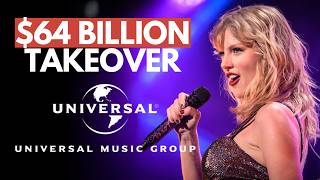
In this episode of the Market Maker podcast, host Anthony Cheung and co‑host Piers review several high‑profile M&A transactions before diving deep into Bill Ackman’s Pershing Square bid for Universal Music Group (UMG). They first explain Intel’s $14.2 bn acquisition of Apollo’s 49 % stake in the Fab 34 semiconductor joint venture in Ireland, highlighting the structured‑financing nature of the deal, the cost‑plus output contract, and the call/convert options that gave Apollo a bond‑like return. Next, they summarize a $2.2 bn joint venture between TotalEnergies and Masdar to develop 3 GW of on‑shore renewable assets across nine Asian markets, with a pipeline to 6 GW by 2030. They then discuss Anthropic’s plan to raise $1 bn, including a $200 m investment from private‑equity firms to create a consulting arm that will embed Anthropic’s generative‑AI tools in portfolio companies. The conversation shifts to Ackman’s non‑binding €30.40 per‑share, $64 bn offer for UMG via Pershing Square Spark Holdings, explaining the “listing‑arbitrage” thesis: moving UMG from the Amsterdam exchange to New York to capture a valuation premium relative to U.S. peers like Spotify. They detail the 78 % premium to the current share price, the need to increase free‑float by selling down Pershing Square’s stake, and the historical attempts dating back to 2021. Finally, they explore the broader music‑industry context, especially the emerging threat of AI‑generated music, citing a survey where 97 % of listeners could not distinguish AI‑created songs from human‑made ones, and debating how AI may reshape copyright, artistic value, and shared cultural experiences. Throughout, the hosts blend analytical breakdowns of deal mechanics with speculative discussion of industry trends.
Chapters
Hello and welcome back to the Market Maker podcast. And in this week's episode of M&A Deals, we're going to talk a little bit about things like technology, energy, biotech, and also a high stakes bet on music's future with Pershing Square making a premium bid for Universal Music Group. So to start with though, let me run through some of the deals of the week, starting with the first one, which is Intel. Has agreed to acquire Apollo Management's 49% stake in the company's Fab 34 joint venture chip manufacturing facility in Ireland for $14.2 billion. I wonder where in Ireland that is.
It's a fab.
$14.2 billion it's worth. I mean, it must be.
It's a good question.
I wonder where in Ireland, like while I read the rest of this out, have a quick little, yeah. Luganda. I'd be interested to know where that is. Maybe there's listeners out there who work at the factory or indeed in the town. But that transaction will be funded through cash on hand and roughly $6.5 billion of new debt issuance. Fab 34, they manufacture semiconductors for products using Intel 4 and Intel 3 process technologies. Can I get a location?
StatShot. You can check. It's, I'm going to pronounce this wrong, but it's Lakeslip, which is in County Kildare. County Kildare. The main Intel campus is just outside Dublin. Intel have a, they have an Irish subsidiary. So an actual business they've listed in Ireland. Obviously lots of companies, lots of mega international businesses do this because of the preferential tax treatment that you get in Dublin. All big tech. Have an Irish subsidiary. Anyway, this is Intel's part of that subsidiary is this Fab 34 thing. Yeah, it's kind of, it's interesting this because like you hear the headlines, it's that Intel agree to acquire and it's like when you read the headline, it's like, oh yeah, this is like a straight up, you know, proper acquisition except it's far from that. I mean, they're acquiring the 49% stake they're acquiring, in inverted commas. I'll explain that in a second, but they're acquiring Apollo's 49% stake. This is a joint venture. The 51%, which is the other part of it, Intel already own. And this isn't a normal, just, ooh, let's go into business and team up and do a joint venture. But basically, this was fully agreed upfront. This isn't a joint venture. This is actually more like a structured financing arrangement wrapped up in some kind of joint venture situation. But basically Apollo's stake right from the beginning behaved much more like an infrastructure, which is basically a private credit arrangement rather than it being a kind of traditional sort of private equity thing. So the arrangement was that the Fab 34 output All the 100% of the output of that factory was sold back to Intel at a cost-plus basis. So retail price plus a little bit of a premium. Intel were committed to a minimum purchase volume for the lifetime of the joint venture. And then Apollo for that basically had virtually no operational influence at all. And so basically, if you break it all down, Apollo got predictable bond-like cash flow upsides with no control over the business whatsoever. And actually the mechanics underneath was that Intel had a call option to buy all of Apollo's stake after a certain period in time. On the opposite side of the fence, If Apollo didn't exercise that option, then Apollo— sorry, if Intel didn't exercise their option, Apollo had a conversion option to basically swap out their ownership of this joint venture into Intel equity. So this is how it's kind of all arranged. But actually, so here we are, the time has elapsed and Intel are now stumping up the cash and buying Apollo out. But actually, if you just break it down, in 2024, Intel sold 49% of this business for $11 billion in cash, right? So it was a financing deal. Intel got $11 billion in cash. Obviously they're in an AI race and they're needing to spend a fortune to try and keep up with the kind of the big boys. They're buying it back for $14.2 billion. So they sold it for $11 billion cash. and they're buying it back for 14.2. So for Apollo, that's a 27% return in less than 2 years. Thank you very much.
That's a story. It's a story as old as time.
Yeah.
You know, he who has the money.
Indeed.
Takes money to make money, brother.
Cash is king. Oh yeah.
I mean, that's the world of private equity folks. So, On that deal, Goldman Sachs acted as the exclusive financial advisor to Intel. It was Morgan Stanley, they were working as an advisor to Apollo. The next one then, just a quick one, is TotalEnergies and Masdar have formed a $2.2 billion Abu Dhabi-based joint venture that will serve as their exclusive vehicle for developing and operating onshore solar, wind, and battery storage projects across 9 Asian countries. Each company will own 50% of the venture, which will have 3 gigawatts of operational capacity and a further 6 gigawatts expected online by 2030. The second to last one before we dive into the Pershing Square story is Anthropic, and they're in talks to invest $200 million in a new venture with private equity firms, including General Atlantic, Blackstone and Hellman Friedman with the broader effort targeting a $1 billion raise. The new company would act as a consulting arm to help portfolio companies adopt Anthropic's AI tools and embed them into business operations. So let's talk a little bit about one of the other people you play paddle with these days, Piers, Bill Ackman. How is Bill these days?
Bill, he's, uh, well, friend of the pod, of course. So, uh, shout out to Bill. Hope you're well.
But yeah, Bill Ackman's Pershing Square there. Non-binding offer to acquire Universal Music Group through Pershing Square Spark Holdings. Uh, this transaction then would merge UMG into a newly formed Nevada corporation and shift the listing from Europe to New York. Okay.
It's the old playbook.
Yeah. And that deal expected to close by year end if it receives board shareholder and regulatory approval. But maybe we could talk a little bit about the mechanics of the deal, but also the broader context, which is of course music at large.
And actually broader still, like, well, not broader still, but Bill Ackman and like, so he's Pershing Square. You know, he's an activist investor and he's actually been involved in UMG for actually a number of years. It's really since 2021, he's been trying to pull off essentially what is— there's a few different names for it, but I'm going to use one of them, which is basically a listing arbitrage, which is a playbook we've seen for a while where really it's trying to exploit the difference in valuations that companies get when they're listed on European stock exchanges versus the valuations they get if they're listed on a US stock exchange. Why is there a difference? It's basically a function of deeper, more liquid US financial markets. It's a function of just generally speaking, a much higher level of risk appetite in the US than we typically see in Europe. And so what you tend to get is like-for-like companies, so companies similar sizes, you know, in similar sectors, you know, will have a— there'll be a valuation gap. And so they'll be trading at a cheaper level if they're listed in Europe versus other similar companies in the US. So this listings arbitrage is this process of delisting a business from their European location and relisting them in the US. There's precedent for this, and we won't go into any of these in detail, but if listeners want to dive into some other examples, then CRH was a big one that happened, I think, one or maybe even two years ago now. I think we even talked about it on the podcast actually. So this moved their primary listing from London over to the New York Stock Exchange. It remained Irish domiciled as a business, But the US became the main trading venue. The rationale for that company, 75% of its earnings were in North America. Anyway, long, long short of it is CRH followed, you know, it got an earnings bump and that was a good example of shifting it and benefiting from that listings arbitrage. We've had other companies like Fergus PLC, 2022, again shifted from the London Stock Exchange to the New York Stock Exchange. Flutter Entertainment. Arm was a slightly different one. The UK government were trying to desperately get Arm to IPO in London, but in the end SoftBank, their main backer, said, no thanks, we're going to list in the US. So look, this is not the first rodeo of people trying to do this. Ackman's been trying to pull this off with UMG for a few years, and really it's looking at the valuation gap between UMG and Spotify. So UMG is trading at 27 times earnings listed in the Netherlands, so it's on the Amsterdam Stock Exchange, whereas Spotify's trading at 40 times. And Ackman's saying essentially his thesis is that these businesses aren't very different. There aren't any structural problems with UMG. He's not looking from an activist investor point of view. He's actually not looking to try and change the way that the business is being operated or the growth strategy for the business. He's actually not— that's normally what an activist investor would be doing, getting a, building up a large stake, getting a seat on the board, then from that board seat beginning to influence company strategy and so on. And structurally change how the business is being run and then benefit from improved performance in the future. That's the kind of normal playbook. But here Ackman's saying, actually, the company's great. Let's just move it from the Netherlands to the US. So it's an interesting one. They've bid, the bid price here is €30.40. What's interesting about that is, well, before this was announced, it was trading at about €16. But also if you look at the kind of since its IPO back in 2021, the highest it's ever traded is 28, just above €28. So this bid at €30.40 is in excess of any price it's ever traded in its history. But we did get a bump higher. So from about €16, it's trading up to about, it's trading at €19.60 at the moment. So on that basis, it's basically a 78% premium on current share price. So that would total that would create a total deal value of about €55.75 billion or $64 billion equivalent. So obviously a big, huge deal here. Yeah, I mean, other interesting stuff, I guess it's kind of, you know, yeah, I said the stock went up sharply. So what's interesting, so UMG stock popped 13, 10 to 13%. But as I said, it's only gone to €19.50 when the bid price is €30. So there's obviously still a large differential there between current share price and the deal price that's been mooted. But what was interesting is it wasn't just the UMG share price that got a bump. It was actually the current large shareholders of UMG their share prices also went up. So you've got Bolloré Group, they were 5% higher off the back of this. Vivendi, who's, these are the top two shareholders, by the way, Bolloré Group and Vivendi. Vivendi popped 10% off the back of this news. So pretty interesting. But yeah, the backstory, as I said, Ackman's been sniffing about this since 2021. He actually first tried to use a different part of Pershing Square, so Pershing Square Tontijn, to buy a 10% stake in UMG off Vivendi. And that was ahead of the Amsterdam IPO in 2021, right? I think the idea there was Ackman wanted to buy a stake pre-IPO and then get them to shift the IPO location. Like, don't do it in Amsterdam, do it in New York. But that kind of collapsed and it failed. Basically Ackman failed to convince regulators that the structure of the deal that he had compiled, it was just too complex basically. And so, you know, rules around governance and there were just governance concerns around the complexity of the structure. And so in the end, the regulators didn't go for it. And so But rather than walk away, he kind of reworked the structure and had Pershing Square's hedge fund directly acquire a stake instead, like in the IPO, right? So he's, he owned 10% of this since 2021. And look, ever since then they've been pushing for, right, let's relist in the US. And interestingly, what's happened is in order to try and facilitate that, And here's a pretty, I mean, I like it as a move. So 10% stake, right? But the problem with relisting it in the US is there hasn't been enough free float. So this is right, a free float is sort of the volume of shares that's like freely trading out there in the broader secondary market, you know, on a day-to-day, week-to-week basis. It's like the liquidity of this stock. And when you have really large shareholders that own the majority of the business, even though it is on the stock exchange and it's in the secondary market, if you've got most of the block of shares held by investors that aren't budging, they're in for the long run, then you tend to get a really small free float, which means the liquidity of the stock on the stock exchange is really low, which just makes the volatility of that share price really extreme, right? And so in order to try and kind of meet these free float requirements, Pershing Square have been selling down their 10% stake out into the broader market. They're not selling because they don't believe in this thing going up. They're selling to force the, or not to force, to enable this listing arbitrage to happen. So they've sold down their stake from 10% all the way down to just 4.7% now at a loss. 'Cause you know, we're trading well below the IPO price. So it's a pretty ballsy move and I think just shows just how big of an uplift that Pershing Square reckon you can get from just relisting in the US. They're prepared to dilute themselves ahead of the deal to kind of make it happen.
So in summary then, if I'm reading this right, you're saying then that going back to the comparison with Spotify, I was just looking at Spotify's chart actually. That is, as my wife will often tell me, this is one of her stock picking highlights over the last recent years. I think she was in, in like 2018. And it was really not doing a great deal. And then I think it was 2022, it hit a low of around $70, I think. And within 2 years it was up knocking on the door of $800.
Can we get Mrs. Cheung on the pod? So that's the next step.
So reading this right then is that there's a gap, is my point, between what you were saying with Spotify, which is like a phenomenal has-come-good success story. So the vision being the right structure, the listing venue, the capital framework could close that discount. And so the mechanics look like a shoo-in. This kind of feels a little bit Warren Buffett-esque in a sense of his sort of saying there's a strong company here, the market's undervaluing it.
Yeah.
Using structure, capital allocation, let's unlock some of that value and then I'm out. Basically. However, a couple of things though that come to mind reading about this is that Universal's underperformance, is it actually company specific or not? Because the industry at large in music is under a bit of pressure. So I remember my best mate at uni, when we first got our jobs leaving university in 2005, he got a job at Sony Music and it was like the coolest thing ever. Like, I remember I got to meet Usher through him back in the day. I mean, this is 2005 Usher. This is like peak Usher. But it was like big record labels were like massive even back then because it was before a lot of the streamers really started to come about. Whereas now Sony, Warner Music, I mean, there is massive competition concerns with the ever-present streaming platforms, Spotify, Amazon, Apple, Deezer. They've all continued to take big chunks of market share. And then the other thing, my wife again, I mean, it puts me in her shadow more often than not because she was at Google DeepMind last night actually. And I think it was more around them trying to push new Google products more than anything else. But one of the interesting things there is they were talking about, they were using this example of basically compute power and so forth. And it was about how they were creating, and they used an example of music. And essentially they were like, right, they gave it a really kind of thorough prompt. And not only did it generate the music, it gave it the accompanying underlying like track. With lyrics, with album cover, with everything, and it just rendered it all right there and then. And so one of the things that I found was a survey that was conducted was talking about how serious is the AI threat to the music industry at large. And this being, um, uh, GenAI creating songs and related then to copyright, to disruption, and so forth. And this survey found that 97% of listeners could not distinguish between an AI-generated or a human-composed song. I mean, this is going to completely split the audience of, I guess, where do you put the value in the creation of music in itself, in its form as art. But nearly 100% of people can't make the difference. And I think they did this years ago, didn't they, with IBM, with their initial, what was it, Deep Blue or whatever it was called. And whilst it was playing AlphaGo many years ago, it was also creating, composing classical music and people couldn't tell whether it was one of the original composers or not. So yeah, I mean, in the face of that then, Is this an Ackman? He needs to get this done and then close the gap and he's not really thinking about it from the mechanics of the bigger long-term investment. It's like there's a clear arbitrage case here that I need to exploit and capitalize on.
And the clock is ticking as you quite rightly say. So I think that's right. His window of opportunity is narrowing. He's been at it trying to get this done since 2021. And so I think this is maybe his kind of last ditch effort to make his play.
We'll see. All right. Well, look, I'm going to leave a poll, but also drop a comment. I want to know what you think about AI-generated music. Let's get a vibe check here. I mean, if you just plugged in a certain artist's entire back catalog and told it to generate new music. Yeah, I don't know.
The problem is it's about shared experience. If every single human can just create their own bespoke music, that's great. But then I think there's a certain element to a shared experience where your friends or your community are all listening to the same thing. The same artist, you know, your mate Usher, you know, everyone can then share their feelings around that shared experience, right? But if everyone's just creating their own original songs, that connection with other people and listening to how they're feeling about it, that kind of vanishes, right?
Well, there's two different things there. Like if you take Hunter X and the success of Demon Hunters on Netflix. Like you could take, uh, you know, for example, an anime animation type, like what, why does it need to be human fronting it? It could be that there's a composer that's the AI engineer prompting of who's creating the music in a centralized place that gets widely distributed to the mass audience, but there is no performer. As such. And then you go to ABBA in London and you have digital global centers to broadcast live 3-dimensional concerts.
Who's to say that's not art? You know, the art form is tapping the vibe of the community and the nation and it's kind of nailing it. Yeah, that Hunter Situation was a perfect example of that. The exact right song at the exact right time that just kind of went global. So, you know, that's not easy to kind of solve for that equation, right? So that's the artistry that's required.
All right. Well, look, we'll leave it there. Thank you so much, everyone, for listening and have yourself a great week ahead. Take care.
More from Anthony


Inside the Biggest Banking Stories You Need to Know This Week (Anthropic, Diageo, Private Credit)


Inside the Biggest M&A Deals You Need to Know This Week (UniCredit, GameStop, eBay, Eli Lilly)







AI Breakthrough or Hype? Anthropic’s Claude Mythos, Tim Cook Steps Down & LIV Golf Collapse