The Deal Room: Google's $32B Cybersecurity Bet, Pepsi’s Health Kick & ESG’s Resilience
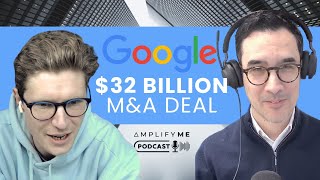
This content was created by Anthony Cheung. This content was uploaded by Anthony Cheung. This is a YouTube podcast episode titled "The Deal Room: Google's $32B Cybersecurity Bet, Pepsi’s Health Kick & ESG’s Resilience" (published March 23, 2025). It is an English conversational news/finance show hosted by Anthony Cheung with co-host/guest Stephen. They discuss three deal-focused stories: Alphabet’s proposed $32B acquisition of cybersecurity firm Wiz (deal structure, antitrust risk, advisers), PepsiCo’s ~$2B acquisition of Poppi (brand strategy, TikTok-driven growth, deal/tax mechanics), and Copenhagen Infrastructure Partners’ record ~$13B renewable-energy fund (ESG, private-market dynamics). The excerpt also includes informal banter, shoutouts (mentions Aaron and Samir), and practical commentary on negotiation, fundraising, and M&A structuring.
Chapters
Hello and welcome back to The Deal Room, and we have 3 hot stories to go over today. And the first one of which is Google parent Alphabet agrees to buy cybersecurity group Wiz for $32 billion. An interesting one here is that Goldman Sachs and Bank of America advising on the deal. So this is definitely one you need to know about from the deal execution side, who's running it, but also the deal and its magnitude as well. Then the second one, Pepsi, $2 billion to buy Poppi. Perhaps not all of you have heard of Poppi, but you know, if you're on TikTok, you probably have. It's the largest gut health drinks company in the US, and JP Morgan and Centerview Partners are running that deal. And then finally, Denmark's Copenhagen Infrastructure Partners have raised over $13 billion for its latest green power fund. That number is the largest ever fund dedicated to renewable energy, of which I thought was a space that everyone was neglecting these days, but it looks like I've been proved wrong. So, Stephen, how are you before we begin?
Yeah, I'm pretty good. And I'm, well, I can hear from, well, I can see you and you're in the office and everything looks very industrious. People getting on with their work. No one's scrolling BBC Sport in the background. But I can also hear, we have some lovely neighbours in the office. Our upstairs neighbours are having a massive refit. I don't know what they're trying to do, install some ping pong tables or something like that. But I can hear some banging. So, uh, I hope that, I hope that you go up there and give them what for.
They're going to get both barrels if they continue during this conversation, this episode, it's going to happen, Steve. So if I get a little aggy, if I get a little aggy as the conversation goes on, everyone will know why.
Anthony Cheung fight night. I'm looking forward to it. Um, yeah, I'm pretty good. I'm going to start with a couple of, a couple of much needed shoutouts. Uh, we, we tend to do this every so often. Um, but I mentioned a few weeks ago that we've, uh, brought on a researcher. Aaron, who has been doing a lot of the research for the podcast over the last 2 months. And I just want to very quickly shout out Aaron as a great representation of the upside of showing initiative. So Aaron reaches out a couple of months ago on LinkedIn, pops me a message saying, hey, like the podcast. Um, just let me know if you need any help, you know, bit of research, bit of support. It's a lot of content every week. Obviously I grabbed the opportunity because it's all about efficiency. Turns out Aaron is wonderful as a researcher. We have a job going at Amplify, a short-term role. What do— who do I think of to get in that spot straight away? Aaron. And it turns out Aaron is starting on Monday with Amplify. So shout out to Aaron and look, that's what initiative gets you. Um, hopefully Aaron will thrive over the next few months here in the office.
There's the front door, the back door, the side door, and Aaron's, Aaron's created his own opportunity. So absolutely, 100%.
Yeah. And my second shout out is to a guy called Samir. Samir just messaged me on LinkedIn a few days ago, and we get a few messages like this, and it's, it's really, really nice to get messages from people who appreciate the podcast. You know, so I do this podcast with Anthony and Piers does the podcast as well. And we chat to each other for 35, 40 minutes and we don't see the audience. And although we like to see numbers ticking up and they are ticking up in terms of listenership, it's quite faceless. So when we get a message from someone saying, hey, look, this has really helped me. Um, you bring it, you're bringing finance to life and it's helping me to land a job and really understand where I want to go in my career. That gives us a massive, a kind of almost a multiplicative boost. You know, a small message goes a very, very long way. So Samir, thank you for taking the time and thank you for that message.
Did you just use the word multiplicative? Educate me. Let's start, let's start before we talk finance. I need a dictionary.
I think it's just a fancy way of saying multiplication, isn't it? You know, I'm trying to impress the audience now to get more LinkedIn messages.
All right, well, look, let's go for this one because I did actually post about this on our LinkedIn account about Google parent Alphabet agreeing to buy cybersecurity group Wiz. So yeah, interested to get into this one because I'm assuming not everyone has heard of Wiz to start with.
Yeah, Wiz isn't a— it's not a high street name, W-I-Z, not the Wizz Air that you might see if you're based here in Europe, the, uh, the very, very no-frills airline. So Wiz is an Israeli cybersecurity company founded in 2020. Think about that. It's been going for 5 years, $32 billion valuation. I think we're all in the wrong industry. Let's go and start a cybersecurity company. Um, so the background to this transaction is that Google, parent company Alphabet, tried to buy Wizz about 18 months ago for $23 billion. They are now acquiring Wizz 18 months later for $32 billion, all cash. This is really important when it comes to structuring a deal. Deals get structured in all sorts of different ways. You know, you can buy a company with cash, you can buy a company with your own equity. As a founder or as a shareholder looking to exit, cash is king. You want cash. You want it landing in your bank account. You don't want to have to deal with the kind of ups and downs of the acquirer's share price and having to do things like earn earnouts, which is basically earning the valuation, earning the cash by working for the company. So this is $32 billion all cash. And the reason why it's gone through, you know, if we take a step back, we're thinking $32 billion tech transaction, this is never going to go through from a regulatory antitrust environment. And we'll get onto that in a second. But the reason why this deal has been accepted by Wizz is firstly, and we'll wait to see whether this happens, there was a sense that the Trump, uh, presidency might foster a more open, uh, environment with regards to deal-making and antitrust. Although the flip side of that is, you know, Trump's pretty anti-monopoly and big tech when he wants to be. So we'll see how that one plays out. But as a security blanket for Wizz, they have negotiated that Alphabet will pay $3.2 billion or 10% of the deal value if this deal gets blocked for reasons such as antitrust. So that is the insurance policy. This deal is not likely to go through until 2026. And Wizz is basically saying, look, you're paying $3.2 billion as an option for this thing to be live for the next 12 months, for this deal to distract us, and then If it doesn't go through, you pay us the $3.2 billion. So that is the reason why this is on the table and, uh, and, and Wiz is excited about it.
So, so could I just get a bit more background on, on Wiz? Like you said, uh, at the top of the conversation, not everyone's gonna be familiar with them. So, so I know they've been founded 5-odd years ago, but where from and what specifically are they doing?
Yeah. Yeah. It's a, um, so as I said, it's, it's, it's HQ'd in New York. Uh, it's an, it's founded by Israeli cybersecurity veterans. and its product offering is— and again, I'm reading from a page, I can't say I know a great deal about this— cloud-native agentless security platform focused on cloud security posture management, CSPM, workload protection, data security. Now, this is interesting for Google or for Alphabet because it is trying to play with the big boys in terms of cloud its cloud offering, right? So Google Cloud is competing against Microsoft Azure and AWS, but Google Cloud only holds 12% of market share at the moment. Azure, 21%. AWS, 30%. And let's remember that security and cybersecurity remains a critical barrier for cloud adoption. So if you can say, look, you know, our cloud offering is the best in the business because it is the most secure in the business because we've now got Wiz, you know, to complement all the other stuff that we're doing. Maybe this is going to enhance Alphabet's competitive position. And remember, cloud revenue has been the driver of Amazon share price to a very large extent, to a smaller extent, Microsoft share price. It is a very, very high margin business and it is growing within Google as a percentage of its revenue. So, this is the strategy behind it. Let's, you know, Google Cloud is playing number 3 at the moment. The growth in this industry is double digits in terms of demand for cloud infrastructure and for cloud computing. So, it makes absolute and total sense, and I'm sure that 12% market share versus Azure's 21% and AWS's 30%, I'm sure that is going to get touted when we come to these kind of antitrust hearings. It's just like, look, you know, Alphabet's big, it's a big beast. It's definitely, it shouldn't be going out and buying any more search engines, probably shouldn't be going out and buying any more video hosting social media companies. But in cloud, it's not a big player. So let us get this through and we can start to compete with the likes of AWS.
Am I right in saying that you You said Google or Alphabet had approached Wiz before. My question then is, how does that— away from this deal— but when a party has come in, shown interest, and then gone away again, but comes back for a second bite of the cherry, how does that change the dynamic of the interaction or the negotiation or the valuation when someone— it's not a first-time show of interest?
Yeah, this is classic negotiation. And remember, the heartland of negotiation is leverage. or the perceived ability to have leverage. You know, the best negotiators create leverage out of, um, out of confidence and out of the way that they position themselves. So when Google approached, so obviously this asset for Google is extremely attractive from a share price perspective, bearing in mind Google shares are down 12% this year. From a share price perspective, analysts say, look, Cloud is a real driver of this Google share price narrative. And when we are talking hundreds of billions and trillions of dollars, market cap of Google is $2 trillion at the moment. Then if you are adding Wiz to the cloud offering, and that might in the short to medium term result in a $50, $100, $150 billion increase in the company, in Google's share price, because its cloud computing division is starting to grow quite quickly, then the value of Wiz to Google is extremely high. And Wiz knows this. So Wiz is like, all right, 18 months ago, $20 billion, bearing in mind their annual recurring revenue is only $500 million. So, you know, still a kind of 40 times multiple, right? Revenue multiple. They're like, look, we can wait. We don't think that this is going to get through from an antitrust perspective. This was 18 months ago. We can keep talking. We like you, Google. We think that there could be something here, but we have got a bit of leverage because you need us maybe more than we do— we need you at the moment. We can survive for the next 18 months. And look, come back to us when Trump's in office and we'll keep talking. And by the way, We've got to be willing to walk away. That $3.2 billion break fee was a masterclass from the guys at Goldman Sachs who are advising Wiz. We're just like, look, even if this thing goes to zilch, i.e., the deal doesn't get done, you guys are walking away with $3.2 billion.
Yeah, I was going to ask then, so Goldman's are involved, Bank of America involved, and this is a very large deal, even if it doesn't go through. So just thinking about the life cycle of Wiz though, I'm assuming that they must have had— so these are some, what, ex-Israeli security forces, or the, the intelligence cybersecurity division of the Israeli government previously, is my understanding. But I'm assuming they had some VC startup backing.
Yeah, so this is Sequoia, Andreessen Horowitz, Index Ventures, the big beasts of the West Coast backing this company, right? Rightly so, because it is a very well well-positioned company in this market. And again, what Sequoia and— there's no doubt, by the way, that this is a loss-making company. Well, very little doubt because it's a fast-growth technology company that's being valued based on revenue, not profits. But what Sequoia, A16Z, and Index would've said is, in order to give us leverage, the last thing you want to look in a negotiation is desperate. Right? So in order to give us some leverage, we will say, if Google doesn't do this deal, or if Google doesn't want to pay the $3.2 billion break fee and the $32 billion asking price, we will fund you for the next 2 years at a $32 billion valuation. So we've got basically presenting at least the illusion, or maybe even the certainty that there is another deal on the table. And therefore we're not desperate to sell to Goldman's. So this is the art. This is the Goldman Sachs wizardry. This is what the game that we're all playing when it comes to relatively high stakes negotiation.
Hmm. Really fascinating. All right. Well, look, let's move on and talk about PepsiCo's $2 billion deal to buy Poppi. Have you ever had a Poppi drink, Stephen?
Tell you what, until 8 o'clock this morning. I'd never heard of Poppi. So, again, shout out to Aaron for bringing this to my attention. So, Poppi, again, you might not have heard of it if you're based outside the US. They are, by the way, the official soda of Inter Miami Football Club. I don't know if you knew that. Nice and pink. But if you look on their website, I'm going to be very, very superficial here. If you look on their website, my gosh, is that or is that not a website that is designed for the TikTok generation? It is. Bright pink, yellow, almost laid out in a kind of tile format. You feel like you're on some kind of social media site. There's a little kind of ticker that goes along the top of the website that says, "The future of soda is now. Have you heard? Soda's back and better than ever." So, this is PepsiCo. Again, a relatively beleaguered brand, uh, or a relatively beliegered fast-moving consumer goods company where they've seen 3% year-on-year drops in consumption in its beverage division, trying to kind of freshen things up, right? And Poppi is an extremely fast-growing probiotic. It's the leading prebiotic. Is it prebiotic or probiotic? I don't know. Let's have a look. Probiotic? Prebiotic. What's the difference?
So, so someone more qualified than us listening will, will definitely leave us a comment to explain.
Okay. Well, it's the, it's the, it's the US leading prebiotic soda company. It grew 163% year on year. Its annual revenue exceeded $500 million. Just as a kind of reference point back to Wizz, that's the same amount of annual revenue as Wiz, but this company just got bought for $2 billion, $1.95 billion, and Wiz is getting bought for $32 billion. So what does that say? It's all about the quality, the value of recurring high margin revenue, which cybersecurity providers provide. And when you're providing a soda, when you're making soda, it's just harder to make that margin and harder to get any form of recurring revenue in there. So a little bit about Pop, a little bit about Poppi. So it was founded in 2015 and it was actually initially funded, uh, on Shark Tank. In the UK, we call it Dragon's Den. Uh, the founder created Poppi, and there's a video of her on the website, created Poppi in her kitchen so she can help revolutionise soda for the next generation. So founded in 2015, growing pretty quickly. And significant. Again, this is a significant success, success story for US entrepreneurs that don't necessarily focus on the West Coast VC story. This is a soda brand. Um, and Pepsi needs it.
Yeah, I was going to say, so strategic rationale simply is that Pepsi's a bit uncool, outdated, and also no point them, I guess, given their brand association, starting a prebiotic drinks line because no one's going to buy it. So you just acquire and bring in a standalone brand to sit under the umbrella. So is that, is that the strategic rationale for this?
Yeah, absolutely. So PepsiCo, you might think to yourself, hey, PepsiCo is, is Pepsi, right? But it's, it's a really, really wide range of— is one of the biggest fast-moving consumer goods companies in the world. Really, really wide range of different brands from Quaker Oats through to Doritos, through to Gatorade, through to Rocket, those horrible high caffeine energy drinks, which it acquired back in 2020. So, it's almost the classic play for these big consumable conglomerates is to buy a brand, because of the strength of that brand, whether it's Quaker Oats or whether it's Poppi, put it into its kind of stable of brands, keep those brands, you know, leverage those brands. Don't try and dilute them with the fact that they're secretly owned by Pepsi. Um, but benefit from things like shared distribution, things like negotiations for supermarket space. You know, instead of negotiating as a very small player, Poppi, to get some space in Whole Foods, you're helping to negotiate as PepsiCo a much, much more favourable deal. This is classic economies of scale. The last thing PepsiCo want to do is to remove the Poppi brand from that acquisition, right? Because that's kind of what they're buying and they're going to leverage with the kind of economies of scale.
And I'm assuming there's a lot of behavioural changes of the consumer moving more towards positive health choices, uh, and that sort of thing. But what, what about competitive landscape? You know, when I think Pepsi, I think Coca-Cola. And so do Coca-Cola in itself have their own line of a similar fashion so they would not be part of this race to bid for Poppi? Or again, is it that competitive tension and Poppi has some of the ace cards here and they can play off some of these big consumer brands.
Yeah. So the competitive space for these prebiotic drinks, these soda brands, which by the way now hold nearly 3% of the US carbonated beverage market, up from 1.5% the year before. That, you know, the US, they drink a lot of soda from what I understand. And 3% is a really significant amount. for this, what we maybe once thought was a bit of a niche product. So Poppi comes up against the likes of Olipop. Again, don't ask me what it is, but I assume it's very similar. It closed a $50 million funding round in February. So there's a little bit of hype around this space. And then Coca-Cola launched Simply Pop, earlier this month, actually in March, to compete against Olipop and to compete against Poppi. So this is something that we've seen the story before, right? You know, 5 years ago it was all about energy drinks, uh, Monster, Rocket, Coca-Cola, and Pepsi trying to get in on that trend. Then it turns into, you know, something a little bit different— bubble tea, whatever it might be. And now it's prebiotics, and everyone's got to get in on the moment and acknowledge that this might— this moment might not stay around for that long. It might be enduring, but it might not stay around for that long.
Probably one of the things I find most interesting about this story is that it's the monetization of TikTok as a platform. Because I remember, I mean, we had a TikTok influencer work with us, Stephen, like 2 years ago, um, as a bit of an experiment to see how that would work. And kind of the findings back then was that it was really good at gaining an audience very quickly, but the conversion tactics were pretty poor quality in a sense. If you'd build it on TikTok, roll it into Insta to then try and monetize it elsewhere, So what I love here is this founder, uh, what, Stephen and Alison Ellsworth, hats off. I mean, just taking to TikTok, but yes, using themselves as a brand, but then having a product and then using that as the vehicle to promote it. And then happy for them.
Yeah, good, good, good for them. And I'm just— I'll just finish up this story by talking— I know this has been quite exciting from a corporate finance perspective. We're talking kind of brand and we're talking TikTok and we're talking a very flashy pink website. But I just want to talk about the deal structure very quickly. Just bring us back down to earth. A couple of interesting learnings here. So the purchase price is $1.95 billion. But there are $300 million of tax benefits that come with PepsiCo acquiring Poppi. Now, in the press release, it doesn't say what those tax benefits are. By the way, that brings the net purchase price down to $1.65 billion, but it is most likely that they are going to be tax benefits derived from the accumulation of operating losses. So if you make a loss year on year, you get a tax credit that you can offset against making profits in future years. And obviously PepsiCo makes a profit. So the likelihood is that Poppy's been making a loss for the last few years as it's continued to scale. That's perfectly natural. And then look, we can fold that $300 million in and just a very kind of very basic model, financial model hygiene question. When you're doing acquisition modeling, this is one of the key things that you need to be looking at because there could be a massive line item of tax benefits that will totally adjust what you feel willing to pay for a company. So it's definitely worth diving into. There's a lot of other tax benefits to do with depreciation and amortization, the way the deal is structured, how much debt you use. Definitely go in and take a little bit more of a look if you're interested. But yeah, just a sidebar on the purchase price.
Can I just ask you a quick question? And it's something you just said then, and this is a personal one from your own experience, is that you said, this company is making revenue and it's losing money, it's completely normal. And I get that from a specific viewpoint of raising money. And I say this because, you know, I'm sure you can go on to explain, you started a tech company, right, in your, your previous life. And so for most people on Main Street, the concept of just running a business that loses money year after year, I think, is a little bit abstract. How, as a founder, having raised funds, what is the psychology of that? I'd just love to get your take, having you lived this, from going from this standard, like, I want to start a business, the business has got to make money because I got to make— I've got to live, feed my family, then I organically bootstrap it and grow it. But this is the opposite end of that spectrum. And so I just wondered, psychologically, as a founder, A-type and B-type, like, if you like, what's the difference? Because you've lived it.
It's a really, really important question. And I think maybe there's a psychology of the founder that lends itself to choosing to go down the, you know, fast growth, hyperscale type business model versus the bootstrapped, you know, cash flow positive within a year, et cetera type model. Now, It's really, really important. It cannot be overstated that not all businesses and not all business environments need that kind of fast growth, loss-making, investment-heavy type origination, type first few years. There are 3 reasons why companies raise money, lose, don't make a profit in their early years. The first is if you are building a complex technology that you think you will be able to monetize quite quickly and quite expediently in the future, you need some investment, right? So the company that I ran, we were building a very complex machine learning data derived dataset that was gonna cost a great deal of money just to become minimum viable product. And then we could start turning on the money, you know, the spigots of revenue. So this is all kind of, this is traditional venture capital, right? You have a technology, it's gonna cost $10 million to build. You need someone to fund it. The upsides hopefully are a very fast-growing, high-margin business. Very stressful, but totally logical. That's where venture capital works. Now, the kind of second order of why venture capital might work is if there is a specific point in time and market opportunity where it makes sense for you to go quickly and to land grab. So, in the case of Poppy, maybe this is it, right? I'm gonna lose money because I want to, but I'm gonna spend all of my money on branding, advertising, getting market share, having that kind of foothold in the market. And remember, business is all about barriers to entry, you know, and defensibility and building up that moat. In the case of the technology companies, it's a tech moat. In the case of a kind of fast-moving consumer goods company, it's a brand or a market share moat. So you might not have to incur losses to get to that kind of, that rung on the ladder that sees you protected. And then the third one, and they're kind of linked to the first two, is that classic economies of scale, right? There are certain business models that don't work very well without scale that do work very well with scale. Tesla's probably the best example of that, right? You're never going to be able to make money from a unit of selling your 4,000th Tesla. You will be able to make money from your unit of selling your 40 millionth Tesla. But you're going to have to incur a lot of pain to get there. So if you as a young person are thinking of starting a business, you've got to think about those 3 things. And if the business that you're starting doesn't necessarily tick or fit within those buckets, you're in a brilliant position because you can just go out and start it. And start making money from day one. If you want to start a consultancy, if you want to start a service business, you don't need venture capital, right? You just go out and do it. Barriers to entry are lower, but your risk is lower as well. So yeah, that's, you know, it's, and maybe more Type A personalities trend towards the kind of VC route, the kind of let's work 18 hours a day and get market share route. Um, and it's, it's an exciting journey, but it's not one without peril.
Yep. Good, good way to put it at the end there. So let's move on. Final story, which is about green power fund. And in fact, the largest ever fund dedicated to renewable energy. So yeah, what's this one?
Yeah. So this is Denmark's Copenhagen Infrastructure Partners raising a world record $13 billion for its latest green power fund. So Copenhagen Infrastructure V, so this is its fifth fund, €12 billion, $13 billion. The fund focuses on greenfield investments with large-scale energy infrastructure, and it's already got a pipeline to potentially invest in of over 50 renewable energy infrastructure projects. And the interesting thing about this story, there's probably two parts that I want to touch on. I'll take the second. The first part is all about ESG, and then maybe I'll take the second part in a little bit. We all talk about whether the ESG bubble has burst, right? The environment, social governance bubble has burst. Uh, and I teach it. I do a kind of hour-long teaching on ESG because it's a, it's a subject very close to my heart. ESG, diversity, equality, inclusion, all of this stuff is kind of taken a real back seat post-interest rate hikes. You know, maybe we saw ESG as a nice to have, maybe we saw renewable energy as a nice to have, but when the going gets tough, we drill, baby, drill, and just get back to the thing that makes us the most money, right? And I put a couple of charts in my notes that showed that outflows outflows from ESG funds have overtaken inflows in 2024. So it was always assumed that ESG would just rise and rise and rise and become the dominant investing strategy. And then people are taking a step back and going, all right, in a higher interest rate environment, let's just make some money. I don't care if it's non-DEI, I don't care if it's not green, I just want to make some money. However, my counter to that, before we get onto my second point, my counter to that is you might have heard of the phrase antifragile. So, antifragile is a concept that was brought out, that was kind of thought up by Nassim Nicholas Taleb, the author of Black Swan. And antifragile is basically an investing strategy or a company strategy where you thrive in times of uncertainty or chaos or disorder. And it turns out there's not too many times that are more uncertain, chaotic, and disordered than the last 12 months in markets. Turns out that ESG funds have roundly outperformed the benchmark because maybe they have this kind of slightly more long-term, slightly more high governance quality, slightly more stable approach to the way that they do business that maybe thrives in times of volatility. So is ESG actually a kind of a great investing strategy for these turbulent times despite Donald Trump saying drill baby drill?
Well, there you go. You get punished if you chase the money. Let's put it simply.
Yeah, exactly. And, and it kind of leads me on to my second point. And I think this is really important because I don't want young people to be thinking that ESG is dead or renewable energy is, is not a kind of critical part of the next generation of investing in markets, the real, the real kind of sweet spot where energy, where renewable energy lands extremely well from a returns perspective is in the private markets, right? These are long-term, costly, 5, 10, 15, 20, 25-year infrastructure projects, and they require patient capital. That models out the future revenue streams from these wind farms, from, from these solar farms, etc., in a conservative case over 5, 10, 15 years. They don't worry about the volatility of day-to-day Trump public markets, etc. Now, public, public market renewable energy firms are getting battered because the knee-jerk reaction from a Trump is to hammer a renewable energy company. You can't do that in the private markets because you've locked in your capital. And that is why, you know, that's why the world's biggest renewable energy fund has just been launched in an environment where you're thinking, gosh, surely renewables is taking an absolute hammering. This stuff is still really, really kind of investable, but much more in the private markets and much more over the long term.
Does it, does it also help in a sense of a lot of these countries, let's say a Scandinavian, uh, Norway in particular comes to mind because of their mammoth sovereign wealth fund. So does it help that a kind of big cornerstone of that pocket of private markets is propped up by that type of money?
Yeah, it's a very good question. I don't know to what, I don't know how much the Norwegian sovereign wealth fund put into this $13 billion. dollar funds. I'm sure we can find out, but I would say probably a not insignificant amount. And remember, you know, in my mind, in my very, very small mind, Europe's back. Um, and you know, there's a lot of narrative around, you know, looking at the things that Europe does extremely well and creating that point of differentiation and a little bit less reliance on the kind of West, West, Western narrative that's slightly being fractured on a kind of day-to-day basis. So yeah, there's massive pools of capital in Europe. There's massive funds being launched in Europe and there's massive infrastructure projects going on in Europe. So yeah, there's money to be made for sure.
Wow. Put away your Great Britain flag. Come on the EU flag. You're just doing a little tour at the moment around EMEA, I think.
Yeah. Look, if anyone wants me to come, you know, come to a university in, I don't know, Venice or Copenhagen, I'll come.
Yeah, me too. All right. Well, look, we'll wrap it up there. Thanks so much as always, Stephen. Thanks everyone for listening and we'll see you next week. Take care.
Thanks, Ant.
More from Anthony


Inside the Biggest Banking Stories You Need to Know This Week (Anthropic, Diageo, Private Credit)


Inside the Biggest M&A Deals You Need to Know This Week (UniCredit, GameStop, eBay, Eli Lilly)







AI Breakthrough or Hype? Anthropic’s Claude Mythos, Tim Cook Steps Down & LIV Golf Collapse