The Economics Storyteller | Joe Little, Global Chief Strategist, HSBC Asset Management
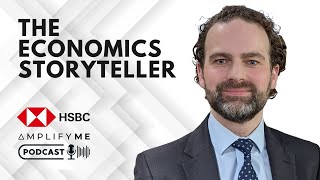
In this 45‑minute Market Maker podcast, host Anthony Cheung interviews Joe Little, Global Chief Strategist at HSBC Asset Management. Little recounts his unconventional journey from a non‑financial upbringing in the West Midlands to a chief strategist role, highlighting the serendipitous choice of economics at A‑level, early influences from publications and finance‑focused books, and a series of chance opportunities that led him to JPMorgan’s macro research team and eventually to HSBC. He emphasizes the pivotal impact of early mentors – a polymath senior economist at JPMorgan and a seasoned generalist investor later – describing how role‑modeling, hands‑on learning, and exposure to diverse thinking shaped his analytical and leadership style. Little then explains the structure of his current role: reporting to the global CIO, providing top‑down macro outlooks across asset classes, building scenario analyses, and translating those insights into investment decisions. A large portion of the conversation focuses on storytelling as a strategic edge: crafting concise, emotionally resonant narratives, using visuals, humor, and audience‑tailored messaging to make complex macro research memorable. He discusses adapting communication for varied cultural audiences, the importance of “killer charts,” and the need to balance depth with simplicity. The interview also covers the performative aspect of the job – frequent travel, conference speaking, media appearances – and how he manages stress, jet‑lag, and work‑life balance through team support and disciplined routines. Finally, Little shares career advice, stressing relentless curiosity, long‑term passion projects, and the mindset of treating the career as a marathon rather than a sprint. The dialogue offers practical insights for students and early‑career professionals interested in macro research, asset‑management strategy, and effective communication in finance.
Chapters
Hello and welcome back to the Market Maker podcast. And today I am joined by the economics storyteller, Joe Little, the global chief strategist at HSBC Asset Management. From his unlikely path into economics to the mentors who shaped his career, Joe lifts the curtain on what a strategist really does, how storytelling can bring to life spreadsheets, and why clear communication is the secret weapon for cutting through noise complexity in global markets. So, Joe, absolutely fantastic to have you with us. How are you?
Thanks a lot, Anthony, for having me on. Great to see you. Yeah, very well, thanks. Hope you're doing okay too.
Yeah, very well indeed. So perhaps we could just dive straight in. You certainly didn't grow up around finance, and I know you mentioned at the time school wasn't easy. I just wanted to, if you could break down that moment that economics came into your life as well. So what, what, what was it like in those days?
Seems like a long time ago now. I grew up in the West Midlands, Aston Villa follower. And I mean, it's fair to say that I don't come from a finance background. I haven't got a lot of family, personal kind of connections in the industry. You know, growing up, I didn't aspire to work in finance. I probably didn't even know what it was. I remember my dad said to me to find a passion and just go for it, get stuck into something that you love to do and try and sort of be the best that you can be at that thing. And then don't worry about anything else. And that's always stuck with me. It sounds like it might be from the inside of a prawn cracker, but it's always stuck with me as a nugget of wisdom. I didn't really know how to do that. So looking back on what happened, it was a little bit of trial and error. I didn't have lots of contacts or people to ask for advice. So it was a trial and error exercise. I did economics at A-level, probably as much because I didn't like the other choices rather than actually knowing what it was. It was all maybe a little bit random, but I was interested in politics. I was interested in current affairs. I was decent at maths, not the best, and I was decent at sort of humanities and could write a little bit, but again, not the best. So I sort of had this sense that economics might blend some of those skills. The jack of all trades, master of none kind of idea. And it then, it sort of snowballed from there. So it was a little bit of a random choice. And then I just loved it. And then as you say, I went to Bristol to do economics. I started reading more and more Economist magazine. Everybody always says that's a good place to start. For sure it is. Things like Paul Krugman's Peddling Prosperity in his New York Times articles. In the UK, Will Hutton in The Guardian. Or Keletsky, who was writing at the time in the White Times. These guys were sort of, and Martin Wolf too, of course, in the FT. These guys were sort of like, yeah, rockstar economists. And I like the idea of being a city economist. That seemed a good objective. I wanted to be in the know. And then, you know, through the studies, you kind of encounter all of these historic characters who've had great ideas. Ideas have changed the world, shaped the world. Keynes or Marshall, someone like Herbert Simon, lots of different sort of characters that you see in the history of economics. So maybe I had some idea that I could change the world as well. I don't know. Initially I was thinking I'd go down the public policy route and politics, public policy. That was a really interesting area for me. I did some internships in that area. I think I kind of realized quite quickly I wasn't smart enough to really make a big go of that. And the academic option wasn't really a choice because my maths wasn't good enough. So then it was sort of scratching around what to do with this passion. And I came across, again, it was books. I mean, you know, reading, I love reading. Things like Market Wizards, Liar's Poker, Barbarians at the Gate. I came across some of these kind of finance classics, modern finance classics, classics in a literature sense, but they told this amazing story of what life might be like in financial markets, global macro markets. And then the sort of challenge was, well, what do I do about that? Because I didn't have an internship. I didn't know anybody in a bank. I didn't know how to analyze a stock. I didn't know what debt capital markets were. I didn't necessarily even aspire to work in a bank. I just thought global macro emerging markets, this seemed pretty cool. And then started applying for things. And I ended up landing a great role at JPMorgan Casanova on the macro research team. Learned a huge amount and then had a stint as a fund manager and ended up in my current role as chief investment strategist. Probably with hindsight, a little bit of a sort of a random walk. It wasn't really planned or predetermined. I'm not sure looking back that it was even that likely given where I started from. But what I did do is follow a passion, follow a daydream. And I think that's the one thing that I've continuously tried to do. There's not been a plan. It's just been a sequence of kind of following what I was interested in, good at, and hopefully people would pay me for.
And I remember you were saying, so in that early part, I'm assuming this would've been at JPMorgan Casanova, which was the importance of having brilliant early managers to help give you perhaps some feedback, some guidance, some direction. So what was that? What were those relationships like and what made them impactful? What should young people look for when trying to find these types of people?
Yeah, I think that's so important, you know, Anthony Cheung, and it probably gets overlooked because everybody is thinking about, you know, the role, business card, the status. You know, we're all human. I'm not criticizing that. We're all human, that sense of self. Sense of ego. This is important to everybody. But my take is that a good line manager is just as important, maybe even more important than the role. And I think early on, it's critical. You know, you learn how to behave, you learn how to act, you learn how to think. Humans mimic each other. We, we, you want good role models to copy from. Even now, I want to work with smart people, people who are smarter than me, good people, people who are inquisitive, because that's what keeps it going. But yeah, you're right. My first boss at JPMorgan Casanova was, I mean, he was just a complete polymath. He had this ability to bring in different themes from different ideas. He'd be looking at the US Geological Survey data to kind of tell a story around minerals. It was the China commodity boom at the time. He'd be thinking about, you know, some crazy chart. He'd be ripping up the format on the bank's research notes to make an exciting point. He'd have a way with words. So a way to communicate. He'd be reading widely, psychology, philosophy, quoting different analysts and experts. And, you know, he was super smart and charismatic. I think maybe the ultimate chief economist. So he really inspired me and taught me how to do research. And we had a trade, of course. I would work at weekends and Christmas. I could do enough econometrics to make myself useful. I could do the data and charts and sort of grunt work for him, but it bought me a ringside seat. It bought me a seat at the table to watch him and copy him and learn from somebody who I perceived as being the ultimate sell-side economist. And then again, when I moved to asset management onto the buy side, I was having a stint as a fund manager. Anthony Cheung, another great mentor in my, probably in my later 20s now. Another very experienced generalist investor economist who taught me a lot about valuation analysis, how to think about the markets, how to integrate some of the economic data with what's going on in terms of investor beliefs and investor views. We spend a lot of time thinking about looking at the market in a third, from a sort of third-party perspective. Mr. Market, sometimes people say Mr. Market, what is Mr. Market thinking? Incredibly powerful way of framing what is going on in investment markets. Super important investments as well when you are on the other side of the fence, putting money, investor capital to work, to really reflect on what's your edge. There's lots of smart people in markets. Where are you expressing something that's a little bit different? So yeah, too early on, I had two— I was very lucky. I had two very inspiring managers, mentors, coaches who helped me a lot. But my feeling is that that's such a big part of it now. And I think it probably gets underplayed. It's not just about teaching you the ropes and give you some, giving you some structure around the role, giving you a job description on a piece of paper. It's, it's just about, you know, mentoring you, inspiring you. So that's really important. And as much as I can, I try and pay the same thing forward.
Yeah, no, I couldn't agree more. That role modeling is so important, certainly in your early career when you're still trying to figure a lot of things out. Yeah, exactly. Sometimes you don't need to be told it, you just need to see it. It's a behavioral thing as much as it is a technical thing.
Yeah, because you think you know everything, but of course, you know nothing. And when you see these guys in action, masters, then you really begin to sort of have that rapid learning curve. Yeah.
That's great. I think that's a really important thing for certainly the demographics that listen to us as an audience. It's a really great point for them to hear. So perhaps we could move on and talk a little bit about, you know, part of my job is to break down what I call the barriers of finance sometimes, which is a lot of these complicated words, the jargon. But when people are thinking about, okay, what potential careers could I do? Like you said, you read Liar's Poker and you're like, right, I'm going to be a trader.
Yeah, I read, uh, exactly.
I'm going to be working PE, some of those other books you mentioned. And it's like, okay, when someone says a chief strategist or a strategist role in general, so how does that fit into the composition of an asset manager or an investment bank and how investment ideas become strategies that shape global portfolios? How do you connect all of this, A, in a kind of the landscape of a firm, but then within a team of individuals as well?
Yeah. Thanks a lot. I mean, the first thing to say is it sounds pretty cool and it is pretty cool. So my role is a senior role in the investment team and it ends up being reasonably high, high profile as well. In terms of our sort of structure, management structure, I report to our global chief investment officer. And that's probably fairly typical that you keep the economist, chief economist, chief strategist quite close to the leadership of the investment platform. But of course, I'm working with sales team colleagues, investment team colleagues, and other functions within our organization. My role is exactly like you laid out, to be top-down. So looking at things from the 30,000-foot perspective, thinking about the trends in the economy, what's going on with growth, what's going on with inflation, what's happening to policy. I mean, we used to just think that was monetary policy, but increasingly fiscal industrial policy, much, much more important, maybe. And then thinking about the big markets, what's going on in the US, what's going on in Asia and the Global South. We used to call them emerging markets. We prefer a slightly different phrase these days. So there's this kind of global perspective, which is not universal, but quite common in buy-side asset management roles. And then global on the other dimension to think about many different asset classes. So my colleagues are running investment funds in fixed income or in equities or in multi-asset or in alternative assets. And my responsibility then is to be able to think about these asset classes from that 30,000-foot perspective, but to think about the whole range of them. So short-term rates, longer-term bonds and credits, stock markets in, you know, the West and in the Global South and the East, currencies, alternatives increasingly such a big area, and those sort of balanced funds mixing up different asset classes that we call sort of multi-asset areas. And so what I try and do with that is 3 things really. Firstly, I'm working very closely with the investors, the fund managers, identifying and building a sort of core scenario, risk scenarios, trying to sort of plot out what it means. What does growth and inflation and policy look like under a central case? What does that imply for what happens in the US or in China or in other economies? And then mapping that, connecting the dots into investment markets as well. Doing the same for more optimistic view of the world, more pessimistic view of the world, thinking what have we missed? What could throw a spanner in the works? Neglected risks. That's all a big part of it. So in that sense, we're contributing, me and my team contributing to the investment decision-making process, the investment outcomes. The second thing I end up doing, which again is kind of common to my role, is cheesy storytelling and great fun things like joining you on the podcast today. I mean, I spend a lot of time on the road meeting clients, meeting prospects, talking to investors, other stakeholders, within the context of the sort of HSBC big group, speaking at conferences, doing podcasts or TV or that sort of thing. And what I'm doing there is representing the views of the investment team, sharing our ideas, research, sharing our house view. We have a house view approach and hopefully saying interesting, sensible things. Um, you know, broadcasting a killer chart on LinkedIn, uh, or whatever it might be. And because of the amazing footprint of HSBC, I end up traveling a lot around the world to some amazing places to meet some incredible investors with very great influence and sort of outstanding track records. Last week I was in India, for example. Yeah. And then the final piece, the third piece is that I don't do all this on my own. It takes a village. So I have a great team of economists, strategists, quants who help me and I have the great honor, pleasure of sort of coaching, managing, looking after them, mentoring, other sort of leadership responsibilities as well within my role. So yeah, there's lots of different elements there. Some a bit more research-focused, a little bit more analytical, some a bit more sort of extrovert Storytelling and then the idea of sort of looking after mentoring coaching is a big part as well of what I end up doing.
I don't know why, but in my head I'm forming like this stage with a band and your quant was on drums, you know, you got your chartist on the bass and then you're effectively a frontman.
Well, why not? I mean, what, why? We've often told the story about it in terms of cricketing fielding positions or a football formation. Look, when you're building a team, don't want identikit people with the same skills. That doesn't help you achieve the goal. That doesn't help you act like a high-performance high-performance team, you want different skills, different perspectives. You want an argument and a healthy discussion. And so, like you say, we recognize that there are specialty skills, specialist skills that we need in our group. I mean, that's true from my team and my silo block of work. But it's true in investment management, asset management generally, and probably true in many walks of life. Having that diversity of skillset and ability, cognitive diversity, critical to enable us to make high-quality decisions on a sustained basis.
Well, on the previous shows, you know, we'll have the the maths geniuses and the quants and that, but that's not why I want to talk to you because the role that you fill is definitely the one around storytelling. And one of the things I thought would be really cool to unpack was that in a world obsessed with data, which seems to be through the advances in technology, we continue to lean further toward that direction. You know, storytelling. I mean, my assumption is that actually it becomes even more powerful, but how is that? How do you define storytelling as an edge? How does that tie to macro research and what makes a good communicator in your perspective?
Yeah, I mean, that, Anthony, that's a great question. And I quite like the moniker, the storyteller. So thank you very much for kind of, it imposing that on the podcast theme. You know, this might sound a bit daft, but have you seen the movie Inception? Leonardo DiCaprio?
Oh, of course.
I mean, that's just such a brilliant movie, but I've often thought about telling the story in the context of that movie, because that's ultimately what you're trying to do. You're trying to land an idea. A theme, a way of thinking about the world, a particular anecdote or charts or trade idea, market insight. You're trying to land that in somebody's mind, someone's subconscious. So, you know, that, yeah, that thinking about that idea of inception, I think is helpful. And of course it elevates the importance of the story compared to number crunching spreadsheets, all the other elements. That's not to say that they're not important. You have to do the work first. You have to do the work first. So, you know, we like to think about research as being a sort of an iceberg. You know, you only ever see the tip of the iceberg, but there's a huge amount of work that's going on underneath the surface in terms of developing ideas and insights. So you have to do the work first, and that's a lot. But my approach is that that's maybe a little over halfway. And what makes good analysis great is then how you tell the story, the art of telling the story. How do you want to land that message? The inception, sort of thing. So if you think, I mean, a lot of my work is spent doing interesting visuals or writing or speaking at investor events or meeting with investors. So, you know, the way the question I would always ask is, what message do I want to leave the audience with? What conclusion do I want to leave you want to leave the reader with? What do you want them to remember? And then this is the sort of the art of storytelling. It's definitely not telling people everything that you know with a 100-page flight pack. Bumf. People do that. So I think you've gotta want to tell the story and curating, knowing what to leave out. Is a really kind of critical first part to that art of storytelling. And particularly for analytical people, you've got to fight that natural urge to show them everything you know. So, I sometimes say to my colleagues and others that we want to simplify as much as possible without crossing that line into being simplistic. And that's really the sort of the first idea. I think the second thing is that stories are not about data and spreadsheets and charts. Stories have emotional content. They have a beginning, a middle, and an end. So you need a structure, but stories make you feel something. So I think, you know, you need plots. You need characters, you need humor. My colleagues tell me I have the world's worst selection of dad jokes. But what you've got to remember is the bar for humor at polite business conferences is incredibly low. So, so, but you, you need, you have to make the audience or the roundtable or the reader, you have to make them feel something. You have to try and make a connection in order to make your message memorable and then for it to land, for it to achieve that inception event. So I think there's a really big place for humor, anecdotes, like the pacing of the story. And we think really hard about all of that emotional content part of it as well. And the third thing I say is you have to know the audience. You have to kind of tailor the message to make it stick with the audience. We have engagement with a whole range of different clients. As I mentioned, a lot of my role is talking with my colleagues, the investment team, the fund management team. You know, you're meeting external clients or journalists. You have to account for how people are maybe approaching the problem or seeing the world. And you have to make people care. But that overarching idea is, you know, what do you want to leave the interviewer or the audience or the investors with? What's the message that you want to leave them with? And as soon as you start thinking about it in that way, You can see what I mean that the work is, the research is essential. You have to be relentlessly curious and focused and all over the numbers and the data, but that's not it. There's another slice, which is then making sure that those insights, those themes are landing really well with the different people you're exchanging and interacting with.
How much of it then, listening to you explain it, is natural personality meshing with the ability to think in such a way as opposed to skills that you learn as you go through? Because from what you're describing, it sounds like the natural course is that when you start, you probably do need to do the number crunching to get the fundamental blocks of how to analyze the market in a certain way, for example. And I guess, is it at that point quite hard to actually step back when you are doing the number crunching at that time? Or can you have that ability, do you think, from the beginning to be able to have the capacity to connect all of the dots, the bigger picture, as well as the data? Or is that a learned skill that develops over time and experience and accumulation of skills?
Yeah, I mean, it's probably different for different people. In my experience, I mean, I was always fascinated by the stories and the psychodrama. Hayek versus Keynes, who would win? Da da da. So I guess I've come into thinking about macro, thinking about markets with that emphasis on personality stories and plot lines. But I think you're probably right. For most people, the kind of the critical foundations are, you know, those research skills, those technical skills, and you build that up maybe in the first 10 years or so of your career. You build that as the sort of the foundation. The foundation. And that then stabilizes you. It gives you the confidence. It gives you the rigor and the robustness. You've learned your research skills. And then it's probably then something that you then develop and move into later to leverage those skills. I think that's probably the right way to think about it. And of course, it's not to say that there's not other ways of cutting the cake and thinking about the issue, but I think that's probably the right way to think about it. Look, nobody is, I mean, people are born great communicators, but you've got to have something to say. You know, you can't just waffle and tell jokes. But, and I think in many instances you read a lot about introverts being the most impressive speakers at conferences. So that tells you as well that there is a learned element to it. You can practice and you can get better. And you know, if you follow some of those steps around the sort of art of storytelling, then it it does enable you to communicate really effectively and clearly and powerfully and in an entertaining way without necessarily having been, I don't know, elite debater of the world in your youth. So I think that's probably the right way to think about it. I'm not saying that don't do an economics degree, don't do the CFA. Instead, just focus on telling stories and reading science fiction. I mean, I think reading science fiction is a very sensible thing for everybody to be doing, but you need that. You do need that foundation because even though it is an exercise in macro investment market storytelling, you are telling stories about macro and investment markets. So you need to understand that plumbing, those connections. Like the process that I talked about at the start, I went through that process myself early on in my career, trying to understand all those elements. And that's the foundation.
Yeah. And you mentioned there science fiction, and you've mentioned throughout actually your appetite for consuming books and reading. And so I just wondered, is there any other practical tips now that you do this? Like you say, you are almost a performer in a way. You go on Bloomberg TV, CNBC, you go on big conferences. Is there some practical tips on managing that stress of the point of delivery, the performance aspect? Is there any frameworks that you have to get you in that mental space or to get you to perform when that pressure's on in that moment to articulate those investment ideas, for example?
Yeah, but performing— performer is very generous. I mean, a synonym is clown.
I've called you— I've gone from rock band to now performer.
So yeah, I think there is a performative aspect. To all of this now. I mean, you're in a conference making a keynote speech, something that I would regularly do. There's 750 people in the room. I mean, it is a performance. Sometimes the stage is massive. It's not like Bruce Springsteen, but you know, there's an element of it in a very, very small way. So I think, I mean, I think it is practice. And if you go through that process of sort of wanting to tell the story, wanting to get better, learning techniques, then you are constantly finessing and improving that craft. You're constantly honing your skills. So I've always thought about it like that. Tomorrow is going to be even better. Tomorrow is going to be even better. That's that sort of relentless curiosity, which I think you need in all different roles in investing, financial services, financial markets. So I think practice and sort of wanting to improve is a big part of it. I think trial and error is a big part of it. See, I'm unlucky now because I've done this role for a number of years, so I roughly know what works and what doesn't. But you know, early on you're bound to make mistakes, so don't dwell on those. I think there's a— it's easy to Maybe get a little bit upset or even disillusioned by things that don't work. But the whole point of experiments is that some work and some fail. So you never know if you don't give it a go and give it a try. And it is that process, I think, Anthony, around just being relentless, keeping going. Yeah. And following a passion for something.
Yeah. That performance aspect. I know that whenever I've done big talks, stuff like that, it's almost like with some of the, for example, like a joke in the middle of, in the midst of some technical knowledge you're trying to transfer, you've kind of tried it a few times. It's almost like the Fringe Festival. So before you sell out the O2, You need to go and do some small pub back work on your, your, your, your sketch in order to see what works, what doesn't. And then actually you tend to have these go-tos that, you know, tends to land. But my question then was, given that HSBC has such an international spread in terms of the difference then in culture and how you learn to identify and deliver what is fundamentally kind of the same message, but reshaped or calibrated for a different audience, because you mentioned that audience aspect is key for it to land in the right way. How do you tackle that? Like working across cultures when clients are going to be quite different in that way?
Hmm.
Yeah.
So clients are different in terms of their interest and focus, depending on where they are in the world. Some are more interested in domestic assets. Some are more global in their mindset. Some are coming at it with different questions and ideas. So you have to tailor your message to the audience you are speaking with. Some of it is sort of obvious, right? If I'm traveling in Asia, if I'm going to meet investors in India, I clearly need to be prepared for some questions on how are global investors seeing India? How are global investors seeing the Reserve Bank of India? Why is the rupee weakening when all other emerging market currencies are strengthening? Those sort of questions are sort of obviously going to come up. So there's a little bit of tailoring the story and the version of the investment outlook that I might deliver. But as much as anything, what you want to do is make sure that the message is at the right level for different investors as well. That really helps land the message. It's this inception idea again. So what we always try and do is have content and materials that can scale. So slides and visuals that are kind of clear and powerful and punchy. My colleagues talk about killer charts. This is what we're searching for. We're searching for a killer chart, the best way of visualizing a particular theme or idea in a powerful way. Maybe one that people haven't seen before for it to be provocative, but not in a simplistic, obvious, boring way. And if you get that right, then what enables you to do is read the room and then you can leverage that content to either go into the weeds, talk about the very detail of particular topic. Or focus on the kind of the key punchy headlines. And you know, the sort of social media LinkedIn version is even more superficial and sort of high level than that. But it still enables us to try to get some of our messages across. But you're absolutely right, traveling around the world, you know, you are aware of different approaches, different themes, different interests, different cultures, different ways of doing business. And, you know, sometimes we even have to do the investment outlook in different languages. My Spanish is— I'm learning Spanish, I'm improving, but I did do part of our investment outlook in Mexico, in Ciudad de México, in Spanish, which was great fun to try. And the, you know, that makes a difference to how people see what you're doing and how people feel about your take on the world. So I think it's as much as anything, it's about being conscious of that and then trying to enhance what you're doing in order to bring it to people in a more digestible, clear relevant, powerful way.
I just wanted to ask then, because the kind of segue from here is you're doing a lot of travel and travel, I guess, in a sense of it's quite hard to just jet into India, do a conference and come back. I'm assuming you have to stay and there's not just a keynote speech. You're probably there for purpose to meet clients and do a bit of a local tour and so on. Anthony Cheung. So given that a lot of your role is on the road and a lot of our listeners are thinking about their future careers, and this is a component of it, but you are still traveling a lot even as you are now in a senior position, whereas I guess a lot of people might do travel early in their career. Just wondered how do you balance that, that kind of commitment to be the best you can be at your job But also you have a personal life to also manage at the same time.
Yeah, I mean, it's a blessing and a curse, I suppose. As you say, you're juggling personal commitments, family commitments, but my role is, it's important to be visible. In many interactions, you know, you need to be there. You can do a lot on Zoom, of course. That's an incredibly sort of powerful breakthrough tool in terms of enabling me to be with investors more regularly in a good format. But nothing beats being with people, meeting investors. Meeting analysts, meeting policy specialists. So yeah, it's always a case of trade-offs. I mean, I should say it's not just my circumstances, not just me. I've got a good team who help me. I've got a number of colleagues in our senior investment team group who would back me up, help me out. And so that's an important part of it. But yeah, I mean, we are a global asset manager, And with that comes an important requirement to travel, to be there with investors around the world. There's not really a getting away from that. Okay. You just have to do your best and try and deal with the jet lag in the best possible way that you can. Drink plenty of water. Yeah.
I don't know if you've had this one yet, but a friend of mine, had to go to New York, come back, fly back on Friday, and then fly to India on Sunday night. So I had to go a few time zones all the way across.
Yeah.
Yeah.
Mexico to Hong Kong is a tricky one. Yeah.
Oh yeah.
That's right.
Yeah.
Mexico and then back. There's always the debate which way around you go. 'Cause you're basically at the antipodes. But anyway, yeah. So I mean, that's occupational hazard, Anthony. I think that's the way to think about it. But you know, it's a team sport. And I'm lucky enough to have a number of colleagues in different parts of the world who can help, and also a good team who can back me up, and some of my global colleagues who also can help me. And that's a real gift.
Yeah. Final question then, just before we wrap, which is, I guess, easiest way to phrase it, what mindset or way of thinking has served you most in your career and how can students start developing that today?
Yeah, that's a great question. I mean, I think there's a tendency in a research role to think the game is trying to outsmart everybody else and that it's all about IQ. I'm not sure about that. I think it, the key skill to incubate and develop is curiosity and a sort of like a relentless curiosity as well. So I don't know, maybe we say like it's a marathon, it's not a sprint. Or maybe you want to think about it like Warren Buffett talking about compounding, compound it, compound it. So it's a case of just keeping at it. I think that's the key thing. You know, you would be amazed how continuous effort ultimately pays off in some of these roles. But it is a case that, yeah, just keeping at something. I think that's the critical thing. I mean, there's no getting around the fact that there are some technical skills, some technical foundations that you need to build in. So it obviously helps if you're kind of interested and curious in these areas. But I think a process of keeping at something is just the critical thing. And it seems to me to be what sets apart the people who are really doing well from others in terms of what I've seen. So it goes back to that rather hackneyed piece of advice that my dad gave me when I was younger. What came out of the prawn cracker. You know, if you can find an area of investment markets, financial markets, which can be your sort of passion project, then you know that you're onto something really special then. I mean, I think the advice works just generally in life, but particularly thinking in a markets context for maybe the listeners thinking about that. If you can find that area, then you are onto winning because instantly then you never work a day, right? It's all fun. Not quite, but you know, you're willing to put the extra yards in. You're willing to go through that process of than setting yourself up and putting yourself in a position where you can compound up and you have that natural kind of relentless interest, which can sort of set you apart from many, many others. In some cases, people who are maybe a lot smarter than you. That was certainly my experience. So I think that's the key thing. Now, whether or not you can kind of coach yourself into that mindset would require an awful lot of self-discipline. I think the more honest way of doing it is just finding a passion and a purpose. And know that there's no wrong answers there. You know, that's a very personal thing.
Yeah, no, as you explained it, I think it makes total sense in that one, the passion then ignites the next step, which drives your curiosity, which brings the energy and the commitment to want to do more and the desire to improve and the thirst and hunger for for more knowledge and so on. So yeah, brilliant.
Exactly. Yeah. Thanks a lot.
Great finish. And we had a prawn cracker for starters and desserts, so we're all good. Joe, absolute pleasure. Thank you so much for giving up your time. As we've just heard, I know you're incredibly busy, so to grab you for 45 minutes has been fantastic. Thank you very much.
Great pleasure. Thanks a lot for having me on the show.
More from Anthony


Inside the Biggest Banking Stories You Need to Know This Week (Anthropic, Diageo, Private Credit)


Inside the Biggest M&A Deals You Need to Know This Week (UniCredit, GameStop, eBay, Eli Lilly)







AI Breakthrough or Hype? Anthropic’s Claude Mythos, Tim Cook Steps Down & LIV Golf Collapse