The Human Side of Finance: Soft Skills, Neurodiversity & Global Markets
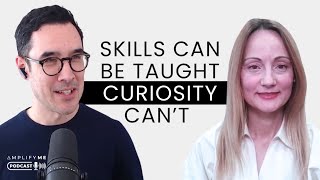
In this YouTube interview, host Anthony Cheung talks with Miriam, an ASF trader at JPMorgan Chase in London, about the human side of finance. Miriam demystifies the various roles within a bank’s markets division—sales & trading, institutional equities, prime brokerage, and securities lending—explaining what each function does and how they interrelate. She highlights how multilingual and cultural fluency, honed through living in eight countries, creates a unique selling point in client‑facing roles. Drawing on her early experience as a New York wait‑staff, she illustrates how rapport‑building, multitasking and rapid self‑selling are transferable skills that give an edge in finance. Miriam discusses personal branding, distinguishing mentors (chosen) from sponsors (who choose you), and the concept of building a personal “board of directors” for career development. She offers concrete advice on selling and pitching—preparation, authenticity, win‑win focus—and on networking, emphasizing active listening, reliable follow‑up, and the importance of adding mutual value. A substantial portion of the conversation centers on neurodiversity: Miriam shares her own experiences with dyslexia and ADHD, the stigma around disclosure, the low rate of openness in markets, and the need for psychological safety, employee resource groups, and assistive technology. She notes recent research linking cognitive diversity to better investment outcomes. The interview also covers how AI tools (ChatGPT, LLMs) level the playing field for neurodivergent professionals and the importance of continual learning, leveraging technology, and taking ownership of one’s career. The discussion concludes with recommendations for firms to foster inclusive cultures, provide training, safe spaces, and accommodations for neurodiverse talent.
Chapters
Hi, Miren, welcome to this series. How are you?
Great. Excellent. Thank you so much, Anthony, for having me today.
Well, I'm really excited for this conversation because, you know, just to give a flavor, there's some really great insights I'm sure you're going to share on demystifying roles in the markets division of an investment bank. I think that's so important for young people to understand and connecting that to their skill sets. Personal growth tactics, networking tips, and then something super unique, I know, to you and something you're very passionate and care about, and also unique to this series, is the topic of neurodiversity and inclusion in finance. So really interested to get your thoughts on that as well. But perhaps like with all guests, we could start with a brief summary of your career to date.
Yeah, of course. My name is Miriam. I'm originally from Spain. I have lived and worked across So I was counting then, actually 8 countries. So I studied across Germany, Italy, UK, US, France. I finished my studies in the US, so I finished my undergrad, I did postgrad, a few executive programs. Currently I work as an ASF trader within JPMorgan Chase in London.
Okay. And then I know looking at your— done a little bit of LinkedIn stalking and saw the history of your career, and you've worked at a number of different US-based firms and a number of different roles. So, you know, when people, young people hear roles like a trader, I don't think they necessarily think of sales and trading, institutional equities, PB or prime brokerage, securities finance. You having lived and breathed some of these roles in your career, I just wondered if you could give me a really kind of simple breakdown of what are these actual roles? What do they entail?
Yeah, of course. So within sales and trading, I think they kind of close, or they work very closely in the sense, so as a sales individual, kind of your role, and obviously this is specific to the product you cover. So let's think for a minute about equities. So what you do is you try to find investment ideas and you can help with anything from IPOs or within your equities. As well, you have a role within that role, whether within other maybe fixed income derivatives, you're trying to pitch the wider umbrella of offering of products you have within your firm. And as well, you work very closely with your traders because ultimately they execute the trade ideas. And as well, you work within the research analysts, which ultimately they give you kind of the prompt on the morning meetings, kind of like stock du jour, what are the key trends, what are the catalysts for a specific stock, or kind of as well macro level, more like top level. So that's very obviously high level, what you do within capital markets. Within prime brokets, you specifically target hedge funds, hedge fund clients, and you become the one-stop shop in the sense that you do anything from infrastructure, you find in the office, you then hire the individual. So you help with the talent introduction, then you do custody, you do trading. Sometimes depending on the size of a hedge fund, they will outsource their operations with you. So you do, as I say, anything from financing, custody, trading operations, so the platform, if you wish. Very much targeted. So, with Capital Markets, you do more the wider institutional clients, so asset managers, pension funds, and as well hedge funds. So that's the difference. Currently, I am within Security Services, which is securities lending. So the clients are the asset owners, asset managers as well, they seek loans bonds and securities, and then basically they come to, um, a lender, an agent lender, and then they will lend the securities, um, to someone that wants to either, um, looking for liquidity, or as well, um, to go short on a specific, um, stock, um, security of, of a bond.
Yeah, that's a really excellent breakdown because you wouldn't believe how many students asked me these questions, they try to find it on the web, but I think it's really hard to hear it as clearly as you've just explained it. So, so thank you for that. I was going to ask actually, given that at the top of the conversation, you mentioned you lived in lots of different countries. Does your language skills actually, are they a really useful tool in terms of the roles that you've had?
Yeah, of course. I even, I can think of an example. I was, I was an intern on one US firm. Um, and my— it wasn't even my boss, it was my MD. And this, it came like a roadshow. Um, he heard about me speaking languages, but I don't think he even knew the languages I was speaking. Uh, but he said, oh, you're very good at this. Anyway, I'm gonna send you over. Um, he did send me over. It was 10 days. I generally have no idea what I was doing. As I say, I was an intern. The feedback I got was from sort of PR individuals. They were like, oh, you're really good at this. I can really see why Jürgen is sending you. But that gives you obviously opportunities, and I think that's what I wanted to allude is try to find your unique selling point. That'd be languages, sales, intra and interpersonal skills, not only now when it comes to the world of AI. We're gonna, all our skills are gonna become replaceable, but the personal skills, the interpersonal skills. So whether that's what I think is really important. So obviously within LLM or ChatGPT, you can translate things. I think the fact that you can not only speak the language, you can speak the culture, that gives you a, yeah, as I say, unique selling point and an advantage when it comes to finding jobs, getting yourself that role or getting yourself that promotion.
Yeah, but perhaps that's a good segue then into this next question, which was more about personal growth and adaptability. And because when you and I originally met a few weeks ago over a coffee, there was one thing that you said that really stood out to me, which was, here I am talking to someone senior in a trading seat, and you were talking about when you were working as a waitress in New York City many years ago. And I think many young people don't quite understand the transferability of skills, those valuable kind of life skills. So, I just wondered if, was there a moment when you realized that some of these skills that you had acquired in life were giving you the potential edge when it came to financial services?
Yeah. So, um, as I say, there's a saying that says, if you can make it in New York, you can make it anywhere. Um, so I was a poor student and I have to work and obviously really busy, really bubbly, and there was people from all over the world. And kind of every, every table was a different kind of opportunity to, you have to quickly sell yourself, build rapport quickly with the table. And obviously you have to multitask. You have, I can't remember, 4 or 5 tables to deal with. As well, multilingual skills, they were really useful working in Manhattan. So that, I generally don't know where it came from. So I have someone, a mentor I have, he's in your blog. And it's kind of been the golden thread throughout my career. So I will give you an example. So I was in business school in New York. So I finished a presentation, I came off the stage, and someone really senior came and said, wow, what you did out there was amazing. You have a skill. I was like, what do you mean? And then again, when I started working, so I was a grad at a US firm as well. So we finished a client meeting and then the client wanted to talk to me and My manager was very good in the sense that let me, kind of gave me the opportunity. And again, the feedback was, well, I don't know, Miriam, what you've done there, but she's been talking to you for an hour. And the feedback again kept coming in the sense is you have a skill, you have a gift, you, I don't know how you do it, but people keep, you know, coming back to you. You're very good at building rapport with people. So I think that's a skill that I don't know if I built it through my waitressing skills in Manhattan, but I think as well is that curiosity that we spoke about. Always, so in the kitchen, I always try to talk to people. So it's great that everyone is in the office. So every opportunity as well, I map out who speaks. I know who speaks French, so I have my French speakers, my Spanish speakers, my Italian speakers, so that's really important as well when I think it's a cultural connection that you need to find. Um, but find every opportunity you have when you're waiting to get a coffee in the morning, like practice, practice talking to people, practice that small talk. It's really, really important. Um, and, and every opportunity, I mean, the way I see it, when you walk in the door, you're on a stage. So take every opportunity when you bump into an MD on the lift, when you talk to absolutely everyone, just practice and, and that's how you become good at it.
Yeah. Such good advice. And maybe the next one from this is about thinking of students aspiring to work in finance or in fact young professionals in finance, applying the concept of standing out, particularly in a competitive environment when, you know, everyone feels a lot of pressure, not only to perform, to be seen, to be heard, like any advice on that side of things?
Yes. I know people say find your passion. I don't believe, I think you find your passion while working really hard at it, uh, something. Um, so try to find, I think throughout your career, you will find through the courses. So I studied business and finance, so I was always very I find really interesting, well, philosophy I find very interesting throughout, but economics. So then you will get a sense of what you like, and usually when you enjoy doing, you are good at it. So already that's a sign. And then going back to the point I was making about the feedback I was getting throughout, take that feedback. So there was one person here, one person there, and everyone kind of saying, oh, you're very good at this. I didn't know what this was at the time. But take that, you know, information that people are giving you. Always take those feedback from people you aspire to become, people that are in the seat that you want to be. Because sometimes through life, people with the best intentions, they might give you the wrong feedback. So, try to find what you're good at, because then you're going to become really good at. I think it's to the point that you find you become obsessed with something. That's what is gonna really make the difference because as I said, everyone now have undergraduate degrees, postgraduate degrees, speak X languages. So try to find what makes you unique and kind of own that piece. I struggled throughout. So being neurodivergent, I hide it through my career. Until recently. Um, so I, instead of owning my uniqueness, I was masking it. So I will say, if you are brave enough, um, obviously ask for the help, but use what you have. So in my case, it's the kind of, um, unbelievable desire to speak to everyone. Um, which I will get in trouble when I was in class. So I was speaking, I couldn't, uh, help it. And, and now kind of making a life of it. Um, so yes, et cetera. Try to, I think the inner work, uh, that's why intrapersonal skills, I think emotional intelligence, I think is, they don't teach you that in school, but I think this would be a subject. That's the first thing you need to master. Once you master yourself, the rest fits into place. So know yourself, know your skills, find what it takes, find what you like, and really go for it. And when I mean go for it, really take courses, take classes, meet as many people you, you know, if it is for instance Prime Brokers, meet as many people you can, you can absolutely meet, both client side, hedge fund side, and Prime Brokers side, and see what they do, how they do it, see if you can relate, if you can see yourself in one those seats. But yeah, give it a good try. That would be my advice.
Something I've heard you say before is about building your board of directors. And I thought that is an amazing way of thinking about it, but I just wanted to get what you mean by that. When you say, I'm assuming that these could be almost your close advisors for your personal professional development, but yeah, maybe a bit more on that.
Yeah, so there's a difference between sponsors and advisors. The kind of advisors, mentors, you choose them. The sponsors, they choose you. That's why it's really important to get yourself, find yourself a platform where you can get that exposure and visibility so people can see your work. The ones you can choose, the mentors or your board of directors, it's kind of people you meet through life. Um, for example, my very first, uh, boss when I was in New York, uh, I still, it's, it's even today my closest friend. Um, and that's another point I think we, we spoke on the day. Don't see people as business cards. See them as, and I'm a strong believer on long-term investment, long-term connections, long-term see that you're investing in them and how can you add value. It doesn't matter how senior they are. I still do reverse mentoring and I think it's a win-win relationship. So get as many people you can on your board and as diverse as possible. I mean, as I say, I have people in New York, have people in India, and get as from different, if they can be outside finance, if that's, that's where you want to go. It's better even in arts because they give you a different perspective, which sometimes is good. Maybe sometimes you just get to marvel in a view. So say, wide diverse, I think across different levels. And don't hesitate to ask for help. And it's true for us, it makes you humble. I struggle with that one as well, asking for help. Um, and, and as well, is that curiosity piece that I was referring to. Just keep learning, always be, you know, studying, reading books, and, and yeah, never think you've, um, you made it, uh, because there's always something to learn. And yeah, keep, keep pushing yourself.
And one thing you did mention before was about how soft skills or emotional intelligence isn't something that you would learn typically in, say, business school. Another thing that I remember you saying before when we were talking about building client relationships and leadership, these types of topics, you were talking about the importance of selling. And I just wondered your perspective and kind of advice on that area for young professionals about becoming better at selling in different ways, because whether it's yourself, a product, I mean, I think at different roles, even if you're talking to a company, convincing them of what timings on a listing or an M&A transaction, or whether it's pitching a trading idea or investment case, there's sales throughout, right? Even trying to acquire a mentor, as you said, there's a degree of pitching. So yeah, what's your, how do you go about that? You said you seem to have this natural kind of gravity in order to do this, but have you ever thought about deconstructing it in a way to kind of share some advice for our listeners?
Yeah, I think ultimately it is about that, selling yourself and building trust. I think that's the building block that you need. I've been on pitches where, not really at the beginning of my career, which maybe wasn't the best, but they really like me and then they invite us back. And then we will win the piece. So I think it's that, again, if you are honest about, you know, whatever, anything go right. But I think it's, if you think again about that long-term piece, so I keep in touch with, you know, my bosses, my old clients. I see people as an investment. I see people as authentic relationships. Besides that sale, and again, within trading, sometimes people, so we obviously all have to hit some targets. We all have a P&L, but it's always trying to, or at least the way I wanna see it, is to be a win-win for both parties. But ultimately, there could be a place where we can both feel that we want the same compromise, but we feel that, and I think that's the piece you always have to keep in mind. Thinking this is, so integrity is very important. Charlie Munger always said, you can be intelligent, you can have all these skills, but I think integrity is the piece that you need throughout. And I think maybe more relatable to trading floors where you have the big portfolio managers, the big traders, the superstars. But I think nowadays it's more important to work as a team, but I think it's about that connecting, thinking what the client needs, tailoring that. Again, I've been at pitches with some senior individuals, a pension fund that was only investing in fixed income and equities, vanilla products, went ahead and pitched derivative products. So again, you learn from, you learn from that more than any textbook. Tailor your message, tailor your pitch. So sometimes, you know, you only have 10 minutes, so make sure the delivery and that you are as prepared as you can. Again, at the beginning of my career, I have this manager that won't let us be put in front of a client unless we have an absolute conviction. And he will destroy our pitch, pull it to parts. I guess that the point Being here is, as long as you can back it up, as long as you say, I believe it's X because ABC, that's what matters. And the client sees that you've done your homework, the client sees that you understand what the product is about. So yeah, do your homework, connect, sell yourself, add value, always looking to add value, and be authentic and think about the long term of the relationship.
Thank you. And I was going to ask you about the kind of networking versus relationship building aspect, because a lot of students here go out and start networking and they're kind of a bit of a loss of, okay, I kind of know what that means, but how to do it is another thing. But two principles I saw that you'd written in some notes were active listening and being reliable. And so, I just wanted to understand a bit more from your perspective, those particular two points, because being reliable, I mean, are people not reliable normally? And what do you mean by that? And then also active listening, what's the difference between active and passive listening?
Uh, you will be surprised how many people, and I think that piece that I've seen throughout my career that most people fail, and again, I can relate it to sales, is the follow-up piece. So you go to an event, great, you meet, let's say, 10 people. How many people do actually follow up the following day? You know, they say you have to follow up within 24 hours. That's when a lot of people I see failing. And again, going back to the mentoring piece. So I mentor individuals and I've seen it both sides. Come back and say, thank you, I did this with your advice, or this happened, or I, you know, again, follow up. Value the time that individual is putting on you. And again, when you go to those events, um, I was last week in, uh, an event and someone literally was with the phone. So you have the, the QR code was just like that. Uh, and I was thinking, that's, that's not the point of networking, like trying to add digital cards to your phone. So it's about, again, it was about adding value, mutually adding value. And being genuine and trying to find the connection there. And yeah, the follow-up piece, which I think a lot of people don't do. And again, when it comes to sales, I think it's statistically on the 5th call when you get the conversion. But most salespeople, they quit after phone call number 3. So it's that. Um, yeah, be reliable. Again, if you say you're going to do something, if you say you're going to follow up with the mentor, you say I'm going to follow up with that lead that you gave me, do so and say, look, this is the feedback I got. So it's that, um, as I said, they invest their time in you. So the least you can do is, is, is, you know, tell them how hard it go. And again, then they're going to be more invested in you because they know that you took action based on what they said. So I think That's my main, my main pieces there.
Yeah, it's such simple advice, but it's so powerful because I remember talking to a very senior person a few years ago and he had gone out of his way to help a few students, but then they'd kind of extracted the information that they required and then never spoke to him ever again. And he was like dumbstruck by it. He was like, I can't believe that that's now the protocol. But so yeah, good to, good to get your guidance on that because again, you don't really learn these things, you kind of expected to know them. So, although it makes sense, hopefully this, this covers that. So let, let's move, move on and let's talk a little bit about something that I know is, is very unique to you and something which I was kind of racking my brains and I was thinking, do you know what? I've, I don't think I've ever in my almost 20 years of working in the city in finance, I don't think I've ever spoken to someone about neurodiversity ever. Now, I'm not making judgments on myself, but I think as an industry, perhaps it is something that's not talked about a great deal. So this is why I'm really interested to get your perspective on things like navigating ADHD, dyslexia in finance, because I know these are some of the things and challenges that you've had to meet and get over in terms of your career. So yeah, just wanted to get your sense in your early career, How did you learn to turn that neurodiverse kind of difference in yourself into a strength?
Yeah, as I was mentioning, it's very much a work in progress, Anthony. Um, I'm with you. I sit on several industry committees and it's difficult to get people. Naturally, I was speaking with someone, uh, this week. I say, I don't know anyone within markets, within sales and trading So on the, on the buy side, they seem to be more like a safe space for people to come out. And, and I will give you any statistics, um, within the Diversity Project, we recently did a survey and roughly it's still about 60% that people disclose, but still the percentage is very high of people, they don't feel comfortable doing so. And even when you do so, you think there's going to be consequences for your career. So the, the, yeah, the stigma of, um, of, and it's very relatable with neurodiversity because people seem to associate with intelligence, uh, IQ. So that's why a lot of people in the industry, which statistically again should be quite skewed towards people with neurodivergence in banking, and most people won't disclose it for fear of that stigma, and then that's going to affect on their career progression. So yeah, very much is the trend that things have improved. So this has been going a trend of people are more comfortable speaking about it for the last 10 years or so. But it's still a lot of work to be done. Obviously, I'm a strong advocate within the industry, and I was recently very fortunate to take part in a study that's done by Professor Alex Edmond as part of the diversity project that they want to kind of find the linkage between, well, to assess whether cognitive diversity, and this encompasses everything from neurodiversity, not only neurodiversity, individuals, but it's as well demographics, whether that leads to improvement in investments, potentially alpha generation. And the study is coming out in June, but a sneak peek preview kind of indicates that having a diverse set of backgrounds, demographics, when it comes to as well, probably Brian Spidoff, they kind of give you the right cards when it comes to having the right team, the right individuals when it comes to a good investment team. So yeah, there's a lot of work to be done on that front. Advice that I will give, it is ask for help. I know it's very humbling. Um, I, what I experience in the workplace is great in the sense I don't have to prove that I'm, have, obviously I have a diagnosis, but I don't have to prove an X, Y, Z to get what I need. And that's really helpful, uh, because sometimes it's daunting having to send documents around, or sometimes you don't have, uh, the assessment. So ask for help. Have an open dialogue with your manager. That's very helpful. Not easy, but it's something that will help you. And then if you feel strong enough, then advocate for other people, either mental, do things like this, speak on podcasts, events. And try to, uh, something that I found within the years and on the different committees I see, still we're lacking to your point of role models, not to be at senior level, which is, um, it's the same. So sometimes it's difficult to aspire to become something that you don't see when you look up. So that will really, um, help within the industry and then having sponsors again, going back to that. That is a senior level that kind of, um, within firms, but as well within the industry, they kind of try to, uh, kind of speak up about their experience, which it will, um, it will ultimately help others.
Yeah, no, I think you're absolutely right. I think the first step is being able to talk about it in order to then find out more information to then try to address and have solutions for problems, whatever they might be. So, Testament to you to come on and talk about your own experience. I was going to ask you then, early in your career, was there, was it a big challenge when you, like, when you start out your career and there's a lot of expectations of you to receive instruction and carry out tasks, whereas I guess your role evolves as you get more senior and you have a bit more autonomy and you have a bit more self-confidence, I guess. So, What was the tipping point for you where you felt more comfortable to be able to disclose your situation or in terms of talk about it and seek help?
Um, it wasn't out of bravery. Um, so actually I needed, um, so throughout the beginning of my career, they, it wasn't even available. Um, or I didn't even have the assessment, so I never asked for, um, a special accommodation. I will give you A very painful example. So I did my, so in the States you have 4 years, you study degree and the last year you, it's called the concentration. So you concentrate on a specific subject. So mine was investments. So I came with a very basic English level. To summarize, I spent 1 day to read 2 pages of my investment book. 2 pages, one day, 8 hours. And that's between my English and dyslexia. Fast forward 10 months, I graduate with the highest honor without any special accommodation and assistance. So I learned to work harder than anyone else. That was my special accommodation, just put out the hours, put out the effort. So I managed throughout my career, both professional and business school, to just work harder than anyone else. Um, lately the way I am, as I say, I'm not out of brevets, I have to take, um, an extra qualification for a license. And I said I couldn't afford to fail. I said, well, I'm gonna now have the, um, the proof that I can get extra time. And anyway, there was delays, uh, by outside provider and I have to disclose that. I'm, yeah, it was the most daunting thing I ever done in my entire life. I went through an emotional turmoil. It wasn't easy. And even within months, then I was asked, I was part of the CFA UK to do a podcast to kind of help other people, just as I was, I guess, internalizing What I just did. So it's not easy. So what I always advise people is very personal decision and only when you feel strong enough. Obviously test the waters to kind of get a sense how it's, well, how your management team, it is, but you don't know how they're gonna react. Um, and most people don't, haven't gone through training. And maybe having been exposed, um, so there are a lot of unknowns. So there will be on you a lot of managing up and educating, and both ways, educating yourself, understanding yourself, and, uh, kind of trying to communicate your needs, um, which is very, very humbling process. Um, But I will, as I say, I will advise people to do so if they feel comfortable, because I know it's not easy.
And I just wanted to ask, has technology helped in terms of some of the tools that now are available to people that perhaps weren't even 3 years ago or 2 years ago? I'm kind of referring to some of these like productivity tools through AI and things like that. So, does it, has this helped in terms of, you know, reading those two pages? Would it help if the information was presented in a different way? And so therefore you could use tools to achieve that outcome.
Yeah, I must say, by the way, I kept that book, Investment 604. I still have it. Um, so whenever I think I'm going through a tough time, I have it there. Um, yeah, so now we have, um, obviously ChatGPT, LLM. If you need to write an important email, there's a kind of spell check. Everything for you is literally life-changing. And, and that's going back to the point I was making before. I think in a sense it's leveling the playing field. For instance, if, if you have, uh, dyslexia, but as well, that makes you realize that the way, so obviously it's a changing, very fast-changing pace environment. So you all have to be very strategic. So I'll advise people thinking. Try to go for roles that are not going to be replaceable by AI or whatever is coming next. So that's why that interpersonal, intrapersonal piece is more relevant. So don't think we're going to get there, that we're going to be putting machines in front of a client. So it's great. It's life-changing for people like myself that have dyslexia. But I try to learn. So the future is going to be for those people that know how to use AI, they know how to use technology. But I think I'll always be thinking what is the next trend, or I need to get ahead. And always that piece, keep learning, keep investing in yourself. Not only it used to be in the old days, but now I suspect the companies expect of you to take care of your career, your education, your finding your mentors, finding— so don't expect anyone to do that for you. Um, how I say to some people, no one's coming to save you. Um, uh, that's what I learned throughout my career, and I think it serves me well in the sense that then you become really proactive when it comes to your career, your learning, and, and your progression. And again, find your niche, use your unique selling point, find a job like I am at the minute, multitasking, talking to people, that's, you know, play to your strength. Find what it is that you are good at and find that role. And again, through, take as many internships as much as you can, talk to people. But yeah, use what it is. Now technology obviously is going to help you fantastically. And leverage your brand, build a brand, be authentic. Don't try to be anyone else. because it's very difficult to be yourself as an assistant to try to be someone else. Own your uniqueness. As I said, it's only recently that I became comfortable with that piece and try to learn from the best. As I said, the technology now, LinkedIn, is amazing what you can do. So leverage people, leverage technology. I've read books.
Brilliant. And maybe just to close the conversation, you did mention earlier, and I know that you sit on various different committees when it comes to talking about some of these topics. I just wondered from your perspective, where you sit, what is it that more firms could be doing to support neurodiverse talent and create more inclusive environments?
Yeah. So, I think the biggest piece is, and this obviously comes within a team, to build a culture. Culture is really important as the baseline, and then psychologically, safety for those individuals to feel safe to disclose. And I think that is very important, obviously for everyone, but particularly more important for neurodivergent individuals because you go through life through a lot. So by the time you come to the workplace, you, you, yeah, you, you kind of mask a lot. Um, so it's very important that you feel safe to be your true self, your true professional self, uh, uh, uh, uh, voilà. Um, so it's building kind of that safe workplace environment. Uh, training is important. As I said, from top down, bottom up, uh, it's very important and create those BRGs. I think they are extremely important having those. I call them my therapy groups. Uh, so say I have my Latinos, my neurodiversity, uh, group. Um, so, you know, whoever you find from your own country or your sports club, find your So say you're kind of safe spaces where you can talk to other people with your interests or the same, um, for instance, in this case, neurodivergent individuals and kind of share best practices or how it works for you. So it's, I found that very therapeutic in a few ways. Um, so it's kind of providing those, those resources. Um, I think they're invaluable and obviously if you work for a big firm that, um, I found standing desk is really useful. So, the assistive technology is amazing if you can get that. Um, so, as for help, as other people, how they do it, uh, and it's just having a coffee with someone and kind of sharing how you go through, through life and work is just, uh, I think the empathy piece, uh, is the best. Accommodation I've found.
All right. Well, look, Mirren, it's been fascinating chatting with you and I can't thank you enough because I know this is obviously very personal in terms of some of these topics and also talking about your journey to where you are today. So thank you very much. Really enjoyed that.
Thank you for having me, Anthony. It's been great. Thanks.
More from Anthony


Inside the Biggest Banking Stories You Need to Know This Week (Anthropic, Diageo, Private Credit)


Inside the Biggest M&A Deals You Need to Know This Week (UniCredit, GameStop, eBay, Eli Lilly)







AI Breakthrough or Hype? Anthropic’s Claude Mythos, Tim Cook Steps Down & LIV Golf Collapse