The reasons behind the US sell-off last night
In this market briefing Anthony Cheung explains the multi‑factor sell‑off that began on Wall Street on the night of December 17‑18, 2018 and rippled through Asia‑Pacific and Europe. He starts by pointing to a technical breach of a key S&P 500 support level (the October trend line and the Dec 10 low) that triggered algorithmic and momentum selling. The immediate catalyst was the sharply deteriorating Empire State Manufacturing index, the worst month‑on‑month drop in five years, which underscored the Fed’s dilemma ahead of its December rate‑hike decision. Cheung notes that the market is pricing a dovish‑ish hike (one or two more hikes total) and that Treasury yields are rising while the dollar index slips, reflecting a flight‑to‑quality. He then moves to commodity markets, highlighting OPEC’s modest cuts, the breach of the $50 crude barrier and the lack of strong technical support below $48, which fuels concerns for energy‑related equities. Geopolitical factors are woven throughout: China’s continued reduction of U.S. Treasury holdings, Xi’s speech on policy continuity, and the trade‑war backdrop; Brexit developments, including Jeremy Corbyn’s no‑confidence motion and Theresa May’s no‑deal preparations, which pressure the pound; and domestic U.S. politics, especially Donald Trump’s likely Twitter response to the Fed’s stance. Cheung also discusses sector rotation from cyclicals to defensives, the compression of forward P/E multiples to 2015‑16 levels, and the historical context of the current interest‑rate cycle, noting that a rate hike in a weakening market would be the first such move since 1994. He concludes that market direction will hinge on the Fed’s communication, upcoming U.S. data (housing, oil inventories), and any political shock from Trump, while reminding listeners that the December rally (“Santa‑Claus rally”) appears cancelled, making this the worst December for equities since 1931.
Chapters
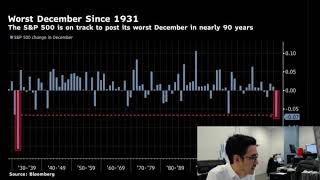
Okay, very good morning, Tuesday 18th of December. Hope everyone is well. Obviously joining us at an interesting morning following quite a large sell-off that was observed on Wall Street last night, and that's kind of fed through into the Asia-Pacific session, and then consequently we've kind of gone full circle as to the European Open this morning where things have kind of slightly stabilized. So really this briefing is about kind of going through and explaining why exactly did the market yesterday sell off. And then as well addressing a couple of questions. I've had one here about, you know, what market is moving, what is— is it Asia, is it the US, you know, what comes first, what are the hot topics. And so definitely to address that first, this is certainly a US-inspired move that really began last night on Wall Street. Now, if I just bring up the S&P 500 chart here, what I'm looking at really is this post-European close sell-off that was persistent over the course of the best part of about 3 hours, all the way up to the close on Wall Street. Before then, actually, we've seen a slight recovery in Asia, albeit Asian markets also taking the baton, if you like, from from the aggressive sell-off and also trading lower. Now, one of the things here is why, why the sell-off? Well, you can see here as a, as a, just a, a technical support point from back on the 10th of December. We, we kind of breached that. And from a, a catalyst point of view, although as we're going to discuss the kind of overall negative sentiment, there's a number of contributing factors, but Certainly what helped trigger it, if you like, in investors' minds was the Empire State Manufacturing yesterday. Now, this is not because this piece of economic data is the be-all and end-all, but it really does show the situation that the Federal Reserve is facing. The reason why that's so prevalent right now is because their interest rate decision, of course, is tomorrow. Now, many different metrics, the US economy does warrant at least further tightening for the time being. However, what we're starting to see is that the economic activity by measures like this— I mean, that is a quite catastrophic drop in the performance of this measure. As you can see here, from a, from a general incremental change from each month-to-month reading, You know, you can see here it's never fallen so aggressively. If we start looking at this on a 5-year, you can see we've got to go all the way back to the lowest reading since about May of last year. So it's not particularly weak in a bigger, broader context, but if you think about it, we're just on the precipice of the Fed is about to hike interest rates, and of course economic activity is declining at a rapid pace. It's kind of the signal then of You know, is this then going to make the situation worse if the Fed continue tightening? Now we're going north of the 2% kind of boundary in interest rates. And so it acted as quite a stern reminder that despite that weak data, the Fed are going ahead with December. The market is still priced for that, and that's just a worrying factor. So we sold off yesterday. And obviously we've got the other things ongoing, things like the trade war of course, but the, the technical part of the trade was also, I think, particularly telling. And that's because that trend channel, which obviously Sam here has been looking at for a long time, and we had that break of it what was at the end of last week, we came up for a retest Monday morning literally to the tick on the same trend line. And then we had that big down day yesterday, and through that down day you can see we, we went through the early April low and pretty much just 2 points off, so to the tick almost, retested the year-to-date low which was seen in the sell-off in February before seeing quite a decent bounce and closing pretty much at that April level. So You can see here when the market, as a herd mentality, kind of coordinates its view and the momentum sellers come in, as well as the kind of, uh, the algos on some of the initial declines that you see hitting the movement as it comes down, that these technical levels really are quite clear targets for the market in a fast money move. Essentially, when the market is selling off at a pace, people are looking for the best part— point of exit to get out of these trades. And so looking for the most logical assessment would be then the historical price action derived from these points. And the market kind of worked out quite well in that respect. I guess if the S&P comes back higher, you've also got that trend line from the October and the retest on the 10th of December. Now, if we come back up here, the That could be quite an interesting area of now resistance to see what happens as we go in toward the Fed meeting. The other thing, of course, that we're seeing on the back of this kind of souring sentiment is a kind of general flight to quality move in a sense to equity weakness, Treasuries moving higher. So ultimately this meaning then that we're most likely to hear a dovish hike from the Fed. Again December going through, but the kind of sequence of rate hikes that we're coming to the, the neutral rate indicative of the fact we might only have 2, possibly 1 more rate hike rather than the 3 they had originally communicated. So Treasuries repricing for that aspect, but the dollar is as well. So the dollar index is down about 0.2%. That is a continuation of the weakness that was seen yesterday. So again, this is the markets moving its pre-positioning for a dovish Fed, and consequently then that comes to the relief of the currency pairs. And EURUSD top left is moving higher at the moment, so managed to break above the, the double top from yesterday evening and the overnight Asia-Pac high. So just above R1 at the moment in EURUSD. And cable also moving higher this morning. We're going to talk a little bit about Brexit, of course, a few updates, but quite frankly, this is not really a sterling-based move. This is a dollar move that you're seeing this morning. And so both major pairs on the front foot. The other thing is, if we do get a collapsing US equity market and that reverberates, if you like, globally, and triggers then a kind of a negative mentality, well, that's going to further dent global economic growth forecasts as far as investors are concerned. So the one thing that's got to give then is that this is that— this is the trade that, that both Sam and I have been, um, kind of eyeing up for quite a while, and that's been that trend line. I think I need to redraw this line to 1 sec, but it's that move that we had in crude which, you know, above that $50 level was quite key and was getting through there that really, uh, we thought that, well, OPEC really haven't really done enough here. A cut of 1.2 million doesn't really address the oversupplied situation of the market. And if then people's kind of recession risk starts to grow and also trade wars continue to escalate, well, the demand's got to give way. And an oversupplied market, well, this is fundamentally— gives a very compelling case to be short. And so, yeah, the brief hiatus that we had after OPEC took that action has proved decidedly short-lived, and we've managed to get below that initial late November test of $49.41. Uh, we did run down to a low, uh, today in fact, uh, seen not too far below. $48.52 now marks the low print here. Uh, as I said before, the reason why we were looking at these as quite critical levels around the $50 mark is that really technically to the downside there's not a great deal of clean area of technical, uh, support until we probably get down to the 47.15, a couple of points here where the price action's previously responded to, otherwise the 45 handle. And so again, worsening the situation obviously for people like Saudi Arabia for sure, but also if we get to the lower bound of some of these circles I've got marked up here, at what point does this also start to make the US situation even worse for corporate America as the refiners and energy majors start to balk at the fact that they can't now repay the leveraged debt that they've had in order to get production in the US up to record levels. So that could almost capitulate the issue in the equity market and see even fuel the flames even further for more of a sell-off. So yeah, crude now So directionally through 50, uh, and also just drifting lower. So a couple things, a couple of charts to run through then. Um, one is then that if I just move my video screen, make that a bit smaller so you can see the graphic that I was going to show, share with you. Because obviously a lot of people were talking in the run into December, because December is such a seasonal period where the statistics show us that December is the Santa Claus rally, but I'm afraid Christmas is cancelled for this year. This is the worst December we've had since 1931, so it's on track to post its worst monthly performance in the month of December for nearly 90 years. Obviously, we're only just over halfway through the month, still a lot to play for, and one could argue the lower this goes all the more aggressive an action the Fed will take, i.e., being more dovish, and also Donald Trump will take in order to kind of prop up this stock market, which he knows politically is absolutely critical. Sam was showing me, he's always got half an eye on the bookie websites, and he should— he said that, um, it was pretty much evens a few weeks ago that Trump would get reelected in 2020, but those odds are sharply changing because of the direct correlation that people have in the confidence and faith of the administration based on the strength of the stock market. It was kind of one of those things where that's a great tool and narrative when equity markets are all-time highs, but you get a situation like this, this is when it can absolutely backfire on President Trump. as far as public opinion is concerned. Uh, the other thing of course that we're seeing is continued sector rotation in the equity market. So out of the cyclicals and into the defensives, and that continues at pace. So the S&P 500 information technology sector 12-month forward PE ratios are dropping at a fairly rapid pace, uh, comparative to where we were at you know, these peaks just north of 19 right at the beginning of the year. That was when we had that February sell-off in the equity market amid the fears of global synchronized tightening at the central banks. But, you know, quite a stark fall as to where we are now, back to 2016, if not going just below there, 2015 levels now. What does this mean for the Fed? Well, I've got a graphic here, and what we're looking at is going all the way back to basically the 1980s. And what you can see here is the federal funds benchmark rate. So this is the percent here on the axis on the left, and you can see here where we were. I mean, let's not forget the interest rates going back all the way to the '70s. Don't forget, we were up at 20%, but obviously we're in the new realm, an unprecedented era of Zero recovery from ZIRP, zero interest rate policy. And here we are. This is what's, you know, the market is absolutely going to be focused on come— well, not they are at the moment, but certainly when we hear from the FOMC tomorrow night. And that is because we've had 8 of these. We're anticipating the 9th interest rate hike from the Federal Reserve. So they've delivered the 4th one as planned for the year. The question is then, where is the upper bound? What's the peak of this particular cycle? You can see every interest rate cycle has its peak in the natural ebb and flow of over time, the economic cycle and so on. And here we are. Here is where do we go from here? The point being is that if you look at the equity market, the blue line is the S&P 500, and obviously this has had its own dot-com bubble burst, the financial crisis of course, and then we've had this monster, you know, incomparable rally that's never been seen before through the advent of not just zero interest rates but unconventional monetary policy in the US, three phases of quantitative easing, then of course Trump won the election, The fiscal promises came, the tax cuts, and up we went. Now the problem is we've sold off, and although this looks quite small in comparison, this is quite a large sell-off that we've had in a correction in the equity market in the States. And in fact, um, if they follow through with a rate hike, uh, tomorrow night, it would be the first time since 1994 that they've tightened in such a brutal market. Because right now the S&P 500 is down over the last 3 months, 6 months, and 12 months, a backdrop that has accompanied just 2 of 76 rate increases since 1980. The point being here is that the Fed have never— on only 2 occasions in the last 76 interest rate decisions— have had to stand there in front of the furnace, if you like, and and go, actually, the right decision is to tighten with such negative context to deliver that into. So remember, a lot of what's happening right now is markets' perception about the downturn impending in the future. Right now, the economy could be argued, and I'm sure this is the basis of the Fed's discussion, that another one more interest rate hike is warranted at this point. It's what's to come in the future which is the concern. With that being said, here's the federal funds rate futures on the CME FedWatch, and as you can see here, the probability of a, of a December hike tomorrow is now at 69.7%. So it's still very much priced in. However, this was up at about 77% at the beginning of the week. So if we had another sell-off like the one we saw yesterday. And one would think if the S&P can break that February low, well, you know, this market's going to run lower very quickly. And the area I'm looking at here, if the market does have a test on that before the Fed decision and it breaches, well, then you got to think we got to run down to 2,500 as the psychological target on that move. Things could get nasty pretty quick under those circumstances. But 69.7% is still odds-on it's going to happen. I definitely still think that is the case, all things remaining equal. The question mark obviously is on the dot plots, but I don't think it's just about the trajectory of interest rates. There are other ways of which I think that the Fed can manage this situation. First and foremost, what the market's going to latch on to is how many rate hikes in 2019 and where is now the peak of interest rates rates or the neutral rate. Are we near that? And i.e., do they step back in a number of rate hikes left to go? The other thing they could of course do is, is take a leaf out of Janet Yellen's book and have a, you know, a dovish hike. And by this, what I mean is not just with the dot plots, but they can use their statement and communication in the press conference to kind of ramp up their sensitivity to financial market stability and away from the more kind of economic-oriented factors like employment and inflation. Now this chart here, I know it's a bit fuzzy, but this is a study of the rolling sum of mandate-specific comments over the previous 25 speeches, statements, minutes, and testimonies from the Fed. So basically it's a study of all of the written communication of any major statements from the Federal Reserve. Now what you're seeing here is coming into the most recent turn of events, you can see inflation, which was such a key point for 2018 at the beginning of the year, has quite steeply dropped off as such a focus. And certainly with things like oil prices moving substantially low over the last 2 months will likely feed that narrative. But also the employment situation is less a focus. We know that's been robust in the US. What has picked up is financial stability. So if I was the Fed and Jerome Powell, what I'd be doing is trying to subtly bring about a bit of an emphasis on we are monitoring what's going on in the world, whether that's stock market volatility or external risks like Brexit or the trade war, I'd kind of tip my hat to that as a signal to the market that I'm willing to be flexible, to change communication, and if things were to get worse, have confidence for the market that we would react. And so in that sense, again, you're delivering a dovish signal on different fronts to accompany what ultimately is an interest rate hike. So that's kind of what I'm expecting from the Fed to counteract some of this, what's been playing out more recently. A quick look then at the other headlines. This is some of the other things that we've seen, and this is what happened in China overnight. So President Xi gave a key speech overnight and would— said would stick to its policy agenda despite pressure from the US and others to allow more competition its economic system and reduce support for state industry. Here, there wasn't really too much that came out of this speech, to be honest, other than the president laying out a continuation of economic policy agenda. And so maybe there might have been a few people looking for something more in response to them, the kind of downturn that we had had in the global economy, to kind of solidify the fact that China, if you remember, over the last couple of weeks have done all kinds of measures to essentially suggest to the market they're willing to do whatever it takes. And on a trade front, that certainly— they've tried to de-escalate the situation, and that being, you know, by removing the tariffs on auto, on selling of cars, and so on and so forth. But overnight in Asia, after Xi spoke, the markets continued to trickle lower. I definitely would say that this is certainly more to do with a US carry-through than it is so much an underwhelming response to Xi's speech. One other thing that we did see overnight was focusing on China. Firstly, was we had the TIX data come out last night. And it did show that China cut its US Treasury holdings for a 5th straight month. So this obviously, well, you know, fuels the flames for those thinking that, you know, the trade war has kind of hit a whole new level of escalation and threat to the global economy. But this is the kind of— for me, falls into the category of media sensationalism. Because although this certainly fits the narrative of a big down day in the US, and obviously it feeds the trade war situation, the fact is, is that China have been reducing their holdings for 5 consecutive months. This isn't a new thing. And if you think about what's been happening in the Chinese economy, well, their currency has been depreciating substantially over the last 5 months. And so in response to that, they need to sell down some of their treasury holdings in order to buy back their own currency. So for me, this isn't particularly shocking news, and I think I wouldn't pin this as the key reason of why markets all of a sudden sold off last night, because the market was already moving lower before this information even came out. But certainly this is something which people will continue talking about The key here with when it comes to China and its Treasury holdings is, as we know, 7 is a real line in the sand for the dollar against the offshore yuan. And if that was to breach and lead to capital outflows, which then would likely lead to a run on the currency and it would depreciate further well beyond 7, that's when China, you know, the Treasury holdings would be quite interesting then. Because likelihood they'll need to start selling more aggressively in order to backstop their own currency. So at this point, China knows this, and hence the reason why they've gone to every means through, you know, talk of income tax cuts, talk to regulatory changes, liquidity injections, downplaying the trade war tariff responses. This is why China's already tried to mitigate this ahead of time. But obviously feeding the narrative as well is Japan— Japanese stocks hitting an 18-month low. But again, follow on from, from what happened on Wall Street. Okay, quick change of direction. Let's talk a little bit about Brexit. As I said, I wouldn't say this morning is particularly pound positive, it's just a little bit of dollar depreciation. A few things that have happened, you Jeremy Corbyn, head of the opposition party, of course, has tabled a motion of no confidence in Theresa May after she said MPs would not vote on her Brexit deal until the week of the 14th of January. You know, Sam was saying to me yesterday, it's just shocking that Labour are not just so far ahead of the Conservatives at the moment. You know, this should be, if all things were in a normal circumstance, this should be an absolute, you know, rubbing your hands together, salivating, going, you know, the Conservative Party basically just blowing up. And yet it's just a shambles, quite frankly, the Labour Party right now. If there wasn't more of an opportune time for an opposing party to make hay, then, you know, it just kind of says what the state of play is. But I guess this isn't really just the UK, this is really global politics, because, you know, we had the same with Trump and Clinton. You know, it's not really the case of one's better than the other, it's they're both bad, which one's just not as bad as the other situation. So with this, the main point here is that Jeremy Corbyn has tabled a no confidence in Theresa May, specifically not the government. But it's already been confirmed overnight that both the Brexiteers and and the DUP are supportive of Theresa May, and hence they are not going to hear Corbyn's debate. So it's not going to take place. So now it puts the pressure and the ball back in Corbyn's court. Does he trigger a vote of no confidence in the government itself? That would be a different matter. So at the moment, Corbyn's— it's just backfired on whatever he's tried to do from yesterday, saying if she doesn't give a date, he's not going to call her a no-confidence. He didn't, then he came back and said he did. And so quite frankly, I think this is a non-event at this point, uh, not unless he calls a full vote of no-confidence in the government itself. Um, but I think that that's a low possibility at this point. The other thing then that's happening is Theresa May, uh, the BBC reporting that the cabinet will discuss whether the government should ramp up preparations for a no-deal Brexit when it meets later this morning. This is after obviously she outlined that, that date yesterday. So now what this means is, you know, we go back to the political posturing, which ultimately I do think is a negative for, um, for the pound. So at the moment, you know, The only saving grace for cable, I feel, is the fact that the dollar is weakening, because now we've got basically 4 weeks until this new vote that's going to happen in the lower house. Up until then, I would expect lots more of this type of rhetoric from May's government in order to kind of bring Europe to the table in this game of brinksmanship. And so yeah, this is quite a, a tactical play, I would say, from Theresa at this point. And obviously we'll look to appease the Brexiteers as well, to get them on side that they won't be bullied by Europe. Okay, finally back to oil. A couple people in the, the chat room just bringing to my attention that we've just had another leg lower. So yeah, that you can see we'd already in our previous conversation We were looking at a couple of levels. So you can see here we've run down to $48.14, $47.15, probably the next level below there and, and down. So you can see now that we've managed to clearly break, uh, some of this price consolidation that we had, it definitely does open up the, the downside. So keep an eye on oil. It's probably going to be a fairly fluid situation if it did sell off by multiple dollars, not forgetting the US haven't even come into the market. We're already down a dollar and a half. Then this will probably add weight to the equity picture. And then if some technical levels are breached and if that February level was to be taken out in the spoos, you know, again, you could get another substantial run lower to the downside in a repeat of what we had yesterday. So looking at the calendar and the session to come, uh, we've just had German IFO come out, um, and that came in at 1:01 That's against previous 102. Um, looks like actually that's pretty much in line, slightly weaker than expected. So not really that much of a great deal from IFO. But this afternoon, I think this is really the, the catalyst or the ignition of the sell-off yesterday was the US, and I'd be looking for the US section, the session, to really dictate proceedings again this afternoon. So Oil inventories going to come out later on this afternoon, but you can see there's a couple of housing data points which housing sector has been weakening the US and does need to be monitored. But I'd say it's the overall sentiment when North America comes in that will be telling. Keep an eye on oil, another push on the downside just as I was speaking. We're having a test on the $48 handle now, so you know, even if I put that on a minute candlestick, you can see how violently oil can move when it really decides to, uh, get its game face on. So gonna come off the mic, let you guys get on. Um, stay safe out there. As I said, I would say the US session, there's a lack of scheduled data points, but this is all about the market's perception now about the current state of play. There's some real key technical points here coming up on the charts to the downside in the US equity markets and oil. And it's about what is the reaction, what does the market think the response will be from the Fed. If they think that the Fed is still going to go ahead and hike and kind of toe the line of more rate hikes to come, well then all the more reason why this market might get a repetition of last night's price action. One thing that you can be sure of, Donald Trump no doubt will be hitting Twitter again in due course. I'm not sure if you saw his tweet yesterday that he made where he was talking about basically that how the Fed should not hike rates. I mean, one thing to be clear here, the Fed are not going to listen to Donald Trump when it comes to this. They're going to be looking at what's happening in the, in the actual markets and the economy. He said, this was his tweet, It's incredible that with a very strong dollar, virtually no inflation, the outside world blowing up— Paris is burning, China's coming down— the Fed is even considering yet another interest rate hike. So I would expect more of this from Donald Trump for sure today. The real silver bullet though will be if Donald Trump— and I do think that he has the propensity to do this— if he comes out and says something along the lines of the trade war's off, well then you're gonna get a nice bounce across assets. One thing to be sure here, that will come as a real sharp shot of relief for the market given how quickly it's moved lower. Do I think that he's to be believed or trusted over the long term? Absolutely not. But he for sure will now want to manage this situation because he knows that the Fed are most likely going to hike. So that's going to put some potential downside pressure, and he's going to have to now, I think, start paring back his aggressiveness on the trade front. So look out for those tweets. You know, you know the drill. He tends to wake up and start tweeting UK time at about 11 AM. Okay, good luck for the rest of the day, guys, and I'll see you in the chat room. Thanks.
More from Anthony


Inside the Biggest Banking Stories You Need to Know This Week (Anthropic, Diageo, Private Credit)


Inside the Biggest M&A Deals You Need to Know This Week (UniCredit, GameStop, eBay, Eli Lilly)







AI Breakthrough or Hype? Anthropic’s Claude Mythos, Tim Cook Steps Down & LIV Golf Collapse