The Role of Data Analytics in Trading | Victoria Bryan, Senior Vice President at Northern Trust
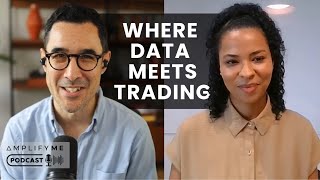
Victoria Bryan, Senior Vice President at Northern Trust, explains how data analytics shapes trading decisions and shares her path from a non-target university to senior leadership. She breaks down essential skills like SQL and Python, emphasizes the underrated power of presentation and networking, and tells her younger self to stop fitting in and start standing out.
Chapters
Hello and welcome back to the series we've been running throughout 2025, where I've been talking to a variety of women in industry, everything from investment banking to trading, from private equity to portfolio management. But this particular direction in this conversation, we're going to go somewhere a little bit different. And that's what I'm super excited about, because we're going to dive into the role of data analytics in the world of global financial markets. And there's also going to be lots of tips for personal growth. So whether you're applying looking for an internship, or perhaps you're even in one at the moment, I know they're fully underway right now, or in your early career, there's hopefully going to be lots of great suggestions to help you reach your full potential. So, to help me unpack this one and provide some industry expertise, I'm really pleased to be joined by Victoria Bryan, Senior Vice President in Trade Performance and Analytics at Northern Trust. So, Victoria, how are you?
I'm really great. Thank you so much for having me. I'm excited to be here. I'm excited for the conversation.
Great. Well, look, with all of my guests, I normally start with going back to when you were a young person and typically from school to kind of put ourselves in a bit of context as to what that journey's been like through school, education, university, and early career to your role today. So perhaps we could start there.
Yeah, it's been a journey, I'll say that. So growing up, I went to a lot of different places for my education. I went to 3 primary schools, 3 secondary schools, 2 colleges, and 1 university. So we got a little bit more consistent as I got a little bit older, but obviously moving around a lot, that does make it a little bit challenging. And as a result, I actually didn't have 3 A-levels to go to university. So I had the equivalent of that in UCAS points, but I actually had 6 AS-levels. Levels and only 2 A-levels. So I went to university through Clearing. I didn't apply in the traditional sense. And at that time, I essentially decided that I wanted to go somewhere else. I grew up in Bournemouth. It's a very small town for those of you that don't know, beach town in the south coast. Most people have been there on a holiday. But growing up there, there's not a huge amount of opportunities, particularly in finance. So I just thought I need to go somewhere else where I'm gonna get those opportunities. So it was quite a last-minute decision on my part because I didn't think I was going to get in to university without my 3 A-levels, given I only had 2. Um, but I did get in, um, and I decided that because I got in and I felt really lucky to get in, I was going to do the best that I could. So I was someone who very much focused on the education part of university. I think the socializing, the networking, is still very important, and I'll talk a little bit more about that, but I actually got a first-class degree at university, but from one of the worst universities according to the Times League table. It's pretty low down there. So again, it was like, if I'm going to university without all my A-levels and I'm not going to, you know, the top tier one, I need to try and get the best possible result. So I got a first-class degree and then I tried to apply for a graduate programme and I wasn't getting very much luck initially. There were a few rejections. I think other people can probably relate to that. Um, and I guess I got really bold at one point because I was so, uh, frustrated with the rejection. So I went into an interview with a consulting firm and essentially at the end of the interview he said, is there anything else you wanna say? And I said, I really wanna work in finance. This is like really, I'm really passionate about this. I really wanna do this. So either you can hire me now and I'm gonna do a great job, or you can hire me in a year when I come back with my master's degree and I'll just do a great job then instead. But I didn't have a business. I didn't have a finance degree, I had a business degree, so I thought, I'm not going to get my foot in the door here. Similar to how I thought I wasn't going to get into university. I think, you know, I was talking myself out of it, but also talking myself into it at the same time. And he just turned around and said, don't worry, you can save your money. You're not going to need that master's degree. And then I got a job on a graduate program. It was 2 years in order to qualify under that scheme, under that program. And then I moved from there to a company that was a fintech firm. So my graduate scheme was a consulting firm, but I was placed in Deutsche Börse, the German stock exchange, for the entire 3 years that I was with that organization. So it felt more like working for Deutsche Börse than actually being a consultant. And then I moved to a company called Trade Informatics, and they essentially analyze trading. That's what the company provides as a service. And I got that role because my friend essentially met a man on an aeroplane. It was various sliding doors. Moment, she got upgraded in a raffle to business class on the aeroplane. So even more good fortune in that sense. Got talking to her neighbour. He had a company that he had just opened the London office for, but there was no actual boots on the ground in London and he needed an analyst. And at the time I was a business analyst. My friend actually isn't in this industry, so didn't know the difference between a business analyst and a data analyst. She just said, my friend's an analyst, you should speak to her, she's great. And then I ultimately got the role 7 interviews later. It was not an easy peasy, just get the job situation. I had to go through the process the same way as anyone would. But then I started that organization. I very quickly became a director of that company, and I covered all of Europe, Middle East, Africa and Asia in that role. So within that job, I did that right up until I moved to Northern Trust, and Northern Trust were actually my client when I was there. So I was analysing their trading and their trade performance from the external seat, and then I ultimately moved into the internal seat of doing that same role.
Perhaps just on that point, Northern Trust. Could you just explain a little bit more about who they are? Because they're massive, but I feel like a lot of students might not have heard of them, or this concept of like a custodian bank for a terminology perspective. So what is that?
So Northern Trust actually have their name on one of the buildings in Canary Wharf. So one of those tall buildings, if you go to Canary Wharf, you'll see Northern Trust just as you come out of the tube station there. So it is quite a big organisation, as you mentioned, but Most people are unaware of it because custody is essentially looking after people's assets. So we have 3 main divisions. We have asset servicing, asset management, and wealth management. Wealth management is essentially looking after ultra-high net worth individuals. So some of the richest people in the world, billionaires, multimillionaires, they will ask us to help them with wealth management, and it's essentially making sure they grow and maintain their wealth. Asset servicing is looking after people's assets. What do we mean by assets? That's essentially stock in the stock market. So buying shares in companies like Amazon or Google or Apple, that would be stock. Then you have fixed income, so that's bonds, that's like government debt, for example. And then you have commodities, so that would be things like gold, like physical assets, gold and oil. And then you have cash is technically an asset as well, so currency. So, asset management is also not the division I work in, but it's essentially managing a portfolio of different assets. You have a benchmark that you're trying to track, so you want to improve the value of those assets by 5%, and then you have a team that essentially work towards improving the asset value over time by choosing different assets or a combination of different assets to create a portfolio. And then I work in asset servicing, so it's essentially everything else in in terms of servicing those assets. Custody is like a bank account for your stock. So instead of being for your money, it's where you hold all of those assets. So because we have this large custody business, we also do other things within asset servicing like trading, and that's where the division in which I work in. So if you want to buy or sell your assets, you could send the instruction to the dealing desk here at Northern Trust, and then they can kind of buy and sell that in the market for you. You can't just kind of go and buy these things yourselves. If you are an organization, you have to do it through a third party.
Cool. Yeah, that makes much more sense now. So hopefully people have got a good lay of the land, but just going back then and to sort of start this conversation with the early careers and the breaking into finance, because it seems like there was a lot of challenges along this road that you've been on, this journey. One of those was you mentioned about the university. Was one of the worst on the Times league tables. So, I think a lot of students certainly do panic about, I don't go to a target uni, like, what am I going to do? So, how do you navigate that challenge? And having gone through that process yourself successfully, what advice would you give to someone who's in that situation? They're reading all these headlines going, AI has changed applications. It's got more competitive. I'm from a target uni, now there's AI, like it's always a challenge. I guess the challenge is just slightly different as times evolve, but yeah, what advice could you give on that?
Yeah, I think I'll speak about this from two lenses as someone who's hired people and has someone working in my team that, you know, isn't that far away from when they graduated at this point. I'll speak from what I felt at the time and then what I see as a manager now. So I think the thing is you need to equipped yourself with knowledge. So the first thing is try and get the best possible outcome that you can from your degree. If you can get that first class or that 2:1, then obviously that's going to be very beneficial for you going forward. But I will be very honest and say the amount of knowledge that I learned in my degree that I actually use in my professional career right now is extremely limited. I have a business management degree and I analyse trading. There's very little overlap. So a lot of the time the degree is giving you a foundation that will take you into the professional workplace. For me, when I was at university, it was about understanding what employers are looking for. Listening to a podcast like this is a great place to start. Also read the literature. If you are seeing that article about AI, don't be panicked by it. Read it so that you understand what the AI technology is programmed to do. For example, I know that AIs will screen CVs to look for buzzwords that are linked to the job description. So if you are going for an analyst role and the word analyst is not in your CV, or analysing, or analysis, or anything like that, then you might get screened out. So just be aware of what the technology is doing and try and make sure that you have the understanding by where you can leverage the technology in your favour. But also now that I. I mean, I told you about the interview, and I think the reason I got the role wasn't because I was exceptionally qualified, because I'd never worked in finance before. I think it's because I was very passionate. I'm very hardworking. I was very passionate then. I'm still very passionate now. And I think as a manager, that's what I value actually more than the knowledge, because if I have someone that has exceptional knowledge but they have a very poor attitude or a poor cultural fit for the type of organization that we are, I, they're probably not gonna get the role. So it's not just about those qualifications that you have on paper. It's the bigger picture of your qualifications combined with your general personality and your general attitude as it comes to bringing that to work. So although it is challenging not coming from a target university and/or coming from a target university, because now there's kind of the opposite effect of Well, we need more diversity, so we can't just keep hiring those top graduates, as you say, you know, from those universities. So it depends on the organisation. Some people want those graduates, some people don't, but I think there are so many different organisations out there, particularly in finance and in this space. You don't need to come with a certain set of criteria because whatever you come to the table with, there will be an organisation where you'll be a great fit. So I think just knowing that. Trying to arm yourself and equip yourself with the knowledge to use the technology in your favor, and just being very passionate, having a good attitude, having a good energy, like show up to your interview on time. It sounds basic, but make sure that you go in there and you are, you know, really enthusiastic about the role. That will differentiate you from others as well.
Yeah, that understanding the AI tools, that was really cool actually, because I was just thinking about it. Might seem very obvious to some. I think if you're uncertain, because I have the privilege now in my position to go to LSE campus and Imperial and these sorts of places, and they're all thinking in that way. But I know when I went to Nottingham Trent, no one was thinking in that way. So yeah, it sounds really interesting actually. I could think of like taking a job description or requirements and putting it almost like in a word cloud and thinking about all the different words that you've got to hit. That I'm sure has to be genuine. You have the experience, but to understand the tech, yeah, that's a really neat way of thinking about it. On the journey then, so the career path doesn't sound particularly linear, so to speak, because there's been a few different shifts here. You mentioned consulting, analytics. I know there's some other things as well that you've done over the years, probably prior to those jobs. I just wondered then, what's the biggest mindset sort of shifts or actions that's helped make those pivots? And I guess ultimately into this one in analysis and data.
Yeah. I mean, when I was at university, I was an event manager as my job. So it's very different from what I do now. And I absolutely love that job, but it wasn't what I wanted to do as a career. So I think One thing is that people, when they know that, they don't give everything then, 100%. But for me, I was still trying to be the best possible event manager because you never know who you're going to come across that, like I said, sees that positive energy, that good attitude, and where the opportunity may come from. My actual career journey has been a little bit of luck mixed in with the skill set. The skillset is important. You need to obviously have some sort of knowledge in certain things, but it can also be taught. The attitude element cannot be taught. Having people that advocate for you is something that isn't just a given. So I think it's about making sure that even when you are not in the direct career path that you wanna be in, or you're not doing the direct job that you want to do, make sure that you are just putting it out there, whether it's just to your close friends or your family, where it is that you do want to go. And what it is that you do want to do. Because I got my second role that ultimately ended up linking me to this one, it was all because of my friend sitting next to a man on a plane, as I mentioned already. So it's about having those advocates that know what you wanna do and where you wanna go and what path you wanna take. Obviously, in addition to that, you do need some sort of skills. So, um, I learned how to code in that role, for example, but I didn't know how to code before going into the role. So it's about either trying to get some, if you know you need the skill, then try and do that skill. There is a website called Codecademy, along with many others that offer free coding courses. So that's just one example of many by way you just go onto the internet, your best resource, Google what skills it is that you need, and there'll be something that you can do to hone that skill, but also combine that with the willingness. Okay, I don't have the skill today, but I'll learn it. Tell me how, tell me where to go, tell me what to do. I will learn it. And I walked into a role that was probably 50% coding, not knowing how to code. So I do feel as though the mindset shift is, I don't know how to do this today, but I'm gonna learn how to do it tomorrow. And having that network, knowing what it is that you want to do, and knowing what it is that you are passionate about. And then combining that with an understanding of what you are interested in. I think a lot of people don't underestimate the fact that when you are very interested in something, you are more likely to get good at it. But if you are already good at something and you have no interest in it, you are probably gonna stay always that level that you are at because you are not motivated to necessarily be better. So, Pick something that you are interested in, and that would be the mindset shift. Like, make your career work for your interests rather than just doing a career because it sounds like a good idea.
Yeah, I couldn't agree more. And yeah, that was really interesting actually about having people advocate for you. I never really thought about that in terms of expressing your desires to those around you so that, you know, fortune can hopefully You're just opening the net for fortune to fall in your favor. But I just wondered then, this kind of willingness to learn, that motivation, because I've often thought a lot of students are competing on fairly level academic ground a lot of the time. And so that appetite, desire to be motivated and curious and hungry. So for you, there seems to be this current consistent theme of willingness to learn. Like, where's that come from? Like, how do you get— someone's going to listen to this and go maybe like, okay, you know, it's like for me at school, I was quite disinterested at school, I must admit. But how would you then present it to someone? You know, you're a natural learner. Let's say I'm not. I'm a natural, I'd say, worker, and I'm good in that scenario. So like, how, yeah, where, how can you learn those skills to have that appetite to learn? Or is it just finding that thing? That subject matter?
I think it's a bit of both. I actually wasn't interested at school, to be honest with you. I was a little bit of a troublemaker at school as well, but not because I was actually trouble, but because I found everything, or certain lessons I found maths, for example, I found it quite easy. So I'd finish the worksheet and then start distracting everyone just with chit-chatting. So nothing too untoward, but I wasn't really that focused in school. I never really would submit my homework. I wouldn't say follow that advice at all. I would say be focused, but I think it just proves that I can be someone who, when I was at school on paper, people would've probably not assumed that I would be in the seat that I'm in now because I wasn't that academic and I wasn't that focused. And a lot of that I think was a byproduct of moving around so much and then not quite settling anywhere long enough to really get stuck in on an academic front. But I think it's about changing the mindset to every day. You learn, and I'm not just talking about things that are academic. When I, I recently just went, for example, on a trip and they have a transport system that I've never used before. So in that situation, it sounds very basic, but I learnt something new because I'm now learning the transport system in a different country. And so I think people think learning is getting your books out and getting your notebook and writing it, writing these things down. But it can just be everyday life experiences that you are more aware of in terms of, this is an experience that I just learnt something from. And when you start to realise that, for me, the reason that I enjoy learning is not because of the learning itself. I just like to have the knowledge because I like to connect with people. And the more that you understand about things, whether that be the transport system or whether that be data and analytics, you can create better connections with people. And when you feel like you're more connected with people, it can help you in terms of that mindset. Because now we've got more groupthink, whether that's about the travel or the work. Now we can kind of work together to get somewhere. It is challenging, but when you feel like you're doing it with someone, with a team, whether that's a friend, it makes it a lot more enjoyable in terms of that experience. So I would say that as someone who maybe comes across as someone who is really good at learning or really academic, it was actually the opposite until I got to university. And what I decided at university is I was going to get the most that I could out of it, but you're only going to get that if you put the most into it. So it was that mindset of I want to get out what I put in, but combined with like every opportunity is a learning opportunity really.
No, that's great. There's so much great practical advice coming out here. We're definitely going to, I'm going to ask many more about personal growth and advice and things like that. But perhaps before then, just a bit more detail about this data analytics part of markets and how it connects to trading, the impact of data. I just wondered, could you walk me through how data analytics influences capital markets trading decisions? Like, how does that all come together?
Yeah, sure. So I love an analogy, so I'm just about to warn you that I'm about to use one. So analytics in general is the process of collecting, processing, and analysing data, but not just the analysis. The whole reason that you do that is to draw patterns and insights out of the data to support future decision-making. So it's essentially the analyst taking that one step further into analytics, which is now that I've got all of this data, what can I do with it? What insights can I draw from it? The way that I always describe my job is I use analogy just because it makes it easier. So, if you wanted to go to a concert right now, let's say that it's playing in Manchester and in Birmingham and in Cardiff and in London, for example. So, you've got all these different places that you can go and see this particular concert, but the concert's sold out. So, now you need to buy a ticket and you need to buy a resale ticket. So, say the original price of the ticket was £100, but now you've gone onto these resale websites, there's lots lots of different resale websites that you can go to. So, you need to decide, do I want to go and see this in London, in Manchester, in Birmingham, or in Cardiff? And then the prices of the tickets will be different in each of those locations. And so, say you make the decision today that I'm going to go to this concert, but you don't buy your ticket until tomorrow. The price difference between the price today and the price tomorrow is probably moved. So think about each of the concert locations as the venues in the stock market. So London Stock Exchange, et cetera. And then think about the decision of you making a ticket the moment that you go and buy the stock from the stock market. If I bought the ticket tomorrow and I paid £115, but I made the decision I was going to buy the ticket today when it was at £110, I paid £5 extra because I delayed my decision. The analytics tells you that information. So it'll say, Anthony, you paid extra £5 because you decided to wait an extra day to buy your ticket. And then you do that essentially over millions of data points over time. So we trade a significant amount, the industry trades a significant amount, so you can kind of analyse all of that data and you can run an analysis that says, is this always the case? So is it always better to buy these things one day sooner? Would I have got a better price? Would I have got a worse price? So we're essentially saying, when was the decision made versus when did the purchase take place? What is that difference? And then is there always a consistent pattern behind the difference? So that's how I can kind of explain it in a simple form. The feedback then in terms of how it influences the decision, decisions is Should you have bought the ticket at Cardiff Stadium instead of London? Should you have bought it the day before instead of the day after? So that's the type of feedback that we'll be giving to the clients and to the traders on their trading decisions.
So maybe I could ask now a bit more about the essential skills. And actually, as you're explaining that last bit, I was thinking, you mentioned you're Deutsche Börse and you were doing more like a consulting role, and it sounded there, you just said you have to manage multiple stakeholders. So was there actually a pretty neat transition of skill sets between consulting, like business analysis, finding out what people need, what their desires are, what objectives are, and then actually now in the role that you have with the multi-layered nature of it? So, yeah, I'd just like to understand the technical and non-technical skills for what you do.
So, one non-technical skill that for me personally is very underrated is presentation. Presentation for me is key. And what I mean by that is it's how you take an incredibly complex topic or subject and simplify it for the audience that you are speaking to and explain it in a way that they will understand. Not just the presentation in terms of your communication, written and verbal, that's also important, but how do you present yourself in the workplace? Um, I've had people that I know of, or I'm aware of, that have gone into internships and they're turning up to the internship in trainers. For a lot of organisations, that's fine. For this particular organisation, we are more of a traditional corporate, so that probably won't leave the best impression in that type of environment. So I think it's about knowing your audience, whether that's the employer that you're working with as an intern and/or the stakeholders that you're communicating with. They say KYC, know your customer. It's like, know your, know your, the person that you're interfacing off with and what their expectation of you may be, because people are far more forgiving if you don't have the technical skills or you make a mistake on that front, if they can see that you've put your absolute best foot forward and that you are trying your hardest. So that's one thing that I will say. There's nothing wrong with wearing trainers in the office. But if when you get there, every single person in the office, there's 100 people and no one's got trainers on, kind of have a look around and think, okay, maybe I should not wear the trainers in this office, this particular space. So I think presentation is key in that regard, knowing who you are speaking to. I always look at people's LinkedIn before I have a meeting with them, so I know what their job title is, their function is, particularly if it's a client call, because you might have 5 different people doing 5 different jobs. In the room. So I think that is very underrated, personally, those non-technical skills. The technical side, I mentioned coding already, so I code mainly in the language of SQL. Python is more widely used, I would say, and the one that people are generally moving towards. So understanding that is great. We use data visualization tools as well, so just understanding how to use those. They obviously are all different, like coding languages, there are multiple and they are different. Data visualization tools, there are multiple and they are all different. But if you understand the concept of what they are, what they're doing, and the baseline of what the language is trying to achieve, you can generally pivot from one to the other without it being a significant lift. So those are the other more technical skills that I would say. It may sound like a mathsy role because it's analytics, but a lot of the actual maths is already provided, and the data comes through a platform that's already calculated. So my job is to take that information and disseminate it in a way that's easy to interpret and understand for whoever the audience is. So it's about being able to look at patterns in large datasets, which is not really something you can teach. It's something that you just need to practise over time as well.
And can I just ask, what's the balance between —kind of written and oral kind of delivery of the analysis, if you like, in terms of when thinking of skills, they're quite two different things. Being able to write well and understand your audience and the timeframes, particularly on the trading floor when time is of the essence often, and they need very concise, impactful, informative information. And then the audio, the verbal side of relaying that as well is a different skill. So what's the balance of that for you?
I would say that it would depend, it depends upon your seat and it depends upon how client-facing your role is. For me specifically, I'm pretty client-facing in my role, and I would say that the written communication happens a little bit more internally because everyone understands the data more already, so you don't have to give as much of an explanation. But externally, particularly if it's a newer client, we will always have that face time in terms of explaining the information that they're looking at. What you don't want, particularly in trading, is for someone to look at the analysis and see a red number and say, oh my gosh, terrible. Because a lot of the time the red number actually doesn't mean something bad. So you need someone to sit there and say, these are what these numbers mean, and this is how to read and interpret this information. Once you've kind of done that a few times, generally people get very comfortable with it and then you don't, you can send them the presentation. You don't necessarily need to go through to the same detail in terms of the presentation that would be oral. You can just kind of send it in an email, but it's definitely a lot more upfront oral communication because people will not understand the information if you just deliver it to them. I would say 9 times out of 10. So, you want to have that preface before they just kind of jump to maybe the wrong conclusion on the information that you're giving them.
So, the visualization I have at the moment and of this client-side interaction and demystifying almost the numbers on the page to make it understandable for someone. A lot of public speaking, and I know talking to a lot of students, this makes them highly anxious. Um, just people can be naturally anxious. I think a lot of people had the COVID situation who are now joining the workforce where there wasn't a lot of human interaction, full stop. So, as someone yourself who, who does this as a job, um, and does it well, what advice can you give to someone who, to start building confidence and practical steps to be able to master that skill?
Uh, when I first got to Northern Trust, I got invited to a conference. and, uh, my boss said, do you wanna go to this conference? I said, yeah, sure. Um, and he said, there's one catch. And I said, what is it? And he said, you need to speak on a panel at the conference. And internally I freaked out and I said, I'm not sure if I wanna do that. I'm gonna come back to you. So I actually didn't say immediately yes, because I had that nervousness around, is this something that I can do? But I think the one thing is if someone is asking you to do something, particularly if they're your manager or their senior, they obviously believe that you can do it because they would not nominate you, particularly in a situation where you're representing the company, if they didn't think that you were going to represent the company well. So that's one thing. Um, the other thing is I did the conference and everyone said, great job, good, well done. But me, I still had that voice of, I don't know if I'm as good at this as people think. Like internally, I felt very scared, very nervous. I had an Apple Watch at the time. My heart rate was like racing the whole time and I'm thinking, everyone's saying I'm great, but I don't feel necessarily that way. And so I mentioned this internally and I actually ended up being advised to get a speaking coach. So if you are somebody who wants to do speaking in a more public forum, I would definitely recommend getting professional help if you feel like you need it. Getting someone who does this. The lady that actually helped me used to be a broadcaster and a news anchor, so she was very much used to that and she gave me really, really good practical tips and advice for how to improve the public speaking. So I would say for anyone that does feel like they need that little bit of polishing, that's fine. Get the help if you need it. Um, the other thing is, when I first started publicly speaking, I had already been speaking a lot in terms of presenting because I would present to clients in my job. So it's about realising that there are moments where you may already be doing that within the role that you have. Even if it's just presenting an idea that you have to your manager and it's a one-on-one interaction, that's still you presenting something. And so take the skills that you learn from those situations and then hone them in and kind of scale them up as you do more and more speaking or speaking that's a little bit more public or outside of your comfort zone. So I would definitely say that the speech coach helped. I will say that the speech coach after the session said, I don't really know what to tell you. Pause a bit more and that's probably about it. So I feel like maybe it was an internal, um, dialogue and a little bit of an insecurity more so than actually how it was presenting to others. But even though that was the case, it gave me more confidence that I wouldn't have otherwise had if I didn't have the coach. So I would definitely say that that's an option. For people.
Yeah, for sure. I mean, we have elocution coaches that come in for our training team for their public sessions and things like that. And yeah, there's one called The Elocution Coach if you're based in the UK, and they do free workshops all the time. So if you're a student, I would definitely go and do it. And they all come from an acting kind of drama background. So it's really fun, super engaging, and yeah, it's helped immensely for our team. And there's also Toastmasters as well that I know exists.
I have heard of that one as well.
Yeah. So there's stuff out there. You just got to get yourself involved and it's good for networking and meeting new people as well. But you mentioned there, perhaps though, you had these skills and actually it was more of a mental one. And I just wondered, that leads me to my next kind of question about more about experiences of your personal journey of imposter syndrome. You know, you being a woman, you being Black, you being, you know, these different things that are not traditionally part of what I guess makes up a large subset of what this industry looks like. And I just wondered, you know, what's that experience been like for you? And, you know, has there been challenges? And if so, how have you overcome them?
I would say that yes, there's challenges. I still feel imposter syndrome all the time. Like, why did you ask me to do this podcast? It's not a thought that did not cross my mind, um, before coming here to speak to you. So I think that is an ongoing thing, and I also feel like most people to some extent have it. I remember I asked a very, very senior leader who I really respected a lot and appreciated a lot how they deal with public speaking, just going back to that last point. And they said, "I still get nervous every single time, and I still am like, why are they asking me to speak sometimes?" And that's someone who doesn't have those certain things that you just mentioned there in terms of he is a white male who's older, in his late 50s, early 60s, who is really established and still feels that way. So I don't think it's bad. And one thing that he said to me, which really sticks to me, is if you didn't feel that way, then you probably don't care. Like if you're not having that internal dialogue and if you're not having that kind of little bit of pressure that you put on yourself, it may be that you're not that interested. So he kind of said, don't see it as a bad thing, but what you don't want is your imposter syndrome to stop you from doing things. So as much as I have that self-doubt, I'm still sitting here having this conversation with you. As a good example of where I don't allow the internal dialogue to hold me back. And any moment where I do have those mo— you know, anytime I have those moments where I think I might get into a space where I'm like, oh, I don't know if I can do this, and second-guessing myself, I actually— and it may sound really silly, but I think it's really good advice— I actually write positive feedback that I get, particularly when it's written, into a note on my laptop. Anytime I have an annual review and, you know, something really nice is written down there, I'll take that, I'll put it in a note so that when I have those moments and I'm doubting myself, I go back to that note because that note is not my internal dialogue. That's actually what people have seen in the work that I've produced and in what I've done. So I would recommend, particularly young people, as weird as it may feel initially, to kind of write things that are really positive about yourself that other people are saying in a it is the truth. And I think when you are not writing it down or when you're not reminding yourself, that's when you get stuck sometimes in that little bit of self-doubt. So even though it may seem a little strange, it definitely does work. As you mentioned there, I have like the intersectionality between race and between gender. And I'm also earlier on in my career, as in, you know, I'm a little bit younger, so there's always that thing of when you're walking into the room, are they gonna take me seriously? And I've had experiences where people have not shaken my hand as I've gone into the meeting room with them. And so it doesn't help then with the imposter syndrome and the self-doubt. And I think that when those things happen, you need to focus more on the note that you wrote to yourself with all the positive feedback that people said. And not that one interaction or that one experience. Because I would love to sit here and promise you that that will never happen and you'll never feel that way. But the chances are that you might at one time or another feel, you know, confused or maybe like you're not good enough or you don't understand why things are happening a certain way. But I think that it's one of those things where you have to make sure you're focusing on all the people that advocate for you and that all the people that believe in you. And not necessarily paying attention to the opposite. Just one more thing I want to mention is I actually wrote my dissertation in university on ethnic minority women achieving leadership roles in finance. And that's probably the one thing that I've carried with me in my career from university to now. So, I wrote that dissertation in 2015, and it really helped me with the tools that I needed. First of all, the understanding that this is not a unique problem to me. Everyone feels this self-doubt and imposter syndrome, but also how do you overcome it? There are certain tools. One of them is, unfortunately, you've got to work a little bit harder, you've got to be a little bit smarter. But the main one was having a good network of people. So when I say about my friends that advocated for me, I've also been a mentor, I've had mentors, and just having those relationships with people really helps you to grow as a professional, but also it can help with some of these things. I remember one person, senior that I respect a lot, told me I have impossibly high standards. And so having someone say that, you're kind of like, okay, well, what I'm probably aiming for is not realistic. And then that helps as well. And another thing that someone has said to me is, I remember I had like some sort of illness. I don't remember what it was, like something like strep throat or something. And I'd gone into work and I wasn't at 100%, and I apologized to my boss for saying, oh, you know, I'm sorry, I'm not 100%, I'm just still like trying to recover from this illness. And he said, your 80% is still significantly better than other people's 100%, so don't worry about it. And that's the message that I keep telling myself every time I feel like I'm falling short of the 100, because it happens. We're not robots. You are gonna have your good days and your bad days, but just reminding yourself that that's how people see you, I think is really good in that sense.
You mentioned networking there being quite crucial actually in order to lift oneself in terms of your aspirations and your career. So how do you do that? Like, how do you go about like fostering this, particularly, you know, someone like, you know, myself coming from a working-class background. I don't really have a lot of friends I was growing up whose parents and professionals, things like that. So how do you have that mindset? But more practically, how do you do that? And even in your early career when you're at university, what can, what can our listeners be doing to cultivate those relationships?
Yeah, it's a difficult one. Um, people don't generally believe me when I say this, but I'm very introverted and I feel like I'm a little bit of a socially awkward person. I know it doesn't come off that way and people will be like, no way. But I do really Before interacting with people, I really do think about it a lot. And then after the interaction, I'm like, oh, how did that go? And I will replay it. So I am one of these people that doesn't come— networking doesn't come very naturally to me. So it is something that I have to make a conscious effort to do. One thing that I will say is having spoken to people in a way that's slightly more candid and vulnerable, like how I'm speaking to you in this podcast. You learn that a lot of people do feel exactly the same way. So you are in a room full of people and I would say, you know, maybe 50% of them, if not more, are kind of thinking, oh, this is a little bit awkward and I don't really know what to do and say. And I think the earlier you are in your journey, the more likely that that is more the case amongst the room that you are in. So just know that and don't feel like you are alone in that feeling. Um, one thing that works really well for me is Sometimes your network can be from people advocating for you, as I've already mentioned a few different times. The network doesn't have to directly be you going to a cocktail thing where you are having drinks and you're saying hello to people. It could just be that people are aware of you and then they tell other people about you or your skills, and your network can just be like a word of mouth thing. If you wanna elevate it that little bit more, you can go to those networking events, but just go with a friend. Go with someone that you do feel comfortable with and then kind of challenge each other. Okay, that person looks like they're a little bit lost. We're going to go and speak to them and say hello. And there will be someone in the room that's looking like that. So that's the other thing that I would say, go with someone if you feel really uncomfortable with networking. And then the final thing is like find common ground with people. One thing that I generally find common ground with people on very quickly is travelling. Where are you going? Where have you been? And then you can kind of have that conversation about that. Or it could be about your goals. Tell me something interesting that you're working on right now. Great question for networking, rather than just, hi, how are you? What do you do? Like, tell me an interesting project that you're working on. Tell me what you want to get out of this networking, like what brings you here. Try and avoid the more cliché questions, and you'll very quickly find common ground with someone, I think, that way. And it It doesn't have to always be super professional. Let the conversation drift. One thing that I was not very good at in my socially, more socially awkward phase than now is having a conversation that's very organic. I was a little bit robotic of, so what's your name and what do you do and whereabouts is that? And it was very just like very fact-finding type. It's not an interview, it should be a conversation, a back and forth. So just try and have a chat about something unrelated. To the reason that you are there, if that's what you feel comfortable with. All right.
Well, look, it, it leads me to my final question, and it's a question that I have asked all of our guests so far, which is kind of retrospectively looking back at your younger self. If there was one piece of advice you could give that Victoria, what would it be?
It's a difficult one because I feel as though, and I did think about this Um, like, what would I say to my younger self? And I feel as though it would be, when you're younger, you wanna fit in and you wanna have a network of people where you are fitting in. And sometimes someone that went to, you know, 6 different slash primary slash high schools, I was always trying to reinvent myself in every new school based on what I thought people liked and what I thought people would want to be friends with. Um, and I would say actually fitting in when you get older is quite the opposite of what you want. You wanna actually stand out. So I think I would tell my younger self that you may not necessarily fit in at the moment, but this is gonna be something that will kind of be your superpower as you go into adulthood in the professional workplace. So it is better to stand out, and I know that's a little bit cliché, but it is the case. And particularly in somewhere like London, there's so many people here. You'll find your people, you'll find your network. So instead of trying to make yourself fit in a place that maybe isn't for you, make, find the place that is for you instead, because you're always gonna feel like you're not quite good enough if you are in the wrong circles. They always say that if you ask a, There's a saying, something about if you ask a— Oh gosh, I have to remember what it is. There's a saying about if you ask a fish to climb a tree, the fish is going to feel like a failure. But if you ask the fish to swim, then it will feel like a success. So if you're in the wrong circle, you might feel like that fish trying to climb that tree.
All right. Look, you said you liked analogies, so we'll finish on the fish analogy. And but look, honestly, that was such a really interesting conversation, both from your openness to speak about your journey to the practicality, all, some really useful steps there, I think, to follow on those bits of advice. And what I will do is I'll put chapters. So wherever you listen or watch this episode, I'll chapterize the conversation. So definitely you should go in and have a look at what parts, if not everything, that will be useful for you. But Victoria, thank you so much for all of your time and your insights and your openness. Really appreciate it. And yeah, thank you.
Thank you so much for having me. I've really enjoyed speaking with you today.
More from Anthony


Inside the Biggest Banking Stories You Need to Know This Week (Anthropic, Diageo, Private Credit)


Inside the Biggest M&A Deals You Need to Know This Week (UniCredit, GameStop, eBay, Eli Lilly)







AI Breakthrough or Hype? Anthropic’s Claude Mythos, Tim Cook Steps Down & LIV Golf Collapse