The Trading Week Ahead: 18th-22nd March 2019
Anthony Cheung and Sam preview the trading week of March 18-22, 2019. Key events include Brexit parliamentary votes, the FOMC rate decision, and US-China trade talks postponed to June. The Fed is expected to pause rate hikes and adopt a dovish tone despite markets pricing in a 25 basis point increase.
Chapters
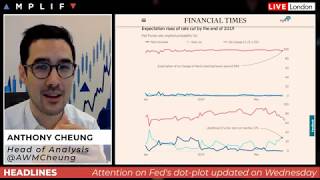
Okay, very good morning. It is Monday the 18th of March. Hope everyone is well, enjoyed your St. Patrick's Day weekend. What we're going to do is decided to do the briefing a little bit earlier than normal just to see how this works out. So it's currently just gone 7:30 AM here in London. What we're going to talk about as per usual on a Monday is really very much a look ahead for the trading week as to identify then some of the key highlights and things to look out for, things that essentially can give you a bit of a roadmap as to where potential volatility could come, what could be the pivot points of price activity, and so on. And certainly we do have an interesting week to come. So usual routine, I'll discuss the kind of fundamentals, and my colleague Sam will jump on and he'll look at the, the technicals on an intraday and a weekly perspective. But this is the calendar for the week ahead. If you did want this calendar, then you can grab it off my, my Twitter feed. My handle's in the screenshot here, just under my name. I did tweet this normally at the weekend as preparation work for what we're looking for. And as you can see here, I've bolded and underlined a couple of key events, those key events being predominantly Brexit-related. It's a very important week for the Brexit process because Essentially now it's coming closer and closer down to the wire where really decisions need to be made by MPs, or whether they're truly going to go down this route of a no deal, or looking most likely, are we going to get an extension, and if so, for what reason? And that's how we're going to be looking at potentially the movement and reaction in the pound. So we'll look at that in a bit more detail. And then the other things we're looking at are based around the US where we've got economic data this week. So as you can see on the Tuesday, you've got US factory orders And then you've got US manufacturing service PMIs on Friday. You also get the European equivalent as well coming out Friday morning. So those will be important for, uh, as to ascertain the kind of severity of the global economic slowdown. And then of course you've got the FOMC interest rate decision, uh, that's going to be happening on Wednesday night. And remember the time frame, the clocks still haven't changed yet in the UK. I don't think that's until this weekend, so it's going to be at 6 PM when that will kick off, and then the press conference will follow half an hour later. So let's have a quick look across the charts this morning. It's a fairly, fairly benign open, pretty neutral overall, nothing really too eye-catching standing out. A little bit of a break here in the top right-hand corner in gold futures after what was a very tight sideways range just up the 1300 level in the futures overnight. So just kind of busted through there as, as early UK European participants come to market. Otherwise, in terms of the major currency pairs, EUR/USD top left, Cable center top, uh, relatively flat, no real significant movement there. EUR may be a touch outperformance, uh, just given a lot of the Brexit complexities. Probably a lot of people more likely to just stay out of that market for the time being. US equity markets, well US index futures are seen positive this morning, and let's just take a bit of a recap of what we had last week. And global stocks had their best week since November after a 5-day rally. So this is looking not just in the US but the MSCI World Index weekly change. And, uh, now you can map this over a couple of different things. Equity performance continuing to come back, and Sam will look at some of the key levels in the S&P, uh, to keep an eye on. Now that we're kind of firmly above that 2800 level. But cable as well, I think it was the best performance for cable on a weekly performance in, in 6 weeks. And so in spite of a lot of the, the kind of Brexit negative headlines, pressure on Theresa May, getting closer to kind of D-Day and the uncertainties that might bring, well, actually the pound had its best week since I think it was the beginning of January. So it just goes to show what markets are pricing in, which is the fact that when push comes to shove, what will likely happen is we're going to have an extension. Now, for what length of time, for what reason, is the bit that we're unsure of at this point. But yeah, equity markets continue to move higher. But as we can see with this calendar, one thing that is distinctly missing from here, from a calendar of events, is that of what's the latest on the trade deal between Donald Trump, so the US, and Xi Jinping, China. Now last week we had Donald Trump on Thursday indicating that he's in no rush to make a deal, but things are moving along very nicely. At the time, that did create a little bit of a pullback in equity markets, but overall for a week's performance, we continue to push on. Um, what's the latest this morning? Because there has been some fresh headlines. So let me just share with you the latest. This came out of the South China Morning Post, and this is the latest source piece in Chinese press. Came out overnight: Donald Trump and Xi Jinping meeting to end US-China trade war may be pushed back to June. So it was previously looked like we were gonna get close to a deal. Trump was pushing for him to come to Mar-a-Lago to come and meet him on his golf course and ink the kind of deal, if you like. That's been pushed back to April, that's been pushed back now to June. Now, markets have taken this relatively comfortably this morning. There's not been much of an impact. If anything, Asia was slight positive overnight. But one thing I'd say is this is the key tail risk to that equity market resurgence that we've had since the beginning of the year. A breakdown of this doesn't just hold problems for the equity market, but globally it could start to, you know, blow up these, these economic weak spots that we've been seeing materialize in a number of economic data points. So definitely throughout the week, keep an eye on this story. June now is when potentially getting a kind of concrete meeting of the top heads of state to sign a deal is what we're looking at. One thing that I think, and the reason why I still remain fairly bullish for US equities for the moment is that I think coming 2020 in the presidential campaign, I think Donald Trump needs to manage this in a way that is stock market friendly. And so if anything, the closer we get to that 2020 kind of campaign race, the more I think he's got to be fairly easy on China in order to help prop things up going forward. So That's the latest on that front. Let's delve into Brexit then. What is the latest and what are we looking at for this week? Well, here's a kind of a summary of some of the headlines. Theresa May threatens and pleads in a bid to get Brexit deal over the line. So this is chiefly citing Philip Hammond, who's actually the, uh, the Chancellor. And so what we have here is Let me just recap some of the comments that he made. The British Prime Minister is still working to win support for her divorce agreement, but she won't bother putting it to another vote in Parliament as planned on Tuesday unless there is a strong chance it will be approved, according to ministers. What Hammond was saying was that persuading enough MPs to back the deal, which has been heavily defeated twice in the House of Commons, is It's a work in progress, but we will only bring the deal back if we're confident enough of our colleagues in the DUP are prepared to support it and put it through Parliament. So Hammond's kind of upped the ante, if you like, to try and leverage the government's position, very much so. And what I mean by this is he's kind of saying to the DUP, the Brexiteers, look, if you don't back us now, then you run the risk of no Brexit materializing, and that's not what you want. So you're gonna have to fall in line. Now, what it looks like on the calendar here, and persuading the DUP is absolutely critical, because if you can get them over the line and their 10 votes, which have been propping up the working majority of the Conservative government, then you're probably going to get a whole host of the Brexiteer-minded Conservatives of the ERG to fall in line and all also support. We'll look at the arithmetic in a second. But as you can see here from the calendar, you've got Tuesday is penciled in here, the possible date for a meaningful vote 3, otherwise dubbed as MV3. Now let's have a look at the numbers. To overturn the 149-vote deficit that she had last week, she would need to win over at least 75 MPs. The most plausible route is the DUP's 10, so it starts with that. If they back the deal, then likely then some 50 of the nearly 70 Tory Eurosceptics will change their mind from last week and vote to back it. Then Theresa May, the PM, would need a further 15 Labour MPs in addition to the 5 Labour and former Labour MPs who backed her last week to also come through and support. Pretty, pretty big call or tough ask to get there, but absolutely possible, I think. And I think if I was going to pick a side of balance, I actually think her deal is going to get accepted this week. If she fails at the meaningful vote 3 on, on what's been potentially tabled for Tuesday, she could come back on Wednesday, the day after, and then hold meaningful vote 4. Now I know that sounds quite incredible, but all of this means then, if you look down here, on Thursday and Friday you have the European Council meeting about the Article 50 extension decision. So that's why the pressure's on UK Parliament. They need to get whether her deal's accepted or not done by Thursday, because that's when Europe will be meeting Thursday, Friday on the terms and decision about whether or not they will grant the extension of which is going to be requested. Now, of course, this idea about how long and for what conditions will Britain ask is going to be key because it needs to be unanimously agreed by all 27 member states of Europe going forward. So what does that look like? Well, let me just blow this up a bit bigger. This was an interesting graphic that I saw on the BBC from the weekend, and this brings us forward to the week and where we are at moment. So as you can see here, her deal— let's just follow it down to the, to the left-hand side first. Her deal gets accepted, whether that's meaningful vote 3 or 4. If that happens, then that goes into the 21st, 22nd, which is that EU European Council meeting, and Theresa May will request what is known as a short technical extension. This is for the parliamentary process to go through. In order for the relevant legislation to be heard and voted upon in Parliament to grant then the fact that Theresa May's deal's been backed. Now, as long as Europe agree to that, they already have, they said that they will for the technical reason if her deal goes through, then that means we exit on June 30th as the government has suggested last week. If though Europe disagree and reject that, and remember it only takes one country to do so, then that's when, if the UK does not revoke Article 50, well, we can technically still crash out of Europe with a no deal. And that would be the absolute worst-case scenario for the pound and would be the most market-moving for the pound, given how priced in we are now for some kind of extension. So technically speaking, in 2 weeks' time, we could still crash out with a no deal. However, I would assign that probability with less than a 5% chance of happening. So you can pretty much eradicate that line. Well, let's go down the other side. If she brings the deal forward tomorrow and it fails, they vote against her again, and they do so again on Wednesday if she comes back a fourth time, Theresa May then must request a much longer extension. Now the question mark there is, for what reason is the extension? If it is a yes and Europe gives the go-ahead, then the UK must take part in European parliamentary elections in May. That they need to give commitment to that. And then that opens up a whole host of potential, as you can see along the bottom, different Brexit outcomes. We still could have a no deal. We could have further votes on the PM's deal. Does it come back now a fifth time, a sixth time? Do we have a renegotiation completely in a Norwegian-style format, which some have tabled? That would be a much longer extension, very pound positive if that was the case. Do we have a second referendum or general election? Do we have a vote of no confidence? Jeremy Corbyn has said if Theresa May brings her deal forward and it fails, then he would seriously consider calling a motion of no confidence in the government. Or Far right of those extremes, do we have on the options no Brexit at all? That would be obviously the most pound positive. At that point, we'd probably be looking at 1.40, 1.45 type region to materialize on the back of that full reversal of the EU referendum move of 2016. And again, if she brings forward the deal, it fails, Europe don't agree to an extension, again again, we could crash out with a no deal. So it really is decision time now for the Brexit process. What I did at the weekend, and again, if you jump on my Twitter account, you'll be able to see this, I did put together a series of charts. This is actually— I know it's quite small, but this is a cable chart of the last 2 years. What we're looking at here is the e-referendum on the left-hand side. And on the right here, I've put some potential targets dependent on different outcomes, with some key points of some fundamental considerations to think about, with some technical levels of significance in the more medium term. So you'll be able to look at cable accordingly there. I've also got other charts like the S&P 500 here, about if we were to see an incredibly dovish Fed with a positive China trade situation where I'd be looking up as an area of resistance. And then also a pretty definitive longer-term trend line in crude that's been holding up. And technically and fundamentally, I still feel pretty bullish crude, and we'll have a look at that now for the reasons why. First off though, let's move on to other things really I want to talk about for the week ahead, and that is the FOMC on Wednesday, and then also WTI crude futures, our outlook for that for the week ahead. Now, this is the, the dot plot. So this is the last summary of economic projections from the December meeting from the Fed. And as you can see, they were indicating at the time of a sequence of further rate hikes to come, in fact 2 that were supposed to take place in 2019, and in fact even further in 2020, before tailing off and then coming back down as we move into the kind of part of the economic cycle that would warrant then probably lower interest rates in the years to come. However, what we're looking at quite simply this time is we know that the Fed have turned much more dovish. How is this then replicated in their official forecasting for interest rates over time? So what we're looking out for from here is the trajectory, the new one of the median dot plots and how flat has this become. So you can basically eradicate this 2018 part on the left. What we're going to be looking at is here. Has this become basically flat or more shallow? Now, one thing that I read this morning, uh, there's been a latest survey of economists by Bloomberg, and I absolutely agree with this opinion. I do not think that the Fed are going to cut their '29 forecast from 2 rate hikes to 0. I actually think they're gonna go from 2 to 1, and that is a feeling that's echoed across Wall Street. And the reason for that is the Fed have commented about taking a pause on interest rates, and I think that's absolutely warranted for the time being as they look to play out things like the trade war and some of the slow slowing down of recent economic indicators. But I think the markets have quite healthily recovered. And actually, if we're looking at things like this graphic, this is the kind of brown area is CPI year on year in the US. The white line obviously is the 2% Fed target. But the two interesting things about this is despite CPI coming back down, core PCE, the blue line, is stable at around the target. And wages, average hourly earnings, which obviously is the, the real key thing that we look for in the non-farm payroll release, has been consistently rising. You can see here. So on these metrics, I don't really see a reason for the Fed to turn incredibly dovish at this point. Also, why would you do that? Why would you not want to keep options available, you know, within your toolbox to counteract if we were to have another downturn, maybe triggered by things like a breakdown in the trade talks, for example. So I very much think that what we're going to be looking out for is, is a slight subtle change here. The Fed will overall sound dovish, but those looking for extreme dovishness to materialize in the dot plots reflecting zero rate hikes in 2019, I think, might be disappointed. I think that pause for now, but the Fed will want the optionality for maybe a rate hike later down the line. Line. It also gives them then the room for the markets to respond should they need be when they cut that 1 to 0, if the conditions warrant and the data that they remain dependent on requires that action. Here, here's, uh, what markets are expecting for the actual interest rate decision. You can see here it's almost priced at nigh on 100% expectations for a rate hike in this meeting are 2%, basically. So 98% Federal Funds Rate futures are pricing that interest rates will remain on hold. So you might as well discount that as a potential situation. And then if we look down to the bottom, the likelihood of a December rate cut— actually, this is looking at the end of this year— markets have priced in a 27% probability that actually, forget interest rate hikes, we might even cut at the end of the year. So quite interested to see how that's changed. And you can see here, even throughout the whole of 2019, markets are still pricing no rate change. So even though the Fed might go from 2 to 1, the market is still, as has always been the case, much more dovishly priced than what the Fed have been communicating. Okay, a few other things just to round up. Uh, Sam's going to go over the charts and he'll look at this in more detail, but you had a JMMC meeting in Azerbaijan at the weekend. This is the Joint Ministerial Ministers Committee. This is basically the enforcement crew of the compliance rates to the ongoing OPEC+ cuts, is basically what that means. Now, there was two major comments that that came out of those oil ministers last night. One is Russia thinks a decision on whether to extend cuts should be made in May-June. And the other, which is from the de facto head of OPEC, Saudi Arabia, and they said oil market is, quote, nowhere near complete and OPEC+ needs to stay the course until June, which is quite a telling comment. This obviously would be anti-that of probably the intentions of what US President Donald Trump would want, which is lower oil prices. But a lot of this Saudi new rhetoric has come because of the fact that they're very unhappy with how the Iranian sanctions were enforced, with numerous exemptions allowed by the US, which meant that they had really no bite. And so now Saudi saying they're sticking to the cause And obviously Saudi wants a higher price, even nowhere near $60 a barrel, given the fact that they've got pretty ambitious fiscal reforms that they need to carry out over the coming 10 years or so. So that's the current state of play. So fundamentally still remain fairly bullish on the, on that side for oil. From a, from a market positioning point of view, more and more people are kind of coming to that view. This is the, the CFTC giving the market positioning in the futures space for last week. And hedge funds' WTI net long positions were up about 4%, um, people adding to their long positions in the crude market for the third consecutive week, while shorts dropped 7%. So the market's also, uh, becoming a little bit more bullish. And, and as was reflected in this crude chart here, I know again it's quite small, but hopefully you can, you you can make out a couple of things, and that is 5788 in the futures. So just short the 58 handle was a really big kind of level. I thought it was a peak of some of the price action we had in February, and we kind of found a flaw there now at that previous resistance turned support, and also bang on that trendline that's been in place since December when we hit that, that year-to-date low of 2018. So from there, I think the technical and fundamental setup does prompt then potential for a push up to 60. 60 brings in the 50% fib of the multi-year high seen October 4th of last year to the, the kind of Christmas low, and that would be the psychological handle and also an area you can see on the left-hand side of support that was seen back in Feb of 2018. So yeah, I do think that potential upside— 60 is a really big area. Of resistance where you might find a bit of a tough time pushing beyond that. If we did, the next levels then not seen up really till the 63.5 mark, more medium to long term. Any break of that trend line though, be looking for a pullback to the, the kind of 38.2% fib, which again was the bottom end of that, that consolidation on the downside. You can see there in the previous peak of activity right at the beginning of the year and the recovery in January. All right, that's it from me. I'm going to hand you over to my colleague Sam, let him go over a couple of markets from a technical point of view. So with that, I wish you a very good day. All right, thanks very much, guys. I'll see you in the chat room.
Hi guys, good, uh Good morning, hope everyone had a good weekend. Congratulations to Wales for winning the Grand Slam. What a game the England-Scotland one was. We have a quick look over at the charts. This is a general look now, just having a quick browse. Top left, Euro coming into my attention here, just pushing the high for the week. Obviously not hard to do that on Monday morning, but yeah, going above the high of last week as well. Bit of, uh, dollar weakness pushing above the R1 as well. And if we have a look back here on a longer time frame, just this whole area is going to be quite key to, to begin, uh, this, this week going back here to the 4th of March. So yeah, I'll be focusing on all this sort of area, that rough sort of trend line that we've had on a couple of times from those lows. I would still, still have on really, probably just, just focusing on, um, you know, a break of that, or an eventual break of that, for really some dollar strength to come back into this market. But as a zone goes, as an area of resistance, you know, from a technical point of view, just this whole area is pretty key. You can see even going back to the back end of February where we had quite a bit of support before that breakdown on the 4th. So as the zone goes, this would be something that I'd be focusing on to see whether it holds or not. The trend line isn't amazing, uh, but as a general guide to whether this could hold or not would be something that I'd be focusing on. With this dollar weakness, or a bit of dollar weakness I should say, this morning, you can see gold has just continued its, uh, its push above that pivot, albeit starting just to slow down a bit now. Probably worth getting this on a, you know, a shorter time frame. Those lows are just— those highs are really banging on the door around here. We had a bit of resistance going back here as well on the, uh, on the Friday afternoon. But for gold so far and the dollar, uh, you know, or the dollar pairs I should say, just focusing on those moves higher for now. The pound, I mean, it's going to be driven by Brexit, we all know that. Um, quite range-bound this morning. However, again, similar with that euro, probably worth getting on a bit of a a trend line here. You can see it is well respected. You've got the low that we had back on the, uh, the Monday last week, the 11th. We've had multiple tests of it. So if that was to go from a technical point of view, yeah, probably worth a short. Um, but you know, I wouldn't be looking to hold these positions for too long, especially the way these comments and rumors and source sources can, can come out. Euro pound worth having a look at as we've had a look at the euro dollar and the pound against the dollar, just to see which market is perhaps, perhaps, uh, stronger than the other. At the moment you can see, well, on today's price action so far, the euro is strengthening. However, we are still below that really key level, that multi-year support, which is now acting as resistance a bit, probably more so now the, the 21st of Feb low. Um, I still do feel there's a bit more downside in this market. Having a look as well at equities in the US, we finished strongly for the, for the, for the week, and we've continued that in the Asian session this morning just to keep pushing. I'll be focusing a potential opportunity around the pivot later on if we were to, to get there. We had such good resistance, not just on the 13th that you can see here, and then the, the Friday morning as well, but going back previously, uh, to the 4th of the month. So yeah, that would be something that I'd be focused on. Obviously last week's high is another area as well I'd be looking at for short-term profit if that pivot play was to come in. Just having a look on that longer-term chart, and we will post the strategy report at some point this morning around midday, but you can see now we're above that, that key level from October. Uh, I'd I don't really see too much stopping it in getting to the 8th of October low before we had the sell-off on the 10th. I know that's about 30 points away, uh, they wouldn't really be too surprising to see us, you know, push on now. Sentiment obviously in the NASDAQ, we saw a new high for the year last week, and again, you know, that's confirmed this morning on the gap higher on the daily continuous continuation of these, these markets. The Dow, which was weighed at times by, by Boeing, is, is started on the front foot as well and, and pushing on. Still got a bit to go to its high of the year, but that was such a key level. That was the low that we had on the APE. So the Dow has already made that. The, the S&P perhaps just lagging behind a touch. Quick look at oil on the, the longer term chart. That break above $58 is massive. It really was. And you You can see we came back down to test it the day after the break in it, and it held really well. The next day we tried to push below it. It didn't hold out as well as many people would have, would have wanted that to sort of got short. And $58 has held. Obviously we changed contract now, but on that, uh, yeah, holding very well. That's still a key level for the support, and if I was looking to get short this market, I want us below that. Um, for now though favoring the long. And if I lower it down, I know the volume is not going to be at its highest. And in terms of trading opportunities, I wouldn't really favor the Monday to be the best one for that. But maybe for oil, opportunity-wise, just waiting to see a bit of the— a break of these resistance points, this trend that's sort of starting to form, um, as well. $58.50 or just below is a good area of support so far, so maybe a break of that you could get a little shorter extension, uh, to the downside. But for now, for the S&P, for oil, I do prefer the moves to the upside. Have a quick look over at the market as well, just a general feel to see where everything else is. The pound just trying to reach that top of the range. The euro, as we mentioned, was on the high of the day not long ago. We are just coming off that bit, uh, that euro strength just perhaps weighing on the DAX a touch. We're focusing on that pivot as well, which was the low of the Asian session. Any questions, as usual, please do get them in the chat. We'll post the weekly strategy later today and we'll be on throughout. I hope you all have a good, good start to the week and catch you all later on.
More from Anthony


Inside the Biggest Banking Stories You Need to Know This Week (Anthropic, Diageo, Private Credit)


Inside the Biggest M&A Deals You Need to Know This Week (UniCredit, GameStop, eBay, Eli Lilly)







AI Breakthrough or Hype? Anthropic’s Claude Mythos, Tim Cook Steps Down & LIV Golf Collapse