The Trading Week Ahead - Multi Asset Review
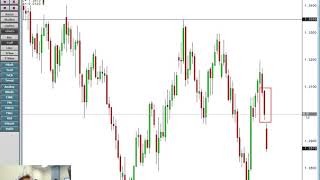
Anthony Cheung reviews the trading week of November 12-16, 2018, starting with Brexit turmoil and sterling's technical support at 1.2722 GBP/USD after minister resignations. Crude oil has crashed from $77 to below $60 as US production hits 11.6 million barrels per day, while the euro hits a 15-month low of 1.1327 against the dollar amid Italy's budget dispute with the EU.
Chapters
Through to the midsection of the penultimate month of 2018. This year is rapidly drawing towards its end, and it's going to be a spectacular one, I think. I'm just showing you here the chart of cable, and certainly the value of the pound has been, well, savaged— wouldn't be too strong a word— over the last couple of sessions. So we're going to talk about Brexit this morning. Of course, this is probably the dominant thing— well, certainly in the UK, obviously this is the dominant theme all over the press as we edge towards, you know, the end of the process. Things are— I mean, it's quite incredible how frequently this story is oscillating. I mean, it's literally one week to the next you have you know, positives, then negatives. It's yo-yoing, and it's just very hard to see which side of the fence this, this whole thing's going to land. And certainly here this morning, some pretty big risk coming through as the pound gets taken downtown. So we'll talk about Brexit. Other major factors going on— oil's a key story this morning. We're going to be talking about crude oil prices lifting, talking about the Saudis looking at potentially cutting production. We're going to talk about Trump inevitably, although he's going to feature not, not very strongly in this morning's briefing, which is a rarity. And then really we're going to look at the week ahead. Now we do have a US bank holiday today, not a major one, so markets are open but volume probably going to be light. But we'll look out over the week ahead. We've got some big data later in the week. US CPI figures on Thursday stand out as perhaps one of the highlights. So we'll be scanning through all of that lot. So let's get into the the headlines here. So this is the stuff you're waking up to this morning: pressure mounts on Theresa May to abandon Brexit proposal. You know, huge pressure coming in. And this is as a result, of course, of, you know, something that kicked off by this guy end of last week, Joseph Johnson, JoJo if you like, brother of Boris, younger brother, and And you guys will have read all about this person, so you know who this is now, but, uh, Transport Cabinet Minister. But, um, in stark contrast to his brother, is a pro-European, uh, Remainer. Of course, Boris Johnson, one of the leading figures on the kind of hard Brexit side. So he's the opposite when it comes to his, um, his thought process around Europe. And the fact that he resigned on Friday from the cabinet was quite a huge blow to Theresa May, to say the least, because up until this point, Theresa of course has been facing fierce criticism from the hard Brexit faction of the Conservative Party generally, but also the hard Brexiteers within the cabinet. So you've had David Davis, you've had Boris Johnson both resigning from the cabinet. These are hard Brexit Conservative members. And they've resigned a few months ago, of course, in the aftermath of the so-called Chequers deal, which was Theresa May's sort of muddle-through plan to get a deal done here and avoid a hard Brexit. So you've had the hard Brexiteers stand up and resign in protest. But of course, Friday took this problem for Theresa May to a new level with a Remainer, a pro-European cabinet minister, stepping down. Huge surprise. And if we just quickly flick to the charts. I want to show you the value of the pound here, which— let me just get my— so Friday's session is the candle in the box here, and we'd obviously come off the, you know, the start of November had been phenomenal. So the 1st of November, particularly massive step to the upside, and then, you know, 4 sessions in a row after that as we tracked through last week as the pound was pushing higher as Theresa May was on seemingly a bit of a role in terms of moving towards the deal. Suddenly everything was, was great, right? We've got a cabinet meeting scheduled for Thursday— this is last week Thursday now— to sign off on the, on the, on the final deal that they're going to get negotiated with the EU. Then it was all about let's organize this summit with the EU at the end of November, and let's work on making sure we get that deal signed on the 13th of December EU summit. And everything was starting to fall into place until the cabinet minister meeting didn't happen on Thursday, and then it didn't happen on Friday. Then Joe Johnson resigns, and now here we are, Theresa May this morning. It's kind of all yet again kind of falling apart a little bit. So this market is tracking sharply lower. You can see the clear destination. Firstly, you've got the low point here in the box. This was the October low. Very sharp correction back end of October, bottomed at 1.2722 on the futures, and then we had that sharp rebound. We're heading back there now. Of course, the key level below that point is the August low, and if we go just quickly on a weekly chart, you know, that anything below that August low— and is a new low for 2019, you know, it is a new sort of 15, 16 month low— you got that kind of triple bottom. If I draw this line in here, you got a triple bottom from June of 2017 in here down at 126. But yeah, I'd say this is definitely a very big weekend. To just, just read off a couple of tweets from Laura Koonsberg this morning, let me just bring this into screenshot. So Laura Koonsberg, BBC political editor, She's saying, and she's a key figure as you guys will well know, any kind of— if you want to get Brexit news first, then follow Laura. We've had some great trades off Laura tweets in recent weeks. She's saying at the start of this week, this may be quite a week. Senior minister tells me for Prime Minister to continue on current track would be self-harming, and for the first time we know how widespread cabinet concerns were about Chequer's plan. She goes on to say, two cabinet ministers say no chance of PM's plans passing Parliament. This is echoed by Justin Greening this morning. And on the other side, Brexiteers warning publicly now that the PM can't stay on if that happens. And then finally she's saying, but PM's allies believe it's the right thing to press on. Number 10's plan only viable one, they say, even if it doesn't please everyone. Plus, they will do everything they can to make it happen in time for November summit. One source says, who the hell thinks they have a better solution? Uh, so this is lining up to be a very interesting week, and I, and I, you can say a very interesting month, because the 13th of December is a month tomorrow. The 13th of December is the EU summit. I mean, I'm not I'm not exaggerating to say that's almost the last chance to get something done here. I mean, I'm sure there can be emergency, emergency, emergency, 11th-hour emergency summits, Christmas Day if needs be, but that 13th of December line in the sand is critical. And now we're in the countdown, we're basically in the final month, and right now things are not going well. You know, in terms of sterling and in terms of this week, obviously we're just extending on Friday's losses, to say the very least. Very sharp addition, massively important close below the 130 handle on Friday's session, just closed below there, 129.99. Gap lower this morning below the 129 handle, you got 128, really kind of a next, but the kind of key levels are those ones I've put in red boxes— the October low and the August low. And right now, the news flow certainly would lead you to believe we're heading in that direction. So keep your ear to the ground. What I would say, I don't know, having followed this saga for, well, over 2 years now, isn't it? Obviously, we voted to leave the EU June 2016. And, you know, like any major sort of negotiation, you're going to have ebbs and flows. You're going to have positive developments. You're going to have negative developments. But— and I would say, and, you know, as Theresa May said, you know, this is the endgame. And, you know, the pressure is on. These are the final stages of negotiation. And you're going to get quite wild swings, positive swings and negative swings in the next 4 weeks. It feels like this morning like she's lost it and, you know, all sides are caving in and surely they're not going to get this deal through Parliament and surely this heralds the end of Theresa May's premiership. But we've said that quite a few times in the last couple of years and every time she somehow squirrels her way through and somehow manages to just about cling on. But I would say this round of nervousness in markets is a little bit different because now you've got that pro-Europe and the anti-Europe factions of the Conservative Party both now resigning in protest, which perhaps is a new, a new low for Theresa May in terms of her ability to get this done. So definitely major risk. And you can see that directly in the pound this morning. And negative sentiment set to continue through the session, through this week. We're supposed to have this cabinet ministers meeting. Well, it was supposed to be Thursday, then they delayed it. It was supposed to be Friday. Joe Johnson resigned. It was supposed to be maybe today, but that looks like it's not going to happen. There's going to be a cabinet ministers meeting tomorrow, although quite unbelievably, the press this morning was saying, although we're not sure whether Brexit is going to be discussed. I don't know what they think else is on the agenda, to be quite frank. But, um, so really that's the kind of next key, I would say, outside of any further resignations, obviously. But the cabinet ministers meeting tomorrow would be the next kind of critical point for any major developments. But negative sentiment until then, I would suggest. Right, what else is happening? Let's have a look at some of these other headlines. Another major story this morning Um, if you have a look at your FTs, uh, oil jumps as Saudi Arabia opens door to cut. So let's have a quick look at the chart first for crude oil because we've definitely had some decent upside this morning, although it is nothing, uh, compared to the downside that we've had. Quite a remarkable run, um, from the 4-year high up at $77 almost on the WTI crude front. You know, that was only back at the start of October. It's only really been 5, you know, less than 6 weeks where we've gone from $77 to briefly sliding below the $60 handle on Friday. We did close below it as well, although this morning quite a key step higher. I mean, as you can see at the moment, though, we're still at the bottom, but at least we're above the $61 handle. If we go to a weekly chart and have a look at this more longer term from a technical perspective, then, you know, you'll see we're still— if you think about year to date, I mean, we are up year to date, not by much anymore. As we slid through the $60 handle on Friday last week, we did set— enter into bear market territory. So that's where this oil price is 20% and more below its recent high. And of course, this is off the back of the news that ultimately Donald Trump— you know, whilst we've had this Iranian crude oil risk in the system driving prices higher, if I go back to a daily chart now, just over the last— through the summer, let's call it, as the US pulled out of the Iranian accord earlier in the year, and then November was set as the date that US sanctions would start to bite, and people started to worry that Iranian crude oil would go offline and even, you know, even entirely go offline. Some were panicking and the oil price drove higher. And in September, along with some very strong kind of economic data coming through from the US, this thing punched to the upside to set a new 4-year high. Then what we had was a response from the likes of Saudi Arabia, the likes of Russia, in terms of ramping up production as well as— and don't Just always look to the Saudis for what's going on with production, because check out this chart, which is of course the US crude oil production rate, which has suddenly spiked and exploded to the, to the upside. We've got 11.6 million barrels a day being pumped out of the US at the moment, and that's an all-time high, and we're heading towards 12 million way faster than anybody was really expecting. Um, earlier in the year. So it's Saudi oil supply ramping higher, it's US oil supply ramping higher, it's Russian supply ramping higher. The idea was to offset, um, a drop in Iranian output. However, Trump then came in with a bit of a curveball, very unexpected, but allowed certain countries to go ahead and carry on buying Iranian crude. He gave concessions So the US sanctions are not biting as hard as we thought they were, which means that Iranian supply hasn't dropped by as much, which means now— hang on a minute— we're oversupplied because of the three big guns have raised production. Plus, add on to that the key opposite side of the fence, which is on the demand side. And, you know, really that's been one of the features of the last couple of months. It's really concerns growing about the global economic growth story as we head into 2019. And, you know, there's real worry that now we're going to be faced with an oversupplied market in 2019 as growth slows and as Iranian supply stays online. So that's the kind of— to sum up what's been going on over the last couple of months: huge spike higher, then a huge unwind over the last 5 weeks. So is this the bottom? Because back to the headline, oil jumps as Saudi Arabia opens door to cut. So This is some speculation that the Saudis— let me just come down here. This is the kingdom's energy minister, and if I just highlight it, Saudi Aramco would cut supply by as much as 500,000 barrels a day in December because of lower demand. Okay, uh, and, and then this morning I just heard on, on the TV before I started the briefing that Some are maybe even talking that the cut might be as much as 1 million barrels a day. So this is now perhaps the big guns in the market saying, hang on, prices have slid far enough here, let's perhaps start trying to talk this thing up. We do have a key OPEC meeting at the start of December. Remember, OPEC nations meet twice a year to have a major meeting about coordinated output and whether they're to take action either to cut production to lift prices, or of course the opposite, increase production to lower prices. But this is perhaps Saudi Arabia just setting out their stall, you know, 3 weeks out from the OPEC meeting, you know, perhaps starting to get the ball rolling towards an agenda at that meeting to get production lowered in an effort to just rescue this sharp decline. So quite interesting, definitely a major moment. And I would say perhaps this might be enough for now to keep us above the $60 handle. We tested it, broke it Friday briefly. This news has come, I think, just to arrest the decline. Now, how far we can push back higher is a completely different story. I'd say on the— certainly on the resistance front, you got to look towards that summer low as the key test back on the upside as resistance. 6358 was the June low. You got the low here also from August, which is coming in around about 6443. So these are the kind of key resistances on the way back up, and they, they may be price points we see, I don't know, maybe later this week, but only if, um, you know, because Russia have been quiet here. Russia have said that they're not necessarily looking to cut supply. Any news flow from Russia this week that they would be happy to join the Saudis in a cut, well, of course, that's going to add to the upside momentum. Of course, we're going to get oil data from the US again. That'll be on Thursday because of the bank holiday, uh, so that's key as well, obviously. All right, so oil definitely in the headlines as well this morning. What else is going on? Well, let's talk Trump. I'm not going to spend much time on Trump. Trump leaves World War I commemorations isolated among our allies. This is the— just the news that just unbelievably Trump decided to not bother turning up to the Saturday commemoration services in France. Just, I don't know why. It was too wet. It was too wet. Yeah, that was the line. Too much rain, so Trump didn't bother showing up. He did turn up on the Sunday, but as you can see, well, this picture perhaps tells the story. But the point is here, it looks like he's just isolated himself even further from his, let's call them, European allies. Now we have a G20 summit later in November. All eyes, of course, are on the US and the Chinese, and can they get any kind of breakthrough on this trade war? Obviously, that's the key factor that people are going to be looking at. But outside of that, you know, Trump is doing his very best to alienate himself from the US's traditional allies, and certainly he's, he's extended that ill feeling with his actions over the weekend. So that's something to just be mindful of. But you know what, that's it. I'm not going to talk more about Trump. He doesn't deserve any more comment after his actions over the weekend. Other stuff going on: Europe takes deep breath as action against Italy approaches. Right, so this is the budget story in Italy, and just news that the European Commission is ready to escalate its budget battle with with Italy. So this is something else that might rear its head again this week, um, so keep your eyes on that. I want to show you an interesting chart actually, because check out this EURUSD, and I'm just going to go to a daily chart first because you've had some decent downside this morning for the euro, and I want to just point something out. Technically, for those who aren't looking at your long-term charts, you'll have failed to notice that we've had a key break this morning. You might have been thinking, oh yeah, key break of the 31st of October low, but that's not price. The price is the August low, it's at 1.1327, that is, that's the futures summer low. All right, now this is important because on a weekly chart, that's, that's a new low for the year, and that's a new low. You gotta go back to June 2017 here. So quite an important technical break, 15-month low for EURUSD. And this is just because, you know, I think last year— last year— last week we had, you know, a Fed that was interpreted hawkishly. So that December hike back on the cards. And this has helped to just drive through a bit of dollar strength. And you can see that, you know, a bit of correlation here as well as cable plummets while EUR/USD gets some downside also. But certainly you got some dollar strength as a theme. And then some euro weakness and any of this Italy budget story, of course, is not going to help on that front. So just be aware of this technical situation this morning with euro-dollar catching some downside with a new 15-month low on our hands. All right. I'm going to just finish off by looking at what's on the agenda for the week. Just quickly looking at today. And today is the quietest day of the week for sure. Firstly, US bank holiday, uh, not a major one though, so most markets are open, but you will get a reduction in volume in the US sessions. It'll be a bit quieter than normal, but on the data front, nothing of any note. We've got some speakers down the bottom here. Um, uh, Deguindos, ECB's Deguindos, is talking. Um, well, actually, that's at 8:30, uh, and he hasn't said anything yet. Nothing on the newswires, so Perhaps he's behind schedule. You've got ECB's Lautenschlager, who has the best name of all ECB members, uh, bar none. Lautenschlager. I don't know why I love saying that name, but anyway, uh, let's move on. Um, you've got the Fed's Daly, uh, talking as well. So some monetary policy comments, but anything from the Fed— and we got Powell talking later in the week— anything from the Fed, obviously we had a Fed meeting last week, so So we'll see if we want to see if we get any more data— sorry, insight into that December hike. On the earnings front, nothing of much. So really the earnings season is kind of now behind us. Okay, let's have a look at the whole week though. It's going to zoom in on some of this stuff. So I've been through this morning. Let's just try and find the kind of major important figures of the week. So we got inflation data out of Europe tomorrow. So these are final figures though. for the month of October. Important data out of the UK with some average hourly earnings numbers and some jobless numbers. We've got German ZEW also, so this is quite important. So, you know, Tuesday morning's lining up with some nice data there. In terms of the US, in the afternoon, um, it's the opposite. Nothing of any note out of the US, I'm afraid. Um, over— or tomorrow night though, we get some data out of China. Fixed asset investment, industrial production, retail sales, unemployment. It's a batch of data from China. Going into Wednesday, we've got some preliminary GDP figures from, uh, Eurozone's big guns, Germany and France. This is for quarter 3 though, so it's getting a bit old now as we're halfway through quarter 4 already. CPI data from the UK will definitely be important. So a couple of big days for the UK data-wise, Tuesday and Wednesday. Jobless numbers and then inflation, and then that's all in the face of this Brexit escalation. We get European GDP figures, but the big number— one of the big numbers of the week for sure is the US CPI data on Wednesday at 1:30 PM. It's important because check out what's been going on on the headline inflation figure out of the US over the last couple of months. It stepped quite sharply lower. We want to know if this downside is going to continue or are we going to bounce again. Obviously it's all about December rate hikes, yes or no. And the Fed were hawkish yesterday— nope, sorry, last week. And so that's lifted expectations. We want to see if inflation kind of ticks back higher, just helping the Fed make that decision to hike for a fourth time. Look at the core though, and it's not quite as dramatic. So the core inflation rate remains above 2%, um, that's 7 months in a row, and we want to see if they're going to make it 8, okay? And if it does, if we get anything above 2.2, then definitely that Fed rate hike expectation is going to increase, and that dollar strength story is going to continue to filter through. So definitely Wednesday, US inflation important, uh, then retail sales figures out of the US on Thursday as well. Empire State Manufacturing, Philly Fed. So some important data, as well as Fed's Powell also speaking. So a busy session Wednesday, Thursday for US news flow, and then Friday to round off the week, final inflation figures out of Europe, and then quieter session, um, with no real US data of any note. Okay, so that's the lineup for the week, um, right? I'm gonna leave you guys to it. Enjoy the week. It's probably gonna be— certainly here in the UK, Brexit headlines will dominate. And at the moment, Theresa May is, well, looking precarious again. And keep, keep your eye on Laura Koonsberg. Any tweets coming from Laura could be insightful and could well be trading opportunities as we track through the next 5 days. Okay, enjoy the week. Thanks a lot.
More from Anthony


Inside the Biggest Banking Stories You Need to Know This Week (Anthropic, Diageo, Private Credit)


Inside the Biggest M&A Deals You Need to Know This Week (UniCredit, GameStop, eBay, Eli Lilly)







AI Breakthrough or Hype? Anthropic’s Claude Mythos, Tim Cook Steps Down & LIV Golf Collapse