The Trading Week Ahead - Multi Asset Review
Sterling jumped on Brexit news about a potential UK-EU customs union deal. The host maps resistance at 1.30 and targets near 1.3123-1.32, then covers US midterms, crude oil around $61-$62, and S&P 500 support at the 200-day moving average. Key data this week: UK PMI, FOMC decision, Chinese trade and inflation.
Chapters
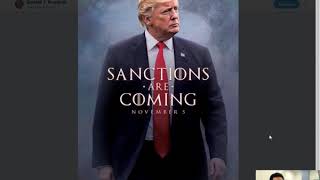
Very good morning, Monday 5th of November. Hope everyone had a great weekend. Um, just getting straight into the, the briefing then, really more of a look ahead for the, the trading week. And so if I just switch over my screens, here's what's on the agenda. We're going to talk through a couple of these points and, and put it in step with some of the weekend's news. But ultimately, I guess you could break down in terms of its main macro events this week onto a couple of specific areas, one being Brexit, another Sunday Times article talking about the prospects of getting closer towards a resolution for this Northern Ireland border issue. And consequently, if we just look at the, the pound this morning, you can see here we, we gapped up at the reopening of trade, looking here at the sterling futures. So we're going to have a look at that in a bit more detail. And then the second big thing obviously as well is the congressional elections, which will be happening, I guess, if we're looking at London time tomorrow night, going into then results when we come back in on Wednesday morning. Other key events that are on the docket though, things such as the FOMC rate decision, that'll be on Thursday night. And if you're talking about rate decisions, you do also get the likes of the RBNZ and the RBA. And then from China's perspective, always in focus when we get any kind of read across into the impact of trade wars. And we get Chinese trade balance, that comes on Thursday. Then we get inflation data and foreign direct, direct investment data from China on Friday. So quite an interesting one overall in terms of US earnings season. I would say from an index-moving point of view, it's, it's pretty much done now. There's still 77 S&P 500 companies, but most of these are not ones which are going to have a meaningful impact on the kind of pre-open futures movement and so on and so forth. There is though a few UK and German companies coming out, DAX in particular, because you get some of the larger components like Siemens is reporting, Allianz, so Thursday and Friday respectively. Then you get the automotive names reporting as well. So BMW, Daimler, as we go through the week. So that's the kind of shape of things to come. But let's get straight into what one of the main talking points at the weekend was. And, and this was something which came out on Sunday night and that appeared in the newspaper on the Sunday from the Times. This is Theresa May's secret plan to secure a Brexit deal and win the backing of Parliament. Now, the details here is that senior sources say the PM has secured a private concession from Brussels that will allow her to keep the whole of Britain in the customs union, avoiding a hard border in Northern Ireland. And essentially, expectations are that this will then be positive for the Remainers within her own party, but also opposition in the Labour MP backing. And in a move to appease the Eurosceptics, May is also said to be on course to secure a political deal on the future economic partnership with the European Union that would allow Britain to keep the prospect of a free trade deal resembling that enjoyed by Canada, which is something which has been mentioned obviously many times as well by some of the Brexiteers. So progression on this front is seen as a, as a net positive, and, and certainly the news flow, just looking at cable here over the course of the last week or so, and it's a really powerful moves on the upside, some of the best of which we've seen in, in actually in history. I think it was last week there was the best 2-day gain. I think it was the 5th best 2-day gain it's ever been seen in cable. So just goes to show about how kind of short position the market is, that we get a couple of positive headlines, whether it's Dominic Raab sending a letter to Parliament about striking a deal by the end of November, whether it's the financial services area having an agreement in principle, and now with Theresa May looking— and this is the big one— a solution to the contentious issue of what's going to happen with the customs union. And then you can see how quickly cable can catapult higher. This is going to be, I think, one of the real deal breakers for this week because I've just seen and been monitoring a couple of comments out of the kind of main person in the know, and this is the BBC political correspondent Laura Kuenssberg. Now, we had the Irish Deputy PM this morning try to throw a little bit of cold water on what was being spoken about in the article in The Times, and he said the Irish position remains Consistent with very clear that a time-limited backstop or a backstop that could be ended by the UK unilaterally would never be agreed by Ireland or the EU. These ideas are not backstops at all, plus don't deliver on previous UK commitments. So this obviously is the opposite and would throw into question the fact that, you know, progress is being made. But the comments here from Koonsberg, I think, are quite telling. And she says, no not quite there in any Holy Grail solution, but Ireland distancing themselves from the idea that a deal, secret or otherwise, is somehow there. But she says talks still stuck on the backstop mechanism. If there is a November summit, then senior sources say there has to be decisive progress this week. Both sides have to be sure that the makings of a deal are there, or Tusk won't press the button. It does feel like the tempo is quickening, but is more than a question of dotting the i's and t's, both practical negotiations, political willingness to accept what might be unpalatable to some. So, you know, Xi is definitely one to monitor. I do think that last week, especially the second half of last week, the intensity of kind of the Brexit headlines, given the diminishing timeline going into this emergency summit, which is still yet to really be confirmed towards the end of the month, and then the December summit, I think on the 13th and 14th of Dec. Time is of the essence, and there's nothing better than to force politicians into action than a looming cliff-edge deadline, because ultimately then they're all kind of jostling for position, but they all typically fall into line. And one would think that not just Britain but Europe, with a lot at stake, some sort of solution will come. The, the key here, I guess, from an intraday trader's point of view, is picking timing, because I think when we do get a nod to sufficient progress has been made that Tusk could then push the button and push things forward, I think you could get a pretty meaningful rally still in the pound. And there is one chart here I just wanted to have a look at, which is this one. This is a technical chart. That my colleague Sam has marked up, uh, that we'll talk over a little bit more in the, the weekly strategy we'll send out later. But you can see here, this is the 50 DMA, uh, in cable, and it's been a quite a marker of resistance actually, uh, just given the aggressive rally that was seen, uh, last week with some of these positive Brexit developments. And so far we've not managed to close above that 50 DMA, and so So that is something certainly that we're going to be watching very closely. If we can get above there, and the catalyst could be that comment, you know, when it might come, who knows. But I think you've just definitely got to keep your wits about you and you're on the squawk, because if there is more positive news on the Irish border, I don't see any reason why we can't break substantially higher here in the short term, at least closing above the 50 DMA. Taking out the 131 on the upside. And then I'd say probably the next line that I'd be looking at is up here where Sam's got this trend line from the low of the year up to previous points through SEP October that's acted as a line of support and resistance. So a target here, if any positive developments in this week, I'd be probably looking up towards that 131.23 area. As a good point of resistance to manage that trade if that did materialize. Any breach above there, and then obviously starts pulling in some of the other highs going back towards, you know, 132 handle psychologically. But again, it would need to be quite a clean-cut resolution in order to get that type of move. But the point being is, you know, just looking hindsight, how sharp the reaction was last week in, in recent positive Brexit developments. The point here is that the market is overtly short, and so a large portion of this move is, yes, it's positive, but it's a lot of people getting squeezed on their short positioning, and consequently the market pops up in a much more aggressive fashion. It's almost exacerbating the move just given the short positioning of the the market. So I do think that even with the bounce, that sterling is still susceptible to some further quite aggressive upside should the news warrant such a, such a thing. Can they get a deal on this Northern Ireland issue? That is, is yet to be seen, but it seems as though the tempo is quickening, as Koenigsberg said. Okay, a few other things. This was obviously the, uh, the graphic that everyone was talking about on Friday, "The sanctions are coming," with a very moody Game of Thrones-esque looking Mr. Donald Trump. And, you know, you can't not say that this guy knows how to whip up a media storm because he tweeted this on Friday, and then over the weekend he's been hitting all the major kind of political battlegrounds where he's been holding campaign rallies. I was just reading this morning the Republicans have thrown some extraordinary large sums of money at campaigning, which has actually seen the polls converge, even though it's still expected the Democrats will take the House. So he definitely does know how to capture media attention. And whip up a bit of a storm ahead of this political key event. But before we get to that and we talk midterms, sanctions are coming. Who's he talking about? Well, he's talking about Iran. And again, all of this obviously purposefully timed, because if you have been monitoring the news about the US and Donald Trump in the last week or so, there's a couple of things he's been really doing. And one is He's been playing hardball and then looking like we could have a trade agreement of sorts with China, so he's managing the trade side. He's then being quite forceful, talking about, you know, Iran, we're gonna sanction you if you don't do what we say. Then he's been pumping the security forces on the border and really playing up this issue of immigration, which of course is really quite at the core, which resonates with the electorate that typically would vote for him. So, you know, everything's kind of being tailored timing-wise, if you like, to fit the narrative of the midterms. And the sanctions one on Iran has really been what's been quite key for a lot of this leg lower that we've seen in oil since really— we're looking at the last 4 weeks pretty much to the date. So exactly the 5th of October, we were trading up at around, you know, nearly $77 a barrel, and here we are down at $62.50. So it's been a monumental fall over a short period of time. You can see the most persistent that we've had out of any of the rise throughout the rest of this year, even though it's been fairly volatile in, in points. And we're down about 18.5%. And one of the things here is because— and this is the beauty, I think, of Donald Trump— is he puts out an image like that, and if you didn't know any better, you would think, 'God, this guy's really fighting for America, and look at him just doing the job.' But then you look at oil, and the reason it's down is because even though there's sanctions going on Iran, the point is, is that these sanctions are nowhere near as stringent as they initially were set out. And in fact, there's several exemptions, which means that Iran's supply isn't actually going to fall as much as we were led to believe about 4 weeks ago. So while he massages the, the kind of, um, the public view, the practicality is, is that his sanctions are nothing near as harsh as, as, as were expected by the market. And so, you know, part of this rally up that we had was about a lot of the threat of the third largest OPEC-producing nation seeing, you know, in excess of 4 million barrels of oil being severely hampered, and that's not being the case. This with, you know, kind of trade wars, still uncertainties on that side, and the kind of the shaky equity October fall that we had emanating from many different reasons This has led to a bit of a recalibration, if you like, of, uh, decreasing demand expectations but increasing supply, because now we know that these sanctions aren't going to be quite as meaningful. So oil still looks susceptible, I think, to some further downside at this point, and the logical area downside would be looking back to the beginning of the year, kind of the April 6th lows. They would come in just up to 62 handle, 61.81. So well within range, less than a dollar away from there at the moment. And certainly if the dollar itself in a currency market remains firmer, then, you know, in a risk-off environment, if that did materialize, then certainly these lower bound levels could well be tested this week. Talking of then, uh, the congressional elections, the Democratic Party is poised to win a majority in the House of Representatives Um, one thing that I, that I did realize over the weekend is that really no one's talking that much about the midterms. Um, and I think that's quite telling because I think that for some time the market's been of the belief that the Democrats are likely to take the House. Now obviously stranger things have happened, and we'll talk through just briefly a bit of an overview of what some of the outcomes could be. As I just said, even though they're expected to win, the polls have been narrowing just given how aggressive Trump has been on the media front. And typically this is kind of playing to his strong suit in that respect. But what could the outcomes be? And as always, ING put together quite a neat infographic to really pull all the different potential scenarios together. Now, the kind of baseline scenario here, and I absolutely agree with ING, is that Democrats win a narrow House majority and the Senate remains in the hands of the Republicans. Now, what does this mean? Well, it means that Trump, increasingly limited by congressional deadlock, must rely on executive powers. So if you think about the kind of ambitious proposals that Trump might have in store, then at the end of the day he's going to need bipartisan agreement in order to see these get pushed through and implemented, of which means that anything that's quite ambitious or far-reaching might be voted against. Now, one thing to be aware of here is that from a historical point of view, in terms of the management with the relationship with China, it's not that if the Democrats have the House, then all of a sudden they're going to say, "Hold on, Donald, you need to soften this a little bit. We're at risk here of jeopardizing the US economic recovery." The point is, in history, the Democrats typically are a lot more protectionist than the Republicans. And so, actually, there's a lot to say that although it would be managed, that he would probably continue down the similar line that he's going on that front. There's other things though. If there were tax cuts more to come, then if the Democrats have their way, they'd probably want this to be more meaningful for the lower-income demographic, just given the kind of split nature of the representation of the voters that would, would vote typically for the Democrats. What this could mean then is, from a policy implication point of view, following the base case scenario in orange, limited scope for legislation occasional standoffs on budget and immigration. But the one thing is, on big things like trade, don't forget the president— the way that the kind of the composition, if you like, of the political structure on Capitol Hill is that the president does actually have executive powers on things like trade, where essentially he can kind of vote things through. Now, those executive powers— and this is one, if you're reading the at the kind of US press at the weekend is quite interesting because just imagine if the Democrats sweep unexpectedly and then we start going down the road of the impeachment process of Donald Trump. Well, Donald Trump has already said that from a technicality point of view he would pardon himself, which is, you know, quite incredible. But this whole idea about a Trump impeachment, I think, is so incredibly unlikely to happen during the rest of his presidency. I don't really think it's anything worth, um, fretting about, because as much as the House might push for that, if that were the case and they had control, um, the Democrats of the House, ultimately what the procedural vote is, is that then it goes to the Senate, of which two-thirds of the Senate need to then vote for the full impeachment to go through. But if you think about it, the Republicans are likely to still have control of the entire— well, not entire, but have control of that chamber of Congress, the Senate. And so what you would need to have is a significant large portion of his own party also going against him. So, and at the risk of that, he said Just imagine you voted against the president and say, "I want to impeach you," and then he turns around, pardons himself. You know, he's going to have your head on a platter at that point. So the kind of reality is, I think impeachment is not going to happen. The other situations you could have here, if the Democrats did sweep, then, you know, one thing I guess from any political event like the referendum, like Trump winning, the US election. I guess you've got to plan for the unexpected. But if the Democrats win, I think that's the most negative for markets in the initial reaction that we would see Tuesday night into Wednesday's session. Why? Because that's absolute kind of all-out war on DC. There's complete gridlock. We could well go down this impeachment route which, if you use Bill Clinton as a reference point, because there was an impeachment process against Clinton which eventually got dropped, but the process took roughly 12 months. So you could have 12 months of political uncertainty which all at the same time is detracting at the point of managing the economy and implementing a further kind of fiscal policies which are unlikely likely then, if it's a split Capitol Hill, to have any type of ability to be passed through and implemented. So this, in my mind, would be very, uh, dollar negative. Economic activity, I would imagine, would slow sharply. Political worries would be amplified. And I think then this whole kind of positive economic story that we've got in the US could quite quickly be jeopardized in that situation. If the Republicans were to keep control of the House, I would say that's probably a slightly more higher likelihood, albeit not the base case scenario. But if the Republicans keep the House and the Senate, then actually, you know, I'd be a buyer of equities, US-based, at that point. Um, so what I'm saying is that although he's probably likely to, uh, uh, have an even harder line on immigration and trade policies, there is a potential for further tax cuts, more fiscal spending. And although this is highly negative for the fiscal deficit of the US, I think that's more of a medium-long-term issue. And I think in the short term, to trade an event, I'd be thinking you, you got to buy into this, uh, under that type of scenario. So I'd be probably looking for short-term dollar appreciation, but in the medium to long term, weakness on an escalation, the worsening of the, the deficit situation for America. So there's kind of two ways to play that if you're a trader or an investor, short and long term. So we'll talk about this obviously much more, but hopefully that just gives you a bit of an overview. Obviously it's going to be quite critical event. One thing though is if we get whichever scenario, but let's say the more likely or not, and as I said, just given the lack of media interest, I think from a financial markets point of view goes to show how I think bedded in market expectation is that the House flips to the Democrats, is that if you look at the history of the US stock market in regards to the S&P 500, this is the last 18 midterm years that we've had in the United States of America since the Second World War. And in every midterm year, then what's happened is that the S&P 500 index return from the October closing low to year end has returned an average of 15%. So And what— here on the numbers that they've got, I think 15% is for the year to date. On the average year to date from the October low, it would be 11 or 10.5, 11%. The point being is, is that history has a precedent that going into midterms tends to create a little bit of uncertainty. Once that passes, the market rallies quite aggressively in the months thereafter. once there is some more political, or political certainty returns in that respect. So, you know, if history is anything to go by, then we— and certainly if we were to get an all-out Republican win, then I'd be looking for numbers kind of at the top end of some of these ranges in that respect. Talking of the S&P, let's have a quick look at the, the chart and what Sam's looking at, because you've got to have a look at some of these technicals And again, what's quite interesting here is the 200 DMA. Quite a few people looking at that in the press this morning. You remember that 200 DMA was a real critical support point going all the way back to really the beginning of 2016. You can see here on this slightly more zoomed-in chart of the year-to-date price action how the market on the February sell-off that we had, it bounced, it briefly tried to get its head below that level in kind of March time, failed, tried again in April, failed, and then we had the more meaningful break on the persistency of the October move lower from the retracement from all-time highs. The point is, is that here last week's low, the kind of about-turn, you know, we've had the likes of some of the social media names, though Apple was weak on Friday Friday. Facebook was right at the pivot point, if you like, at the lows after their shares rallied quite aggressively. We had some positive signs here about trade developments where it looked like China and the US were coming together to have some more discussions for the first time in many months. And so on the upside, although we've backed off slightly on Friday, you can see we tested it almost to the tick. That 200 DMA, I think, is really pivotal for the week ahead. It was a previous line of significant support, and I think now in the short-term week ahead, it's a significant area of resistance going forward. And it certainly is back within striking distance given the political events, the FOMC, and things that are coming up this week. So definitely we'll be keeping an eye on there as we go forward. On the downside, I'll be looking for near-term support on this trend line going back from the previous all-time high from the January high trailing down, as you can see, to the kind of Friday defining the range. So really Friday's range is those two key levels I'm looking at— the support point on the trendline and the 200 DMA on the upside. Okay, one other chart just have a look at, and just while we've got it up, is EUR/USD. And we'll go back to the weekly graphic in a second to review what's ahead on the, the docket for European side of things. But as you can see here, Sam's looking at a couple of things. You got last week's low and this kind of trend line from the price activity over the course of the last 3 months or so. So it's kind of wedging in the price movement, which would be indicative then we're going to have to see a breach of one way or the other coming up. And I'd say probably the dollar is going to be quite critical then to the movement on which direction this goes next. And, and obviously the congressional elections could be quite key as to this near-term price movement. Quick look at the calendar for today and then we'll review the overall week. So today's session, just to be aware of, we do have some data coming out the UK of significance, and that's the Service PMI. So, you know, if you are gearing up, well, let's have a quick look back at the pound on the, on a more intraday setup. So that's obviously the, the gap up that we had on the Times article that we spoke about. I guess we just got to look at the 1.30 handle and the kind of low defined from the overnight Asia-Pacific session, which is just above the handle, 1.30 26 in the futures. So that's a near-term level of support, which if broken, I would imagine you get a pretty quick gap fill down to 29, uh, 96. And then I'd be looking at the lower bound of that price movement that we had late on Friday evening. This would be on the setup if we were to get a low service PMI, which is coming out in about half an hour's time. On the flip side, something more positive, I'd probably be targeting up, maybe up to some of the range here that you've had from some of the previous highs. I wouldn't be looking to get too ambitious. Again, what I would say, and I said this last week with the pound, is I think intraday traders, speculators, will be very much looking to get into trades if there is a reason to it, like with the service PMI, but not wanting to stay in an open position of risk for any time longer than is necessary on the prospect that they could get caught blindsided by a breaking source or tweet about Brexit, which could spike them out, spike them out quite aggressively in the opposite direction. So again, if there is any trade execution at these particular data points that come out through the week, UK relevant, then I think you just got to manage them quite proactively. Otherwise, apart from that, looking into the afternoon, it's pretty quiet. The ISM non-manufacturing, I think, is, is interesting but non-market moving, especially now we've had payrolls. Um, speakers-wise, quite a few. Uh, Vice President De Guindos is speaking later. You've got Bank of Canada's Poloz, and the CAD always quite susceptible to some wicked movement on the back of when Poloz speaks. So do keep an eye out for that. That'll be at just after 1 o'clock. And to a final review, just going back to the, the kind of overall shape of the week and some of the other highlights. So today you do have a Eurogroup meeting, so just be mindful of any Brexit updates. Service PMI, as I said, is coming up later. Going into overnight, if you are trading overnight, you do have the RBA rate decision. And then actually there's a UK cabinet meeting. This is a regular thing that happens, but I was reading a lot of the weekend press and a couple of sources were saying that basically the way I think that the Brexit rumors might come out is I think you might get quite a few later on this afternoon ahead of the cabinet meeting that's taking place tomorrow. And the press at the weekend was suggesting that if there is a deal to be, to be struck then it's going to come tomorrow during that meeting. Otherwise, you've got the German factory orders tomorrow, the various final service PMIs on Tuesday, and the congressional elections being the highlight. Wednesday, um, not too busy, all inventories, but fairly quiet overall. Thursday, things pick up a little bit. Chinese trade balance, one of the highlights from when we come in. You've got the FOMC rate decision later on that evening. And then Friday, more Chinese data on the inflation side. And then we get things like UK first reading of GDP. You've got the trade balance from the UK, the University of Michigan to finish things off at the end of the week. Okay, that's it. So weekly strategy will be sent out a bit later on this morning. Sam and I will put together. Otherwise, both of us are here and watching the chat room, so any questions that you have, please do just let us know. No problem at all. Have a good week, guys.
More from Anthony


Inside the Biggest Banking Stories You Need to Know This Week (Anthropic, Diageo, Private Credit)


Inside the Biggest M&A Deals You Need to Know This Week (UniCredit, GameStop, eBay, Eli Lilly)







AI Breakthrough or Hype? Anthropic’s Claude Mythos, Tim Cook Steps Down & LIV Golf Collapse