The Trading Week Ahead: Multi-Asset Review
In this weekly market briefing, the presenter surveys the key macro‑economic and market drivers shaping the week of October 29 – November 2 2018. He begins with a technical and sentiment assessment of the S&P 500, noting a 10 % decline from recent highs and a critical support level around 2,600 that could dictate short‑term direction. He then moves to sovereign credit news, explaining Standard & Poor’s downgrade‑outlook on Italy, the resulting BTP price rally and spread tightening, and the broader implications for Euro‑zone stability. Euro technicals are examined alongside the German regional election in Hesse, where the CDU remains the largest party but loses ground to the Greens and AfD, a development deemed non‑market‑moving but relevant for confidence in the euro area. The UK segment covers Philip Hammond’s Autumn Budget, expectations of fiscal easing, potential digital‑tax measures, and the upcoming Bank of England quarterly inflation report, all set against ongoing Brexit uncertainty that is keeping sterling under pressure. The Brazilian presidential election is summarized, highlighting Bolsonaro’s first‑round win, market optimism for reforms, and the political complexities that could temper future gains. A dense earnings calendar is outlined, with 139 S&P 500 companies—including Apple, GE, BP, Facebook, and Alibaba—reporting, alongside key UK and European releases. Finally, the week’s macro data slate is listed: US non‑farm payrolls, ADP, global PMI releases, Chinese manufacturing data, and a Bank of Japan rate decision. The presenter promises a follow‑up technical report and charts to be shared in the Trading Live chat.
Chapters
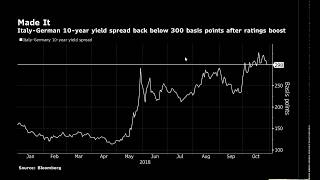
Okay, very good morning, Monday 29th of October. Hope everyone is well and have managed to make into the office fine. The cold weather this morning and the clock change, of course. But just getting straight into things, quite a few things to get through news-wise. We've got an update on Italy. We obviously had the sovereign rating announcement that came late on Friday. We got an update on the election side in both Germany from a regional election And then from the national elections in Brazil, also going to take a look at the UK market. Not so much talking about Brexit, but today we've got the budget, also got the Bank of England and the quarterly inflation report due later in the week. And then we've got a whole slew of earnings as well, another 139 S&P companies reporting for the week ahead. And that's not even mentioning we've got nonfarm payrolls, of course, coming as the bookend of the week on, on Friday. So plenty to get through and I'll try to keep it as concise as possible. But just taking a look first off, got the S&P, much broader perspective here because I was just looking at the kind of performance of the month of, the month of October. And you can see from the kind of peak where we were trading not so long ago at the kind of the record territory levels in the S&P when the talk of the town was when are we going to get a test on 3000? And through a number of different catalysts, whether it be the optimism sounded by Jerome Powell initially, whether it's the EM crisis slowdown in China, whether it's corporate earnings and, and profit forecasts decreasing, a number of reasons have been at play. But we've seen an overall move of the top to bottom over 10%. We're sitting about 9.5% at the moment. One of the interesting stats I read at the weekend was that in terms of— it's not so much the severity of the downturn, but the consistency of these declines that we've seen in the US equity market from these all-time highs. And actually, in terms of the cumulative number of down days in October of this year, I think the last time statistically we've had so many, you would have to go back right into the midst of the financial crisis in 2008, to put it in, in some perspective. So Certainly this is why, you know, when you read the weekend press, you hear a lot of the kind of bearish tones, if you like, being sounded because of these types of statistics. But one thing is looking at the, you know, the S&P here on a broader daily continuation, because this now puts in— I mean, what you're looking at on the chart here is the last 2, 2 years basically. And obviously when we get to these kind of price points, and certainly with a trend line like this. This is kind of when I talk to Sam in the morning and the question or the conversation very much centers around, well, at what part do we start buying, i.e., the buy the dip kind of mentality. And I have read quite a lot of bank research which has talked specifically about this kind of 10% area being quite key. And you can see 10% pretty much puts us spot on to that trend line. Of where the price has had a brief momentary run last week through the level, but we haven't really managed to close down below there as yet. And so I do think as we go through the week ahead, whichever which way direction this market might go, I do think that a real concrete test and a close above here would need to happen in order for us to make another decent push on the downside. Where we go from there, I mean, targets would be quite a bit lower down at the 2600 handle. Below there you can see a support point on the bounce going back to May this year, and also some brief resistance when we're on the incline to the record territory at the end of 2017, initially as we were going into the kind of festive period. So I do think this is quite a critical point we're at here in the short-term technicals. Um, appetite— I mean, talking to Sam again this morning, I think he feels a bit more comfortable if we were to get a little bit lower, possibly that 2600, then to kind of let the, let the festive rally begin. I mean, seasonally that does actually tend to be a pattern, uh, the kind of holiday cheer going into Christmas lifts optimism, um, and certainly we, we historically have seen rises into Christmas period. I just don't know how punchy I'd want to be. Typically I tend to be a bit more conservative, but I don't know, I think this could be a decent floor for the recent rout that we've had at the moment. And obviously a few singular catalysts to be looking out for this week. We've got Apple, we'll see kind of the final jigsaw piece of the, the big tech names is going to be reporting on Thursday night. And certainly that would be quite telling for markets, I feel. Um, going into the news then and looking briefly at the euro, euro currency is marginally lower, down about 19 pips at the moment. Um, just looking at the news first, then we'll look at the chart a little bit more technically. But this is what I'm looking at this morning, and For any of you who were kind of watching the news still late on Friday night, I would hope that you're not and you're doing something much more interesting than watching a sovereign rating upgrade, or announcement I should say, from Standard Poor's. But, but I was, and, and what happened was that essentially we've had two major updates for Italy, and this was a big pressing concern for markets, is what, what caused Over the recent weeks, Italian yields to spike, spreads to widen, euro currency has been under some pressure, the FTSE MIB in Italy, the stock market has been moving lower. And yes, this has come amid these kind of very far-reaching measures that would mean an accumulation of more debt, and that kind of deficit issue has been called into question with the European Commission. But all of this then reaches the endpoint of what happens if the country, the sovereign of Italy, was subject to a downgrade into junk status. Now, the reason why this is so incredibly important for markets and why the markets generally have been quite nervous about Italy is because it's absolutely pivotal that Italy remains investment grade. The reason for this is that it assures the presence of its bonds in global benchmarks. And more importantly, the European Central Bank's asset buying program, which is— obviously provides a level of guaranteed support, which is pivotal for someone like Italy at this particular point in time. And so what's happened is Standard Poor's, they basically came out on Friday night and said that they'd lowered the outlook on Italy to negative but kept the sovereign rating unchanged, 2 notches above junk. And if you remember the week before this, we had Moody's cut them just by one notch, I think it was, but to one above junk. So Italy lives to fight another day, at least for the time being. And actually, we've seen BTPs. If you— I mean, if you're using Saxo, you can put— you can look at the Italian BTP. You can see we are retesting highs that we had back earlier in the month. So BTPs on the front foot, consequently Yields moving lower, spreads against the benchmark German Bund are tightening, and we've moved back below 300. So this is, this is a positive development. If you think about it, what we were looking and talking about in the brief last week was about if we were to get to 400, some serious problems from a refinancing point of view that Italy would run into, and certainly from a market psychology and the short selling of Italian assets that would probably ensue. So Now we've moving back below 300. This is certainly some, some good news for Italy. Not only that, and this was something I kind of joked about on Twitter last night, um, you've got the Italian government would step in to help in the event of a crisis in the banking sector, according to their finance minister, who said on Saturday, uh, basically that the government would intervene in a banking crisis. So again, this kind of mentality, whatever it takes, and so on and so forth. Um, you know, is Italy just too big to fail was the kind of the, the running joke. But, uh, that aside, some positive news with the euro currency where we're trading at the moment. I mean, we're going to look at the broader weekly calendar. There's certainly quite a few things to look out for from a dollar perspective, particularly with the employment focus We get the various different job indicators in the build-up to Non-Farm on Friday. But aside from the— aside from that, looking at the euro, we found a bit of a flaw this morning. Let's have a look around the, the low point that we printed back on the 24th. You can see here just below the pivot level, which is pretty much where we sit at the moment in the major pair. On the upside, quite an interesting area, I guess, if we do see a bit of a recovery in the euro of what has been under some downside pressure. Is if we were to come up to this kind of area here, you can see the trend line from these highs that define the last kind of 2 weeks price action, and these relative lows are kind of looking— I'll just get my mouse here. I think this could be quite an interesting area for the price was to come back up as to whether or not this could be a re-entry for the short, moving it back lower on the premise that US data remains solid at the end of the week, and some question marks still remain, let's say, about the performance of Europe going forward. Not forgetting things like the PMIs last week were particularly weak, so fundamentals have been fairly soft in Europe. So let's just consider on the point of the euro, and something that I just wanted to really clear up is we did have another quite big test for Angela Merkel at the weekend, following on from the kind of disappointing results from the Bavarian election that you'll remember. I think it was on the 14th of this month. You've now had Hesse, which is the one of which the CDU were running, because they didn't actually run in Bavaria. But the Christian Democrats lost 10 percentage points, and the Social Democrats which is their junior coalition partner, suffered their worst result in a state that was once their stronghold. Though diminished, Mrs. Merkel's CDU does remain though the largest party in Hesse and will probably retain its hold on the regional government, renewing a coalition with the Green Party, which saw a huge surge in their share vote. If I just scroll down, these were the actual kind of results of the local area. So The point being here is that this is not market-moving for this, this morning's open, because these results are to be expected. I mean, they pretty much mimic what we saw in Bavaria. These aren't surprising in any way. The point being is that the CDU is still the biggest party. I think this is an area of which they've governed, Merkel has led for the last 18, 19 years. The point is, and this has been ongoing since their election last year, popularity is decreasing and is moving into other alternate parties. The Greens is probably the most credible in that sense, and the one of which then Merkel may look to form a new-led coalition later in the year. But AfD, the far right, also continues to pick up some presence as well. Now, what I would say the thing is to look forward to is the CDU party conference is happening on the 7th and 8th of December. So obviously, going through the various ebbs and flows of the, the Brexit side of negotiations and so on and so forth, it's the CDU convention here that's going to be really key for her. But all in all, this doesn't really detract from the point that Merkel is here to stay, and she is obviously incredibly important for for the euro area and confidence that investors would have with her being up at the helm, being one of the most influential members. So weakened but still leading at this point. Elsewhere, quick look at the British pound. A few things obviously to be aware of for the week ahead. This comes after last week sterling had its worst weekly performance in months last week. So we'd have to go back to here. So what we're looking at, July-August period, and then it's only been as bad last week on a few occasions this year, really, if we look at 2018 as a whole. So what have we got this week? Well, let's go through it in a kind of chronological order because later on today we see this fella. Mr. Philip Hammond delivering the Autumn Budget. Now, a few things to be clear of for any of the, the new guys trading, and that is that financial markets from the assets that we trade at Amplify— so things like the pound, the FTSE maybe— but more broadly speaking, the budget tends to be a fairly dull affair for us. The people of which the budget can be a little more interesting for from a trading point of view is for single stocks. I.e., if he was to make some sort of specific change about the housing sector or taxation, things like this, then it can have— or regulation, I should say— can have a meaningful impact on some of the home builders or the utility names, and they can see some volatility. But from a broader pound point of view, I wouldn't be expecting big massive swings in price action on the back of this, nothing like to the degree that you might get on Thursday which is the most important of the week when you get the Bank of England and the quarterly inflation report. To give you a quick summary though of the budget, what we have here is that Philip Hammond is likely to substantially upgrade the situation on public finances, and this will allow him to back Prime Minister May's pledge this month to end austerity. This is obviously quite important from a political point of view for Theresa May, who's obviously under immense pressure both internally and from opposition parties about her handling of Brexit. So if she can kind of say, well, look, austerity is ending now, we've been fiscally prudent, managed our finances for a better Britain, it's quite a powerful statement of intent, I guess, to give to the public at this fairly sensitive point of time when confidence generally is quite low on political uncertainty and Brexit. What this will mean then is the prudent handling of the economy, helping the public finance situation, should then technically allow Mrs. May's pledge in June to increase funding for the NHS over the next few years to go through. And if you remember, the NHS is kind of an area of which really resonates with the electorate as an area of which we would like to see more funding in general. And so this again it could be manipulated in a way to be more positive, at least providing a bit of breathing room for Theresa May. In terms of the breakdown on economic growth forecasts, again, what the Office of Budget Responsibility, which is more formally known as the OBR, they release their own economic forecasts, but again, the market's kind of a little bit disinterested. We're more interested in what the Bank of England have to say about things like inflation and growth and so on, not so much the the government. But on this point, forecasts for economic growth and inflation are expected to undergo basically limited revisions, uh, in what we saw from the previous spring statement. So I wouldn't be looking for anything too outstanding. One thing that could be quite interesting is you might hear Philip Hammond talk about the FANGs. For political members really in the developed world, it's become quite a popular thing to do from a political angle, which is to target these huge tech-oriented global firms. So Facebook, Apple, Amazon, Netflix, Google— these are all companies which typically are structured in such a way which they pay incredibly small amounts of corporate tax. And so, much like other countries, what Philip Hammond might be doing is is looking to identify and highlight flaws in the international system and rectify the UK tax on digital companies' revenues. This meaning then that we could hear some sort of timetable on announcement on that type of digital tax announced today. So whether or not you would see later on at the Wall Street open any sensitivity to that could be quite interesting. And obviously this comes at a time when You're getting a lot of UK retailers— I think it was Tesco at the weekend— were complaining that companies like Amazon should be taxed. Obviously, this is driven out of the fear that Amazon is quite quickly consuming a lot of the business, particularly if they move into the grocery sector, which they're likely to do given their purchase in recent years of Whole Foods. So Budget, I think, you know, if you— I'll put this link into the chat now. If any of you on your own accounts are looking at individual single stocks, then there is a way that you can slice this up and look at related foods, or excuse me, related stocks. So the grocery sector, sector, you've got Sainsbury's, Associated British Foods, the online. So this is the Amazon tax I mentioned. So you could be looking for some of the other related names. Home builders, so, you know, Barratt Developments, Taylor Wimpey, all these types of places could be, could be quite interesting. This comes as there could be a little bit of push about how he's going to deal with the, uh, the kind of shortfall in new housing and so on. Bookies are always quite volatile in these types of budget announcements. The gambling industry preparing for hits on both brick-and-mortar shops and online gaming. Remote gaming duty and tax imposed on online betting sites expected to be raised to between 20% and 25% from 15% level. So, you know, gambling firms have had a pretty tough time about the tightening of regulation, uh, as the government's objective has been to have more responsibility about protecting the consumer. And obviously heightening these types of taxation rates lowers company profitability. So Paddy Power, William Hill, GVC Holdings, so on and so forth On the booze side, good news for those cider drinkers. Duty on normal strength cider should be cut by 2 pence a pint. So, you know, save your pennies, they turn into pints of cider, it inevitably seems. So again, would this have any read across for some of the associated names, Heineken, so on and so forth? So yeah, I won't go through every line by line, but an interesting article if you didn't want to watch it that way. Looking at the Bank of England though, this is where it certainly gets a lot more, I think, interesting and a lot more important for the pound. And one thing, if I just flip back to the sterling chart I was looking at for cable, I think given the decline— you remember I just showed you that chart last week was one of the biggest declines we've had this year. This is this area here. We've come to a really interesting point actually, I think, technically, because if you look back, this 128 handle— I'm looking at the futures on a daily continuation here Just below 128, you've got the low point that we had in September. You've also got the 2017 summer low in August and the high point seen going back to December of 2016. And then the overall initial wake of the EU referendum, I think it was a week or half ago, or after the actual referendum itself, we printed down at around a similar price point. So this is quite key, and if anything I think all things remain equal, I would expect this level to be breached, whether this week or the coming weeks, because I do not see any immediate resolution on the Northern Irish border issue. So I do expect political uncertainty to continue to impart a greater weight as time diminishes over the Brexit negotiation timeline. Not only that, I think that the dynamic then is going to drive the opposite fundamentals to support a stronger dollar against a weaker general sterling currency. Not only that, this week we are looking for potential— there could be downside risk to the outlook for growth in the UK being downgraded by Mark Carney and Bank of England, the QIR, on Thursday. If we breach this, then obviously that opens up a bit of a run lower to the downside, the most obvious target would be then the low we hit in August of this year. If you remember this period here where you can see quite aggressive selling was when the Trade Secretary Liam Fox was talking about the prospects of a no-deal hit 60/40. That was when we hit that lower bound, just sub a 127 handle. A breach of that, you know, then it gets, you know, the pressure starts really mounting then, and 125 can't be ruled out and lower. And obviously the lower bound of the Brexit move in the sand is 120. I don't think we'll get down that low anytime soon, but certainly I think that this area here is going to be under real test over the coming weeks. Remember, you— from a Brexit point of view, you've got the emergency EU gathering on Brexit. It's going to be mid-November. They're going to look to strike a deal then by the mid-December EU summit so that they can then get it into some discussions in the lower house of parliament before the Christmas recess. And so I do think that this is going to be quite critical for the next couple of weeks for the pound. Talking of the Bank of England, then here it is. So it's going to be Thursday when this happens, and the Bank of England may be on course to cut its growth forecast for the next 2 years, even without taking— even without taking into account the latest impasse on Brexit negotiations. So if you look at this chart here, basically this is a survey of economists conducted by Bloomberg, and none of the 15 economists expect the central bank to raise its forecast for growth next year or the year after. It's currently 1.8, 1.7%, almost half. So you can see no changes here to what economists are seeing, but you can see here there are a slight subtle change just to growth expectations that we see going beyond this year. Respondents are evenly split on what officials do with their 1.4% forecast, uh, for this year, but then subtle changes here. So all in all, I guess it's about what and how confident can the Bank of England be about the prospects for the UK economy over the next 1 to 2 year horizon. Uh, I just think it's a bit of an impossible task if you're a central banker, given that the political negotiations that can completely out of your hands. And so that, I would imagine, means they need to sit on the side of caution. And so then the prospects of it being on slightly more dovish sounding— I would say it's how dovish is going to be the key to trading that event when it comes. Okay, other items just to round off the news. We did have Brazil. This again is as expected. I can't remember the stat off the top of my head, but I think it's been about 3 decades where there's been a distinct pattern that whoever wins the first round of the presidential vote in Brazil goes on to win the second. So the fact that Bolsonaro won the first, this was an absolute shoo-in in that respect, and it ushers in the first far-right administration in Brazil since its military dictatorship ended more than 3 decades ago. Important point to think about here is that markets have risen on hopes that Mr. Bolsonaro will deliver his promises of economic reform, particularly on overhaul of Brazil's costly pension system and privatizations of its state-owned enterprises. To put it in some perspective, obviously today's markets move on future expectations. So when he won, and it was looking like he was going to win that first round, Brazilian assets have already rallied at this point, and over the past 6 weeks, the real, the local currency, has actually strengthened 13.5%, and the Bovespa, which is their local stock index, has gained nearly 15% in the last 6 weeks. So we've already priced in a large degree of this move. Serious challenge will come, though, in lifting economic growth in a country that's still struggling to emerge from the recession. And dealing with a Congress that is divided among 30 political parties. You heard me right, this isn't like Britain where it's kind of two mainstream parties with the, you know, the Conservatives and Labour. In Brazil, there's 30 parties. And to put this in some context, most Brazilians did not even vote for him. While he won a majority of the valid votes, 30% of the country's 147-million-strong electorate put in null or blank votes or registered as absent. So just because theoretically he should be, you know, kind of pro-market in a sense, that doesn't mean that the actual implementation of his promises will actually go through. So the long-term viability of these substantial gains we see in the local market have to be questioned, I guess. Other thing to be aware of this week, this is what the, uh, highlight of some of the most anticipated earnings of the week ahead. So there's 139 S&P companies reporting, there's 6 of the 30 Dow reporting. So it's busy, not quite as busy as last week, and typically as we start to go through the most severe earnings week, which was last, last week, it starts to die down a little bit. Markets have kind of priced in a lot of the perception of what they feel about the overall kind of sentiment, if you like, because most sectors now have reported. There's just a remaining couple of large-cap names to come. So would I be expecting the same kind of real strong movements in the market we saw last week? Actually, probably slightly lesser extent, I would say. That doesn't mean I still wouldn't keep an ear out for Well, going through it, some of the key ones are— if you look at Tuesday here at the top, this is actually— anyone recognize that logo? That's General Electric. So you've got General Electric, BP, Pfizer, Facebook all coming out. eBay on Tuesday. Wednesday, no one really too notable. General Motors, I guess, from just a kind of more noticeable name. And then Thursday night You get Apple after the market close, always one that's quite closely followed. And then we get the all majors on the Friday, and also including Alibaba, which is going to be something which guys will look at quite closely, just given it forms part of the kind of FANG plus NYSE index components. And again, as I said, you've got Exxon and Chevron coming out on the Friday. So still quite busy, the things certainly to look out for. Talking of earnings, There are also UK earnings, of course, and HSBC's got off to, uh, as I saw, some decent moves. And this comes after particularly their cost cutting has, has helped their kind of bottom line in a sense. And so their shares off to a, a firmer footing. On that note, here's the kind of week in its entirety, and, and we just encapsulate a few other things. So sticking with earnings from a UK perspective, HSBC today is done. You've got BP tomorrow, um, then you get the likes of Glaxo, so one of the top 10 FTSE components, one of the major pharma stocks coming on Wednesday. Don't forget, on Thursday you're going to have very light trading volumes coming out of mainland Europe because it's All Saints' Day, and so most European countries will be observing that— Italy, France, Germany, so on. And then Friday Uh, of course we get non-farm payrolls. So with that being said, you get the various buildup. So you've got ADP coming midweek, you've got the various PMI numbers not just in the US but globally littered in throughout the next 5 trading sessions, culminating in that jobs report, which once again wages will be the critical component probably for markets reaction to that event. A few other things to have a look at. You've got some Chinese data, you've got Chinese manufacturing, non-manufacturing coming on Wednesday. You've also got a Bank of Japan rate decision, but that's relatively dull, I would say, at this point in time. And so I'll leave you with this to have a look at in your own time, but I'll issue a weekly strategy report with Sam providing some of the technicals a bit later on this morning. Okay, with that being said, that's it. So as I said, we'll mark up quite a few charts. I'll get Sam to do that if he hasn't already done so at the moment. I'll get him to share them immediately into the Trading Live chat room, and then I'll integrate them into the weekly strategy report, which I'll send out in the next 2 or 3 hours. Okay guys, that's it. Have a good session and a good week ahead. I'll see you in the chat. Thanks very much.
More from Anthony


Inside the Biggest Banking Stories You Need to Know This Week (Anthropic, Diageo, Private Credit)


Inside the Biggest M&A Deals You Need to Know This Week (UniCredit, GameStop, eBay, Eli Lilly)







AI Breakthrough or Hype? Anthropic’s Claude Mythos, Tim Cook Steps Down & LIV Golf Collapse