The UK’s Fiscal Alarm Bell
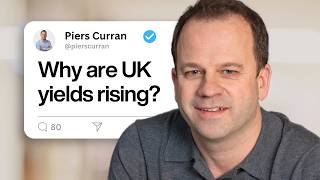
In this Market Maker podcast episode, host (Speaker A) and guest Piers dissect the UK’s mounting fiscal pressures and their market ramifications. They note that 30‑year UK gilt yields have risen to their highest level since 1998 (around 5.55%), prompting a sharp but brief 200‑pip drop in sterling after a Treasury reshuffle. The discussion outlines a vicious feedback loop: higher yields raise borrowing costs, worsening debt sustainability, which in turn fuels further yield hikes. Contributing factors include a widening current‑account deficit (‑2.7% of GDP), limited fiscal headroom, higher UK inflation (3.8% vs lower G7 peers), and stagnant economic growth. The upcoming autumn budget is seen as a pivotal moment, likely requiring tax hikes and further credibility challenges. The conversation then shifts to gold, which has surged past $3,500/oz, driven by inflation hedging, safe‑haven demand, and a steepening yield curve (long yields up, short yields down). Piers explains the split between “conviction” buyers (institutional investors, central banks) and “opportunistic” retail buyers, noting institutional buying has kept gold rising despite price levels. Gold price forecasts from Goldman Sachs (baseline $4,000 by mid‑2026, tail risk $4,500‑$5,000) are discussed, with Piers deeming them plausible given persistent fiscal stress. The episode concludes that rising gold prices reflect eroding trust in government fiscal credibility and central‑bank independence, and that the market will likely remain in a holding pattern until the November budget.
Chapters
Hello and welcome back to the Market Maker podcast. And just to give you a bit of a flavor, as we look to break down some of the major moves in markets this week, we're going to focus and start with the UK, where long-term borrowing costs have surged to their highest level since 1998. Sterling also slumped earlier in the week, investors questioning whether the government can stick to to its fiscal rules. It's a story of rising debt, persistent inflation, political pressure, of course. I think they have now announced, Piers, the autumn budget late in November. But this isn't just about UK, global bond yields are climbing too, with the US and Germany facing their own fiscal strains. And then there's gold. That's the other talking point for this week, blasting through 3,000 $500 an ounce, a signal that investors are hedging against something deeper. Is it fading trust in government finances and central bank independence? While stocks and bonds are looking pretty calm, the question is, is gold flashing us some sort of warning sign or not? So as ever, to unpick this, joined by Piers. How are you?
Not bad. Yeah, looking forward to, you know, UK focus today, at least to start with, which is good. I'm happy about it. We normally tend to lean towards US-centric stuff, which, you know, they're the big boys, so fine. But yeah, good to have a domestic focus today. And those listeners who aren't in the UK, you know, good for you guys to get a little insight into what's happening over here. And yeah. It's not going to be pretty what we're going to cover, to be honest, because yeah, we're in a bit of a tricky situation, I would say. So looking forward to diving in.
Yeah, it's interesting as well because a lot of this attention was earlier in the week and we obviously do our wrap at the end of the week. It's amazing how calm now the market feels compared to the end of day scenarios that were definitely flying around. I think it was on Tuesday when it kind of hit its moment. But yeah, talk me through then maybe some statistics to kick us off of the kind of size of the move, the magnitude, and why the press kind of jumped all over this.
Well, the press jumped all over it, which is why it kind of feels like, you know, obviously a really big story. And that's really because they could, you know, print headlines like, you know, yields 30, let's be clear here, 30-year government bond yields, you know, reaching, I kind I even remember, what is it? 25-year highs I think was the stat. Basically, you gotta go back sort of, well, around the turn of the century. 1998. 1998. Thank you. So look, that's a hell of a long time, right? So when a market does reach a price point that it hasn't kind of traded at for such a long time, obviously it's notable. Particularly when it comes to the press. I mean, we kind of bang the press quite a lot on this podcast. I'm going to do it again. But you know, they love a sensationalist story that's negative, right? That's the clickbait winner. If it's bad news and you can sensationalize it, then perfect for your press, right? So they're all over this because yields climbing like this is bad news for the UK. This is kind of really setting A lot of things, but borrowing costs for the UK government, for example, I mean, is absolutely kind of driven by these bond yields at the point at which they're borrowing and issuing new bonds, right? The cost of borrowing to the UK is really a function of what are the yields out there in the marketplace right now. So basically in simple terms, it hasn't been this expensive for the UK to borrow money for the whole of this century. It's the most expensive since 1998. And when we've already got a lot of debt and when we've already got a kind of deficit, 'cause obviously COVID, you know, governments, their extreme sort of intervention cost huge amounts of money. So obviously debt levels rose right across the planet. That's not a UK, you know, thing only, of course. So this is the problem, rising borrowing costs when you've already got a load of debt. And that's why it's kind of, yeah, a bit alarming. I mean, what the press didn't say was that the last time the UK 30-year bond yield hit a 27-year high was on the 19th of August. So literally 2 weeks before, and then, and actually the bond market has been climbing like this and it's been trending higher for 3 and a half half years. So it's an ongoing extension of a 3.5-year story. It's just that this trend is now reaching levels, as I said, that we haven't seen for 27 years.
Yeah, I was going to ask you that. Why did, because on, I think it was Tuesday, the pound dropped a lot.
Yeah.
And it looked like the sort of chart that you would think, wow, there's a new piece of information that's come out.
Yeah.
It didn't it look somewhat inevitable that we were going to hit these levels. Yields have been rising for some time. I know a lot of people were talking about the shakeup at Downing Street. Yeah. Was that not perhaps the reason, but the catalyst with the pound move?
It was, I think it was the catalyst coupled with a breakout in that yield, like technical, not a technical breakout, meaning that it, yes, made another new high, but that can often just attract in more buyers because buy signals start flashing as it breaks up through a ceiling. And so you can get a bit of an acceleration, right? Couple that with, so it was kind of triggered by the government shaking up their Treasury Department. So why do that? Well, clearly the people that were in those roles weren't doing a good job. Why is that a problem? Because the government's in charge of our finances and if they've got rid of the team that were in charge because they weren't very good, well then surely that's a concern, right? And maybe the government can't be trusted and maybe their fiscal kind of credibility took a bit of a whack there, which triggered then spike higher in yields. And because it was quite a rapid move, then it kind of, I guess cascades through other markets then. So the pound got whacked, as you say, it actually sold off about 200 pips. In pretty short order. This is back on the 2nd of September. So 200 pips in, in a day, that's a lot, right? That's an unusually large move. I would say it's recovered 3/4 of that sell-off. I'm just looking against the dollar only here, right? So back on Tuesday it was trading at 1.3530, let's say. So 1.3530, and then it dropped to 1.3330. 50, and it's recovered three-quarters of that. So yeah, quite a short, sharp move triggered by that government announcement. The media jumped all over it. We had a kind of breakout on the upside on the 30-year yield that triggered kind of correlation moves in other markets. And all of a sudden, you know, there's a little bit of a momentum story behind this sort of a little, let's call it a mini panic and it was very, very mini, whatever. If there's a word, you know, minuscule is maybe even a better term, right? A minuscule panic. And now things have just calmed down because look, all of this stuff that the press have decided to shine a light on earlier in the week, it's just business as usual. This has been happening for 3.5 years, so it's not actually new.
So I read a piece from Deutsche Bank. And you've talked about this before, and it was talking about this slow-moving vicious cycle, circle, and perhaps you could explain it. And this is that idea that these concerns, these debt concerns push yields up, but then the dynamic, given the limited fiscal headroom that the UK government currently has for the reasons you described, one thing makes the other worse and then it comes back and it kind of snowballs.
Yeah, it's like a negative feedback loop that then it's a vicious cycle. So this is how it works. Remember those bond yields rising means that borrowing costs go up right now. Why do borrowing costs, why are they going up? We'll maybe touch on that after. There's a few reasons here, particularly the UK. Look, these yields are rising right across the globe. So everyone's pretty much, certainly G7, right? The major economies, their yields are rising as well, but the UK's are a little bit rising faster for particular reasons. We're going to go into that. But look, here's the negative feedback loop. If, look, think about the lender now, right? So remember these government bonds, that's the vehicle by which the UK government borrows money. So they issue bonds and then they sell bonds to investors, banks, you know, other governments, like international investors and so on, right? And basically the investors are buying the bonds, meaning they're lending the money. Okay. Now in any loan situation, the lender has credit risk. Okay. And that's because the borrower, well, how creditworthy is the borrower? And what's the chances of me getting my money back? Am I going to get paid the interest payments? For the lifetime of the loan? Am I going to get my money back at the end of the loan? Right? These are quite key, obviously key questions for the borrower. So when it comes to governments, you're thinking, right, well, what shape is the UK economy in? You know, what shape is the current fiscal situation in? Is the government credible? Are they doing a good job? You know, all these factors are kind of wrapped up into that kind of credit risk analysis right now. If you start to worry, that things aren't going in a particularly good direction for the UK, then as a lender, you're thinking, yeah, well, the credit risk is rising here. So if I, the investor, I'm going to lend you money, the UK, that risk is going up. So I require a higher interest rate to compensate me for the greater risk. Okay? So that's the mechanism. Now the problem is, of course, if the yields rise, well, that makes borrowing more expensive, which makes the situation worse, right? So then, well, that means the risk has gone up, so investors need more return. So I'm going to lend to you, but I'm going to need more interest, right? So then interest rates go up more, but then that makes the fiscal situation worse, which means lenders need more money, which means the fiscal situation gets worse and it kind of, it can ratchet up and spiral. Now it's crazy to be talking about this. With regards to the UK, like a major economy. Okay. This kind of stuff is normally reserved for your emerging market. That's kind of got into some fiscal difficulty, like Argentina, right? Over the years has required an IMF bailout multiple times because they haven't been, they've got to a fiscal situation where they can't afford it anymore. 'Cause there's a limit, right? You can only borrow money at an interest rate that you can afford. And that's the kind of tipping point. If that interest rate climbs, if these yields climb to a point where, hang on, it's completely unaffordable, then the whole thing collapses and then investors stop lending to you entirely. But you need money 'cause we've got a debt to service and a deficit. And so this is where then you need a bailout and that's where the IMF, that's what the International Monetary Fund is for, is to try and backstop some of this kind of default scenarios. So look, the UK's not, they're not there, right? The yields we're talking about, obviously we're not at that point. The yield's at 5.553% on the 30-year. Okay. So we're not at the point of the tipping point, but it's the direction of travel. Okay. And has the risk of UK defaulting on its debt gone up? Yes, it has, but it's gone up from a very low, tiny, minuscule risk to a slightly less minuscule risk. Okay. And so this is what's happening.
Yeah. So there's a bit of a split here to read or interpret the news because I, was it Kenneth Clarke or who was it that said the IMF bailout comment? But it was obviously a Tory, former Tory member.
That's right.
And so yeah, from an optics point of view, it's just a very simplistic way of attacking the incumbent kind of government.
Yeah.
But for the reasons you said, which are supported by evidence, because I did see that there was a record £140 billion for a £14 billion gilt syndication. Now just explain to me what that is, because a lot of people might go, oh, what's a gilt? What's a gilt syndication? Why is there record orders? But I mean, that very much validates kind of what you're saying, right? Yeah.
I mean, so remember the government has a deficit. That means that it, the budget for this year, and you mentioned something, fiscal headroom, you mentioned a minute ago, and that's basically when the government sets out its budget for spending for the year, it'll have a bit of headroom, i.e., a margin for error. So that there's a little bit contingency there, right? In terms of how much we're going to spend this year versus how much we're going to borrow. Their headroom is dropping and dropping and dropping. And that's because the economic situation and the cost of borrowing and so on has changed as we go through the year. And it's changed in a bad way, meaning their contingency is kind of dropping to wafer thin. And again, this is why the press are on it because now there's literally no margin for error now in the final, well, we've got to get November, right? So really we've got 2 months to get to that point where they then issue another budget. So look, the contingency's almost gone, right? But look, I would say that let's explore why this is happening. So it is happening, so why? And the underlying drivers, I would say, are kind of, there's kind of 4 in my mind. I would say that debt and deficit sustainability is an issue. That's not just the UK, right? So we've got countries all over the world whose debt situations have got worse because of COVID right? So this one isn't exclusive to the UK. We've got a lot of debt, we've got a deficit, and look, we're worried the government might not be able to kind of steer this ship. Hence that story earlier in the week with Starmer changing up his kind of Treasury team, right? So that's one. Number two, inflation. So inflation is rising, okay? And it's rising more in the UK than other countries. So this is a kind of, one of the issues why the UK bond yields are rising faster than others. So right now we've got an inflation rate in the UK at 3.8%, kind of comparing that to the other G7, it's 2.7% in the States, Germany's 2.2%, Japan's 3.1%. For example, Italy and France, well, France is 0.9, right? So our inflation is higher than others. Now what happens there is if inflation rises, well then again, that has an impact on what we call the long end of the yield curve. So long duration bond yields will rise, and that's because inflation erodes the value of money, right? So if you're going to lend money for a long time and inflation's high, when you get that loan returned to you, the value of the money's gone down, so you need compensating for that and that's what you get this yield for. Okay. So inflation's a key problem and the trend on inflation is not looking great, right? In the UK, inflation's been trending higher for 12 months now. Next, well, what's the economic situation and what's our expectations about how the economy's going to perform going forwards? Because look, the government has debt and a deficit, but if the economy grows really powerfully, Well, then that means the government's receiving increased revenue through more tax, right? If companies are making more profit, that's more corporation tax. If people are buying more stuff, that's more sales tax and so on, right? So is the economic expectations looking positive for the UK? No, not really. So again, I don't think the economy's gonna come to the rescue here, right? So kind of remove that and then you are left with something called the current account deficit. And again, this is a UK-specific problem relative to the other G7 nations. Now, what is a current account deficit? That's looking at the difference between how much goods you— what's the value of the goods you import versus the value of the goods that you export. Okay. Now for the UK, we have a wide current account deficit. Okay. Now to put numbers on it, our deficit is -2.7%. of GDP. So the value of that difference between imports and exports is 2.7% of GDP. It means we import more stuff than we export. It's actually only the US that's got, you know, out of the lead big economies, it's only the US that has a larger current account deficit. That's -3.9%. Okay. Others, for example, like let's take Europe. Germany has a really strong positive current account surplus at 5.7%. Japan has a big surplus, 4.7%. Why? Because they export a of stuff. They import stuff as well, but think about the automotive industry. You know, you've got your big giant German automotives, you've got your big giant Japanese automotives. One example there as to why those countries have a slightly different kind of ratio between imports and exports. So for whatever reason, over the decades and decades, the UK has shifted more to a services kind of led economy, which means we don't manufacture as much stuff anymore, which means we don't export as much stuff anymore. but we're importing like crazy. So we have this deficit that's wider than others. Why is that important? Well, it means you're more reliant on foreign investment because think about it. Let's say, I don't know, super simple example. Let's say we buy £100 worth of imports, right? From foreign suppliers. That means there's £100 going out of the country to pay for those imports, right? Then let's say we're exporting less, so let's say we export £80 worth of stuff. Well, you get £80 coming back in. Okay. As your international buyer pays for that stuff. Right. But that's a £20 gap. You got to, you know, that money just doesn't vanish. You've got to kind of balance the books, right? So where does the £20 need to come from? Well, it needs to come into the country from outside, and that often comes through foreign investors buying UK gilts, gilts being the name for UK government bonds. So that's where we get this kind of inflow of money from international investors to kind of balance the books, if you like. So we're just more dependent on foreign investors than other countries because our current account deficit is wider. Why is that a problem? Well, if the fiscal kind of situation in the UK deteriorates, it's the foreign investors that kind of vanish first. They're the ones that head for the hills, right? Especially, you know, if you are, yeah, domestic is a little bit different, but it's the foreign investors that kind of pick up their sticks and head home first in a fiscal crisis. And so because we're more dependent on those, it's just a little bit more risk for us, which means another feeder into why the UK 30-year bond yield is rising and it's rising faster than you're seeing in other countries.
That last point, would that explain why Starmer was one of the first to cut a deal with Trump with these trade tariffs?
Well, actually the UK is very unusual in that we actually import more stuff from the US than we export to the US. The US being the biggest economy, one of the key reasons why we've got a current account deficit You know, unlike, which is wider than most others. So I don't think it really matters from a current account point of view necessarily. I just think we've obviously got a historically very strong relationship with the US and the tariff thing was less risk for us for those reasons. 'Cause we actually import more than we export to the US. So I think Starmer just wanted for optics reasons, probably to just get a deal done early doors. Which was the right thing to do in hindsight because our tariff rate is lower than what you're seeing in these negotiations and agreements with the likes of whatever Japan and the EU and so on, whose tariff rate is 15% and we agreed at 10%.
How much emphasis then are you putting on this autumn budget?
Yeah, so this is like the autumn budget, right? This is where the government announces, right, what's our spending plan? For 2026 and how are we going to afford it? Where are we going to get the money from? I think this is, it's the most important budget since last year, but last year's budget was the most important budget for decades in my opinion, right? Because you had the Labour government coming in and they did some radical stuff by increasing taxes to try and fill the hole between the budget spending and the amount of revenue coming in. I think this time in November, They look, the UK government, they're not doing well, particularly fiscally. So they're going to have to raise tax. And this is obviously a very unpopular thing to do. It's just which taxes. But yeah, a lot of people in the UK are very apprehensive going into that budget because what it will mean for them from a tax point of view is a real concern. And of course, we talked about the economic outlook. You know, if you get taxed more, well then of course you've got less disposable income. So it's one key reason why we're just a little bit nervous about the economic trajectory because we don't know what the government's going to do. Looks like they're going to have to raise tax because the fiscal situation's in a mess. And so the outlook for growth going forwards is a bit depressing.
Now, I can't speak on behalf of the broader public, but thinking of financial services, which is the industry we work in, Have any of your friends left the UK, gone to Dubai or anything like that?
Yeah, one friend has. You've almost hit the nail on the head. He went to Abu Dhabi actually. James Wright, keen listener to the pod. So hi, hi Jim. Yeah, he moved, not for these fiscal reasons though. It's more for a job offer. But yeah, I don't think it's not like panic stations. You know, it's not like, oh my God, pack your bags and leave immediately.
The ability to alter taxes, which is going to probably impact everyone.
And for that current account deficit, that's bad news because we need foreigners coming in. We need foreign investors buying, I don't know, property in the UK that helps with balancing the books, right? But if they're If they massively raise the tax, stamp duty tax, which is the tax we have for buying property, right? If they raise that, well then less foreign buyers are going to buy property, right? And then that's bad news again for the current account. So yeah, I don't know how the government are going to sort this out, but they got a really big problem. And so whilst it's not like crisis Armageddon, you know, just around the corner. It's the direction of travel and it's the lack of ideas for, you know, a strategy. There's no, what's the strategy here? So we just need to figure out a strategy and then start deploying it sharpish.
So we've got about a 2-month holding pattern. Basically, we can't really make any great big assumptions. You had this panic at the beginning of the week. Everyone's now aware of this situation, let's say. And so we just gotta wait until the end of November till we hear the budget as to where this goes next.
Yep. And maybe longer term, or let's say medium term, you know, does something come out of nowhere to kind of come to the rescue here, such as the AI revolution? You know, does that lead to a genuine improvement in productivity, which is something the UK, you know, our productivity levels have been been, you know, really low for years. And can we get a revival in productivity which can lead to a more accelerated economic growth story?
But punching at straws here.
Yeah, exactly.
All right, well look, let's have a good segue then into gold because people are often looking at, you know, trying to curve fit narratives as to why gold is moving. And certainly, you know, as yields have been on this pretty persistent rise on a global level. Gold equally has continued to move higher and it's gone through $3,500 an ounce. But stocks generally quite steady overall. Just wanted to understand like your rationale of what is going on with gold and how is that connected to some of this conversation that we've been having?
Well, so it's connected on two fronts to the conversation we've just had, I would say. Firstly, I was talking about inflation. So inflation's back on the rise, like generally around the world, but as we've said, more rapidly in the UK. Look, it's nothing like the inflation crisis we had back in 2022, right? To, and to quantify that in 2022, the UK inflation peaked at 11%. We're now, it's on the rise now, but it's at 3.8%, right? So it's obviously nothing like that inflation crisis, but gold is a really good hedge against inflation. So remember that cash, you know, the value of cash gets eroded by inflation over time. So one kind of trick to hedge, protect yourself against that is to buy gold because gold historically has got a nice positive correlation to inflation. So take your cash, buy gold, wait, whatever, 10 years, sell your gold and you're gonna get more money for your gold. 'Cause the price has gone up, you know, in line with inflation is the idea. So inflation rising is positive for gold. The other one's about yields, but let's go the other end of the yield curve here, because what's happening is we have a steepening yield curve. So long duration yields are going up for all the reasons we've just discussed, but actually short yields are going down. Why? Because we're now expecting central banks to cut rates more, right? Look at the Fed. The Fed are gonna cut rates in a couple of weeks. We're expecting another cut before the end of the year. So that's bringing the short end down. One reason to not buy gold. Is that it doesn't yield anything. It's an inert lump of metal. You don't get an interest off that, right? So the problem is if bond yields are really high, well, why buy gold? You might as well buy bonds where at least you're getting a nice income off that investment. Okay? But if those yields are dropping, it's like saying, well, actually, you know, that yield differential is narrowing, meaning there's less of an incentive to buy bonds and you could go back to gold instead, right? But then there's loads of other factors at play here for gold that are contributing for this move. And so gold is a safe haven. So, you know, we've just, particularly with the UK, we've painted a pretty bleak picture there, you know, fiscal risk rising, you know, economic outlook looking pretty negative and, you know, could you extend that Globally? Well, yes, fiscal concerns are certainly a global thing. Economic growth concerns, you know, what's going to happen? Are tariffs going to cause a drag on global growth? How's the US going to come out of all of this from a growth situation? So there's plenty of reasons to be nervous about the outlook going forward. So you, you can hedge that by buying a safe haven asset such as gold, right? So these are some of the, the kind of factors that are at play here that's driven gold to a new all-time high. Yeah, as you said, smashing above that 3,500 level earlier this week.
When it comes as well, just to, to who's buying gold. Mm-hmm. I mean, 'cause I think when we talk about it, it's almost like this abstract thing and you think of just people buying gold as in normal people. But yeah, one of the classifications that I saw when I was reading the FT earlier this week was talking about conviction buyers and opportunistic buyers.
Yeah.
Could you break that down for me? Like what are they talking about with those two categorizations?
So, well, look, gold, right? It's a bit like yields on the long end. They've been going up since, well, it's like 18 months gold has been trending higher. Okay. It broke above $2,000 at the start of 2024, and that has just set in motion almost like an exponential move to the upside. It was thought back then, it was thought that gold can't move much above $2,000 because ultimately it's going to get too expensive and therefore demand will dampen because people don't want to pay those more expensive prices. The thought was that it was kind of your retail buyers, your India retail market or China retail market. People thought that that was a really big influence and big driver for the gold price and they well, that's a natural cap to the upside because those retail players, they're going to step out because it's going to get too expensive. That couldn't have been more wrong. We broke 2,000, then we went 3,000. Now we're like 3,500 and this thing's still marching higher, right? So this is where we think, well, okay, who are the buyers then if it's not the retail side? And this is where that idea around this conviction buyer comes from. That's more like your, the kind of, I would say institutional buyers who are buying like gold ETFs, for example. And that, why are they doing that? They're less concerned about what's the price today. Oh God, that's really expensive compared to 6 months ago. I'm not going to touch that. No, their strategy is I need gold in my portfolio as a hedge, so I'm just, I'm going to buy it whatever the price is now. I need that as an offsetting balance in my portfolio, right? So you've got a lot of institutional flow, then you've got a lot of central banks. That have been buying gold. And that's not just all of a sudden, that's again over the last few years. And that's really trying, that's basically countries trying to, I guess, kind of reduce their exposure to the US. This all started back actually in the Russian-Ukraine crisis where the US used financial kind of tariffs against Russia as their kind of tool to apply pressure. And everyone thought, wow, okay, hang on. We got well, we're exposed to this ourselves, right? And so other countries have set about kind of just de-risking from that. So they've been buying gold, selling US treasuries, for example, and like buying gold. Okay. So that's certainly added to the upside as well.
Okay. Got two more questions for you before we wrap. One was, of course, the sell-side institutions were out banging the gold drum with these prices doing what they're were doing, one of which was Goldman Sachs. They were putting out the figure of $5,000 an ounce. You just said there that there was a time, actually not so long ago, that you would've thought $2,000 was a big call. We're now talking the fives come out. It's one of the first times I've seen that figure. What they said though, just to put this in some context, was they outlined a range of possible outcomes. This is normally what they do, their base call and then the range. Uh, their baseline forecast is for a surge to $4,000 an ounce by the middle of 2026. The so-called tail risk scenario of $4,500 and an estimate of almost $5,000 rationale if just 1% of the privately owned US Treasury market were to flow into gold. That's what they're saying. What do you think?
Yeah, I think it's a good thesis. I mean, one of the reasons why gold is in the press this week is because, yeah, new all-time highs, but it broke a really key technical level. So at around $3,430, right? That was the high in April, was the high in June, it was the high in July. You kind of got this triple top that got broken. All right. Now at the moment, look, for all of the reasons we've said, it doesn't look like any of these catalysts are going away. You know, we are worried about fiscal sustainability. That worry is not going to end soon. That's not an easy fix, right? So inflation's climbing. All right. The economic outlook we're worried about, you know, all of these things. Mean that owning gold, the root, the rationale for owning gold isn't going to change. And because of the fact the big buyers and the drivers in the market aren't the retail side anymore, it means this thing, well, could definitely march higher. And actually you'll see it. Final point, maybe you're seeing this in the gold miner stock prices. I said that gold's been marching higher, You know, really since I would say, yeah, 18 months, right? But it's only really in the last couple of months you're seeing the share prices in gold miners really start to ramp up as well. That's quite an interesting sign. The reason is like, why didn't they rise sooner? It's because if you think the gold price spike isn't going to be sustained and gold prices are going to come back down, well then these miners, they don't bother like trying to ramp up and increase production to take advantage of higher prices. If they think it's just gonna be temporary, they kind of keep production kind of stable. Okay. What you're seeing now is miners are ramping up production, meaning they believe these levels are absolutely sustainable and they may even get higher. And so obviously producing more and selling it at a higher price is obviously good for revenues and profits. And so you are now seeing the share prices in miners rise, which is a interesting kind of, I would say, confirmation that the direction of travel for gold isn't going to be down. And actually, I think Goldman's got a good story here. I think there's reasons, compelling reasons that it's going to continue to march higher.
All right. Conclusion then, not to sound too sensationalist, but yours is going up. Gold is going up. Is this an erosion of trust in the two fundamental institutions that dictate an economy, an erosion in the independence of the central bank and the credibility of the government?
Yes. I just think yes. And look, it's just coming home to roost. We forked out a huge amount of cash to pay for COVID. And look, it was inevitable. I know people just wanted to brush the problem under the carpet and forget about it and pretend it's not there, but it's just coming home to roost. And the inflation crisis, again, as a result of COVID meant yields have gone up. Loads of debt, expensive borrowing costs, that's not sustainable. And the longer it goes on, well then the bigger concern people have about it. So that's the direction of travel and we're going to carry on going in that direction because you can't fix these fiscal problems overnight.
And in fact, if anything, the vicious circle continues because worse it gets, that's going to erode the government's favorability. Political change will be in the offing, as is the normal economic-political tie in terms of the change. So yeah.
Yeah.
Interesting times. We shall see.
Yes, indeed.
All right. Well, thank you as always, Piers, for breaking that down. Some really interesting points there when you were talking about the four-point structure of why things are happening, some of these other bits. To unpack. So lots there. If there's any questions at all, let us know in the questions or the comments, I should say, on the episode. And don't forget to subscribe for more things. There's obviously not just the budget. Every week it seems like it's the end of days in markets and we'll be here to hopefully explain it in a nice digestible way. So wishing everyone a fantastic weekend wherever you are, and we'll see you soon. Thanks, Piers.
Cash later.
More from Anthony


Inside the Biggest Banking Stories You Need to Know This Week (Anthropic, Diageo, Private Credit)


Inside the Biggest M&A Deals You Need to Know This Week (UniCredit, GameStop, eBay, Eli Lilly)







AI Breakthrough or Hype? Anthropic’s Claude Mythos, Tim Cook Steps Down & LIV Golf Collapse