The week ahead with focus on Brexit & trade wars
A market briefing covering the week of December 10, 2018. Key events: the UK Brexit vote on Theresa May's deal, U.S. CPI and retail sales data, and the US-China trade-war truce deadline. Technical analysis identifies support and resistance levels across gold, currencies, oil, and stock futures.
Chapters
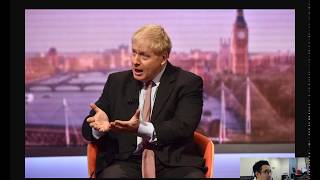
Very good morning, Monday the 10th of December. Hope you had a fantastic weekend. Just to give you an overview, I'm going to talk about the news, what's been occurring, what the general— how the land lies for the week ahead, and the main things that we're going to be looking at across asset. And I'm going to hand over to Sam, and he's going to look at the charts from a bit more of a technical setup for a couple things he's looking at from a level picking and strategy point of view. Looking at the charts overall then, as you can see, I've gone back to having several charts shared here so you can get a bit of a flavor of what I'm looking at. So just to recap for anyone new who might be joining us, I've got EURUSD top left, Cable beside, and then Gold top right, DAX future, S&P. So DAX left, S&P right, WTI crude futures at the bottom with the US T-note or the 10-year future in the bottom right-hand corner. Just having a look then, we have this morning a little bit of downside pressure in the currency pairs as the dollar just claws back. I wasn't here on Friday, but presumably then some of the losses given the, the soft non-farm payrolls release that we had on Friday. So just a bit of a slight pullback in the dollar has meant that the currency pairs just edged a little lower here. Cable, we're going to get into a lot more detail. There's obviously a lot to look forward to this week with the meaningful vote still at this point at least scheduled for tomorrow. Elsewhere, gold, I'm going to leave it for Sam really to, to have a look at in more detail, but, but obviously gold has gone through some really significant levels here. A lot of talk this morning in the office of where do we go here. Now that technically we've opened up some room to go further north. And if that were the case, well, then what could your relative targets be? I guess just having a quick look, probably be looking at 6595, the psychological 1300. But hey, what's to say we don't get up there? So, you know, the, the gold bulls making some noises this morning. Equity-wise, again, a bit of reversal from generally we, we fell overnight in Asia couple of things certainly domestically. The trade war concerns almost re-escalating now after that brief impasse that we had this time last week, but a lot of that, I guess, a bit of catch-up from the negativity that developed from Friday's session. So if anything, despite the gap down, both European— the DAX here you can see— and the S&P future have just been gradually clawing back some of those losses, both well below pivot at the moment. But we've already had a gap fill in the spoos and more so in the the case of the, um, the DAX for the moment. Oil prices pretty static, obviously in the wake of the OPEC deal. Just while we're on that, because I'm not really going to talk about the OPEC deal that much, you can see here the kind of real roller coaster price activity that we had back on Friday, presumably a deal getting done being obviously just a net positive. There was a tail risk that a lot of things we were discussing last week that Saudi were in a political rock and a hard place. Could they commit to cutting knowing the ramifications that could have with their fragile relationship with the Americans? The fact is they did. The range that we were looking at was around a 1 to 1.4 million, and combined OPEC+, we saw a cut of 1.2. So a bit of a confirmation, I'd say, of relief, and that caused a bit of a spike in prices. But as I would expect, bit of a pullback in You know, for me, looking at this oil chart on a slightly longer time frame, here's the bigger, you know, the bigger perspective. And that what I'm looking at is the kind of range high that we've had from last week at $54.50. We're kind of sitting right in the middle of that trading band at the moment. And then obviously the psychological key $50 on the downside, which we threatened but haven't really sustained the break of as yet. And so Going forward, I just don't think that the cut that has taken place is enough for me. The supply situation, whatever country you're looking at, whether in North America, in the US production rates, or that of various Gulf nations, particularly the fact that to get the deal over the line, one of the devil in the details was that Iran is exempt from that deal. So, Obviously, in order for the Saudis to get something through, this is normally the case to get them on board. But then Libya, which has been producing also very high rates in historical comparison, means that on the supply side, I think you've still got a decent amount coming to market. But then on a demand side, you've got the China-US trade war souring again very quickly. This trade truce was incredibly short-lived. And if that starts to ratchet up, which it slowly is kind of, you know, coming to a boiling point again, then I'd say that there's more potential fundamental bias to be short prices here. And then obviously the technical setup would still be exactly the same where, you know, there's plenty of clean air to the downside should we make a concerted break of 50. But For the shorter time frame, the intraday, I'll let Sam have a look at that a bit more detail in a second. First things first, here's the calendar for the week. There are a couple of, I guess, sweet spots of activity. Chinese data kind of sprinkled in throughout the week, and then you've got the meaningful vote for the UK, arguably probably the biggest event overall. The trade war stuff, I guess, on the sidelines to this because there's no real set definitive dates, but no doubt that's going to be an influential force for market sentiment on a short-term basis. US data, a couple of interesting things as well, particularly on Wednesday. As you can see there, you get US CPI numbers. Now I do think that these are, these are very important because if you put into context the non-farm payrolls and the wages component, then if we were to get a weaker CPI print, again, this continues to heap the pressure on the Federal Reserve for arguably not the December rate rate hike, that's going to be next week, and we still on the balance are expecting that to go through. But the composition or number of rate hikes that they're going to be able to put through in, in 2019 is what is up for debate. And I think that US CPI data on Wednesday will be particularly important. US retail sales also to follow on Friday, industrial production, cap utilization, you get your flash manufacturing service PMIs, business inventories, So a pretty heavy week for US economic data, and it comes at a pressing point where I do feel that economic data has taken a renewed kind of significance now that the Fed have changed course. And we're at a little bit of indecision about, well, how dovish did the Fed need to become? And I think the only way really we can tell that is through two things: one, commentary coming out of the Federal Reserve members, and two, the quality or not of the strength or weakness of the underlying economic situation derived from these data points. So they will take on significance. Let's take a look at some of the news stories then. I'm going to fly through this because I want to give Sam ample time to go through the charts. One is, um, the kind of overall risk associated to the trade war. This situation hasn't really changed. It's been a dominant theme for the previous few months. The only thing is we were led to believe that there would be a short-term truce, and that equated to kind of relief rally in assets for the grand sum of about 24 hours this time last week. Well, a couple things to have a look at here. One is the, the kind of underlying economic situation of China continues to remain relatively soft or fragile. Over the weekend, we had Chinese factory inflation slowed further amid weakening demand while gains in consumer price index moderated. So still pointing to weakening demand in the country, just given the, the tightening screws of this deleveraging process, but the ongoing uncertainty about where does this trade war go and what could it mean for the Chinese economy, which has obviously had a really tough time through 2018. The headlines this morning are, you know, this is the problem, is Now you've got threats on both sides. You'll remember the arrest of the— I think it was the, the Huawei executive daughter, and this has led to now threats of retaliation from China. Well, the US and China trade negotiations need to reach a successful end by the 1st of March or new tariffs will be imposed. This is the US Trade Representative Lighthizer on Sunday clarifying there is a, quote, hard deadline. So the first thing we already knew, this was always a 90-day truce, but it's the addition now of this kind of hard deadline phrasing, which is kind of putting the Chinese backs up slightly into being a bit more aggressive of what the retaliation could be. On that point then, what could that be? Well, This was an interesting article in an opinion piece in Bloomberg, and not to go into all of the detail, but this is how China could respond. And if this happened, this would be, I think, renewed level of confrontation that would be arguably very negative for all asset prices because it would exacerbate these fears of a global slowdown, uh, led by this, this, this trade fallout reverberating across the global economy. And that is because, um, you know, the, the supply chain for American companies that predominantly is going through the channel of China. You know, if you think of someone like Apple, for example, where, okay, their products are designed in California, but they're very much made, manufactured, and then exported out of China. And so could Beijing decide to retaliate by leveraging its dominance on that supply chain, not just on Apple, but a variety and number of large American companies. That would be highly destabilizing, would be probably one of the first times that China could look to be a bit more of the aggressor in this situation rather than the fairly passive approach that it's taken thus far. But, you know, these are and would be incredibly, um, you know, elevated moves on China's behalf that I think have not quite been priced in and would be very negative if they occurred. I don't personally think though that China are going to go to this option as yet, but they would definitely like to dangle or wag the stick to China saying, don't make us, you know, pull the trigger on this side. And Trump will be fully aware of that. Talking of this escalating or re-escalating trade war, what does that mean for broader Fed expectations? Well, we've just briefly talked about it, but here's one of the major US banks, Goldman Sachs, they expect the Federal Reserve to raise interest rates this month, as does the market, but they've said the probability of a follow-up in March has fallen to slightly below 50%. So remember, the whole idea here was about currently Fed communication is for rate hike in Dec and 3 more in 2019, but we know now given the shape of the economy and how it's been performing and Fed commentary that that really holds no validity at this point. It definitely— the number of rate hikes is going down. The question is by how much. So Goldman Sachs saying holding in March would likely coincide with a volatile period for markets as the 90-day trade war truce between the US and China is due to end at the start of that month. So it's a very good point. You know, we've just talked about this hard quote deadline that the Americans have been saying that pretty much coincides with the Fed pattern of when they like to hike interest rates with the Summary of Economic Projections. So if they were going to hike rates beyond December, the likelihood is the next one would be March and then June if they were going to go from 3 to 2. And so does that trade war timing, you know, kind of shackle their ability to communicate beyond that? I'd say if the Fed go from, um, for a one-and-done December I think that then that could be your catalyst moment for then the Santa Claus rally to finally appear and equities to recover, because that is a pretty drastic change where we've gone from a hiking cycle to a Powell pause in a very short period of time. And, and certainly I think that would come as a bit of a surprise on a very dovish extreme side of that. A lot of people last week were talking about this inversion of the yield curve And I'm not going to go into it again. I know we covered that in full last week, but I did see some interesting stats while I was on the train coming in this morning, and I just wanted to provide a bit of context to this conversation that is definitely picking up pace. And this is the specific number of days between an inversion of the yield curve and the number of days then before the recession began. And as you can see here, on average it is 765 days between the inversion— and I think this is looking at the, the 1s-10s spread between inverting and then the recession taking hold. So although it might have felt a little bit doom and gloom, and absolutely 100% I agree markets have got to price in these kind of new uncertainties, But the reality is, is, you know, we were looking at— remember that S&P forecast for 2019 that I showed you for much of the major banks on Wall Street? Nearly all of them are still looking for further upside in US equities through to 2019. You know, just because the curve is inverted, that doesn't mean we're immediately going to fall into a recession as of tomorrow. So just something I wanted to clarify. Okay, moving on. Quick look at the pound this morning. I mean, this is the bigger picture. We're still pretty much locked within that, uh, that trend channel lower that we've had sitting at around, uh, this 1.27 handle at the moment. We have got down as low as 1.2665 back at the beginning of the month, but arguably this week's going to be the big one. And a couple things to cover there. This is that Theresa May faces decision day on whether her deal, her ill-fated Brexit vote. So Theresa May must decide on Monday whether to put her Brexit deal to a vote in Parliament this week and risk a humiliating defeat that could plunge the UK into unprecedented political chaos. So obviously the media sensationalism just loving the situation at the moment, obviously predictions of Armageddon and so on. It's, you know, Let's everyone just stay calm and let's just look at this objectively. So the first talking point here is most people are of the belief then that if she brings this vote as it stands, her proposal to Parliament on Tuesday, it's gonna fail. And it's not just gonna fail, it's gonna fail badly by potentially a more than 3-digit or a 3-digit margin. If that was the case, then it heaps an incredible amount of pressure on Theresa May, whether or not she can remain as the legitimate leader of the party given such an overwhelming or resounding defeat in the Commons. So with that being said then, one of the options of course could be, well, let's just delay the vote. This was the Sunday Times that came out this weekend: Ministers and aides expect Theresa May to announce Monday that she is delaying Tuesday's Commons vote on her deal in order to launch a final throw of the diplomatic dice at a summit in Brussels on Thursday. Remember, there's an EU summit, of course, happening this Thursday and Friday in Brussels. Specifically, top of the agenda there is Brexit, at which point the plan was Theresa May would have gone through the first hurdles of Parliament, successfully managed to get backing, to then go to Europe for the progression of talks to then secure the transitional period come the lapse of Article 50 in March next year. Now, this idea of the vote being delayed has already been downplayed by the UK government. As far as it stands this morning, the vote is still going ahead tomorrow. However, for me, I think there's no smoke without fire, and I think there's a credible risk that this vote gets delayed. Now with that being said, what does a delay vote mean for markets? Well, actually, I think in a slightly longer context, I think she would be— tactically, it would be a wise move for her to delay the vote. Although in the short term, this will obviously bring lots of questions. The Brexiteers will be crying, "Look at our weak leader, she can't even command a vote as to when she said because of fear of failure. But for me, if I was advising Theresa May, I would say, "Okay, look, let's go to Brussels, let's present them with the current state of play, which is if I take this proposal in its current form, it's gonna fail dramatically domestically. And so all that's gonna happen is I risk now being shoved aside as leader and guess what? Guess who you're gonna have step in and take my place? Could be this guy. You don't get a sharp haircut like that if you're not lining up a run for Prime Minister. And God forbid, from a European point of view, this chap right here, Mr. Boris Johnson, is Prime Minister and leader of the Conservative Party. That would be the worst-case scenario for Europe. So the question mark then is Well, who else could there be who could run as a leader of the Conservative Party? Well, Sajid Javid has been making some noises apparently in the background to the whips that he's lining up a potential bid, as too is Dominic Raab, the former Brexit Secretary. But I mean, just check out this YouGov survey done last week of the public's perception of what we think about these people as potentially being a good or bad Prime Minister, and every single one of them basically is diabolical. We do not like any of them. And for me, this then, if you bring in the fact that obviously given the state of play, there's been this: Theresa May facing the prospect of a leadership battle with the 48 letters from MPs that could trigger a contest, likely to be submitted this week. For me, given this reason, I just think, haven't we not been here before? Yes, Theresa May has her faults, but for me it's, you know, she's stuck in a rock and a hard place, and the alternative is even more frightening. So I think from a public's point of view, this fatigue with not just getting on with it, which Theresa May obviously has leveraged that as a talking headline over the last couple of weeks to campaign for her proposal. But further disruption, I think, is going to just lose further public support about this, this entire process. So I don't think that actually this letter, 48 letters, I don't think that the situation has changed that much. The point I was making about delaying the vote though is that you go to Brussels, you say to them, this isn't going to pass, You risk then one of these other more Brexit-minded people coming in. So Europe, take a look at your own house. Take a look what's happening in France. Take a look what's happening in Italy. Take a look what's happening in Germany. And throw me a bone here. Help me out. Give me something so I can go back then successfully having obtained a little bit of a better deal. Whatever that point might be. I'm not sure, but something. Then Theresa May comes back, you then delay parliamentary recess, you then sometime next week have then the vote. And at this point, think about it, Theresa May has a deal, she then gets a slightly better deal. I think it would be political suicide then to vote against her. Because then you're only going to be further exacerbating this public frustration about not getting on with the process. So I think logically, not a bad play to delay this and leverage your own domestic uncertainties. You can almost place a seed in Europe's head that, look, rather me than someone else, and take advantage of their weak political state from an individual country basis. So if all this happens, I actually think this could be, you know, through it all, although obviously highly volatile, could be a positive for sterling rather than a negative at that point. But again, trying to trade these headlines, just a word of caution, very difficult time frames. Obviously you just got to be very realistic about the time to execute in terms of not staying in a, in a trade for too long at risk of a headline. All of this though, purely my view, so to take with a, um, you know, a pinch of salt. As for the time being, the vote is still going ahead tomorrow, but I do feel that there is a decent probability that today we might hear that it's getting delayed. Okay, a few other things. This was the last headline that came out if I put cable onto a, a pound, a 1-minute chart just to show you, here's a spike we just saw in the pound this morning, uh, spiked and then immediately reversed. And so this was the headline that caused the spike: Breaking news, European Court of Justice rules the UK can unilaterally revoke Brexit Article 50 process. So, you know, this is where, you know, if you're going to trade the news You've got to be a real, you know, news bug following it all the time. And, and soon as that spiked, you know, I think that was just absolutely to be expected. I mean, this headline is purely confirmation of what we had from the initial hearings from last week. And ultimately, what else would you expect from Europe? You know, this is classic Sun Tzu, Art of War. Those who know their negotiating tactics, you know, when you're dealing aggressively, or if you back a wounded animal into a corner, always give them a way out. Someone will fight much harder if they know that there's no way out in that respect. And so with Europe and Brexit, it's always give the UK an option here. You can just call the whole thing off. You know, even though that's not their stance, that's a logical tactic to deploy, I think, in at this particular juncture. All right, that's it for me. I'm going to leave it at that. I'm going to issue a weekly strategy report with a few more ideas and so on about our view for the, for the week ahead. But I'll hand you over to Sam and he can look over some of the charts. So have a good week ahead. Thanks, guys.
Hi guys, hope everyone had a good weekend. Just, I was looking at the charts on a longer-term perspective just recently, and you know, while we talked about it Friday and again in this, this briefing, we've got gold that has broken— let me just clear this up— above quite a key technical level. So whether we can continue to push on from there or not, I think is going to be pretty interesting to see. You can, uh, go back to the briefings in sort of June, July when we were talking about this level, and every time we came, we found fantastic resistance. What was the, the low that we had last— well, literally, uh, a year ago today— broke through there July and then retested it a few times on, on quite a few days and just failed really to, to hold the break above. But now, following really the weaker dollar from the non-farm payrolls, uh, on Friday, then a bit of risk-off as well. Gold has pushed on and looking to sort of push on again this morning, but found a bit of resistance around sort of 1250. Could we get up to the high that we had back in July, 9th of July? That would be an area I'd be looking at, and then really looking more 81 and then obviously 1300. So one to bear in mind over the week ahead. Also, dollar-yen has found some really good support support a couple of times already. Well, 1, 2, 3, 4, 5 significant, uh, tests of this area. So that's be— that'd be one that I'm keeping a, a look on. The resistance, uh, that we're sort of contained now within this range from those October, November lows, and even going back on a much longer time period, you can see how significant that resistance level has been. So again, this week looking to see how we, uh, we hold around there. It might be that the push lower comes off, you know, further risk-off, or perhaps some dollar weakness in the mix there as well. Dollar index has recovered this sort of early morning push lower, and we're actually now on its higher point of the day as well. Euro and pound, I think obviously got bigger things going on to maybe look to technically, even if we sort of bring it down a bit lower. As Ant mentioned just then, you had the Brexit comment that Chris price higher and then lower. And since then we've just come back down to test Friday's low. And I think, you know, from a technical point of view, yeah, though the S1, if that goes, and there's a bit of an opportunity there, uh, still contained within that trend channel, which I know quite a few people were looking at, uh, last week. So you can see if I just bring that in, trend channel here. So we'll just draw that roughly on the top and the bottom. So while we're still contained in that, um, I prefer the, the break of the downside, um, of the trend channel, just given the, the overall sort of sentiment of this market and the direction the trend channel is going. But equally positive news, and we could obviously have a break above that as well. Oil, quite an interesting level We obviously had that push higher on Friday, albeit, you know, half and more than half was undone into the sort of the close. Quite a key price action point around $52, so the sort of psychological handle, I think, in terms of gauging sentiment for this market. Above $52, then I feel the bulls are still sort of in control, but below that, I think we we open the door again and we start to push lower. Uh, and, and I, I would say that that's the, the most important level for gold to the downside— of oil, sorry, to the downside for now. And I think the sentiment really could change from that, much like it was in, uh, if I bring in S&P here on, on Friday, um, got that really key sort of 2700 level from a technical point of view. We failed to push and hold above that. I think if we had finished above 2,700, we'd be, you know, a fair bit higher by now. Yes, you had the, the Trump 90 days comment, not going to get done with China, that, uh, sort of weighed on equities there. But again, looking back at this on a longer term chart, I do believe from a technical point of view, and it just comes in with that sentiment, if we had closed last Monday above this trend line, then who knows where we could be. I mean, if we take the move to the downside, to the upside, it'd be another all-time high. Um, so yeah, let these obviously markets tell you what's going on. And I think that oil to the downside is quite key. And if you're looking to, to the upside, the sort of gap that we've sort of closed in, uh, US equities above that, then you might get a further push. But, uh, I think the sentiment, yeah, is rightly to, to the downside at the moment. Another few key levels around the pivot and also the sort of Friday morning low that we did breakdown to retest as well. All quite interesting, uh, the day ahead. Was looking earlier at T-notes and it's just incredible to think, you know, this time a month ago, literally on— well, if we— what's the date? The 9th, uh, of November. So just a month and one day ago, the push that we've had. And you can see we're now trading at levels— we draw a horizontal line that we had on the second of February when equities were of course coming down quite, quite strongly at that time period. So the reaction, the recovery we've had in, uh, in T-notes is pretty remarkable there. But from a technical point of view as well, coming up to some very key, uh, levels you see here that we had in, in the summer, in August. So can we confirm a break above that? And then you're looking really at what was also very strong resistance in April March and May. So pound, more headline opportunity, I would say. That trend channel quite key. And euro, that pivot sort of, uh, the pennant still in play. Um, whether the dollar can, can move too much off its own back here against those two pairs or not, not too sure. Equities, oil, and gold all got interesting levels in T-notes, as we've seen. But as mentioned, Anthony Cheung will be putting in the the text for the, the weekly strat, and we'll get that sent out. And I'm sure I'll put in a few charts in that as well, and also in the, in the chat and on our Twitter pages as well. I hope you all have a good, good day and remainder of the week. Obviously quite a lot going on. Thank you.
More from Anthony


Inside the Biggest Banking Stories You Need to Know This Week (Anthropic, Diageo, Private Credit)


Inside the Biggest M&A Deals You Need to Know This Week (UniCredit, GameStop, eBay, Eli Lilly)







AI Breakthrough or Hype? Anthropic’s Claude Mythos, Tim Cook Steps Down & LIV Golf Collapse