This Week In Markets: 10th - 14th October 2022 (Includes US Earnings & CPI Preview)
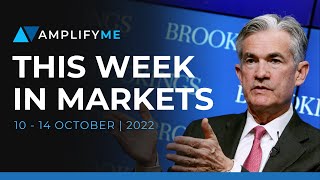
Weekly market briefing covering October 10-14, 2022. Russia escalates strikes on Kyiv, the Bank of England expands bond-market support, and the US restricts semiconductor exports to China. Watch for earnings from JPMorgan and others, US CPI expected to fall to 8.1%, and Apple as a bellwether for consumer health.
Chapters
Hello and welcome back to the channel. Hope you had a lovely weekend. And just taking a look at the kind of macro menu of what's been going on so far today and the outlook for this week, we're going to talk a little bit about the new escalation, which I'm sure you've seen from some of the videos on social media between Russia and Ukraine. We're also going to talk about the extension of emergency measures by the Bank of England to address specifically the fixed income market in the wake of the UK mini-budget. US earnings kick off this week. We've got the likes of BlackRock on Thursday, then other big investment bank names like JPMorgan, Morgan Stanley, and Citi all report at the end of the week on Friday. Also got an update on the semiconductors. We're expecting them to move lower on the open of the NYSE today, um, in step with what we've seen in the Asia-Pac region on the back of a new announcement from the US administration tightening rules on semiconductor exports. And then we'll look at the week ahead. US CPI is undoubtedly the main highlight. That's likely to influence people's expectations about what the Fed will do at their November meeting, with markets pricing at the moment the fourth consecutive 75 basis point rate hike. But more on that shortly. Let's take a look at the main headline then from the weekend in the general broader news sphere, and that undoubtedly was that missiles have struck Kyiv and other Ukrainian cities earlier today, Monday. This comes 2 days after an attack on a key bridge to Crimea that Russian President Putin has blamed on Ukraine. Overall, there hasn't been too much of an outright reaction in oil prices, for instance, but WTI crude front-month futures do sit still up at around the $92 handle, which is sharply higher, of course, over the period of the last 7 days given that OPEC+ decision to cut production dramatically by 2 million barrels per day. It does mean though that energy traders, more broadly speaking, going to be relatively anxious now on the risk of further escalation and disruptions obviously to gas flow from Europe will still remain something to be vigilant for as we go forward over the coming days. In terms of the Bank of England, as I mentioned, they've expanded their emergency support for the UK bond market. What specifically have they done? Well, you can break it down into 3 real parts. One, they've doubled the size of its ongoing auctions. They're launching a temporary expanded collateral repo facility, a real mouthful, but I won't go into explaining what exactly that is, but just check out the Bank of England website and their press release for more information on that, and then expand the types of collateral it accepts. And all of these measures aimed at ensuring that the LDI funds— and you remember that was the one with the big shakeout in the UK rates market two weeks ago, so liability-driven investment strategies— giving them time that they need in order to unwind positions and have the liquidity in the market to act by the end of next week, which was the initial horizon that the Bank of England had given in order to stabilize what was that big blowout in UK markets on the back of the mini-budget. They also provide a broader assurance that the Bank of England stands ready to keep the market working even as investors make a dramatic shift in their valuation of a wide range of assets. So again, all of the usual forward guidance, guidance-type statements coming out of the central bank more recently. Earnings season then, let's have a quick look. As I mentioned, you've got BlackRock here on Thursday, you've got likes of JPM, MS, Citi, and Wells Fargo coming on Friday. Here's a quite an interesting thing to look at. This is a survey conducted by Bloomberg over the weekend, or the end of last week, and more than 60% of respondents to that survey said the earnings season will push the S&P 500 lower, and about half of the poll participants also expect equity valuations to pull back even further from their average of the past decade. All of this, of course, coming in the context of the looming recession, with earnings outlooks likely to be downgraded given what's on the near-term horizon. On our watch list were those big companies that you mentioned. What we tend to see is that although the likes of Goldman Sachs and so forth will report next week, it's really the first big banks out the gate set the precedence for how market participants will view that overall sector performing. So really Friday is a big day. BlackRock will look at as an asset manager in a little bit more isolation, but that will really set the scene for how then financials are likely to perform. And of course we're looking at potentially a big difference between the traditional investment banking divisions, which has suffered immensely given the degree of market uncertainty at the moment, really impeding their fee generation, as a revenue stream comparative to the broader volatility that we've seen, which generally has been boosting trading volumes. One of the things, though, that the Bloomberg survey was highlighting was they basically asked many different fund managers what do they think is the one company to watch to really define the earnings season. And from a macro perspective, what a lot of them came back with was Apple. And the reason why it's a key stock to watch is really twofold. One, just the magnitude of the company. It is the biggest company in the S&P 500. But the other thing is it represents an array of key themes. Now, that being consumer demand, supply chains, the effect, the effect of the appreciation of the US dollar and higher interest rates that are happening and are continuing to happen at the moment. How is that impacting the company? Does that act as a litmus test then for just general broader risk appetite perception across the board? All right, other things to look out for. This is the one I mentioned briefly— global chipmakers. Their stocks have fallen as the US has restricted semiconductor exports in a bid to slow China's progression, particularly on the military advance side of things. Again, to break this down into 3 more digestible headline parts: 1, they're going to restrict certain chip exports. So think about AI, supercomputing, things of that nature. Two, they're going to tighten rules on sharing of semiconductor equipment. And three, create new hurdles for supplying unverified Chinese firms with equipment, essentially. Now, overnight we did see Chinese giants like Alibaba, Tencent all trade lower. Even more, that move prominent in chipmakers listed in that region. And we'll be keeping a close eye on the likes of Nvidia and the rest when Wall Street gets open later on today. Um, one of the other things to mention then is what's coming out for the week. And just to go over this in a chronological order to keep things moving, it is a US national holiday, Columbus Day actually today. But as much as that being a national situation, it does mean the bond market is closed. But the equity market, cash equities on the NYSE is open as per usual, but you might see a little bit of impact on volumes. A few things then to be aware of today, relatively quiet in terms of major data. As we go through the week though, Tuesday you get UK jobs data, Wednesday things start to pick up and become a little bit more interesting. You've got the FOMC minutes happening on Wednesday. This is of course is when the Fed hiked interest rates by 75 basis points for third consecutive meeting. You've also got the OPEC monthly oil market report on Wednesday, and again, in context of the big move that we saw in appreciation of oil on the biggest production cut we've seen since the onset of the pandemic, that might draw some attention for the energy traders. And then in the UK, you can see we've got the August GDP estimate. Um, UK GDP is expected to have contracted slightly in that month after stagnating for most of the year as a result of soaring prices hitting household demand and business activity. But as I mentioned before, and ultimately the headline piece for this week, all eyes will be on the US CPI report for September. Comes on the coattails of that US jobs report, which has seen the market shift back up to a high probability of around 78%, um, implied probability at the last check that the Fed will execute their fourth 75 basis point rate hike. And in terms of what to expect, the headline should drop to 8.1% from 8.3%. But of course, as ever, the devil is in the details. And that headline reading is likely to reflect then what has been a drop in energy costs. What will draw more focus for the overall lasting impact will be what's the core reading. So X-ing out those volatile components like food and energy and It is expected that the core reading will be bolstered by continued rise in shelter costs. So that's something we'll be looking at very closely at the time of that release. Also on Thursday, away from data, the G20 finance ministers and central bankers will be meeting. There's also been lots of things going on from Japanese currency interventions to the emergency measures that have been taken by the Bank of England, the Fed hiking rates, all these different things. So you can expect some commentary towards the back end of the week on those matters. And then Friday to round things off, we've got Chinese CPI PPI and trade data, always an interesting thing to take a look at, and that will come alongside the US retail sales report and the University of Michigan October preliminary reading. So one interesting thing there is about the time horizon that you are looking at US inflation. Although the core reading might go up, as I mentioned, on shelter costs, we can get some visibility at least from consumers in the Michigan reading about what do they think consumers about 1-year and 5-year inflation, and is that starting to now move lower just given all of the situation that is happening economically at this present point in time. So that's really your week ahead. Uh, hopefully that was useful. Don't forget, as ever, it'd be amazing if you could like and subscribe to the channel if you don't already do so. More videos coming out later this week, but I'll leave it with that and take care.
More from Anthony


Inside the Biggest Banking Stories You Need to Know This Week (Anthropic, Diageo, Private Credit)


Inside the Biggest M&A Deals You Need to Know This Week (UniCredit, GameStop, eBay, Eli Lilly)







AI Breakthrough or Hype? Anthropic’s Claude Mythos, Tim Cook Steps Down & LIV Golf Collapse