This Week In Markets: 13th - 17th June 2022 (Incl. FOMC & BoE Preview)
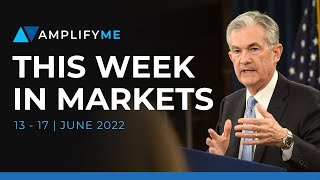
U.S. inflation hit 8.6% in May, the highest since 1981, sending stocks down and mortgage applications to their lowest since 2006. The Fed is expected to raise rates by 50 basis points this week, though some traders are pricing in 75. Watch Powell's comments for signals on how aggressive the central bank will get.
Chapters
Okay, welcome back to the outlook for the week ahead, and if you haven't already done so before, remember to hit that subscribe button and the bell icon to be notified whenever we put out any new material on the channel. But I hope you had a lovely weekend, and let's get straight to it and talk about how things finished at the end of last week, which was pretty much red across the board. And of course, the Dow dropped around 800 points, the S&P 500 finished finished with its worst week since the beginning of the year in January. And all of this, of course, coming on the back of a red-hot US CPI reading, the headline year-on-year coming in at 8.6% above the expectations of 8.3% and even above the top end of the street, which was sitting around 8.5%. So inflation now in the US CPI, the highest since December of 1981. So consequently then, the 2-year Treasury yield seen as very sensitive then to fluctuations in short-term interest rate expectations in the US, jumped higher above 3% to its highest level since 2008. And that really weighed on the US equity market at the close and the end of last week. Compounding some of those fears and more bearish outlook at the moment is the fact that if you were to look at consumer confidence in the US, here's a look at Michigan. That did also come out after the US CPI data on Friday, and it came in at the lowest on record. The headline came in at 50.2. You can see here, so the US consumer is even more pessimistic at the moment than has ever been recorded here in this data set. So that supersedes then the peak of where we were in the late '70s, early '80s. The current economic conditions sub-index, all-time low, 55.4, and a pretty catastrophic drop from the prior reading of 63.3. Expectations gauge, so what consumers think about the future, plunged to its lowest level since May of 1980. So continuation of pessimism starting to really get into the American psyche, which is real trouble then for what the probability is of a recession for the second half of this year. Not only that, one thing you might have seen if you are following me on LinkedIn, do feel free to connect with me. Just look up my name and Amplify Trading. Was this. This is Home Purchase Mortgage Application Index in the US, and one of the things that really caught my eye last week, which not a lot of people are talking about, and for good reason because most people are very laser-focused on the inflation situation at the moment, which is the biggest weighted factor for the Fed and their decision-making. But there was a comment, specifically one I quote, that said that US housing market is at the beginning stages of the most significant contraction in activity since 2006. And what really sounded alarm bells in my head was the fact that this came from Len Kiefer. Probably haven't heard of Len, but Len's an important guy because he's the Deputy Chief Economist at Freddie Mac. And anyone who was trading during the GFC will remember the importance of Freddie Mac and Fannie Mae in particular. He tweeted that it hasn't shown up in many data series yet, But mortgage applications are pointing to a large decline over summer. Purchase apps are down 40% from seasonally adjusted peak. And the main thing he's stressing in his analysis is that during COVID in the spring of 2020, applications also fell 40% but came roaring back in short order. We reopened, but such a rebound is very unlikely in the current economic climate. As what we're seeing at the moment, people's saving rates collapsing, their confidence collapsing. So the idea then that the housing market is going to hold up given these really high levels as well that we've had at the moment, fueled by low interest rates and everything else that the, the government has thrown at it, um, in the post-pandemic environment— another really key risk and one that's going to get the bears all fired up in addition to everything else I've just discussed. So definitely The jury's out. Does this market got further to, to move lower? You know, have the Fed got to really go hard now, and that's going to really put in jeopardy then the depth then of the recession that we're going to get later on this year? That's the main thing markets are trying to wrestle with at the moment and will be the main theme of this week. But look, let's jump straight to it and let's talk about this guy, Jerome Powell, of course. And it is the week of the Fed interest rate decision, and they very much are expected to hike 50 basis points. It's been very clearly communicated by the chairman himself, Jerome Powell, that they're going to do 50 back to back. And so the June and July meetings, market pricing is indicative of potentially, given the inflation reading we had on Friday, that curve move has reflected heightened interest rate expectations for possibly a 75 move in July, possibly September. Now, one of the key things here was a direct kind of addressing of Powell in the prior meeting that 75 really was not on the table at this point in time. So one of the key things we're looking out for in this meeting is, although there is an outside bet that they could hike 75, Barclays, Jefferies are both going for 75 this week. They are outside of the consensus on the street, I must add. Goldman Sachs strategists forecast 50 at basically each of the next 3 meetings. But one of the key things I'd say to look out for is that, look, let's say he hikes 50. I don't think he'll go 75 because they've quite clearly communicated so far back-to-back 50s. I think it would do damage to their credibility to not follow through on that now, hence the market pricing to back-end the 75. But does he now keep 75 on the table? That's really the key takeaway we'll be looking out for on Wednesday when he gives the press conference. So not so much the actual rate in itself, there is tail risk. Of course, they do go more aggressive straight out the gate, but does he keep 75 on after in the previous meeting he directly kind of removed that as an option going forward? My idea is that he probably will keep that flexibility, and thus then an evolution into stepping into slightly more hawkish territory, and rightly so given the inflation conditions we know of right now. The other thing we're looking out for here then is the dot plot matrix Uh, of course it's the June meeting, so the last time we saw this was in March. To give you an idea, um, for the latest summary of economic projections, much like what we had with the ECB revising up inflation, revising down growth, but consequently the difference here from the Fed is their dot plot for rates. Nat West, their chief US economist, expects the median dot plot will have risen from 1.875% as expressed in the March report. So that's where this green line is here. The median of all of the cluster of the FOMC members voting is what this, this represents visually. And so looking for that to be bumped up to 2.625%, so somewhere up here, and then with limited upside changes in the shape of that through '23 and '24. So basically what you're getting is a lift in the front end of the kind of rate trajectory. And then that's likely going to increase by being more aggressive in the near term, the recession probability further out down the timeline. So that's going to be another key thing we're looking out for. Aside from the Fed on Wednesday, that obviously is one of the biggest events of the week. Jerome Powell is also giving remarks at a conference on the international role of the US dollar on Friday. Could be something as well that he might use as a bit of a platform to talk about the economic climate or monetary policy depending on the fallout of how markets interpret that speech that he delivers then in the press conference and so forth on Wednesday. The other thing to look out for from the US, we do have some economic data of course, and we've got US retail sales on Wednesday. Analysts at ING note that headline growth will be depressed by weaker auto sales in May, but there should be decent strength in other parts of the report given strong readings for people movement, so mobility, and also firm chain in-store sales numbers that leave this with potentially an overall positive figure. Overall, industrial production is also coming out this week from the US and should also be firm, with increasing oil and gas drilling adding to the strong manufacturing sector performance that we've seen thus far. The other big rate decision, of course, everyone's looking out for is the Bank of England. As per the headlines, expected to hike interest rates to a new 13-year high. That's a little bit trying to caused a bit of headline stir. That really isn't that particularly big news because they've already, uh, hiked interest rates multiple times to put it at the highest it's been since around 2009 anyway. But look, let's have a look at the shape of the interest rate changes from the BoE of the last several years. And of course, the unexpected vote in the EU referendum to leave the EU caused then an immediate move lower in interest rates as they look to safeguard that downturn that was impending. And then we had the rates climbed back up through the period of normalization in 2018. Remember, this is the period when the Fed were hiking at the time, um, and then COVID hit, sudden collapse down to record low levels, and this very quick uptick we've seen. Remember, the BoE are really quite far out there, having pulled the trigger quite quickly to start hiking rates. And for the BoE, if they do hike rates at this meeting, very much expected, really what's the decision here is how big do they go, 25 or a Fed-style 50, uh, as much as what's being adopted by many other central banks around the world at at this point, the RBA, the RBI, and so on and so forth. This would be their 5th hike in a row when they deliver upon it. The last meeting, to give you a bit of context, 3 out of the 9 members of the MPC— so the Monetary Policy Committee— voted for rates to be set at 1.25%. So there was already a small group of them going for a more aggressive move. The kind of the balancing act here that you have with the decision that the bank needs to make really is between what do they want to prioritize here, inflation or growth. By hiking rates, they're going to look to address what has been an ever-increasing inflation figure, which is expected to go north and break double digits later on this year. But by doing so and tightening rates even further and more aggressively does then increase the likelihood of impeding growth over the coming months and then the subsequent depth then of the potential recession that we could see towards the back end of the year. Um, to give you a bit of context, the OECD, who recently put out their latest forecast, foresee the UK will be the weakest country within all of the G7 next year, given the predicament the UK is in at this present point in time. To help give a bit of, of color around the UK economic climate at this, uh, point in time, you've got UK GDP on Monday, it may show growth at the start of the second quarter after decline in March. However, again, this calendar and the analysts at ING note that they still expect overall second quarter growth to come in negative, largely because of an extra bank holiday last week, remember the Platinum Jubilee of the Queen, but also because of a reduction in consumer spending as the cost of living crisis really starts to hurt the consumer and their ability to spend. The other things we're looking out for: jobs data from the UK on Tuesday. We've also got UK retail sales on Friday. The jobs data expected to really reflect an ongoing tight market, labor market that is, and as such accelerating wage pressures, which is fueling once again this kind of inflation outlook at this present point in time. The other things to be aware of that we do have— going to flip over my screens momentarily— we've got a Bank of Japan interest rate decision as well happening this week. Here's a look at a weekly candlestick bar for dollar-yen. And the reason why I've got it on a weekly is because we've really got to go back 2 decades, 20 years ago, Q1 of 2002, last time we were trading up at around this level of 135, which is massive, basically. And, you know, break of this level could quite easily see a run up to 140 and then targeting up at the '98 kind of currency crisis highs that we were seeing over that period up towards 150. Now, before we get too excited about that, we already had a lot of the relevant bodies in Japan at the end of last week. So the BOJ, the Ministry of Finance, the FCA, they all jumped in in a unified fashion. Very uncommon for that to happen, to basically say, look, look, we're watching the yen, we're going to intervene if things get out of hand. So this is a really critical juncture now for the Japanese yen. And of course, why has the dollar-yen pair just been on a rampage to the upside? This is all about interest rate differentials, of course, and this being that the Fed are already well on their way for tightening, even talking about more aggressive tightening, where the BOJ is just so far removed from that. And so that combination of dollar strength and, and static yen, if you like, have just created this really powerful move from well below 120 up to where we're challenging at the moment. So yeah, for the BOJ themselves, we're not expecting— Governor Kuroda is widely expected stick with rock bottom interest rates. But the trajectory of the yen over the course of the coming days are going to be really critical. And so the BOJ's position on that would be something to look out for, not just in that meeting but throughout the entirety of the week, any more commentary pertaining to the matter. As far as some news is concerned, just a couple things to update you on. Um, in China, COVID, um, we were— markets were before really Friday feeling a little bit more optimistic about this idea of demand pickup China, you know, trying to alleviate supply chain concerns given the some of the loosening we've been seeing in some of the major populated areas and trade important port areas in China. But Beijing now, their most populous district, uh, Chaoyang, announced 3 rounds of mass testing to quell the latest COVID-19 outbreak that's emerged at a bar in a nightlife and shopping area last week. And shortly after the this all comes after relaxing those rules that had been in place for, for a couple of months. So still a fairly precarious situation, precarious situation, as to say. So we're watching that quite closely. This of course can— is a key risk that could really have even, even bigger impact, knock-on effect globally to the inflation situation if we continue to see the zero lockdown policy inactioned, and that impedes then more supply chain disruptions. On the point of China, China's retail spending, industrial output, investment data is all due on Wednesday. Should show the economy is beginning to claw out of the COVID lockdown-affected slump in April, though the May numbers are likely to remain relatively downbeat, is what most people are anticipating. Just very quickly, there's tons of stocks news, but two that I thought were worth mentioning, particularly for HSBC, obviously one of the largest companies in the FTSE 100. Reports on Bloomberg that a breakup of the company's Asian unit could unlock $26.5 billion, or a fifth of its current market value, according to research by Toto Consulting, Consultancy Limited. Now, if you've never heard of them, I'll get to that in a second. Their report said that two other scenarios that could benefit shareholders are for HSBC to spin off the Asian business or just its Hong Kong retail operations into a partial initial public offering. The UK Sunday Times said that Ping An Insurance Group— the reason why they're particularly important, certainly if you've lived or are from the Far East, you would have heard of them— they're HSBC's biggest shareholder. And apparently, according to the Sunday Times in the UK, it is them who are the third party that commissioned that Toto report. So Yeah, be interested to keep an eye out for any words out of the, out of the bank on this particular comment out of Bloomberg. The other thing was TotalEnergies, quite a big potential deal for them. They've become the first foreign company to win a stake in a multibillion-dollar project to boost Qatar's gas exports. And obviously lots more potential opportunities out there for these types of companies given the switch out of Russian dependency of gas. TotalEnergies will get 6.25% equity stake in the first phase of the plan, state producer QatarEnergy said this weekend, today on Sunday. Known as the North Field East, it would cost almost $29 billion and include the construction of 4 LNG liquefaction units or trains, and they're going to be very much involved with that. So keep an eye on the individual stock movement in the QatCoron as well on Monday's cash equity trade. But that is it. So plenty to get your teeth into. And again, as I said, if you've enjoyed the briefing, make sure you like and subscribe to the channel. Really appreciate it. Feel free to join our daily newsletter as well. I'll drop the links into the bio of this video. And yeah, have a great week ahead. Take care.
More from Anthony


Inside the Biggest Banking Stories You Need to Know This Week (Anthropic, Diageo, Private Credit)


Inside the Biggest M&A Deals You Need to Know This Week (UniCredit, GameStop, eBay, Eli Lilly)







AI Breakthrough or Hype? Anthropic’s Claude Mythos, Tim Cook Steps Down & LIV Golf Collapse