This Week In Markets: 2nd - 6th August 2021
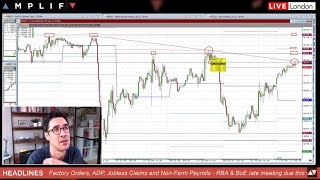
Markets open broadly positive on China stimulus signals and easing regulatory concerns, though US fiscal worries resurface with the debt ceiling. Watch for the non-farm payrolls report Friday and a potential copper mine strike that could affect 5% of global supply.
Chapters
Okay, very good morning. This Monday, 2nd of August. Hope you're doing well. Had a great weekend. Um, for the briefing on Monday, as per usual, gonna summarize some of the main things to be aware of from the weekend overnight session and then the outlook for the week ahead. And certainly is busy week for the US calendar, tons of data coming out, bookended of course with non-farm payrolls on Friday. But let's kick things off with talking about China. Quick review of the charts briefly, technically. I'll leave the community on Amplify Live to go over the trade setups in more detail. But as you can see to the side of me here, um, positive trade in Chinese equities overnight. The Shanghai Composite up about 1.5%, the CSI 300 index up in excess of 2%. And so we'll talk about why that is happening in a moment, but the overall positive trend going into the European morning has led to stock indices trading in positive territory. The NASDAQ's up about 80, 86 points, the S&P 23, the DAX 59. So starting with those to have a quick look at this morning, as you can see here, the DAX future just responding quite nicely to a trend line initiated from the 23rd of July retested back last Thursday, and then a nice response that was seen on the initial push-up that we had in sympathy with Asian equities during the overnight session, and then just pulling back as we've gone through into the European open for the DAX. So very much more technical sentiment that trade, anything than anything German European news related. The NASDAQ's pretty similar from a technical perspective, just looking at a trend line on the same kind of time frames. So this is a 30-minute candlestick chart. You've got the— on the far left, the double top from the all-time highs in the NASDAQ, the retest that we had last Thursday, and then to where we're trading at the moment. And we have actually found some resistance with the early birds in Europe coming in. We're having a little bit of a retest at that at the moment. So I think that's quite a key area to watch. And as you can see from these rectangles marked up, any breakout above that in a more positive trend fashion, then we'll be looking to target up and around the prior highs of the 28th, in that area that was really capturing the peak of some of the price action, um, from last Thursday's session for that brief decline that we saw on the back of when Amazon earnings were coming out. So that Amazon move completely taken back now from that dip that we saw going back on to last Thursday after market. Um, anything above there, you've got the S or the R1 just above there, and that would be in line with around that top that we saw on the second half of last week, and then the all-time high sat for the weekly, um, targets at 15,134 under more bullish scenarios. Any further pullback though around these levels, um, kind of got a bit of a floor to price here at around this area at 15,024. And then also you've got the, the kind of added benefit of the R1 down here as well. And then kind of using the previous price points as a bit of a reference then for any further pullbacks for the back toward the 15,000 mark would be key levels to watch in the NASDAQ. S&P relatively similar, that's also trading on the front foot this morning, up 22. So as such, just seeing a bit of an unwind in gold. It's just having a bit of a test and push through actually the previous resistance turned support from the Asia-Pacific session. Initially as Europe came in, it As you can see, just having a brief look below there at the moment. So the S1 comes in at $1,808, and then the range low that was holding for the best part of last week would be more in line to the $1,800 handle in the futures. This is for gold, $1,799.98. So quite a cluster of support seen lower down at those levels if we continue to trade heavy there. Oil not doing too much of a great deal. We're down about 80 cents. We faded overnight in Asia. But quite frankly, if you look at the daily bars, then we've been moving considerably higher over the last few sessions, almost to the tune of $10 over the last 2 weeks or so. So a bit of fading off those highs, I don't think is too surprising. And of course, we keep one eye on COVID, which I'll talk about at the moment, which is still to be watched. But interestingly, in the currency markets, the dollar is a touch weaker. So from the major pairs perspective, Cable and Eurodollar trading up about 15 pips each respectively. Cable just finding a bit of near-term resistance here from around the highs that we had on Friday. That was a previous inflection point as well, as you can see here going back towards last week. And so just seeing how that responds now, trading at this relative range of about 25 pips at the moment, defined by the overnight Asia-Pac high and those previous aforementioned levels in sterling. And then for the euro, again, likewise, similar pattern to cable amid the dollar weakness. And here just running into some resistance, again, quite a key inflection point short term in the last session, and also the daily pivot level sat at the same level. So an area of resistance here that the pair will need to tackle if it's going to see further continuation to the upside. Um, T-notes, interestingly, yields, um, lower. So bonds and Chinese equities locally rallying. So similar thing this morning, and very much a global theme there, which I'll talk about the rationale of why that's happening in a moment. But as you can see here, the 10-year sitting above then just the right side or the top side of that range that was holding through the back end of last week. So T-notes sitting up around 3.5 ticks this morning at 134.18 with higher US index futures. Now, what's the rationale behind that? Well, let's talk about China, um, quite a focal point from last week, but equities actually weakened initially as we reopened for trade last night, but they then recovered. Sovereign bonds also rallied. Investors weighed the odds of monetary policy easing against a regulatory crackdown, obviously impact markets last week. Some of the things that people are looking at then is Amid the rebound is weighing Beijing's latest signals. And one of the things they're talking about here from a signal point of view is the Politburo. If you're unaware of the kind of political structure in Beijing, the Politburo is kind of the, the top dogs of policy decision-making in the country. And on Friday, they signaled more targeted support for the economy as policymakers look to cushion growth in the face of resurgent pandemic risks. So definitely there's a couple of things going on here at the moment in China. Overnight you did have the Caixin manufacturing PMI for July came in at 50.3 versus expected 51. This follows the official manufacturing PMI of the weekend, which expanded at a slower pace, as the headline would suggest here in July at 50.4 against 50.8. Some of the reasons there they were citing were higher raw material costs equipment maintenance, and extreme weather. So you've got a bit of a slowdown just emerging generally. This has been the trend we've been seeing in PMIs of recent months. Um, you've also got in China at the moment, from a COVID perspective, Beijing are going to step up efforts to prevent the spread of the virus, including suspension of flights, trains, and buses from regions with COVID cases. So at the moment, they're still mindful of the impact that that could have on any further spread throughout the nation. Already starting to see a slowdown in manufacturing and data. And of course, we've seen the disruption through the cybersecurity kind of crackdown with the likes of the technology and the education sector last week. So all of that sounds quite negative, of course, but the more negative it becomes, well, then the more likely is that then there could be targeted support as growth risks mount. And this tantamount then to in different forms, monetary policy easing. And every time we get to easing, of course, there you go, we fall back into that buy everything mentality. So bonds and stocks start to rally. And so any of that subsequent risk emanating from China just dissipating a little bit. And as I said, Chinese equities overnight rallying, and the general region was positive, hence the higher open here, or the higher trade for futures markets in mainland Europe and the US indices. The other thing as well, two other things that have really helped sentiment from overnight. One is that US senators worked over the weekend to finalize legislation on that latest bipartisan infrastructure bill. The bill could be heard in a matter of days according to Senate Democratic leader Chuck Schumer on Sunday. So that's another point. And then the other thing is the ASX 200 So the main benchmark stock index in Australia performed well, not only in sympathy with the Chinese equity move, but also supported after a move in Afterpay shares surged over 30% at the open after the New York listed Square offered to acquire the Australian payment company for a $29 billion deal as well. So yeah, that's, that's how we've kind of started things this morning. And got the week underway. In my notes, um, you can access on my Twitter account— my handle's here, as you can see— I did cover some quite interesting stuff about the US debt ceiling and the US Treasury quarterly refunding announcement, things I think you should be aware of if you're an active market participant. Not really worth me talking about in this briefing for timeliness sake, um, because it's not going to be impactful for strategies this morning. But from a top-level kind of macro perspective, I do recommend that you have a read and check those things out. In short, the US debt ceiling officially became operative again on Sunday after a 2-year suspension, and that means then that the US are going to have to thrash out a deal in order to increase the debt ceiling. And if not, that first deadline could well be hit then for a default in October. Sounds scary. They always come to some kind of deal in the end, but it's worth being aware of the trade-off that that can have then for any political negotiations for any subsequent bills that get brought to Congress. And then obviously more debt issuance out of the US, increasing supply, the appetite to buy that— these are all quite key things which the market is looking at at this point in time, of course. But otherwise, really want to talk about the week ahead because there is plenty going on. Before I do, quick update on COVID from a global perspective. And one of the first things I wanted to mention, because this is an event on this calendar for the week, is Australia. And cases in Sydney have matched an all-time high while parts of Queensland state entered a second day of lockdown. Now the reason why I'm talking Australia is because this week we do actually get the RBA interest rate meeting. It's going to happen tonight, so by the time I deliver this briefing Tuesday morning, I can bring you the latest update. But in short, COVID will likely take precedence at this upcoming meeting, as opposed to the largely constructive, resilient, backwards-looking economic data. The majority, 13 of 18 surveyed economists, expect the RBA to defer its planned tapering. If you remember, they've been consistently tapering over recent meetings as the economy generally has been recovering and performing quite well, but the increased outbreak we've been seeing of the Delta variant is going to shackle their hands in Australia. So that's coming out overnight. But kind of back to COVID for a second, a few other hotspots to be aware of, starting with the US. Florida has become the new epicenter of the US outbreak as it recorded its highest one-day increase of cases since the start of the pandemic over the weekend. And yeah, we, we continue to watch things quite closely on the global front in that regard. And And probably just another reason as well to just not get too carried away, ultra bullish with oil, when we get these consecutive sessions of running higher, just to kind of take a bit of profit as we, we continue to push on there. So trading 74 or 73 handle this morning in WTI crude. And then the other thing I briefly wanted to metal while we talk about commodities is copper. I did read this morning, something to be aware of or put on your radar if you're trading commodities in his workers at BHP, uh, Escondida mine overwhelmingly rejected by 99.5% the company's final wage offer. Mining will continue during a period of obligatory government mediation, but if no deal is reached in the 5 to 10 day period, then strike action will begin. Now this is important, of course, because Escondida is the world's largest copper mine. It counts for approximately 5% of global copper supply. BHP Billiton, London listed, they hold around a 58% stake in that mine. So if you're watching BHP in London equities, if you're watching copper prices, what they've said is then there could be, if no deal is reached in 5 to 10 day period, strike action may begin. You might see some people taking protective positions ahead of that and subsequent volatility might ensue if no deal is made. Toward the back end of this week. So just keep an eye on, um, but talking about the calendar and yeah, there's plenty to go at and you've got the ISM Manufacturing PMI this afternoon coming out of the US. Just a quick top overview. You've got factory orders on Tuesday, you've got US ADP National Employment on Wednesday. You've then got, uh, initial jobless claims on Thursday. You've got the Bank of England rate decision on Thursday. Then you've got US nonfarm payrolls on Friday. Now let's talk about the US non-farm payroll release first, and then we'll talk about the Bank of England and US earnings. So in terms of non-farm payrolls, this is what people are anticipating. Economists are expecting a fairly robust print of around 900,000 jobs, and as you can see, that would be pretty similar to the last month, but continuing this more improving trend we've been seeing of the last few readings. The unemployment rate is expected to decrease to 5.7% from 5.9%. The release is going to shed obviously more light on the strength of the US recovery as well as challenges to hiring, and likely to inform then the outlook for policymakers as we keep a close eye on this timeline for the eventual kind of more definitive hints around tapering, which people of course are expecting at the end of this month. Now we're in August. Jackson Hole in a few weeks to come. For payrolls, ING analysts note that childcare issues, worries about returning to work amid the ongoing pandemic, early retirement, and extended and uprated employment benefits may have diminished the financial attractiveness of going back to work. Again, it's been one of those things we've been aware of for a while, which is job availability is high, but the appetite for people to return to work for those aforementioned reasons has has seen a fairly lackluster return to the workforce perhaps that markets were anticipating just a few months ago. But with many states having now ceased these extra unemployment benefits, the pool of available workers should be in theory on the rise. And so actually going forward then, as schools return to person tuition in September, that pool should increase further and these numbers should continue to pick up on a fairly positive trajectory going forward. Also worth keeping an eye on this week, the Fed Vice Chair Richard Clarida and Fed Governor and voter Christopher Waller are scheduled to speak, which should give investors some insight into the central bank's thinking on inflation and obviously this potential timing around the tapering discussion. The US jobs market still has some ways to go before it improves enough to satisfy the Fed's criteria for beginning to reduce its asset purchases was the latest comments that we had late on Friday from Lael Brainard, one of the main board members on the FOMC, to give you the current kind of reiteration of what Powell was kind of saying more recently. Um, otherwise then, the other thing away from the, the major data coming out from the US, which is kind of prevalent throughout the week, is of course then the Bank of England meeting. Uh, here's a look at the new kind of composition, if you like, of the MPC. We see one member down, of course, because chief economist Andy Haldane is out and a new member doesn't join until the next meeting, is my understanding. And so Saunders and Ramsden have now moved into the more hawkish camp, given some of their recent rhetoric, to kind of fill the void of the outlying Haldane. And so those are the two really to watch. But in general, first, what we're looking at from the Bank of England is that before taking their foot off the stimulus pedal. They're likely to want to know how the UK jobs market will fare, of course, when the government's wage support program or furlough scheme ends in September, and also whether the success of the vaccine rollout contained the Delta variant ahead of the start of the school year. So at the moment, COVID cases, of course, as we know, have been heading in the right direction, but it's still not a foregone conclusion that we're completely out of the woods yet. So perhaps a more prudent stance, as the majority would expect is for them to just kind of hold the line for the time being. HSBC said for the Bank of England meeting that markets are reasonably well prepared for Saunders and Ramsden to vote for an immediate end to QE. Anything other than 6-2 split, in their opinion, in favor of continuing purchases would spring a surprise. And that surprise can obviously come two ways. Either we get an 8-nil vote and actually Ramsden and Saunders fall in line with the majority, not looking to do anything with ending QE at this point in time. Or you get a more hawkish surprise and perhaps the next person on here, but I find that hard to believe given that Ben Broadbent is a deputy governor, as too is Cunliffe, which tend to be more aligned with the more center and not looking to change things up yet on the QE side. Andrew Bailey, if that were to happen, obviously a more hawkish composition might now materialize, and that would be now looking at a 5-3 split, which certainly would, would raise a few eyebrows at this time. But again, overall, probably too early for the Bank of England at this point in time. Then finally, earnings. We've actually got 148 S&P 500 companies reporting, one Dow component, so quite a lot of companies. But I know these are quite small to see, but in general, all of the, the big companies are done. These are all kind of more mid-cap, small-cap type names. There's a couple of interesting ones across the week like Alibaba pre-market Tuesday, um, Moderna's aftermarket on Thursday. So a few that might cause some interest. Um, in the UK and Europe, um, certainly some interesting ones— HSBC, AXA this morning, BP, BMW on Tuesday. Bayer and Siemens, some of the, the kind of German giants report at the end of the week on Friday pre-market as well, just to be aware of. But that is it. So as I mentioned, there's a more thorough, in-depth kind of review of the week ahead, or preview I should say, available on my Twitter account. There's a morning call note that I publish every morning, so feel free to check that out. Any questions at all on this briefing, feel free to drop me a line by putting a comment on the video below. I'll Otherwise, I wish you a good session ahead, uh, and a great week as well. All right, take care.
More from Anthony


Inside the Biggest Banking Stories You Need to Know This Week (Anthropic, Diageo, Private Credit)


Inside the Biggest M&A Deals You Need to Know This Week (UniCredit, GameStop, eBay, Eli Lilly)







AI Breakthrough or Hype? Anthropic’s Claude Mythos, Tim Cook Steps Down & LIV Golf Collapse