Trade truce and the week ahead
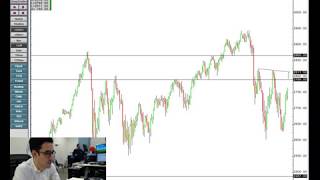
In this 20‑minute morning briefing Anthony Cheung reviews the market impact of the weekend G20 dinner where President Trump and President Xi agreed to a 90‑day trade truce, describing it as a relief rally that lifted risk‑on sentiment. He walks through equity market reactions, highlighting a gap‑up in the S&P 500, technical support at the 61.5 % Fibonacci retracement, and potential upside targets around 2,850‑2,865. He notes strong gains in German automotive stocks (BMW, Daimler, VW) and discusses the possibility of a Santa‑Claus rally driven by dovish Fed signals and the trade pause. Cheung then shifts to commodities, detailing a 5 % oil rally ahead of the OPEC+ meeting, the technical resistance around $53‑$55, and the significance of Russia and Saudi Arabia’s willingness to extend the OPEC+ pact, while also mentioning Qatar’s planned exit from OPEC. Currency markets are covered: the dollar’s pull‑back lifts EUR/USD, GBP/USD, and the euro‑dollar pair, while Italian bond spreads narrow after political news of a possible deficit target concession. He provides a concise Brexit update, outlining the upcoming parliamentary vote on May’s deal, the legal advice controversy, and the risk of a no‑confidence motion leading to a general election. Finally, Cheung previews the week’s economic calendar, listing key central‑bank speakers (Fed, BoE), upcoming data releases (PMIs, non‑farm payrolls, ADP, RBA, Canadian rate decision), and political events (German CDU conference). He promises a detailed weekly strategy report later in the day.
Chapters
Alright, good morning. Monday, 3rd of December. Hope everyone had a fantastic weekend. Let's get things going. I'm gonna give you a bit of an update on the kind of big news from the weekend. The dinner date between Trump and Xi Jinping. And as you by well know by now, they've had a temporary trade truce, and that's kind of the main headline for this morning. Recapturing then renewed risk-on sentiment and what otherwise in recent weeks and months has been quite a fragile kind of macro state that had seen big sell-offs in the global equity market, but a continued recovery this morning. And so we're going to have a bit of a review of exactly what's happened. We're going to have a little talk as well about a +5% rally already underway in oil ahead of the OPEC meeting, which we're going to get on Thursday. And then an update as well on Brexit and Italy. I won't talk about the charts too much from a technical perspective. I know you guys are already— would have done most of your analysis this morning, and I'll issue a weekly strategy report in a few hours' time which will include a few more kind of key broader levels that we're looking at for the week ahead. So I'll keep it on point for the fundamentals for the next 20 minutes or so. But as you can see on my chart, we've had a a significant gap up here from the news that's come from the weekend. So firstly, let's just have a look at the headlines and then we'll make sense a little bit more of where we're at in terms of looking at the S&P 500 here. This was it: Trump, Xi agree a temporary truce in a bid to contain trade war. The leaders' dinner at the G20 yields a 90-day pause in tariff hikes, and so alleviating, at least for the moment, some of the near-term risks associated with the further escalation as what had been put forward by Trump about this time last week. This not massive surprise, but the reason why you've had quite a knee-jerk reaction in markets, I think, is because of the version of worst-case scenarios. So if anything, if you were going to pigeonhole it or classify it, you'd call it somewhat of a relief rally in that respect, because ultimately the risk of these tariffs is still there. It's just that it's been delayed for a period of 90 days. But it's fitting with our kind of base case of what we thought would materialize. A few more commentary pieces this morning where Donald Trump said late night tweet last night that China has agreed to reduce and remove tariffs on imported American-made cars. A claim that Beijing wouldn't confirm or deny. But further positive noises. So if you're looking at the DAX, for instance, where the automotive names have been hit hard in recent weeks on the fears of this escalating trade war, they're up sharply. Well, in fact, let's just have a, let's have a quick look how those DAX components are getting on this morning in Germany. So just click on the DAX. Yeah, you can see here the best performers: BMW, Daimler, Infineon, Volkswagen. So you've got BMW's up over 6%, Daimler 5%, VW up about 4%. So that entire sector up quite nicely this morning. So S&P has gapped up, and as I said, we're above the 2800 handle. Uh, just looking at that trend line from the high on the recovery initially that was seen back on the 17th of October, the 8th of November, and we're pretty much on that line just testing here at the moment. So just finding a little bit of resistance for the, the time being in the futures market. And here, just encapsulating a bit of the, the kind of story of 2018 really, this is a year-to-date chart that we're looking at. I'm sure if you can— if I just bump it up, you can just see it above my, my camera feed. But that was that big February sell-off that we had, the kind of recovery to all-time record highs And here we are having a retrace now, well, from that original high that was seen before the collapse that came in October. And you can see here it's quite a nice fib retracement level there, uh, the 61.5% retracement of the all-time high to the extremity of the sell-off that was seen in October. That absolutely lines up to the tick with the trend line from scaling down over the last period of 6 weeks or so. So pretty decent level here, uh, to keep an eye on as we go through the rest of the session. If this optimism, uh, is to remain, then that could act as a, as a nice platform for then, uh, another push on the upside here. I guess the, the logical level from a technical standpoint, be looking up probably around, first of all, uh, the kind of 2850, just from a psychological point of view, and You can see here it was previously a line of resistance, but then probably the bigger level comes up around the— so looking at here, and then 2865, which would bring into context some of the previous levels coming up towards the beginning of the year all-time high that we had. Uh, question marks obviously at the weekend, a lot of people banding about, you know, is this now the commencement of the Santa Claus rally? You've got a couple of things that could well help suggest that that could be the case, one of which is, you know, just check out the bounce that we've had here in the last kind of week, really, the, the Powell pause. So a dovish turn from the Fed in combination with the trade truce, and now, as we're going to talk about in a second, OPEC+ looking to extend their cut. All of these would be net positives, I'd say, for the equity market. And then will that seasonal effect of the, the Santa Claus rally kick in? And if it did, then these would be the upside levels in the near term I'd be looking at. Talking of OPEC, let's just have a quick look. Well, let's flick the chart over to, to oil. Similar kind of story, nice gap up this morning after on the sidelines, don't forget, from the G20. There was not so much Trump involved because of the slight breakdown there's been politically between himself and Vladimir Putin. But Putin— I don't know if you caught it, it's a shame I don't have a clip prepped up for you— but the high five between Putin and MBS was just absolute classic. You know, kind of big smiles on their face, really macho high fives going on. Probably the only time that I've seen Putin smile in the last 12, 18 months. To be, to be quite frank. But point is, we gapped up, we've rallied hard, and obviously this comes in the context of oil being incredibly susceptible to a very key technical point that we've been watching over the course of the last kind of week or so after we initially had a bit of a run on $50. So, you know, this is the longer-term chart that we're looking at, given this dramatic 35% repricing that we've had in such a short period of time. I mean, you know, we're looking at what, 7, 8 weeks? We've gone from the north to 75 to sub-50, and this is when obviously it's almost crisis for some of these oil-producing nations, particularly the likes of the Saudis, who of course have big ambitious kind of fiscal economic reform plans that have a requirement of oil trading well north of this price point, even that we've traded year to date. And so 50, you tend, you tend to start to get a lot of action on talking of cuts. And certainly we've had a strong bounce now off that level, so it being well protected for the time being. At the weekend, this is what we had. So the headline suggesting that Putin, that Russia, Saudi will extend OPEC+ oil pact. So some of the details here that they've agreed to extend into 2019 their deal to manage the oil market. Although Moscow and Riyadh have yet to confirm any fresh output cuts. So at the moment, it's an idea that they're willing to work together is enough for the market to kind of take that as a positive signal. Remember, the OPEC meeting, if they are going to announce any type of production value cuts, then that's going to happen on Thursday. But you know the drill when it comes to an OPEC meeting, you you know, the— it already starts to get priced in as these oil ministers are fairly vocal about their intentions of what's going to be the outcome of that meeting. So you definitely need to be mindful of that trading oil through the first half and midweek. Uh, you don't need to wait till Thursday, you're going to know well before that what it is that they're likely to do. Not only this, think of oil as a, as a supply and demand quite simply equation, and the trade truce helps lift back demand, which was falling over the kind of cloud and uncertainty of an escalating trade war could have on global growth prospects. So demand has picked up, at least in sentiment, the short term, and supply has gone down. So we've kind of had a little bit of an equilibrium, a bit of a pullback, if you like, from what had been quite disconnected with an oversupply of the market and question marks over, over global demand. So hence the reason you've had a nice little pop this morning. If we continue to move higher in oil, I guess just looking here at the charts, found a bit of resistance, I think, at a fairly, fairly clearly defined level, that being this previous high that was seen back right beginning of the year. We're going to go back to April, it's around $53.74 in the futures. Upside here, probably looking at that $54.80 to $55 kind of area. We start to encapsulate a number of the highs seen at the tail end of 2017, a support point from November '17, and then also you can see we tested it there briefly as well before the sell-off ensued. That's a big level there, and I'd say that's the one to watch as we go through the, the week on the upside. Okay, one of the other things, just so you're aware of— or excuse me, that was my charts I was just showing you with oil. Um, so let me just go over that, what I was just saying again. So 50, this is the defense level, if you like, which we've seen all of this action happen. Uh, we failed to really break that level, uh, with more force. And now we've had these comments and commitments from Russia and Saudi. That's what's prompted this move back to where we are at the moment. Then that was that previous high back in April '17, but really the bigger level is this one above which would be the 54.84, kind of 55 level. As you can see, it's been such a key one going back to 2016, 2017, and this year. Uh, that would be a strong level of resistance on the upside. One of the other headlines that has come out, and just to clarify why people are talking about this, this is Qatar. They plan to withdraw from OPEC to focus on gas output. Now, the reason they've said that, the They are the world's largest exporter of liquefied natural gas. The reason why it has just caught a couple of the headlines at the news agencies is because Qatar basically is one of the founding members of OPEC. I mean, they're— they joined it back in 1961. So them leaving is fairly historical, uh, has quite high relevance. But is this to be something to be worried about? I'd say not. I mean, from a production point of view, I think of the 15 OPEC nations, Qatar ranks in oil number 11. So their actual production output is very low, and when we're talking about a total OPEC production value of about 33 million, these guys only contribute a small hundred thousands type figure, but Why has this happened? Well, deteriorating political situation between Qatar and its neighbors, essentially Saudi, the UAE, Bahrain, and Egypt, have imposed trade and travel embargoes since June last year on the country over allegations that Qatar supports terrorism. Now I guess the tail risk would be that this is kind of— then they've been pushed down this route And is this going to then create potential further, I guess, fragile— what is a geographically very sensitive area, obviously, for the supply of crude oil. Does this disrupt that and provide a tail risk for supply disruptions that could cause further upside to prices? I'd say probably not so much, but something to consider at least. but they are going to be leaving Qatar from OPEC. All right, talking of Brexit, quick look at pound this morning. Well, if you look at the currency markets, let's just have a look at quickly at the euro because I've got that up on my chart as we speak. And this is the euro-dollar pair, we're up about 52 pips, but if you notice, all currencies against the greenback are higher. A bit of an unwinding then of that kind of flight to quality move that had been in play given the associated risks of the, the G20 and the China-US escalation. but the fact that we've had a truce has meant we've had a pullback in the dollar. So the DXY is down about half a percent, supporting all the, the major currency pairs. EURUSD up about 52 pips at the moment. Similarly as well, I mean, this is EURUSD of what we've had this morning and where we trade at the moment. We've had some Italian news where basically Italian media is saying that the government may accept a lower deficit target So BTPs are up on the front foot again this morning. And so some possible more concessions to appease the European Commission to get their proposals through has seen further tightening. This is a picture of the Italian 10-year over the benchmark German Bund. And you can see from the most— I mean, this encapsulates 2018. So you can see here when we had the hung parliament and the Five Star and the League got together with their ambitious social reform reforms. Then came the panic about the sovereign creditworthiness of Italy. And you can see here, the point is, is the spread is narrowing as the, the Italian yields start to decrease, come back in towards that of the German, being a risk kind of positive situation. So kind of twofold here, I guess, for the euro from a fundamental perspective. Some more positive signs coming out in regards to Italian politics. On a potential concessions, and then the dollar negative moves that we've seen on an unwind of the, the kind of flight to quality play. Uh, having a look at the pound, uh, similar type moves, uh, sitting above a 128 handle, finding a bit of a floor around the R1 this morning. Uh, I guess around these levels is, uh, fairly interesting for some of the near-term price action. That 1.28 has been in play a couple of times here, here, to where we are this morning. Had a bit of a run higher and slight pullback, up a similar increment change as EURUSD. So really I'd say this is, this is more of a dollar reaction than it is anything particularly positive coming out for sterling. Much of the focus obviously from the weekend is about UK May facing fresh Brexit battle amid rowl over legal advice. So you're completely up to speed with what's going on here. Theresa May is due to speak in Parliament later today to update parliamentary members about her— what she took out of the G20, essentially. And as part of this, the Attorney General Cox is expected to address Parliament as well. Lawmakers calling on the government to release their advice in full. So Let me just give you a quick bit of background color here. Meanwhile, over the weekend, the opposition Labour Party further raised the stakes for the upcoming key parliamentary vote on May's deal, that being, remember, the 11th of December. The party signaled it will propose a motion to bring down her government if, as is widely expected, the PM's plan is rejected. The first battle could come as soon as today. The Attorney General Geoffrey Cox addresses Parliament And while lawmakers have voted for the advice to be published in full, Solicitor General Robert Buckland has told the House of Commons at the end of last week the government will provide just a full and reasoned statement on the legality of Brexit, something of which has drawn strong criticism from all parties. The Sunday Telegraph, just reviewing some of the national papers, they said that May's Democratic Unionist Party allies, the DUP in Northern Ireland, are set to join Labour and other opposition parties to force the issue. The Sunday Times reported that Cox's advice warns that the UK could be trapped, quote, indefinitely in a customs union with Brussels, citing a letter to cabinet ministers in November. And obviously this is the most contentious issue, the whole problem that the Brexiteers within the Conservative Party have is this kind of commitment about the indefinite nature of the legality around the customs union, which they deem is unacceptable. Labour's Keir Starmer, Labour's Brexit spokesman, said on Sunday as well that it was inevitable that his party would call a no-confidence vote if lawmakers reject May's deal. If May were to lose that too, a result that would likely require some of her own lawmakers or parliamentary allies to vote against her, it would put the UK on course for another general election. So with that being said, let me just flip over to this one. Uh, the UK's Fixed-Term Parliamentary Act stipulates that after losing a confidence vote, parties would have 2 weeks to form another administration that can command a majority in the House of Commons. If nobody can, then an election automatically is called. So Now this is a little bit of a, I don't know what you want to call it, a tree diagram, if you like, of going from the vote that's happening on the 11th, and you can kind of follow this through. I would say my belief is that the vote won't pass, but I do believe then if we go down the, let's follow this through, if we go down the vote fails, I actually believe then we'll get this, the bottom square, which is the green one, that the deal gets amended and then the second vote passes to then be ratified and we have, you know, quote, an orderly Brexit. So even though I think it'll fail at the first bite, I think we'll go back down and then the political will will be there once the pressure kind of manifests itself with the risk of a no deal. They'll be prompted into action. But obviously, as we've just discussed, And as what Labour have kind of been positioning for, it would be then if the vote fails, would they themselves, the opposition party, call a vote of no confidence? That would in effect need then two-thirds of the lower house to agree with them, and then going down the route of a new general election. Particularly messy. The Conservative Brexiteers, obviously the risk then that this could mean that you'd have a Labour— you could have a Labour government led by Jeremy Corbyn. Which would be their absolute kind of worst-case scenario for them. So there's a lot there of risks that could force them into then kind of backing down at the last possible moment to pass the PM. One of the other things as well, I did post this on a couple of social media feeds but in case you haven't seen, this is the kind of slightly more drawn-out picture of where we're at on the timeline of Brexit. So that debate in Commons is happening. You've got kind of two sittings, the 4th to the 6th, the 10th, 11th, the final date being the vote, which is the meaningful vote. You've then got the EU Council to follow, so that's going to happen in about 10 days' time. You then have the parliamentary recess. However, there's already been a lot of the newspaper speculation that could be delayed. Or at least shortened so they could come in over the Christmas period. Then you have the parliamentary vote deadline, should it so be necessary, the EU parliamentary vote for the eventual then withdrawal from the European Union at the lapse of Article 50. Okay, so that's it for, for sterling. Let's just then wrap things up and take a look at the week ahead. Firstly, starting with today's session before I give some thoughts as to how to kind of manage your, your energy, your capital for the week ahead. Starting off with the overnight session, we did have the Cajun Manufacturing PMI. This did come in actually just above 50. It actually showed a very, very modest improvement from the previous. It came in at 50.2 against previous 50.1. On the manufacturing side. However, no one's really panicked about that in the short term. It's a risk-on relief that the trade escalation hasn't gone any further at this particular point in time. Otherwise, going further forward, this morning there's been a couple of the, the final manufacturing PMIs, so lesser market moving given that fact that they're final readings. Nothing really too surprising. Germany and France have come out this morning basically in line with expectations. Moving further forward, today is relatively quiet, so really you'd be looking for today to be driven by market sentiment from what's developed over the weekend. So particularly keeping an eye on just general equity overall positive sentiment, how long-lasting can it be on the trade truce, and then the oil commitment from Russia and Saudi to team up to do more. We're still looking out for details. Don't forget, on on what exactly is the action they might take at the official OPEC meeting on Thursday. So that could well dictate some of the price movement in that asset, as well as the parliamentary conversations happening today for the pound. And speaker-wise though, quite a few things going on. And actually, I'm going to jump over to this. This is a snapshot of central bankers from the Fed and the Bank of England. They are out in force this week. And I think that this is absolutely tactical on both sides of the pond. For the Federal Reserve in the States, you've got Clarida, Quarles, Williams, Brainard, Tuesday Williams, Thursday you get another cluster of speakers with Jerome Powell as well testifying this week. And so for the Fed, I think the reason why you've got, what, 1, 2, 3, 4 5, 6, 7, 8, best part of 10 keynote speeches from Fed members coming is because at the moment they've reversed course from some of the original optimism and hence hawkishness that was in play for the majority of 2018. And obviously we've had this kind of Powell pause put in place, slightly dovish turn that we've had materialized over the last week or two. So for me, The market is asking big questions as we come into year-end. We know you're going to hike next week. That's fine. But the question mark is how many times are you going to hike when it comes to 2019? And don't forget, with the upcoming— I think it's the 14th, 15th of December when we get the next Fed meeting. So it's not too far away. We do get the updated summary of economic projections with the dot plots. And what's going to be key here is that currently they predict 3 rate rises in 2019. Market's priced for 2, moving toward potentially 1 given the recent dovishness. And so we, we will be looking for these speeches to provide some of that clarity as they'll look to manage market expectation and positioning ahead of that event. So these are definitely going to be worth keeping a close ear on. There's 4 speakers of note coming out the Fed today, this later on this afternoon. Bank of England as well Similar scenario, if you think about it. Mark Carney, the infamous unreliable boyfriend, has kind of flip-flopped about his views, but he's got knees deep into the argument of how devastating a hard Brexit or no-deal Brexit could be on the UK economy. And so now you've got Bank of England's Haldane, Flager, Ramsden, they're all going to be on the newswires as well as we go through this week. So clarity on Brexit and the impact on the UK economy and subsequently monetary policy at the Bank of England, and then clarity on the neutral rate is what we're going to be looking for from the Fed members. So that's the speakers. Otherwise, some of the other key events that you've got— anyone trading overnight tonight, you'll get the RBA rate decision. So if you're looking at the Aussie, something to be aware of. On Wednesday, we start looking out for the buildup. Don't forget, it is also nonfarm payrolls on Friday. So we've got the various employment indicators that front-run that— ADP employment change being the main kind of bellwether, if you like, for the labor report— and that's coming out Wednesday. You also get the Canadian rate decision on Wednesday as well. Then looking to Thursday, a couple of interesting things. You've got German factory orders, obviously the OPEC meeting that'll be taking place throughout the day. And then on Friday, quite a busy day to, to finish things off, as you can see on the calendar there. But one thing to draw your attention to is also Saturday, not only because we continue to monitor the health of the Chinese economy and we get trade balance and potentially some inflation numbers, but it's actually the CDU party conference happening in Germany this weekend. And so it wouldn't be too surprising to start to hear some more press speculation going into that on who the potential replacements could be for Angela Merkel, given that the fact that we know she's already going to stand down in 2021. Question marks are who's going to oversee the process of taking over that party in the interim period. Okay, that's it. I'm gonna leave it at that, let you guys get on with things. I've seen a couple of people just mentioning crude while I've been talking. So it's a little bit of a pullback I can see here, um, which, remember, one of the things here is that we have not yet had a firm commitment. They've not said we're gonna cut by X number. They've just said that they're willing to continue the conversations and are willing to do a deal. We just don't know what that deal is at this point. So Still a lot to play for with oil potential volatility, but a little bit of a pullback at the moment. All right, have a good day, guys. Have a good week, and I'll have the weekly strategy report sent out to you in about an hour and a half's time. Thanks very much.
More from Anthony


Inside the Biggest Banking Stories You Need to Know This Week (Anthropic, Diageo, Private Credit)


Inside the Biggest M&A Deals You Need to Know This Week (UniCredit, GameStop, eBay, Eli Lilly)







AI Breakthrough or Hype? Anthropic’s Claude Mythos, Tim Cook Steps Down & LIV Golf Collapse