Trading a News-Driven Event (US CPI & FOMC Meeting)
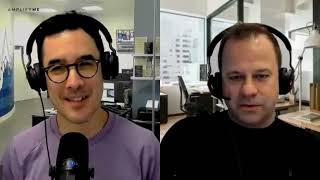
Trader Piers Curran breaks down the June 2024 CPI release (3.3% year-on-year, 0% month-on-month) and how it shaped market moves in equities, bonds, and the dollar. He explains the gap between fast-money traders reacting to the shock and longer-term players betting on rate cuts, then shares a 2008 Bank of England trade that turned a four-fold profit by reading order-book dynamics.
Chapters
Hello and welcome back to the show. And today there are two major talking points of major market events that have happened this week, which is that namely of US CPI and also the latest Federal Reserve interest rate announcement. So that's what's on the agenda and we are going to break it down. For any of those more regular listeners, you can probably hear either I'm a very fit individual and I can cycle a bike and sound very cool and calm and collected. But I'm going to use the excuse of we couldn't fit the Wattbike into our recording studio. And so therefore, Piers and I were both on the bike at 7:00 AM this morning. How many kilometers did you clock in?
I knocked out 31 Ks before 8:50.
Okay, I shouldn't have asked that because that makes me sound bad now because I only did 20.
Just my usual morning, to be honest.
Yeah, I mean, for anyone who's, who's listening for the first time, we, we, we've, um, we're doing an event raising money for Great Ormond Street. Uh, they're building a new cancer care unit for children, and we've got— we, we're doing this, uh, Ride Across America challenge. And so yeah, if you want to donate, that would be amazing. I'll drop a, a link in the, in the show notes. But yeah, everyone's got stuck in, we've doing the best we can to keep pace with, uh, world record holder James Golding, who's doing this in real life. I think he's currently, I understand, cycling through the Grand Canyon at the moment. So definitely a little bit harder than what we're doing, for sure. Um, but yeah, let's, let's talk about the data points. And the thing, the way I wanted to frame this episode was, um, break down what exactly happened. So let's talk about the data in itself, And we can talk about the macro implication from the Fed perspective, dot plots and all that good stuff. But then also I wanted to talk a little bit about how you as a trader would interact with this type of information and, and talk me through a little bit of your, uh, experience from doing that, good and bad. And maybe that can help unpack a little bit the different roles in finance. And how different market participants interact with these news-driven events in particular. So yeah, let's kick it off with, with US CPI.
Yeah, so I mean, big news, of course. I mean, this data is the number one piece of information that economists, traders, investors, you name it, are looking out for each month. And that's just because it's the critical economic measure that the Fed are looking at when they're deciding on when to hit the button on beginning their rate cutting cycle. And of course, um, but the backstory being that inflation has been stubborn in coming back down to the Fed's 2% target. Um, we had expected it to be down at 2% already, and it just hasn't happened. And so as the months roll on with inflation staying stubbornly high, then the Fed have to push out their rate-cutting cycle, right? So that's the kind of context. And so each month we're all desperately waiting, you know, please come down inflation, please come down inflation so that the Fed can start cutting. And every month this year we've been disappointed until this week. So I would say the inflation data which hit the wires yesterday— we're recording this on Thursday, so Wednesday the 12th, 1:30 PM is when the inflation numbers— and there's many numbers in this inflation report— they all hit the headlines and markets sprung to the upside. And that's because this is definitely, I would say, the most encouraging inflation report of the whole year so far. Um, the numbers. So the headline, uh, CPI reading year on year was 3.3%. Now that's lower than the expected 3.4%. So lower than the, than expected. All right. Tick. That's, that's what we want to see. I think with that headline reading though, that's about as where the good news ends because it's lower than expected at 3.3%. But it's still like if you look back over the last 2, well, certainly 12 months, that headline reading, it's been sideways in a range between 3% and 3.7%. So actually this 3.3% reading, it's just bang in the middle of this range. So if all you looked at was the headline year-on-year CPI chart, you'd think that inflation is going sideways, not down. Okay. But when you start looking at some of the other numbers, so if you look at then more shorter term, so we all, we also look at inflation, what's called month-on-month. So that headline year-on-year, that means prices, you know, in the month of May 2024 versus prices in the month of May 2023. Okay, and 3— and prices are 3.3% higher. But if you look month on month, it's looking much more shorter term. And so if you want to look at a guide towards, you know, inflationary trends in the short term, then you look at that shorter reading. Month on month then is May versus April, right? And there we had— this is the really one of the key points of this whole report— there it was zero, 0%. So no inflation. So actually prices in May were the same as they were in April. And the reason why that is significant is because that's the first reading we've had at zero since July 2022. And actually, July 2022, it was zero. And actually, if you take that, they're the only two zero readings in the entire 4-year period since COVID So this is like matching a 4-year low for month-on-month inflation. So if you're out there praying and hoping that the overall inflation picture is going to start to decline back down to the Fed's target, then that's a really encouraging, uh, piece of information. Then, so that's like the headline stuff that includes food and energy and everything's bunged in there, right? But then we look at— and the Fed are more interested as well at looking at what's called the core inflation. So this is then stripping out food and energy, the volatile stuff, and looking more at the services side of the economy where the pricing is much more driven by consumer spending and consumer demand. And so there the figures were really encouraging. The headline year-on-year reading was 3.4%. Now, that's higher than the overall CPI reading of 3.3%, but it's all about trend and movement compared to recent months. The key thing there is that we've had now two declines. March was 3.8%. We had then a 0.2% decline in April to 3.6%. We've had another 0.2% decline to 3.4%. When you look at the annual chart of all of this, it looks like the decline is picking up speed. Okay, and that's kind of— that's the key here. It's, it's trend and looking at how does this number compare to the previous months and which direction are we heading in and how fast. And so right now the core chart is looking like the downside is picking up speed, um, and then you can delve into it in more detail If you look at something called the— Well, the good thing about that headline inflation, core inflation number dropping, it was not driven by the housing services inflation component. It was not. It's that component that's been stubbornly high for various reasons. Everyone's been thinking, well, as soon as that housing figure starts to come down, well, the whole inflation picture will decline. Here you've got the whole inflation picture declining without the housing market moving. And so actually, this is stuff like airfares, car insurance, repairs, hotels, clothes, all this stuff, which is a pretty broad spectrum of consumer items. All of it is coming, you know, it is helping to bring this number lower. And so the, what we call the services inflation ex-housing, was zero in May. And so ultimately, as I said, long story short, this is the best inflation report the whole year. And maybe, just maybe, we might start to see inflation now heading down towards 2% over the course of the next few months.
So would you suggest for a student, is a sensible thing to do to go on the BLS website and look at the CPI report? Because the way you've articulated what you've said, is that what you'd be expecting as a student to be able to articulate when you talk about US CPI over and above just saying it's gone down, it was more moderate, it's moderating. Or how far of a knowledge do you need to go to, I guess, secure a role in finance in your early career?
If I was interviewing someone, I'd put people in 3 categories. If I asked them a question about the US inflation report, I think there'd generally be 3 categories. Number 1, they've got no idea. Oh, what? There was inflation data? Okay. I didn't know. Sorry. Okay. They're not hired for sure. Number 2, it's right. Yes, I saw that inflation dropped and it seemed to be a really positive thing for markets, right? That's superficial. I mean, that's superficial level knowledge. That's better than no knowledge, but it's superficial in so much as you could scan the front page of the FT and capture that because it's in the headline. Those that can then go further and talk about core CPI and talk about month-on-month versus year-on-year, those that can delve in and start talking about services inflation ex-housing, okay, they're the ones that have taken the time to really read the articles and from various sources. And I want people to be reading an article in the FT. Which is quite top level, and then pick out a couple of things. Oh, services inflation ex-housing. All right, let's drill down into that. Let me Google that. Let me see where I can find some more detailed information about that on the BLS website or whatever it might be. Then they're the candidates, right, that are able to demonstrate that they really, they're fascinated by this stuff. They find it really interesting so that they want to seek out and spend time reading up on it. And they're the people you want working for you in the roles where that kind of thing's important because you want people who are passionate and interested in, in the role.
Yeah. And just to kind of connect the dots, I did see, I think the Goldman's summer internship kicked off on Monday and they put a, like a marketing piece out and it was like they had 315,000 applications and this is, this is how many people got the job. And it calculated that the acceptance rate was about 0.8%, which to put into context, that's obviously very small. I think Citadel is 0.3% as a reference point. So it's incredibly hard to get into Goldman's. It's even harder to get into some other places. But the point being is what you've described is definitely possible. And I think when you're fighting those odds, It's probably because what you just said on the third category, you'd probably be— well, I'd say there probably is only about 1% who could probably describe it to that level.
Probably, but I don't think it takes long. Well, hang on, there's kind of two things. It doesn't take long, like, for me to kind of read up on, on the report in that level of detail that I've just talked about. You could go way deeper, by the way, um, to that level of detail I went to I don't know, you could capture all of that. You could, you could spend 10 minutes on it and get to that. Now, that's because I've done it a lot in the past in that I know what I'm looking for. Right? So this is where it comes. If you're a student and you delve into this stuff every month and like if this is the 6th time you've done it, the 6th month that you've really delved into it, then for you, it'll start to become much quicker, much more second nature. And you can spend 10 minutes, bang, done. Great. Now I'm up to speed. Walk into an interview, be confident in talking about it.
Yeah, this is what I was explaining to our interns who are with us at the moment on our summer program. It's preparation, observation, and review, and repetition, and then it becomes habitual, then you become fluent. And every meeting you see, it's like it just builds out that knowledge bank. But that's why, yeah, the superficial will get you so far, But the real understanding, when then you can articulate it in a believable manner that demonstrates passion and interest, then you need— you can't just, um, you know, reel it off. You've got to be in it, right, consistently.
And then I would go another step, right? So you, you're reading up on the data, then it's like, right, how did markets react? So, you know, if we looked at that, I mean, it really was— I mean, it was genuinely, you know, a straight up really big market event. This, um, go back and have a look at your charts. 1:30 PM yesterday on Wednesday. And so we had big, big reaction across the asset classes. So you had stocks, you know, surging to the upside. And that's because, remember, then this inflation report was really good in so much as it— inflation's dropped. And so people are then getting more excited about, well, maybe the Fed can cut in September, right? And maybe we will get 2 or, oh, I don't know, maybe even 3 cuts before the end of the year, right? That's the optimists. And so stocks go up through the roof, which makes sense. Um, looking at the other asset classes though, I mean, so it's talking about stocks is the obvious asset class you'd probably gravitate towards, but what's really impressive in an interview scenario, if you can then go and talk about the other asset classes as well. So if you look at the kind of US government bond situation, then bond yields dropped. That's because then our interest rate expectations are lower. We're expecting maybe more cuts. So bond yields drop, bond prices spike higher. And then you look at the dollar and the dollar's value dropped. Okay, so the dollar devalued again, pricing in some, you know, more interest rate cuts in 2024 than we had thought prior to this data being announced.
Okay, so let's move on then, because as you said, that was a few hours before. It was like Super Wednesday, um, and a few hours later then the Fed come out, and one of the main things that people were looking at with the Fed was no one was expecting an interest rate change in this meeting, which didn't materialize. So rate's still 5.25% range. However, there was like this ultra focus and sensitivity towards the dot plot, which is this projections the Fed put out on a quarterly basis about their future forecast of where interest rates will be at the end of the year. Um, and the summary of that was in the last two meetings, the projections going back to March and Dec had projected 3 cuts for 2024, um, and they moved that to 1. Now, I don't find it that much of a surprise to think they've moved from 3 to 1 given the economic situation that we, we now know from the previous weeks. However, from a market reaction perspective, do you think it— the, the movement that we saw, which perhaps you can go on to explain, but do you think it was a little bit of a function of Because I saw what markets are priced in for cuts for this year after the CPI. So in the immediate aftermath, we had gone from thinking they would do 1 to 2.
Yeah.
And then the Fed come out a couple hours later and officially put on the table 1. So did that determine the initial knee-jerk move? And there's obviously other things we can discuss on the, the presser and the details, but was that that initial is a function of the pricing that occurred in the period.
This is what we call the fast money, right? So this is short-term intraday market participants. And, and, you know, intraday, that could be a human being placing trades manually, you know, right down to high-frequency, you know, algorithmic trading systems or placing trades in microseconds. Got a kind of timeframes, right? So there you got people that aren't looking, or they're not thinking about medium to long term. They're not, you know, the mindset is not, you know, when will the Fed actually start cutting? You know, how many rate cuts might we have this year? You know, how big might the cutting cycle be overall? You know, what might rates be at the bottom of the cut, next cutting cycle in 12, 24 months. You know, they're not really thinking like that. All they're thinking about is today, how is price going to behave given the new informational inputs on that day? And so when it comes to Fed stuff, well, firstly, when it comes to inflation or any economic data of importance, right, that's information being announced. Bang, right? Is it— I mean, it's quite binary. Well, often it's binary, so it's either good or bad. You buy or sell, right? And you're thinking short-term reaction here. Let's get in and out over the space of a few seconds or minutes or hours, depending on your intraday kind of time frame. Um, I, I hesitated when I said binary. The thing is, sometimes it's a bit complicated when you get lots of information announced at the same time. Like we did with the inflation report, there's lots of different numbers, and sometimes, and quite often, you can get the numbers conflicting. Some of them are good, some of them are bad, and then it can get a bit messy. What was good about yesterday's report? All of the numbers all lent that one same direction, which was, hang on, inflation's dropping faster than we thought.
Yeah, and, and kind of one thing I saw, which was there's a, a tool called the Fed Statement Tracker.
Ah, yeah.
So it automatically will update when they drop it, and it's from the Wall Street Journal. It just kind of eradicates out a removal and puts in the replacement word. And there was literally two words that were removed because these statements tend to see very little alteration meeting by meeting because the Fed don't want to create instability. They don't want to shake things up dramatically. Not unless there was a big event in markets they'd need to adapt to. Continuity is key. So check out this sentence then, first paragraph, and it's on inflation, which is obviously, as you said earlier, the critical component to ascertain what is the Fed going to do in the future. So the previous statement on 1st of May, they said, in recent months, there has been a lack of further progress toward the committee's 2% inflation objective. The only word change in the statement was, was essentially they've got rid of a lack of, and it now says in recent months there has been modest further progress towards the committee's 2% inflation objective. Would that not be counterintuitive then to the initial knee-jerk response of the dots and the reaction function of, oh, this is hawkish, stocks decline. But actually, they're acknowledging here that inflation is moving closer to target.
So, so again, it depends who you are. If you're a short-term intraday trader, this is hawkish. Sell stocks, buy the dollar, you know, get, get short T-notes, right? Because the moves off the inflation data from that afternoon are now going to get reversed. All right, get in. There's going to be a short-term knee-jerk reaction in a, in a binary sense to how this report is being interpreted. Okay, now then you move beyond that and you think, well, come on, you know, the thing is, right, the Fed have been conservative all year whereby we've had higher than expected inflation, right? Generally speaking. But have the Fed— are they hiking rates? No, the Fed are just not cutting. Okay, so they're not hiking where you could say, take any one of those months in isolation where inflation's gone up, you could say, oh well, shouldn't the Fed start hiking here? But the thing is, they're not looking at 1 month or even 2 months. They're kind of looking at 3 months at least of data and a trend, and then they might start making some decisions. So they've been conservative all year because they haven't hiked in the face of inflation maybe ticking back up. And here it's the opposite— they're being conservative in what now looks like inflation ticking back down. And they're right to be conservative because inflation has been basically impossible to predict. We thought it was going to drop and it didn't. Then we thought, well, it's not dropping, and now it has. So it's like, well, who the hell knows, right? And so from the Fed's point of view, are they going to cut in September? Well, that's— well, hang on, correct me if I'm wrong, there's another meeting, isn't there, which will be at the start— yeah, in end of July. Yeah, then definitely not going to cut then, right? Now, September, I mean, look, by then that'll be— when will it be? Mid-September. I'm actually not quite sure if we'll get the August inflation report before that September meeting or not, but let's just say the June inflation data and the July inflation data are similar to the May inflation data we got yesterday, where it shows a continued decline. If they get 3 months of solid data in a row where inflation's dropping then maybe there's an outside bet that they might cut in September. I would say more likely they're going to be conservative and not do that, and they'll probably wait, much to Biden's annoyance. Biden would love a little cheeky rate cut pre-election. I don't think he's going to get it. Um, and so look, they're being conservative. Um, so, you know, I, I'd say generally, I mean, look, if you look at the stock market right now. It's quite an interesting, uh, reaction ultimately, because the NASDAQ— let's just take the NASDAQ— jumped higher for the back of the inflation data. Fine. There was then some real noise and it went lower off the Fed announcement, but actually it closed the session. And actually overnight, I should say, really, sorry, in overnight trade, it's now higher than it was. It's higher than yesterday's high. So that, that negative reaction off the Fed has been eradicated and we're back up on the top. So from a stock market point of view, stocks are now looking a bit further down the line and they're saying, yeah, it's only one low inflation number. I get why the Fed have stayed pat and been, you know, saying, look, we're not getting carried away, we're not cutting, we're not cut— you know, it makes sense. But if your view is that inflation's now really starting to drop then you'll predict that the Fed will move towards a cut if those June and July inflation reports come in similar. So you're starting to make that bet as a kind of more medium-term view.
Is there any of these meetings over your career that you think particularly stuck out in your mind and perhaps walk me through mechanics of what, how you traded that event. But also, it'd be great to get an insight of how— I mean, because you were at the time day trading in terms of intraday, very short term. So it was the former, it was more of the, the knee-jerk.
Yeah.
Um, taking advantage of these mispricing in markets and things like that. So talk me through that. And then I'd also like to know, like, a lot of the students I was talking to have never done anything like this before. And so whilst they're learning and they're learning and winning and losing, um, how do you emotionally handle this in terms of gearing up for a big event? It's kind of like, right, the Olympic Games comes every 4 years and you're like, you train, you train, you've got literally— there's 9.4 seconds for you to win the gold sort of thing. And don't mess it up because you've got to wait 4 years. So is there like almost— you get these big events which are scheduled and you're like, this is going to be a big one. So how do you contain that natural kind of irrationality that could lead to impulsive behavior?
Yeah.
How do you then come out of that high-focused level of concentration and with really good or really bad outcomes? Like emotionally, you're probably somewhere on the outer spectrum of your normal emotional variance? How do you pull yourself back in post a big event?
Yeah, I mean, these days where there's a big set-piece event like the Fed, yeah, there's a— there's just a different atmosphere on the floor, and there's a real sort of buzz of expectation and anticipation and excitement and your mindset is, well, look, this is what I've been training for. This is what I've been preparing for. This is it. This is the moment. I wouldn't quite say it's like the Olympics because the Fed's every 6 weeks, right? So it's more like, I would call it more like a, I don't know, just using sporting analogies still. It might be that it's an important, it's like a top of the table clash or If you're talking Premier League here, if you are Man City, then right, it's a game against one of your rivals, the other kind of top 4 clubs, which comes along every, maybe every 6 weeks, right? And it's that one where, you know, it's really key. The pressure's on, the expectation is high. Your personal desire is right, this should be a big event. This should or could lead to a lot of market movement. That means if I'm on it, I can perform at a really high level here. And when you're thinking very personally about your P&L, you're thinking, right, I could make, you know, I could make a big chunk of my monthly P&L off this one event. I mean, you know, if you got a really good meeting, you could easily make half of your month's P&L. In that one session. So when you're going into that session, your personal expectations are very high. You're hoping it's going to be a really big one right now. That's super dangerous because if you allow your hope to override, then naturally your brain will have bias and it will naturally, I would say, take the information that gets announced. And because you're hoping for it to be sensational and really unexpected, and it's going to drive a big market movement, you might have a bias towards the parts of the information that are different and a bit more unexpected. And you might latch on to those, and you might kind of subconsciously ignore the information that actually, that's what we thought was going to happen. You kind of discount that, and you you, you, you're overaggressive and you're looking to trade a move that just isn't there. Now that's super dangerous because you end up— you can lose a lot of money in these events if you're trading it in a way that's in your head rather than in reality. So the best traders, you know, you talk— and again, talking about sport analogies, but you talk about, you know, athletes being in the zone. Right? How can you perform at your absolute optimum when the pressure is also at its absolute peak? And because the pressure is at its peak, well, that's the hardest moment to perform, right?
Talk me through. I want to know your routine because I know there's usually a template that professional athletes will have. I want to know what was your routine.
I wouldn't really, I wouldn't really get involved with the, the banter and the chat on the floor. Yeah, everyone's buzzing around, like, oh yeah, what do you think is going to happen, right? You know, you know, that's where the kind of the emotional stuff bubbles up. I kind of would, you know, I'd kind of stick to myself, sit at my desk, wouldn't really engage with that kind of stuff. And I'm just kind of right waiting. But then the real skill is when the information hits, because yeah, fine, your half of your brain's desperate, right? I want a big move and I want to make a big P&L. But you got to really be in the present where you've got to say, okay, what is the information? And then be quite very pragmatic about it. And I guess pragmatism is probably one of my strengths. So it's pragmatic about, right, that's the information, okay, what am I going to do with that? And it's not that half of the brain that wishes there's going to be a big move. It's like, actually, well, take it on merit. Is that information surprising or not? In which direction? And right, how big a move do I expect based on the information? And I'm going to trade the information rather than my desire to, to kind of make, make money. Um, and I guess, I don't know, there's been certainly occasions where I've made a lot of money on these monetary policy meetings. I've definitely lost lost a lot of money as well. I mean, that's how I learned to be more pragmatic and rational. You know, it came from painful events where I allowed the emotional side to override and got slapped down. And once you get that almost like mental scarring, I mean, that's when you really, really learn, right? And then you don't do it again because you've got that pain scenario to kind of keep your emotions in check. But like the— I remember probably the best monetary policy meeting I had from a trading point of view was when there was a really big surprise. Like last night's meeting was a very, very small surprise, very tiny, right, where the Fed were a bit more hawkish than people wanted them to be given the low inflation announced a few hours earlier, right? Tiny surprise. My best meeting was a big surprise. So this, it was November 2008, actually showing my age a bit here. But what hopefully listeners will realize is that October 2008 was a pretty key month for the planet because that's when Lehman Brothers went bankrupt and the great financial crisis, you know, really kicked in and everything fell off a cliff. Then we got central banks and the more aggressive central banks really starting to step up and take action. We're going into a— it was a Bank of England meeting, and the Bank of England were before the Fed. So actually it was the first kind of major central bank, and people were expecting the Bank of England to cut, cut rates. And I think— I can't remember exactly what was expected. It might have been a half a point cut, or maybe it was even 1% cut.
Yeah, I think it was 1.
Right, and people were going, 1% cut is huge, right? Then banks never shift rates by that much in one meeting. And so everyone's going, look, the Bank of England are going to be super aggressive here, they're going to cut by 1%. Okay, that was in everyone's mind. The news came and they cut by 1.75%, and it was like, bloody hell, wow. On the one hand, it was Jesus, okay, this is This crisis is way worse than we thought then, given how ultra-aggressive this move is by the central bank. So, I mean, markets just went mental, um, and it was really hard to trade because there's this thing called liquidity. I don't want to go too far into this, but ultimately, if you want— so I was trading like the most sensitive product, so interest rate to changes and changes in interest rate expectations, I would say, is the 2-year government bond. Okay, that's that, that duration is the kind of most sensitive to, uh, interest rates. So, um, it just happens that that was— I was a specialist 2-year government bond trader. I mean, that was literally my product. And so, um, it's the best product to be trading when central banks make moves. So, but, so here, if they cut by more, then fine, yields are going to go down by more, prices are going to go up. So I wanted to buy right now. That's fine, you want to buy, but to buy you need a seller. There has to be a counterparty. But the problem is, who the hell's going to sell when the Bank of England have just cut by way more than expected. So therein lies your problem. Now, I would put this down as my— probably one of my literally best ever trades, because there was nothing, there was no liquidity on the sell side of the book. So we would sit with our screens and we'd have the entire— well, obviously the height of your computer screen allows visibility on a certain portion of the order book. Okay. And there were no sell orders at all, like none. So I can't buy then, can I? But I just scrolled up a little bit, and then there were some sell orders. People have maybe left orders in by mistake or something, but they were miles above where the market had been trading before the announcement. But I went, you know what, that's miles above market, but I think this market's going to go 10 miles above. But it took a certain amount of, um, confidence, maybe a bit of bravery, to go, you know, I'm going to lift your offer a mile above market because I think it's going 10 miles, but it was aggressive. So I bought it. I took out all the orders on a portion of the order book and got a big size on— actually, it wasn't that big, so it wasn't much liquidity, but then it went 4 times. Um, and so, and then I got out and it was a great trade. Um, so it took a rational judgment. But then I think most people wouldn't have executed it because you needed to buy way above where the market was previously trading. And I think that, that's the, that's the best part of the trade from when I self-analyze it back.
How do you decompress after that? So you are with the other people on the floor. Some people would have lost money. Some people would have made some money. You've then got like, so there's the peer group, but then there's the management structure looking at you as well, and they know your P&L quite clearly. And then you leave that trading floor and you go home.
Yeah.
So, so talk me through the floor first and then the home. Like, how do you, how do you kind of like, oh, what, first of all, how did you feel immediately after that situation? Do you, is it like a feeling of cool and calm because that's exactly what I thought would happen, it's happened. Or is it more you feel that euphoria and then you control it?
Yeah, I mean, I'd like to say I was cool and calm, but I wasn't. I mean, you know, when you hit one of your best ever trades, you know, it's like, I don't know, scoring a goal like top corner from 30 yards, you know, in the cup final. Type moment where you're not just going to casually walk back to the halfway line. You're going to be running around, taking your shirt off, jumping in the crowd. But I mean, I, I— that's how I felt inside. I didn't really show my emotions externally. And I think to an extent, yeah, you don't know what other people have done. You don't know how they've got on. You don't want to be celebrating, running down the trading floor. When other people are hurting and have lost money. So I would— I wouldn't really talk, I wouldn't really announce that I'd done an amazing trade, or— so I would just— but inside I'm celebrating, right? And you're really— yeah, your adrenaline's up. And then again, from experience, the best policy is just to turn everything off, because if you start to trade afterwards you often fall into that trap of thinking you can do another one of those. You know, you're— then your expectations become wildly, you know, beyond reality. That one single trade of them in the moment was the trade. If you expect another trade of another same size again, forget it, because markets then start to calm down, can often get very noisy, and you can often lose half of the money you've made if you carry on trying. So I, yeah, one trade, in, out, done, switch it off. If then there might be a couple of other people who have nailed it as well, so then you're like, all right, let's get out, let's get out of the office and go and debrief, um, over a, you know, cold beverage, cold beverage or two, uh, and then you'd be joined by those probably later that got got it wrong, um, and they're kind of more drowning their sorrows. Um, but yeah, it's certainly internally you're really buzzing.
And so, and then how, how do you manage a, um, you know, because a lot of the jobs in finance, you close a big funding round, you execute a deal, you win a, a tender, or you do a trade, or so, so how do you manage that relationship than at home. When you get home, I mean, a natural reaction you would imagine in a human relationship is to go, I had this amazing news to tell you, like, today was— but then being trading, I'm surely that doesn't compute on most— with most people.
Yeah, that's it. I think it's hard to relate if you're not, you know, if, if you're not a trader. I think it's really difficult to relate to what it's like emotionally when it's good and when it's bad. But you know, you can measure it in terms that are understandable in that, you know, that was my best ever day, or my one of my best ever days. And like, when you've been trading, I think by that point I've been trading for 6 years, and so if it was one of my best ever days, you know, in, in 6, 6 years, that's like 2,000 days, right? Then obviously that gives some sense of, of the magnitude of it. But then, you know, uh, I had a 20-month-old daughter and, um, she just needed a nappy changing. So that's what she thought about it, you know. So you kind of get, you kind of get grounded pretty rapidly.
So, yeah. Okay. So you're saying that the key to success is, uh, having to have a, uh, a little human around to be the ultimate distraction.
Oh, well, that is—
everything else pales in significance to raising a child.
That's right. Yeah.
I can only sympathize with that.
I'm just doing my bit for the, uh, for the UK birth rate. Come on, guys.
Okay, cool. Well, look, great to get a bit of, um, you know, a bit of inside the head of Piers Curran. And, uh, it's always good to hear these things because I think, you know, you don't hear— you don't hear about this sort of stuff a great deal. And perhaps, you know, if you, uh, want to hear more of that on the show, I mean, it doesn't have to be from Piers always. I'm sure I've got, you know, a few, few tales to tell, and we can get other people on similar who've had experience in different, uh, industries, then yeah, if you find it useful, let us know. Drop a, drop a comment, um, certainly on Spotify. I know there's that option. But yeah, otherwise we'll wrap it up there. Thank you, Piers. And so hopefully that was an interesting episode to just get, get under the bonnet a little bit about data, how it works, and, and how it would be traded in reality. And we will see you next week. Thank you very much.
Thanks a lot. See you later.
More from Anthony


Inside the Biggest Banking Stories You Need to Know This Week (Anthropic, Diageo, Private Credit)


Inside the Biggest M&A Deals You Need to Know This Week (UniCredit, GameStop, eBay, Eli Lilly)







AI Breakthrough or Hype? Anthropic’s Claude Mythos, Tim Cook Steps Down & LIV Golf Collapse