Trading Psychology Part 3: The Mindset Behind Elite Trading Performance
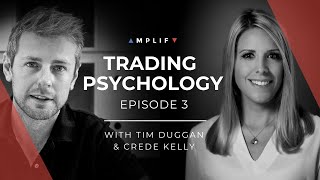
Psychologist Krija Kelly explains how limiting beliefs like fear of success drive revenge trades and overtrading. She introduces a performance profile exercise mapping physical, mental, technical, tactical and lifestyle factors, and stresses that mental skills need systematic training through repetition and pressure simulations, just like technical skills.
Chapters
Hey folks, so this is the third installment on my series of psychology for trading, and here we are with Krija Kelly.
Is that right?
Krija. Krija.
So, I always do that whenever I— yeah, sorry about that. Krija Kelly. Uh, so, you know, Craigie and myself have been working together for long enough for me to pronounce her name properly, but, um, for a number of years now, and, um, but, you know, some, some really good sessions, and, um, I just wanted to get Craigie involved in this series, um, to kind of talk about how the people that she works with a lot of the time high-performance sports people and executives, and some of the practical elements that she brings to those people and to their, their things that they want to work on.
And I thought that might work really well for, for rounding off this series.
So, um, we have a couple of questions, um, I wanted to kind of get through, but really it's just a framework for a discussion around performance thinking. And for, I suppose, for traders, it's, it's sort of how do we get from, you know, when we start learning how to trade, it's very hard to adjust to that sort of risk mindset. And I wanted to really open it up to Craig and, and see what you think about some of those challenges and what you've really seen in the past.
Yeah, sure. So I might just give a little bit of a background on how I've actually ended up in the trading sphere, because it might seem a bit strange coming from sports psychology. So I'm a high-performance psychologist, but the bulk of my career was working with elite athletes, so professional athletes, in optimizing performance. And so I would have studied sports psychology and qualified in that, but actually the principles of, you know, high performance and the principles of sports psychology are the exact same. It's all about humans operating in high-pressure environments and, you know, succeeding. So what I found was, I've been coaching since 2008, so what I found was along the line, people, so Tim actually found me in this way. So I was working as a sports psychologist, but I got a lot of people from different high-performance domains contacting me. And so I've worked with everyone from opera singers to pilots to doctors to, you know, anyone that's kind of working in a high-pressure environment. And so then, you know, started working with Tim and the trading side of things really took off because there's such a similarity between the mindset that's required in elite sports, professional sports, and the mindset that's required in trading. And actually, there's a lot of similarities between the two arenas as well, you know, the high risk, the split-second decision-making, all of that. So I've been working now for the past, um, around 2 years with traders, uh, to really dig into that mindset. And I suppose the approach that I take— so just to maybe explain how, where Tim's coming from on the psychology side of things and where I'm coming from complement each other. Uh, I don't have a background in trading itself, so I don't trade, um, in the market, but my expertise is in psychology. So what I bring to the mix is an understanding of the depth of the psychology that drives humans and the things that can mess us up, and then how that plays out in the markets. So my approach to high performance is to go really deep into the psychology of the person and then link that with the actions you're taking in the market and how that, uh, how you can actually kind of use practical strategies to, to change what you're doing in the market to optimize your performance. But it means going in depth into the person. And so what I found really, the biggest wins that I've had with traders have been sometimes from unlocking things at a very deep level, like core limiting beliefs that are playing out then in, you know, the typical actions that you see in the market, like revenge trading, ego trades, fear of missing out, all of that, but it's actually coming from a deeper place inside the person. So that's really where I found that the, you know, the biggest wins come from.
Yeah, that's really interesting because, you know, core limiting beliefs, and I always find that I'm coming back, you know, with traders, I'm coming back to their core, core confidence in their ability to do their job. And so with my a small group of elite traders every week on a Friday, the first question in review is rate yourself 1 to 10 on how comfortable and confident you felt in your ability to do your job as a trader. And just because you just want to get a pure, quick gauge on how they feel. And, you know, something I talked about in one of the masterclasses we did is, you know, it's, it's like I can, I can so easily— I felt this myself in sport and in trading— in that you, once you start sitting there and any thought creeps in that you're, you're sitting there at a deficit for knowledge or technical skill, then it just starts this, this downward spiral of, you know, just giving in to the losses or just, just clicking buttons and and it just all spirals down into like fear of missing out trades, um, you know, chasing trades. It's kind of similar, and just, just totally ignorant of the part of you that knows you shouldn't be doing these things. Um, and so yeah, I mean, that's, you know, really something that I'd love to talk more to you about is like, how do you help people to kind of transition on? I remember there's one trader that I was working with that went on to work with you Anthony Cheung, who I had a session with him. And he was like, every time trades go onside, like really onside, the more they go onside and into profit, the more he just cannot wait to get out of it because it's so, it was so painful to him. And I was just like, well, do you really talk yourself down quite a lot? And he's like, absolutely. My wife would totally agree with that statement. So like, could you talk a bit about how you work with that?
Sure. There's actually so many pieces to that, my brain is going mad, but there's loads of different things I want to pick up on there. But just to come back to the idea of confidence in yourself, like that's fundamental. And literally, I would say across every client I've had through every performance domain, confidence is the main thing or one of the main things that they want to work on. So even professional athletes at the top of their profession, top of their game, you know, they're still trying to build confidence. So it's not always about fixing things that are going wrong. Sometimes it's about even optimizing strengths as well. But that confidence piece is so important because in these arenas, so trading and sports, pressure is very high and that's just the nature of the job. But having strong confidence can kind of buffer against the impact of that pressure. So it actually stops— we can talk about that maybe down the line around how pressure impacts our thinking, but having high confidence kind of protects against that. So it's a way that you can— if you can build your confidence, you can deal with more pressure. And so, but that's a really interesting point about, you know, that trader that you're speaking of, that kind of when they were winning, they were, you know, felt uncomfortable. And this is something that I've seen a lot actually as well. And it's really counterintuitive. Like people kind of get surprised when you talk about this, but a lot of people can have a fear of success. So it's deep-rooted and it's not something you would see on the surface. But it can be something that's inbuilt in us from, I don't know, childhood, from our parents, from lots of different experiences, but we can actually limit ourselves from succeeding for a myriad of different reasons, and it takes self-awareness to understand why we're doing that and then to shift it. But it is something that's come up time and again, and sometimes it's useful to actually question, like, what would it mean if I was to succeed? And you might be surprised by the answer. You know, maybe you might have to let go of certain relationships, or maybe you might have to change your self-identity, or other people would be jealous, and you're trying to protect against that discomfort, things like that. So there's a whole load of kind of really deep psychology reasons why people can actually hold themselves back from succeeding. So that's one piece of it. Obviously then the rest of us, you know, it's hard enough to have good practices in the market and to stick to your plan and all of that. This is something that people should watch out for. If you find that you're consistently not kind of hitting your targets even though you know you have the capacity to do so. Maybe question, are you holding yourself back? And just one other piece to pick up on there, I love what you're saying about, you know, every Friday rating how confident were you. So that's a really good example of taking a psychological concept but bringing it into, you know, your practical day-to-day trading. So actually getting it down in numbers and being able to track week by week, how is my confidence? That's really the basis of the work that I do with people is developing that self-awareness. Through tracking, through metrics, you know, objective data. And so that you can start to see patterns. And so once you kind of have the data there, then you can start looking at why that might be. So for example, if you have a run of really low confidence 3 weeks in a row, it could be something that's going on in some other area of your life, like in your personal life, that's impacting your confidence and it's playing out in the market. So in high performance, you can't separate the person from the performer. You know, both sides of things are always in play.
Yeah, so what— so there's a couple of great questions, uh, or sorry, what great things you said that have just like gotten questions going in my mind. Is that like one thing I wanted to ask you, you know, I mean, maybe, maybe quite a few traders watching this, you know, are thinking, well, I wish I had the problem that was just confidence, you know, whereas I'm just bleeding money day on day on day. You know, how do I take myself out of this spiral and make a change? And I know when you and I started working, I was in a pretty bad personal space, and I knew it was impacting my trading. And I suppose, how do you kind of create that awareness?
Because I, uh, for me, I was just like, no, everything's fine.
I mean, yeah, I've had a bad, bad breakup here, but 'No, I'm dealing with everything, it's fine.' But really, to kind of objectify that or to take yourself out from that, what sort of things do you— can a person do to kind of take themselves out and be a bit more aware, maybe?
So I think, um, like we're talking about, it's really— it's about building self-awareness but doing it in a practical way. So the first step that I take with any— when I'm doing one-to-one coaching with anyone, whether it's a trader, an athlete from any performance domain, we do a thing called a performance profile. So sounds fancy, but it's a pretty simple exercise. We actually break down performance like a jigsaw. So you look under different headings. So physical factors, mental factors, technical skill, tactical, and lifestyle. You think of all of the different things that impact your trading. So even, you know, so not just the things you're good at or you're bad at, but literally everything that has an impact on your trading performance. So that if you were 10 out of 10 on all of these different things, what would result in peak performance? And that's usually an eye-opening exercise for people because you start thinking outside the box and you start getting into this performance lifestyle approach that I talk about. So this would be something that athletes really, you know, use and ascribe to. So your sleep can impact your trading. And maybe that's not an area that people who are thinking, you know, I really wanna improve my trading, they're not first thinking, actually, I better get a better night's sleep. However, that's fundamental. So in any performance domain, like we all know, if you don't get good sleep, you know, you're not going to be functioning optimally in a cognitive way. So this exercise maps everything out and then it gives you a good sense of like a snapshot in time of where you're at on every factor. And usually you'll find that there's one core thing in the middle that if you improve that first, you know, 5 other things would improve. So you can actually approach this in a very systematic and practical way.
I remember when we did my performance profile and I just thought, oh, this is just like, I don't, I don't really know where this is going. And then when I filled it out, I was like, oh, okay, there's some stuff here, maybe if you look at it the right way. And then we got in a session and I was like, oh gosh, this, this is like just picked me apart.
And that was—
I was amazed at actually how much self-clarity it gave me.
And then from that, I could develop like a whole different level of confidence.
Because, because I was just so much more self-aware, and I just thought that was amazing. And that was really a turning point for me in working with you. Um, so, well, thank you for that. But yeah, I highly recommend that for people to do. Another question I have is like, you know, in relation to— because I know like most traders that I talk to are just, they're, they're, they're kind of young, or they're starting, or they're like you know, 6 months in, maybe 2 years in, that have these real sort of— especially with the traders who are like 2 years in, 3 years in, it's always— they have such an awareness of that. It's just their psychology, that they know all the technical stuff, they have good edge, but it's just these, you know, self-limiting beliefs, or didn't— don't have good sleep. Things like that that get them. But coming back to like, you know, maybe most of the traders that might be watching this who are kind of suffering in P&L performance, um, I mean, for example, like, how, how, how does the mindset of like, say, Johnny Sexton, uh, rugby player for Ireland, uh, how does, how does he develop his mindset to kind of like, what gets him to being Johnny Sexton in terms of how does he think I mean, yeah, he's got natural talent, obviously, but then also when he's there in front of a stadium, being known around the world, about to take a kick, how does he not choke?
And what, you know, how does he keep his mind under control?
So it is literally practice, discipline, systematic approach to developing that mindset. And I think that's something that maybe people miss when they think of performance psychology. For some people, it seems a bit, oh, and especially even as I'm talking about going deep into your core limiting beliefs probably half the people have gone, oh, that's not for me. But it's— there you can actually do this. And the best way to do it, to develop the mindset that you need for peak performance, is to treat it the same way that you build your technical skills and your tactical skills in trading. Like, you learn techniques, you implement them, you consolidate them, become second nature, and then you move to a higher level of, you know, learning new skills. And so it's the exact same on the mental side of it. So for example, like, and I have worked with, um, you know, children in the past on the mental side of it, teaching mental skills at a very simple level for, say, sport and that. But it's the same, so you start simple and then you build up the kind of complexity of what you're doing. So same with, for example, Johnny Sexton, he's gonna have been working on the mindset, mental side of his game for years and years and years, and he would practice under pressure as well. So, I think you'll find that in a lot of sports people that say, especially people that have a role in sports where the pressure is on them as an individual. So in a team sport, you know, for a number 10 in rugby, if you're kicking, the whole stadium, all the pressure is on you. So, you know, typically in those positions, people will actually train under pressure in order to try and recreate the pressure of being in a match situation, championship match. And so, for example, I think Johnny Wilkinson talks about this in his book as well, that, you know, they would give themselves a target of like getting, say, 200 kicks on target in a row and starting again if they miss it at the end of training, so when they're fatigued. And, you know, so in that way, they're building up their mental resilience under fatigue. So you can literally systematically train for this. And I think it's important for traders starting out, like, there is an element of you need some technical tactical skills in place for the mental side of things at the level we're speaking about, is to really be of benefit and to kick in. So at the start, I'd always say to people, like, when I'm working one-to-one with people in terms of trading coaching, I would say they need to be at a certain level of technical skill in order to benefit. Because if you, if you only have a certain amount of time to spend on trading during the week, you know, get the technical skills to a good level that's kind of relatively automatic so that you know what you need to be doing, and then we can start looking at why do you deviate from that. Plan. So I think, you know, it's taking that systematic approach and understanding that it's the exact same as building up your technical skills. You approach the mental side of it in the same way. I've just lost your audio there, Tim.
Fantastic stuff.
I mean, it's— I think a lot of people think that these wins are only attained by, you know, these gains are only attained by you know, a small amount of practice and kind of very turnkey quick fixes. But, you know, as you're saying there, it's just methodical, consistent, you know, kicking 200, starting again if you missed the 150th kick, you know. And I think with trading, I think a lot of people think that, well, if they just put on a series of indicators and have one or two good trades, that then, okay, they're done. You know, but, but I think, yeah, something that I want to get out to people watching this is that, um, you know, even with the most technically proficient traders I've worked with and traded beside, um, you know, they, they don't just get there because they have a magic set of indicators. It's because they have a really strong consistency to doing the right things practicing those right things and just making it like a reflex action. And that takes a lot of repetition. And it's not something that, you know, they're, they're just doing for like 4 hours once a week and it's done. And that might be a shocker to a lot of new traders who just, you know, think, well, I'm just going to put some risk on and I'll be driving a Ferrari by the end of the month. It's more the best traders I've worked with have, have years of consistency, well, years of practice, and they start on small size edge. And then there is a pivot point where they just go on to really big size. Because essentially, P&L is just a product of size. So if someone has 100% or 99% consistency, trading micros, they could very easily just turn, turn the risk up like 1,000%, and they're just going to be making a lot more money. But unless you develop that consistency on the micros, you're really— you can't move on to bigger, like putting more money into your account and trading that, because essentially you're kind of just lying to yourself. And you're kind of winging it and gambling. But yeah, brilliant stuff. So, you know, I started off this series with that quote from Phil Hellmuth, something about, you know, good luck is having a— being dealt a good set of cards, but skill is knowing how and when to bet. And I pulled the stats on that in a masterclass session that I did. A couple of months ago, and I polled everybody on how long or how many hands they think that Phil Hellmuth uses or plays in any tournament. And everyone was surprised to realize that the average was only 12% of the hands that he's dealt, he plays. And so, you know, coming back to my holy grail, which is trading is waiting, you know, working is waiting. How do you think people can, you know, restrain themselves in a way from taking what seems to be like opportunity after opportunity, you know, and then they get themselves into trouble P&L-wise? But what are some of the tools really that you've seen with your work with high-performance people where maybe being too aggressive or being too active or too eager can be damaging.
So that's a really good topic to talk about because it comes up for so many people. And the first layer of that is exactly like you've touched on in the other videos, about understanding that trading is a different, you know, it's a different mindset. It's a shift in thinking that will help you to develop that patience. So, um, I was thinking this when I was watching your other videos, that trading is probably one of the only professions where you know, you can have a little bit of training and just go in and operate at the same level as people that have been operating in the market for years, you know. So if you think of what it takes for, I don't know, a barrister to get qualified and then go and actually be responsible for the outcome of people's lives in court, or a surgeon or whatever, it takes a long time before they're actually exposed to the real-world consequences of what they're doing. Whereas with traders, you can just, you know, you could read a book and then enter the market. So I think it's really important to give the right amount of respect to this performance domain and understand that whatever level, you know, you're starting out at, that just because you have access to the risk that you could potentially put on doesn't mean that you should, you know, go in and take full advantage of it, that you really do need a measured approach and you need to understand it's a process. Same with athletes that start off, you know, some athletes will come in kind of say around academy level and will be, you know, 18 and they've always been at the top of their game in school and they're used to being really good and they're you're naturally talented, but you really see the difference then between the people who are willing to put in the work and the discipline and the patience. They eventually outperform the people that had natural talent but kind of just assume that they can get by on that. So in terms of going back to your idea of, say, people being overactive in the market and, you know, eager to get involved and kind of wanting to take every opportunity, there's different reasons why people do that. So sometimes it can be a mindset, like a personality trait of being someone who's quite impulsive, who gets a buzz from just being active in the market. And there's a really good book, people might have heard about it, The Chimp Paradox by Steve Peters, and he talks about— he's a sports psychologist— he talks about this idea of everybody having an inner chimp that's basically just really impulsive and, you know, just wants to get involved, wants to be excited. And so becoming aware of that propensity in yourself and kind of disrupting that automatic process where you're just following brain chemistry. So you basically, your brain gets rewarded if you jump into the market and you put on high risk regardless of the outcome. The actual act of doing that can make you feel good by releasing like dopamine in your brain. So to be conscious of that is really important for people who are naturally kind of risk takers, would have that tendency towards a gambling mindset. That's one piece of it is to just identify are you someone that that kind of plays out in, you know, for you and your brain chemistry and your personality personality and to become quite conscious about trying to disrupt that pattern. So when that chimp starts, you know, going for the button, that you actually kind of pause and reflect and say, is this aligned with my trading plan, or is this just me wanting to get a short-term buzz from the act of being in the market? So that's one piece of it. And then another piece that comes up a lot for people as like a root reason why people tend to be overactive, um, it's often when their ego is quite tied up. So I mean this from a psychology perspective, no, no judgment on this, but when are trading for ego reasons. So, um, either to protect their self-esteem, so to feel good about themselves, you know, to, to make more money, but in a way that it's to, um, to build up their self-esteem. Basically, that is kind of a danger zone for you because if you're— if it means that if you lose or if you miss an opportunity or if you, you know, if you don't come out with massive profit, that it says something about you as a person. And that's when you're in a danger zone as well. So when you're trading is tied up with your self-esteem, you're much more likely to take impulsive action in the markets or, you know, to kind of take a loss really badly and go after it to try and make up for it. So I think there are a few key things to look out for in that space, but obviously it's quite individual, so there can be very different reasons why people do it, but it's a common challenge that people face.
For me, yeah, absolutely. The way I've looked at is like, I read The Inner Game of Tennis by Timothy Galloway, and obviously the work we did as well. And I think, I think The Inner Game of Tennis was a book that helped me categorize, you know, remember we did lots of sessions where we almost had a new name for the monkey in my head, nearly every different session. And But something I remember from that was actually, it was to be, not make it as such a negative thing. And then segueing into the Inner Game of Tennis, it was to say, listen, there are kind of two parts of you. There's your ego. And then there's, there's, there's your kind of, uh, self, uh, too, which is like the instinctual, uh, sort of, um, fluid flow, thought flow process, flow state sort of person. But your ego is always trying to like hold that flow state back. And so I just, once I kind of was able to categorize that from you and I working on it, that just opened up a whole new world for me in terms of my psychology, how I think about doing my job and, and being able to sort of siphon off all the negative sort of persona ego stuff that actually just always wants to be, you know, killing it and, you know, slamming these markets every single day. And it's just, that's given me so much clarity, actually, being able to detach these things and kind of categorize this. And this is not a good thought process. This is more instinctual. It feels right because it looks right. And it is a good trade. And so take it, you know. And yeah, that's been fantastic. And so I know we're getting on a little bit here, but, um, I wanted to kind of close off with, uh, one question. Well, there's actually two, but it's kind of— they're interrelated. Um, but it's sort of like one statement I made in the first video was— and I get this from very early stage traders, and is, you know, who have done a lot of blood, sweat, and tears trading. And, you know, maybe they've had a couple of winners, and now they want to get into full-time futures trading or stock trading. And it's this, is that they say, wow, the more I actually know about how these markets move, and the more I know about macroeconomics or whatever, it's just, it's so hard to make money. Whereas before I was just like flow state, just, oh, this looks like a good trade. And they were kind of essentially flipping coins, but now it's a game of not just flipping a coin. But also then the other part of this question is when there's lots of information and it's tied together, when there is lots of information, how is it, how can we work on categorizing all of this so it doesn't stifle our ability to do the job of being a trader.
Such an interesting point, and I think some of that is about acceptance that that is part of the learning process. So there's one thing about starting off and maybe you are making money because you don't know what you don't know, and you know, so maybe you're not over-analyzing or whatever, but that can only take you so far. So it's— I remember the first poker game— I'm not good at poker— but the first game I played, I was playing against I think 10 guys and I'd literally never played in my life and I got down to me and one other guy and it was purely because I didn't know what I was doing and I was just, you know, so, but that would not have been a strategy that would have carried me through many other poker games. So it's the same idea that in this process, if this is going to be a career, if this is going to be, you know, where you have long-term targets that you want to hit, you have to accept that there is a period of time where you're going to be hit with loads of information and it's going to take time to consolidate it and you will get there. And it's about finding your own, like you talked about this in other videos, kind of finding your own edge, finding, you know, not paying attention to every single indicator but actually figuring out what works for you. And that's a process in itself. So if you think about learning to drive a car, you know, at the start of it you're trying to process all these different things like the gears, you're trying not to hit the old lady on the street, you're, you know, can't drive with the music on because it's it's too confusing when you're thinking of everything else. Then eventually it becomes really automatic and solid and you can do it without thinking nearly, and then you can get into a flow state. So it's the same idea that actually just being patient with that process and understanding that as you level up, so as you're improving your trading skills, you're going to open up to more information. But that's part of the process. If you think of any other realm where you want to become an expert you know, you can't stay in a comfort zone of just having a little bit of information and sort of hoping that that'll carry you through. You have to open up to taking in more and then working to consolidate that and just being patient with that process. But be aware as well that under pressure, even for people who have already consolidated that, pressure can make you actually go back into that state of breaking down all the information and second-guessing yourself. So like paralysis by analysis, So if, as you're on that journey of kind of trying to consolidate the information and make it automatic, if you can also manage how you deal with pressure, it will buffer against starting to get confused or kind of overthinking all of the information at your disposal. So there's a few different ways to do it. So I'd say boiling that down, one is being patient with process and accepting that it's part of the journey, especially if you're thinking about it as a long-term career. And then two is be mindful of actually dealing with the effects of pressure and anxiety on your thinking.
So what would you— what would be like maybe your top 1 or 2 pieces of advice for traders who are just finding it really hard psychologically to, you know, they're learning a lot at the moment, they're reading all the books, and, you know, but there, there may be— there's one trader actually who was— I was messaging with on Friday who's, um, I think he's in the markets 3 to 6 months, and he was sending me these videos of his trading, and he's like, I can't believe what I've done here. We've, we've broken up through this resistance area, and I have— I've had this trade plan for the last 48 hours that if we broke up through this and made a pullback I'll trade this and I'll go long. And then he was explaining this, he was like, but that's not what I did. The market broke up, pulled back once, twice, three times, and I, I, I was shorting it every time. And he's just saying, I don't know what I'm doing to myself. What, like, what am I doing? It's like there's one person is analyzing, the other person's trading. So to kind of come back here, it's like, I suppose, what, what would be kind of your top one or two pieces of advice for traders who are just probably amazed at how they have great plans but they're not executing these great plans.
So, couple of different— I'll give 3 if that's okay. Sorry, I know we're going over time. But first one, just to your point about how do you— when everything's kind of— you're learning all this information and all of that, I would say set realistic goals. Set small achievable goals, daily, weekly, monthly. You can't— if you're learning all that information and then you have the goal, like say your 5-year goal is to be earning whatever from trading, but you're expecting that of yourself now, like then you're going to confuse yourself. Whereas if you keep it simple, simple goals, I think those—
yeah, simple goals. And I think really for traders that boils down to a P&L figure, like, or, or I think that's where it would really help, you know. Yes, have goals for learning a certain amount or proficiency goals, for example. But really, with traders, you know, I think setting realistic targets has such a power, you know, because you're sitting there thinking, oh, why haven't I made like $500 today? Well, stop designing a game that's really hard to play when you can design a smaller game that you can actually win every day by saying, I'm trading micros, I want to make $50 every day and have consistency doing that. Or £100. So I mean, yeah, for goals, for me, that's a big one that I've been talking about the last 2 days in the trading room.
Absolutely. And even to go a step further on that, because sometimes actually, so you should have P&L goals, but then to work even backwards from that, having more kind of performance-based goals that are in your, completely in your control can be helpful. So for example, our process-based goals, so aiming for consistency. So maybe like rating yourself on how well you stuck to your trading plan every day and making that the end emphasis at the start is— well, even actually for skilled traders, but that's a kind of good focus to have. It's completely within your control. You know that if you do that over a long period of time, you will get results. So it even pulls you away from the pressure of the P&L day to day and gives you a different focus and makes it quite straightforward. So that's— I think that's really important. And then some other suggestions, I think building self-awareness is fundamental to all of this. So if people find that they're either overtrading or they're afraid to put on risk. It's— I would say do that kind of performance profile exercise and understand what's behind your actions, even if it's at a, you know, if it's not at the level of going deep into your psychology, even if it's just understanding patterns in your behaviors. That will give you the tools to be more conscious about choosing your actions.
That's actually a really practical exercise. It's not like airy-fairy concepts of psychology that don't really resonate with people. It's actually an exercise that really has a practical, almost like a tangible outcome. So I'd be a big supporter of that.
I actually have a PDF on that I can send it to you. You can put it as a link for people. So it just goes step by step to talk people through that because it really is the first place to start.
And then the last one, although this would probably take a bit longer to explain, is t.duggan@amplifytrading.com, and we'll put a link to that at the bottom of this video, and we can send that out. Yeah, that's awesome.
Brilliant. The last thing I would say is affirmations, which does sound hippie-dippy to some people, but honestly, I've had the most logical thinkers, you know, who are, um, who wouldn't normally deal with any of that stuff in their lives use affirmations and have it literally overall everything, like, transform everything for them. So there are statements that you say in the present tense about yourself that reinforce the mindset that you want to have. When you record them and, you know, your own voice saying them, you play them every day, it sounds very out there, but I honestly— it is a way to shift the mindset. So even if you're just trying to build confidence, you could have an affirmation statement. Maybe it's in your, you know, you want to build confidence in your ability to stick to the plan. So, I stick to my trading plan every day, and I have full confidence in my ability, and I'm doing everything I can to become the trader I want to be. Those type of statements.
That was something interesting that we worked on together, and I actually— it was a bit jarring at the start, and then I really got into it. And actually, you know, Annie Duke talks about this, making a promise to your future self that keeps your, you know, the person you are right now sort of in check and responsible to something in the future, right? And I think the scripts and performance scripts is a task that you do with your clients. I thought that was really good. And I thought it was interesting how I was asking you, hold on, do high performance individuals do this? And you were like, well, yeah, some of the, the rugby players you've worked with have these like these dialogues and these affirmations memorized and they might break it out. In the middle of a pitch in a game.
Yeah, absolutely. And even that's interesting. It is jarring at the start because you're literally challenging deeply held beliefs. So you're, you're trying to, as you try and change your mindset, like that monkey or chimp or whatever is like really holding on to those old beliefs. So it can be a bit uncomfortable. And then, but then it starts flowing and you see results and then you want to keep going with this. So I think there are 3 tips anyway for people to take away.
That's amazing. Thank you so much. That's, that's really good, really good chat. So how could we get hold of you, or how would someone find you if they wanted to, you know, learn a little more?
Yeah, absolutely. So my website is creativeperformance.com. So maybe I'll send you, just because my name is an awkward spelling, and maybe we can drop that in the link below as well. And I mostly am on, I'm on Instagram and LinkedIn professionally, but LinkedIn is probably where I'm more active. So if people want to contact me there, it's @creatashihi_kelly. Um, I think there's only one person with that name in the world. So, uh, happy to chat to people, and if anyone has questions, you know, just reach out, or my email as well is on my website, so you can email me either, and they're the best places to find me.
Brilliant. Well, listen, thanks so much for, for a great session, and I think this has been a good way to round off videos on, on trading psychology. And now, you know, we might, we might bring some more into this series down the line. But for now, thanks so much and look forward to talking to you soon.
Thanks, Austin. Cheers.
More from Anthony


Inside the Biggest Banking Stories You Need to Know This Week (Anthropic, Diageo, Private Credit)


Inside the Biggest M&A Deals You Need to Know This Week (UniCredit, GameStop, eBay, Eli Lilly)







AI Breakthrough or Hype? Anthropic’s Claude Mythos, Tim Cook Steps Down & LIV Golf Collapse