Trump threatens new sanctions on China
In this market briefing, the host walks through the day’s key macro and market drivers. He starts with the euro’s reaction to speculation around German Chancellor Angela Merkel’s departure, noting that the market has already priced in a gradual transition and that the euro is holding near recent resistance levels. He then shifts to sterling, explaining that the UK budget was a non‑event and that traders are now focused on the Bank of England’s upcoming quarterly inflation report, which could influence the pound’s trajectory. The core of the briefing covers the escalating US‑China trade war: Trump has signaled that, if talks fail at the G20, the US will impose a new round of tariffs in early December, timed to hit China during its Lunar New Year. The host interprets this as political posturing ahead of the US mid‑terms, noting mixed market reactions – an initial sell‑off followed by a rally after Trump’s optimistic remarks and China’s regulatory support measures. He highlights China’s efforts to stabilize the yuan near the 7 CNY/USD psychological barrier and the CSRC’s liquidity‑boosting steps. The briefing then reviews gold’s recent rally, citing Goldman Sachs’ view that fear of a US recession is driving safe‑haven demand, while also noting central‑bank buying and higher emerging‑market demand. Oil is described as range‑bound with technical focus on the 67.64–68 USD per barrel area, and the yen’s recent reversal is linked to risk‑appetite shifts. Corporate earnings updates include Volkswagen’s adherence to guidance, BP’s profit beat, and a preview of Facebook’s after‑hours earnings, with emphasis on revenue growth, margin pressure from increased moderation staffing, and the impact of GDPR on European user numbers. Finally, the host provides a quick snapshot of German state CPI data, unemployment figures, and upcoming macro releases such as European GDP flash, ECB speeches, and US API oil inventories, before opening the floor for chat questions.
Chapters
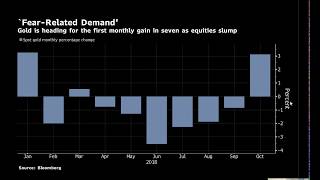
view about yesterday's movement in the euro on the Merkel news. We're gonna have a look at some comments coming out on trade war update between the US and China, a few other things, a quick look at oil, how it remains under pressure, some comments out of the big banks like Goldman Sachs on gold, and we'll have a look at what to expect from Facebook earnings, which are also due after market today. So that's what's on the agenda. Starting off though, quick look at the euro, and I won't spend too much time talking about this, but what I wanted to explain was the way in which the, the news came out. And what we had here was a bit of a downtick early morning yesterday, so around the time we were delivering the briefing. And this came in step with the kind of circulation, if you like, of expectations of the departure of Angela Merkel, the German Chancellor. And this obviously caused some short-term pressure for the single currency, just given the fact that at the time of the initial, original circulation of the talk, it almost felt like it was going to be an immediate resignation, which obviously would be incredibly destabilizing, not only for Germany but for Europe as a whole. However, it then came out that, you know, it isn't anything to, to fear for the here and now. This is a much longer-term thing. And giving her diminishing support that she's been seeing in her selections at the weekend and really for the last couple of years. We've seen this shift though more recently into the likes of the Green Party and the AFD. Markets recovered because the timeline is she's still going to see out her term and her term takes her all the way through to basically 2021. So looking at the euro this morning, I think the price action really tells it all and I totally agree with what the market's kind of summation is from, from looking at these charts. I don't really think this is a matter to worry about at this point in time. That being that I've seen a couple of guys talking about in the chat, it's not that Angela Merkel is not important, but the market has plenty of time to acclimatize to the fact that she is due to leave. Obviously, as we go through, there's going to be the hotly contested race on who takes over— excuse me— as the head of the CDU party. And that, of course, will be quite influential because there'll be more conservative-minded ones and more centrist members. But this is all kind of an issue for another day. For now, if we actually look at the euro where we opened before the volatility yesterday, we're exactly to the tick of where we were. So I don't think this Merkel thing has anything really further to play at this point in time. Looking at the euro then, a bit of a trend line forming in the fact that for the last kind of 2, 3 weeks, we have been edging lower. The kind of flight to quality that generally supported the, the greenback with the, the persistent selling in the US equity market, whether it's trade wars, whether it's lackluster corporate earnings, so on and so forth, that then has pressured the euro lower. So as we come back up around the pivot level, I would be having a look at this as we come higher above there. If we did breach this, then obviously above the R1, the R2 level, a pretty decent level, I think, of resistance today in the euro should we get up at that level. So that's the R2, that's then the high print that we saw, would have been Thursday's session, then up and around some of the, the highs that we had going back to the 19th and 23rd. So looking at the range, I'd say that's a pretty decent level of resistance should we get up to that point at any anytime soon. But that's about it. I'm not going to dwell on the facts on Merkel because I think that's done and dusted. The other thing that we, we continue to see here is pressure in sterling, and this comes after the budget. And quite honestly, the budget, as we were discussing yesterday, is really largely a non-event as far as the currency market is concerned, at least. And we will be turning our attentions quite quickly now to the Bank of England quarterly inflation report. And remember, that's not due until Thursday, but that's really the key one to look out for, whether or not they downgrade growth under the kind of mounting uncertainty over Brexit kind of biting in terms of the performance of UK economy and whether or not that will materialize into a subtle downgrade in growth expectations. The one thing I guess to be, to be clear of is that the press conference is probably going to be the most telling part. And you know, how much clarity though realistically can the Bank of England have, I'd say, on the prospects of UK economy over the next 2 years? I mean, it's pretty much a pinch of salt, I think, what they say. But if we look at the cable here, you can see it's a fairly narrow channel. It's been moving lower amid same reasons for the euro currency. If you remember the euro pair, it's pretty similar mapped price action because this is really a dollar play where we've seen the greenback strengthening. But if we look at cable, we're at quite a critical point. We did touch upon this yesterday where we are at the moment in the futures. You can see just marked up here a couple of circles identifying— this is the pre on the left, EU immediate referendum drop that we saw, uh, and a key level on many occasions going back through the period of the last 2 years. And a breach of this, um, could be quite critical because technically I think then to the downside we could see an extension and push down to the year-to-date low that we saw back in August. Now, catalysts for this could be, um, if all the, the chips fall the right way, i.e., uh, we get a slightly dovish-sounding Bank of England followed then on Friday by, let's say, a pretty stellar jobs report and a pickup in wage growth, then that combination of kind of dollar-positive fundamentals against the weakness on the sterling side might then open the door for a technical breach of more, uh, of more potency to open up a bit of a further run. So certainly I think these levels here are quite key and quite susceptible, uh, just given what we've got coming up on the docket at this point. Quick look at some other things then. Let's look at the main headlines. And for this morning, the one that most people are looking at are the latest comments from Donald Trump. Um, let me read to you exactly what's been going on here, and then I'll give you a bit of a take on what I, what I think and where we go from here. The US is preparing to announce by early December tariffs on all remaining Chinese imports if talks next month between Presidents Donald Trump and Xi Jinping fail to ease the trade war. This is according to, of course, not official comment, people familiar with the matter, so Bloomberg sources. Now, an early December announcement of a new product list would mean the effective date after a 60-day public comment period. So this is quite, quite tactful from, from the administration and Trump because by doing it in early December, this means it will coincide directly, directly with China's Lunar New Year holiday in early February, which is the biggest holiday of the year for China. So what better time to hit them than at that specific kind of seasonal time of the year? The list would apply to the imports from Asian nations, so China, that already, or that aren't already covered by the previous rounds of tariffs. So this is, in a sense, definitely an escalation at that point. US officials are preparing for such a scenario in case a planned Trump-China meeting yields no progress on the sidelines of the Group of G20 summit in Buenos Aires in November. So if you actually read between the lines, then what's happening here is Trump is basically saying that 'Should we not make any progress in the upcoming talks, then I'm already going to say it now, I'm going to slap on a whole new other round of painful tariffs on your country.' It's kind of like putting a gun to the head going into the negotiations. It's certainly typical Trump, kind of aggressive style in that, in that sense. He then said in a Fox News interview late last night, US time, "I think we will make a great deal with China, and it has to be great because they've drained our country." And actually, we've had a bit of a twofold reaction overnight in the Asian markets to the commentary. Initially, when Bloomberg ran the source comment, markets acted quite negatively, in fact. And then he came out and talked about, "We're going to have a great deal with China," and that came as, as quite quickly as relief And the market then turned and we actually moved higher in mainland China. One of the things here, though, is that any further broadening of tariffs showing Trump's kind of appetite for escalation of the trade war— I just wonder whether all of this is just political posturing again ahead of the looming midterms, which are only a couple of days away now. Because we've already seen from the corporate earnings that have been coming out, obviously we saw from industrial names like Caterpillar and 3M last week, which acted as a bit of a catalyst for a renewed sell-off because they were saying that essentially, you know, the prices of doing business for them is getting more expensive because very much so the tariffs. So, you know, corporate America also feels the bite, not just China, on the back of this. But for Trump, obviously he needs to kind of show a pretty firm stance going into this major US political event to the general public of the US ahead of the, you know, hitting the voting booth. So, you know, there is a pretty fine line here that Trump is walking, and I just wonder whether, you know, these are at this point verbal kind of threats just so that it pushes over the line some progression in the talks at the G20 coming up in November. I think this is more tactical rather than a credible threat. I've got to read to you this quote because it's just too good not to mention. This is Trump. He said, "We're in the middle of a pretty nasty dispute. We're in a trade dispute, and I want to use that word because it's nice, it's a soft word, but we're going to win." He said, "You know why? Because we always win." Gotta love the guy. I mean, do you know what? I started— didn't like him at all at the beginning. I actually quite enjoy commenting on Donald Trump day to day. Forgive me for my sins, Father. But having a quick look then at some of the other things here that you can see, and there was one chart in particular that I did see, which is this one. And this was quite interesting because you know, as much as China's economy has been suffering, the stock market generally has been moving lower. The Chinese yuan, if you've been reading this morning, is getting ever closer to 7, which is a key threshold. The one thing is, is that China have been pretty resolute that they're willing to step in and do what's necessary. So this is when the market was generally moving lower late last night. Then Trump came out with the comment predicting a great deal with China, and this was quickly followed by some comments out of the CSRC, which is the China Securities Regulatory Commission. And basically they listed measures, or a list of measures, to support the market. This came in pretty quick succession after the Trump positive comment, and what the CSRC said was that it would increase stock market liquidity. It would cut trading barriers, it would encourage buybacks, mergers, and investments. And so consequently, brokers saw a pretty firm rally after those comments were made. And, you know, this comes after as well, if you remember, the DAX took a bit of a pop in the German automotive sector, did pretty well yesterday after China said it was considering cutting vehicle sales taxes. So, you know, these are China's ways of trying to protect itself by, you know, propping up the economy and various other means in that sense. And so as long as this is happening, you've got to think, well, you know, how bad can the global fallout be? You know, are we at the precipice of something, you know, more meaningful than just this 10% correction in the S&P? Could it be now the, the the bears come charging in, the market collapses. I think as long as China is willing to step in, in this sense, I don't think that that would be the case. And as I've always said the last couple of months, I think post these midterms, it'd be interesting to see the type of rhetoric that could be sustained from Donald Trump. The other thing that we've been looking at— and let me just change graphics slightly to this one— and this is because the Chinese renminbi has slipped to a fresh 10-year low. So as you can see on the bottom of the axis here, the yuan's decline is taking it closer to the 7 per dollar milestone. But the front page commentary on the Economic Information Daily, it's one of the main publications in China, said the exchange rate is unlikely to weaken past that level as China's international balance of payments remain sound and authorities are determined to stabilize the market. The reason why they're so resolute and firm in that terminology, which keeps the market's belief that really we're not going to dip, we're not going to go beyond 7, is because of a breach of that level could well intensify depreciation expectations. Just think of it, if we break that psychological level, then we get a bit of a further run on the currency, and this could cause renewed capital outflows, which obviously would be we kind of see the situation escalate very quickly. So again, I think the point here is that China will continue to do what's necessary for the time, time being. So a little bit of negative overnight on the initial threats from Trump, but he himself then flipped that and talked about a good deal in addition to support measures. Saw quite a firm reversal from overnight. Looking at other things, um, obviously gold has seen a significant rally over the period of the last couple of weeks. And one of the things I was just looking at longer term was obviously we had that key December bounce that we saw around this time, a few weeks to the date from where we were in 2017. And we kind of got up there, had a test, and seen a bit of a pullback since then. But obviously quite a key level technically on the upside. I'm looking at 12 $1,636, $1,637 on a daily continuation in the futures. What are the banks saying? Well, you know, Goldman Sachs not exactly reinventing the wheel, but certainly I think to be aware of what some of these big institutions are saying. Goldman Sachs saying that the fear has made a comeback and gold is benefiting the stock slide. This kind of possibility about people's kind of medium to long-term expectation that the US ultimately is going to tip back into recession. If you remember, kind of the world's biggest hedge fund Bridgewater and Ray Dalio were kind of pushing that narrative a few weeks ago when he was kind of doing the, doing the rounds. But if we look down here, so essentially bullion is heading for its first monthly gain in 7 after equities we've seen slump, trade wars kind of festering hurting, uh, kind of prospects for global economic growth. The US, according to JP Morgan's models, they're predicting now has a greater than 50-50 chance of tipping into a recession in the next 2 years. So it's not that Goldman's are saying that, you know, this is the end and the market's gonna, gonna collapse. What they're saying is, while we think the US cycle still has room to run, it doesn't mean that markets will not worry about it coming to an end. They also note the other positive reasons for, for gold, citing prospects of central bank buying, higher core inflation in the US, and rising emerging market demand. So still remaining relatively bullish, at least for the, for the time being. Just looking back on the chart here for gold, uh, so this is a daily continuation. I just wonder whether or not if I just put a little Looking at that low. Yeah, it's going to be interesting to see how this plays out, certainly, uh, coming in towards year end. Okay, oil. Let's have a brief look there, see what's going on. I did see Sam, and for those interested, I know Sam posts charts in the trading live room. He also tweets quite a few interesting charts in the morning. Which I'm sure he'll, he'll pop in the chat in a second. But I did see him looking at a couple of things this morning. I guess he was probably looking at this, I would imagine. It's been pretty lackluster in any firm, clear, definitive direction. Obviously later on this evening we get the, uh, the API inventories, and that'll be followed by the DOE tomorrow. That could be a at least in the short term, a bit of catalyst for a spike in price activity on an intraday format. But a couple things, I guess, just to look at technically here. Any breach of the overnight Asia-Pac highs, you can see how in the Asia session we kind of responded to that trend line from the last week or so's price action. So we've got quite a nice setup here as we go through the session that probably warrants keeping half an eye on. As we go through. If we were to test anywhere through this break of these, obviously a break of this and the Asia-Pac high, I'd be looking up at around that 67.64 kind of range high, and beyond that, the 68 handle, which kind of encapsulates the last week or so of the price action that we've had for crude oil. I was also just looking at the, the Japanese yen, a bit of a reversal obviously from some of the, the heavy downward movement that we're seeing just on Friday actually. And we had, just looking at this, because overnight the Asia-Pac session, just given some of the positivity, as I said, on the turnaround on that Trump great deal with China comment, with some of the more commitments from China about mitigating the downturn. So a bit of a return of some risk appetite. The yen actually reversed, so dollar-yen moving higher, and we broke that trend line that's been in play for the best part of of, you know, the last 2 weeks or so. And since that point, managed to get through those respective highs as well. That was quite a key level around that, uh, here, 112.27, because that was also the kind of mid-month highs. Well, let me just mark it up for you going back. So we had these initial movements, it's been a key level really throughout the month of October. And you can see we breached that, found a bit of a floor before then a push higher to then hit the target, which was the, the high on the 22nd. Quickly, a few other earnings reports we've had this morning. Volkswagen leads the head of the leaderboard in the DAX this morning, sticks to their full-year guidance. If you remember, we had the likes of BMW, Daimler sounding particularly downbeat about their profit guidance going forward because of the trade war. And the impact that that would have, because obviously Trump has been quite vocal in singling out Germany and predominantly its exports, which comprises a majority of the automotive sector, and their selling of cars to the key market of North America, and then putting a tariff in place which has been detrimental to them. However, Volkswagen have stuck to their guidance, so in effect this is a much more positive for them. They've had robust results out of their Porsche brand, and they've managed to get through basically some production bottlenecks. So that's been a positive for them. On the flip side, looking at the FTSE oil majors, we obviously got Exxon and Chevron coming at the end of the week for the States, but in the UK, BP profits smash estimates on eve of giant Shell oil deal. BP's profits being up substantially, I think, doesn't come as any surprise. Just think about the quarter of which this encapsulates. And so we've had, you know, a monster rally in oil, and so their surge in profit smashing estimates, I think, is, uh, is good for them, uh, but not wholly surprising, uh, to that extent. Um, other thing I just wanted to have a look at, and this was— we've got Facebook coming out after market tonight. I'm not going to dwell too much on this because I know, um, we're not really trading the single stock in this sense, but obviously the markets are quite sensitive to the FANGs. And this week we kind of conclude that with Facebook tonight and then Apple on Thursday night. So Facebook in particular, I think, is quite interesting because if you remember last quarter, their shares dropped about 25% after earnings. So immediately after the earnings call, I mean, if you're putting that into dollar value. The company's share, or the company's market capitalization, fell about, about $120 billion within a few minutes after the back of what was the largest one-day fall in any US-listed company in history. Slower revenue growth, lower margins, as well as mounting signs that users in the developed world are less engaged with the app, were all reasons for that dramatic fall. So if you think Cambridge Analytica was bad, their earnings report was way worse in terms of the market's reaction or the share price reaction. So key things you're looking out for from Facebook in summary: will revenue growth continue to slow? That was one of the main things from last time, and that's one of the main things the market's going to be looking at again. Will margins narrow? If you think about it, part of the fallout from the Cambridge Analytica scandal is that now they've had to make a political commitment about being more, I guess, more sensitive to the way in which they manage their data. This means it needs more moderators on their content, and Facebook have pledged to double that number to more than 20,000 by the end of the year. So, you know, the thing that makes the gearing so high for a lot of these tech firms is that basically have a low workforce number but the technology means the scalability is definitely there, which means that for every value employee, the output, if you like, in terms of the company share price is infinitely higher compared to someone, say, like Ford Motor or General Motors, for instance. So obviously Facebook upping their workforce substantially is going to impact the margins, which were certainly something in question last time. Other things You know, don't forget about the regulatory changes we've had here in Europe. Facebook lost about 1 million European monthly active users in the second quarter when the— and it kind of gives me goosebumps when I say the word now because we had to deal with it ourselves internally— but GDPR came into force. And has that hit, and how hard has it hit their advertising revenue, just given users are opting then to, uh, opting out of data collection and their privacy changes. The one source of some positivity for Facebook, and this has been the case for a while, is Instagram, because, you know, that has been quite a phenomenal story. I mean, Instagram's popularity has been second to none. I guess the question mark here is about monetizing that as a, as a, as an e-marketing platform. And we are expecting them to contribute roughly around 16.5% to Facebook's overall revenues compared to only around 10% last year. So it continues to be very important. All right, that's pretty much it for the news. Um, just want to have a quick check on the euro because I am, um, I'm I am aware that the German state CPIs are coming out this morning and it's just gone through 9 o'clock. Just looking on a minute chart, no real immediate moves here in the euro. But giving you a quick update, we've had the German state of Bavaria, the CPI 2.8% against previous 2.5%, the month-to-month 0.2% against previous 0.5%. Brandenburg earlier this morning was 2.3%. So looks like the German state CPIs at the moment, the ones that have come— Brandenburg, I imagine Saxony came out earlier this morning— have been generally slightly softer than previous on the month, slightly higher on the year-on-year. You've also, just get up to speed, had the German unemployment rate in line, 5.1%. And in terms of the unemployment change, basically in line. So non-market moving for the jobs data, in line as you'll get from the German perspective. With the German state CPIs, certainly I'd keep an eye for the rest of them. The pan-national kind of CPI at 1 o'clock then is typically non-market moving because it's just a summary of the parts that we have seen throughout the morning. So looking ahead, one of the things that could be quite interesting— if I just blow this up slightly— is the flash preliminary European GDP. So this could be particularly interesting just given some of the things we've just discussed, uh, such as the trade wars and the, the general PMI slowdown that we've seen evident last week in Europe. So what's the situation with GDP? Then looking further forward into the afternoon from the US, it's actually pretty quiet. Um, but we've got API inventories later in the afternoon. But from a speaker's perspective, a couple things— you've got an ECB, uh, two speakers, um, 1:30 and 2:10 to be aware of. So I think you just need to add that as well to your, your radar. And then from an earnings perspective, pre-market in the States, you've got Pfizer, Coca-Cola, GE. So a couple of names, the big one after market being Facebook. All right, gonna leave it at that for the time being. Let you guys just, just get on with things. Any questions you might have, I will respond to them in the chat room on Trading Live. All right, have a good one.
More from Anthony


Inside the Biggest Banking Stories You Need to Know This Week (Anthropic, Diageo, Private Credit)


Inside the Biggest M&A Deals You Need to Know This Week (UniCredit, GameStop, eBay, Eli Lilly)







AI Breakthrough or Hype? Anthropic’s Claude Mythos, Tim Cook Steps Down & LIV Golf Collapse