Trump's Fed Pick, USD Drops and Japan Debt Risk Rises
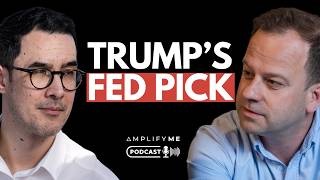
Rick Rieder, BlackRock's fixed-income chief with no PhD or Fed experience, is the betting favorite to replace Jerome Powell. The dollar hit a four-year low after Trump praised weakness, while Japan's 40-year bond yields jumped to 4%, threatening the yen carry trade that relies on cheap borrowing.
Chapters
Hello and welcome back to the Market Maker podcast. And in this episode, we are going to do a bit of a macro overview. So going to talk about the latest Trump nomination for the Fed chair, or at least what the betting markets are saying is their preferred candidate. And then that's going to lead us into the actual Fed decision, just happened literally 12 hours ago from when we were recording this. And that's going to lead us into also a bit of a discussion point from this week, which is the weaker US dollar. and also a lot of movement volatility happening in the Japanese yen. But unusual for us to be filming it if you're watching on video in this location, because if I go like this with my finger, I can literally scratch the back of Piers's head. Or I could, I could, if I go like that, I wonder if I could get his bald patch right there. Look at that.
Just cover it up, actually. That's perfect.
And also you might see to my other shoulder, you can see we are very well prepared here. That is a Colin the Caterpillar box.
Absolutely.
And I did see you scoffing down a slice just a moment ago.
I am, well, this podcast has kind of rudely interrupted my Colin munching actually.
I think if you're American, you're probably thinking, what on earth is a Colin cake?
Well, they're nice cup of tea.
Perhaps to kick us off. You know, you're so good at taking, you know, explaining these matters. What exactly is a Colin the Caterpillar cake to an American listener?
Well, Colin the Caterpillar caused a kind of massive kind of storm on the, well, I guess it was intellectual property. Do you remember this? So basically Colin the Caterpillar, there's a shop here called Morgan Stanley.
No, it's not.
Marks Spencer. Okay. Very famous old, you know, 100-plus-year-old retailer in the UK. Part of it is food, part of it's clothing. Anyway, on the food line, I don't know how their marketing team, however many years ago, genius, made a cake, chocolate, looks like a caterpillar, chocolate log. Then the German supermarkets kind of came into the UK. Sort of sphere. So I'm talking like Lidl and Aldi. All right. And they really started to undermine M&S on the food front, really expensive premium. And then Lidl and Aldi are coming in at the bottom end of the spectrum. Okay. Budget. And I think it was Lidl that basically created a chocolate log cake. But was it a cat? It wasn't a caterpillar. What was it? Do you remember? Or maybe it was a caterpillar. Basically, they just didn't even bother making it look different. They basically created Colin the Caterpillar and put it in a little wrapper. And M&S kind of kicked off about how they've been, their IP rights have been violated, and it caused a massive storm. Yeah. So Colin the Caterpillar is even more famous than, than it was prior to that episode. Yeah. It's very tasty.
I don't think either myself or the listeners were expecting such a long-winded history of— I thought you were just going to say, yeah, it's just like this cake with a cat's face on it. But I just literally got, I got a business, I got the Harvard Business Strategy Review.
That's right.
Of Colin and IP rights.
Yeah. Ask me anything and I'll give you an economic angle to it.
All right. Well, maybe I could ask you about who's the favorite? To be nominated for the Fed chair, a chap called Rick Rieder, who will be what Trump is. I guess Trump's played his hand quite well here. He's kind of brought some names to the table, but he kind of, he's a great tease, is our friend Donald. But what people are looking at is the betting markets, and there's this guy Rick Rieder. I thought we could just give a bit of a background check because he has shot up the kind of betting sites that exist. And I think he was literally tracking just, I don't know, a week or two ago at pretty much zero. And now he's the odds-on favorite north of 50%. So I thought relevant then, because we've talked about lots of people over the recent weeks.
Yeah.
Who is this guy and what's the likelihood of him coming in?
Well, quick reminder for people who have forgotten, who, or maybe don't care, or anyway, the Fed, well, Powell. So Jerome Powell is the Federal Reserve Chair right now. His term comes to an end in May, so he's got literally 5 months left, 4 months left now. He's done his second term. This will be 8 years in the seat and he's out. Okay. So there needs to be a successor. That's part one. Part two, Trump hates Powell and has been heavily, you know, critical of Powell both in his first term when Trump was first-time president and then now. And basically Trump wants interest rates to be way, way, way lower and he wants to juice the US economy and make America great again. So he's been very critical of Powell and he's been lining up and like to undermine Powell. And to also maybe, I guess his ambition was to try and influence markets into thinking that someone more dovish than Powell is going to come in and take his seat. Okay. More dovish just means more likely to cut interest rates. Okay. So one of Trump's strategies has been to undermine him and he's been proposing various different candidates. We're going back like at least 6, 9 months here. When this all kind of started to begin happening. And so, as we approach May, this is going to really start to hot up and become more headline news again. And so this is what's happened this week. All of a sudden, Ryder, Rick, is it Ryder or Reader? I actually don't know how you pronounce that.
Reader, I believe.
I'm going to say Rick Ryder because it sounds way better. Sounds more American. Anyway, He has now, as you said, shot up to be above 50% chance of taking the seat. So why is this interesting? Well, actually, yeah, and here was the best stat about it that I found, or I think you might have found it actually, but this, if he did get the job, he would be the first chair in modern history without either a PhD in economics or prior experience within the Federal Reserve System. So basically this guy is a massive outsider. He is an outlier. He is, you know, and in Trump style here, he is from industry, right? He's not a policy guy. He's an industry guy. And actually, who is this guy? Well, he's actually currently right now, he's got a job. It's a pretty big one. And we'll come on to the implications of him giving that up if he were to get this gig. But he is right now the chief investment officer of a very small, little-known asset manager called BlackRock, who happen to, yeah, manage the biggest asset management firm on the planet with $14+ trillion under management. So he is the chief investment officer for their fixed income division, if you like. That, I mean, this is a big, big, big job this guy has. So obviously comes with monsters, monster amounts of kind of industry and markets experience. So yeah, it's just a bit, it's a bit odd that he's kind of suddenly shot up from nowhere. And that's because he had a meeting with Trump and post-meeting, you know, Trump's in his style. Yeah, I like that guy. And you know, all of a sudden, a few throwaway comments from Trump and it's like, ah, okay, he does kind of fit the bill with regards to Trump's, you know, inner circle, which is really made up of industry practitioners. Rather than career politicians. And that's why I think markets are starting to think, hang on, this guy could be the guy.
So the two angles to this then, one is looking at his history politically. So how aligned is he? Because one thing I was reading is that he isn't a MAGA loyalist. He's actually backed Nikki Haley in 2024 primary and donated to the Democrats in the past. However, when you go back and look at his description on how he views the economy, he's talked about the inflation storm has kind of come and gone. The real risk is in the labor market. That latter phrase, particularly sensitive for market conditions right now. And so it's quite clearly sitting on the dovish end of a spectrum. How much then, so it feels like his analysis and how he sees the world might be aligned to the vision that Trump might have. Is actually a political thing a problem for Trump or not, do you think?
I don't think, I honestly, you know, I honestly think that Trump doesn't mind so much about Republican or Democrat. It's kind of more about, you know, aligning with a general like ethos. And it's, it is, he's not MAGA, Ryder, but actually his policy is kind of, let's say his monetary policy opinions, and we'll come on to quoting a few of them in a second, do align with Trump's agenda of his economic agenda, which is, you know, his MAGA movement has many elements to it. One of them is economic where, right, let's boost US economic growth. And so definitely they are clearly aligned here. So he said, and actually there's so much column inches this guy has filled down the years given his job. And actually in the 2026 sort of outlook, BlackRock fixed income outlook report, you can quote him. He's there saying inflation is no longer the central problem for the US economy. It's the labor market. And so he was talking about job creation has been mostly sustained by the healthcare sector, and he's saying wage growth is slowing. And so he is basically saying that the Fed have got it wrong here. We'll talk about what Powell said, because what the Fed— well, let's just say it now. What did Powell say last night? Because this is what Ryder is criticizing. Powell said economic activity has been expanding at a moderate pace. Oh no, sorry, apologies. That's what the Fed statement said last meeting in December, moderate pace. Powell's now saying it's actually expanding at a solid pace. So actually the Fed are saying GDP growth is accelerating and duh, I mean, Q4 GDP growth was 4.4% and we're expecting it to be even faster in Q4, right? I mean, it is like, properly hockey sticking. So the Fed said, oh well, that's now solid pace rather than moderate. You know, it's being solid is a kind of an understatement. Anyway, on the unemployment side, the Fed are saying, they used to say like in December they said the unemployment rate has edged up. Now they're saying the unemployment rate has shown signs of stabilization. So here's the disconnect between the Fed and what Ryder thinks. The Fed are saying, there ain't no problem in the labor market. It's stabilized. Whereas Ryder's definitely of the opinion that that's not true and actually the labor market is weakening. The data and the government shutdown and the immigration changes has made it incredibly difficult to track what's really going on. But his opinion is what is going on is bad news and we should be taking the interest rates down. He's been talking like 1%. He's, He's saying rates should come down to like 3%. Okay. Which is very much in line then with the Trump kind of mantra that rates should be 3% and let's kind of get this economy properly juiced.
The other thing as well is that Trump, obviously he tends to be quite an activist and monetary policy setting inherently is very slow. One of the things I was reading in the FT highlighting about this Wall Street practitioner approach, being a person of the markets, is that you're looking through the lens of viewing the economy through live market data, corporate earnings, rather than economic theory, of which academia generally is your starting place. Do you think there's much in that in terms of Reeder being that he speaks the market language, so he sees the world in that way? One thing I'd say is that I think something that a lot of the press I've been reading is missing is that he's just one person. And although he's the chair and he might be able to steer and influence some discussion, I don't necessarily think— I think the way it gets written in the press in the last few days is that he comes in, that's it, policy goes this way, which is not the case. Yeah.
I mean, that's definitely a point to make and underline, which is the Fed I mean, they love to sensationalize everything, right? So they are sensationalizing this like everything else, and it makes for good headlines and a good story. But yeah, I mean, look, the Fed chair obviously is the most important person on that committee. So whilst one person, they do have an influence and certainly, well, it's hard to say, isn't it? He would be such an outsider. Be hard to say how the committee respond and react should he get the job. Meeting number one, how does that go? And is there a kind of pushback to his markets stance compared to their theory sort of modeling stance? Who knows? It's impossible to say. But you've got to say he is going to have, he's more dovish than Powell. So if you swap out like for like and you get a much more dovish chief then, you know, obviously that should tilt rate expectations down.
Another interesting point I saw that was picked up on was, as you were saying a moment ago, he's an enormously accomplished person in the industry. And unlike many of the Trump appointees who many of our listeners probably have never even heard of, might not have heard of Rick Rieder, but he's on a different level in terms of in the marketplace. So he would be incurring very high opportunity costs to take a job in the government, and he seems unlikely to pay them just to become, as the FT was saying, Trump's stooge.
Right.
So is that the biggest reason why he's probably not going to get the job here? Is his own choice of no. Yeah.
Who knows that meeting that he had with Trump? Who knows what's being promised? I don't know which side kind of instigated that, whether it was kind of Trump calling him in for a chat or whether Ryder put his hand up and said, actually, I'm keen. I don't know. So it's impossible to know. But yeah, he would have to, your point stands, he would have to give up a huge amount. And look, he's not going to do that to just be in Trump's pocket because he's not a MAGA guy. So yeah.
Sounds right. Sounds right for a deal.
Well, what other, well, maybe this is Trump, right? Because obviously this has to get voted through the Senate. And so, you know, if you're getting a guy who's a little bit more centrist, he's a bit more, you know, he's backed Democrat people in the past. So he's perhaps Trump's idea is he's just more likely to get the vote in the Senate. And so compared to some of these other candidates that are a bit more, you know, definitely Republican and in Trump's pocket type people.
All right, well look, let's shift over into the Fed and actually what is happening right now whilst Powell is still here. And very much as expected, they held rates at 3.5 to 3.75%. So one of the things that I do know is that having spoken to you earlier today, you know, you said something that actually probably summarizes this whole affair before we actually start to unpick it a little bit, which was what, what did you say to me?
Well, Well, look, it's been bit— I've been busy, but I said to you that the Fed meeting that was last night completely was not on my radar. I didn't actually realize it was happening. And I would say that I've been in finance since 2001, and I honestly think in that 25-year period, I honestly think last night's meeting was the first meeting that I didn't register was happening. In that entire 25 years.
It was a very important event then. So markets didn't react a great deal. So what should we take as the main takeaway? So you talked already about some of the language, but what's the main summary here?
The main summary is that the Fed didn't cut rates, but that was expected. And then I guess if you really want to read between the lines, then you probably come out of it saying the Fed are, rather than, I think if you go back a few weeks, the idea was, right, they're gonna skip a meeting, right? They cut rates in December, they won't in January, they'll probably then cut again in March, right? Was the idea. If you're looking at that statement last night, it might have changed slightly to now, well, they didn't cut in January and they actually they might not cut in March either. Okay. So it's more about the March meeting. But to a certain degree, we're so close to his end of term now, he's almost a bit of a kind of just a dead man walking, Powell. And so obviously now he's kind of got a criminal in— he's under criminal investigation as a result of Trump. You know, I mean, the guy's been, pretty amazing in terms of keeping it professional and not allowing, you know, Trump's kind of shenanigans to, you know, change the way he operates. But I don't know, maybe everyone's got a limit.
I saw a headline on that and it said his best defensive strategy to that, to being attacked, is being boring.
Yeah.
Well, he's good at that.
He is good at that.
All right, well look, let's shift and follow this through then, because the other big thing of this week was quite a big move in the currency markets. We'll start with the US dollar and then we can talk about the Japanese yen, but the US dollar index, so the greenback against a basket of other currencies that had its lowest level in 4 years. And although yes, it's been weakening already, it was exacerbated by the fact that the US president, when asked about what do you think of the weakness of the dollar, and he said it's great, as he does. And that actually triggered then a bit more of a green light to continue that short position, if you like. So I wanted to just get your take really on why is it weakening? And what does that actually mean from an economy perspective, an investment perspective and so forth?
Yeah, I mean, there's, this is a difficult topic. There's so many different angles to go at it from. So like first and foremost, like when Trump says, you know, a weak dollar's great, really what he's kind of saying there is from a kind of international trade perspective, then if you have a weak currency, it actually can be a really positive thing for your exporters, for example, because now the goods that your companies are selling to their foreign customers, they become cheaper. If the dollar's weakening, then people paying in euros, well, they're paying less euros for the same dollar amount, right? So it means exports, you know, can really boost exports. Trump's been heavily, heavily critical of China in the past, accusing them of purposely devaluing their currency in order to get an edge in the kind of export game. Okay. So that's what Trump's kind of meaning there. The problem with a weak currency is that actually it's inflationary. So, because if you are buying goods from, you know, you think about the opposite of exports, well, they're imports. And so if your currency's getting weaker, Well, then of course imports get more expensive, which means prices go up, which means it's inflationary. So it kind of very much depends on the shape of your economy as a whole, whether a weakening currency is a good thing economically or not. For America, they import way, way, way, way, way more than they export. So actually it's an inflationary problem. Fine. Benefits companies like Caterpillar. Who are US companies that produce goods that go all around the world. Fine. Some individual winners there, obviously. But you would say in the main, if we're worried about one of the concerns of 2026 is inflation, which is 1% above target at the moment, around 3% above the Fed's target. That is, if the currency continues to weaken, well then actually that, that on its own could mean we get another inflation rise. So then you can forget about your rate cuts. Even if Reeder Ryder comes into office mid-year, if inflation's on the uptrend, even he's going to find it difficult to justify cutting rates.
And then one thing I saw which I was quite surprised was that A, the market reacted in the fashion that it did to Trump's comments. Because unsurprisingly, 24 hours later, the Treasury Secretary, Scott Bessant, comes out and says, basically corrects course, let's call it. It's kind of like, oops, that happened. And then your actual Treasury Secretary who's more in charge of these matters comes out and corrects course. So yeah, I was a little bit surprised by just how the markets actually took that. In and of itself. But I guess this political antics that are happening at the moment is so, they're so variable, they're so changeable. This is part of the problem as well, a lack of certainty around.
Right. So, you know, one of the, one of the kind of standout sort of markets of 2026, January, so the month of January has been gold and particularly silver. That have just got, I think silver's up 50% this year. It's the 29th of January, right? But gold is up through $5,000, record ever high, right? People are looking at that and they're going, wow, gold, safe haven, smashing the highs, all-time high. Wow, there must be some kind of major risk-off going on. And you look at Trump and his policies and his antics and his Greenlands and his Venezuelas and his Irans and his And it's, oh God, this world's in chaos. Let's kind of just go major risk off. And you look at gold and you go, yep, tick. That makes sense. Check out gold. The problem is no other market is behaving in the same way. Stocks, all-time highs. The dollar's weakening. The dollar historically has been a safe haven. I mean, you could look at the Swiss franc. That's the kind of the only other, maybe the only other market So the Swiss franc is historically very a safe haven currency that has been tearing up as well, going higher. But so this whole idea, people are throwing around this debasement trade theory. Can I just pour ice cold water on all of that? Like right now, in my opinion, the debasement trade is the end. It's the end of fiat currency as we know it. You know, government policy, central bank policy, it's all gone off the rails. We can't trust fiat currency. That's your dollars and your pounds and your euros, currencies that are controlled by governments. We can't trust them anymore. It's time to go digital. It's time to go Bitcoin, right? Bitcoin hasn't gone up at all throughout this whole sort of period. So A, that right there tells you it's not the debasement trade. And anyway, if we got to the debasement trade scenario, that's like end of days kind of stuff. Stocks would be collapsing. And obviously they're not. Not only are they not collapsing, they're all-time highs. So the debasement thing, I think, is a little misguided. So then you've kind of got, well, is it a protest? Like, is it emerging markets and is it other governments that are kind of trying to wean themselves off dollar dependency. And fine, there is a certain degree of that where you've got central banks and governments kind of trying to maneuver away from dollar-denominated reserves to other currency reserves. This has been a trend for the last few years. You could point towards Russia invading Ukraine as really the trigger point of that trend that's probably ongoing. And that's because the US really showed that everyone else being dependent on their currency was actually a really strong weapon in the kind of US arsenal from a sanctions point of view. So I think everyone saw straight away that, ah, maybe, you know, long-term policy, let's try and move away from that. So perhaps other governments have been selling dollars, which has helped for the move down, right? But fine. But I think, you know, ultimately I think it comes down to how can you have a weakening dollar, but US assets like stocks are all-time highs. So that tells me that foreign investors are owning US stocks. They're buying more US stocks. Okay. But this is dollar-denominated. I think what's really going on here is they're very keen to own US assets. but then they're hedging against a bit of dollar risk. So it means if you buy whatever, if you buy some Nvidia stock, but you are worried the dollar's going to go down, then you might go into the kind of FX forwards market and short some FX forwards. So you're selling FX forwards, which actually pushes the exchange rate down in the forwards market, which then actually just ripples back to the spot market and pushes that down. Okay. Which means you get this downward trend and the more it trends down, well, the more people want to hedge. So the more they want to sell in the forwards market, which means exchange rates go down and then, okay, more need to hedge. And so you kind of get this sort of feedback loop, which I think is probably, I, that's the, that's the kind of theory I like the best. I mean, what do I know? But And then the final point is the dollar index, which is the dollar versus a basket of currencies. If you take the last 50 years, do you know, so we're trading at 96.5, right? Yes. A big move lower in the last, really in the last 12 months, we've gone from 109 to 96.5. It looks, it's a really fast move. The problem is 96.5 is bang in the middle of the long-term range. So the dollar's not cheap when you're looking historically, it's about right here. It's just that it's gone down a lot in the real near term. And people combine that with Trump and all his shenanigans, and then you start to get these theories bubbling up. Which I think in the main are pretty misguided.
So when we are talking about currencies here, it's quite often the case that your mind jumps to looking at the dollar in isolation. But yeah, because of its at least status at this point as the global reserve currency and the kind of all trade globally denominated predominantly in dollar. And so when we were to look at something like the Japanese yen, and then we're looking at an FX pair like that when you're trying to analyze fundamentals on both sides of an equation. So we've kind of discussed here the dynamic that's been happening here. So by definition then, that's obviously going to influence the other counterparty of that, in this case the Japanese yen. But what else is happening domestically or fundamentally then in Japan, which is causing dollar-yen to see some pretty dramatic moves as well at the moment.
Well, so yeah, I mean, this week the dollar-yen has had a monster move, and this is actually the yen appreciating against the dollar, partly because the dollar's weakened because of Trump and all the things we've just talked about. But there's definitely some, I think, some yen strength in that equation as well. If you take a step back, whilst the dollar has been weakening for the last sort of 12 months, the yen's been weakening even more. So it's actually been even weaker than the dollar. Okay. And actually hit almost 160. So we're talking here 160 yen versus the dollar. Okay. As that exchange rate goes up and up and up, that's the yen weakening, the dollar getting more expensive. Okay. And 160 historically. I mean, that is like crazy, crazy levels. 160. I'm just going to try and see on my chart now, or maybe you can fact-check me, but that's the highest we've seen that exchange rate for many years. You can go and have a look, but 160 in the past has been a point where the Japanese government have intervened because the thing is, your, as we discussed, your currency being weak is good for your exporters, but then it's not very good for imports. Okay. And stuff gets more expensive. And so, you know, you can only tolerate a certain amount of currency weakness until it actually flips and becomes a problem. So in the past, the Japanese government have intervened at 160. So because we're around this area, people are starting to go, wow, okay, is this intervention time? Now what's going on at the same time is talk about political sort of volatility in the US with Trump. Well, there's actually some interesting political uncertainty going on over in Japan. So the Prime Minister Sanei Takaichi has actually called a snap general election for next month and she's in power, but she's doing really well in the in the polling because of populist policies. And she's trying to double down on that near-term popularity by calling a general election to win a greater majority in Parliament to then be able to drive through some of her agenda. Her agenda is cut tax, spend more. It's like, it's like the, you know, and, and the problem is Japan have got monster amounts of debt. Now that's what, you know, one of the reasons we talk about the carry trade. You know, this is where some traders will go to Japan, they'll borrow money in yen and then they'll convert their yen to dollars and they'll buy Nvidia. All right. So the yen has historically been a really good funding currency because historically their interest rates have been super low because inflation's been super low. Okay. Post-COVID, whilst the rest of the world had an inflation crisis, it was finally the kind of dawn after 30 years of deflation for Japan. This actually dragged them out of deflation. It was a really good thing. But the problem is their interest rates are going up now, and if Takaichi wins and if she has a majority sufficient to get her stimulus policies through, then we're really going to start to worry about Japanese debt going up. And the problem is if the debt levels rise just as interest rates are rising, then this debt's going to very quickly become unaffordable. And their 40-year government bond hit 4%. That it's never been at 4% ever in the history of Japanese government bonds. So you've suddenly got a kind of double combination of, or I should say a triple combination, really large amounts of Japanese government debt, interest rates rising, making that more expensive, and now a Prime Minister who wants to pile more debt on top. And so you're suddenly starting to get this panic. Okay. Oh, well, there's not panic yet. You're getting concerned. All right. Now, what happened in the, what, what happened over the, at the end of last week, interestingly, and one of the reasons why you had a really sharp move. So the dollar-yen was nearly at 160 a couple of weeks back. It just kind of collapsed back to 152 last week. So that's the reverse, right? The yen's now strengthening, the dollar's weakening, partially because of Trump, because what we said, but actually a lot of it's yen strength. And that's because actually there was this thing where the New York Federal Reserve, of all people, actually started, like, requested in the kind of amongst the FX traders, started to request, they called it a rate check. Okay. And this is where the Fed, the New York Federal Reserve is asking market participants for yen pricing. So you got the New York Fed asking market makers for pricing. Now, often that in the past has been a precursor for government intervention. They're checking out pricing to then ready to intervene directly in the market. Okay. So you, I think this move kind of exacerbated, was exacerbated by this news. It's interesting. Would, are the US going to intervene in this market? Are the Japanese government going to intervene? I don't know, but this to me smells like Scott Bessant, who's the Treasury Secretary. It was the Treasury that ordered the New York Fed to start asking for pricing. Bessant, he used to be a hedge fund trader. He knows what to do. He knows how to move markets. It's to suggest you are going to do something and then markets do the move for you. So I reckon this is Bessant just trying to send a signal to markets that, hang on, This currency exchange rate's gone too far here. Either you guys sort it out, the market, or we'll come in on top. So you've just got another interesting sort of dynamic here. And just to finish it all off, I think that for me, one of my biggest risks for this year is Japan and the debt situation and the carry trade. And if that properly starts to unwind, that is definitely, that has got potential to derail everything globally. It's such a big trade. So I think even the US now are prepared to step in to kind of avoid that happening.
You're increasingly becoming a replacement for Michael Burry. Since he wrapped up Close Shop.
He's stepped out of the market.
He's handed you the torch.
There's a void. There's a void there. Uber Bear.
Got a shoe in for you for your next role. Cool.
Well, listen out for this election in Japan. It's coming on the 8th of February, I think it is.
Okay.
So it'll be interesting to see how much majority she wins. And if so, the Takaichi trade. Go and Google Takeichi trade. It's just a really interesting one. It should be on your radar. Cool.
All right, well look, stay tuned for the next episode that's coming out at the beginning of next week on a Monday, because that's where we are going to also have a look at some of the other big things that happened this week, which were the corporate earnings, namely very big different outcomes for the likes of Microsoft down Meta up, Tesla complete, business strategy U-turn. So we'll go into all of that in the next episode. So remember to follow, like, subscribe wherever you listen to this podcast. But thank you as always, Fizz.
Thanks a lot.
More from Anthony


Inside the Biggest Banking Stories You Need to Know This Week (Anthropic, Diageo, Private Credit)


Inside the Biggest M&A Deals You Need to Know This Week (UniCredit, GameStop, eBay, Eli Lilly)







AI Breakthrough or Hype? Anthropic’s Claude Mythos, Tim Cook Steps Down & LIV Golf Collapse