Trump's U-Turn on Jerome Powell EXPLAINED
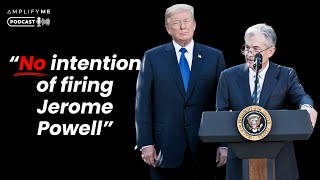
Trump's threat to fire Jerome Powell rattled markets: equities fell, the dollar weakened, and gold surged past $3,500. Treasury Secretary Scott Bessett signaled the U.S.-China tariff standoff may ease, while Tesla's stock rebounded despite dismal Q1 earnings as Musk faces loss of his government employee status.
Chapters
K, you have just heard from the US President Donald Trump there, and a pretty spectacular U-turn on what has caused a lot of market volatility in the last 2 or 3 sessions. So in this conversation, I've got Piers with me and we're gonna talk about a couple things. We're gonna try and put all of this together. What is the current state of play? And we're gonna address a couple of questions here. So why does Trump want lower rates? Can he actually fire Jerome Powell? How have markets reacted and why is an independent Fed important? But more than this, there's not only the Trump U-turn that's materialized. We've also had US Treasury Secretary Scott Bessant come out and a little bit more warming to trade negotiations with China. And finally, Elon Musk, Tesla's earnings were a bit of a disaster, but Elon is pivoting his focus back to Tesla. And their shares were up as much as 7.5% last night. I think they settled at around 5% in aftermarket trade, but all signs in Asia and in the futures market look positive for today on this Trump turnaround. So let me just give you a quick summary of the current state of play, and then Piers, we can address some of these questions. So the President, as everyone probably has seen, has been repeatedly hitting out at the Fed Chair's refusal to cut interest rates. I won't list out all of the derogatory terms that he's called Powell, but there's been many. And basically what he's been wanting to do is dismiss Powell before his term as central bank head comes to an end. Now, just for clarity's sake, that is not scheduled to happen until May of 2026. Now, that sustained criticism of Powell in recent days has basically rattled global markets. And this idea of threatening the independence of the Fed, which we are going to explain why that is such a critical function of global markets and how they work. Now, this was all compounded over the end of last week as that concern, if you want, was exacerbated by what was mentioned by Kevin Hassett, the Director of the National Economic Council, who on Friday said that Trump would, quote, continue to study the matter of dismissing Powell. You just heard from Trump at the top of the show. He said that was definitely not the case, but probably there's no smoke without fire. And then on Tuesday night, i.e., yesterday from when we were recording this, Trump said he had, quote, no intention of firing US Federal Reserve Jay Powell. And he was very explicit about that. Whoever's still pushing him that he should be cutting rates sooner rather than later, surprise. Perhaps we could just start at the beginning and get everyone up to speed before we talk about all of this. So first of all, let's go back. Why does Trump want lower rates? Let's just address the first question.
Yeah. Well, simple. Yeah, he's a populist president and lower rates. So the Federal Reserve cutting interest rates just then follows through to cheaper borrowing, right? It's a, You can call it an economic stimulus. You know, what does Trump want? He wants popularity. So people out there, the consumers out there who are paying mortgages, who are, you know, paying interest on credit card debt, whatever it is, then if these rates come down, then those debt interest costs come down and that's better. People then have more disposable income. The idea is they go out and spend more, which drives up consumption, drives up economic growth. And you know, there's nothing better for a sitting president than the economy to be picking up growth momentum, right? So that's it. He wants rates down and he's very annoyed that Jay Powell over at the Fed is stubbornly keeping rates up at what is the top of a hiking cycle. And so rates are, well, certainly in the last, compared to the last sort of 20 25 years, rates are really, really high and he wants them to come down.
Okay. So before what's happened from Trump's latest statement, a lot of the press was talking about and questioning and trying to figure out, can Trump actually fire Powell? So I know that legally this gets a little bit complicated. So what is the status of that?
Well, I don't know the— I mean, to be honest, It's a bit of a, it's a bit of a sort of black box that I don't know what the legal technicalities are. There's certainly a lot of people in the press and look, it's so political in the US, right? It's so bipolar. So you're going to get the left coming out and saying it's illegal. You can't do it. Now, is that statement correct? Honestly, I don't know. But I think it's not, it's not a relevant question. Just because, well, is Trump going to get rid of Powell? Right. And I think the answer's definitely no. So it's kind of a moot point. But yeah, apparently there are legal blockers preventing Trump from doing that. I don't know what those technical legal issues are. Yeah.
I mean, I can give a superficial brief explanation. So There's an, as with all legal terminology, the use of words is very important. And one of these statements of truth is that power can only be removed, quote, for cause. And the legal interpretation of for cause is essentially misconduct or abuse of power, of which the legal scholars have said, just criticizing him because he's not doing what you want with policy doesn't constitute misconduct. Or abusive power. Now, the next part then away from this is this kind of next order of questioning is, okay, you can't get rid of him. Can we just demote Powell? So demoting him though doesn't change the situation that you could basically demote him from chairman, but you serve, I think it's a 14-year term when you are board. And then when you're chair, you do a multi-year, like a shorter 4-year term. So all you would do is rotate back into the FOMC. Yeah. And still have a degree of influence. So it's definitely not a clean break. And where this gets messy, as you said, is that all of this falls under a catchment of a law that dates back to 1935 that basically lets Congress shield independent agencies such as the Fed from political interference. And obviously what some Trump allies are trying to do is change that legal setting. But there's actually a couple of hearings in play at the moment through a couple of executive orders that Trump made getting rid of some senior officials that are being, the government's being sued in this process at the moment. So, Nothing's going to happen right now is the point.
Yeah. Look, legal, like that word of cause or like abuse of power. If Trump wanted to get rid of Powell, if he actually wanted to do it, then look, there's enough wiggle room there. Can't you argue he's abusing his power by keeping rates too high? So he could do that and then half of the country will love it and agree with it, and half of the country would be up in arms, scandalously shouting, this is just, you know, outrageous.
So to your point then, it's not about the legal side of this, it's about how markets are reacting to even just the idea of this.
Right. And maybe that's what's happening here. Isn't this just Trump, you know, via his What's his name? Hassett, his kind of mouthpiece. Isn't he just dipping his toe in the water here? Let's just say I wanted to fire Powell. How might markets react to that? Well, let's find out by just leaking a little hint that I'm looking at doing that. Let's see what happens. And what happened was, yeah, a little bit of a blowout. Look, you had stocks dropped quite sharply. The dollar fell in value. The bond market was interesting because you had yields on the short end, they went down. So that's because pricing in more rate cuts, because the idea is if he swaps out Powell with someone who's aligned with his thinking, therefore you're going to expect rates to come down more quickly. So bond yields dropped on the short end, but bond yields went up on the long end. So you actually had a steepening of the yield curve and the bond yields went up on the long end. And that's, so that means people were selling, let's say, 10-year government bonds. So basically you're selling everything, selling stocks, selling the dollar, selling long duration bonds. And that's because of the uncertainty, if you like, the implied volatility of things like inflation, things like interest rates, the uncertainty about what will happen in the future goes up. And so that kind of led to bond yields on the longer end rising.
And in that asset class mix then, given all of that uncertainty leading to selling, that cash has got to flow somewhere. And is that what's driving gold prices then to these record levels?
Gold spiked and look, gold smashed up through $3,500, record ever high. Look, I would say, I do want to say that I think, look, these moves in markets are kind of just ongoing. It's the same pattern we've had for weeks. We just had another little bit more of the same right now in that sort of scenario. The, you can look at it two ways. It's like, well, market confidence is really low and it doesn't take much. To have another episode of what we call risk-off, right? Just so happens that it's Powell, oh sorry, it's Trump threatening to get rid of Powell. Trump has been threatening to get rid of Powell for years. Like you can go back to his first term in office, you know, go back and check his tweets about Powell. He's been wanting, he's been, you know, very vocally criticizing Powell for his entire time. What happened this week is just more of the same stuff. This isn't a sudden U-turn. I'm going to get rid of Powell. So look, I just think it's a function of low market confidence and it's just for want of a better reason to continue the risk-off. Well, what's in the news? Oh, well, Trump said this, so people latch onto it. The media kind of obviously latch onto it and it becomes a thing. But I don't see it as a particularly important event. Trump's not going to get rid of Powell.
To your point then, if there's a consistent degree of volatility and U-turning and so on, at what point does it start to normalize or the market just starts to then lean into, well, Trump is all bark again, no bite, and we start leaning the other direction.
Look, Powell, his term ends in May of 2026. It's actually not long, right? It's just over a year. So what is the upside of Trump getting rid of him? Well, maybe, right, you get lower rates, but is that economically and from a monetary policy point of view, the right strategy to cut rates? I mean, why wouldn't you cut rates? Well, Powell's not cutting rates because he's worried inflation is stubbornly high and, and is not coming down to his target of 2%. He's worried that tariffs will lead to an increase in, in inflation, right? So that's why Powell and the Monetary Policy Committee don't want to cut rates yet. So who's right? I don't know. I mean, it's such a, it's a really hard thing to predict what happens with inflation. What happens with tariffs, you know, and therefore what happens with rates.
Maybe strategically releasing that Bessant China information and softening the stance on the China negotiation whilst performing the U-turn means then that now, if then this is true and there's more of a lesser emphasis of heightened inflations on tariffs coming in aggressively, an interest rate, the economy is slowing, interest rates starts to be cut. Trump can now go, see, The guy listens to me. What a great thing.
Well, that, yeah, I mean, I think, look, that Bessant story about China is definitely the most important story that's happened this week because that is a potential U-turn and change from the current situation. This Powell-Trump thing, that's not a change in the current situation. It's just more of the same, right? If this standoff with China is now at its peak, and that's going to start to be rowed back if China and the US engage in negotiations, which they haven't yet, by the way. So Bessett has just said that the current situation's not sustainable, and he basically said that he hinted that negotiations could soon happen. They haven't, but if they do soon happen, well then, right, you can draw a line in the sand here where this called kind of big tariff risk episode, really, we could be more confident that the worst is behind us, right? So that's the most important thing that's happened. But look, just back to this, back to this Powell-Trump thing again. Look, there is precedent here. Erdoğan in Turkey, took control of the central bank, basically booted out the head of the central bank, basically put in his puppet, and then he cut interest rates, right? In what was already, you know, an incredibly high inflation environment. There's one negative feedback loop that happened because if you ultimately, if you undermine the market's confidence, in the central bank and the central bank's ability to do its job correctly, then you get market fallout. One of the scenarios is to do with the currency, right? And we saw it on Monday, the dollar dropped in value. So if international investors are going to pull money out of the US because they're not as confident in that kind of political monetary policy system anymore, if you pull money out, Well, it devalues the currency. What does that lead to? More inflation. So then you're going to have— so the cutting of interest rates actually has a negative feedback loop of raising inflation, meaning that rate cut is even more damaging, right? And you're going to have to raise rates more rapidly in the future to kind of counteract that inflation spike, right? So that market, this is what, this is one function of markets. It's really important is to keep checks and balances on these people in power. And ultimately Trump will be checked and balanced if he does something stupid like fire Powell and put in his puppet to cut rates immediately. Yeah, he can't, he cannot do that. Markets will not allow him to do that.
And so, yeah, you kind of answered a little bit of that Fed independent question then. So just what, given the nature of Western democracy in very various short-termist type settings, so 4 years, 5 years tends to be a typical term of political power before then a new election, if not one called earlier. Obviously political parties will want to engineer certain outcomes in towards political voting moments. So, well, this is the key reason then of why they need to, the goal needs to be credibility, stability, and employment over a longer-term setting. And hence the reason why they're, but this wasn't always the case though, right? So it used to be even in the UK, right? Until was it Gordon Brown that Yeah. The two were one.
That's right. Where the government did control the central bank and interest rates and yeah, it was just felt that actually they should be independent. And again, it's like checks and balances. It's again, not allowing the government to have too much power and to become almost a kind of Erdoğan kind of dictator scenario where if you do something stupid, you can have major, major negative consequences for the whole nation for a very long period of time in terms of destroying wealth. If you do stupid stuff and markets vote with their feet by international investors selling and running for the hills, it can cause lasting damage. So this idea of keeping them separate, having them independent, Yeah, just keeps that check and balance in place to reduce the chances of all that nightmare stuff happening.
Yeah. All right. Well, look, we talked briefly about US Treasury Secretary Bessett, but let me just give you the top headlines of what he said. So it was a Bloomberg exclusive and apparently saying, again, it's all cloak and dagger with the way the information's coming out at the moment. Closed door investor summit on Tuesday. That the tariff standoff with China, as you said, cannot be sustained by both sides, that the world's two largest economies will have to find ways to de-escalate. So some numbers here. Bessett said that it was not the US's goal to decouple from China. So that's the first important point. And that the current status quo of 145% tariffs on Chinese goods by the US and 125% tariffs on US products by China was not sustainable. He expressed optimism that tensions could cool, so important timeline, in the coming months, which could bring relief to markets. But he did caution that a longer or a larger deal could take longer. So obviously, as you said, markets last night, I mean, I think the S&P rallied as much as 3% and we closed up about 2.5% in New York on Tuesday night. Importantly though, perhaps Trump Biden's tactics are paying off. We've talked about this over recent weeks because a Politico report was saying the White House is very close to announcing high-level agreements now with Japan and India. Yeah. You know, these are two pretty big countries and economies. Those are expected to largely signal a willingness to negotiate on very specific topics. So details to be worked out over months or even years. But I guess, wasn't this always the tactic? Force the hand, get them to the table. You're not going to do a complete deal, but at least you control the narrative from the US perspective.
Yep, absolutely. I mean, yeah, I think we were saying a couple of weeks ago, like Trump, this is the classic Trump playbook, the art of the deal. And yeah, let's see what the news is about Japan and India. I think that's going to be another really important moment in this tariff crisis. It's, you know, what is the What is the end outcome of all of this bullying? And does it bring the likes of big, big trade partners to the table? And what kind of deal is signed off? And then you've got hard evidence as to how this is going to play out. And then you can start to extrapolate that through all the way through to China in the end, which is obviously that big that big fish in all of this. And, but you are right, it's going to take months, months and months. We're going to be talking about, you know, the, the China-US trade war for the whole of 2025. And, but yeah, I, I think for Trump it'll be really great for him if he can start chalking up some really big wins. And so yeah, when we get news, more news and detail on Japan and India, it will, it be a chalked up massive win for him. In which case that will just further justify to himself, not that he need, you know, he already thinks he's always right, but he would just further justify to himself that his strategy is correct and they will sit tight and get China to the table and they won't back down until they're at the table. But then it's like, right now that you're at the table, okay, you've got a willingness to negotiate, let's negotiate. And then a deal can be done.
So perhaps he gets interest rates cut, peace deal in Russia and Ukraine. He gets a deal cut with India and Japan.
I mean, they always talk about the first 100 days, right? You know, when the president comes in, it's always like that 100-day mark. It's like, right, you know, what have you been able to get done? And how, what does that look like relative to what you were telling us you were going to do on the campaign trail? And so that 100-day line in the sand is a really important one. And so yeah, I think he's, what is he, 90-odd days in here. So yeah, we're going to hit 100 days end of next week. So yeah, if he can chalk up a big Japan and India win in the trade war column, he'll be very happy with that.
Okay. Well, look, someone who was very close to his side in those first 90 days was of course Elon Musk, and there was a very interesting reaction in their share price last night. So why did they react so positively to what otherwise was pretty disastrous numbers for the company in itself?
Well, Musk is having a shocker, isn't he? I mean, talk about a bad year. So Tesla has just been annihilated in terms of its share price. It's dropped by 50%. Now a lot of it is political. So it's the political backlash that Musk is getting via Tesla and the ability for that business to sell cars. And so look, they had their earnings last night. So this is for quarter one, so January, February, March. And how did they do as a business? And how they did was not very well. They sold 3,36,681 cars in that quarter. Now, is that a lot? Well, no. Analysts were expecting 390,000, so they're a good 20%, or not quite, 15 to 20% off the kind of target there. And a much lower, so 20% drop in revenue compared to the same quarter last year. So the worst quarter since 2022. And it's just been a disaster in Europe. Again, like Musk just dipping his oar in, just getting involved with things like the German election and stuff. And it's just, why? There's just no need. So what's happened is German Tesla sales have collapsed. So, and you're obviously getting a lot of demonstrations going on at Tesla showrooms in the US. You know, so look, it's just been a shocker. There, there've been other stuff that have also happened. It's like all come at once for Tesla because you've got this backlash in Europe. Well, what's going on in China then? Another really important market for them. Well, BYD, their Chinese rival, it's just smashing it. And they, they sold 416,000 electric vehicles in the quarter versus Tesla's 336,000. So they're absolutely destroying them in terms of market share. In the last 12 months, Tesla's China market share has gone from 12% down to just 7%. So you've got really bad stuff going on in China. There's another thing which you could look into the future and say might turn into a positive. They finally got a new version of their Model Y. All right, finally, finally, finally. We've got an upgrade to the Model Y. The problem there has been that to produce this vehicle, you've got to upgrade your tooling on the production line. But to do that, you've got to stop the production line, take out what's there, put in the new stuff. So actually they lost a couple of weeks worth of production in the quarter because of that tooling change, right? So that's a negative, another reason why you've seen a dip in vehicle deliveries here. They've had other stuff you'll have heard about. Well, they had to recall 46,000 Cybertrucks because one of the panels was at risk of falling off. Right. Then you add on the macro stuff, which is tariffs. This tariff war with China is a shocker for Tesla because that's where they get their batteries.
Yeah.
Right.
So I was going to say that, that was so clear point of difference here. Tesla assembles all of its vehicles sold in the US locally.
Yeah.
But the important point is what you just said is where do they source their components, like the battery cells from China, for example.
Yeah. So it's literally the perfect storm. And so their share price is halved. Now everyone's asking, well, when'd you buy Tesla then? When's the bottom? When's the bottom? And it's like, well, I don't know. Is the, but I would say it's hard to see how things can get worse. And what happened last night was quite interesting because the share price initially dropped, I think it was like 6.5% off the back of these earnings numbers, which were really bad. But then they ended up rallying and finished up 5%. So how did that happen? And because Musk said, Okay, enough. My time at DOJ, my time working for the government is going to start to decline. And he's basically saying, I'm now back to my day job. I'm going to refocus back on Tesla. I'm only going to be spending a couple, you know, I'm not stepping entirely away from DOJ, DOJ, the Department of Government Efficiency, but he said, I'm probably going to cut it down to about 2 days a week. So that's what investors wanted to hear. It's like, look, stop messing about with your other political stuff. Get back to the day job because your business is falling apart.
One thing I didn't realize about Musk was that he's an SGE. And I was like, okay, what's a, what's a, a SGE? What's an SGE? And so it's so interesting because like just out of naivety, you just don't know about these things often until they happen. The media talks about it. So Musk basically has a deadline for his special government employee status, which is a very unique category of how you get employed by the government, which only lasts for 130 days. So we were talking earlier about coming up to the 100-day mark. So all along, you know, Trump, Musk now in hindsight, in retrospect, even though we know his style, like what he did with Twitter turning to X and the slashing immediately and things like that. He did have pretty much a stop clock from day one where he needed to break things pretty quickly. Now, just to be clear, so he's going to hit soon this 130 days. So the pivot makes sense on two fronts, both from a technicality point and his employment status with the government, but also from Tesla's situation. But that could change, like you said. So there's two ways this could change basically. Either he could get reappointed under a new status and you just get another 130 days, right? Like you just change the job title. It's not difficult. I don't think from what I've read. So he could definitely come back again for sure. One of the main things there is though, that could be at risk of violating federal ethics law is what some of the scholars have said. But again, who's got the stronger argument? Uh, and that guy's got some pretty deep pockets, so, um, you see what happens when you go against him legally. But yeah, I think the Tesla thing, as you said, is probably enough to draw him back for now. But let's see.
Yeah, I, I can't, I can't see, I can't see him swapping up job title and, and doubling up for another 130 days. I think this, this period of time you know, where he's been sidetracked, you know, the evidence is very clear as to the damage it's doing to the business. And ultimately, you know, you would've thought that's gotta be his priority in the end. So it's like, and look, he's with the DOJ, the Department of Government Efficiency. It's not like that's stopping, it's not just him on his own doing that, right? So he's basically saying, look, I've got it up and running, the team's in place. They will crack on and do their job and get rid of fraud, waste, and abuse as they talk, describe it, right? So that's just the system's in place, the team's in place. He can kind of step back now and it can do its own thing. And I would say politically it's going to end up being a positive for Trump because half of the country is very resentful of the fact that Musk has strolled in and is seemingly wielding a lot of power, right? So the left, the Democrats of the country will enjoy the fact that Musk is going to step down. So there's no way Musk is going to come back.
And actually, I reckon that's another strength to Trump's argument of his first 100 days. He's come in, disrupted things, cleaned up the shop, and now he's said, I'm the biggest ego in town. Musk is gone. So One final question then to close, given a lot of the people that listen to this are investors, they're not specifically traders. So these could be professionals, early career professionals, but we know we have quite a breadth of audience base, but a lot of those are active in the market thinking about their self-invested pensions or stock picking. You talked about Tesla there. Any words of advice, just given your 20-plus years of experience about, like you said, we seem to be in this new paradigm of heightened volatility, of how to go about approaching that from a mindset perspective?
Yeah. Don't think you can pick the bottom.
Don't say it, Piers. Don't say those words.
Don't try and pick the bottom. It's impossible. I guess I mean that if you're an investor and so the big, the million-dollar question is when's the bottom? And like, when's the bottom generally for the indices like the S&P or the NASDAQ? When's the bottom like specifically for Tesla or for Nvidia? All right. When is the bottom? No one knows. And we're still in this A few things have happened this week that you could say are starting to tip the balance. Well, maybe there's some positive things. You know, obviously that China situation, does that draw a line? And is the tariff war, has it peaked? You know, does that mean that inflation can come down? Does the Fed cut rates? You know, what's happening with these earnings that we're getting from these big companies? You know, it, there, there's a few things that are happening, but I would say like you spread if you want to buy because you think it's the bottom, don't just go all in now because, and try and pick that bottom. I'm saying spread it, buy a little bit because you might be wrong. And ultimately this negative, we saw it on Monday, then the confidence in this market is still really low. So it doesn't take much to just trigger another episode of risk-off. We saw it. That stuff about Powell's ridiculous. It's exact— Trump's been saying that stuff for years and yet what, all of a sudden it's now a big news story and markets sell off? I mean, I think it's just a signal that the confidence is still low. So you gotta be really careful cuz ultimately any negative headline will be latched onto by the media and it can just trigger another episode of downside, right? So we're in this, you know, maybe we're in a finding the bottom mode, but who knows when that will be? It might be this week, it might be 2 weeks, it might be 2 months. You know, it obviously depends. Does China come to the table and negotiate? Does that first negotiation break down and become very acrimonious and the 2 sides retreat back into their own trenches, which has happened in the past, by the way? Well then, right, that's going to trigger another episode of panic, right? So I think in the meantime you gotta kind of just spread. If you do wanna buy the bottom, don't just lump it all in, spread it over time, and then on average you might catch it.
Nice. All right, cool. That is it for today's. Hopefully that was useful. And if you aren't already subscribed to the channel, just remember to do so. Drop us a like or a comment wherever you listen to the podcast show. Piers. Till next week. Take care.
Thanks a lot.
More from Anthony


Inside the Biggest Banking Stories You Need to Know This Week (Anthropic, Diageo, Private Credit)


Inside the Biggest M&A Deals You Need to Know This Week (UniCredit, GameStop, eBay, Eli Lilly)







AI Breakthrough or Hype? Anthropic’s Claude Mythos, Tim Cook Steps Down & LIV Golf Collapse