UK PM Johnson Announces Plan B, What Does This Mean For Markets?
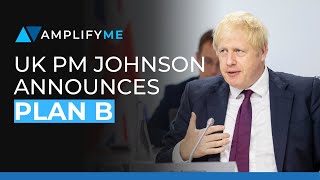
Boris Johnson announced Plan B to fight Omicron: work-from-home guidance, mask mandates in public spaces, and NHS COVID passes for nightclubs. The pound fell to 1.32 against the dollar, and the Bank of England's rate hike shifted from December to February 2022.
Chapters
Okay, I thought I would do a quick update because we've just had some breaking news coming out of the UK Prime Minister Boris Johnson, who has announced then that they will be enacting Plan B in England. And so I just wanted to talk a little bit about what is Plan B, when is it going to come into play, and what does it mean for markets. So first off, Boris Johnson actually is still talking. This has literally just happened in the last few moments. It's not entirely unexpected though, and a quick look at the charts, the pound The pound has already had quite a rollercoaster day, in fact, and it did actually decline quite early this morning on the back of lots of rumors and speculation of this very announcement happening today. Long story short, the more restrictions come in, the more it might impede then economic activity in the UK, and subsequently is causing markets then to rethink then how quickly the Bank of England can hike rates in the future. They were thinking December, probably now that's been pushed out to February of 2022. So the pound did weaken. It did recover. The announcement really is just confirmation of a lot of that, uh, rumor-mongering from this morning. So it hasn't had too much of an immediate impact. But that low printed today in sterling— if we just flip over to a daily continuation chart here, you can see here we are trading just around the 132 handle. And actually, this would be the lowest price point we've printed in sterling-dollar for about a year. And you can see what an important level that 132 level has been through the journey of the pandemic, and actually even beyond, going back 2018 and 2019. So what exactly has been announced and why has it got to this point? Well, a couple things. These are the three main kind of pillars of the Plan B strategy from the UK government. First off is the reintroduction of the work from home order for those who can from Monday. One of the main points here is the fact that what we already know from the early data from Omicron is that it's highly transmissible, in fact more, much more so than the likes of Delta, which was the latest variant that still is being experienced across the world globally at this point in time as the dominant strain. Now, the average days that the Health Secretary and the Prime Minister have said is that Omicron is doubling around every 2 to 3 days, which is much faster than and more transmissible than the Delta variant, which again in itself was much more transmissible than its predecessor, that of the Alpha variant, and then the original strain that we saw in the initial outbreak of the pandemic. The second point then is the extension of mandatory face mask wearing to most public venues— theaters, cinemas, and so on. And then the NHS COVID Pass, commonly referred to as the vaccine passport, will be made mandatory in a week's time for nightclubs and large events. So this is an incremental kind of step up, if you like, of trying to offset then what is at the moment a relatively low number of cases, but as per the government's own admission, admission, then the fact is that these numbers are likely already much higher. And as I've just said, they are pretty much doubling every 2.5 days. So the current case rate number is 568 in the UK, uh, probably is already much higher and will continue to head north, so is the expectation. Now here's the percentage, uh, the proportion percentage of Omicron in sequence cases as of just a few days ago. And as you can see, it's still quite low, but it's the trajectory of which this new variant is moving is what's causing concern. Omicron cases per day in the UK, um, confirmed cases are in the red down here, but projected cases are that it could accelerate very rapidly. And one of the concerns of the government, of course, is the overall 7-day rolling average of cases of just COVID-19, all strains together, predominantly Delta at this point. We already have seen a 21% lift in the past 7 days, and we're right up at the double top kind of peak that we saw in July and also going into early October of this year. Any breakout above here, which is at the moment anticipated, which put us back up to the most highest levels before there were any vaccines, before there was any lockdown really, as to going into the peak period of 2020 when we saw the biggest outbreak towards the back end of that year, where in fact that was when we were in lockdown. So a couple of different things then. Why has the government made this decision? Well, leaked minutes from SAGE's emergency meeting earlier today was talking about Omicron hospital admissions. And that really is the key at the moment with all this data. Hospital admissions are still relatively contained, and as to then our subsequent mortality rates. However, one of the things here is that, that SAGE have said is that hospital admissions could breach 1,000 a day by the end of the year without tougher restrictions taking place as of now. For context, currently around 680 people are admitted to hospital each day in England. With the Delta variant. So at the peak of last winter, the, the wave of coronavirus— and this was what we were seeing at this, this peak that we've had thus far when cases were up at the 60, almost 70,000 a day mark— there were in England admitting around 3,811 people infected with the virus. So this warning comes obviously as we're starting to see the first signs, but it's kind of proactive to try and then offset what is obviously going to be a politically very delicate period for Boris Johnson, where closing down and restricting families from mixing over Christmas would have a lot of political impact on him. And he's already under pressure, of course, for lots of other reasons I'm sure you've seen in the press. A few other things are then, is there a Plan C? Ministers have said they aren't afraid to go further if they need to, but there's no real exact details of what a Plan C would constitute. But scientists have generally hinted towards that would be more to do with more exact social, social distancing rules like we saw in the initial onset of the pandemic in 2020. How has the market reacted? Well, again, not too much now on the confirmation, but when this was initially breaking, UK travel and leisure stocks got hit immediately as the rumors started to swirl this morning. Obviously, more lockdowns, less mobility, these leisure and travel stocks are always going to be the biggest casualties, as they have been in the past. The other thing was the British pound. We've already talked about the lowest it's traded against the US dollar in about a year. Going further forward then, what, what can we look out for? Well, from a market's perspective, really it's about now the how participants view the Bank of England taking action. As I mentioned briefly before, there's been a lot of emphasis about how high and the direction of travel for inflation in the UK that they're going to have to take action to raise rates sooner rather than later. However, this has and likely will be the barrier to executing that in a meeting which is only around a week or so from now for the next Bank of England meeting. The rationale why not hiking rates in Jan— next real major meeting is in February for the Bank of England, and that's when their latest monetary policy report with their projections on growth and inflation and so on comes out. Typically, that's when they like to take action. So it could well be that we start to see a bit more of a graduated move reversing some of this hawkish market pricing of late. And obviously, if we start to see US inflation coming out on Friday, big figure, of course, just given the narrative of the Fed turning hawkish at the moment. So despite Omicron risks still really yet to emerge, but likely will do in the US, if we start to see a further disconnect in the short term between more onerous restrictions in the UK against the US, and if inflation in the US starts to really accelerate further beyond high levels at the moment, it could well force some further downside pressure on the cable pair going into the end of the week under those, uh, that scenario. So overall, I don't find this is particularly too unexpected. Obviously the PM's under a lot of pressure at the moment. There's the inquiry into Number 10's Christmas gathering, um, the breach of rules and so forth. So the government's already trying to fight against a lot of ill feeling both internally and also publicly against the ruling government at this point in time. And again, Christmas being cancelled would be an absolute disaster from a public opinion point of view, so hence the rationale probably to take action sooner rather than later. And that's pretty much it. So yeah, hopefully that's a useful update. I'll have more, of course, in my normal briefing in the morning, but that's it for now. And enjoy the rest of your evening. All right, take care.
More from Anthony


Inside the Biggest Banking Stories You Need to Know This Week (Anthropic, Diageo, Private Credit)


Inside the Biggest M&A Deals You Need to Know This Week (UniCredit, GameStop, eBay, Eli Lilly)







AI Breakthrough or Hype? Anthropic’s Claude Mythos, Tim Cook Steps Down & LIV Golf Collapse