US Non-Farm Payrolls *LIVE*
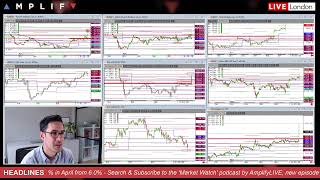
Anthony Cheung breaks down the US jobs report live as it drops: expectations were 978k jobs at 5.8% unemployment, but actual came in at 266k jobs and 6.1% unemployment. The miss sparked a NASDAQ rally, gold and euro bounce, and dollar selloff.
Chapters
Okay, hello folks, just gonna get up and running on a, on a live feed. So just going to give it a minute or two before I really kick off and start the full Nonfarm Payroll live coverage. Going to be on from 1 to 2 PM London time. So I'll do a full fundamental preview. We'll listen into the live release. We'll look at the charts and how things react in real time. And yeah, happy to take some questions as well. So great to have everyone with us. I'm just getting some screens set up at the moment. And just obviously people getting logged in and so on. So, "Non-Pomparell Live Coverage" gonna be on from— So yeah, I'm just getting a few screens up now so I can monitor comments, and obviously I'd love to get some questions from you guys. We're going to be streaming this time across all the different Amplify social channels, so interested to see how this experiment goes. I'm sure it'll be absolutely fine, and hopefully it's something we can do more often. Not just on market stuff but all kinds of different things. So yeah, I'm just going to set up, we'll give it a minute, and then yeah, we'll get underway. So just move a few screens around. Yeah, I hope everyone's doing well. Happy Friday. Okay, cool. Well, look, let's, let's get things underway. Firstly, thanks very much for clicking on the link. It's the first time we've really live-streamed on things like LinkedIn, and I know we have a really great community on there. So if you're watching on LinkedIn, hello. I hope you're all doing well, but also this is going to go out to the Facebook group as well as the YouTube community as well. And yeah, you know, you probably see my face fairly regularly with the morning briefings, so, you know, massive thank you for everyone who does follow us online. I super appreciate it. As I always say when I do meet people in person, any of those daily kind of macro briefings I put out then if you have questions, whatever they might be, complicated or simple as you like, just go ahead and leave a comment. I'll always try and get back to people throughout the day. So, you know, my intention there really is to use it as not only getting you up to speed on what's going on, but, you know, for traders, for students, but also as, you know, a vehicle to learn as well. So, yeah, I look forward to seeing you guys online. But look, the purpose of this hour. I'm going to be on for now until 2. Obviously, I'm going to talk mainly about nonfarm payrolls, so I'll get right into that in a moment, and I'll give you a bit of a preview of what we're expecting today with one of the biggest probably jobs reports we've seen from a number point of view on the headline changing on farms since the onset of the pandemic, which I'll talk about in a moment. And then, yeah, talk a little bit about Amplify and the guys. I've got a few different guys online helping me out here in the I was going to say in the background, but in the virtual background. And so if there's any questions at all, if I can't see everything, they're going to fire it over to me and I'll be able to pick those up as well. So yeah, before we get into payrolls, do check out— we've kind of soft launched the V2 of Amplify Live. So Amplify Live is kind of our trader community where again those guys are online now, so hello to everyone. But yeah, we have lots of different things which I can show you here just briefly because AmplifyLive.com includes basically content training as well as housing our trader and investor community. We cover live trading sessions, so things like this or like yesterday's Bank of England I'd be doing that regularly over any big data releases, any breaking news, vaccine news or COVID, things like that. I can flick on the mic and go live in a private stream. Then we have one of our senior traders, Tim, and he's there with a live stream going throughout the entire day. So market updates here, you know, one of the great things that we wanted to do for you guys really, the communities online, is that you know, just jumping through all of this, which you can check out in your own time, what exactly the Trader Hub is. But there's a free version. We really wanted to give something back for the really loyal followers that we've had over the years. And so now the way that we've designed this hub is there's kind of 3 tiers to it, and one of those is absolutely free. So that briefing that you get from me on YouTube around 10 AM, you can now get that early ahead of 8 AM. Um, all you need to do is just go on to AmplifyLive.com, sign up for free. You can access a private Discord community room. Um, you can also get hold of calendars, technical charts, things like that. Uh, and yeah, we just, just get our online community really out there. And then if you want added things, and then obviously you can check other stuff out. Other things, just a quick bit of housekeeping before I get into payrolls. Um, we just put out the latest podcast. So if you're not aware of this Market Watch podcast, you can go on Apple Podcasts or Spotify, just search for Market Watch. You'll probably see it, see my face. But me and Piers do every Friday morning, we put out a new episode and we've just done the latest one, which is about basically a big talking point in markets right now. And we've been seeing this phenomenal rise in commodities across the board as we go through this reopening, the kind of pent-up and big demand that we're going to see come through, and the constraints as well that general manufacturing bottlenecks are having at the moment, and what this is doing for inflation. You know, inflation is moving higher, it will continue to do so. Now, is the Federal Reserve right to really hold true to the idea that inflation will be transitory or not? What's the challenges they're facing? What's the timings on communication for tapering? All these types of things. Piers and I discuss at length in the podcast today. So, so yeah, check that out. Again, just search for Market Watch or just go to AmplifyLive.com/podcast. But look, let's have a quick wrap-up what's been going on in markets so far today and what the charts are looking at or looking like, and then we can, we can go into and drill down into a preview for non-farms and what we're expecting from today's release in 22 minutes or so. So one of the things here then is, before we, before we look at the, the detail, let's look at the, the lay of the land. And at the moment, the dollar seen a little bit of weakness after the slight bid— talking about the Dixie— when European players came in. So we're just picking up off the lows at the moment, in fact. And the dollar index is back to unchanged, having traded a little bit weaker this morning. So let's have a look at a couple of different charts then. For one, this is EURUSD. Quite nice respect actually from the recent range, which is taking the Fib retracement from the recent high that we printed back at the end of last week, last Thursday, 29th, to the low that we printed on Wednesday. We had a nice respect to the 50% Fib in the yesterday afternoon session, also held and constricted the Asia-Pac session until Europe came in this morning. And and then the 6182 with the R1 in the euro futures I'm looking at with the 121 handle. So real nice combination of technical indicators there aligning to just go around that zone for the top there in the euro currency. And it's just drifted south here, as I said, as the dollar seeing a bit of recovery going into the number. Don't forget, obviously, the dollar perhaps more favorable to upside, just given the idea that this number most are sitting on the, on the side of a blowout to the upside. So the risk is for an upside surprise, and that could well then be net dollar beneficial in that sense. So weighing on EURUSD a little bit. Otherwise, cable has been, from a range point of view, fairly restricted in recent sessions. Yesterday's Bank of England— I mean, you can see these really exaggerated wicks here on the initial volatility. Initially the pound actually dropped, but what the Bank of England did yesterday I think was absolutely in line. If you actually look where we're trading now, just come out of the kind of microscopic lens of the day trading environment and you look at it from a slightly higher time frame, we are pretty range-bound in the middle of that. So despite the noise over the BoE, who did kind of taper— not sure taper is really the right word for what they did, It was more of a technical tweak to prolong then to year-end as per their guidance about the, the volume of purchases to the amount committed so, so far. Upgrades aggressively to things like growth, the kind of unemployment peak being lower now from the previous forecast in February. None of that's surprising. So the move in itself, I think you had a bit of a drop yesterday in the pound. It recovered quite quickly. Net-net, I wouldn't really over-interpret it. So now it's really over to the dollar. and the greenback will really drive proceedings now to see off the end of this week. So from, from a cable point of view, where we're trading at the minute, um, probably don't really look for too much interest unless we get back down to where we were in yesterday's low, or we get back up to that range high. And the R1 is sitting just above that, about 4 pips above that area as well, just marked up with the rectangle. Otherwise, quick look elsewhere from a technical perspective. This is the NASDAQ 100 future. Fairly interesting setup here. We have had good respect this week after the breakdown in price that we saw on Tuesday. You remember on Tuesday, lots of people putting around the kind of hypothesis of why was— we were selling off. But I think ultimately we were, we were selling off on a combination of different things, you know, whether it be technical, whether it be Janet Yellen's comments where she kind of walked back but was Anthony Cheung was commenting about perhaps the need for rate rises in the future. The idea being here is this— look, technically this is quite a key level, I think, around this payrolls, given how close proximity we are to it at the moment. So any breach back up, obviously you've got the R1 just above, but perhaps more interesting then is you start to draw in that double bottom respected during the middle of April. Um, you've also got that high here before the drop. So you kind of broke— you can see how the market technically played out on Tuesday we broke down through that double bottom, moved down to that on the day, the S2, bounced back up to that level for then what we'd call the kind of classic short, and the market just ran lower. Some of that momentum picked up on that, that kind of bearish developments on that day. But as we become so accustomed to seeing, we actually saw this again last night as far as the S&P is concerned, the final half an hour or so of trade, stocks just kind of blast back higher. And reverse a lot of the moves. So upside, yeah, that, that would probably be a key area I'd look at, 13,697. Any further progressive push higher, then just having a look up toward 13,722, which starts to bring some of those relative lows at around that mid-April period, as well as the levels of support, the Asia-Pac session going through this week, Monday, Tuesday, before the breakdown in price on, on the Tuesday afternoon. On the downside, yeah, there's definitely room here to move to the downside for sure. And technically speaking, I'll probably be looking at that intraday like we printed this morning, which did coincide with that initial peak in price that we saw late European afternoon yesterday. So yeah, just running over the charts now before then I'll drill into the fundamentals and what exactly we're to expect for payrolls. Otherwise, just having a look at the S&P. So the S&P now has— sorry, I'm just going to turn my Gmail off because otherwise you can probably hear those pings. Okay, so just having a look at the S&P here. Yeah, really powerful breach of that area of resistance that was seen yesterday. Evening. That was also the retest of the prior day session high and just popped higher really there and really drove prices high into the closing bell. Asia took us another leg higher. We have formed a bit of a, of a near-term base at around 4192, uh, and, and we trade in excess of 4200 at the moment. So this is obviously right up there, you know, if we're looking on the dailies back to, back to all-time highs, having had the likes of the Dow already put in that, that marker this week. So yeah, definitely, as I'll talk about at the moment, you know, if payrolls comes out in a particular scenario, certainly we could, we could be printing all-time highs once again. Otherwise, T-notes really quiet actually going into this event. I don't think that's too untoward. Obviously market volumes tend to drop off just going into the volatility and Uh, at the moment it's just a wait and see really for, for this number to come out. Now, um, looking at the near-term kind of price ranges, uh, it's kind of between 32.16 and 24 on the upside. The upside level is quite interesting because that's been quite restrictive of price over the course of the last 2 weeks, 2 and a half weeks or so. So up at 24, which is sitting just 2 ticks above the R1 on the daily pivots. Oil, much more indirect in terms of commodity space reaction here. So be more byproduct of how dollar reacts overall, uh, rather than something more tangibly direct to, to crude oil prices. But crude oil just come under a bit of pressure, obviously, as we've been seeing, as I've mentioned, a bit of dollar reversal of late. Just going into this figure, the Dixie now has eradicated all of the morning's decline, and we're just testing the S1 here, which was also, as you can see, the low here on the 4th. It's going back to earlier part of the week. On the downside, I'd be keeping an eye on the 64 handle. So kind of down here, as you can see, that was the peak of resistance back at the beginning of the week at the recommencement of trade on Sunday night going into Monday, and was also an area of support back on Thursday session as well, on Thursday morning. Uh, downsides there then, 63, I think not too much then until we actually get get further down, um, probably looking down toward the 63 handle starts to draw in some of the base of that price activity at the beginning of the, the week. But again, would want to not look at oil in terms of too direct, not unless there's good technical setups, given the fact that the more kind of direct moves often best kind of played out via yield, subsequent bond prices, dollar fluctuation, and then equities and commodities probably secondary to that. But let's just have a quick look at the Nonfarm Payroll by detail then, of exactly what are we looking at. And let's start off with a couple of, couple of talking points. So Let's jump straight onto here. So just sharing the economic calendar here, and I just wanted to go over a couple of 101s for anyone who's not that familiar with following payrolls. Payrolls is a, you know, comes out first Friday of the month, barring some exceptions when there's a UK or US bank holiday. It's always seen as a major kind of reading in terms of the overall health of the US economy, and even more so in the current environment because of the fact that The US Federal Reserve have been pretty adamant that jobs is a real focus in terms of their policy decision-making, and we know that from, from the political side coming from the US administration as well. So the jobs report here is actually quite a multifaceted report. There's a lot of pieces to it, but there certainly is generally a hierarchy of, in a day trading environment, what subsequently causes short-term volatility and The headline reading is the kind of first input, so it's almost the first output in terms of the initial, often algo-led kind of reaction effect, which can often be fairly binary. And the reason why is because those computerized systems are largely based upon the parameters that are the, the range. And what I mean by this is Payrolls Today headline is expected at 978,000 jobs created with a range of 656,000 to 2.1 million. And so that range, then you can determine what would be really an outlying surprise, either in a negative or a positive sense. And more broadly speaking, just talking from a technical reaction point of view, the further you are, the bigger the deviation away from the media consensus, normally the bigger knee-jerk reaction you're going to see. As I said though, payrolls has a few more layers to it, which generally adds to volatility. And often for a human point-click trader, it's often better to just kind of stay— steer clear of the initial noise, i.e., seconds, could be minutes depending on how mixed the data is. And then, you know, don't try to be too clever about it, you know, unless there is something really ultra clear and uniformity to all the numbers pointing in a particularly positive or negative fashion. Well, then just stay out of it and wait for, for better potential opportunities later. And I've said many times to, to our junior traders that, you know, the best opportunities can often come 15, 20, half an hour, an hour at the open on Wall Street. You don't need to hit it or feel compelled to hit it at the point of release. The other kind of key numbers here then are the unemployment rate, uh, that's expected at 5.8%. Um, that will be down, an improvement on 6%. Again, fairly wide range of 5.2% to 6.1%. Don't forget with the headline reading to be aware of the revision to the previous 9/16. Now, is the revision up and you get an actual beat on the month? Obviously that just adds to the positivity of it. Or does it net off effect, kind of neutralize a headline beat on the actual month of April that this report is? So a few things there to think about. You've then also got the 2-month net revision. You get a breakdown of manufacturing government payrolls, which adds some granularity to the report but isn't too important, I'd say, in the initial reaction. Much more the headline, the unemployment, the revision, the 2-month net revision, um, and, and the average hourly earnings is something historically people will look at, but I think at the moment the focus is on the overall job number for the time being and the unemployment rate more so. A few things then that we have had. What, what market participants tend to do is there's a very formulaic process as to what happens prior to Non-Farm coming out. And essentially, Non-Farm is not the only jobs data. It's arguably seen as the most important one. It definitely encapsulates the overall national picture, but there are a number of little jigsaw pieces that we get given in the run-up to non-farm payrolls. So these in themselves carry somewhat of a hierarchy of importance. One of the ones you would have seen yesterday, of course, was, was jobless claims. Initial jobless claims, so i.e., a lower number is, is a better perceived perception of the employment situation. And as you can see on this chart of the last 12 readings going back to the beginning of February, We've been on a downward trajectory, which is positive. Vaccination is going up in the US. You've got on a state-by-state level different reopenings happening. So people going back to work. And so the jobless claims figure is decreasing. So these would all be positive developments for the belief then that people are going back to work, that demand will pick up, and the economy is going to increase in terms of its output. And hence, like what we saw with the recent GDP reading last week. Important points to remember, kind of nuances with payrolls, is that they take what we call a reference period. So typically the 12th to the 12th of the month. So it's not like it's the 1st to the end of April as an April report, it will be the 12th of March to the 12th of April. So when you're looking back on these data points, it's not going to necessarily capture things like 498, but certainly it captures the decrease that we were seeing from the drops of 750 down to the high 500s. Um, that's not the only thing though. Probably the one that people, uh, again historically put quite a lot of kind of weight behind is the ADP employment report. Now, now this one is private payrolls, a very big kind of data collection exercise. So it's given that, that kind of weighted factor as a good precursor for payrolls. Came out earlier in the week on— it always comes out on a Wednesday. It did rise And in fact, it was the biggest figure in the last 8 releases, albeit it was a touch below expectations. So it came in at 742,000 against expectations of 800,000, but nonetheless quite a significant jump. So overall, I mean, I know that number's lower than consensus, but generally speaking, you know, the deviation away from a consensus estimate, that's not that big a surprise. So typically quite neutral, I'd say, with that release. The other things then are the ISM readings. So these are your PMIs. So we've had this week the manufacturing on the Monday, just had the services PMI come out in the US, a little bit of a mixed picture. And probably on the manufacturing side, that was the only one that was a little bit weaker. And we are seeing kind of a degree of kind of bottlenecks at the moment as these facilities try to reopen quick enough to keep pace with this massive pickup in demand. And consequently, that's what's creating these massive price pressures, which undoubtedly is going to see infla— inflation move higher in the future. But as such then, what this employment sub-index for manufacturing actually retraced from what was a 3-year high. However, it's still above the very important level of 50, and 50 for the ISM number and its constituents is deemed to be then above expansion, below contraction, and that figure was still at 55.1. The services number was really strong, came in at 58.8. It's the highest level it's been since September of 2018. Other numbers, Challenger job cuts continue to diminish. University of Michigan and the Conference Board— so this is more looking at a consumer confidence level Those figures as well showed signs of optimism. We've got a post-pandemic high in University of Michigan sentiment, and the Conference Board Index figure as well is pretty strong. So that's all fine. All of this is basically telling you then that this market is expecting a decent report. Um, the, the question then becomes, well, how's the market going to react and what does this mean for the Fed? So let's just address that for a few minutes and then the release will come out. So a couple things. For one, uh, the, the Fed are very jobs-focused. If we get a number a million, broadly in line with expectations, I think put it into the context of the fact that that still would leave employment about 7.5 million jobs short of its peak of where we were going back to February. Of 2020. So prior to the pandemic really kicking off. So when you think about the slack in the economy and you think about the, uh, the catch-up that we need to make, there's a lot there. And that goes some way to explain then why the Fed feel that although there's inflationary pressures emerging, there's still a lot of slack in the economy. In addition to the fact that, don't forget that, you know, consumers and so on have been kind of jacked up on multi-stimulus checks and all these different types of things which has been keeping demand up. And so once that fades out, well then, you know, where does inflation stand then? And when all of these other kind of operational aspects start to reopen, that kind of decreases then at the factory those price pressures, and then that kind of fades down to the, to the consumer. Um, in terms of the breakdown of actual jobs, you're probably going to see in this payroll report, and I'll show it to you on the breakdown when it's out, quite a general improvement across sectors, but leisure and hospitality industries are probably going to see the most aggressive moves back, which we would anticipate because things like restaurants, bars, amusement parks, things like that are reopening from state to state in the US as vaccinations continue to increase. Government employment is also expected to pick up as many school districts are going back to kind of face-to-face rather than virtual classroom activity. And then strong housing demand will likely have boosted construction payrolls as well, like as we've been seeing with the squeeze on lumber prices and things like that and kind of unprecedented demand for new, new homes in America. So yeah, a couple of things there. From the Fed's point of view, the Fed have said they want to see a string of, a string of jobs reports being strong before they'll begin the decision about tapering. And that's key. So if you get a million figure, if you get a million point two, if you get a million point five, I don't think that's going to change the Fed's mind. I think— and you know, this is the next point we'll talk about quickly— is a good comment from Stephen Englander, who's the FX global strategist at Standard Chartered. And I absolutely agree with him. He was saying you need a number north of 2 million today to really make the Fed then make, make a kind of take back and consider, are we on the right path here? Is this actually more aggressive recovery than what we're anticipating? And therefore, do we need to have earlier conversations or not? But as per their own language, they need to see a string of strong job reports and not one-off things. Remember, policymakers are trying to make decisions over the medium-term horizon. They can't be reactive and start being hawkish, then dovish, then hawkish, they lose credibility. So they've got to be patient with that. So overall then, I think just if we get a headline beating number and a fairly robust report, I wouldn't necessarily take that then as a hawkish type reaction. I think what you need to see is really spectacular numbers like an unemployment rate low 5s with a headline at 2.5 million. Yeah, then you're going to see the dollar really explode. Yields move higher, stocks will probably get hit. Anything short of that though, I think actually you might get that kind of Goldilocks scenario and equities might take it. Good data, good move, we brush to fresh highs again, um, and yields perhaps don't really move too much. The dollar, bit of strength, that might provide opportunities for those FX pairs. All right, well look, let me get the, um, let me get Squawk on. So I use the Squawk company, Newsquawk. They're going to read out the headlines. Adjustments, 30 seconds. Okay, 30 seconds. Hopefully you can hear that fine. Again, I'm going to come off the mic. We'll listen into the release. You've got the charts up in front of you now. I'll reiterate anything important. 10 seconds. 266,000. That's 266,000. That's below the expected of 978. The unemployment rate, that's 6.1%, above expected at 5.8. Provisions, the headline was down revision at 2770, and the earnings month on month— yeah, just jumping in there, guys. That headline is a massive miss, huge miss. T-notes popping to the upside, smashing through that resistance level. Gold session highs as well, and the dollar getting whacked on the back of that. So big spring back up in euro-dollar and cable on the back of the initial release. Uh, again, I'm just waiting for the Squawk to come back on, but unemployment rate is also a disappointment, 6.1% above the expected 5.8%. Remember, on the balance, People were looking for a good report here. The information we've had has been positive. Markets are positioned for positivity. This figure's come out. It's a shocker on those two levels. 266,000, that breaches clearly the bottom end of the most pessimistic estimate on the street. The unemployment rate also at 6.1% was within range, but it's on the wrong side of market expectations. I would say NASDAQ is going to like this. And the NASDAQ, why that's important is because the NASDAQ's been beaten down this week on this rotation into growth, uh, out of growth into value. This puts to bed the idea that that's an appropriate thing at this point in time because this jobs data is a disappointment. So yields dropping, T-notes just exploding higher. The equity move here, as you can see, it's more pronounced in the NASDAQ because it's the NASDAQ that's been feeling the pain this week, and it's like to see some of that upside. So here just gone through some of those key levels that we were looking at in the NASDAQ. Uh, just going to highlight here with my marker, you've got those previous areas here to keep an eye on. We're just testing that now at 13,722, busted straight through there. Next target stop now is going to be at 13,774, which would be just above the R2. So NASDAQ just really loving that report. And again, it sounds weird, it's a bad report, but again, it puts to bed any of this idea that we're moving towards the kind of successful reopening, uh, and it's going to then tantamount to more policy tightening. This kind of— we're not there yet. So as far as the Fed are concerned, you know, they're doing exactly the right thing with their strategy. So S&P a little bit bid, but less forcefully so than the NASDAQ. But as you would anticipate, currency pairs still rallying. Euro cable session highs. Gold also just loving it at the moment. So Just going to jump over here on a 240 on my gold futures chart. You know, we've really broken through what was that key area here at around $1,829. Next kind of stop from a technical perspective, I'd be eyeing that range low here, which is where we're just finding a bit of an obstacle at the moment in the futures market. Uh, so just to highlight here and here are key areas, and we're just having a test of that now. So good $21 gain now in the session for gold futures. And euro just really busting on the upside now. So let's just have a look at the euro chart. Euro has taken back pretty much the entirety of the week selling now. Um, just coming out to a couple of strategic points here in the euro as we move higher. Um, if any other— what you might see is you can see here quite aggressive movement in the wicks because this will be a lot of that fast money just trying to hit it, and they will be looking for the first exit opportunity that they get. And you can see that here from these two areas. So on that breakup through, um, that R2 is a pretty good level from a technical perspective. As you can see here on the horizontal, it lines up some of those key areas, and that's why you're getting quite an aggressive pullback. You just would have seen on the order flow people coming out clip by clip all the way up. And even though this is a positive directional move and the euro should remain supported here. The point being is, is that you're just getting those fast money players just exiting that trade. So you might get some come in to reload here at the R1— or the R2, excuse me. Let's see how it performs here, if it holds up and has another retest on the upside. Cable, yeah, it's been— cable's been really dull this week despite the Bank of England, but obviously this has just helped it break out from that, that range that's been restricting price. And again, just running up towards some of these levels that were the peak of the price at the end of April. Uh, probably lesser, um, interesting though comparative to that euro move for the time being. So yeah, the dust just settling a little bit. This is what I mean about oil just going into the release, really. I mean, oil hardly blinked. Um, but again, that's why, you know, knowing what product to focus on and tackle is really quite key. You're talking about much more domino effect move for oil really to, to see a substantial movement on the back of that. If anything, for oil, it's kind of a double whammy that neutralizes the impact. Because if you think about it from a demand point of view, perhaps we're not quite far as we thought we were in the economic kind of picture of jobs. It's not anywhere near where we thought it was going to be. But at the same time, if that keeps the Fed honest that they're going to keep accommodative policy for longer, you know, that kind of nets it out, and, and hence we haven't really seen too much movement there. I'd say would be my initial take. Yeah, so things starting to just die down a little bit here. Let me see if I can get Squawk back on, see if they've got any further analysis to add. But yeah, you can see T-notes backing off, and that's not uncommon. You get that initial explosive activity and then it starts to die down a bit. Now is where you might potentially get a pullback to a nice strategic point because of the fact that this is quite an outlying poor report. You might then get that ability to just carry the, uh, carry the move onward now for the rest of the session. So yeah, actually turning out to be quite, quite an interesting one. I certainly wasn't expecting I think as per the market reaction, something that weak, that's definitely not what the market was lining itself up for, and, and from the information from the other employment data points that we've had this week. So definitely a surprise there. Just having a quick skim of the comments. Hi guys, yeah, I can see a few of you there. Yeah, good to see you, Owen, Ali, Narin, Samurai, Yenny. Great to have you with us. Ed, sorry Ed, I've got— I think I need another 2 computer screens to be able to like monitor everything. But Ed, always a pleasure to have you online with us on YouTube. Hope you and the family are all well. Yeah, I mean, I can address Ed's question now actually. Do I expect a negative surprise to have a Goldilocks effect after the knee-jerk, and if so, how negative do you think it needs to be for a sustained move? Yes, good question. I definitely like the NASDAQ in this scenario because the NASDAQ has been quite sensitive, I think, over the recent sessions to just generally this, this, this rotation that's been pinned on the theory of the reopening. And, and, and this— I don't think that this report really slows the reopening to a certain respect because the reopening, as we know, is really more down to vaccination rates more than anything, and COVID rates. And in the US, those vaccination rates have been decreasing, but as we go through this month into June, we'd expect them to pick up again. And further reopening would be tantamount to at some point this jobs market will start to fire up again. So yeah, it is weak. I think the NASDAQ perhaps— I, you know, I'd want to see the NASDAQ really at this point, if it comes back down toward 13,696, this kind of area here. So let me just remove some of these and make this a bit more clear. If it comes down to kind of here, I think could be quite interesting for then the entry point for the long for the rest of the session. Equally so if it comes back up and we get a bit of a test and on this level here and we see this type of price action So break above, pull back, and then for the move onward. I think that could be quite interesting as well as a potential play for the rest of the day. But the NASDAQ, I kind of like it because of the fact of its positioning at the moment. The S&P, lesser so. I think this number could be supportive for the S&P, but the S&P hasn't been as weighted by a lot of the factors for this week. So I prefer the NASDAQ. You can see the NASDAQ now just having another look on another push here. Otherwise, yeah, in the currency market, some of the dollar just easing off a little bit. Again, I'd want to see— yeah, perhaps if we get the pullback— might have already materialized just while I was talking on another screen. Yeah, the R2 in the futures on the euro with around those highs from back on the 30th might be interesting then to come back in. But yeah, I mean, we're at the top end of that range now, so not sure how comfortable I'd feel about entering there, to be honest, or considering that as a long continuation opportunity. The payoff there is relatively limited on the upside now, back to that high. Surprised by the jobs miss today. Remember, he's voting in 2023, which is the window many people think the Fed will normalize policy. Outside of the intraday, I, I think the market likes this in terms of the equity market overall. I think it just allows the, the Fed to maintain their credibility and to put to bed any idea that might have been building up, particularly with the Yellen comment earlier in the week of higher rates and things like that. The Fed are job-centric at the moment. Inflation is a big consideration, it's a key factor, but they're job-focused. And, you know, just going off what Powell was saying earlier in the week, he does think there will be ups and downs, and it does think it will take time. Remember, he is a notorious dove, so this isn't too surprising from Powell's quite focused, as per his comments this week, on the idea that they want to get the lower socioeconomic demographic employed again. Those people are going to be, going to be more difficult to get employed or take longer. You know, throwing in the mix now these types of numbers, it just solidifies that the Fed are doing the right thing. And this is why in conversations that Piers and I have with the guys, often the community, just through experience of the financial crisis in particular, I just think the Fed will always land on the side of caution, always. So I always think it's wrong to write them off and that they're, they're wrong, or, you know, this whole transitory argument and things like that. And I think today is evident of that. Yeah, gold back to session highs. Uh, let's just have another look. And NASDAQ is just moving higher again as well. So as I said, I think the NASDAQ is the one that's got a bit more room for maneuver on the week's positioning. On the, the gold chart, yeah, I mean, the gold technically looks like it's got a bit of blue skies here until we get up to $1,850, $1,851, to be quite honest. So yeah, the opportunity to get in though, a bit difficult on the exercising of the— on the execution side. Let's get it down to 5-minute. Yeah, so we got around this 36. He was asked whether this means that we should get more fiscal stimulus. Kashkari suggested that there's already a lot of stimulus that's been undertaken, and in combination with monetary policy, that might be enough. Yeah, I was going to say, if you put it down the tighter time frame, like 5 minutes or less, you can see that 36-37 area. There's a bit of a in gold before now seeing a bit of further upside. That's probably the only opportunity there after the explosive pop to really control an entry more appropriate, and that would be based on the belief then that you'll get a further continuation here through to the previous high seen in early Feb. You can see here, this is on the— this is on daily for gold. I know it's a bit messy, there's quite a lot of lines here, but the one I guess I'll draw your attention attention to would be here, and I'll just color that now just to make it easier to see. So this kind of zone up here at 45— we're trading at 38 at the moment. So you've got those previous highs here seen in February and that good area of support seen back in late September. I'd like that as a target there if you're in those longs now from 37 as a to hold on the intraday. Question— don't worry, there's never a dumb question, absolute rule 101. But how can they be so far out of the estimates? Yeah, let me turn this— 8.5 million Americans that remain me out of work. So yeah, it's a good question, you know, why are analysts so bad at their job? And I guess I can say that because you could probably throw me in that camp of people fulfilling those duties. And the thing I'd say there is that don't forget that we are in a— we're in an unprecedented situation where unlike the global financial crisis crisis, the market is seeing these massive fluctuations in activity, and like we've never seen before. Like when we go back to GDP a few quarters ago, you know, we see a 30% contraction, bounce back of 30%. It makes life just very difficult to build an accurate model of your inputs when each individual component of that model is seeing such wide fluctuation. So hence the reason why in recent economic data, even today, you get such a wide variance of expectations. I would definitely put lesser credence on the consensus, the median estimate, and I'd focus more on the range of estimates. You know, today we were looking at what, 650 to 2.1 million or so, and I'll be using that as my reference point. Anything that lands in between there is pretty much in line to some respect. And obviously this one was way off the mark on the downside. So as data points start to normalize, let's say, in volatility terms, away from the— on— in terms of a deviation perspective, as you go through probably then toward the end of the year into next year, you'll see those estimates probably ranges get more more defined and probably to a degree more accurate, but they're never really that accurate with payrolls, to be honest. Just because you're Goldman Sachs does not mean that your model can accurately forecast, um, non-farm payrolls. So don't forget, if you're trading, day trading, it's not so much about trying to accurately guess that number so much as really putting the pieces together of what's the market expectation how have we positioned, what's the best technical setup of a product across asset class to trade, and then executing on the back of that mindset rather than, you know, trying to be clever and pick the number, which is, you know, doesn't really help a great deal in a report that's pretty multifaceted, as I said, like payrolls. Yeah, but even so, Piers is saying, but even so, the The bank analysts, uh, I'm just trying to cut them a break, Piers. Yeah, maybe you as the trader, you're a little bit more harsh than me. Yeah, Piers makes a good point. You know, there's all well and good that, um, people— well, vaccinations are being administered in the US. Those numbers continue to increase. Earlier this week, Joe Biden said the administration's target is to have at least one shot given to every US citizen, 70% of the population, by the 4th of July. Now, that's all well and good, but I don't think we should be fooled into clearly thinking in a binary fashion that 70% inoculated means, let's say, 70% of the workforce gets filled. Let's say, just, just talking in relative terms. And the reason for that is, like Piers says, I think people are a little bit hesitant on a couple of different levels. Some don't want the vaccine, just don't want it. We've seen that with the likes of European faith in AstraZeneca because of the tit-for-tat that Europe was saying about the quality and the blood clots of the AstraZeneca drug. You've then got, um, uh, certain pockets of lower social income, kind of economic structure, and also ethnicity, where again they don't, they don't want the vaccine. You've got a lot of people who are a bit apprehensive going back to work, particularly types of work where you're exposed to a lot of people. So these could be manufacturing facility plants, there could be leisure and hospitality when you're interacting with people, you know, I don't think we should be so blind as just saying like, right, people get vaccinated and they all feel like invincible and we all go back to work. It's probably not so binary as that, I would say. All right, well, we've got another 12 minutes before I come offline, so yeah, hit me up with some questions. Happy to help if I can. Don't forget Another quick shout-out, shameless plug for the podcast as Piers is on, and Piers is my, my partner in crime when it comes to the weekly podcast. So I'm going to drop this— well, the guys can drop the link into the chat, I'm sure, across the different platforms. But we did a really good conversation that was talking about some of the things I've just been discussing discussing here, you know, will inflation be transitory, how the Fed are going to react. Certainly this number is a good extension of that conversation that we were having this morning for sure. Also as well, just if anyone's just joining the call, yeah, if you like the podcast, you know, feel free to follow it so you get the alert every week. If you're on Apple, would massively appreciate it if you could leave a star rating and a review, really help get the podcast out to more people. Also, if you just check out AmplifyLive.com, we've soft launched, so it hasn't really gone pushed out yet by the marketing team, but if you want to check out AmplifyLive.com, we've kind of redone our TraderHub portal. It's had a bit of a facelift, content upgrade, and we've got a really cool user dashboard now where you can access Everything. And there's 3 levels of access to the portal, of which one is absolutely free. So you've got no reason not to join the community. There's a private Discord chat specifically for that group with a technical chart section. You get my daily macro briefing early when I do it in the morning. So I film those at around 7 AM each day, so you'll get it way before kind of general public release of YouTube channel and things like that. And then there's some other kind of tiered paid-for subscription rates which give you access to lots more things. Also as well, one of the things that we've shifted to now just through feedback is people always kind of saying to us, okay, can we get— can we just pick it up and go and learn more from you guys? So what we've done, if you scroll down to the bottom, There's a course section, explains a little bit about us and what we do. Yeah, very proud to have our overall business, you know, we work with some, some great financial academic institutions. Members of the team, bit of background about the guys. But then we've got individual— we've now created basically a series of micro courses: Macro Fundamentals, Technical Analysis, Trading Psychology, and so on. So if you click on one of these, you can get a bit more information, you can see the full kind of lesson course plan. So in this one, for example, there's, you know, some 16 different videos. They range from anything from 15 minutes to 45 minutes each over these individual subjects, and you'll get a diploma certificate on the back of that as well. So, you know, feel free to check that out. I put out a morning note as well on my Twitter account So feel free to follow me, you know, happy to communicate with people on my Twitter. Just search my name or @awmchung. I am on Instagram, but I think there's probably about 20 of me, all of people trying to scam people out of money, so don't trust them. You know, if you're unsure, then put it this way: I have no interest in Bitcoin or crypto at all. And I will never ask you for money. So with those two things being said, if anyone's trying to pose as me on Instagram, you know it's not me. Otherwise, yeah, LinkedIn, feel free to, to follow me on or connect with me on LinkedIn. Happy to help if I can. If you're a student, you need some advice, and we've got the Amplified Trading YouTube channel as well. If you subscribe to that, there's lots of other content that we put out But there's one really great video I just put out today, which was— some of you have been in the market a long time, might recognize— but Louisa Boyesen, who was the former anchor of CNBC, I had a chat with her, interview last week, and she gave some amazing advice, kind of not just practical tips, but really great motivational speech almost for any young young students or graduates looking to break into finance. So I've just put that out a few hours ago, and I'm sure you'd find that beneficial. Um, but yeah, otherwise, last couple minutes and then I'll close up this live feed. So any other questions, let me know. It's just a question about all-time highs hit across the board for indices. Recession corrected via QE? Is there a real deeper recession inbound, or are we safe to assume we're in recovery bull markets for another few years? I definitely think that the economy is going to improve going forward over the coming quarters for sure, and at a rapid rate. Um, the end of the year, I think things start to get perhaps a little bit more interesting. To see the lay of the land once we get over the reopening, the stimulus kind of decreases on the fiscal side. You know, we're in the midst of, um, the kind of latest Biden infrastructure package at the moment, but once those taps are turned off and the Fed communicating toward then tapering, you know, these will all be things that will see that slow down. But in a sense the economy will still be growing. So we've kind of had the downturn, if you like, the recession for now was last year and it was fleeting and rapid pace but highly impactful. And so now I think is the— for now I think we, we recover, but greater questions perhaps come in two sections the rest of this year. One the timing and successful stepping away of the commodity policy from the Fed. So you're probably looking at summer. So June meeting for the Fed is very important, as is August when we get the Jackson Hole semiannual testimony. That's for— intonations on that timeline. And then towards the end of the year, once all the stimulative forces start to fizzle out, you know, then, then what happens? Next. But as far as the street is concerned, if you're looking at the S&P, most banks on balance still see more upside here overall. Yeah, I mean, as Will's saying, you know, he's not, he's not wrong. I agree, you know, if the point being here is what would make stocks weaker would be a strong number. And this is what we were kind of talking about in the preview. It would, you know, you need to have, not only do you need to have a 2+ million print this time, but as the Fed have said before, they need to see a quote string of strong numbers. And a string is up for debate on what is, what classifies a string, but let's say multiple. So 3, And so the markets will always have a knee-jerk reaction. But again, think about— think of it in real job context. Given today's number was so poor, we're still 8.5 million jobs away in the US from getting back to where we were on the initial onset of the pandemic. So that's why I'm quite strongly of the belief that any notion of the Fed, you know, kind of easing off, uh, the kind of stimulative mentality, I think is misplaced for now. And certainly that's ratified by the number that we've had today and, and really underpins the rationale of why I think equities can remain, if not at these levels, move higher, um, for the time being. Yeah, but so that's— yeah, some great questions. So yeah, it really is about the Fed. I mean, if you think about generally the mechanics of what drives the market, I mean, obviously there's lots of micro little stories going on, like Peloton the other day and the treadmill recall switch and decision that they made, and the shares dropped 15%. You know, there's individual isolated stock stories happening all of the time. When you think about the overall global asset class direction, so global yields, currency movement, overall equity indices, the price of commodities, yeah, the base of this is determined largely by the Federal Reserve and the decision-making that they make in combination. In this era, even more importantly as ever, than in combination with fiscal policy, given the, the kind of lengths and the reaction or effect that they needed to go to and how far they had to go to combat the severity of the initial lockdown impact. So yeah, to answer that question, they really are super important if you're going to understand things from a, from a top-level, top-down macro perspective. Mr. Big, it seems that low unemployment, lots of free money, is a recipe for massive inflation. Check out the podcast. Yeah, so, so just go to, um, on your Apple Podcast or Spotify, search Market Watch. Piers and I talk about exactly your question, and you can get our take on that. All right guys, just coming up to 2 o'clock, so gonna wrap up the live feed. Thank you very much. Hope that was, hope that was useful, hope it was interesting. Great to be back online. Hopefully we can do a few more of these kind of live sessions, not just over big fixed events. I'd love to do like a Q&A, don't necessarily need to talk about markets, can talk about careers, can talk about whatever really. So yeah, if you're watching this on one of the social channels, don't forget to like, comment, follow, all of that other great stuff. And as ever, massively appreciate it. Hope everyone is well, stay safe, and enjoy the weekend. All right guys, take care.
More from Anthony


Inside the Biggest Banking Stories You Need to Know This Week (Anthropic, Diageo, Private Credit)


Inside the Biggest M&A Deals You Need to Know This Week (UniCredit, GameStop, eBay, Eli Lilly)







AI Breakthrough or Hype? Anthropic’s Claude Mythos, Tim Cook Steps Down & LIV Golf Collapse