US Non-Farm Payrolls *LIVE*
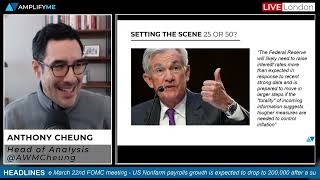
Anthony Cheung breaks down the March 10, 2023 non-farm payrolls report as it drops: 311k jobs beat expectations of 203k, unemployment held at 3.6%, and markets rallied on softer earnings before pulling back. The Fed's recent hawkish pivot had priced in a 50-basis-point hike; this stronger data complicates that call ahead of the March 14 CPI report.
Chapters
What I'll do is, as I'm going through this, I'm going to do about a 10-minute rundown. We'll tune in to the News Squawk team and they will announce the news live as it comes out. We'll then have the charts up. I'll do my best to talk you through why what is happening is happening, and we'll look at all the different products. On my screens, I'll have a few different FX pairs, US stock indices, I can— I could flash up things like gold, T-notes, so on and so forth. So we'll have a bit of a cross-asset view. And then, yeah, any questions at all as we go, feel free to drop them in. I'm here solo, so I'll do my best to try and field them the best I can, but I'll probably leave some of those till the post-event and then tackle them as and when. But yeah, happy Friday everyone, hope you're doing well. Good to see some of the familiar names in the in the chat. Okay, well, let's dive in and let's start talking about just what's been going on. It's been an incredible couple of days, actually. I mean, just having a look at the S&P 500 here, I'll make this chart just a little bit bigger. And really, this is this week's price activity, and really a combination of two major events. Of course, we had the first one, which which was the Jerome Powell semiannual testimony, which I'll kind of dive into a little bit more in a moment, of the main comment and why that's really set the scene for this release. And then the forthcoming CPI number we'll get on Tuesday, on the 14th. So we had that leg lower after we had seen, you know, decent push higher into the close of last week, this time last week. So we sold off on Tuesday aggressively, as we know, And then we dipped again yesterday quite sharply, and that came on the back of a bit of a run on the US banking sector. You probably would have read by now the focus on Silicon Valley Bank, SVB, and how that's reverberated across some of the other larger financials on the potential contagion impact. Still a lot of debate going on at the moment about whether that's going to transpire or not and how this time is, you know, different to say something like Lehman's, which I'd probably agree check out the podcast Piers and I have just put out. We, we talk about that situation a bit more closely. But that obviously was a— this second factor that compounded the sell-off that we've seen this week. And it's been a pretty violent move, and we've gone from around 4,080 at the peak in the S&P. We have recovered off lows, but obviously last night we did get down towards 3,900. And really, this figure could be decisive of a retest down at that low or recovery back up in towards that range we were trading before the shakeout that we had yesterday. So what can we expect from this payrolls report? Let's have a quick look. And so first things first, here he is, your main man, Jay Powell. And the comment that really triggered that, that spill out or spill off in the US equity market this week was that the Federal Reserve will likely need to raise interest rates more than expected in response to recent strong data and is prepared to move in larger steps if the totality of incoming information suggests tougher measures are needed to control inflation. Now, this is all obviously super important because he's really saying something hawkish, yes, that they're willing to basically respond to strong data and increase the increment size of the hike and therefore the terminal end rate likely for, for Fed in this rate cycle. However, what he is saying, and this puts greater emphasis and will likely increase, exacerbate the volatility around today and next week's CPI number, is that really it's all the chips are on the table now. What the Fed are going to do on the 22nd really comes down to the information we're going to get in 9 minutes' time and that, that follows up. On Tuesday. So this is really quite meaningful now and will definitely shape the sentiment as we go into the end of the week. If we get a really solid payroll report here, definitely I think we could retest those lows in the US equity market we saw yesterday on the SVB kind of story, and then it could get pretty messy going into the close as markets again recalibrate somewhat for a more aggressive move coming. Now, to give you a bit of an idea, it's not as if the markets are caught blindsided here. We started the week, the market was expecting around a 30% probability— this is implied probability looking at federal funds rate futures— of a 50 basis point rate hike. So the market to start the week was leaning more on a 25 move. That is what we had become led to believe from a lot of the Fed communication and the possibility of 50 was kind of there but unlikely until Powell spoke and the narrative has shifted up a gear to the more hawkish side of things. So now I pulled this literally about 5 minutes ago before I came on live. So we're at a split of about 60/40 at the moment. So the market somewhat is positioned leaning in that direction, and so some of that verocity, if you like, to the downside has been factored into some degree. But I certainly think it, depending on how outlying— if we get an ultra-bullish report of payrolls, certainly that number goes north. And if that happens, that means yields go up, dollar appreciates, that'll weigh on the major currency pairs, and we'd like to see US equities sell off into the close. Most probable scenario. Now, a few other things to be aware of. In terms of the figures then, of what we're looking out for today, the headline change in non-farm payrolls for this month is expected at 203,000. That will be the first number that you'll hear come out on the, on the tape. The range— so if we're talking upside that would trigger a negative reaction in the form of US equities, anything above 325,000. And that comes of course in context of that huge surprise And this was what really had initiated and fired up some of that hawkish belief in the market, is because January's payroll report was 517,000. We'll get to that in a moment about that number. So we are looking for a little bit of a moderation in the headline figure. In fact, 203,000, if that came out in line with consensus, I think would be below, um, multiple months averages. So it would be a slowdown somewhat. But we were surprised last month. And so could we be surprised again? The range, 100 on the low side to 325 on the high. The unemployment rate is expected to be unchanged at 3.4%. The range there, 3.3 to 3.5. January repeat. How likely is that? I would say unlikely. Looking at some commentary out of analysts at JPMorgan, they cite really 3 factors of why that's likely to be the case. And the first one is that last month's figure was buoyed by the ending of industrial actions. So the ending of those strikes means that there's a whole bunch of people that come back into the workforce and that adds then to that top line figure. And that added roughly nearly 40,000, likely supporting then the numbers relative to regular seasonal patterns. There was then probably one of the key reasons warmer weather conditions may have helped. And while a similar dynamic may be seen in February data, they were not deviating as much compared to, to January. And then seasonal factors were highly supportive in January as well. So there was a couple of things there that kind of explain why that might have been a slight anomaly and a one-and-done scenario. But stranger things have happened. And of course, if we were to get a 500K print with an unemployment rate, let's say, fixed, unchanged at this point, then you'd be looking for that aggressive sell-off type action in US equities and a pop in yields and the dollar on the back of that. Quite the opposite, though. I don't think we shouldn't talk about the other side. So just quickly going back to the numbers, let's say we do get a lowball number and we breach the bottom end of the range and we're talking double-digit rather than triple-digit figures for the headline. So 50,000, for example, and the unemployment might tick up, for example, then there could be scope for the complete reverse. So the vice versa of what we just described. So dollar is a little bit primed for a bit of a pullback, as to stocks for a little bit of a rally, just given the size of the sell-off. I mean, we're only about, I would say, a third, if just shy of that, reversed from the sell-off from just yesterday's session. So there could be some meaningful upside in somewhat of a relief if this jobs data just comes off the boil a little bit and comes in soft. Final things, as per usual, heading into payrolls, we get a little bit of the other job indicators that give us an insight of what can we expect from the Bureau of Labor Statistics report. ADP, so this is private payrolls, um, that came in at 242,000 for the month of February. This was on Wednesday, so earlier this week, and that did top expectations, which was similar, looking for around 200,000, as we are for the headline today in payrolls. However, ADP has dramatically underforecast the BLS official job gains for months. And so the quality of that relationship, I'd say, as a precursor, as historically it's often been known as, I'd say is very diluted at this point in time. So I wouldn't really read too much into that. The initial jobless claims, an important thing here to recognize with jobless claims, although we just had it yesterday, that data is not reflective and caught in the survey period of this payrolls report. So the initial jobless claims for the week that coincides with the established survey window was little changed versus the January survey window. And then for ISM, so the Institute of Supply Management, looking at manufacturing employment subindex, that did actually fall, and it fell back below 50, so into contraction actually, um, by 1.5 points to 49.1, while the services employment subindex actually rose a very large 4 points to 54 from 50. So a bit of a mixed bag there, but service industry obviously super important for the composition of the US economy. So might that lift things up again and again create a negative reaction if we were to get a really strong payroll report? Again, not going to go into the dot plot, going to go back to the charts. I'm going to turn the squawk on just so we've got about 90 seconds or so to the numbers hit. I will play the number release out of my microphone so you'll hear it come out. Um, just to give you a quick look at the charts here, I've got EURUSD in the top left, cable in the top center, gold spot price on the top right. You've got the S&P futures here and the NASDAQ at the bottom beside my video feed. I do have a US 10-year just tucked away with a few other charts as well that I can pull in as and when we need to. But just about a minute to go now. As ever with something like payrolls, so it's always important to just—
payrolls print to get us forecast at 205,000. I'll then move on to the unemployment rate forecast at 3.4%, before moving on to any revisions to the headline, the earnings components, which includes month-to-month and year-over-year, the average workweek hours, the labor force participation rate, I'll then jump to the counterpods and move on to the employment change forecast of 10,000. I'll do the full-time, part-time breakdown, unemployment rate, participation rate, and wages. I'll then cover the rest of the US report. 30 seconds. And as a reminder, in terms of Fed pricing, at 25, that's priced at 51.6%, and 50 at 48.4%. It's very much neck and neck there.
Again, someone's asked my guess. It's really not about guessing with this. It's definitely a case of you have to wait and see rather than guess, as fun as that would be on the headline figure. Okay, got 5 seconds or so now.
311,000. That's 311,000 above expected of 205,000. Unemployment rate, that's 3.6% above the expected 3.4%. And the prior, that was revised a touch lower to 5.04 from 5.17. Earnings month-on-month at 0.2% below expected 0.3%. Year-over-year also softer at 4.6% below expected 4.7%. Average workweek hours 34.5% below expected 34.6%. The participation rate, that climbs to 62.5% from 62.4%. Jumping over to Canada.
Right, so the 10-year has exploded higher. Equities bid and dollar weakness. So once again, the headline is a touch stronger than expected, but within the top end of the analyst range. So 311, the unemployment's ticked up. Remember, unchanged was expected. It went to 3.6, above the expected 3.4%. And then the average hourly earnings year on year is also below expectations, 4.6 versus expected 4.7. So if anything, it's a touch soft. So take out that headline figure, of which in itself was in the top end of the analyst range of expectations. The— you've had a jump up in unemployment and a lower than expected average hourly earnings number. So yields initially have dropped, as is the US dollar. That's provided a bit of a bid tone to the major FX pairs and gold. And US equities have just pushed up here on the back of this initial reaction. So I'm just going to make this S&P chart just a little bit bigger. You can see here we're just coming up now towards the bottom end of that range, so a bit of resistance to be found here in the S&P. I'm just going to drop a line here just encapsulating some of those— that, that's really been quite a decent inflection point for price over the last 2 weeks. You can see bouncing off a number of times, and including what was the midweek before the spillover that we had yesterday evening. So just providing a bit of resistance there, just struggling a little bit after it shot higher on the initial release. Let's just have a little pivot around some of the other charts. Here's a look at the US 10-year. So the move here, very pronounced of course, of— because of the nature of the fact that we're looking at this from a perspective of what are the Fed going to do. But you can see after the spike, you've had a decent pullback. So the market not really taking that on and following through on that initial blip that we've had. We're pretty much back to scratch now where we were initially. So just keep an eye because some of those other moves might well reverse now that that 10-year has pulled back so aggressively. So you can see equities have backed off. The currency pairs going bid have also reversed as well. So Market's just chewing over this at the moment. The 2-month net revision was -34,000, just as a reference point. So I'm just going to have a quick look across some of the news feeds, see what other things I can spot to bring to your attention. Just having a quick look at the actual breakdown of the headline figure, you can see here bulk of the main jobs were coming in leisure and hospitality, followed by then private education, health services. So, um, again, the weather likely just playing a little bit of a help there given the rebound that we've had, and that generally typically helps those types of specific job sectors in particular. Just having another push back up now in the currency pairs. Just having a look at the euro here, it's just having a go back above pivot, which was also that low point that we had on Monday before the rally that came on Monday afternoon. So a bit of upside just being seen in the euro currency. So for further follow-through of the dollar move on a bit of weakness here. So cable likewise just following suit, a bit of upside being seen. NASDAQ again similar, popped higher, came back a little bit, and now just going bid slowly. Not too much here technically on the upside that really jumps out. Maybe around this level here, if I just put horizontal So these previous highs coinciding both on Wednesday and also for the peak of the price action that we had to the second half of the prior week, that's just about where that initial spike petered out on the, the back of the initial release. So a little bit of food for thought for the market. I guess if anything, has it really changed too much of the perception of what the Fed are going to do, it might well just kind of keep that 60/40 kind of market pricing split. Maybe that's kind of appropriate with the composition of these numbers. And now we just have to wait for the CPI numbers we're going to get on Tuesday. And, and that's going to then— is it in line like this?
It is worth noting that SIVD That is the SVB Financial Group has been halted pending news.
Okay, SVB halted pending news. So that could also— that's all another variable to throw in the mix, certainly for today at least. Okay, just while we're here then, any other questions at all while we are online? Just while I'm here, I'm just going to quickly share as well a few links that you might find useful. Uh, for anyone who's not on our daily newsletter distribution list, would love to have you in the community. Free newsletter goes out Monday through to Saturday, covers all the major things that are happening in markets. If you're a student thinking about a career in financial markets, then lots of career tips. We get job opportunities shared from our corporate partners, so you get a bit of a heads up for internship, graduate hiring cycles, things like that. So yeah, check out that link. Also, uh, just had a question, very timely. Someone's just asked in the chat about who are SVB, Silicon Valley Bank. And so I am going to point you to listen to this podcast because Piers, who's the co-founder of Amplify and also our head of trading, he and I have an end of week chat always. We put out a podcast episode of where the main topic of conversation was. Jerome Powell's comments and also SVB, and he does a really good concise explanation of what happened to them and whether or not that could happen to a larger financial institution like a JP Morgan, a Citi, a Wells Fargo, or not. So check that link out, I've just shared it into the, the chat. Okay, I'm going to leave it at that. Just short and sweet. If I can, I'll try and jump on again for Tuesday for the CPI report. But my overall conclusion here is, yeah, a little bit of a dovish reaction across markets has been seen. And in terms of where do we go from here, I think I, if I was sat here analyzing it, working with the trading team as we would do back in the day, I wouldn't really feel the need to pre-commit here and second-guess how we finish the rest of this session. So to say we're going to rally now on the back of those numbers, I don't think there's enough concrete evidence to probably suggest that. I'd rather let the market show its hand and then try to follow that accordingly rather than try to be aggressive and enter the market at this point with the information to hand right now. I think overall this really just kicks the can down the road and puts even more emphasis now on the inflation report we're going to get on Tuesday. It just means then there's going to be a lot of focus, a lot of concentrated kind of expectation around that to really define then what will happen on the 22nd of March. All right, take care everyone, have yourself an amazing weekend, and I will see you next time.
More from Anthony


Inside the Biggest Banking Stories You Need to Know This Week (Anthropic, Diageo, Private Credit)


Inside the Biggest M&A Deals You Need to Know This Week (UniCredit, GameStop, eBay, Eli Lilly)







AI Breakthrough or Hype? Anthropic’s Claude Mythos, Tim Cook Steps Down & LIV Golf Collapse