Week ahead with focus on FOMC & Brexit
The Fed's FOMC meeting this week could trigger a dovish rally as markets price in a December rate hike. Brexit uncertainty looms with rumors of a second EU referendum, while the pound faces pressure from upcoming UK economic data and the Bank of England's decision to hold rates.
Chapters
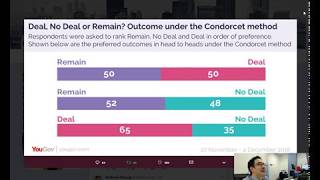
Okay, very good morning, Monday 17th of December. Final kind of run-in then until the, the Christmas week. And having a look at the, the week ahead, obviously quite a few pivotal things are upcoming, um, namely on Wednesday night we get the FOMC delivery with what should be the final and fourth rate hike of this year. But more importantly, we get the latest projections, so we'll have a look at that. And what that could mean for markets. We're also, of course, looking at things like Brexit, the kind of rumor mill intensifying about the potential for a second referendum over the weekend. So we'll have a look at that as well, what it might mean for the pound, and then just looking across the, the broader asset classes of what we, we could expect to come. So looking at things as they stand this morning, overall relatively quiet. As I said, the best is kind of yet to come as far as the week ahead, and I think most participants in the marketplace are kind of aware of that. So many interest rate decisions as well coming, not just the Fed, you've got the BOJ, you've got the BOE as well to boot, with a lot of UK data as well coming, as well as the risk of obviously lots of Brexit toing and froing. So at the moment US and European equity index futures relatively flat, marginally positive. I was just talking to Sam just before I kind of switched the mic on and was just looking at the S&P on a daily continuation because I think we've got to quite an interesting point really here because we managed to close though, or under, that kind of trend channel that's been in play obviously from the previous, at the beginning of the year, all-time highs to the what is now the all-time high just shy of around that 2950 level. and those previous lows that we had printed in October. We did breach it very quickly on the 10th of December, but we never managed to close below it until, of course, the end of last week on Friday. So you can see here how the market has kind of responded now as a point of resistance there on that wick on the, the present candlestick as to what was quite a crucial point of support. So It's going to be really interesting to see as the week plays out how far we go from here or where we go. I guess one of the pivotal things, of course, is going to be the FOMC. And if Jerome Powell and the subsequent dot plots are on the dovish side, i.e., a movement not of the 2019 hike but of 3 rate hikes, possibly down to, to 1, let's say, or none if that was ultra dovish. Then that would be a real catalyst for a bit of a bounce. And maybe then the Santa Claus rally can commence. You'd probably as well want to see a bit more of a meaningful move higher in oil, which still looks— we'll have a look at this chart in a second down at the bottom— still looks relatively susceptible to a retest down at that kind of influential 50 level, because despite the cut from OPEC, it hasn't really managed to get a continuation of the moves higher when it has tried. It's been more of a consolidation, if anything. So the recovery here of the S&P, I think, is contingent on a couple of things, namely then the FOMC being dovish. Also as well, does, you know, does Trump deliver that kind of Christmas cheer and he backs off the trade rhetoric just to help bump things up into year-end? Could be another thing also to look out for. On the flip side though, if we continue to move lower, then The kind of obvious targets would be— we're kind of sitting right on at the moment that previous October low. We've got the low we printed just, what, last week, and then you start kind of scaling in the previous lows to back at the beginning of the year in April, and then the year-to-date low, which came amid what was actually the aggressive, most aggressive sell-off of the year on the back of that kind of synchronized policy tightening fears. After that payroll wage data popped higher and then the, the sell-off that ensued. So there's definitely some, some targets here on the downside should we get down to that point. But, um, what I'll do is I'll reshare the link of the chat Piers and I had just on Friday about our outlook going forward. And we did talk about, you know, what could be the mechanism of the response and if we got down to this lower bound. But certainly quite a pivotal moment now for, for the equity market, because otherwise the Christmas week in itself and the run-up into New Year's usually is very quiet. So that being said, I'd say you're going to get the bulk of the remaining price action, if there's any to be had. And given those big meetings like the FOMC on Wednesday, I think this will be a very telling week to where we finish from here. Um, let's jump straight into things then and let's have a look at the calendar for the week ahead. As you can see from today's schedule, it's relatively quiet. It's quite typical for a Monday. I get Empire Manufacturing Index later on this afternoon, which could be quite interesting. The Rightmove house prices has already come out, and as you would imagine, I can't remember on what basis, but it was one of the biggest continuous month back, back-to-back month-to-month declines that we've had in many years, just as the uncertainty over no deal continues to escalate over the Brexit situation. So obviously house prices highly susceptible under that circumstance. Tuesday, you do have the RBA minutes, some key German data, IFO business climate. I think that could be quite interesting, actually, a forward-looking soft indicator, but just given on the coattails of the, the broadly disappointing PMIs and this kind of narrative of slowing down of of economic growth in the euro area. That was something which, which peers definitely tabled as one of the potentially most underplayed or underrated risks of 2019. And IFO is quite a good one 6 months down the line. How confident are businesses in Germany? And then Wednesday, see, this is when you kick off. Yeah, you've got quite a few things coming out, not just the Fed and the regular oil inventory numbers. You get UK inflation data, Thursday, the BOJ rate decision. You also get UK parliamentary recess. However, obviously that could be changed. Would not really be that much of a surprise that they delay that, just given the fact that there's still so much to get through and there's such a disagreement on how to progress at the moment as to go forward. If the recess were to happen, then arguably they're not— well, they're not actually set on the parliamentary website to return, let's say, back to office until the 7th of Jan. Uh, and the self-imposed deadline obviously for May is the 21st of Jan to get this actual second vote done, or the meaningful vote I should say. And then Friday you've got final UK GDP, uh, and then a few other US data points, the final GDP as well from the States, uh, durable goods orders, the revised University of Michigan. So a nice jam-packed week to, to see things out. So let's have a look at the the pound. And let's catch up on the Brexit news. I'm sure you read plenty over the weekend. And let's have a look at what the latest state of play is. Well, first off, if you look at both major pairs, both are up ever so slightly as the dollar is a touch weaker this morning. So I wouldn't say there's an outright kind of pound article that's really driving price action. It's more a bit of a status quo at the moment. But just looking slightly longer time frame, what has been very clear that we've been talking about for the last couple of weeks has been that kind of shaded area there of what had been, you know, really key area of support from that summer '18 low. Same case from the support and resistance points in 2017. When that broke, we obviously ran down to the 125 handle, we recovered, found resistance at exactly the same point. So that continues to remain a very strong barrier to the upside price action. And I would say for the moment, I would anticipate that throughout this week, unless there is, you know, Labour triggering a motion, a vote of no confidence in the government, which then could potentially lead to avenues of another referendum and so on, then I'd probably say we will remain locked in this range of cable from around that previous low, just up the 125 handle. Looking at the sterling futures here to the upside of that price band, uh, being 126.78, I'd probably imagine consolidation within this until we get a bit more clarity on what exactly is Theresa May going to do, uh, and the timings around that vote. So looking at the, the Brexit news, this was the first kind of thing that started to kick off a lot of the rumor mill at the weekend, and this was a report in the Sunday Times. So that paper or publication has been particularly good on picking up leaks and so on and so forth. Remember, it was the Sunday Times last week who kind of correctly got about what was going to happen with the delay on the meaningful vote. And this time around, it's two of Theresa May's most senior allies are preparing for a second EU referendum, apparently behind her back, according to the Sunday Times, opening up another Tory civil war. What has happened then this morning is a stern defense from the two individuals which the paper named, but also Theresa May, as to that is not the case. But once again, you would have to think there is, you know, no smoke without a fire. We've kind of been here before, and as soon as these leaks start to materialize in the press, you know, this is just a bit of crisis control management from Theresa May's team. This certainly is building in the possibility that a second referendum might definitely be on the cards. Now, what might that mean? And first off, what exactly has been said? Well, Theresa May has accused the former Prime Minister Tony Blair, obviously, of undermining her negotiations. He's been out Obviously has been a backer of a second referendum for a long time. Theresa has been quite strong, saying this would be a catastrophic breach of trust. David Lidington, May's effective duty and chief of staff, Gavin Barwell denied supporting what the Sunday Times were saying. They were the two chaps that were mentioned, and Business Secretary Greg Clark has told the BBC Radio today that a new vote would increase divisiveness and prolong uncertainty for companies. Another referendum would do irreparable damage to the integrity of our politics because it would say to millions who trust in democracy that our democracy does not deliver. This is leaked comments out of the speech that May is due to give to Parliament later today. So, you know, you don't need to guess what she's going to say. That is what she's going to say. Again, crisis management. Given the, the article that circulated in the UK press at the weekend, she's already— Number 10 have fast-tracked snippets of her coming up or impending speech in order to quell any rumors at the moment. Now, one of the key things obviously going forward that we need to be mindful of is the Labour Party. They have said it would press for May's deal to face a vote in Parliament before Christmas and is still considering the best time to submit a no-confidence motion against the government to enhance its chances of winning and taking a step toward forcing a general election. But at the moment, the indecisiveness of the Labour Party has caused a lot of friction with other political parties like the Scottish National Party who's been pretty, dished out some pretty harsh words, Nicholas Sturgeon, for Jeremy Corbyn for not being more decisive at this present point in time. But that obviously is a risk of Labour triggering that because they're saying before Christmas. Theresa May has given a self-imposed deadline of the 21st of Jan. So the thing could be still quite volatile this week. Talking of a second referendum, Couple of points I just wanted to make. This was a latest YouGov poll that I saw that was getting circulated, and this was looking at, you know, respondents were asked to rank Remain, No Deal, and Deal in order of preference. This is kind of a Condorcet method, which is basically each one, each choice against one another, and Remain Choosing Remain in the EU or just a deal to then exit the EU is basically bang on 50/50. Remain to no deal, 52/48. Deal to no deal, so if we did, you know, if remaining was totally off the cards, then definitely a deal is more favorable than no deal. One thing I think absolutely you've got to be clear with these types of things, I still think there is a high degree of inaccuracy of any poll around such a sensitive and emotive subject such as Brexit, I am incredibly reticent now to read too much into these polls because I think there's still a lot to be said for the kind of the shy voter mentality when people are just sick of this now and just want, you know, I'd rather just get it done and have no deal. I think there is definitely an under played element of that, of when it comes to someone actually, you know, over a survey written or telephone, actually being honest on the phone call. So yeah, I don't know if I really read too much into this. This would be indicative that, you know, it's just so mixed and clouded what exactly a second referendum outcome would, would actually be. And on that point, this was a really interesting article that I saw in The Economist last week, which I thought I'd quickly share with you. And it asks the question of, well, actually, if you had a second referendum, it's not actually that clear, because the biggest problem is then, well, what exactly is the question that you ask the British public? Because the question that you ask could heavily shape the outcome of the actual vote, which arguably leads us back into a kind of doom loop of being back in exactly the same situation where we're at. So the main dilemma is what to put on the ballot. Now here are the kind of options: you could back a three-way poll. Voters would rank their preferences with a choice of remaining in the EU, backing the government's deal, or leaving with no deal at all. Others, including the People's Vote campaign, would prefer a binary choice between staying and leaving. A third option is a two-stage referendum. Voters could be asked whether they want to leave the EU, and only if they still do, by then what method. Now, The Economist, what they're pointing out is that each option has major problems. A binary choice would bring accusations of unfairness, as Remainers would not wish to choose only between the government's deal or no deal. They obviously want to remain. A straight choice between 3 options, with the most popular declared the winner, would also be tricky One option could win with just 34% of the vote, of course, which would by no means seem a particularly decisive answer. So Britain could use what's called an AV system, an alternative vote system, which considers people's second choice. But though some places use preferential voting for local elections, a three-way choice with an AV is unfamiliar to most voters and would require public information campaigning, and two rounds of voting are incredibly unfamiliar for the British public to go through on this type of issue. Crucially, the mechanism used could definitely shape the response from voters, and Theresa May's deal or no deal or staying in the EU could all win depending on the precise question put to a second referendum. So the point being here is that although it seems to be rising, this kind of conversation behind closed doors or in the corridors of Westminster, as well as in the public, about a second referendum, I think that's just a whole new headache would be then. Okay, fine, maybe we want a second referendum, but trying to put together— there's going to be such divisiveness between the actual question that gets asked. It's going to be incredibly messy. That being said then, the one thing that you know for sure is that a second referendum going ahead would mean that Article 50 would need to be delayed. And if that was going to be the case, what's the mechanism for that happening? Well, I did see this article in Bloomberg, so I just wanted to get everyone up to speed of what exactly that would would need to take place. So obviously at this point in time, Article 50 is due to lapse at 11 PM London time, 29th of March next year, so midnight Brussels. If this was going to change though, one thing first needs to happen on our side. The same Act does state that a minister may by regulations amend that date, and so this would likely fall down to the current Brexit Secretary Stephen Barclay. Anthony Cheung. He or another government minister would draft regulations and lay them before Parliament. This then basically needs to be heard by other committee of lawmakers who represent the House of Commons. They would then have a debate in the Commons which would last no longer than 90 minutes, at which a vote is held. The outcome of the vote not binding, so either way the government would then schedule votes in both houses which must approve it. So in this case, if there's a second referendum, you would imagine this would probably go through at that point. But then on the EU side, the EU's 27 other members would have to reach a unanimous decision to extend talks on Article 50. Um, as EU countries are also concerned about repercussions for no-deal Brexit, it's unlikely they'd refuse, is what Bloomberg are suggesting here. The one thing they'd make clear though, that this is second referendum or new government. It would not be to reopen negotiations per se. So yeah, that's the kind of the state of play at the moment. Um, is it having much of a meaningful impact, this idea about a second referendum on the pound right now, or no? But is the possibility of it occurring increasing? I'd say yes. Is that the baseline scenario right now? As what the final outcome will be, I'd still say no. But obviously the situation can change quite rapidly. One thing it does mean for this week is we do have the Bank of England interest rate decision, and the likelihood is, is that this is going to be a relatively straightforward deal. I would definitely anticipate a unanimous vote split of 9-0, just given the large cloud of uncertainty of where we are right now I can't see any way, despite the meaningful pickup that we've had in wages, which would normally be something that would make the hawkish-minded members a little bit more prone to voting for rate hikes. I think just the political uncertainty, given the time frames now, is just so overwhelming that they're likely to just stand pat for the moment. All but one of 60 economists a Bloomberg survey predict the MPC will maintain the benchmark rate as it is at 0.75%. Obviously with every Bank of England rate decision you'd be looking out for the minutes, but given just how Mark Carney's been sounding of late, I don't think what he's going to say about the ramifications of Brexit as part of their outlook is, is going to come as much of a surprise. And then as I said, back to the calendar for the UK, we Wednesday you get UK CPI data, Thursday UK retail sales data, as well as the Bank of England, uh, decision and minutes. And then Friday you get the UK final GDP reading. So quite a lot to come, not to mention all the Brexit shenanigans in the middle as well. Moving on, some of the other stories that we've had is potentially a little bit of a positive development unfolding in Italy. Where the Italian premier wins populist support for new budget offer from the EU. So he's forged a deal with the populist leaders to submit revised budget proposal to the European Commission in a bid to avert fines against Italy. Um, I mean, BTPs have, have seen a bit of seesaw price action, definitely not just surging to the upside on the back of this. So I guess part of this is it almost feels like we've been here before where it's looked like we've made progress, but then it's kind of fallen and stumbled on the final hurdle. But the actual deal here is talking about a lowering of the deficit target to 2.04%, which Conte had proposed last week. So Salvini and Di Maio kind of falling in line in the end. I mean, looking at the euro currency, we have had a little bit of an uptick. But as I said, it's quite a bit of dollar weakness because both major pairs are moving a little lower here. Um, so just having a look where we're trading at the moment. So this was the, the kind of the draggy— the bit I've got highlighted here in this circle is the, the draggy low that we had on the press conference from the ECB. So that's probably your obvious target in the futures as we continue to, to trend higher, just reversing some of the movement that we saw from Friday morning. Talking of the, the Fed, well, obviously this is the— this is probably the main event, I would say, of the week. If we're looking at federal funds rate futures for the December rate hike of 25 basis points, the market is priced for 78.4%. So that's very much priced into the market. Well, obviously everyone's going to be looking at is Well, first of all, understanding the, the rate cycle that we've had so far. I mean, remember, we were at historical low levels or zero interest rate policy, and we've had multiple rate hikes ever since the first, which was executed in December of 2015. That's put us back up into a, uh, the kind of higher bound now of what is close to defined as a neutral rate sitting just above the 2% level. It's kind of where do we go from here is what's pivotal. And what's going to be most telling then is the shape of this green line, essentially. So the rate trajectory over time, uh, 2019 is going to be what's going to be telling. Markets are priced for just under 2% now, and obviously the Fed current communication is 3%, which would have taken us before rates north of 3%. So expectation is this is going to come down and become more shallow here in the near term. The question is how shallow, what is the composite composition of these individual dots, and where is the median line? And also, just given this inversion of the yield curve we've been watching, this kind of growing belief of a recession coming in the medium term, let's say, then where does rates peak and at what level, and so as to ascertain then what's the Fed's timing of when this economic, economic cycle is going to kick in and inevitably we'll move into a recession at that point. So, um, see, we'll stick around Wednesday, that's going to be key event for the week. So other than Brexit and the kind of spikes in price action you might see I'd say from a, from an US equity index point of view, it could be relatively contained as the market will hold fire its ammunition, potentially awaiting for this event to, to materialize before then looking to, to make final decisions for the year. Could definitely be the same for the Treasury market as well. The one thing with the slight dollar weakness this morning, I'd say markets are definitely erring on the side of potentially the Fed sounding more dovish, which does kind of set the stall then for, well, what if they disappoint? And again, this is something me and Piers were talking about on Friday. My kind of point of view is I don't feel the Fed are going to want to be too extreme in changing the kind of rate hike sequence too dramatically because that would, you know, could jeopardize their credibility and also their remaining options. If they were to spectacularly say, do you know what, it's one and done, although that would be a short time or short-term net positive, let's say, for things like US equity markets, I do think that would be a step too far in, in them being overtly aggressive on the dovish side, which I think is not normally the Fed style. And then the final rate decision that we have is this the BOJ, but I really don't think there's much, um, point in spending too much time discussing this because ultimately the BOJ is more likely to wait until after next year's sales tax hike before taking any action to tighten monetary policy. All of the 49 economists at the major banks and research houses surveyed by Bloomberg expect the central bank to leave rates on hold, with 88% of them forecasting the BOJ won't raise its long-term interest rate before the end of 2019, to give you a bit of an idea. Okay, one other thing as well that's likely to get a bit of an airplay as we get towards the end of the week, something which I haven't seen too many people talking about, but, but certainly just to make you aware, is the US government shutdown risk. So the US government faces a potential or a partial shutdown if Congress fails to reach a compromise and pass 7 remaining bills by the 21st, so Friday, to keep the government open. Trump has threatened to trigger a government shutdown if Congress refuses to pass a government spending bill that basically allocates $5 billion to pay for the wall and fencing along the US-Mexico border. So, you know, for anyone who's been in the markets long enough, it's kind of feels like this happens every year, and every year the same sort of thing happens. Even if there is a partial shutdown, it's normally a couple of days and then the politicians have kind of made their point. At the end, a compromise is made and the bills are signed in that respect. Now, UBS made a, an interesting comment. So with all this talk of a partial government shutdown, they said the impact to price action should be largely discounted. 5 out of 12 appropriation bills— so this is basically spending bills accounting for 70.5% of discretionary spending have already been approved. So only 25% of discretionary spending is at risk. Even if 100% were at risk, we would generally need to see a prolonged shutdown before there would be a meaningful impact to growth. So one thing to be aware of for anyone who's new to markets, although it sounds pretty scary concept, the shutting down of federal government, we have been here many times before. And I think, you know, Maybe market could be guilty of being a little bit complacent, but ultimately the politicians do tend to fall in line in the end. A quick look at the calendar for today's session. You've got the final European CPI numbers, so not expecting too many surprises here. It is the final reading, so that takes us through into the afternoon session. As I said, Empire Manufacturing is kind of the main data point of the afternoon. Otherwise, it's relatively quiet. Then looking at one other thing, if you have— if you did miss it, the chat that Piers and I— Piers being the head of trading— about our outlook, you know, talking about things like oil, Brexit, Trump, China trade wars, everything that, that kind of we're looking at for the months to come. If you go on our YouTube channel and go down to the live session recordings, there's this one here, the 2019 multi-asset review. If you do have time, it's definitely worth a watch if you haven't already done so. Okay, that's it from me. Sam, I'm sure, will jump on in a second. He'll go through some technical levels, uh, with a bit more precision than my kind of fundamental review. So I'll leave him to cover that in full. But we'll get a weekly strategy report also sent out to you before midday. Otherwise, have a good day and a good week ahead, and thank you very much.
More from Anthony


Inside the Biggest Banking Stories You Need to Know This Week (Anthropic, Diageo, Private Credit)


Inside the Biggest M&A Deals You Need to Know This Week (UniCredit, GameStop, eBay, Eli Lilly)







AI Breakthrough or Hype? Anthropic’s Claude Mythos, Tim Cook Steps Down & LIV Golf Collapse