What does slowing growth in China mean for markets?
China's Q3 GDP slowed to 6.5%, the slowest in a decade, raising questions about whether the deceleration is manageable or accelerating into 2019. The briefing covers tech selloffs, Italy's yield spike, Brexit developments, and the Khashoggi fallout's impact on oil prices.
Chapters
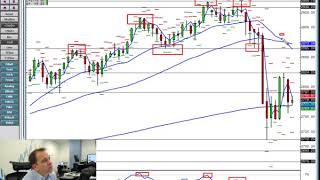
Okay, good morning guys. Friday 19th of October, coming at you with the briefing here from the Amplify desk. So let's have a look at what's going on. Just firstly, there's quite a lot to cover this morning. We will be talking, well, the latest kind of developments with sort of global stocks and look at the chart I'm showing you now, which is the S&P 500. And you know, another kind of tech-led sell-off yesterday. We're going to be talking about another sort of slight escalation in the Italian sort of deficit risk that also took place yesterday. And is this beginning to spill over to driving some contagion amongst other peripheral debt markets? We're then going to focus in on China and their GDP data released overnight, 3 AM this morning. So this is the kind of big news that the world has woken up to, or I should say Europe has woken up to this morning. So we'll look at how the Chinese GDP data slightly disappointed, what kind of implications that has, what does Chinese growth outlook look like for 2019. We'll talk a little bit of Khashoggi. That's the US Washington Post columnist. Looks like he's now been reported as officially dead. So we'll talk about what implications that might have on the geopolitical front. But then we'll kind of wrap off with some Brexit updates. Theresa May looking to extend the transition deal out into 2021, which has not gone down well— would be an understatement— amongst the Conservative Party back here in the UK. So all of these factors are kind of shaping and influencing price action this morning. So let's start with the S&P. So here's the daily chart. You can see the red candle I'm hovering over now, 18th of October. So that was yesterday's session, um, you know, another, another above 1% sell-off. And you can see kind of giving back those big gains we, we had back on the 16th of October. So it's been a bit of a volatile week, you know, bouncing off the lows that was printed last week. But this, this rebound has certainly lost momentum. And we'll talk about where this might go today and tomorrow and next week shortly. But, you know, just looking back, I mean, this chart's quite interesting. Obviously, you know, a formidable uptrend for most of the year until we kind of hit that top double top up here, 21st of September and then 3rd of October. And actually looking at this now, let me just add a study and show you something. I might get a little bit more technical this morning. I know you guys love a bit of technical analysis. So what we've got here is actually quite a— I mean, it's a bit of hindsight perhaps, but you've got quite a nice sort of— well, let's take this top here and look at the RSI peak down here. You've got some divergence going on. So there was— these are corresponding peaks. Then the market goes and makes another new high. Okay, so this is where the S&P drives mid-September, new all-time high 2944. But check out what happens to the RSI here. Can't get back above 75. So that's an indicator that momentum is perhaps slowing on this trend. Then you get the real capitulation on the RSI. So here's the top again. And actually we did match that top. So you could say the market's still trying to drive higher, but the corresponding high on the RSI is very low. So you got quite a sharp divergence there, which of course coincided nicely with the kind of fundamentals shifting and becoming negative. Then you got these moving average breaks, and then you got the big, big, big, big candle, 10th of October, um, as things really broke lower. Again, technical, because you check this low here from the 7th of September confirmed on the 8th of October. It's also the kind of double triple top from the start of August, really key price point, $28.65. And as soon as that gave way, right, just gave those— though not only the bears but also the bulls the confirmation to book profit, of course, which then drove this monster move, breaking down through supports, breaking the other key level at $27.91, which was this top from back mid-June, confirmed nicely throughout July and into the start of August. That got broken, then it's got a bit messy. Of course, we didn't quite get down to the low that we saw 28th of June, and in the end we got the reversal, or at least so far the lowest point of this sell-off printed on the 11th of October at 2712. Then you get the consolidation, which is always a very messy affair, and it's proved to be the case this week with multidirectional large movement. So, um, the other thing to note is this big moving average, uh, the 200-day moving average. And there's been some chat about this in the press, and let's have a look at it. Because what happened back in February, what, what still remains as the biggest sell-off for US stocks since 2011 was the February sell-off. And we had this key double bottom, and if you draw the line in down here, the key— sorry, down at 2528, this key double bottom also coincided, you know, the 200-day moving average, great support in here for what proved to be the low and then stabilization. And then the market, a bit messy obviously, but got back onto its upward trending mode and new all-time highs, of course. And this 200 moving average has kind of shaped things higher, but with notable false breaks. You know, the— certainly on the 2nd of April, then again on the 3rd of May, definite false breaks. But, but actually, I'm just looking, we've only— there's only one day in all of this lot where we closed below the 200-day moving average, and that was on the 29th of March. And then, of course, things lifted higher. But, you know, what I would say about this returns to the 200-day moving average that we've seen now is that it's the biggest— if it is a false break, and it might not be, we'll see. It's got very messy, as I said. We'll talk about why in a second. But technically, you know, I think this week's important. Do we close below this 200-day moving average or not? Certainly I'd say it's probably more likely than not. I know we're above it at the moment, but we'll talk about Chinese GDP and, and other things in a minute. But You know, this is certainly the biggest test and we may well see this 200-day moving average really kind of giving way properly. And that'll be for the first time in a long time. So technically, things looking very bearish. You've got this moving average cross here as well. If you want more technical evidence, the 20-period moving below the 50-period this week as well. And that hasn't happened. That hasn't happened really. Let me go back. The last time that happened was back when we had the big sell-off. Start of the year. So technically, things certainly looking still bearish. So let's look, though, under the bonnet here, because if I go to a 60-minute chart just to zoom in a little bit, yesterday's sell-off came really back end of the European session into the European close, you know, after the US cash open, of course, breaking below the low that we'd had from the 17th. Now let's look at this in a bit more detail, because when you look and split out the sectors, then certainly technology again, and it's been the theme of this move lower. In the last week or so. Technology leading it, down 1.5% yesterday. This has got a great— this is such a great sort of example of sector rotation strategies going on. So people selling cyclical sectors, that's companies that have their revenues aligned to the economic cycle, selling out of those. 'cause they're fearing we're at the top of the cycle, and we're now gonna go late stage and then recession. So they're selling out of these cyclically, you know, economic sort of sensitive companies. And with the cash, they're buying defensive companies. These are companies that have less sensitivity to the economic cycle. Your consumer discretionaries, or consumer staples as we sometimes call it. Utility stocks, telecommunications. You know, energy's a great kind of late cycle sector play. It's such very strong evidence that more and more investors are shifting their sector rotation strategy to late cycle, meaning that they now think a recession is on the horizon. Now, how far away is the horizon is the key question, obviously. And, and these investors, these rotations, these aren't short-term trades. These are medium to long-term trades. So you're looking kind of probably 12 months ahead here, maybe. The late cycle, the late phase of the cycle typically might last about 12 months. So, but yeah, great evidence that investors are turning more and more and more defensive. It's interesting here because if you check one stock in particular which has been really the headline tech stock for the week, I would say Netflix. So yesterday down 5%. And if I show you, if I go a little bit shorter term here, This is looking over the last few weeks. And so back when we had the— Netflix delivered their earnings for Q2 back in July. And what happened was that their stock market collapsed. How do I get this thing going back? Hang on. Let me show you if I can. Sorry, sorry, sorry. The stock market went down sharply here mid-July when the earnings was announced and they announced much slower than expected user growth. Big collapse. And this was— generated fears about, you know, this whole kind of technology-driven rally in the first place is all based on user growth numbers and user growth rates. And hang on a minute, growth rates are slowing. And if they're slowing, this definitely doesn't justify some of the P/E ratios that we're seeing on some of these share prices. So big correction lower. Okay, but this week, if I zoom back in And we look at this week. This week they delivered their Q3 earnings, which were stellar. You have this sharp move back higher here. You know, relief about the Q2 numbers being an anomaly and Netflix back to uber-strong user growth and so on. And that provided some big upside, which is kind of what generated that rebound that we saw on Wall Street. Back earlier in the week. But this rebound lasted all of 2 days. And this is really interesting. It's not like suddenly Netflix's Q3 numbers have been revised and they're actually really bad. No, they're, they're amazing. Their numbers for Q3 were stellar. However, it's not been enough to, to even buck the trend on Netflix shares, never mind buck the sentiment on technology sector generally. So Netflix down 5% yesterday despite their amazing earnings earlier in the week. Clear evidence that sentiment around the tech sector generally is still very negative, and I would say should continue to be negative. One thing you've got to understand about these stocks— if I go back on Netflix longer term, what you've got to understand is between January, start of January, and middle of June, the Netflix share price doubled. It went up 100% in 6 months. And check out where we are. All right, we're just a little bit off the top. Not much, but it is a 10% plus move off the top. But, you know, you've got to understand that some of these stocks have just gone through phenomenal upside. So whilst you're in the narrow view of the last couple of weeks, you're thinking, wow, massive downside carnage. Actually, when you're looking year to date, these tech stocks are still phenomenally positive in terms of their performance. So you've got to keep the bigger picture in perspective. But definitely tech leading this kind of negative sentiment market. And I think today will be interesting. Go back to the S&P chart here, go back to that kind of daily view. You know, what happens to today? Do we break below yesterday's low or not? Technically, do we finish below 2750? Do we close the week below this 200-day moving average? You know, these are questions that the technical analysts will be really wanting answers to later in the session. But I'd say at the moment, slightly negative sentiment. Something else then. Let's talk about some of the other issues. So this is the Italian bond yield pushed to a new 5.5-year high yesterday. This is 10-year yields in Italy now up to 3.73%. Um, why? Well, this is really further kind of ongoing story, of course, about Italy's budget and them looking to spend more money. And this likely going to see the deficit widen and the broader concerns about how Italy's debt levels are, you know, unsustainable anyway. And so it is violating EU rules on, on fiscal budgets. And so what happened yesterday, the European Commission presented Italy with a letter raising concerns about the country's draft budget, which it said did not comply with EU rules. And they said to Italy, we expect a response by Monday. Okay, so that's just brought this story back onto the headlines. Italian yields higher. What I'm really interested about with this crisis If, you know, here we are sat in London and trading global markets, does this story become something that we need to be having at the top of our agenda? And I'd say at the moment, no. But I'd be looking at Spanish yields to give me the answer to this. When am I going to be really interested in Italy's 10-year bond yield? I'm going to be really interested when the Spanish 10-year yield starts ramping higher as well. Now, look at this chart. This is the Spanish 10-year yield, and on first glance, well, it's ramping higher. And so actually, you're starting to see, I would say, the early signs of a little bit of contagion here. However, you've got to understand that yields are higher globally thanks to the Fed and U.S. 10-year yields rising. So this Spanish yield uptick here isn't just about Italy. So slightly tricky to gauge, but one thing to be aware of in the coming weeks, 1.89% on Spanish yields. If you get a move above that, and then that'll take Spanish yields to the highest levels, uh, for 3 years. That then to me would, would, would tell me that, right, this Italy story is now a bigger deal. At the moment it's contained, but if it starts to spill into other peripheral countries, if you start to get correlated risk-off upside moves on 10-year yields, then this becomes a much bigger, broader problem. Okay, so keep your eye out. 1.89% Spanish 10-year yield, that's a key price point. Um, not today, but you know, next week, what's, what's Rome's response to the EU Commission and so on? Okay, all right, let's talk about really the big story of the day, uh, so far, and that is China. China's economy slows. I mean, darker outlook at home and abroad. So, um, let's look at Chinese GDP because they reported their GDP figures last night, and here it is. Here's the chart. So this is quarter 3 growth, and it's 6.5%. Two things notable about that. Number one, worse than expected We were expecting 6.6%, so all right, not a massive miss. But the notable thing, if you go back 10 years, is this is the lowest GDP growth since the financial crisis, uh, 10 years ago. Um, but don't get too alarmed. Well, there's two ways of looking at this. One is to don't get too alarmed. Uh, the other way of looking at it is get really alarmed. Let me explain. Don't get too alarmed. 6.5%, yep, slowest growth for a decade, but actually it's still in line with the government's guidance at the start of the year. The government, the Chinese government, said target for growth this year 6.5%, and at the moment they've got 6.8, 6.7, and 6.5, meaning they're probably going to deliver above average growth rate for the year. That's one thing. The other thing is Chinese growth slowing is inevitable. Forget about trade war risks and all the rest of it for now. It's inevitable just purely by the fact that it's just getting such a massive economy. Um, here's a good stat for you. Since the financial crisis, so in those last 9 years, right, this is the slowest growth for 9 years. Well, what's happened to the Chinese economy in the last 9 years? It's more than doubled in size. The Chinese economy has more than doubled in size. You can't go on growing at that kind of breakneck speed. Inevitably, the economy gets so large and it starts to mature, and growth rates start to get slower. This is the transition from emerging market to developed market. It's inevitable. So this is the viewpoint of those that are saying, look, don't Don't get— don't start panicking here. Everybody knew this was going to happen, and it's happening, and it's not a surprise, or it shouldn't be. So that's the— that's one way of looking at it. There's another way, which is the kind of more alarmist way, and that's to think, well, okay, why is it slowing? And more importantly, what's going to happen in Q4? What's going to happen in 2019? So it's 6.5% here. It's not just about trade war risk, and actually you could argue It's nothing to do with trade war risk. Most of this slowing of growth, you might say, at the moment is perhaps more to do with sort of fiscal discipline being forced on the Chinese system by the Chinese government, which has kind of led to a big drop in sort of public and private partnership infrastructure projects. There's a couple of cities in northern China that had grand plans to build an underground system at vast cost, you know, public and private sector combined project. And that got scrapped because, you know, it's just too much. And these regional governments have become too indebted. So Beijing has been clamping down on this, and that has a negative effect on growth. So that's really the main reason for slowing. The reason why I say trade growth isn't an issue yet is because actually most of the tariffs that have been implemented on China came in quarter 3. And actually, the biggest set of tariffs— that's 10% on $200 billion worth of goods— that didn't come in till mid-September, i.e., right at the end of Q3. And you could argue, weirdly, that actually trade war risk had a positive effect on Chinese growth in Q3, as people front-loaded their exports to get and shift products out of the country before the tariffs start ramping higher. And don't forget, as we go into 2019, Trump's threatened that this 10% tariff on $200 billion worth of goods, that's going to jump to 25%. Now, just as an aside, we do have the G20 summit in Buenos Aires next month in November, and the rumors are that Trump is going to be meeting on the sidelines with the Chinese Premier, And so maybe we're going to get another touchpoint where discussions can happen. But as it stands, I can't see any progress or much progress being made. So right now, it's most likely going to be the case that start of 2019, these tariffs jump to 25%. Now, the point is that exporters are trying to shift goods out of the country ASAP to kind of front-run this tariff thing. Here's evidence. Let me show you something. Let's go to the China Let me just find export. I want the exports growth. OK, I'm going to have to use this. So this is exports ramping back higher as we went into quarter 3. If I show you on a 5-year, we're right up at the very top end of the kind of range here in terms of goods. What I wanted, though— this is a bit misleading, this chart, because this is just in dollar terms. I wanted an export growth rate chart. And what's happening in quarter 3, exports, the growth rate of exports has jumped back higher, back up above 14% as people front load what we're expecting. So the point is, I guess what I'm trying to say is go back to the GDP chart, 6.5% for quarter 3. Those who are really getting worried are saying that actually quarter 3 got a positive boost because of front running tariffs, meaning that when we get into Q4, and much more importantly when we get into 2019, this is really where you're gonna start to see this tariff situation bite. So we're really— some are getting really pessimistic now about quarter— sorry, 2019 growth. Don't forget, there's another real positive for GDP here in Q3, and that's if you take a look at this chart, which is the Chinese currency. Which has really weakened dramatically. And when you're an exporter, a weak currency is very good news. And so check out year-to-date here, Chinese currency very weak. This is the dollar versus the yuan. So when this moves higher, dollar strength, yuan weakening. So actually they got another positive boost from a cheap currency, positive boost from front-running future tariffs, and still the GDP number missed expectations. So there's always two ways of looking at these things. There's always glass half full, glass half empty scenario. But for me, I would say I'm actually quite worried about China growth rates starting to decelerate at a faster rate in 2019. I do think this will become the big story of 2019 if Trump most likely is going to carry on with his strategy on tariffs. Um, okay, that's China. Let's get through the other stuff a little bit more quicker. Actually, I did want to show you this chart. Sorry, Chinese stocks down yesterday or overnight in response to this. Look at this now, they touched down 30% off, um, the highs, um, set back in, in, in 2017. So, or, or sorry, rebalance to 2017, where we're 30% down now. You can see the MSCI All World Index down 10%. If you had the S&P on this chart, it would be ramping higher through the roof. Major divergence here amongst global stocks. But yeah, 30% down now for Chinese equities as we go through this deceleration in growth. And we, you know, we're worried that these tariffs are really going to bite when we hit 2019. And we're worried the Chinese government will be reluctant to throw in the big stimulus play given they did that back in 2009, and they're trying to now address the debt excesses that, that has produced. All right, China, big story of the day. Um, other stuff, Brexit quickly. May gambles on go-slow Brexit to help revive flagging talks. This is where Theresa May has conceded and opened up the idea that Well, because don't forget, at the moment there's a transition period agreed. So March 2019, we're not leaving the EU. There's a transition period to give us more time to agree a trade deal. And the transition period currently takes us to the end of 2020. OK? It's a 21-month transition period. Well, now May's saying, look, all right— because the big problem's Ireland and the Irish border. And May's saying, look. If we can't agree a deal by the end of 2020, to avoid an Irish hard border, you know, let's just open the door to the idea we can extend this transition deal further into 2021, maybe to the end of 2021. I don't know, really, for the Conservatives, they do want to get this done before the next general election, which has to be latest 2022, but Everyone back here in the UK, and actually interestingly on both sides of the agenda, you got the pro-EU Conservative MPs as well as the anti-EU hard Brexit Conservative MPs. It does seem that neither of them are happy about this situation where you're just going to get an extension of the period where the UK stay in the EU in terms of paying into the EU budget, in terms of having to continue with the free movement of people, but have no say on any matters because we would effectively have no opinion at the table. So people aren't too happy about this, but it does— I don't know, the summit goes on today. It's an important day for this EU summit. It's the last day of the two-day summit, and Merkel's seeming like she wants to be a little bit more softer, but Macron the opposite. And so, and which has been the case of course throughout. So important day on the Brexit side. Let's see if we have a quick look at the value of the pound, you know, what's been going on here in terms of market reaction. Well, the pound has been moving lower yesterday and we're trading around yesterday's low now, but the kind of key levels perhaps to be looking for, for today's session, if negative outcomes occur in Brussels, then any break below 130, uh, the 129.64 level is key. That's the October low. Um, obviously we've got more levels lower than that. Um, but yeah, for now, this— the first day of the EU summit has been negative for sentiment and for Brexit. Let's see if we get any reversals on that today. So keep your ear to the ground for more news flow. That's the Brussels situation. The other thing just to mention very finally is, uh, Khashoggi. This is the US, um, Wall Street Journal columnist. And let's have a look at crude oil here, which has had a negative week so far because of inventory levels, and perhaps you could say more broadly a little bit more risk-off sentiment about global growth. So that's helped with the downside as well. But keep your eye on this because Trump earlier in the week was very supportive of Saudi, saying, you know, it's fine, Saudi aren't responsible. But it does look like the further time goes on, the more the evidence suggests that Khashoggi has been killed by the Saudis. Trump said last night that if that is the case, then the consequences will have to be very severe. Don't forget that Saudi said earlier in the week that if consequences are severe, well, then we will retaliate in equal measure. So, you know, you're getting this kind of this Twitter war going on that we're very familiar with these days. But don't forget, there is an oil supply risk here. Don't forget, ultimately, absolute worst-case scenario, which isn't going to happen. But Saudi have got the biggest weapon of all, and that is they're the world's biggest oil producer. But I don't think we're going to get to that, because ultimately the US are too dependent on Saudi purchasing of weapons to really see this problem escalate beyond just a little bit of Twitter argument, I would say, at this point. But I don't know, Trump might get backed into a corner if the evidence does clearly show the Saudis are fully responsible for this and they've been lying about it. Well, fine, this situation can escalate in terms of price risk, and you may well see oil prices lift. So keep your eye on any evidence coming out of Turkey, because the, the murder happened in Turkey here, if it is a murder, but it's believed the Saudi consulate are involved. If further news flow does arise, then it may well start to show up in supply risk in the price of oil. So keep your eyes to the ground on that. Okay, the other news, just looking around markets, we had a bit of a risk-off— sorry, not risk-off, sorry, a bit of a move lower in gold earlier on, um, which coincided with a bit of dollar strength. Remember, if you're, if you're trying to figure out what's going on with gold, this year's mostly been, um, gold's price lower because of dollar strength. And what happened earlier? Well, Eurodollar €/USD, which of course is most of the dollar index, broke below yesterday's low. So break lower below the 1.15 handle on €/USD. And to get this in a bit of context, looking longer term, this takes us down to the lowest we've been now since that episode mid-August that took us down to the low of the year. So a bit of dollar strength here, which kind of fed through to the gold price. Breaking the pivot, breaking the overnight low, breaking the low from last night. So maybe technical moves here. As you can see, we've recovered now. So I would say a technical breakout lower because of dollar strength. Now things have calmed. All right, so keep your eye on that dollar, euro-dollar being the lead. Keep your eye on US equities with that kind of tech-driven risk-off sentiment we've got going on. All right, let's look at the calendar to finish off. And then I will let you go. Here's the data for the day. This morning, nothing of note. So into the afternoon, nothing of note until we get to 3 o'clock. Unless you trade Canadian dollar, then obviously the Canadian inflation data is definitely important. But really, existing home sales out of the US, and that's not important. I mean, housing data at the moment is not really on anyone's agenda. So actually, from an economic data point of view, today is not that interesting. Do bear in mind, Carney's talking at 4:30, mind. So talking at the Economic Club in New York, you know, we do move towards November, key month for the Bank of England with their quarterly inflation report. So, you know, rate hike risk. So, you know, as we move more into, into towards November, Carney comments do become more important. So bear that in mind. We've got some Fed speak as well, but that's going to be after the European close. On the earnings front, quietens off a little bit today. Procter Gamble and Schlumberger are the two big guns. Keep an eye out for those. All right, that's it from the desk for today. That's the last briefing of the week. Uh, enjoy the session. Thanks very much.
More from Anthony


Inside the Biggest Banking Stories You Need to Know This Week (Anthropic, Diageo, Private Credit)


Inside the Biggest M&A Deals You Need to Know This Week (UniCredit, GameStop, eBay, Eli Lilly)







AI Breakthrough or Hype? Anthropic’s Claude Mythos, Tim Cook Steps Down & LIV Golf Collapse