What happened in UK Parliament & what next for Brexit
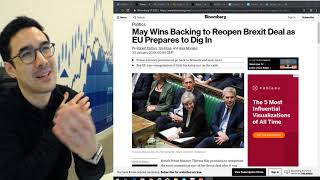
In this morning market briefing, the presenter opens by congratulating guests from Amplify and then provides a comprehensive overview of the key financial and geopolitical events shaping markets on January 30, 2019. The core of the briefing is a detailed recap of the UK Parliament vote on Brexit, highlighting Theresa May’s renewed mandate to renegotiate the Irish backstop, the modest 100‑pip pull‑back in the pound, and the shifting probabilities that major banks (Goldman Sachs, Deutsche Bank) assign to a no‑deal, delayed, or cancelled Brexit. The speaker then shifts to Apple’s earnings, explaining why the stock jumped 5 % despite a 15 % YoY decline in iPhone sales, emphasizing growth in services and wearables and the impact of weak Chinese demand. The briefing moves on to macro‑level drivers: the resumption of US‑China trade talks, the upcoming Fed FOMC meeting and its likely dovish tone, and technical analysis of gold (support around $1,300 and a potential rally to $2,600). The presenter surveys equity markets – NASDAQ futures up on Apple, S&P flat, DAX softer – and lists the day’s corporate earnings (Boeing, McDonald’s, Alibaba, Facebook, Microsoft, Tesla, Siemens) and key economic releases (UK mortgage approvals, US ADP payrolls, oil inventories). Throughout, the tone is analytical and conversational, with a measured, cautiously optimistic sentiment toward market stability despite lingering political uncertainty.
Chapters
Okay, very good morning. It is Wednesday, 30th of January. Hope everyone is well. Very congratulations to the man that just walked in right here. I don't know if you can quite see it in the camera. Will DeLucy and Piers Curran, the founders of Amplify. We celebrated our 10th year anniversary last night, so I know there was a lot of old faces that came back over the years, and I'd just like to thank you all for coming from last night, those who did attend, and Apologies if I didn't get around to talk to every single one of you, but you're always welcome to come back. You know where we are, the door's always open. So, um, if you're ever in London, please do always remember to drop in. But, uh, yeah, getting cracking on. Let's get into the briefing. And obviously there was a big Brexit event last night, so we've got a recap of what's the current status with that, how does that impact the pound going forward, and what's the next developments now for the Brexit timeline. We've also got Apple earnings which came out last night, which did move the overall NASDAQ index future positively, and we'll look at why that happened because that came despite a dramatic collapse in their revenues. And then we're going to have a look at the kind of risks going forward, predominantly from the basis that the trade situation, which undoubtedly is kind of the top of the pyramid of the most influential, I feel, kind of macro events for the week, and that's because the high-level talks now recommence between the US and China. So we'll have a look at that. Gold already this morning, uh, is seeing a little bit of a positive move, and we'll look at that technically as well. A nice trend line of support potentially going forward. And then you've got the FOMC this evening. So as I've got here on my screen, I've got the full calendar of events You'll remember I talked, talked us through this on Monday, and Wednesday is the kind of sweet spot, if you like, of when most of the scheduled activity is due to happen. Excuse me. And so as you can see here, the final thing to have a look at is you've got corporate earnings: Boeing, McDonald's, Alibaba, Facebook, Microsoft, Tesla, and for any German stock traders. You've had Siemens, one of the biggest companies in that domestic market, report this morning, and their earnings have been met negatively. Their shares, second worst performer in the local index, they're down about 2%. Deutsche Bank, a bit of profit taking after that positive move on the— was it the Qataris' investment that was mooted over the weekend? So yeah, DAX a little negative. Let's just go back to the broad charts. DAX a little softer this morning. On the contrary though, if you look at here, my center chart is the NASDAQ future, which is sharply outperforming after what was a quite a big jump that was seen. And the, the only reason for that is purely down to Apple's earnings. Shares actually rose about 5% after market last night. So you can see here we're just kind of gravitating on toward that pivot level now. Where we sit at the moment, but you can see a good decent, uh, 40-point move already. Comparatively, the S&P on the center right here, very quiet, awaiting some of the other earnings to come later on, and basically flat at this point. So let's get stuck into some of the headlines, and we've got to start with Brexit, of course. And let me just talk you through exactly what happened last night. This is kind of headline Theresa May wins backing to reopen Brexit deal as EU prepares to dig in. First of all, let's have a look at the market reaction. And, you know, Sam and I popped back into the office last night. I guess it was about half past 8, something like that. We were having a look at the chart and, you know, the kind of chart tells— picture tells much more than you would need to really go to the headlines because obviously we had quite a decent fall and pullback in the price of pound. I guess one of the surprising things for this morning, just looking in retrospect, is that I guess it's a little bit of Brexit fatigue, if you like. Actually, the move from last night was about 1 point, 100 pips, which actually is relatively contained. I'd say that's a pretty small move, all things considered, of what we've seen. It's kind of like what we had back in several years ago with Greece. It was kind of Greece at the beginning of the cycle, pre the first ever bailout. Every headline was moving markets substantially. But as weeks turned to months, and what happened there obviously turned into years, obviously the impact of just talking about Greece just got less and less and less to absolutely zero, if what you have now. So, not saying we've got to that point at all with Brexit, but I'm just quite surprised by And it's kind of, I think, reflective of investors' kind of appetite now to just not really want to get involved in this kind of the legality, the complexity of trading these types of events. And it's kind of— there was a relatively, I think, contained move, but undoubtedly one to the downside. So why did it move to the downside? Well, let's have a talk-through of what some of the actual amendments that went through and some that didn't. And for what reason then this means for going forwards? Theresa May promised to renegotiate the most contentious part of the Brexit deal after it was ripped up by Parliament. So this is again the most contentious part, talking of course about Northern Ireland. She will now head to Brussels to face a European Union that's already warned it wouldn't even consider her demands. So I'll get to this at the end, but I think it was EU's Tusk put out a comment immediately after the votes went through and said, "We're not negotiating on the Irish border." It almost does feel like whilst we're going through this political infighting in Westminster, we have forgotten the fact that actually Europe does need to agree to this, of which they've been absolutely resolute so far that that's a non-negotiable point. Of which has exactly been the sticking point for the last 12-18 months. So yeah, it kind of feels a little bit like swings and roundabouts, but going through this, let's just talk it through. So the House of Commons now have chosen essentially to send Theresa May with a mission to change that Irish backstop section of the withdrawal agreement. The PM has 2 weeks to make enough progress to basically bring all party members together and face Parliament again. So if you have already put in those Valentine reservations, I'm afraid you're going to disappoint your girlfriend or boyfriend because it's Brexit vote again pretty much on that evening. So again, bit of can kicking to some respect, but there are some things which The explanation behind the pullback is that one of the main ones that we were looking at yesterday was the Labour politician Yvette Cooper, who is looking to kind of force power back into Parliament's hands in order to be able to delay Brexit, which has been one of the key reasons why the pound has kind of moved higher in recent weeks. And we've traded as high as nearly a 1.33 handle. That got defeated. So at the moment, the prospect of a no deal certainly is still alive, albeit I think ultimately will be averted. But obviously markets need to price in this type of thing. Certainly you've heard already a response from people like the CBI in the UK talking on behalf of businesses. This is absolutely not what they want because it just adds, you know, while the politicians are playing this, this game of pushing up to the 11th hour, obviously from business points of view, contingency planning This is very problematic, and certainly this will probably translate in— transpire into corporate confidence, I'm sure, continue to diminish. But of the other series of key votes, May won backing for the Conservative lawmaker Brady's plan to reopen the Brexit agreement and promised to demand legally binding changes to the so-called backstop. So that's the kind of main key one. of what we're looking at. May lost when the Commons backed an amendment stating that it opposed leaving the EU without a deal. While largely symbolic, this sends a clear signal that Parliament is likely to block a no-deal split at a later date. So again, as I said in that latter one, I still think that a no-deal is going to be averted. The point here as well is that Theresa May has gone from looking incredibly fragile to the point of votes of no confidence to now actually having quite a decent amount of parliamentary backing. You know, as we've talked about, I think a few weeks ago, maybe this is kind of the strategy all along for Theresa May, who knows. But opposition leader Jeremy Corbyn now has bowed to pressure and has agreed to meet with the PM now to discuss over options. So it's kind of like you're running out and exhausting hosting the potential options. And one of the key things for Theresa May is about the Brexiteers, who obviously do not want to go down the route of giving Parliament power because that could lead to no Brexit. So the ERG have basically taken a bit of a U-turn, and they're kind of looking to back now the PM. And that's been aided overnight by news that a group of pro-EU members of her party, led by the former Education Secretary Nicky Morgan, have also signed up to most of the ERG's plan. That may have been the reason that Brexit supporters in Labour who had previously been reluctant to back May have also put some of their support behind her as well. So yeah, quite a few things going on. There's still a lot to play for though, because obviously, as I said, Europe Tusk, and of course Macron, has also been out pretty clear that, you know, this is not open for renegotiation. So on the, on the flip side though, there was a, a comment that the EU said they would consider a delay to Brexit. Uh, at this present point, it's still March 29th when we exit. Um, they said taking into account the reasons for and the duration. So this is quite key about that conditional, um, response to if they extend, it's got to be under certain rules. May has not ruled out an extension, but for now the PM's stance is she's sticking to the plan to leave on time. So absolutely, although I'd say the consensus belief is that this ultimately does need to go beyond that point, she obviously wants to keep a little bit of pressure on the negotiation itself. And I guess that makes sense that she's not going to buckle to that right at this point. So yeah, that's the, the status at the moment. So just going back to the pound, um, quite interesting, getting a little bit of a pullback, um, from the dip, and ultimately we remain pretty much where we were. I would say the reasons behind that and why the market isn't just collapsing and selling off, I guess, as As ridiculous as it sounds, these politicians still have a couple of weeks to play with. And although they are playing with an entire nation's fate, both economically and you could argue socially, these are politicians we're talking about. So they've obviously got their own agendas. And, you know, if you're leveraging a position on that front, then you want to push things up the last possible moment. That's when deals get done in this type of situation. So I think the market's fairly aware of that and fairly comfortable. And although I think the pullback last night— so this move that we did have, which was here— I think that's purely a byproduct of this pretty decent rise we've had in the pound and the prospect that no deal was going to be completely taken off the table. The fact that that hasn't It's just a little bit of a repricing, but ultimately that I think still will get averted at the end. So net-net, we're back to pretty much where we were. And remember, we were looking at this longer-term chart of cable yesterday, and we kind of had the rectangles marked up of the potential possible scenarios of where we could go based upon a lot of those big investment banks' calls. And credit to them, they were pretty right on the money. About a point move, uh, was what they were calling in either direction. And that's exactly what materialized in terms of the size of the move. A few other things here, just looking on the chart, that trend line on the downside. I think this is something Sam was looking at yesterday, and I guess that would come in if we got down to that point. Could be quite interesting on the 130 handle. So yeah, a few things to have a look out for. But if anything, I would say as for now I'd say macro-wise, on an intraday basis, Brexit is kind of comes off the boil and gets superseded now by some other key issues, that being the China-US trade negotiations are probably taking top priority. You've got the FOMC this evening and you've got corporate earnings coming out as well. So Brexit, if you like, is kind of taken off and will come back in about, I'd say, a week and a half. It will heat up again and it will rise back to the top of the pile of investors' attentions, and that will kind of saturate all the media focus as well. So yeah, maybe for today I wouldn't be expecting too much. I guess playing, playing it technically is probably the better play. A couple of bank comments then. What are the main institutions saying about what's happened? Well, Goldman Sachs have come out with a research note overnight, and they've basically put some fresh numbers. And not that I, you know, would make trade decisions based on the back of what exactly that they're saying, but it definitely helps to add a layer of context to what is it that the bigger players in the market are thinking and advising their clients. And Goldman Sachs analysts up their no-deal Brexit probability to 15% from 10%. So like I've been saying, it's still a very low probability, but it has not been legally removed as yet. So it's still there as a, as a tail risk. They cut the probability of Brexit not happening at all to 35% from 40%. So I mean, GS is still pretty, pretty bullish that actually Brexit just doesn't happen. And I won't get into the various things that would need to happen. This has been a big discussion point for some time— second referendum, new general election, so on. And they hold their estimated probability of a delayed Brexit, which I agree is probably still the most, the most likelihood of an outcome of what's going to happen over the coming weeks into March. And they have that at 50%. And for me, that's the reason why the pound could continues to trade up at a 1.31 type level for the moment. Deutsche Bank, they've also come out, um, they've said that it will take profit from recent recommendation to sell the euro and buy sterling. They've basically turned now neutral on the pound after being a little bit more positive following the vote that happened last night. So again, slight little tweaks that have occurred. All right, let's have a look at other issues. This was Apple's share price last night, and this, I guess, for any new traders, this is something to be very aware of. Because Apple's— if you looked at Apple's numbers and you had no context at all, you'd probably think they were shockingly bad. Why have their shares spiked 5% higher? And this is what certainly, if you're going to trade single stocks, but also or say index futures, you've definitely got to do a lot of prep work to get yourself equated to what has the stock price built in at this point. And, you know, if I think about it, Apple has had such a terrible run of late. I'm trying to think how much actual— in monetary value, I think they've lost something like $250-300 billion of their market capitalization after hitting that kind of $1 trillion level just a few months ago. So it's been an absolute rough ride for Apple of late, and it's almost like the bad news has been priced in. And so when they reported— and as we know, iPhone sales are so critical for the company given that's where they derive the largest portion of their income— their iPhone sales fell and it was down 15% in the quarter from a year earlier. So obviously we, we know kind of broadly the reasons for this— longer now contracts that the providers are having to give out, 3 years instead of typically 2, because of the cost of the phone to be spread, because of the, you know, now smartphones going north of £1,000 and people not upgrading as much, and also the lack of you could argue, innovation that the product has had. So iPhone sales down sharply, but fortunately for Apple, and this has been what they've been pushing in recent years, is services and wearable devices have grown substantially as a revenue generator. If you look at wearables and home accessories, they actually jumped 33% in the quarter from a year earlier. So that's a phenomenal performance, irrespective of the fact that their second quarter revenue, um, they said will be between $55 to $59 billion, which is against analysts' expectations of basically $59 billion. So big disappointment on that front. Um, looking at China, and that's pretty— when you look at Apple, that's a real sweet spot for trying to think about their future in the near term. Obviously you've got a trade war going on and this is having a big knock-on effect for the economic performance of China. And so therefore, obviously consumers are getting a lot more, you know, picky with their high-priced purchases and sales in China have decreased sharply. In fact, Apple sales fell 27% in Greater China. So quite a substantial drop-off. But earlier this month, don't forget, and this is what I mean by market positioning, and Apple is an absolute master of this is they already know what the situation was with the appetite for the iPhone X. And so Tim Cook quite, you know, tactfully has been warning about the company would miss. You remember over Christmas their shares fell because their holiday quarter sales targets were going to be missed. So the bar, if you like, was so low for Apple going into this earnings report Lo and behold, their shares respond very positively. So, um, does this change? Remember, you've got Microsoft, Facebook, Amazon, Alibaba, you've got loads of these really big tech-focused names still coming out both today and the rest of the week. Are they all going to follow a similar thing? Well, I'd say Apple is a bit unique. They have had such a such a bad period, and Tim Cook, as I said, has quite managed the situation in order to garner this type of response. I don't think this is net going to be the same reaction that we can expect for everything. So I'm still quite interested to watch these tech names as they come out. So yeah, NASDAQ firmer, but probably looking for cues now from some of the other tech names to come, which ultimately is aftermarket. I'm just having a look at the other indices. As I said, the NASDAQ's outperforming. Just looking here at the S&P, I mean, it's pretty mid-range in terms of near-term price action. A couple of points on the upside, maybe just having a look from the, the weekly high that we printed. Well, this is going into last week's high just before the close to the high that we had yesterday as a trend line to see, you know, whether we can break that. I guess the Federal Reserve meeting this, this evening is going to be quite key, followed then by those earnings from the big tech names after market. On a broader perspective, you know, quite— it's a similar type of thing we were looking at earlier in the month, which was really really around here when we had that, the bottom of that trend channel from the price activity on the long-term price movement of the S&P. And again, just as much as that was a key area of resistance, which of when broken in combination, um, with the, the fib retracement, the moving averages, and the trend channel, we saw that quite sharp pop and break up to the upside. But as we've come back down It's almost the reversal of that, and looking at that for some quite key support going forward. So, uh, yeah, if we go through, I guess, key catalysts to be aware of that could potentially break this level, of which then technically you could see some more aggressive moves to the downside— other than earnings, I think the main thing that could be a catalyst for that would have to be a a negative outcome from the China-US talks, that would then, I think, create quite a negative force. With a technical breach there, you could easily get a run back down to 2600, which would open the trapdoor, if you like, to potentially more heavier moves to the downside. So yeah, trade wars, I think, are quite pivotal to that play in the kind of beyond the intraday. Talking of then, that the final thing is the Fed. Um, what are we to expect from this evening? I'm going to read through a couple of things from this article because what this is, is— well, let me just stop this playing. The Fed seen pausing rate hikes but still moving twice this year. So a couple of interesting points here from a Bloomberg survey of economists. So what they'll do, Bloomberg being the major benchmark news news agency. They'll call up all the bank economists and research houses and they'll say, what do you think about the Federal Reserve and what are they going to do? And after they've polled maybe 50, 75 different people, they'll have the kind of consensus view on of what they think will happen. So let me just read you through. A majority said that they now expect those, um, the rate hikes, i.e., what the Fed have said, still is the, um, the official line. Is 2 interest rate hikes this year. Now, a majority of economists said they expect those to come in June and December instead of March and September as predicted, um, just a month ago. Remember, one of the things that we had, if we go back to the S&P, is, you know, in the December meeting when the Fed kind of surprised markets to some degree and said they were still going to hike rates 2 times markets collapsed. And it was in January when then Jerome Powell came back. And right at the beginning of the year, given the severity of the fallout, that was when Powell started saying, actually, there's a lot of stuff, external headwinds that are happening, risks to the global outlook, which means that we could get a more dovish Fed. And the markets have recovered in the wake of that. So most economists, though, still think they are going to do 2 rate hikes. It's the timing of the rate hikes that really has changed. So a few other things here. The reasons why these economists think this, because markets— and I'll get to this in a second— absolutely disagree with the economists because markets are pricing in no rate hikes at all in 2019. Now, the economist argument here is that the labor market remains extremely tight, and that's unlikely to change through 2019. Now, by tight they mean that the unemployment rate remains very low, which means then that that should keep wages rising and consumer spending strong enough for at least 2 more rate hikes. The nonfarm payrolls report we're going to get in 2 days' time— I'll say this now— is probably got to be treated with a large pinch of salt because it is going to be a one-time effect and impact of the US government shutdown, which now has been temporarily resolved. So that payroll report, you can't really take too many conclusions from it. Even if unemployment did pop up, the longer-term trend is it's still very low. So that's their argument. Um, Powell himself, though, obviously has reassured investors by saying the Fed would be patient and flexible in its approach. So this is where that dovish management to counteract the equity sell-off that we had comes into, into play. Economists expect the FOMC to only make small adjustments to the post-meeting statement. I think that's exactly what you'll get tonight. Remember The difference with this evening is it's the first time, this being a non-dot plot, non-projections meeting, that you're going to get a press conference with Powell. He's going to have a press conference every time. So for me, the statement is official. That's the actual definitive commitment the Fed are making. Better than in the Q&A, that that's where the subtleties will come if he needs to manage that they're going to be slow cautious, gradual, and hence dovish. So you kind of put out a neutral statement but sound dovish, and that then manages market expectations but keeps as many options on the table. That's certainly how I would approach it in that respect. To give you keywords to look out for in December, the committee said that they still saw the need for some further gradual increases in rates. That was the key phrase, some for further gradual increases. Two-thirds of respondents in the Bloomberg survey said officials would alter that line to signal greater uncertainty about the need for further hikes or replace it with a reference of being patient. Just 5% thought officials would drop the line entirely. A strong majority of the survey, 71%, said they believe event officials would stick with the assessment of risks as quote, roughly balanced. Just 21% thought they would change this to say risks were tilted to the downside. And again, I know it sounds very subtle, very small, these word changes. This is what you're trading when you're trading a monetary policy event. So again, just to go over, this is the, the view that the Fed has on the global economy at the moment, that currently the assessment of risks is defined as roughly balanced. It could change to tilted to the downside. That would be a big dovish move, which would be equity positive, dollar negative, if that were to occur. But I think that's probably an unlikely outcome for them to be that drastic. Remember, the equity market has already recovered and market stability has returned after that Christmas volatility. So yeah, hopefully that kind of just sums it up a little bit. Um, a couple of final points here is about the actual balance sheet. That's going to be the other key thing here. This is the idea about the Fed, as well as hiking interest rates, which they've been doing as part of a cycle, they're also winding down the balance sheet by letting bonds mature as part of their quantitative tightening process. That explicit wording around that could be quite key. Economists have also showed they mostly sided with the Fed on the impact of the central bank's ongoing balance sheet reduction, though officials eventually signaled an openness to altering the runoff if their hand were forced. Powell made it clear he didn't think that would be the case when he spoke at the beginning of the, of the year, and about 85% of economists have agreed with that, to remain kind of the status quo for the moment. So yeah, the Fed tonight, um, definitely to be monitored. Potentially could be a tradable event for sure. Is it going to be absolutely groundbreaking? I'd say probably not. I think we're kind of on board of where the Fed is at the moment, in that March is going to be more interesting in terms of their projections, if there is going to be any definitive official change. And I would expect Powell in the press conference this evening to sound, as he has been and other Fed officials, relatively on the dovish side. Whether or not you'll get much of a response out of equities, I think a lot of that's been priced in. Okay, finally then, just having a quick look at gold. There's a level I know Sam was, was marking up this morning. And I guess it's a— I guess we could stretch this out almost with this trend line going further forward than even what's on my chart here. But gold certainly has been on the ascent. Obviously, the big risk here in the coming days is predominantly led by the outcome of the China-US trade talks. Remember, these are happening today. They'll go on tomorrow. Likelihood is, you know, it's going to be those statements of the end and the, the depth of the clarity of the commitments in their official statements from both sides at the end of this week that's really going to be important. So might not get too much today, certainly it will pick up pace Thursday, and then Friday will be key. But I think it makes sense for the general broader risks. You've got a technical break of the, the year-to-date high, and that's obviously helped as a bit of a platform now for gold, which is also the psychological 1,300 level. I'm looking at the futures chart here, and we've managed to just continue to punch higher. Obviously Brexit's unresolved, and the Fed, if anything, might continue that dovish line. So yeah, on the upside, I think there's still a little bit of way to go for gold. I guess the next nearest point of interest, around $2,600, that would be going back to the 11th of May high. And obviously it gets a lot more interesting as we get further up. If we were to get to that point again, you would need probably a big breakdown in those trade negotiations, some quite inflammatory tweets out of Trump coming at the end of the week, and then you could quickly see gold back up at those levels. Around $13.50 if that were the case, and it triggered a decent equity sell-off. You would— that would need to occur for that to happen. All right, finally, uh, earnings. I did briefly mention this. There's a couple you need to look out for today. Boeing is coming out pre-market. Boeing, of course, one of the largest components of the Dow. You also have McDonald's pre- market. Um, and then you've got a couple of other slightly larger names coming out, so I'll post those into the chat room so you've got them all to hand. And then just finally looking at the calendar of what else is to come, uh, this is the calendar for today. I'm just checking, I don't think you've actually had any of the German state CPIs so far this morning, so given that fact It might be the case that they've been rescheduled because typically they would already be out by this time. Um, other than that, other things that you've got: UK mortgage approvals, uh, mortgage lending. I was reading those, uh, some articles. I'm sure you've done the same this morning. Um, if you've got £100 million going spare, you can get a good snip in the prime real estate market at the moment. The Citadel head of trading, um, got himself a good bargain. He bought a house just off St. James's Park, I think, for £95 million, where the price tag was previously, only about 12 months ago, £150 million. So if you're in the top end of the market, good time for a buyer. But mortgage approvals, how important is this really, in all honesty, for us trading at the moment and looking at markets intraday? Very little. I would not be looking for this data to be impactful from that point of view. For the new guys, just to be clear, you get a little batch of what looks important but is not market-moving data— business climate, economic, industrial service sentiment, and so on. Yeah, if this is lower-tiered data, something to to be aware of. Keep an ear out on the squawk, but it's very unlikely to be DAX, Bund, Euro market moving going off historical precedents. Into the afternoon, ADP employment change. So, um, this is the first kind of run-up then to see what was the situation and impact potentially of the government shutdown. This is the private payrolls reading as the precursor then for the, the labor report we'll get on Friday. And as you can see, you've got lots of asterisks here about the US data. I'm pretty sure I read yesterday that GDP is being delayed. I'm not sure if it was delayed to today or it has now been delayed, but we'll confirm later. Obviously still catching up, uh, given the shutdown. And then you've got the oil inventory data later on this afternoon, so we'll run through that in more detail a bit later on. Okay, that is it. I'm not going to talk anymore, going to let you guys get on. Any questions on the more technical side of things, remember in the chat room, Sam has got his eye on there. Ask him any questions that you might have. Otherwise, I wish you a good session ahead. Thanks very much.
More from Anthony


Inside the Biggest Banking Stories You Need to Know This Week (Anthropic, Diageo, Private Credit)


Inside the Biggest M&A Deals You Need to Know This Week (UniCredit, GameStop, eBay, Eli Lilly)







AI Breakthrough or Hype? Anthropic’s Claude Mythos, Tim Cook Steps Down & LIV Golf Collapse