What next for Brexit & the direction in GBP
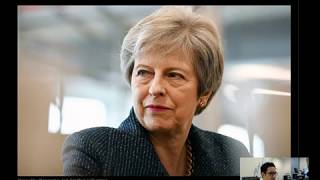
Theresa May's Brexit negotiations have broken a key support level on the pound, pushing GBP/USD down to 1.25. Oil is technically vulnerable around $50, with OPEC cuts seen as insufficient against oversupply. The presenter advises traders to manage headline risk and watch pivot levels for entry signals across currencies, equities, and commodities.
Chapters
Okay, very good morning. Tuesday the 11th of December. Hope everyone is well. Here's a quick flavour of what we're going to talk about this morning. Here she is, Theresa, looking self-assured on the surface, but I'm sure underneath it's kind of like flapping underneath the surface because there are some severe uncertainties that have arisen from the fact that, as we were suggesting yesterday here on the desk, that the vote was going to be delayed Personally, I don't think that that was that surprising, but the pound did catapult lower. And a bit of two things really going on here when we're looking at cable. This is a combination of the kind of fundamentals and the technicals. I mean, Sam being the technician in this case was looking at that trend channel for, for a long period of time, and We broke that convincingly at the trigger point of which then it became clarified that this indeed was going to be delayed. Now, this increasing then uncertainty about the ability for Theresa May to lead the government, increased chance of maybe a second referendum, a snap general election, Jacob Rees-Mogg contesting the leadership again with the 48 letters with Boris Johnson. As we saw yesterday, getting his hair cut. There's no greater sign than a run for leadership than that. And so, you know, a lot of negatives fundamentally increasing the prospects then of a possible no deal. But then that in combination with the technical breach here. But on the long-term charts, that rectangle there was an area that we've been looking at for at least 2 weeks that we were saying was really quite critical for any potential further heavy selling pressure in the pound. And that being that, that was the previous year-to-date low here seen in the summer, and that was also an area of previous kind of congestion for some of the price action on resistance really in the initial bounce from the EU referendum lows, but also support from the summer of 2017. And that was that rectangle here of which we broke and and you can see the, the speed of the price action upon moving through that area, and we dropped to essentially the 1.25 handle. Now we have seen a decent pullback this morning. You can see here, as far as that trend channel is concerned, we've managed to move back above it, and it looks like here on the intraday just having a little peek above the pivot level. There are obviously a lot of Brexit headlines coming out nearly every second. So usual rules apply. I would say, you know, you just got to be realistic in altering your kind of, I guess, strategy around execution, because you don't want to be sat in a trade any longer than necessary on the fear or increased risk of getting stopped out by a spike in prices on headline noise, of which ultimately is quite up and down at this point. And so, you know, definitely it's a very fluid situation and one that needs to be monitored extremely closely. Elsewhere though, apart from that, the equity index futures were fairly sideways price action, albeit in positive territory. Remember, as a reminder, on— there's been some changes to the Eurex trading hours, so the DAX obviously does trade overnight now, and as you can see here, has just found support around its pivot level. Not really too much to speak of in the way of singular equity stock-specific news as we continue to just monitor the overall broader macro picture. And we'll get around to the China-US trade war in a second. Otherwise, elsewhere, it's a bit more of a dollar-based move than I'd say overall than, than cable, so to speak, because the DXY is down about a quarter percent. So equally, EURUSD has also just been picking up pace really since the Asia-Pacific lows. We've also just managed to trade back to pivot here. I was just looking on a broader context because obviously a couple of things that are coming out this week. You've got the ECB, of course. We're going to talk a little bit about Macron and an emergency speech in which he gave yesterday and what that might mean as well going forward. And then a quick look at some of the other charts. Gold still remaining buoyant, having broken above key technical levels. And so that, you know, that really important level around $1,238 here, and then $1,239 in the futures, which was a real strong area of support going back into the tail end of 2017. Well, really about year to date of where we were trading. We tested it, broke in the summer, found resistance there only a month ago with the new volatility in the selling in the equity and FANGs technology space. And having broken that now, you know, that's still a pretty good area of support, I'd say, really going into year-end, particularly with the types of risks it looking like from a Brexit no-deal possibility all the way through to an escalation in trade wars, given the limited temporary truce that we saw between the US and China. So things still remaining technically, I'd say, still quite positive here. For more gains in the broader picture. Areas there on the upside, probably be looking up toward that kind of 60 level if we were to get back up towards some of these previous areas of significance on the chart. Otherwise, oil is still— to me, in my mind, I'm very strong of the belief that we're going to retest the lows again. I think that OPEC cut, I think they've almost shot themselves in the foot. I don't think it's enough. Said that at the time, and I remember I'll stick to my guns here. I just think that, you know, a 1.2 million cut is nowhere near enough, not when America's pumping well north of 11.5. You know, the Saudis, you know, they're still, even with the cut, still just off their record levels. Russia, UAE, you name it, there's so many countries who are pumping at near record capacity levels. That under the cloud of what really is weakening demand as people start to build up this conversation about the inversion of the yield curve, all this talk of recession, all these other risks going into 2019, then you throw in a trade war, which the 90-day truce of the hard deadline comes, I just think there's a complete imbalance between the supply and demand fundamentals. And so here we are in the, the energy move. We're within 80 cents now back to that 50 level. So any kind of positivity there was after we initially bounced up ahead of the OPEC meeting towards 55, you know, we've already taken a good $4 back of that move. And obviously $50 is then when it becomes really quite critical. And I think for oil traders, we kind of know this now. OPEC have kind of shot one of their bullets. I want to see them test it again. And, you know, if we break $50 and we go lower, you know, they're going to have to show their hand if we get lower down and be more aggressive. So they will be incredibly reluctant after a meeting just a couple of days ago to start talking up further cuts, more action. So I think if the market can push it through 50, um, it's got a little bit of clean air here, obviously technically. But then the strategy from OPEC will be, well, we can't just jump in straight away and start talking it up. So what I'm saying is you've got a good couple of days there where you could force the price lower. Um, and then obviously, ultimately, I think what would happen if, let's say, if we broke 50 I do think we could get down to this $45, $46 area pretty, pretty rapidly. Should we get down to $42, even more so. I think what starts to happen here is one of the important players outside of OPEC starts to change tactics, and that of course is our friend Donald. Because once we get south of $45 and corporate US energy firms start bulking up this price, 'cause they start thinking we're gonna start defaulting on potentially the leverage nature of how we've grown so rapidly, this phenomenal increase in production in the shale industry, then Trump's gonna start easing off the foot off the gas, and then I think you'll get then, at that point, a bit more of the sustained bounce from the lower levels. But I think oil's still quite susceptible here at around these levels, so worth watching not just today but this week. If we retest 50, I think it can get very interesting very quickly in that respect. Here's a bit more of a closer look at oil from a technical point of view. You've obviously got the, that rising trend line from the price action that's been in place since the end of November. Um, if we get down to there, I guess the first test and then lining up— so if I just remove this circle here and I'll show you what I mean. I guess this kind of area here with the trend line and the support point on the horizontal line from November 23rd, and also the test that we had back on the 6th of this month. But then ultimately that lines up quite nicely with today, for instance. That's pretty much bang on the— if you can see here, the S1 is the $50 handle. With those lows at the psychological figure, I think this is a really important area for oil at the moment going forward. The breach of that obviously brings into play those previous lows, and that was seen at $49.39. And then, you know, you've got the S2 at $13 and $49 handle just beneath. Okay, well, let's crack on and let's talk about Brexit. Where are we and, you know, what could happen next? So this is what we're looking at this morning. So May gambles running down the Brexit clock will focus political minds. What the headline's suggesting then is that Theresa May, as we were discussing yesterday, tactically looking to purposely run the clock down go to Brussels, try and secure some kind of concession to then bring it back, and MPs have no other choice but to accept the deal at that point, otherwise risk that of a no deal, of which all sides, both within the UK and Europe, ultimately would want to avoid, given the dramatic economic effects that that would have, and then knock-on effects for the global economy. Hence why this is a risk. As well for even things like the Fed and their rate trajectory going forward into 2019. So a couple of things though, we've had a few tweets this morning. Here's Donald Tusk last night saying he's called, or he's decided to call, an EU meeting on Brexit Article 50 on Thursday. We know this, there's an EU summit happening on Thursday and Friday of this week. We will not renegotiate the deal including the backstop. We are ready to discuss how to facilitate UK ratification. As time is running out, we will also discuss our preparedness for a no-deal scenario. Follow that up, Mr Juncker this morning. So this is one thing to be aware of. Theresa May is embarking on a tour of European capitals starting today, of which this evening she's having dinner with Mr Jean-Claude. This is how she tries to negotiate some of the finer points to get something more palatable for the Commons to back her then, even within her own Conservative Party, but others that she will need to get over the line— some Labour members as well as the DUP, importantly. Juncker said, I remain convinced the Brexit deal we have is the best and only deal possible There is no room for renegotiation, but further clarifications are possible. And so to me, quite honestly, this is just absolutely, you know, classic posturing ahead of negotiation. Of course, Tusk and Juncker would cut a deal if it meant— if the pressure was on ultimately that there was going to be a no deal. And as I said yesterday, they would much rather be dealing with Theresa May and the current plans, albeit maybe slightly altered to give further clarification on the Northern Irish backstop, than they would in an alternate world where you have someone like possibly Boris Johnson or, yeah, even worse, Jeremy Corbyn, because don't forget he's a Eurosceptic himself. At that point. So Europe has political will, I believe, as does the UK. It's just a matter of timing, and I do think now is too soon. And I've just been reading a lot of the press this morning, and a lot of this has been talking about the end of January is when actually this vote might happen on any amended deal. and we'll look at some timelines in a second, but I think that would be quite a clever move because ultimately then there's no way out. You're into a— backed into a corner. You've managed to get a slightly better deal. One of the amazing things that I've felt when I was walking in this morning and talking to a couple of people— there's absolute anger growing, festering amongst people about the inability now to just push this thing on. And so I think then the MPs voting against May's deal come the end of Jan, I think would be political suicide for all those opposing it. And then, how the tables have turned, all the power's then in Theresa May's hands, and then we push on and we move into the transition period. I think failing that, I do think that Europe would be willing to extend Article 50 if it's necessary, but obviously they would not want to be showing that hand anytime soon because they'll want to keep the pressure on to keep the minds kind of focused on the UK side. What could this reassurance be then? What is it exactly we're looking for Theresa May to get out of her meetings with Europe? Well, here's a bit of a, a summary. This is a source that spoke on the condition of remaining anonymous to Bloomberg and said the EU is prepared to add wording to the effect it has no wish to force the UK into a never-ending backstop arrangement in the absence of a broader trade deal, and it will do all it can to avoid it, according to officials. So this is really what we're looking for. The, the key thing here is reassurances that basically the backstop is not indefinite. Now, are they going to change the legality of it? Well, no. But can they change some of the wording around the commitments to it? Well, yes. Is that gonna be enough? That's the question. And I think, well, ultimately it's a very small tweak. It doesn't really change things. But I think if Theresa May can play this strategically over a correct period of time, then she basically forces opposition views into no other alternative but to accept the deal. Looking at that, here's a good graphic to make things a little bit more simple of what we're looking at. Here is then what's happened as of yesterday, is a neat graphic about the steps going forward. This is from ING. I absolutely agree with their base case scenario, which is the orange boxes, so the default scenario that PM heads back to Brussels to renegotiate. Government goes back to Brussels to try and renegotiate this Irish backstop. So it's kind of where we are at the moment. Yesterday, of course, adding the kind of fuel to the flames of the sterling sell-off— is Theresa May gonna resign? Absolutely not. Absolutely, that is not gonna happen in my mind. Could it happen? Sure. Is it gonna happen? No. Come so far, she's been up, you know, under pressure since day one. She's not gonna resign at this point. Conservative rebels unite to trigger a leadership challenge. I mean, there was a couple of this, uh, and in combination with this one, opposition parties bring forward a motion of no confidence in the government. I mean, this was something being mooted yesterday. I remember Will was on the desk and he was saying about the ERG and Jacob Rees-Mogg teaming up with Labour. My God, you've got— if that were to happen, that would be a miracle, I think. I mean, I know Brexit is unprecedented and, and certainly historically one of the most important political events in our history of our country. I can't see that happening. And I also can't see the DUP going through and dropping their backing of May's government. Understanding Northern Irish politics, the DUP, if it goes wrong for them, then the worst, worst case scenario for Unionist party in Northern Ireland would be As part of the Good Friday Agreement is a clause saying then that if it's the will of the people, there can even be a referendum on Irish independence to make a one united island, which would obviously fuel the flames. It would be the total destruction of the Good Friday Agreement, would be huge civil unrest, could lead to a new vote, of which on the balance there has been a rising sentiment for those now, given the demographic shift in Northern Ireland, to then bring it back into, as I said, a one united Ireland. And the DUP, that would be absolute worst, worst case scenario. So I think the DUP are bluffing, and I would be leveraging that risk over them if they were, you know, trying to push or bully us into making some sort of decision as a May government. Now beyond this then, when is this going to happen? Well, here's a graphic of a timeline I just wanted to go over again. So we don't forget we've got parliamentary Christmas recess happening on the 20th to the 7th of Jan. So if you think about it, Theresa May's doing her European capital tour right now. There's a EU summit happening Thursday, Friday, so you're going to get a lot of commentary on Brexit both from the European and UK side going forward. Now initially on the snap headlines, I did think potentially you might get this vote quite soon to fit it in ahead of parliamentary recess, but I'll kind of recalculate that. And I think actually strategically what she'll do is I think she's going to wait it out over the Christmas period, and I think then the conversations, negotiations with Europe will continue. And then I think this idea of pushing the vote into mid to late Jan in order then that really that is last chance saloon, otherwise there's going to be a no deal. It's either no deal or extension to the transition period, or excuse me, the Article 50 period. Now, one question I have had is how much is a no deal priced into the pound? And I would say, well, definitely what's happened has increased that probability, and hence we've broken that key area of support on the cable chart. So I guess let's call the lower bound 125 handle, has that priced in a no deal? I would say no, that's not priced in a no deal. Confirmation of that come end of Jan, if then there is no, let's say there's no extension to Article 50, and let's say the deal doesn't pass, because don't forget, new leadership, if it was to be replaced on Theresa May, typically takes, a number of weeks, maybe 2 months, in order to go through the natural process. So if that was going to happen, and Theresa May fails at that second vote, well, actually, we'd have to have Europe give us an extension on Article 50. If we were going to have a snap general election, again, you'd need several weeks in order to get that underway. Hence the reason why I think she should delay the vote if she's going to be successful in getting it through. If a no deal does happen, I'd say 120, here we come. And that is the post-EU referendum low, that kind of double bottom of what we had from the first mention of hard Brexit in the party conference in 2016 by Theresa May, to where we were on the retest in, in early 2017. Adding a no deal, we definitely, as the prospects come, we go to 120. And then if it does go through and there's nothing meaningful that happens to shift that, we go south of 120 and we break that key level, down we go. So yes, I think a no-deal probability is increased. I still don't see that as the base case scenario. So on the balance, I think it's been partially priced in. There's a lot more to price in, I think, the downside should we, you know, the timeline continue to diminish. Okay, that's my views on Brexit. I hope that helps. Quick, sticking with European politics, well, here's a— here's the other thing. Well, actually, before I get to Monsieur Macron, let me just round off with— we've talked a lot about politics with the pound. One last thing to add here was I just made a few notes about points about the UK economy, because last week we saw a sharp fall in UK services PMI which is one of the main contributors to economic growth within our country. So clearly concerns of a no deal are beginning to have a tangible impact on growth expectations going forward. There's also increasing evidence that the sentiment of the political uncertainty is beginning to weigh on consumer activity. And actually, consumer confidence in the UK now is below the post-Brexit level. So British consumers have never been more negative than they are right now, ever since Brexit first happened. So the initial shock and horror that we had— forget that, it's even more pessimistic now than it was the day after the vote in itself. And I think that's quite telling, because if you think about this economically and economic activity, our economy is going to continue to slow. So economic data between now, the December data, the January data, it's only going to get worse. So obviously this adds to the, the belief then that downside weight is going to be felt fundamentally for cable. Question mark, I guess, on how severe and how quickly the sell-off can be. Don't forget, with any currency you're trading two currencies, so it's a very negative backdrop for sterling The question is, and we'll hear from the Fed next week, what's your rate hike sequence beyond the December hike? If they maintain a firm hand and say, you know what, we're gonna do 3, we're gonna stick to 3. If they did that, a hawkish surprise in what has been a dovish-sounding Fed, all the more downside you're gonna see. That would be a perfect cocktail for shorting the pound, uh, on those— on that basis. Okay, quick look at Macron. There's been some news overnight because yesterday evening he had an impromptu 13-minute televised speech nationally where he decreed a state of economic and social emergency following 4 weeks of protests. So this comes, uh, and then after he announced a series of measures aimed at controlling what's being called the Yellow Jackets and the protests that we've been seeing. I'm sure you've seen this on the news in France. Um, quick summary here of what's happening, and then I'll give you a view about how this could impact the markets or not and why. So what's happening here is quite a growing underlying sentiment anti-Macron government Um, this comes as Macron avowed plans to improve the purchasing power of those who are struggling the most. So he said the government in France would increase the minimum wage by €100 per month without any cost to employers. He said that overtime work would not be taxed from next year. The president also asked that employers pay an end-of-year bonus which would be exempt from tax. He said also the government would cancel the increase in some social charges for pensions at a certain level. All of this is happening because of these Yellow Jacket protests began online about rising fuel taxes but have widened now to incorporate widespread anger about high taxes, a lack of purchasing power for the lower socioeconomic demographic, and also their belief in an elitist president. So again, I can't remember, Macron was Rothschild, was it, before where he was a a big-time fund manager. So obviously, you know, it's, it's obviously okay for Trump to be a billionaire, but it's not okay for Macron to be a millionaire. But you know, there you go. But one of the things here that obviously has been brought into question is, will this have any impact on the euro? Now, one thing I always say is let the chart be your guide and show me on the chart how this Macron news is influencing the euro. The point is, it's not. It's had no impact. And this was a good question actually I had from a student just the other day. He said, with these protests happening, what's happening to like European assets? Surely they're going to be reacting, you know, something in such a, you know, a developed country like France to see such violent action happening on their streets. Surely this is going to be impacting markets. The point is, is that, you know, there's so many— if there was no other macro stories happening, if Brexit wasn't a talking point, if Trump wasn't the president, if there was no trade war, you know, if all these things weren't happening, I'm sure from a herd mentality and investor psychology, we'd have to focus on something. And people might then take more notice of these types of events. The point being is that there's just so much other stuff going on, and as we've seen before, violent protests and this kind of emergence of this kind of way of vocalizing your political view is not new. We did see a lot of this type of thing during the harsh period of austerity through the sovereign crisis of 2010, '11, '12, and so on. So also investors are, I hate to say it, fairly comfortable with this type of thing happening right now. But one thing to be aware of here is that by helping this new social reform in France, France effectively needs to borrow more money. Sounds reminiscent, right? Sounds exactly like Italy. How do you keep those people happy, the people at the the kind of lower socioeconomic demographic, as I said, well, you've got to reform your social policies, help those out at the kind of lower end of the pay or income scale. But that requires more borrowing. And France's deficit-to-GDP ratio actually makes Italy look quite healthy in that respect. So the question comes, well, for Europe, you can't then penalize Italy but not penalize France? And so this is quite a compelling question. But I guess one of the things here that you've got to understand when it comes to France is that France has a much lower ability to finance itself than Italy. So the yields in Italy are way higher, which means then the cost of its debt is more expensive. So it means that even though technically there's more indebted in France, they can service that debt at a slightly more favorable rate than Italy could, for instance. Also, taking into consideration the value nature of the, the sovereign creditworthiness at the rating agencies, then there is quite a distinct difference why people are not panicking on the French situation. But the Commission need to be careful that they're not seen giving special treatment to France because it's a major economic player and a net contributor to the EU budget. You know, this is, this is what a lot of people say is obviously wrong about the European idea or ideology, is that you're trying to govern with one rule, one area which comprises of many countries. It's going to get very difficult because of the widely different political and economic situations. But hey, that's a discussion for a longer time frame. Net-net, the euro is not interested. In the French story. Finally, the final story here is that on the trade war update, top Chinese and American trade officials spoke by phone yesterday, signaling that dialogue between the two nations on trade issues is at least continuing despite the diplomatic row over the arrest of that Huawei businesswoman. So that actually, away from Brexit, away from France, I think that's what's helping just hold a little bit of the sentiment at the moment. So equities, although the DAX looking a little bit precarious now on the pivot, generally speaking, we're relatively flat in the US futures, mildly negative European equities, slight positive, but things a little bit in a holding pattern right now. If the trade war— as long as this remains positive, this is quite a safety net for market sentiment, I feel, intraday. If this starts to develop and become more negative, then this could be another catalyst to fuel what otherwise is quite negative news that's out there at the moment. All right, quick look at the calendar, and this is what we've got on the agenda for the day ahead. So coming up, UK data, average weekly earnings, um, UK data. I'd say just approach this with some realism that you might get a blip, but there's obviously a lot of other bigger things going on here than just this economic data point. Um, weak average earnings numbers, if anything, will only help fit the narrative if prices are going to continue lower. German ZEW economic sentiment is coming out at 10. US data, PPI, the API inventory numbers for the crude traders coming out later on this evening. Okay guys, that's it. If there's any charts or good setups, I'll get Sam to share it across all chat rooms. Otherwise, have a good day, uh, and I'll catch up with you later. Thanks very much.
More from Anthony


Inside the Biggest Banking Stories You Need to Know This Week (Anthropic, Diageo, Private Credit)


Inside the Biggest M&A Deals You Need to Know This Week (UniCredit, GameStop, eBay, Eli Lilly)







AI Breakthrough or Hype? Anthropic’s Claude Mythos, Tim Cook Steps Down & LIV Golf Collapse